Flagship smartphones are collectively going on sale with 8+256GB configurations, is the industry regressing?
It's truly unprecedented that in 2026, people pay 6000 yuan for a flagship phone with 8GB RAM.
Recently, Vivo pulled a surprising move for its flagship X300 FE in the Indian market, launching an all-new 8GB+256GB version priced at 84,999 rupees, equivalent to roughly 6,000 RMB.
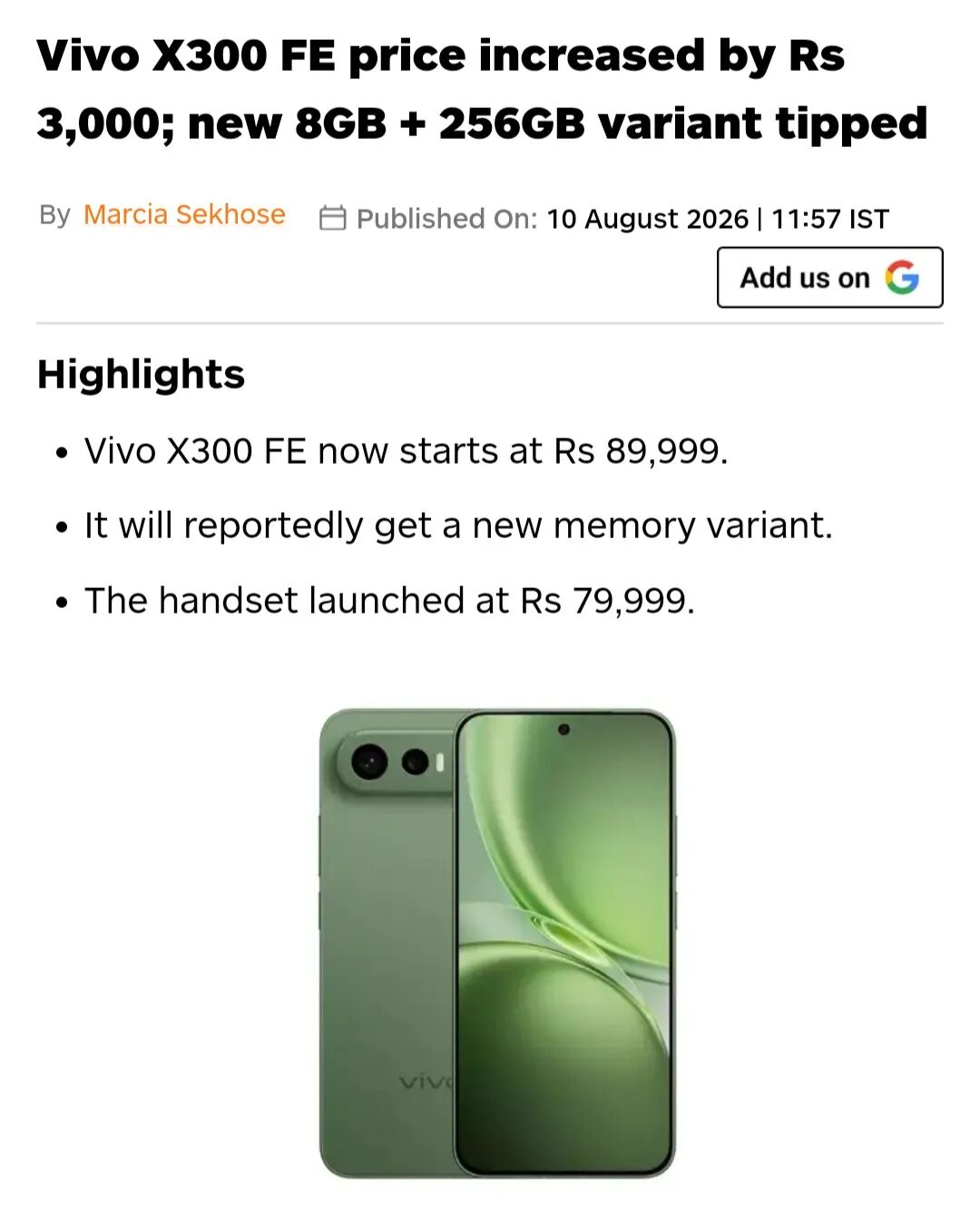
Many people may not realize the absurdity of this figure at first glance, but when this device was first released, the 12GB+256GB version was only sold for 79,999 rupees. Now the RAM is cut by 4GB, but the price is 5,000 rupees higher, which is nearly 430 RMB more expensive.
Lower Configuration, Higher Price
If this operation happened back in 2023, the digital tech community would have dragged the manufacturer to the top of trending searches for three days and three nights. But in 2026 today, the most common comments in the comment section are not "cutting leeks", but "full understanding to you".
Because everyone knows that it's not that Vivo wants to do this, but the price of storage chips has risen to a point where all mobile phone manufacturers are losing sleep over it.
Therefore, the "resurrection" of 8GB RAM and the "retrogression" of flagship phones seem to become the norm for mobile phone manufacturers.
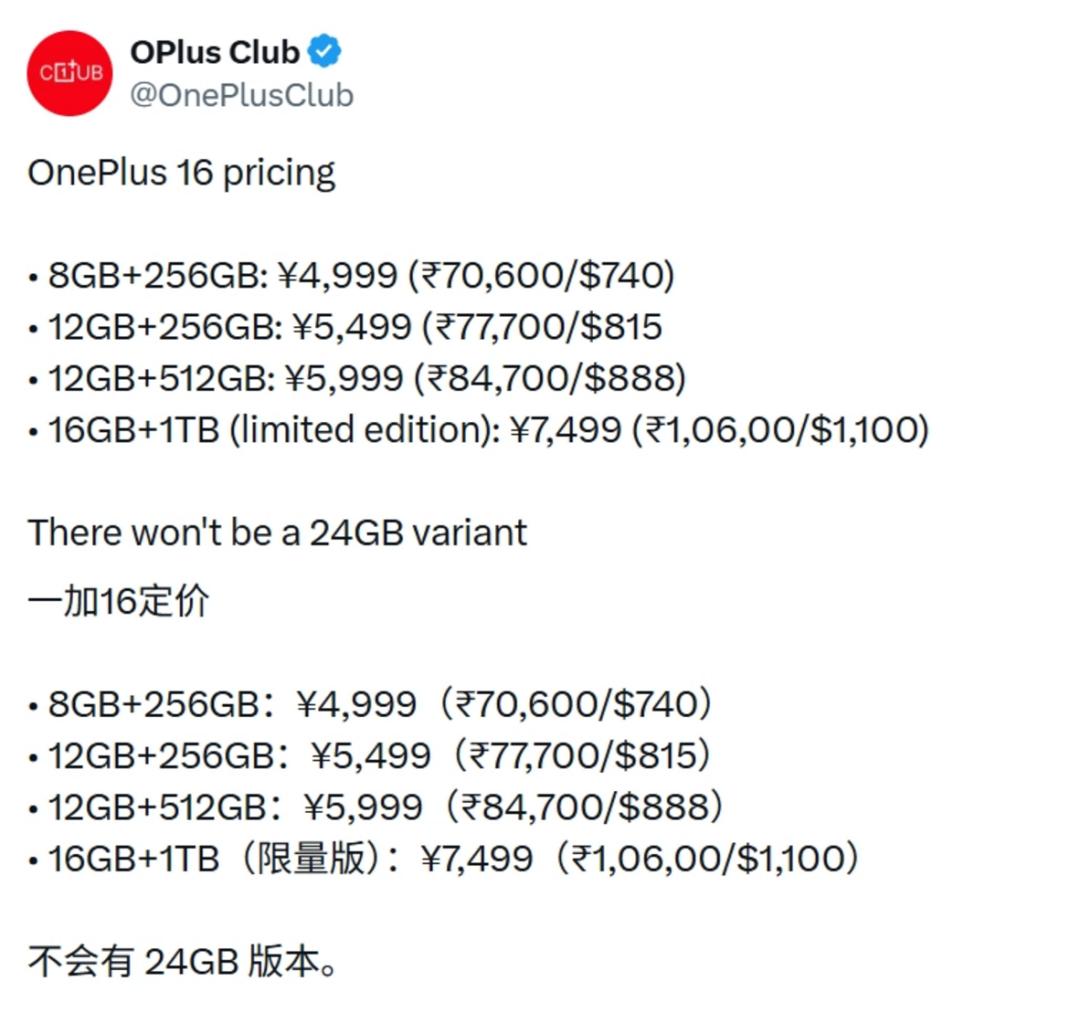
After all, Vivo is not the first one to do this. Earlier, there were rumors that the upcoming OnePlus 16 will also add a new 8GB+256GB version, with a starting price of 5,000 yuan.
Take a look at this timeline. In 2024, 12GB was still the entry configuration for mid-range phones, 16GB was being popularized in the 3,000-yuan price segment, and although 24GB RAM phones were more of a gimmick than a practical product, it at least showed that the whole industry was moving in the same direction of "specs competition".
Bigger, faster, cheaper. At that time, if a manufacturer dared to sell a flagship phone with 8GB RAM, digital tech bloggers would dissect every frame of the launch event PPT, and the comment section would flood the brand's public relations department with complaints.
But by 2026, 8GB RAM is not only back, but also blatantly appears in the SKU list of flagship phones, and is sold at a higher price than the 12GB version back then.
Many institutions have predicted that in 2026, the pace of promoting 16GB RAM in high-end mobile phones may slow down, mid-range phones will pause the upgrade from 12GB and roll back to 6-8GB, and low-end phones will directly roll back to 4GB as the mainstream configuration.
At that time, many people thought this was an alarmist statement.

After all, everyone has seen the price cycle of storage chips, the price will always fall after rising, and you can get through the tough period just by waiting. But no one expected that this round of price increase is not a cyclical fluctuation, but a structural supply crunch.
Previously, mobile phone manufacturers competed to stuff larger RAM into products at the same price, but now they compete to cut down the storage cost first. Or, to skillfully pass this part of cost on to consumers.
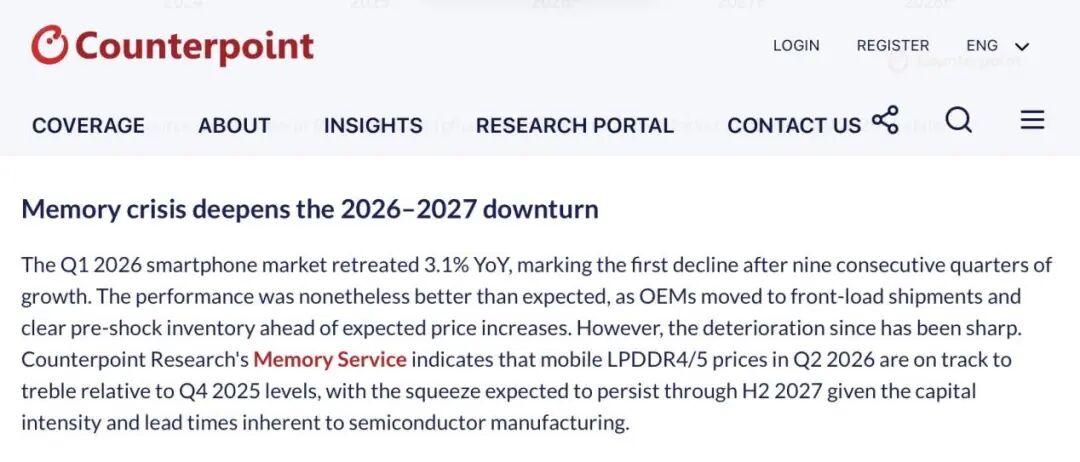
Predictions from many consulting agencies point to the same conclusion: this round of storage price surge is an "unprecedented" long-cycle market trend, which is expected to last until the end of 2027. The storage quotation in the first quarter of 2026 is nearly 4 times that of the same period last year.
Just imagine, if the price of pork quadruples in one year, what else can a steamed stuffed bun shop do except raise prices? The current situation of mobile phone manufacturers is similar to that high-end steamed stuffed bun shops are forced to sell "reduced-meat buns" with less meat but higher price, and you have no other choice if you don't buy it.
But it is also not right to say that mobile phone manufacturers are completely innocent.
From 2023 to 2024, when storage chips were at a historically low price, the whole industry was frantically piling up specs. Configurations like 16GB+512GB and even 24GB+1TB were quickly distributed to mid-range models, and the RAM specifications of products priced at 3,000 to 4,000 yuan were almost on par with flagships. The more happily the manufacturers competed in specs back then, the more embarrassed they are now.
In essence, the manufacturers' practice of offering "higher specs at the same price" by taking advantage of low-cost storage in the past two years is essentially overdrawing their future cost space. Now that the storage price has risen back, those brands that survived on "higher specs at the same price" will be the first to collapse.
Search on e-commerce platforms, and you will find that 1TB version flagship phones are getting harder and harder to buy. It's not that they are sold out, but that manufacturers dare not produce too many. 512GB has become the main shipment configuration, the price gap between 256GB and 512GB is deliberately maintained at 400-500 yuan, and the 1TB version is either cut from orders or directly canceled from the product roadmap.
This is not a simple price increase, but the industry is re-pricing its products.

In the past five years, China's mobile phone market has been "trading profits for volume", using lower and lower profits to get higher and higher market share.
The storage price surge has completely torn off this layer of window paper.
When the cost structure changes fundamentally, the cost-effective model itself is unsustainable. Those brands that attract spec-focused users with "higher specs at the same price" have fallen into a dead end in the current context of soaring costs.
So what should people who want to change their phones do?
First, the conclusion: if your current phone can still work for another half a year, and you don't have an urgent need to replace it, you can indeed wait. But the reason to wait is not "waiting for the storage price to drop", but waiting for manufacturers to sort out the product line with abnormal configurations like 8GB+256GB, and waiting for the market to find a new balance between price and configuration.
If you have a large RAM phone bought in 2024 or early 2025, especially the 16GB+512GB or 16GB+1TB version — congratulations, you are probably the biggest winner in this price surge.
At that time, storage was cheap, government subsidies were still available, and manufacturers were still frantically piling up specs. Looking back now, that was probably the most cost-effective window to buy a phone in the past five years.
For friends who have to replace their phones now, the suggestion is to buy 16GB if you can afford it, 12GB is the bottom line, and do not recommend buying an 8GB flagship phone unless the price is incredibly attractive.
It's not that 8GB is not enough for daily use, it's indeed enough for using WeChat and scrolling through TikTok, but it's just absurd that you spend 5 or 6 thousand yuan on a phone with only 8GB RAM.
What you buy is not a configuration, but a compromise made by the manufacturer under cost pressure.
These compromised products usually have compromises in system optimization and subsequent update support. The purpose of manufacturers launching this SKU is very clear: to lower the starting price to attract you to the store, and then guide you to pay more for the 12GB or 16GB version.

The return of 8GB+256GB is essentially not an extra choice for consumers, but a lifeline for manufacturers.
We are used to the mobile phone market of the past five years where "more specs for the same price" or even "more specs at lower price" is the norm, and we are used to the annual upgrade rhythm where RAM and storage double while the price remains unchanged.
But the underlying support for that era was the historically low price of storage chips, manufacturers exchanging profits for market share, and the whole industry being caught in fierce involution.
Now, AI servers have taken away most of the storage production capacity, and the cost structure can no longer go back to the past. Mobile phone manufacturers have to choose between raising prices, reducing configurations, or going bankrupt. The return of 8GB+256GB is just the first answer to this cruel multiple-choice question.
And for consumers, perhaps we need to adapt to a new fact: mobile phones are really getting more expensive again.
This article is from the WeChat Official Account "Tech Fox" (ID: kejihutv), written by Hu Mei, published with authorization from 36Kr.