Swiss biotech enterprise CellX Biosolutions develops microfluidic devices to capture and develop biodegradation products for chemical pollutants | Top 100 Swiss Innovations
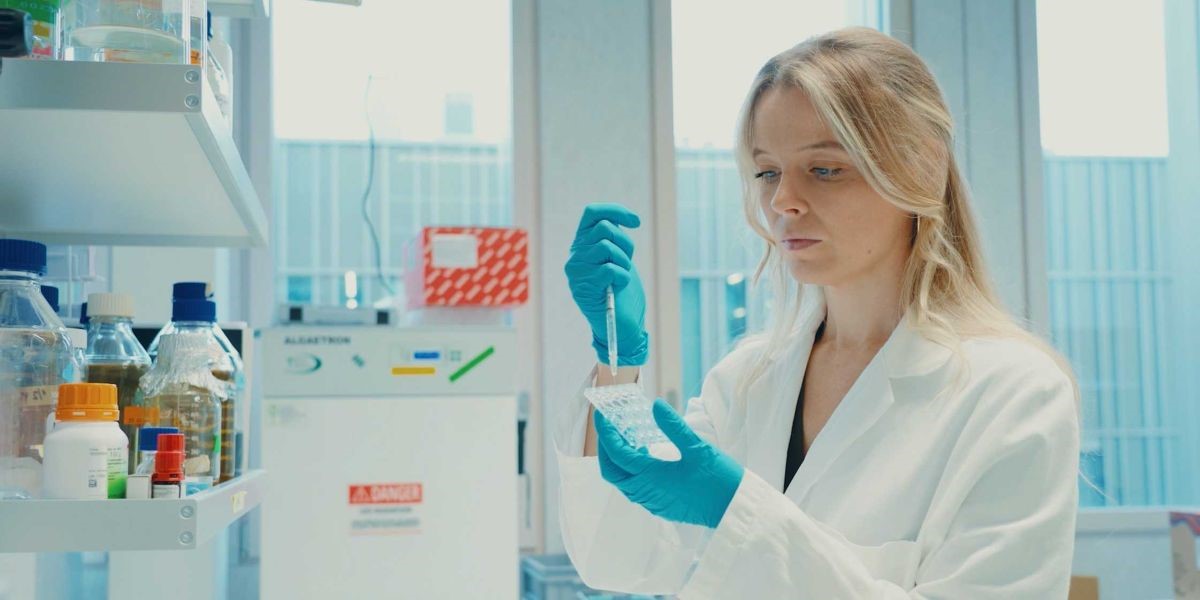
Image source: CellX Biosolutions
Swiss biotech company CellX Biosolutions (hereinafter referred to as CellX) was founded in 2024, and it is committed to the research and development of microfluidic devices. Such devices can screen and isolate natural bacteria with the capacity to degrade chemical pollutants from various water environments, then combine and scale up the culture of strains according to the characteristics of different pollutants, so as to form biodegradable products for the treatment of persistent chemical pollutants including per- and polyfluoroalkyl substances (PFAS), pesticide and pharmaceutical residues.
CellX is a spin-off of ETH Zurich, co-founded by Estelle Clerc, Fabienne Kurt and Geoffrey Besnier. Estelle Clerc, the CEO of the company, holds a doctorate in marine microbiology from ETH Zurich. Her main research focuses on how marine bacteria sense and decompose complex organic matter, as well as the role of microorganisms in the marine carbon cycle. She once served as a postdoctoral researcher and senior researcher at the Stocker Lab of ETH Zurich. Fabienne Kurt, the Chief Science Officer of the company, holds a doctorate in biotechnology from ETH Zurich. She once served as co-founder of microbial technology firm PharmaBiome, and is mainly engaged in the design of synthetic gut microbiota. Geoffrey Besnier, the Chief Operating Officer of the company, holds a master's degree in European public affairs from Sciences Po Paris, France.
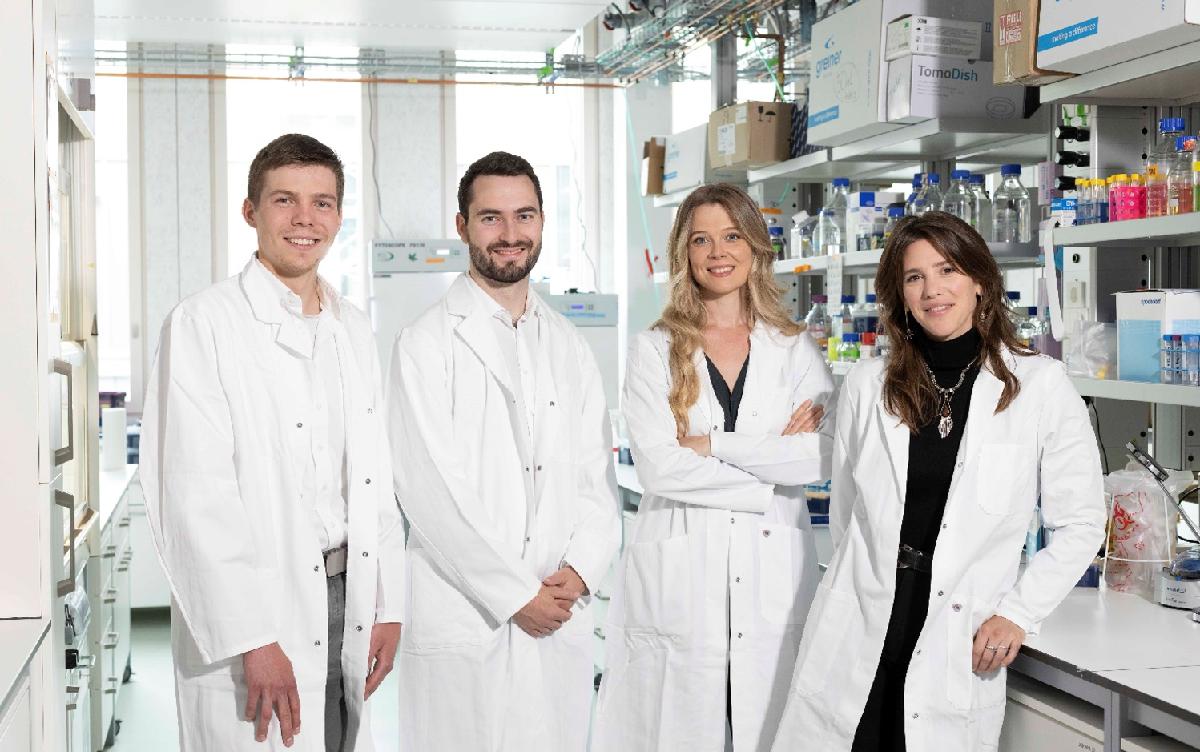
Image source: CellX Biosolutions
Persistent chemical pollutants such as PFAS are widely generated from chemical, pharmaceutical, fire-fighting foam and other industrial activities. Their chemical structures are highly stable, so they are difficult to degrade naturally after entering industrial wastewater, soil and groundwater. Traditional sewage treatment systems that mainly treat easily degradable organic matter also cannot effectively destroy their molecular structures, and the relevant pollution control market has reached a scale of 30 billion US dollars. At present, commonly used methods such as filtration, activated carbon adsorption and ion exchange mainly separate and enrich pollutants from water into adsorption materials, resins or sludge, without truly eliminating the pollutants. Subsequent final treatment still needs to be completed through transportation, incineration or centralized disposal, which features complex processes, high cost and high energy consumption, and meanwhile increases the pressure of pollutant storage, transfer and secondary disposal. On the other hand, long-term discharge has led to continuous accumulation of PFAS in some industrial sites, soil and groundwater, and it may further spread along with groundwater migration, making pollution control gradually evolve from end-point wastewater treatment to a long-term and complex environmental remediation problem.
Image source: startupticker
CellX has developed a microfluidic device that can directionally capture and isolate natural strains capable of degrading persistent chemical pollutants such as PFAS, pesticide and pharmaceutical residues from various water environments including oceans, rivers, lakes and water plants, and combine and scale up different strains as required to produce commercial degradable bacterial products for targeted chemical waste treatment.
The research of CellX's founding team found that natural marine microorganisms have significant chemotactic responses to specific polysaccharides, among which macromolecular polysaccharides such as laminarin have even stronger attraction to bacteria than their oligosaccharide and monosaccharide components. Based on this, CellX has developed a patented microfluidic device, which consists of 25 micropores arranged in a 5×5 array, each with a capacity of 110µL, loaded with different chemical substances respectively. Each micropore is equipped with a port of about 800μm in diameter to connect the substances inside the pore with the surrounding seawater. After the microfluidic device is deployed into the water body, the chemical substances inside the pore will diffuse outward through the port and form a concentration gradient, simulating the chemical environment around marine particles and phytoplankton cells, so as to attract chemotactic microorganisms to actively enter the micropores. After the device is recovered, the team will count the number of microorganisms through flow cytometry to quantify the chemotactic attraction intensity of different compounds, use gene amplicon sequencing to analyze the composition of the bacterial community, and further isolate the strains in selective media rich in corresponding test compounds. The relevant strains will be further cultured and scaled up to test their degradation performance, thus realizing the directional capture, identification and isolation of natural bacteria with the metabolic capacity for specific chemical pollutants.
After obtaining high-performance strains, CellX will carry out combination optimization according to the metabolic capacity and synergistic relationship of different strains, to construct microbial flora that can continuously and synergistically degrade complex pollutants, and further improve their stability, degradation efficiency, as well as adaptability to temperature, pH, salinity and complex chemical components in real industrial wastewater. Subsequently, the company carries out large-scale culture and formulation of strains or flora through its own biotechnological process, so as to finally form commercial microbial products for industrial wastewater treatment, sewage treatment and environmental remediation.
At present, the company has established a strain library containing more than 50 strains that have been proven to degrade PFAS and a strain resource library of more than 30 isolated strains, and started to promote pilot projects with industrial partners in 2025. As of June 2026, CellX has obtained 8 industrial pilot projects.
In February 2025, CellX completed a pre-seed financing of 1.7 million Swiss francs, led by Positron Ventures, with participation from Kickfund, Venture Kick and other institutions. The funds are mainly used to promote the commercial development of PFAS-degrading microbial flora, carry out joint verification with industrial partners, and further scale up laboratory technologies to real application scenarios.

CellX Biosolutions is a 2025 TOP100 Swiss Startups honoree. TOP100 Swiss Startups brings together the best "Swiss made" startups and growing technology innovation enterprises, and is the most internationally influential benchmark list in Switzerland's technology innovation sector. Since 2011, this list has selected 100 of the most pioneering and market-prospective Swiss innovative enterprises and 25 Swiss growing enterprises with the highest unicorn potential across Switzerland every year, covering life sciences, engineering machinery, robotics, information and communication, low-carbon technology, food technology and other fields. The TOP100 Swiss Startups and its series of brand activities are landmark events in Switzerland's innovation ecosystem, representing the highest ground of Swiss innovation and the forefront of international investment and financing.
The 2025 Chinese version of TOP100 Swiss Startups is honorably released by Insight Tech. Insight Tech is the authorized Chinese partner of TOP100 Swiss Startups, responsible for the operation and promotion of TOP100 Swiss Startups in China and assisting the list projects in carrying out commercial cooperation with China. Insight Tech is a China-Europe (Switzerland) industrial innovation service provider, committed to promoting the localization of Swiss innovation in China and the internationalization of Chinese industries through ecological construction and cross-border empowerment.
To obtain the full list and industry-specific lists of TOP100 Swiss Startups, please visit the official WeChat account or official website of Insight Tech.