Genesis AI: Why is the market willing to give a valuation of 3 billion US dollars to a company that has been established for less than two years?
If the capital market's bets over the past two years centered on "making AI learn to think", more and more capital is now betting on the next step: making AI learn to act. Genesis AI is emerging as one of the companies worth close attention in this current Physical AI wave.
In July 2025, Genesis AI came out of stealth mode and announced the completion of a $105 million financing round. For a company that had not been established for long and did not have mature commercial products at the time, this was already an extremely large Seed round financing. The lead investors are Khosla Ventures and Eclipse, and other investors include Bpifrance (the French Public Investment Bank), HSG, as well as well-known tech investors such as Eric Schmidt and Xavier Niel.
What deserves more attention is the valuation change one year later. In July 2026, Genesis AI is in talks for a new financing round of approximately $500 million, with a potential valuation of around $3 billion. If the final transaction is closed at this price, compared with the company's previous $105 million Seed round, it means the company's valuation may see an order-of-magnitude increase in less than a year.
For investors, the truly question worth researching is not "why Genesis AI can raise so much money", but: Why is a robotics company established less than two years capable of supporting a long-term valuation of $3 billion or even higher?
The answer actually does not lie in the word "robot" itself, but in the foundation model and data infrastructure for the robotics field that Genesis AI is trying to build.
01 ┃ What robots truly lack is not hardware, but "intelligence"
Today's industrial robots are already very mature. Robotic arms can complete tasks such as welding, assembly, and handling at high speed and with high precision, but their flaws are also very obvious: Robots are very good at doing one specific thing, but it is difficult for them to truly understand a whole category of tasks.
If a robot is trained to grasp a specific part on a fixed assembly line, it usually needs to be reprogrammed and debugged when the part size changes, the position shifts, or even the environment alters. This is also why robot automation over the past few decades has been mainly concentrated in highly standardized scenarios such as automobile manufacturing and electronic assembly, while a large number of complex physical labors still cannot be automated.
The opportunity Genesis AI sees comes exactly from this pain point.
The company aims to build a "robot foundation model" similar to large language models, so that robots no longer need to be programmed separately for one single task, but can understand vision, language, tactile sense, body status and environmental changes through a unified model, and then independently decide what actions to take according to different tasks.
In other words, traditional robots solve the problem of "how to make one action more precise", while Genesis AI tries to solve the problem of "how robots understand what they should do, and how to respond when facing changes".
This market space is extremely huge: global physical labor corresponds to an economic value of about 30 trillion to 40 trillion US dollars, but more than 95% of physical labor has not yet been automated.
This is also why the capital market is willing to interpret the robot foundation model in a framework similar to generative AI: If the model can evolve from single-task capability to general-purpose capability, the size of the robot market will no longer be determined by the sales volume of a certain type of robot, but by all automatable physical labor across the world.
02 ┃ The most notable point of Genesis AI is that it is building a "robot data flywheel"
The real difficulty of the robot foundation model is not to develop the model itself, but where to obtain sufficient high-quality data to train the model. This is one of the biggest differences between Physical AI and traditional generative AI.
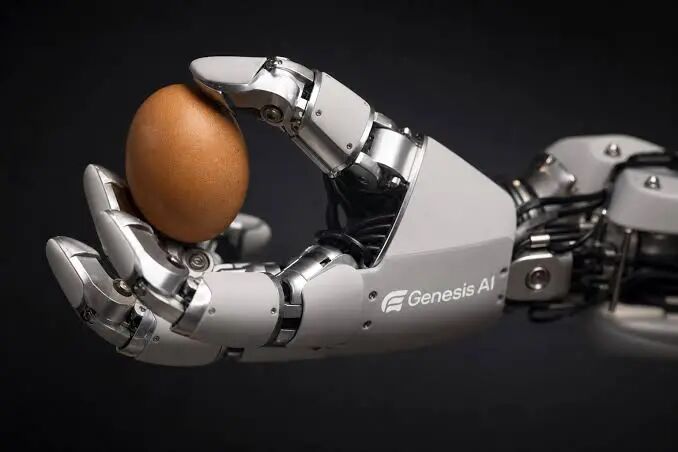
ChatGPT can obtain massive text and image data from the Internet, but robots cannot learn only by "watching". If a robot wants to learn to pick up an egg, it not only needs to know what an egg is, but also needs to know at what angle the hand should approach, how much force to apply, when to slow down, and how to adjust the action after touching the egg.
Therefore, what robots truly need is action data in the real world.
Genesis AI's core strategy is to build two sets of data sources at the same time. On the one hand, the company builds a high-precision physical simulation system to generate a large amount of robot training data in the virtual environment; on the other hand, the company collects real-world data through sensors, robotic hands and human operation data. The company combines these two parts, hoping to form a continuously expanding data system.
Once robots start to be deployed, every task completed by robots in the real world may become new training data; new data can make the model better; a better model can enable robots to complete more and more complex tasks, thus generating more data. The final result may be:
More robots → more data → stronger model → higher robot value → more robots.
This is the data flywheel that Genesis AI really wants to build.
Once this kind of flywheel is formed, the company's moat will no longer be a certain mechanical structure or a certain generation of robot products, but a continuously reinforcing positive cycle among data scale, data quality and model capability.
03 ┃ Why didn't Genesis AI only build models, but choose the "full-stack" path?
Many robotics AI companies choose a relatively asset-light path: they do not produce robots themselves, but provide AI models to control robots. Theoretically, this model is more like a software company and can more easily get a higher valuation multiple.
Genesis AI has taken a different path.
The company is advancing foundation models, simulation systems, data acquisition equipment and robot hardware at the same time. This seems to make the company's R&D cost higher, but there is a very practical reason behind it: Without mastering hardware and data entry points, it is difficult for the robot foundation model to truly build its own data barriers.
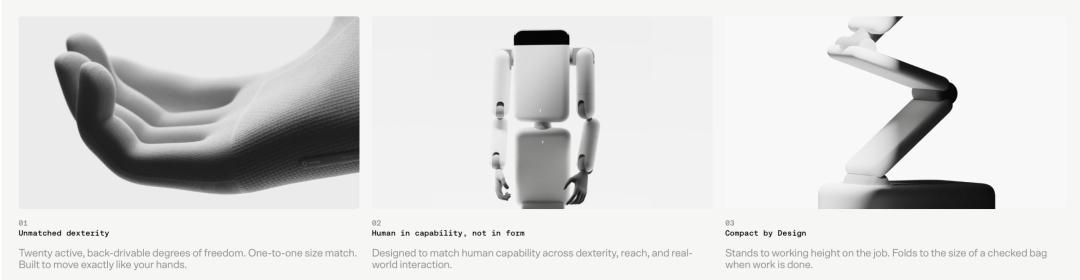
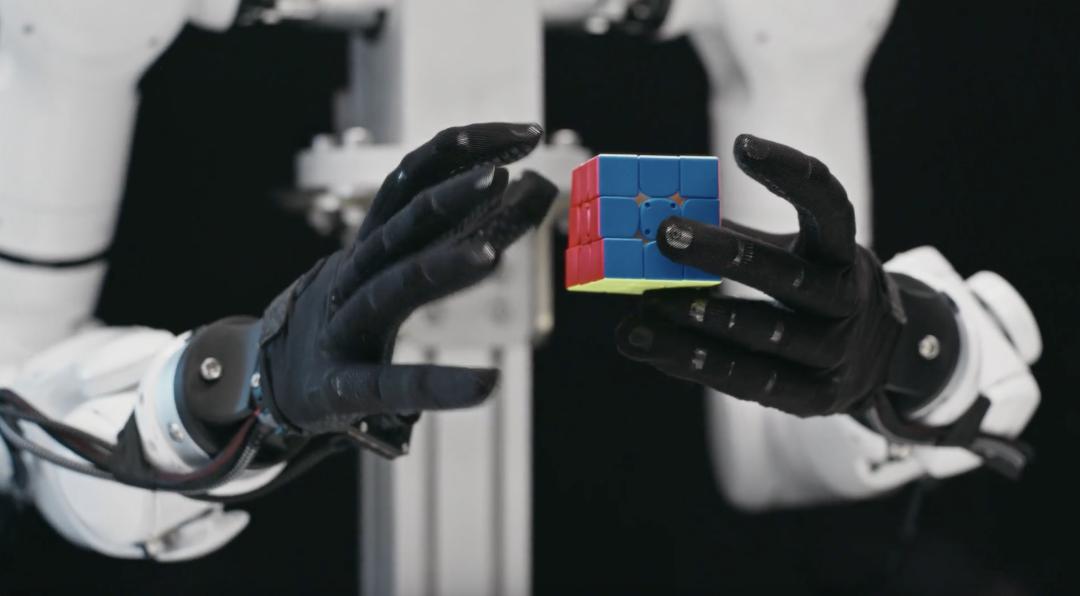
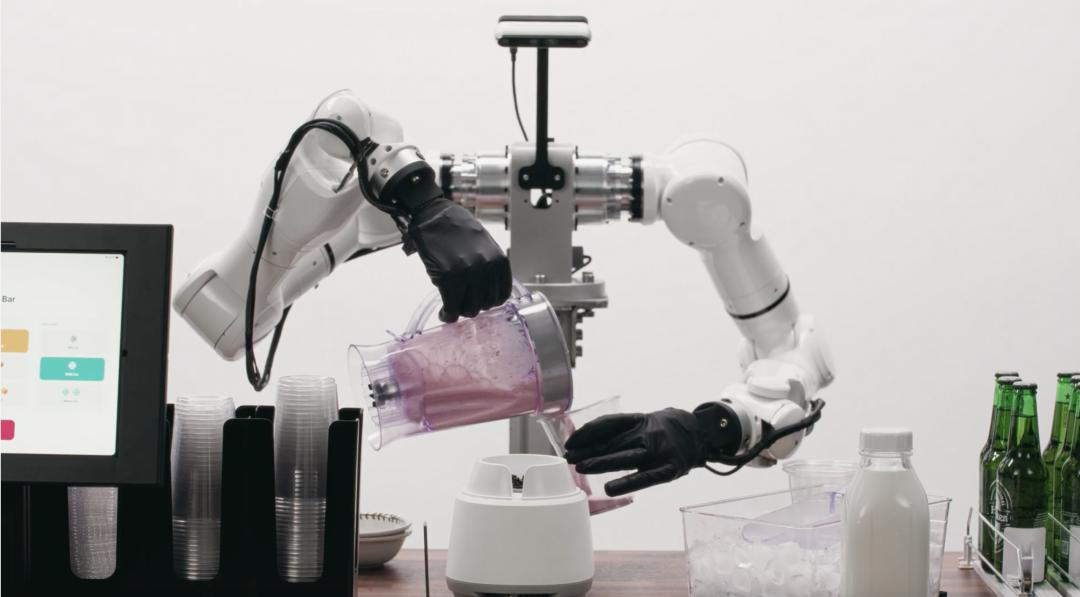
In May 2026, Genesis AI released GENE-26.5, and demonstrated the high-dexterity robotic hand matching its model. The public demonstration covered complex operations such as cutting vegetables, cracking eggs, solving Rubik's cubes, and playing the piano. Reuters reported that the company hopes to use this method to make the model adapt to different types of robots, instead of being limited to a certain fixed hardware.
This means Genesis AI's strategy has become increasingly clear: It is not simply selling a robot, but using its own hardware to obtain real data, then using the data to train general-purpose models, and finally making the models adapt to more robots and more application scenarios.
This is actually a very typical infrastructure strategy of "heavy first, then light". In the early stage, the company needs to get through the entire technology stack by itself, because there is no ready-made industrial infrastructure; but once the model and data system mature, the company can theoretically gradually migrate to the platform layer, allowing more third-party robots to use its models.
If this process can be realized, Genesis AI's commercial value will transform from a robot manufacturer to a Physical AI infrastructure company.
04 ┃ The real imagination space of the business model: not selling robots, but selling "robot labor"
If Genesis AI ultimately only produces robots, the $3 billion valuation does require very careful consideration. Because hardware business naturally faces problems such as manufacturing cost, supply chain, inventory, after-sales service and capital expenditure, it is difficult for the business model to get the valuation multiple of a pure software company.
But what Genesis really wants to do is not simply sell robots. The company's longer-term business model is to turn robots into a productivity service that can be directly purchased by enterprises.
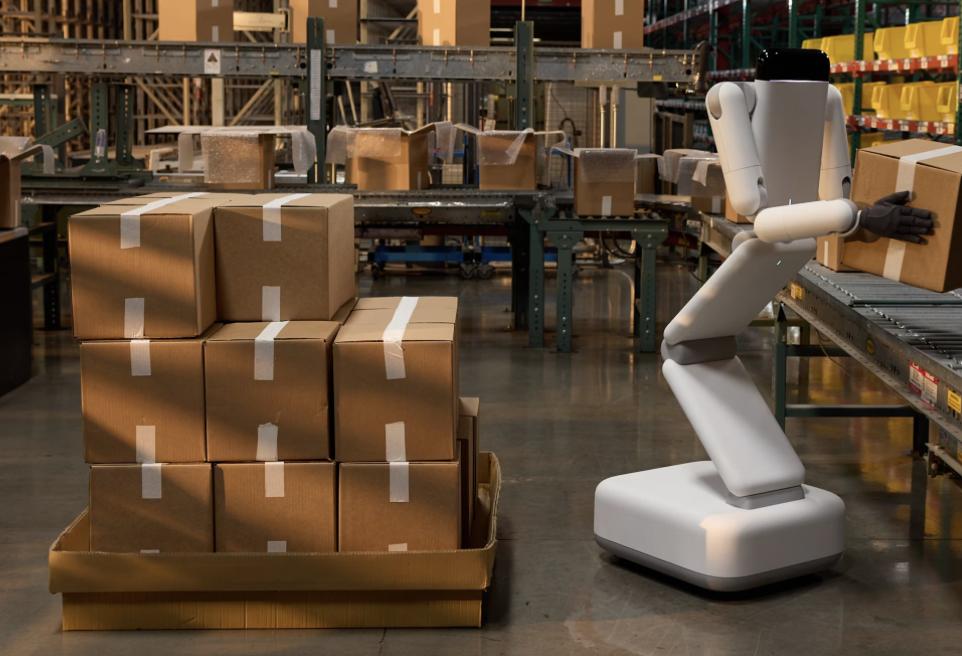
For example, a factory does not necessarily need to buy a robot, but needs the robot to complete 8 hours of handling, sorting, assembly or other repetitive labor every day. For customers, what is truly valuable is not "owning a robot", but "how much labor is reduced, how much production capacity is increased, and how much cost is cut".
This means that the future robot business model may gradually shift from one-time hardware sales to a recurring revenue model of "hardware + software + service". Genesis AI's model can become the software layer in it, robots become the execution layer, and enterprises ultimately purchase the entire automation solution.
If the model can also be licensed to other robot manufacturers, the company can further obtain revenue from model licensing, software subscription or charging based on robot usage.
Thus, a potential business structure emerges:
The bottom layer is simulation and data infrastructure, the middle layer is the robot foundation model, and the upper layer is robot hardware and enterprise applications. The biggest value of this model is that once the foundation model truly matures, revenue growth theoretically does not have to fully depend on how many robots the company produces itself.
The faster the number of robots grows, the greater the potential usage of the model; and the more robots the model covers, the easier it is for the company to obtain more real-world data.
This is the core reason why Genesis AI can get the valuation of an AI company, not just a robot company.
05 ┃ Why does the team itself deserve a high valuation?
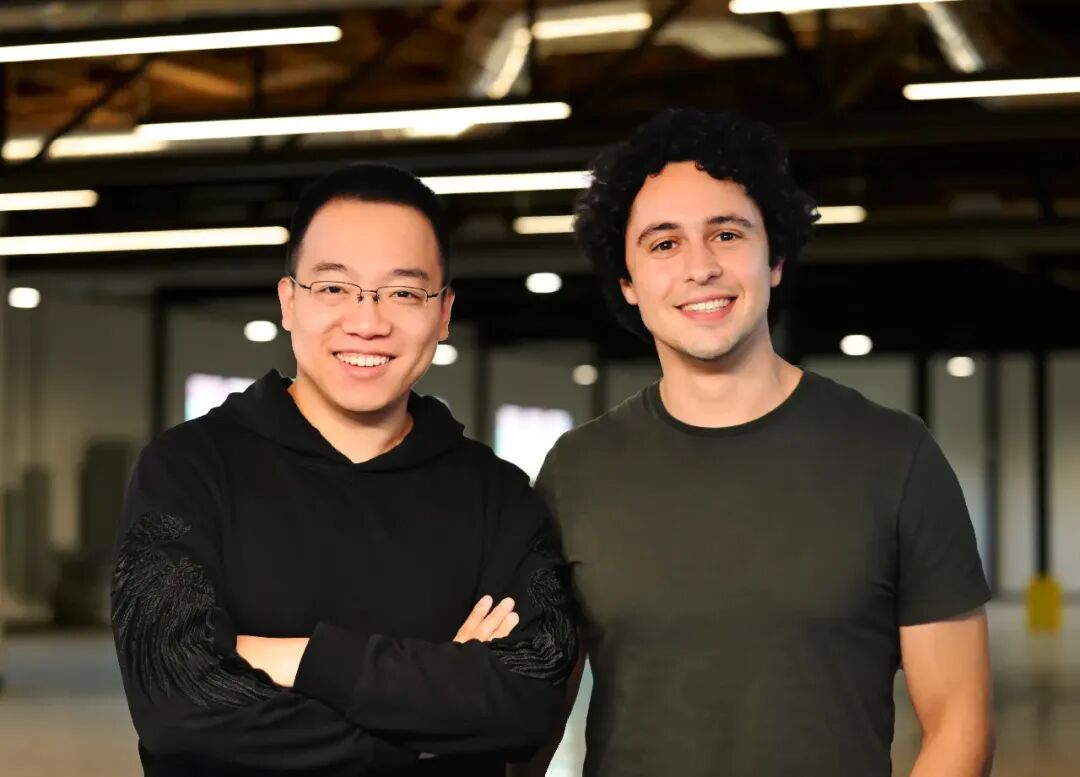
Genesis AI has a strong technical team. Co-founder and CEO Xian Zhou holds a PhD in Robotics from Carnegie Mellon University. During his PhD studies, he focused his research on robot learning, generative simulation and world models, and led the Genesis simulation project which later became one of the technical foundations of Genesis AI; the other co-founder and president Théophile Gervet also graduated from CMU, and was previously a research scientist at Mistral AI, participating in the R&D of cutting-edge multimodal models such as Mixtral and Pixtral, and has research accumulation in robot vision, 3D understanding and robot manipulation.
More importantly, this is not a case of two founders working alone, but a technical team gathered from top AI and robotics institutions such as Mistral AI, NVIDIA, Google, Apple, CMU, MIT, and Stanford, covering the full technology stack of foundation models, robot learning, physical simulation, graphics, data systems and hardware. Genesis itself also emphasizes that team members have participated in important robotics projects such as Diffusion Policy, UMI, and NVIDIA GR00T.
06 ┃ Why is this story particularly worthy of investors' attention now?
Genesis AI is not in an isolated robot market, but in a structural shift that is taking place in the AI industry.
In the past few years, AI has mainly solved problems in the digital world: writing code, analyzing text, generating images, handling customer service, and assisting decision-making. In the next stage, AI will start to enter the physical world. This means that models need to evolve from "understanding information" to "understanding the environment, planning actions and executing actions".
The capital market has already begun large-scale pricing for this direction. In the first quarter of 2026, Physical AI startups completed a total of about $16.3 billion in financing, and robots have become one of the most important capital gathering directions besides AI.
Genesis AI is exactly at the intersection of this trend: it has the imagination space of AI foundation models, and also has the huge application market of the robotics industry. Its current valuation logic is actually built on three levels:
First, the huge end market. The company is not facing a robot niche market of tens of billions of dollars, but a global physical labor market of tens of trillions of dollars. Even if only a very small part of it can be automated, it is enough to support the revenue space of a company worth tens of billions of dollars.
Second, the platform effect brought by the foundation model. If GENE can eventually work across robots, across tasks and across industries, the company does not need to be a manufacturer of every type of robot, but can become the intelligence layer of the entire robotics industry. Once this business model is realized, the revenue ceiling will be far higher than pure hardware sales.
Third, and the most important, the compound growth that the data flywheel may bring. The growth of traditional robot companies relies more on factory expansion, supply chain and sales teams, while the growth of robot foundation model companies can theoretically benefit from both the increase in the number of robots and the improvement of model capability. If real-world data can continuously improve the model, every additional robot may not only mean a hardware product, but also a new data entry point and a new model training resource.
So from the perspective of investors, the $3 billion is not pricing Genesis AI's current business, but pricing the probability that it will become a Physical AI infrastructure platform.
This is also why investors such as Khosla Ventures, Eclipse, and Eric Schmidt are willing to bet at a very early stage. The $105 million financing the company obtained in 2025 already shows that top capital is willing to pay a premium for this direction in advance; and if the subsequent financing is completed at the rumored valuation of about $3 billion, it further shows that the market is comparing Genesis with top Physical AI companies such as Physical Intelligence, Skild AI, and Figure AI in the same competitive framework.
Epilogue ┃ The next stop of AI is the "real-time world"
The most notable point of Genesis AI has never been whether it can build a better robot, but whether it has the chance to become the "brain" in the robot era. If robots enter factories, logistics, laboratories and even homes in large numbers like today's software, what truly has long-term value may not be a certain type of robot, but the companies that master the models, data and intelligence entry points.