Led by a post-1999 generation team leader, PandaAI has successively completed three rounds of financing.
According to PE Daily, PandaAI, an AI trading infrastructure company, announces that it has successively completed three rounds of financing including seed round, angel round and angel+ round, with the total financing amount reaching tens of millions of RMB. The angel round and angel+ round are led by L2F Lighthouse Founders' Fund.
It is reported that the three rounds of financing will be mainly used for the continuous R&D of AI trading large model, professional QuantSkills, multi-agent collaboration infrastructure and trading Agent development environment, to accelerate the construction of PandaAI OS, EVO and A2A technology system; at the same time, the company will further expand the global user market and promote the large-scale implementation of AI trading capabilities among individual traders, professional investment teams and financial institutions.
PandaAI may be unfamiliar to the public, and its helm is Li Yuqi, the founder of the quantitative finance popularization IP "Quantitative Li Bubai". He graduated from Columbia University with bachelor's and master's degrees, and is a new generation of quantitative investor and AI trading practitioner in China.
Founder Born in 1999: Set to Redefine AI Trading
Li Yuqi, born in 1999, holds bachelor's and master's degrees in financial engineering from Columbia University. He started his career in quantitative private equity entrepreneurship as early as 20, and now still serves as a partner of a quantitative private equity firm, participating in the management of assets exceeding 1 billion yuan.
In addition, at the age of 23, Li Yuqi launched the quantitative finance popularization IP "Quantitative Li Bubai", which has more than 200,000 fans across all platforms, and has been promoting the popularization of quantitative investment knowledge through content, courses and industry sharing. He founded PandaAI in 2024.
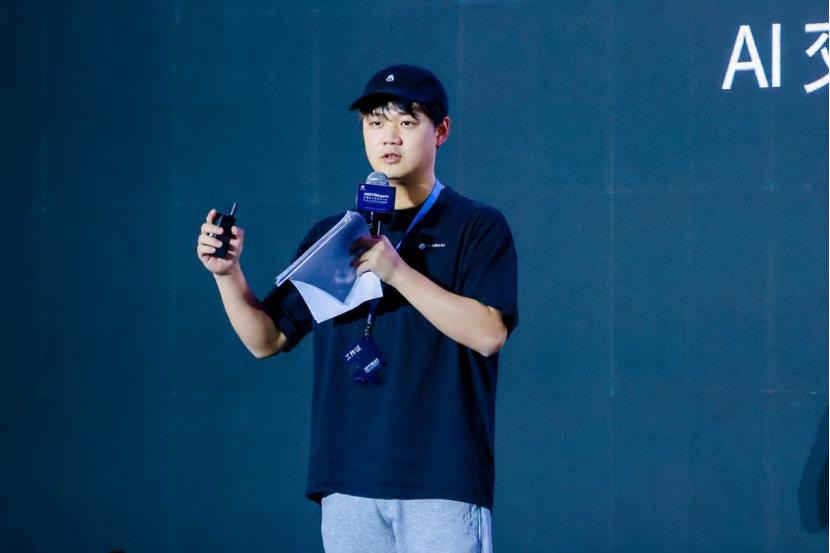
In the team, Liu Bingjun, co-founder and CTO, once served as a system architect at Hundsun Technologies and Accenture, and participated in the core development of China's first online securities account opening system, with rich experience in financial system architecture, trading infrastructure and large-scale project implementation. Other core members cover quantitative research, artificial intelligence, financial data, trading system and product engineering, forming a complete closed loop from paper research and model R&D to product delivery and real trading scenario application.
Li Yuqi said frankly that his original entrepreneurial intention was very simple: after the emergence of large models, his first reaction was whether traders could have a completely different set of tools. At the beginning, he and his team tried to use Coding Agent to help traders write strategies, code and conduct backtesting, but later found that being able to write code does not mean being able to trade. "I realized that what is worth doing is not just another tool, but to reorganize the entire trading research link."
As we all know, traditional quantitative research has a high entry threshold. Even if users have mature market judgment, they often cannot convert trading ideas into verifiable and executable strategies due to lack of programming skills, insufficient professional data, complex backtesting environment or fragmented tools.
Large models are changing the cost curve of many of these capabilities. Therefore, Li Yuqi positions PandaAI as a new Trading Infrastructure for the AI era. "We hope to gradually organize a complete AI Workflow that covers the whole journey of a trading idea from generation, data invocation, factor mining, strategy construction, backtesting verification, Agent collaboration to final trading execution."
Therefore, PandaAI has built a set of visual AI workflow that supports natural language interaction, which integrates "trading idea - factor research - strategy generation - backtesting verification - risk assessment - trading execution" into one system. Users can express their market judgments in natural language, and the system will call data, models, codes, backtesting, risk control and trading tools to gradually convert a vague trading idea into a structured research process.
In PandaAI's AI workflow, complex trading research is split into nodes including data acquisition, factor construction, code generation, strategy backtesting, parameter adjustment, risk analysis and trading connection. Users can check what data is used in each step, what processing is performed, and what results are obtained, and they can also adjust, replace and reuse the existing process at any time.
This is exactly the core Agent engineering capability behind PandaAI. At present, PandaAI has built PandaAI EVO, an A2A multi-agent product for AI trading scenarios. Different Agents are responsible for tasks such as data processing, factor research, strategy generation, backtesting analysis, risk assessment and trading execution, and collaborate to complete research through a unified workflow.
This kind of Agent-to-Agent collaboration makes AI trading no longer just a single model answering questions, but like a professional team, completing the entire trading research through division of labor, verification and feedback. In this process, multiple Agents can continuously correct their reasoning paths based on mutual feedback, realizing self-evolution at the level of thinking ability, so that the AI's trading research capability can continue to grow with collaboration.
According to Li Yuqi, brands in the financial industry used to be very serious and traditional, and they hope PandaAI can represent something different from day one: young and technology-driven. "Looking back now, the name 'PandaAI' is to some extent consistent with what we are doing today - we hope to re-enter this very old industry with a new technological paradigm."
Three Rounds of Financing in Two Months, with 100,000 Accumulated Users
Commercialization has now become a core challenge for every AI company.
According to the introduction, focusing on the trading research methods of different users, PandaAI has formed core products such as OS, EVO and QUBE, with unified professional capability support provided by QuantSkills, covering different needs including one-stop research, natural language strategy development, in-depth investment research and multi-agent collaboration.
Up to now, PandaAI has accumulated more than 100,000 users at home and abroad, and has promoted industrial cooperation of AI trading capabilities with a number of securities firms, futures companies, funds and professional financial institutions.
In the individual user scenario, PandaAI helps researchers and traders complete data analysis, factor mining, strategy generation, backtesting verification and trading review, lowering the technical threshold for building a complete quantitative research environment.
In the professional trading scenario, experienced traders and research teams can precipitate their own research frameworks, trading logic and professional experience into invocable and reusable Agents and QuantSkills, so that personal experience can be gradually converted into systematic capabilities that the team can continuously accumulate.
In addition, in the institutional scenario, PandaAI can be integrated with the existing data, investment research, risk control and trading systems of financial institutions, providing AI trading models, visual workflow, multi-agent collaboration, data services and privatized deployment capabilities, promoting AI to move from peripheral efficiency tools to real business processes.
At the same time, focusing on AI trading talents and developer ecosystem, PandaAI continues to hold factor competitions, university workshops, quantitative hackathons and global AI trading events. These events are not only user growth channels, but also important scenarios for PandaAI to verify product capabilities, discover excellent researchers, and precipitate factor and strategy workflows.
Looking back on PandaAI's financing history, Li Yuqi said that the company officially launched external financing for the first time in the second half of 2025, and successively completed three rounds of financing including seed round, angel round and angel+ round within the following two months.
After multiple rounds of financing communication, Li Yuqi deeply felt that the focus of investors in each round is changing. "In a sense, the three rounds of financing of PandaAI correspond to three stages: from proving that AI can enter trading, to proving that AI can reconstruct the trading Workflow, and then to discussing whether AI Trading will generate new opportunities in the infrastructure layer."
As Ji Xing, Managing Partner of L2F Lighthouse Founders' Fund, said, the most profound change that AI brings to trading is not to give people an answer of "what to buy", but to reconstruct the production method of Alpha - converting traders' experience and judgment into verifiable, reusable and continuously iterative research workflows. "What impresses us most about PandaAI is that the team does not stay in market query or code generation, but starts from factor research, gradually connects data, models, backtesting, risk control and execution, precipitates workflow data from real feedback, and builds a new generation of AI Trading OS for individual traders, professional teams and financial institutions."
Looking into the future, Li Yuqi judges that when the cost of intelligence continues to decline, trading capability will gradually change from a closed capability limited to a few institutions to a basic capability that can be invoked, combined and continuously evolved.
"At that time, the market may no longer simply distinguish whether it is humans or AI that are trading, and the really important question will become: who can better organize intelligence. We hope that PandaAI will eventually become the infrastructure that carries all these intelligence."
This article is from the WeChat official account "PE Daily AI", author: Liu Bo, authorized for release by 36Kr.