The Henan-produced diamonds that most young people turn their noses up at have made Nvidia drool with envy.
You may not believe it, Jensen Huang traveled thousands of miles all the way to China to buy diamonds?
But don't get me wrong, Jensen Huang didn't come here to buy any pigeon-egg sized diamond rings, but lab-grown diamonds.
Back in January this year, Jensen Huang visited Beijing, Shanghai and Shenzhen to attend the company's annual meeting. This has always been a key occasion for NVIDIA to deepen connections with supply chain partners and explore new markets.
Amid his tightly scheduled trip, Jensen Huang still managed to squeeze out time to hold in-depth closed-door talks with the leading domestic "diamond tycoon".
A few days later, the company named Chaoying Diamond posted an intimate group photo of its CEO and Jensen Huang on its official account, and stated that the two sides had conducted in-depth exchanges, laying a foundation for future deep cooperation between the two companies.

Some of you may wonder, what cooperation could NVIDIA possibly have with a diamond enterprise? Could it be that Jensen Huang is following Richard Liu's example, gifting every NVIDIA employee with more than 5 years of tenure a large diamond ring, letting them pick between 1-carat and 1.5-carat options?
Just kidding. The real reason is that NVIDIA is facing a diamond shortage.
Shortly before this annual meeting, Jensen Huang just unveiled its new-generation AI platform Vera Rubin. As a veritable performance monster, Vera Rubin also adopts an unusual heat dissipation solution, which fully applies a brand new system combining "diamond-copper composite heat dissipation + 45°C warm water direct liquid cooling".
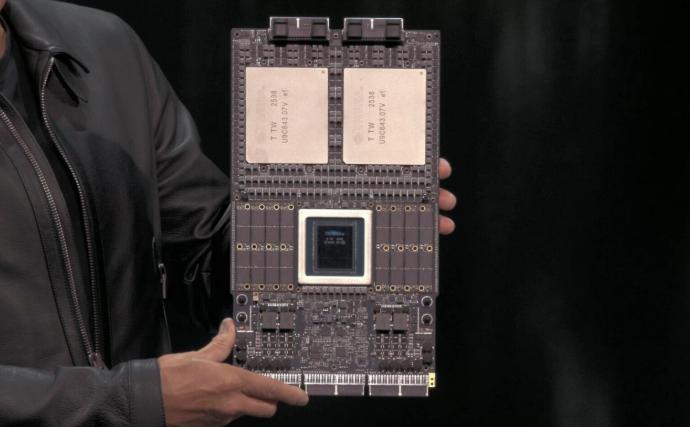
Among all components, diamond has become a critical part of this heat dissipation system.
In fact, not only NVIDIA, diamond is gradually coming into the sight of numerous chip manufacturers thanks to its excellent physical properties.
The reason is simple. Over the past two years, the number of parameters of large models has exceeded hundreds of billions and trillions in no time, and the power consumption of data centers and chips has also skyrocketed accordingly.
Take Vera Rubin as an example, the thermal design power consumption of a single chip has soared to the 2300W level, and the local heat flux density in the core area has directly exceeded 1000W/cm². For reference, the induction cooker you use for cooking at home roughly reaches this level.
If this amount of heat cannot be dissipated quickly, the internal temperature of the chip will rise sharply, which will at least trigger overheating frequency reduction protection and greatly reduce the computing performance; in more serious cases, it may cause overheating and cracking inside the chip, leading to permanent scrapping.
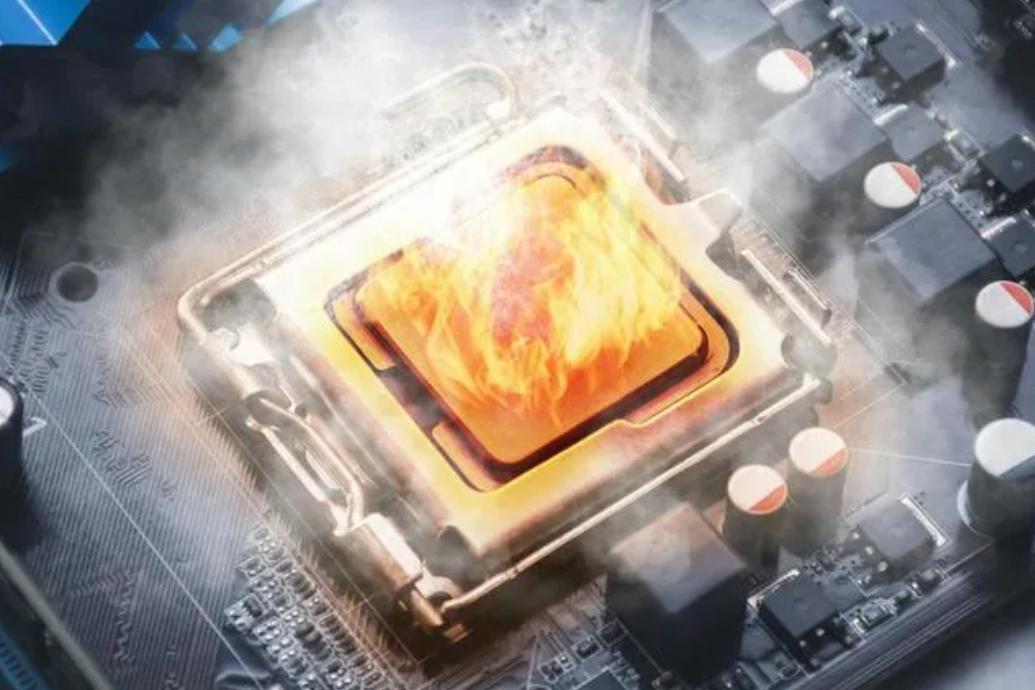
Therefore, heat dissipation is becoming the physical thermal wall that caps the upper limit of AI chip performance.
Many people may say that haven't we come up with a lot of heat dissipation solutions?
For example, liquid cooling that has been booming in recent years, as well as various fancy heat dissipation methods from major tech giants: competing with humans for water resources, building servers in the ocean, and even Elon Musk's SpaceX intends to build data centers in space for heat dissipation.

But if you think carefully, you will find that these solutions only solve the problem of transferring the overall heat to the external environment. How to quickly dissipate the concentrated heat gathered on the chip itself?
In the past, various thermal conductive materials were used for chips to solve this problem, but traditional thermal conductive materials such as aluminum only have a thermal conductivity of about 200W/(m·K), and are even abandoned by high-end chips due to their excessively high thermal expansion coefficient. The mainstream copper material currently in use can reach a thermal conductivity of 400W/(m·K), but this peak value of copper is far from meeting the growing demand.
Just when everyone was at a loss, diamond came into the public view.
The room-temperature thermal conductivity of high-quality artificially cultivated diamond is as high as 2000~2600W/(m·K), which is more than 5 times that of pure copper and 13 times that of silicon.
More importantly, diamond has better thermal matching performance.
One major problem with traditional heat dissipation materials is that the chip is constantly heated and cooled repeatedly, and different materials expand and contract at different speeds, which easily leads to cracking.

The thermal expansion coefficient of diamond is only 1.0-1.5×10⁻⁶/K, which perfectly matches that of semiconductor core materials such as silicon and silicon carbide.
Moreover, diamond is an excellent electrical insulator, so there is no risk of electric leakage and short circuit, and it also has a series of advantages such as corrosion resistance and radiation resistance.
Test data shows that the core operating temperature of GPUs adopting the diamond heat dissipation solution can be greatly reduced by more than 10~20℃. To put it bluntly, diamond is exactly the fever patch for the AI era.
But as we all know, natural diamonds priced by the carat have never been cheap.
For large-scale industrial use, we have to rely on lab-grown diamonds, but there are very few regions in the world that can mass-produce high-quality artificial diamonds.
Coincidentally, Henan Province in China has built strong industrial capabilities in this field.

Simply put, in the 1960s, China successively manufactured its first artificial diamond and domestic cubic press. In the following decades, Henan developed a complete superhard material industrial chain based on this type of equipment.
At the very beginning, these artificial diamonds were not used for marriage proposals, but for heavy-duty scenarios such as drill bits, grinding wheels and glass cutters.
Later, jewelry-grade lab-grown diamonds became popular, and enterprises found that a crystal clear diamond is far more profitable than a glass cutter, so a large amount of production capacity poured into the jewelry market.
So a few days ago, many people must have heard that Henan's artificial diamonds have pushed the once unattainable pigeon-egg sized diamonds down to a very low price, making the international jewelry giant De Beers keep complaining in its dreams that "if New York exists, why does Xinxiang have to exist".

As a result, enterprises purchased production machines too fast, while the "love demand" did not expand synchronously.
From 2022 to 2024, the price of rough lab-grown diamonds once dropped from about 100 US dollars per carat to around 15 US dollars.
Currently, the price of artificial diamonds in jewelry stores is still falling. In the second quarter of 2026, their wholesale price dropped by 13% year on year, and the price of 2-carat round diamonds even fell by 20%.
However, in the industrial market, driven by Jensen Huang's strong demand, the price trend has completely reversed.
Securities Times reporters' field visits found that more than 80% of the interviewed domestic diamond enterprises have issued price increase notices, with an overall price hike of about 15% to 30%.
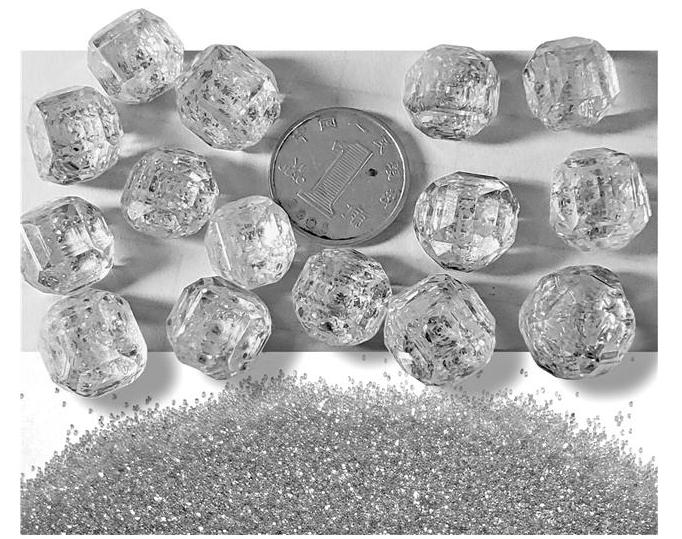
Leading concept stocks such as SF Diamond and Henan Huanghe Whirlwind have more than doubled their cumulative gains since the beginning of this year, and the entire diamond sector has risen by an average of more than 30%.
Although the main driving factors for the current price rise are practical factors such as rising raw material costs and production reduction by enterprises, almost all market observers believe that lab-grown diamonds will definitely seize a considerable share of the chip heat dissipation market in the future.
According to the calculation of open-source securities firms, at the moment when the demand for AI chip heat dissipation is exploding, the market size of diamond heat dissipation may surge from 50 million US dollars to 15.2 billion US dollars within 5 years.
However, it is still hard to say how much of this new cake we can grab.
Although Henan is known as the capital of artificial diamonds, we are still lagging behind in the current diamond heat dissipation sector.
There have always been two technical routes in the field of artificial diamonds: High Pressure High Temperature (HPHT) and Chemical Vapor Deposition (CVD).
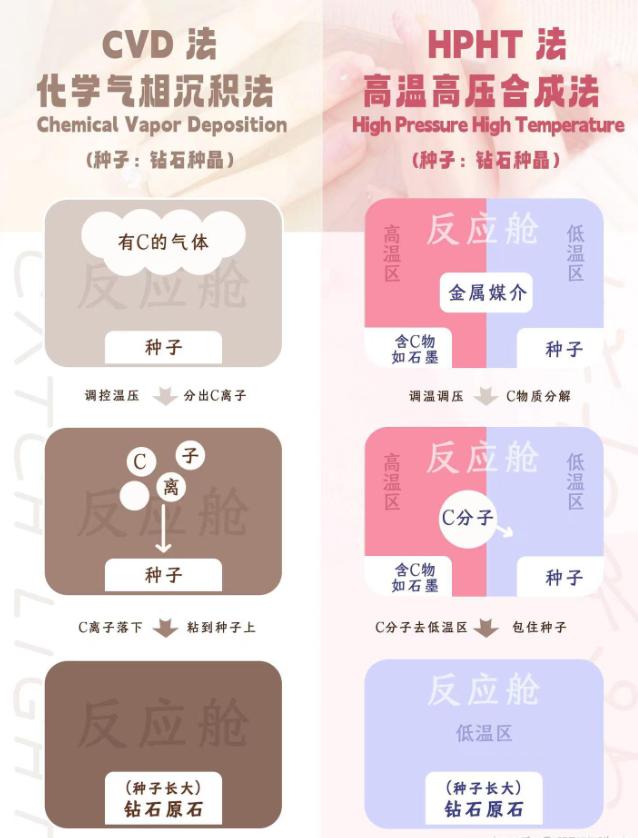
We can be said to be the global leader in the HPHT route. Diamonds produced by this method are large in volume and low in cost, which are ideal for making molds, cutting glass, or producing large-carat jewelry diamonds.
But the diamonds produced by HPHT are not qualified enough to be directly used in chips.
The biggest defect of diamonds manufactured by the HPHT method is that a large amount of nitrogen will inevitably be introduced from the air or raw materials during the synthesis process, and these nitrogen impurities will drastically reduce the thermal conductivity of diamonds.
In addition, there are metals such as iron, cobalt and nickel in the production process, which will greatly reduce the insulation performance of diamonds.
Moreover, the HPHT method produces granular diamond crystals pressed out one by one by the press, while chips, as we all know, require wafer-shaped materials.
Therefore, what chip heat dissipation really needs are large-size, high-purity, low-defect diamonds produced by the CVD method.
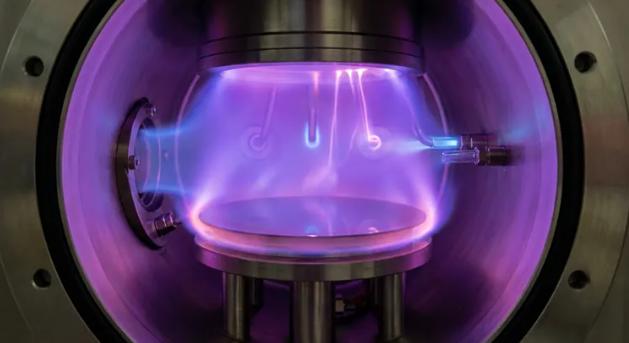
The CVD method, in short, is a process that deposits a layer of solid film on the surface of a silicon wafer through a chemical reaction of mixed gases, and this technology has long been widely used in chip manufacturing.
In this field, overseas technology was developed earlier with more reference experience. Leading overseas manufacturers such as Element Six under De Beers, Coherent in the United States, and Diamond Foundry control most of the technology and market share, and many of their products have already been verified in practical applications in the market.
Element Six has launched CVD diamond heat sinks and copper-diamond composite materials, which can directly replace some traditional copper heat dissipation components.
Coherent in the United States just launched diamond materials this year that can be directly bonded to silicon, silicon carbide and gallium nitride devices.
The US startup Akash Systems has made the fastest progress in commercialization.
In February this year, Akash announced that it had delivered NVIDIA H200 servers with diamond heat dissipation to Indian cloud computing vendors. A month later, it launched diamond heat dissipation servers equipped with AMD MI350X with server manufacturer MiTAC, and announced that it had received the first batch of orders worth 300 million US dollars.

Therefore, overseas manufacturers have started to turn diamond from material samples into real sellable servers.
Fortunately, domestic leading diamond enterprises are not standing still, they have been making great efforts to develop CVD technology in recent years.
In addition to the aforementioned Chaoying Diamond which seems to have the possibility of future cooperation with NVIDIA, the CVD diamond heat sink of another leading artificial diamond manufacturer SF Diamond has also passed customer tests and entered small-batch supply. The 8-inch diamond heat sink production line of the subsidiary of Henan Huanghe Whirlwind was also put into operation in February this year...
All enterprises are sparing no effort to seize this most lucrative market opportunity in the AI era from overseas giants.
Of course, the operation of production lines does not mean that this cake is already on the table.
From sample testing to mass supply, there are still a series of thresholds to cross, including supplier certification, packaging adaptation, yield ramp-up and long-term