Don't overestimate automakers' capabilities of "humanoid robot development"
In May this year, the last batch of Model S/X rolled off the production line, marking their official discontinuation and retirement. 46 days later, the old production line was completely dismantled, and the first mass production line for the Optimus humanoid robot was set up.
Optimus is the key for Tesla to transform into an AI company, and its birth process is highly dramatic: it not only shares a factory with Model 3/Y, but also directly transplants the FSD algorithm as its core "brain".
All along, Tesla has been repeatedly emphasizing that the FSD algorithm developed for vehicles can be reused for robots. The heavy asset burden of the automotive industry has been turned into a software advantage with marginal cost approaching zero, which has driven its valuation to keep rising.
Cathie Wood recently publicly admitted her mistake, stating that the $2600 target price model for 2029 did not take the value of Optimus into account at all [1]: "We were too aggressive in the field of autonomous driving, but we may have been overly conservative in the field of humanoid robots."
Elon Musk himself also often complains that Wall Street underestimates Tesla's value, and has repeatedly spoken up for Optimus at earnings calls, claiming that the third-generation product is "a truly general-purpose robot" and a "truly useful product in daily life" [2].
However, behind all the fanfare lies a rather awkward time gap: Tesla first proposed this concept as early as five years ago, and it has still not reached the mass production stage to this day.
Humanoid robots are the crystallization of the software industry and manufacturing industry. They inherit autonomous driving technology on one hand, and are based on precision manufacturing on the other. Theoretically, this is the comfort zone of automotive companies. But as robotics companies are gaining increasing momentum, Tesla, which originally had all the advantages, has slowed down instead.
Where is the problem?
Algorithm Transplantation
In 2024, Andrej Karpathy, who had started his own business, was a guest on a podcast program and inadvertently revealed little-known details about Tesla's development process of Optimus.
Andrej Karpathy studied under Li Fei-Fei and is a founding member of OpenAI. After joining Tesla, he quickly set up the AI team and is a key figure in the development of Autopilot and FSD. In 2022, Andrej Karpathy returned to OpenAI, but he sincerely recognizes his former employer, and accidentally let out the secret when he was speaking highly of it [3]:
"The early version of Optimus once thought it was a car, because it used the same computer, the same cameras, and the same algorithms that ran on cars."
Transplanting the FSD algorithm for Optimus is not Tesla's unique skill. There is indeed commonality between humanoid robot technology and autonomous driving technology.
First of all, the two are similar in essence: both aim to make machines understand the physical world and interact dynamically with the real environment.
Secondly, both follow the "perception-decision-control" chain: sensors are responsible for perceiving environmental information, the "brain" makes judgments and gives commands based on "what it sees", and the "limbs" execute the final instructions. This is the premise of algorithm transplantation.
External estimates show that Optimus reuses about 60% of the FSD algorithm. He Xiaopeng gave a more radical answer, saying that the software commonality between humanoid robots and cars is as high as 90%.
In other words, the logic that the capital market values Tesla as a technology company is not exaggerated. Other car companies quickly took action after seeing this, and packaged their own algorithms into robots one after another.
This has also led to an interesting phenomenon: a considerable number of engineers in the Optimus project team come from the vehicle department. At present, the most crowded track for startups in the automotive industry is none other than humanoid robots.
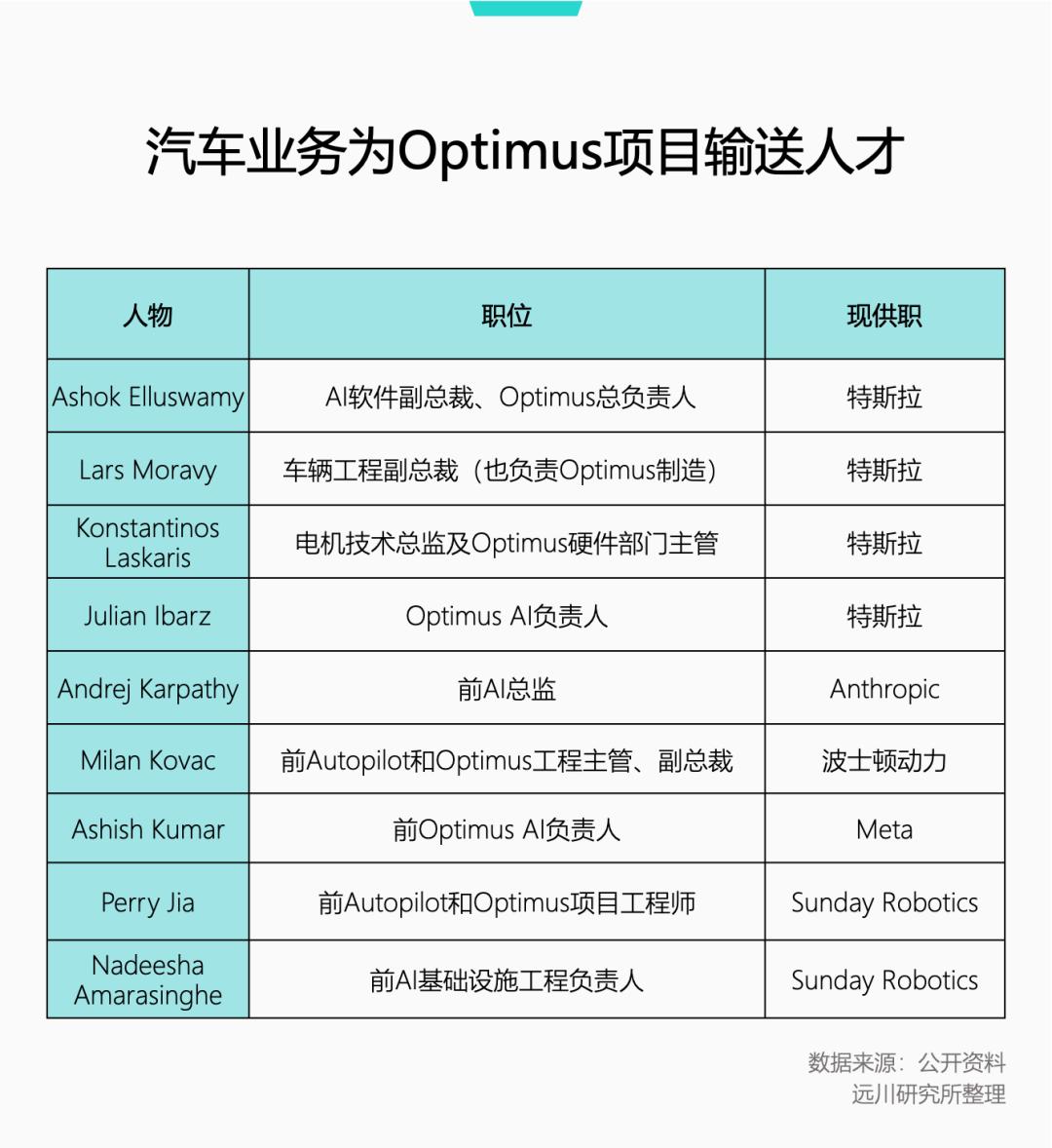
Although the slogan "people from the automotive industry know robots best" is shouted loudly, the real development is a little different.
Whether it is XPeng, which has released the humanoid robot IRON, or Tesla, which is gearing up to show off its third-generation ace product, what they focus on demonstrating is hardware and mobility.
The advantages of car companies are probably not algorithms.
Hardware Advantages
Compared with the far-from-stunning effect of brain algorithm transplantation, the advantages of car companies probably come more from hardware, specifically in two major aspects.
The first is supply chain management capability. Although the parts of cars and humanoid robots are not highly universal, their technical principles are mostly similar, and the supply chain has a high degree of overlap.
In addition to old demands such as sensors and batteries, taking joints (which account for the highest proportion of the total machine cost) as an example, motors, reducers and lead screws are the three core components, and a large number of automotive suppliers are involved in this field:
Hengshuai makes motors, Zhongding makes reducers, Shuanglin makes lead screws, SanHua Intelligent Control makes modules, and Schaeffler is involved in all of the above. GreenHarmony, the only domestic harmonic reducer company in Optimus' supply chain, has also accidentally entered the automotive supply chain.
At the same time, coordinating thousands of suppliers and carrying out refined management of production and inventory are also the strengths of car companies.
This means that car companies can systematically migrate their supply chain management experience to the robotics business. The huge automotive orders not only allow car companies to get extremely low procurement prices, but also participate in product R&D in depth to ensure cost advantages.
The second is manufacturing capability. Automobiles are among the most complex industrial products in human history. Organizing large-scale standardized production while dealing with such complexity is a capability in itself.
The same goes for robots: it is easy to build a prototype, but whether it can be mass produced and what the yield rate is determines whether the cost of robots can be reduced to a reasonable range.
Compared with start-ups that adopt the workshop-style manual model, car companies have highly automated production lines, mature four major manufacturing processes, and strict quality control systems. Even if the production lines cannot be directly reused, their production experience can be fully migrated.
However, in terms of software algorithms, it is difficult for car companies to open up a clear gap with native robotics companies.
Algorithm Differences
For humanoid robots to achieve "general-purpose" capabilities, hardware is the threshold, and the core lies in algorithms.
General-purpose corresponds to special-purpose: traditional robots are designed for specific tasks, because their algorithms are highly dependent on function models. If the shape of the cup changes, or the table is 5 cm higher, the system will crash. In the past two years, with the rapid development of VLA, world models and reinforcement learning, robots have gained the confidence to move towards general-purpose capabilities.
Coincidentally, the mainstream architecture of intelligent driving algorithms is also VLA (Vision-Language-Action large model) and world model, but robots cannot simply copy and apply them.
The physical world faced by cars and robots is completely different, and their algorithm objectives are also essentially different.
No matter how complex the autonomous driving algorithm is, it serves the goal of "moving from point A to point B". Sensors identify traffic lights and obstacles to make decisions on acceleration or braking. The challenges are no more than how to deal with sudden pedestrians cutting in, other vehicles forcing lane changes, and whether the strategy is comfortable enough to avoid sudden jolts.
Humanoid robots are different: when they recognize a water cup on the table, the goal is to pick it up; when they see a messy room, what they need to do is organize the clothes and clean the space. From the perspective of longer-term scenario generality, the challenge of humanoid robots lies more in being able to handle all kinds of tasks in both domestic and public scenarios.
Understanding the physical world means half success for autonomous driving, but it is only a small first step for robots.
For intelligent driving algorithms, it only needs to master good driving skills and avoid active collisions with other vehicles and pedestrians; while the value of humanoid robots is precisely reflected in the contact links, and they can operate all kinds of objects only by understanding physical common sense.
Assume a scenario: to pick up an egg on the table, the humanoid robot must first identify the egg, confirm its position, and control the force of its hand during the grasping process to prevent the egg from slipping and falling to the ground or being crushed by excessive force.
In this scenario, the "brain" first judges the property that the egg is smooth and fragile, and issues a grasping command, then the "cerebellum" adjusts the grip force in real time according to the tactile feedback. This process involves both multi-body dynamics and tribology, which are usually not the priority considerations for intelligent driving algorithms.
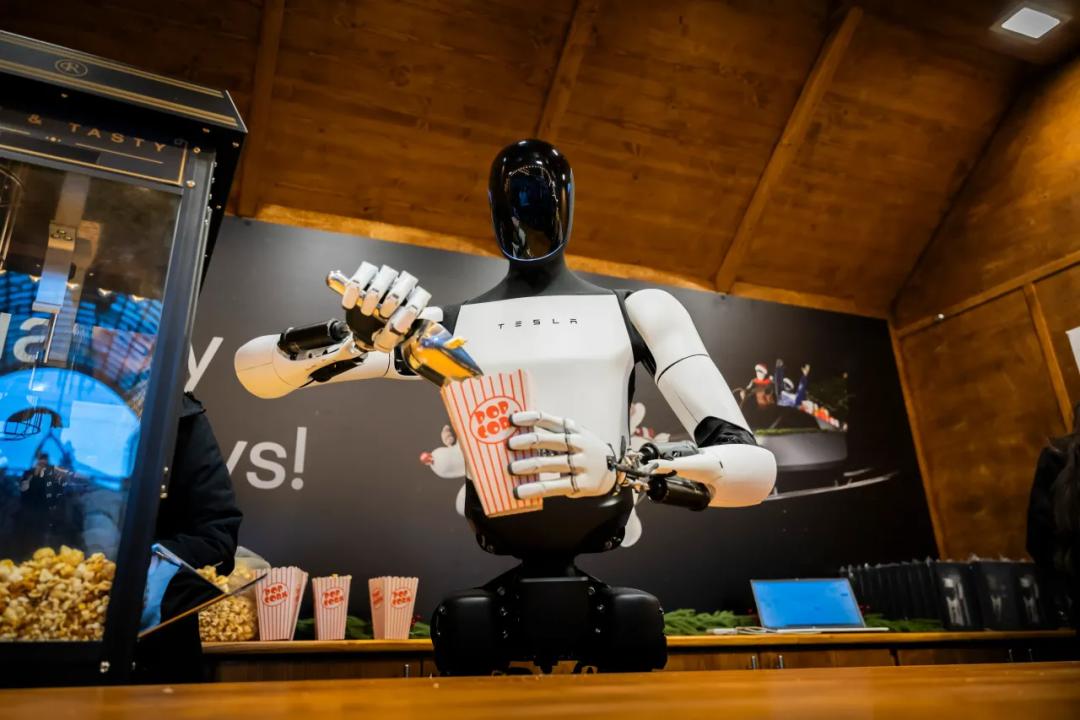
Tesla's Optimus has worked as a bartender, made popcorn, and tried to grasp eggs
Specifically, the acceleration and braking commands output by the intelligent driving algorithm cannot be converted into the skills required by robots at all.
No matter how good the intelligent driving algorithm is, it is at best a special-purpose robot system; if a humanoid robot can only "move from point A to point B", it is nothing more than an intelligent driving system with excellent driving skills. The real generality lies in the word "versatility", that is, what it can do and how well it can do it.
On this point alone, data is the biggest obstacle faced by car companies.
Data Challenge
Humanoid robots need a large amount of data to train their algorithms, which is essentially to break the Moravec's paradox: the things that are easy for humans to do are difficult for AI, such as grasping an egg or squeezing tofu with bare hands without breaking them.
A three-year-old child can grasp an egg without breaking it not because he has learned mechanics, nor does he understand friction, but the instinct from biological evolution tells him how much force to use.
If pre-programming and remote control are not considered, understanding the physical rules of daily common sense and learning human instincts through acquired training is too difficult a task for robots.
Therefore, compared with single-type driving data, the data required by humanoid robots needs to cover all aspects of life and be continuously supplied. The brain can learn how to cook by watching videos, but how much force to use to hold the spatula and how fast to flip the food ultimately requires more practice.
The problem is that intelligent driving data can be obtained passively by waiting for the mass-produced vehicle fleet to upload data back to the office, while it is obviously much more difficult for humanoid robots to acquire data.
In the past, data collection mainly relied on real-machine teleoperation: operators wore VR headsets and force feedback gloves to synchronize the robot's perspective, and taught it 1-on-1 through demonstration. The advantage is that the operation data is accurate, but the problem is that it cannot work without operators, and the data is easy to fail when applied to different machines, leading to very high costs.
In the past two years, the concept of data is king has been widely recognized, and highly efficient non-robotic data has become popular, with more and more portable collection tools, mainly UMI and EGO. One uses a specially designed handheld gripper to record hand movements, and the other uses wearable devices to record first-person perspective operations, allowing people to complete data collection while working to double the efficiency [4][5].
In this way, non-robotic data can be used for pre-training of algorithm models, and real-machine data is only used for model fine-tuning, which improves the overall efficiency.
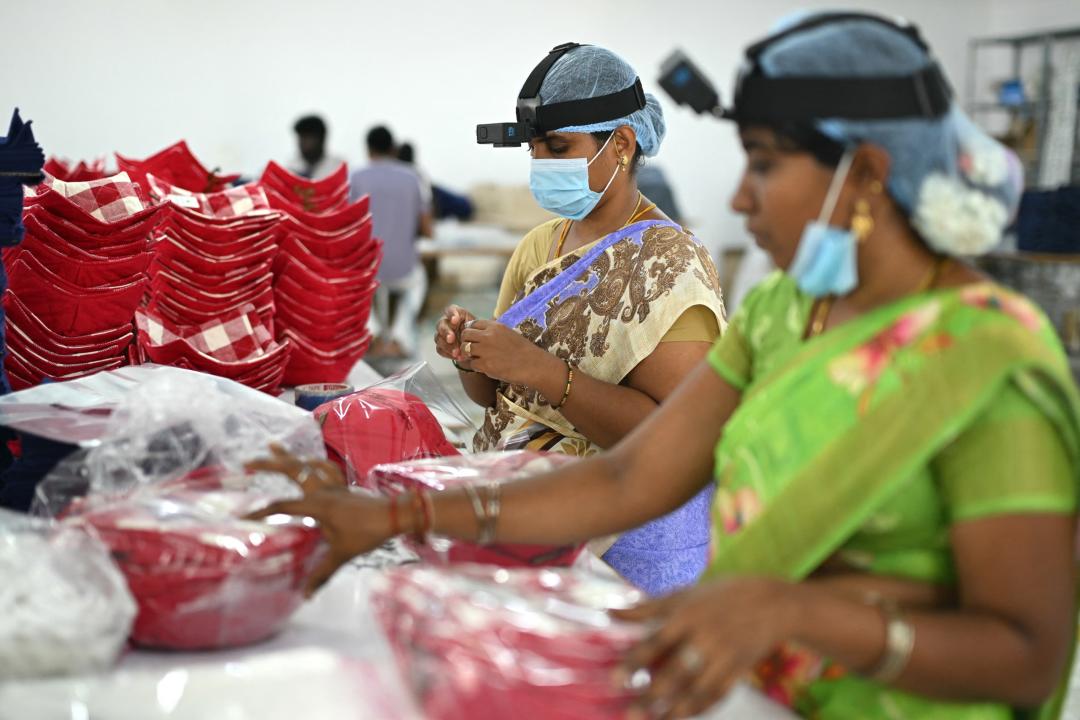
A common sight in Indian factories: workers worry about being monitored while collecting data with almost no extra pay
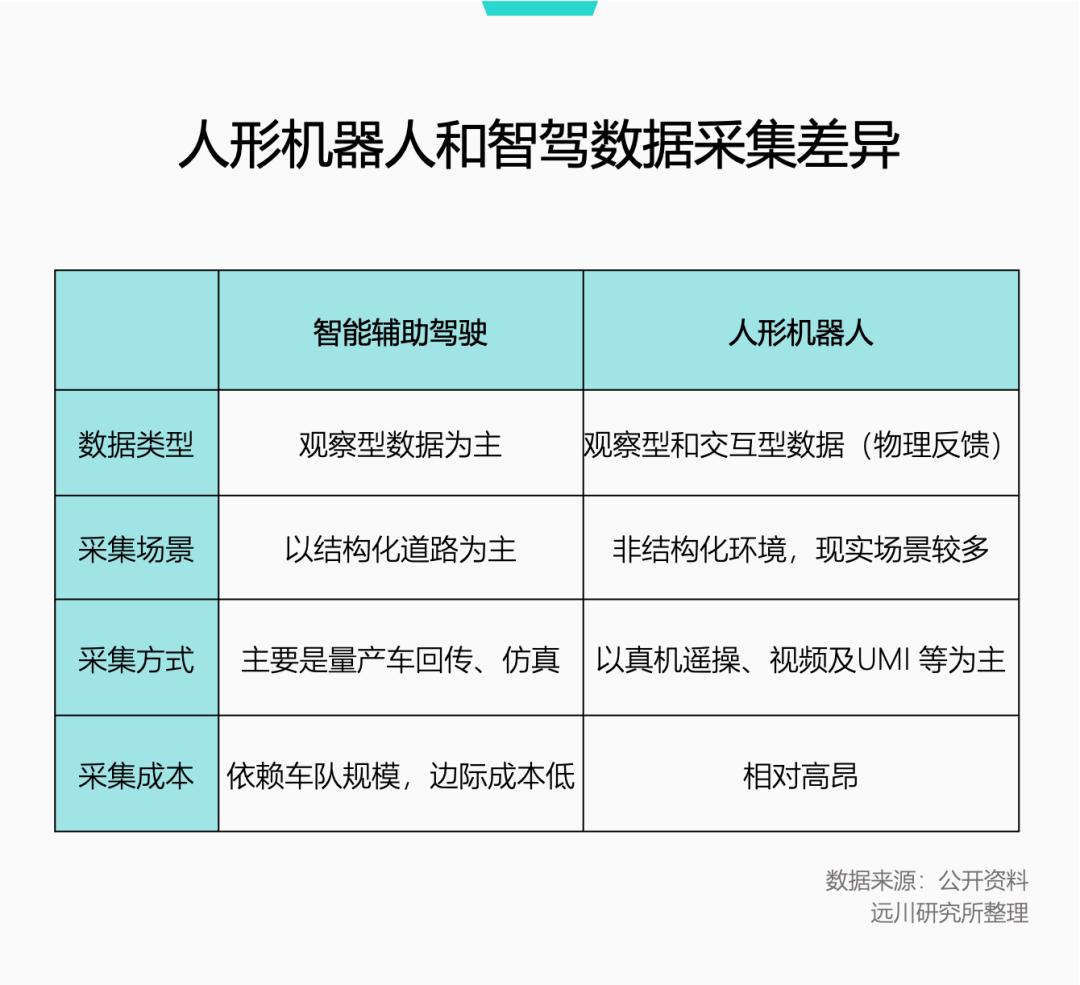
In the data link, car companies and native robotics companies face basically the same challenges, they can only take on the tough and tiring work, and there is no difference between domestic and foreign companies.
Back to car companies: their experience in car manufacturing may help them build robots, but whether the robots can perform well ultimately depends on data and algorithms. In this brand new competition of humanoid robots, probably no one has mastered the secret code to clear the level directly.
References
[1]Cathie Wood: Tesla Stock Forecast, Bitcoin Bull Case, AI Outlook,Morningstar
[2]Tesla's Q4 2025 and Q2 2026 Earnings Calls
[3]With Andrej Karpathy from OpenAI and Tesla,No Priors
[4]‘Who is going to pay us when we’re replaced by robots?’ The Indian factory workers told to film themselves for AI,The Guardian
[5]Indian workers wearing cameras on their heads teach robots to take their own jobs while working, Coollabs
This article is from WeChat Official Account "Yuanchuan Tech Review" (ID: kechuangych), written by Xu Shanshan, and authorized for release by 36Kr.