Jin Yongsheng from Jindu Biotech: Training the multi-omics large model GeneLLM that can "read" original raw transcriptomic signals from zero to one is just the starting point.
Understands AI, and also understands biology.
If the human body is compared to a complex "kingdom of life", molecules such as genes, RNA, and proteins are the staff members operating nonstop day and night in this kingdom. Their work contents and collaboration methods are all recorded in a special "language" — the omics data we often refer to.
This "language of life" determines the birth, aging, illness and death of human beings, and is hundreds of millions of times more complex than any human language. For hundreds of years, countless scientists have tried to decipher it directly, but progress has been slow.
Recently, the GeneLLM series of multi-omics large models independently developed by Jindu Biotech have been published successively in top international journals such as Nature Communications and Advanced Science. "Understanding the original sound of life" no longer seems to be a distant fantasy.
According to Jindu Biotech, GeneLLM performs pre-training based on raw data, can directly read raw RNA sequences, and does not rely on reference genomes and manual labels for "translation". This path is extremely "heavy", which requires processing massive amounts of unprocessed biological noise, and can be called the heaviest kilometer of scientific intelligence.
But for Jin Yongcheng, the founder, this is not enough.
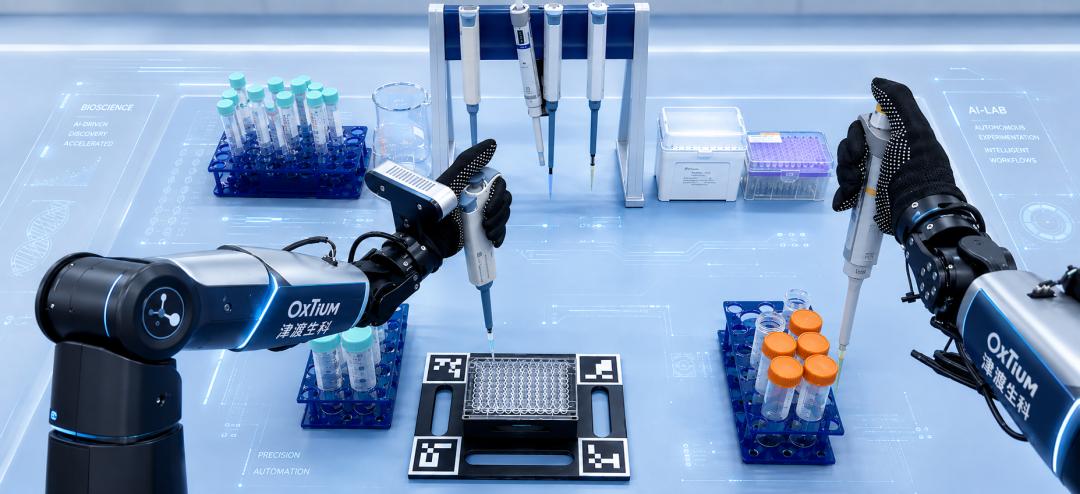
"The last kilometer of scientific intelligence is whether it can send a hypothesis into the physical world and then bring back the results." said Jin Yongcheng. Jindu Biotech, founded by him and three Oxford alumni, has not only completed this heaviest kilometer for GeneLLM, but also taken a further step — through the BioFord Agent platform, it equips AI with physical "hands" to open up the last kilometer between models and laboratories.
Up to now, Jindu Biotech, which has been established for less than four years, has accumulated nearly 1 million registered users overseas, and has completed 6 rounds of financing in the past 14 months, with investment from well-known institutions including HSG Seed Fund, Chuangdongfang Investment, and Getuijia Investment.
The following is the conversation between 36Kr Pro and Jin Yongcheng.
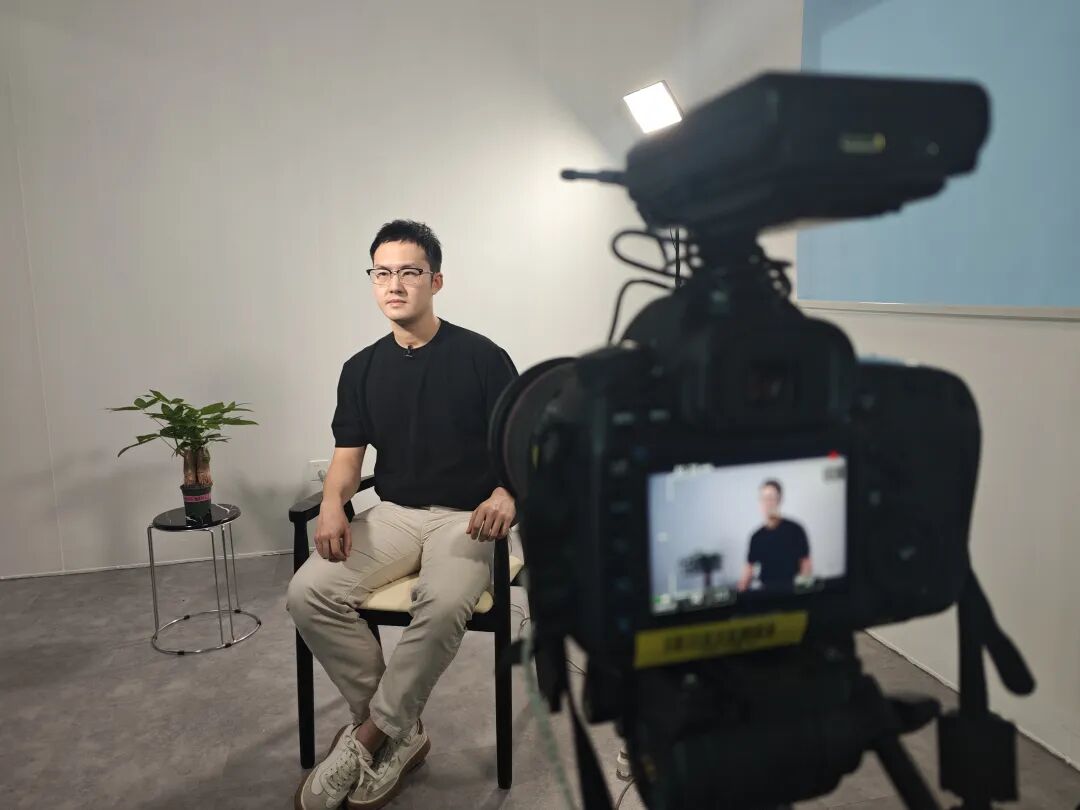
Jin Yongcheng (Photo provided by Jindu Biotech)
"Pre-train multi-omics large models based on raw data"
36Kr Pro: "GeneLLM large model is pre-trained based on raw data", how to understand the innovation of this method?
Jin Yongcheng: The traditional method is to first translate the sequencing data into known genes, label them manually, and then feed them to the model. Every additional processing step will lose a part of the original signal, and the AI will be trapped in the boundary of human cognition, and the output results will also carry human subjective biases.
However, GeneLLM does not take this shortcut. It bypasses the step of human labeling and directly processes the original RNA sequence itself, which is equivalent to letting AI read the "original sound" instead of the "translated version".
36Kr Pro: In which research directions can GeneLLM be applied?
Jin Yongcheng: Essentially, it is a general foundation platform in the biological field that can support various tasks. In the long run, it can be applied to scenarios such as disease diagnosis and treatment, new drug R&D, synthetic biology, industrial biological manufacturing, agriculture and breeding.
For example, whether you want to explore the relationship between a certain gene mutation and a disease, or design a new functional enzyme, it can provide underlying understanding capabilities. What applications run on it depends on what problems we and our partners want to solve.
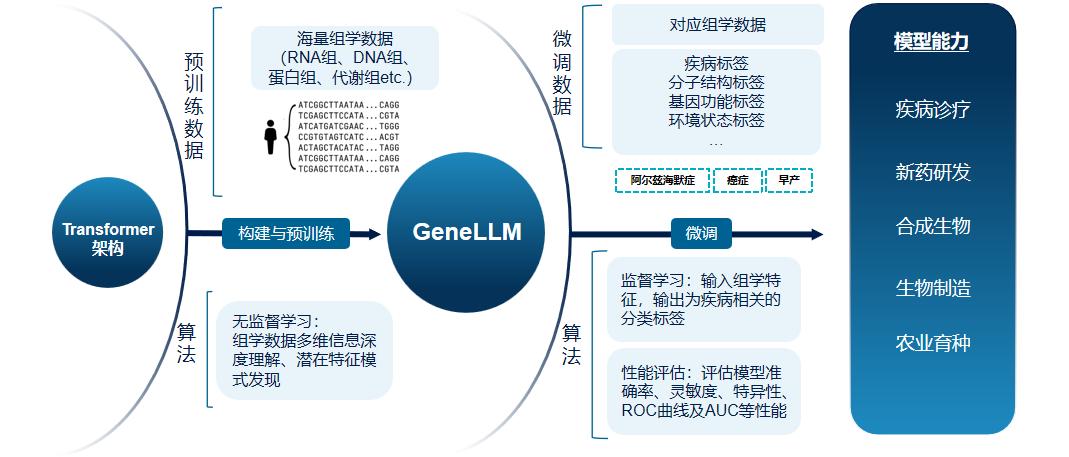
Image source: Jindu Biotech
We have initially achieved some results. For example, in the early detection of multiple cancer types (such as colorectal cancer, gastric cancer, liver cancer, lung cancer), the highest accuracy (AUC) can reach 0.9962; in preterm birth risk prediction, the AUC can reach 0.85, and the accuracy is 1.4 times the industry average. More importantly, the sequencing cost required to complete these judgments may only be one-sixth of that of traditional methods. Some scientific research achievements have also been recognized by international authoritative journals such as Nature Communications, Advanced Science and npj Digital Medicine.
36Kr Pro: Will GeneLLM directly processing raw sequences lead to higher computing costs?
Jin Yongcheng: Indeed, the amount of computation required to directly process raw sequences is larger. Our approach is to use self-supervised learning for pre-training, so that the model can discover patterns in the sequences by itself, instead of telling it "this is gene A, that is gene B". The upfront investment is indeed considerable, but in return, the model can see things that have not yet been defined by humans.
As for the cost, we have optimized the model architecture. It is not a large model with hundreds of billions of parameters, and the cost is relatively controllable.
Not an adapter for the laboratory, but "Windows"
36Kr Pro: When many people hear "AI for Science", their first reaction is that AlphaFold and ChatGPT help scientists search for literature. How would you explain what Jindu Biotech is doing to someone who knows nothing about this field?
Jin Yongcheng: For example, you find a super chef who designs a recipe for you with extremely detailed descriptions, including ingredients, heat control, and steps. But the problem is that there is no stove in the kitchen and no one to operate, so this dish can never be made.
Most of the current AI scientific tools are doing the work of "designing recipes", helping you read literature, raise hypotheses, and write plans. This work is valuable, but its value stops there. Of course we also design recipes, but we take one more step: to light the stove and make the dish actually cooked, and to record the whole cooking process completely, so that it can be done better next time.
36Kr Pro: You have developed an AI platform called BioFord, what is it?
Jin Yongcheng: GeneLLM is like the "brain", enabling AI to have a better ability to understand biology, such as understanding scientific problems, putting forward hypotheses, and making predictions. In the traditional process, the next step for scientists is to start designing experimental schemes and conducting experiments manually. But here is a key question: do humans still have to do the experiments?
As long as there is still manual human participation in the scientific research process, the speed will inevitably be relatively slow.
Therefore, we further integrate models, multi-agent systems and Harness related technologies to develop the BioFord physical-level AI biological intelligent research platform.
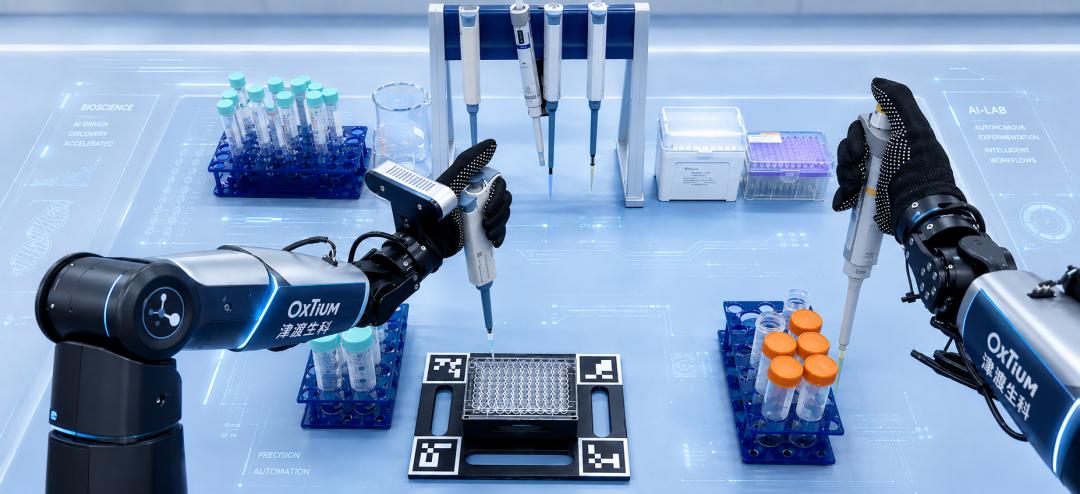
Image source: Jindu Biotech
It does not simply make robotic arms imitate human hands to perform experiments, but transforms the laboratory into a compilable, schedulable, observable and traceable digital system, so as to connect the scientist cognitive layer upward and the laboratory physical layer downward.
Specifically, BioFord consists of 5 agents. At the cognitive level, 4 agents including the literature retrieval agent, experimental design agent, scientific agent and data analysis agent form a collaborative network to simulate the thinking division of labor of top scientific research teams, integrate fragmented workflows into automated pipelines, which can read literature, design experimental schemes, call various models with one click, and analyze data and generate charts and conclusions after experiments, greatly improving scientific research efficiency.
At the physical level of the laboratory, the experiment scheduling agent will schedule heterogeneous devices in the laboratory according to the experimental scheme and work order, conduct experiments nonstop 7×24 hours, cooperate with the existing equipment in the laboratory through robotic arms, dexterous hands, mobile trolleys to complete the whole experimental operation, and record and give feedback in real time during the process, realizing full life cycle tracking and parameter adjustment.
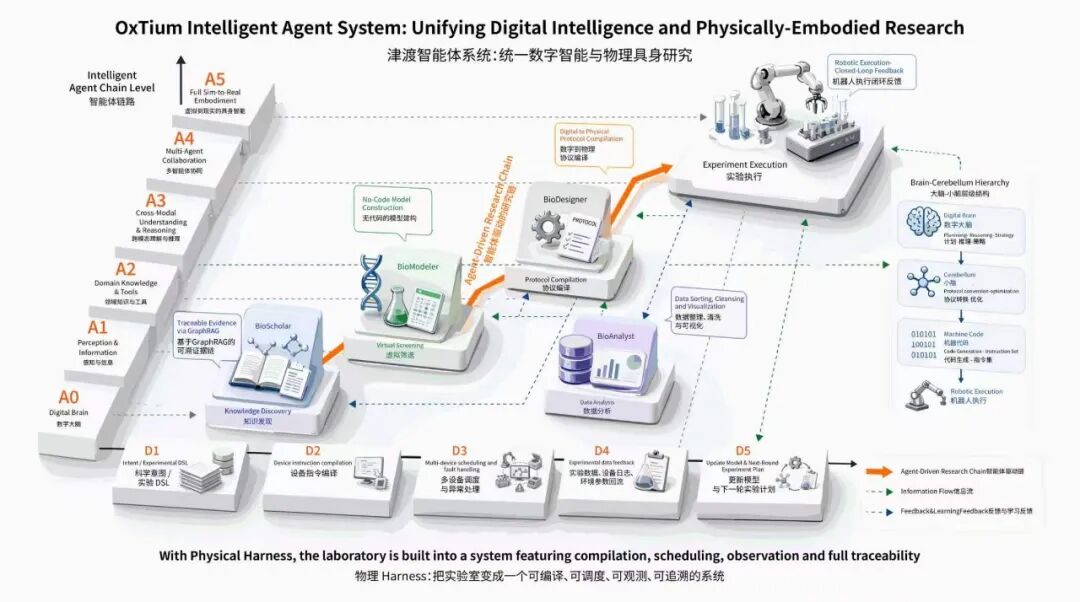
Image source: Jindu Biotech
36Kr Pro: What is the biggest difficulty in this process?
Jin Yongcheng: There are Thermo Fisher centrifuges, Opentrons pipetting robots, and domestic fermenters in the laboratory, all using different private codes, and these heterogeneous devices cannot cooperate with each other. The general device abstraction layer we focus on developing is like the "USB driver" of a computer, which unifies and standardizes the interfaces. The robotic arm can grab the test tube from the pipetting station of brand A, seamlessly pass it to the centrifuge of brand B, and then put it into the detector of brand C, realizing the unification of all devices in the whole process.
All process data, such as device status, operation records, environmental parameters, etc., are fully collected and become the input for the next experiment.
This operating system needs to solve the problem of "connecting" devices, and also solve the problems of performing tasks, collecting data and making real-time adjustments after connection. It is not just an adapter, but more like the Windows system in the laboratory. At present, BioFord can already cover many hardware devices such as high-throughput sequencing equipment, liquid handling workstations, biochemical analysis instruments (PCR/microplate readers), and mass spectrometry analysis instruments (LC-MS/TOF), which basically meet the needs of life science laboratories.
36Kr Pro: Does this operating system need to be human-like?
Jin Yongcheng: Humans have many advantages, such as on-site judgment, intuition, and creativity, which AI cannot achieve at present; but humans also have limitations: they get tired, miss details, and cannot monitor ten devices at the same time.
Therefore, instead of creating a humanoid robot to imitate humans, it is better to create an AI that can complement humans, and maximize the parts of work that humans are not good at (such as stability, precision, and full-process recording).
At present, BioFord related technologies have been implemented in well-known universities, hospitals, and scientific research institutes. From the results, the manual operation time in some laboratories has been directly reduced by 40%, operating costs have been reduced by 30%, and experimental throughput has been expanded by 5 times. The work that a doctoral student used to finish in one year may only take a few weeks with the assistance of BioFord.
36Kr Pro: What is the hardest thing to digitize in the laboratory?
Jin Yongcheng: The hardest part is on-site judgment and exception handling. Various accidents often occur in the laboratory: the color of the sample is wrong, the device reading jumps suddenly, a certain step takes longer than expected. Experienced researchers will intuitively judge whether intervention is needed, but this kind of judgment is difficult to be standardized.
Our idea is not to try to completely replace this kind of judgment, but to record all abnormal signals completely, so that the system can identify "what is different this time from the last time", and then combine with the model to assist judgment. The more data accumulated, the stronger the judgment ability of the system will be.
36Kr Pro: What do you think of the existing "AI + Automation" solutions on the market?
Jin Yongcheng: At present, many solutions positioned as "AI + Automation" belong to semi-closed ecosystems. Their self-developed agents and hardware devices only serve their own industrial systems and R&D pipelines, and are adapted to limited R&D paths. In this case, data can only be collected in fixed experimental processes, and diverse data cannot be obtained in open scientific research scenarios. AI will fall into a closed iteration loop, and the R&D cost is relatively high at the same time.
The idea of Jindu Biotech is to take the route of full-link openness and lightweight deployment. The entire AI system can be scaled up and deployed in laboratories of various enterprises and scientific research institutions, greatly reducing the cost of intelligent upgrading and accelerating iteration at the same time.
36Kr Pro: Many large manufacturers are now getting involved in AI for Science, what are your advantages?
Jin Yongcheng: Simply put, general model companies may be competing for computing scale, but Jindu is competing for the interface that generates new knowledge in the real world. What we focus on solving is how the model can enter the experimental site and obtain real feedback. The industry barrier of AI for Science may only start to form now.
In the laboratory, failure may be more valuable than success
36Kr Pro: You have a judgment that I find very counterintuitive — you said that the most wasted thing in scientific research is not failure itself, but the failure that has not been preserved. Can you elaborate on that?
Jin Yongcheng: Yes, I think this is the biggest waste in the entire scientific research system. 90% of the hypotheses generated by global scientific research teams every day will be eliminated in the verification step. These failed experiments consume huge amounts of manpower and material resources, but what do they leave behind? Usually nothing. The researcher wrote a few lines in a notebook, or wrote nothing, and then went on to the next experiment.
In fact, there is a lot of valuable information in these failures: why this path does not work, under what conditions it will fail, where is the boundary of failure? If this information is completely preserved, its value for the next experiment may far exceed those successful results. The paper system is good at preserving conclusions, but scientific research AI needs to preserve the full context of the whole process.
36Kr Pro: If a failed experiment is completely recorded, where is its value reflected specifically?
Jin Yongcheng: Take drug R&D as an example. A compound fails in a cell experiment, and the researcher writes down "invalid" and gives up. But if we completely record the experimental conditions at that time, such as the batch of the cell line, the composition of the medium, temperature, processing time, and the specific status of the equipment... we may find that this compound actually has an interesting side reaction under a specific combination of conditions. It was ignored as noise at that time, but it may be a clue for another direction. Without complete records, this information disappears forever. With complete records, another researcher may discover it three years later and make it a new breakthrough.