lululemon's rival ALO has arrived, just a little late.
On August 12, ALO, the high-end U.S. active lifestyle brand, officially entered the Chinese market. On Tmall, its transaction volume exceeded 10 million yuan in just 1 minute, breaking the transaction record for new brand openings in the Tmall sports and outdoors industry.
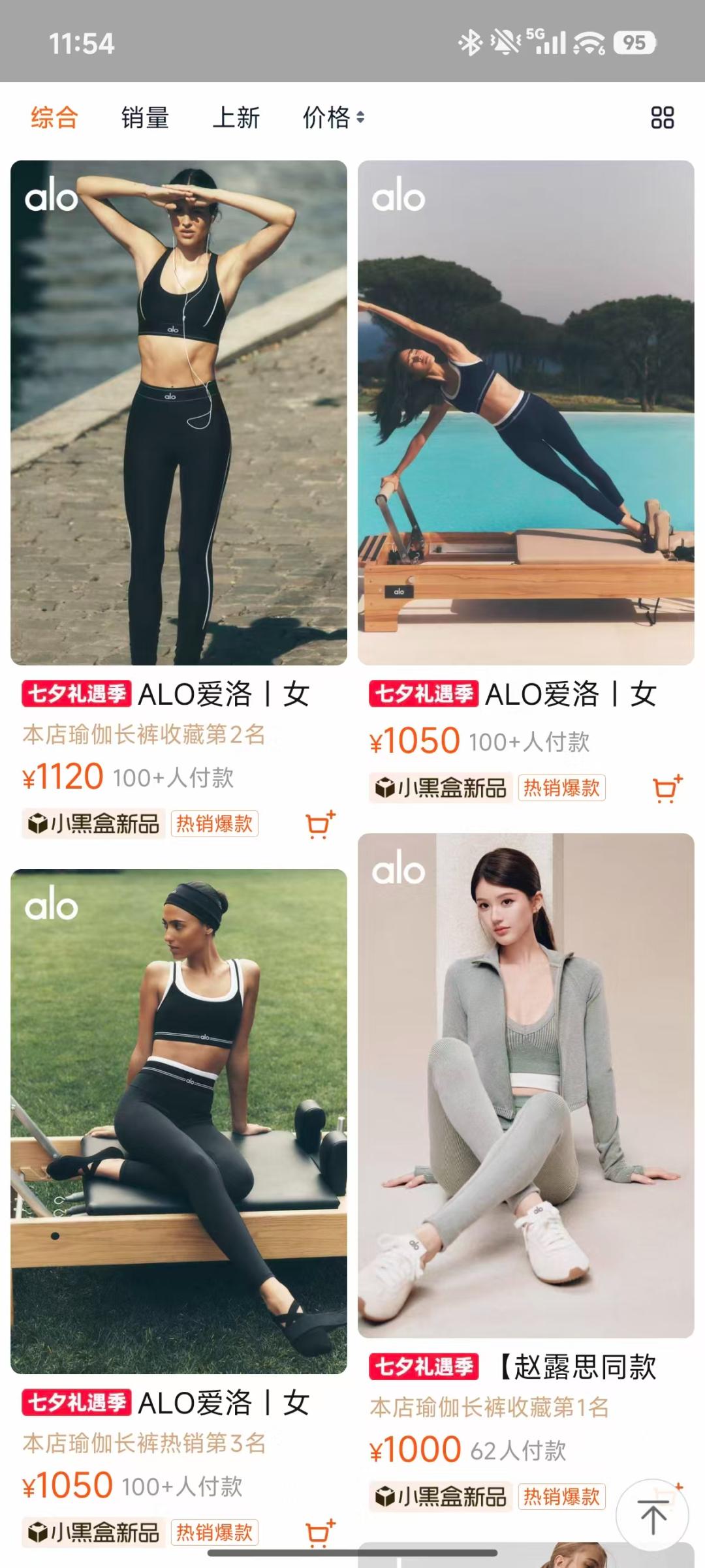
In fact, as early as more than two years ago, a number of Alo stores had appeared on Tmall, JD, and Douyin. A pair of yoga pants priced at nearly 1,000 yuan on the official website only sells for 300 to 400 yuan in these stores, and cheap ones are even priced at only dozens of yuan. On Xiaohongshu, some people post overseas purchasing guides, some share tips to distinguish genuine products from fakes, and others directly look for daigou in the comment sections.
The official Alo had not yet arrived in China, but its celebrity-endorsed styles, logos, consumers and counterfeits had already come first.
This is exactly the most interesting part of Alo's entry into China: celebrity street snaps and social media first create desire, cross-border e-commerce and daigou are responsible for closing transactions, counterfeit stores continue to amplify brand awareness, and the official company and offline stores come last.
It has saved a huge amount of market education costs, but also taken over a piece of brand equity that has been consumed in advance.
The current question is: what else can a brand that has been popular on social platforms for many years sell after officially entering the Chinese market?
01 Alo arrived very late, but the market has long been pre-heated
Alo's popularity in China is largely a spontaneous folk phenomenon.
The first driving force comes from street snaps of European and American celebrities.
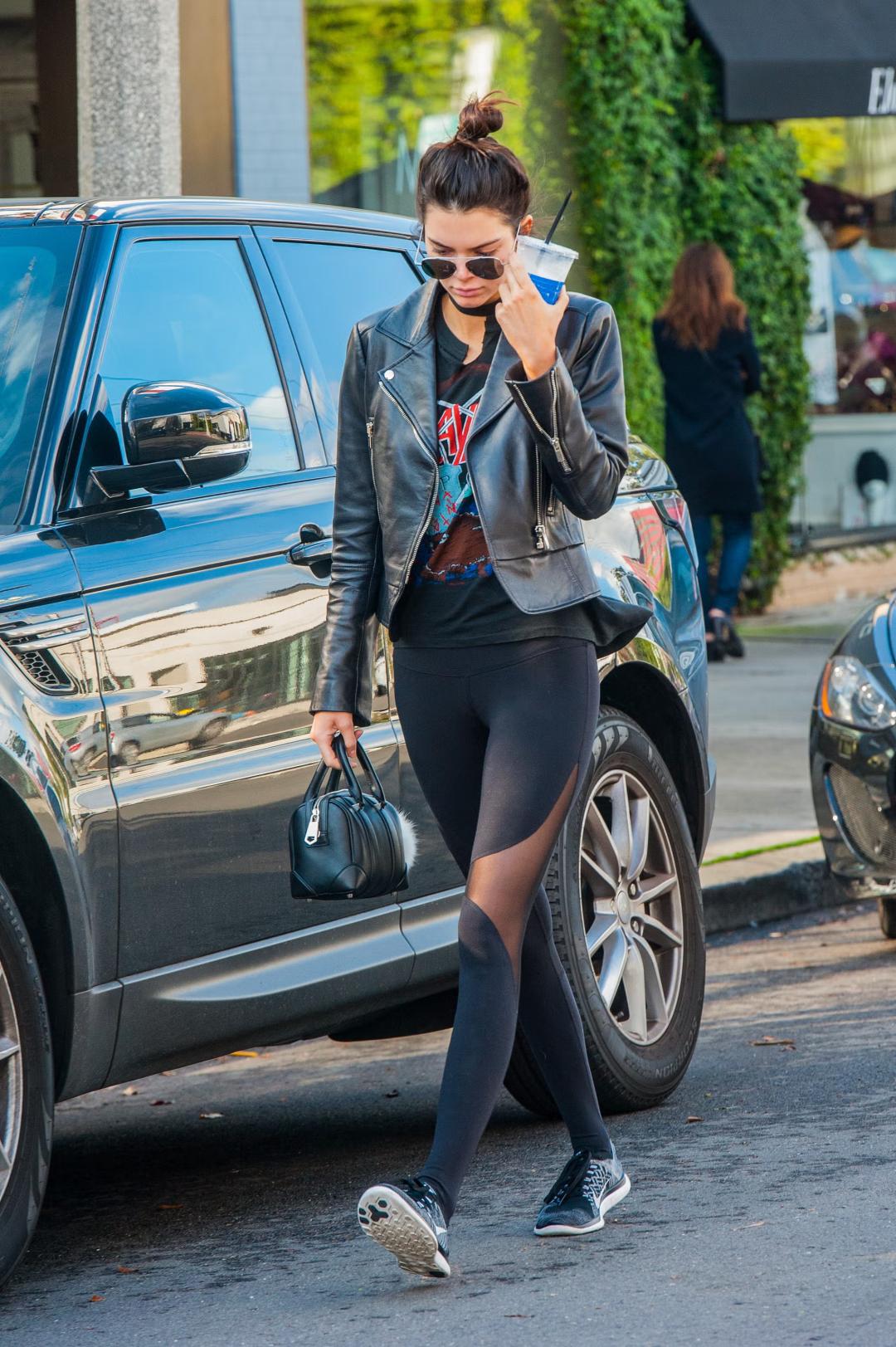
Celebrities including Kendall Jenner, Hailey Bieber, Bella Hadid are frequently spotted wearing Alo on the streets of Los Angeles. They usually do not stay in the gym, and rarely perform standard yoga poses. More common scenes show them wearing sunglasses, holding coffee or fruit and vegetable juice, and wearing a full set of Alo outfits to go shopping, walk dogs, or do Pilates.
The real message conveyed by these photos goes far beyond a pair of yoga pants: they tie Alo to sunshine, good body shape, self-discipline, relaxation and the Los Angeles lifestyle.
Behind it is a very specific Los Angeles lifestyle: going to Pilates in the morning, holding a cup of coffee, wearing a set of coordinated sportswear, with a toned body, a calm life, and plenty of free time at disposal.
The second driving force comes from K-pop.
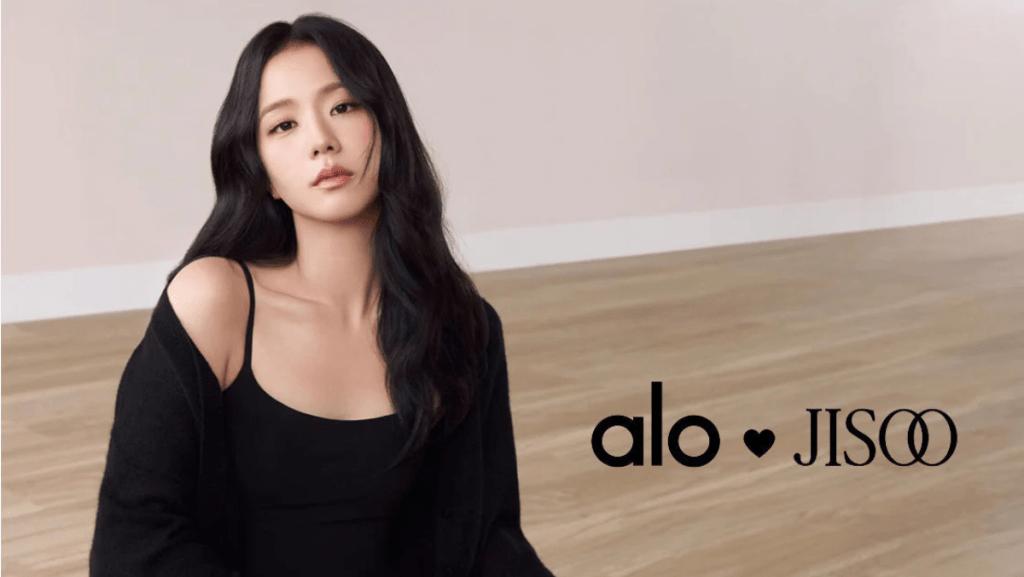
In 2024, Jisoo, a member of BLACKPINK, became the spokesperson of Alo, and then Jin, a member of BTS, also became the global brand ambassador. After Asian stars joined Alo's global communication system, this Los Angeles-themed narrative has added an extra layer of Asian faces.
European and American street snaps create a sense of distance, while Asian stars narrow that distance, making Alo easier to be included in the outfit lists of young Chinese consumers.
The third driving force comes from gray market channels.
In 2024, a large number of counterfeit Alo stores have appeared on multiple e-commerce platforms. At that time, the brand had no official sales channels in China, but Chinese consumers could already buy products with the Alo logo at three price ranges: dozens of yuan, hundreds of yuan, and thousands of yuan.
Counterfeits siphoned off the revenue that should have gone to genuine products, but also helped expand the brand's popularity for the official side.
Therefore, Alo's entry into China represents a new globalization path for new brands: algorithmic dissemination comes first, celebrity seeding comes first, consumer purchases come first, gray market distribution comes first, and the brand finally takes over the business.
This is of course an advantage, but troubles also exist at the same time. Consumers have formed complex impressions of the brand from daigou, counterfeits and social content: some think it is more fashionable than lululemon, some think it is only suitable for taking photos, and some have already made judgments on its quality after buying the so-called same celebrity styles.
The first thing Alo needs to do after entering China has shifted from building brand awareness to taking back the right to interpret its own brand.
02 Alo turns healthy lifestyle into a visible identity
Many people are used to calling Alo a challenger to lululemon, but if you regard Alo as a copy of lululemon, you will completely misread its business ambition.
In the early stage, lululemon built trust by relying on fabrics, tailoring, yoga instructors and local communities. Consumers first believed that its products are suitable for sports, and then wore them to offices, airports and cafes.
Alo's development path is more similar to that of a fashion brand. Celebrity street snaps, popular colors, matching full sets of outfits and social content first create desire, and yoga, Pilates and health concepts then provide lifestyle support for this desire.
This difference is also reflected in the product boundaries.
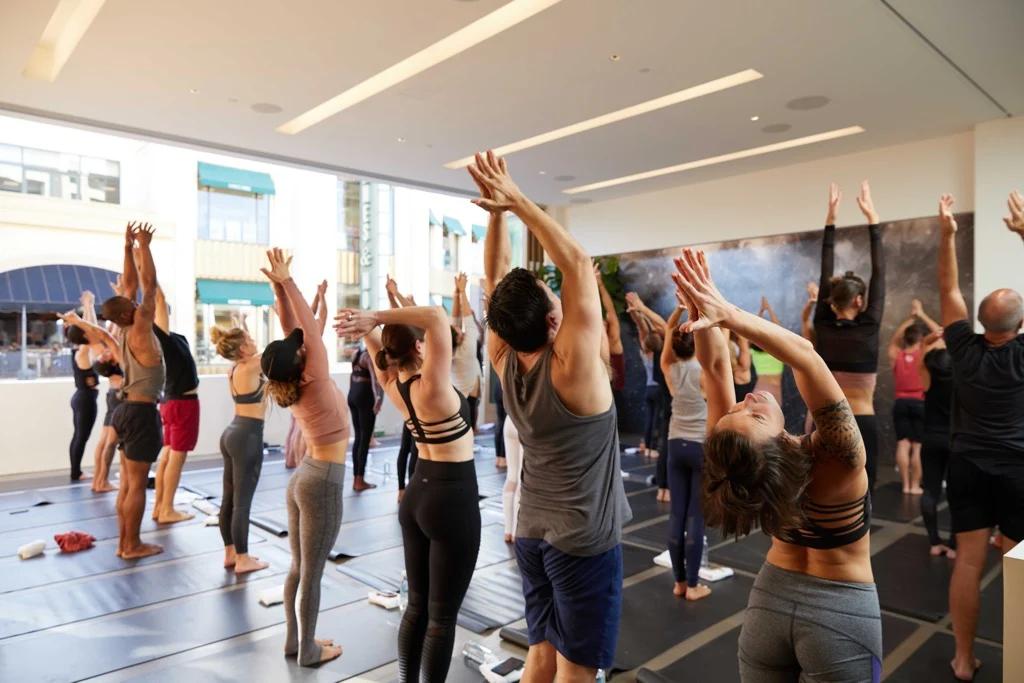
Alo has long moved beyond yoga pants, and it has started to sell shoes, beauty products, health supplements, cashmere products, leather goods and high-end ready-to-wear. Its leather travel bag launched in 2025 is priced at 3,600 U.S. dollars. Some of its offline stores are called Sanctuary, which not only sell clothing, but also offer yoga courses, coffee and wellness activities.
Clothing is only an entry point. What the brand wants to operate is a whole set of consumption centered on the body, mood and living status.
Its personnel layout further fully exposes this "ambition".
In 2026, Alo hired Benedetta Petruzzo, former CEO of Miu Miu and former Dior executive, to be in charge of its international business. Jimmy Zhu, President of Alo China and North Asia Region, was previously in charge of Givenchy's Greater China business, and its head of human resources also comes from the LVMH group.
Alo is almost running its global expansion with talents from the luxury industry.
According to Forbes' estimate in 2025, the revenue of Alo's parent company has approached 2 billion U.S. dollars, about ten times that of 2020. This shows that the combination of celebrities, fashion and healthy lifestyle has already formed a considerable business of large scale.
Alo's truly valuable product is a set of wearable healthy identity.
A full set of Alo outfits provides several easily recognizable labels at the same time. The wearer cares about their body, has time to manage themselves, understands current fashion trends, and has the ability to pay a premium for this lifestyle. Yoga wear is perfectly suitable for carrying these signals, because it fits the body, is easy to match into full sets, has a striking logo, and can be naturally worn in sports, commuting, travel and social scenarios.
This also explains why Alo dares to sell sportswear at a price close to that of light luxury products. Part of the cost consumers pay comes from the fabric and tailoring, and the other part comes from the efficiency of this identity being seen by others.
Unfortunately, Alo arrived a little too late
If Alo had entered China five years earlier, it would have faced a rapidly expanding high-end sports market. At that time, yoga pants had just entered daily life from gyms, consumers were in need of new lifestyle symbols, and lululemon had just started to prove in more cities that a business of selling a pair of sportswear for nearly 1,000 yuan was feasible.
But the current market environment has changed.
First of all, high-end consumption is cooling down.
The Bain & Company report on China's personal luxury goods market shows that China's mainland personal luxury goods market dropped by 17% to 19% in 2024, and continued to drop by 3% to 5% in 2025. Today's consumers pay more attention to whether the product is practical, durable, and whether the price is reasonable.
Alo's core target group is urban middle-class and young consumers who will hesitate when buying a pair of 1,000-yuan yoga pants. When people start to calculate the frequency of use, fabric durability and matching possibilities, celebrity-endorsed styles alone can hardly support long-term premium.
In the past, an expensive pair of yoga pants could directly prove consumption power and lifestyle, but now, products at the same price need to answer more questions.
Secondly, the yoga wear sector has passed the stage of easiest growth.
The 2025 Tmall Fitness Industry Trend White Paper shows that the sales scale of fitness apparel in 2024 increased by nearly 20% year on year, but the same report also shows that the number of brands in the Tmall fitness industry has reached 5,000, and the number of settled brands increased by 25% in 2024.
Demand is still growing, but supply is growing faster. Yoga pants have changed from a novel category to a basic product in the sports wardrobe. To achieve growth, brands can only compete for more market share, increase repurchase rates, or bring products into new lifestyle scenarios.
Sports trends are also diverting consumers' attention.
The 2025 National Fitness Survey released by the General Administration of Sport of China shows that brisk walking, running, cycling, badminton and basketball are the most participated sports items, and the proportion of service-oriented sports consumption has risen to 48.5%. Another outdoor sports industry report shows that activities including hiking, rock climbing, skiing and trail running are growing rapidly, and the sales of trail running shoes increased by 100%.
Consumers' sports time and budget are flowing to more items.
A few years ago, yoga was highly tied to delicacy, self-discipline and urban women's life. Now, running, cycling, tennis, hiking, skiing, rock climbing and HYROX are all generating their own apparel systems, social circles and identity symbols.
Yoga is still important, but it can no longer exclusively occupy the central position of the sports lifestyle.
Finally, Alo is entering a competition that has been fully intensified.
lululemon has established its advantages in products, offline stores, communities and localized tailoring. In the first quarter of 2026, its revenue in China's mainland reached 478.4 million U.S. dollars, a year-on-year increase of 30%, accounting for 19% of the group's total revenue. The Chinese market is still one of its strongest sources of growth.
Vuori is also behind it, which has laid out multiple offline stores in Beijing, Shanghai and Hangzhou, targeting similar consumer groups with fabric tactility and all-day wear scenarios. MAIA ACTIVE, a brand under Anta, has a better understanding of Asian women's body shapes and Chinese channels. It had 52 stores by the end of 2025, and plans to expand to 60 to 70 stores by the end of 2026.
In addition, domestic sports brands, emerging fitness wear brands, unbranded white-label products on e-commerce platforms and a large number of counterfeits can all provide similar tight tailoring, coordinated color sets and striking logos.
Alo's popular yoga pants are priced at about 134 U.S. dollars, which is definitely over 1,000 yuan in China. At this price range, Alo needs to give consumers a sufficiently specific reason to buy.
04 Alo's real rival is the "disenchanted" Chinese consumers
Alo is good at creating desire, but it does not necessarily make people believe that this desire is worth satisfying. Celebrity street snaps, K-pop endorsements, and social media seeding have given Alo reputation and a large number of counterfeits before its official entry into China, but they also make its brand image suspended between internet-famous trends and luxury.
Consumers know it is expensive, fashionable, and worn by many celebrities, but they are not quite sure what its real advantages are.
In the past few years of consumption boom, Chinese consumers have witnessed the rise and fall of too many lifestyle brands. People are increasingly aware that wearing expensive yoga pants cannot really bring the sense of relaxation under the sunshine of Los Angeles, and buying a 3,600-U.S.-dollar sports handbag cannot solve the anxiety in real life.
Alo tries to sell sportswear with the logic of the luxury industry, which used to be a dream-making machine that worked perfectly in the period of economic growth.
But at the moment, when symbolic consumption begins to ebb, and people start to refuse to pay for the gaze of others, this business model that highly relies on social display will face the most stringent stress test.
Alo's real rival in China has never been lululemon, but the question in consumers' minds of whether it is worth the price.
This article is from the WeChat official account "Xunkong's Marketing Revelations", Author: Xunkong 2009, published with authorization from 36Kr.