The most exciting AI manifesto of this year comes from the most unpopular figure in the tech industry.
Mark Zuckerberg recently started using AI to help him with his sleep routines.
To be precise, it is a 24/7 on-call personal AI Agent: it tracks his sleep metrics, monitors his movements during workouts and gives targeted suggestions; when a new idea pops up in Zuckerberg's mind, it can also work with him to quickly build a prototype.
On weekends, this Agent has another role. Zuckerberg's 8-year-old daughter loves baking, so the AI will pre-design family-friendly recipes, place orders for ingredients, and when the father and daughter actually step into the kitchen, it will provide step-by-step guidance alongside them.

Image | Qualcomm
These seemingly trivial snippets of daily life were included by Zuckerberg in his long essay released on August 10, titled *The Future is for Everyone: The Path to a Positive AI Future*.
This essay did not announce any new models, nor did it introduce any new Benchmark. Zuckerberg devoted more space to discussing questions that do not yet have standard answers: How will AI reshape work? Who should superintelligence be accountable to? Who should hold sufficiently powerful capabilities, and how can we prevent it from eventually becoming a tool for a small handful of people?
The most important question of our era is who can access superintelligence, and what we will use it for. Will it be concentrated in the hands of a few institutions, subject to strict restrictions, or become a tool that empowers everyone?
Zuckerberg chose the latter.
In the future he described, AI rarely requires you to actively open a chat box. It understands your work, health, family, finances and interests, and keeps working even when you are asleep; it can communicate with you through computers and mobile phones, or be embedded in a pair of glasses to see exactly what you are seeing.
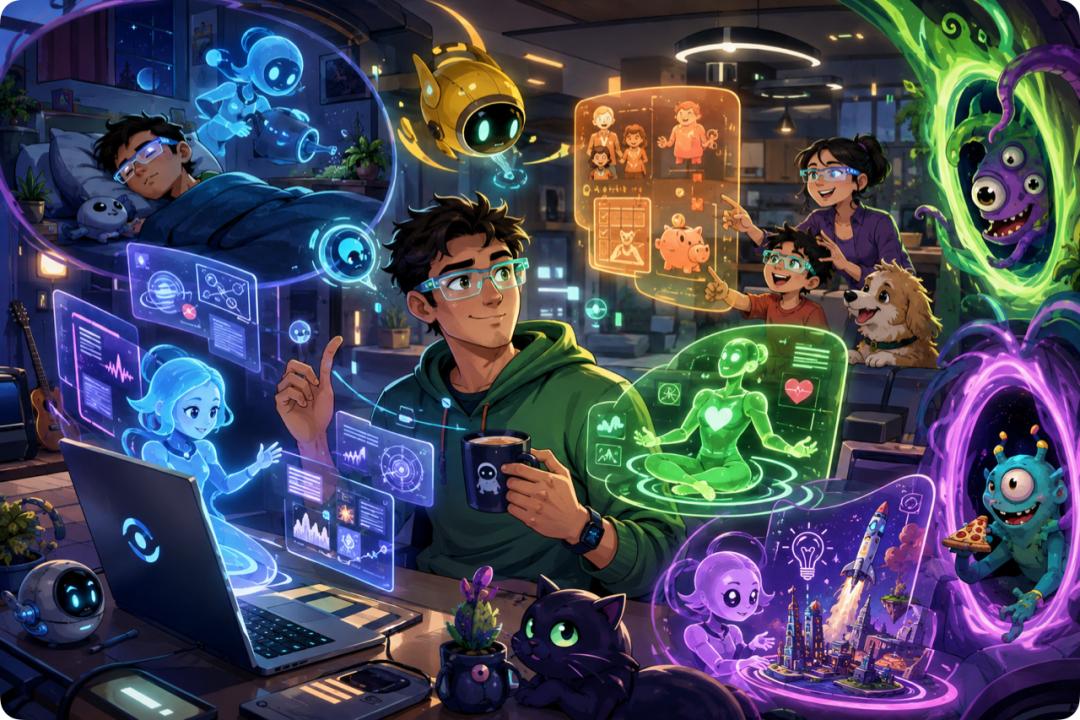
It will act as a teacher, coach and assistant, and can also accompany you to start a business, conduct research, and create things that were impossible to make before. Meta named this seemingly ambitious concept "Personal Superintelligence".
One person, and the entire AI team behind him
In the essay, Zuckerberg imagined a number of professions that still sound a bit odd today.
Some people may run a "one-person product studio": from toys, furniture to clothing, one person is responsible for coming up with ideas, and the AI behind them completes the work that used to require a team of designers, engineers, marketers and operations staff. Some people will become "world builders" who specialize in creating games, stories and virtual experiences. Others may have their own "personal biologist", using AI to understand their physical conditions, participate in research, and even find more personalized treatment plans.
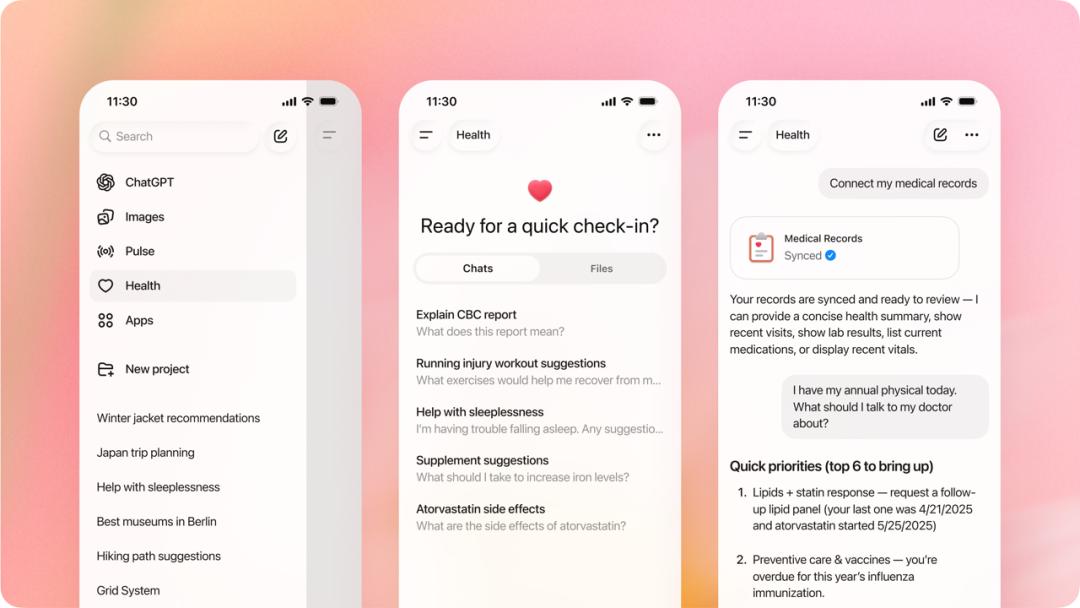
Image | ChatGPT Health
Behind these professions lies Zuckerberg's basic judgment about AI and work. When we talk about automation today, it is easy to interpret it as a subtraction problem: work that used to take 10 people can now be done by 5 people with the help of AI.
What Zuckerberg is more interested in is another possibility. If what used to require 10 people to complete can now be done by one person, will more people try to work on projects that they could never form a team for or get funding to do in the past?
Image | Tepperspectives
Companies may also become smaller as a result. A small number of people with their own AI Agents can run businesses that used to require dozens or even hundreds of employees. At the same time, products and services that no one previously offered due to excessively high costs may also emerge.
This is a typical kind of optimism shown in *The Future is for Everyone*. Zuckerberg acknowledges that AI will eliminate some jobs, but believes it will create new capabilities, new demands and new jobs at a faster pace.
Next, he extended the same optimism to a much more troublesome question: If superintelligence is powerful enough to change employment, business and even warfare, is it safe to give such capabilities to everyone?
If superintelligence is dangerous, let everyone have one
Zuckerberg does not quite believe that the world will eventually create a "benevolent AI" that makes the right choices for all people.
Humans are not a group with completely consistent values. When facing important issues, different values mean different trade-offs. No technical solution can satisfy the conflicting interests and values of all people at the same time.
Image | BBC
His solution is to apply the logic of democratic systems and the market: do not build only one central hub, let different people, enterprises and institutions have their own AI.
He gave a very intuitive example. If only one person in the world owns a "superintelligent lawyer", this person will gain a huge advantage. Even if the case itself is not in their favor, the opponent will still struggle to cope when facing an AI lawyer that can instantly read laws, cases and evidence and never gets tired.
So what to do? Restrict superintelligent lawyers? Zuckerberg gave another answer: let the opposing side have one too.
If everyone can access similar capabilities, the gaps formed by money, resources and lawyer proficiency today may narrow instead.

The same applies to cybersecurity and business competition: if attackers have more powerful AI, defenders also need capabilities of the same level. Zuckerberg calls it the "balance of power".
This also shapes Meta's understanding of "alignment". When talking about AI alignment today, people usually discuss what rules models should follow and what requests they should reject. Zuckerberg hopes personal Agents can go a step further: they should try their best to understand the user's own goals and values, and preset as few "correct choices" as possible for the user.
Such an Agent should not only remember your schedule, interests and work, but also know exactly what you want to achieve, and be able to act on your behalf. An always-online second brain that is much smarter than you and knows you well is indeed very appealing.
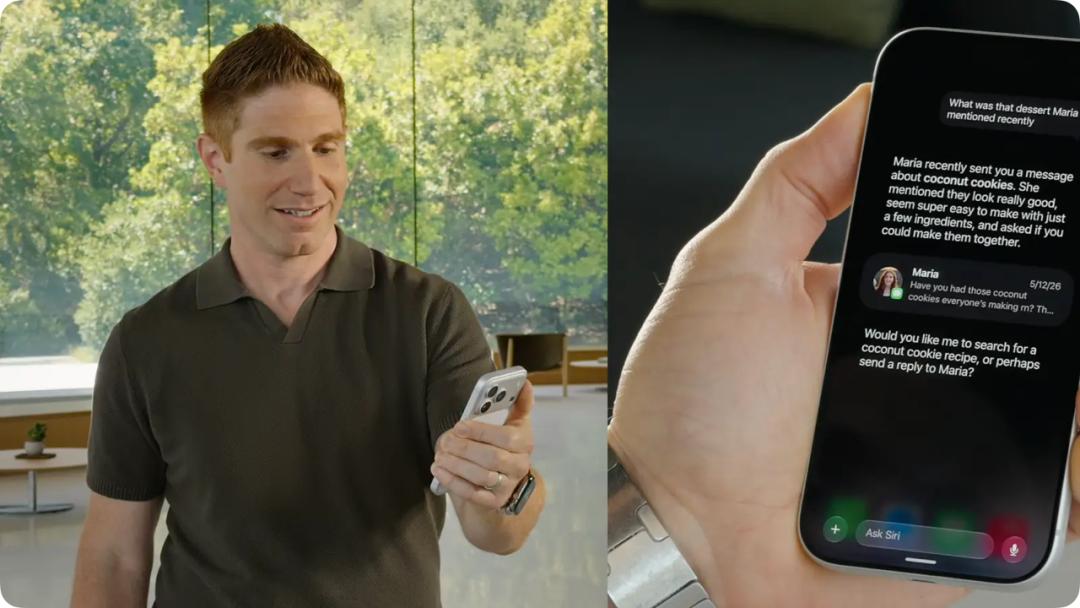
Image | Siri AI | Apple
The more an Agent knows, the harder it is to avoid privacy issues. Zuckerberg made a very significant commitment here:
We believe that people should have a fully private mode for their personal agents, under which even Meta or any other service provider cannot view or authorize access to your information.
The personal superintelligence described by Zuckerberg is indeed very attractive: it knows you well enough, and tries its best to keep privacy and choices in your own hands. Judging only from this vision, it is hard to say there is anything wrong with it.
When "For Everyone" comes from Zuckerberg
If you cover the signature and only read the more than 6,500 words of *The Future is for Everyone*, it is actually a quite brilliant essay.
The essay does not just spout empty phrases like "AI will make the world a better place". It discusses how work will change, why a superintelligence that represents all people is hard to realize, why capabilities should not only be concentrated in the hands of a few institutions, and whether future AI should obey companies or the users themselves.
Many of its judgments are indeed appealing: the greatest value of superintelligence should come from invention, not automation; since humans do not have unified values in the first place, instead of looking for a "benevolent AI" that makes decisions for everyone, it is better to let more people have their own AI to compete and check and balance each other.
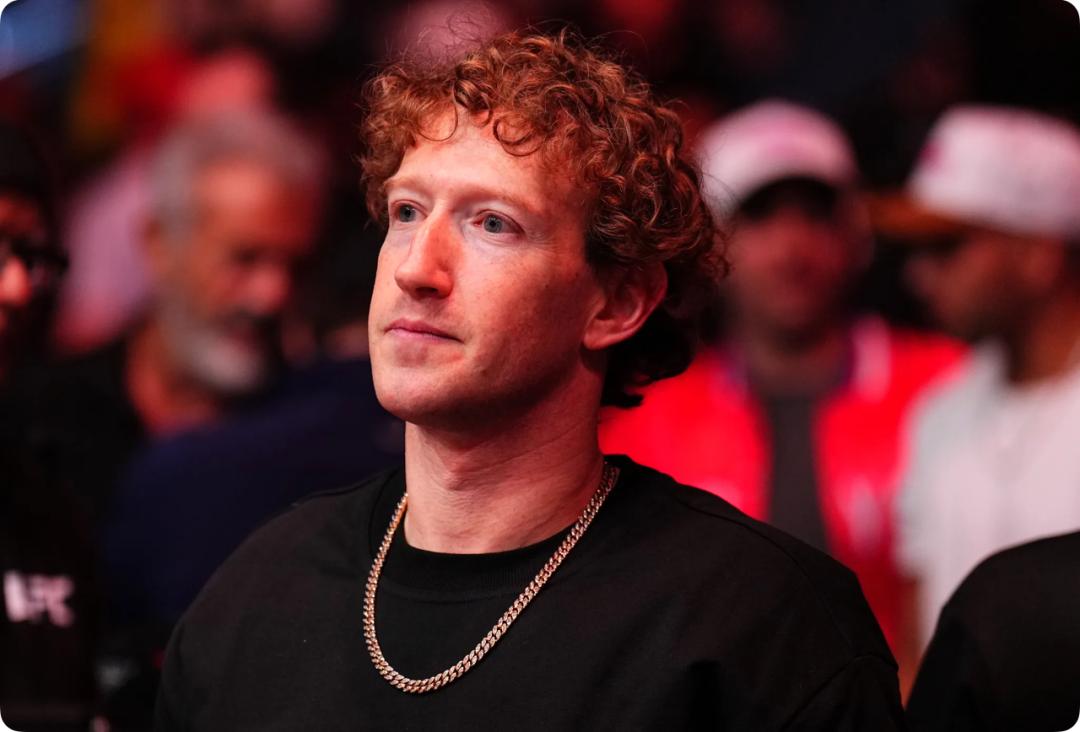
Image | TechCrunch
If the author were someone else, this would probably be a logically complete, typical manifesto of technological optimism.
But the signature is Mark Zuckerberg.
Over the past 20+ years, almost every time he bet on a new technology, he would come up with a grander narrative for it. Facebook talked about "connection", the metaverse talked about "Presence"; when it comes to AI, the thing handed to everyone becomes "intelligence".
Image | Investors Alley
This time, Zuckerberg positioned Meta on the side of "individuals". In his narrative, if the future of AI is dominated by big companies and institutions, power will remain in the hands of these institutions; what Meta wants to do is put superintelligence in the hands of ordinary people.
He even traced this back to Meta's mission since its founding:
From the very beginning, Meta's mission has been to put power in the hands of people. If our ideas and principles can guide the future, the balance of power will tilt more towards individuals, and bring a better future for everyone.
The problem is that Facebook's track record in the past makes it very hard to take this statement at face value.
The Cambridge Analytica scandal that broke out in 2018 is one of Facebook's most famous privacy controversies. Through third-party apps on the Facebook platform, Cambridge Analytica obtained data of tens of millions of users and their friends, many of whom never directly authorized the company to access their information. This data was later used for voter profiling and political targeting.
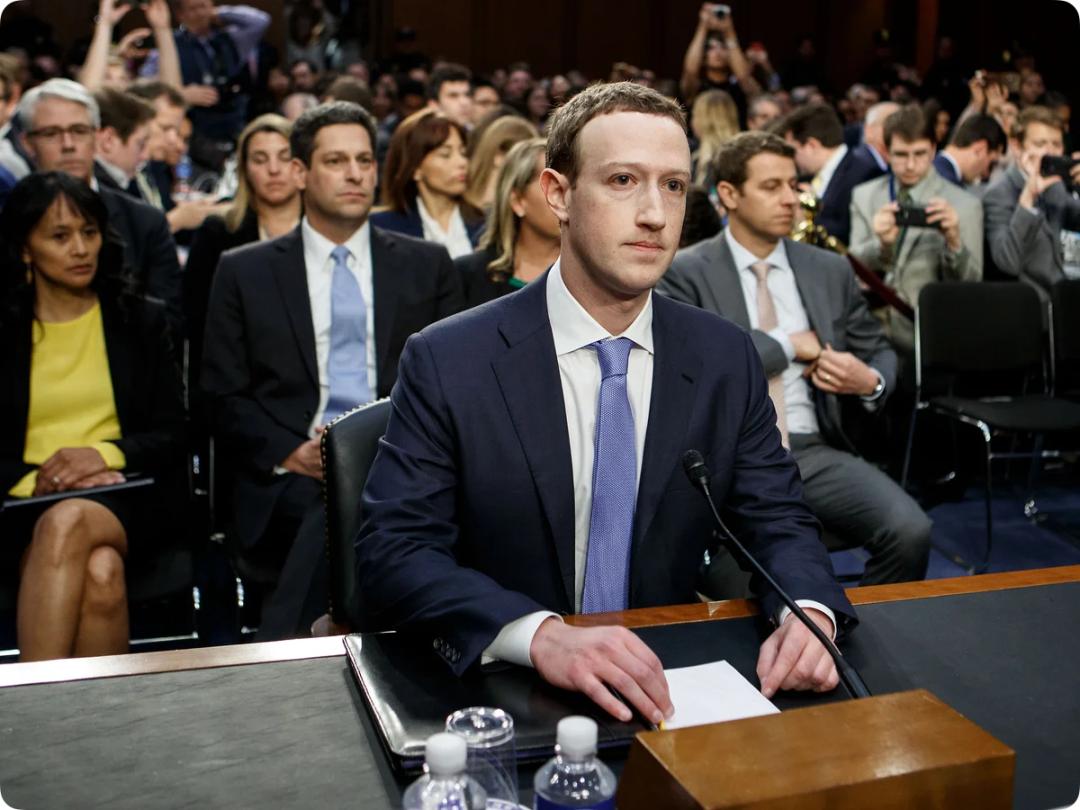
Image | The Guardian
In the same year, Facebook faced even more serious issues in Myanmar. An independent human rights assessment commissioned by Facebook itself acknowledged that the company had not done enough to prevent the platform from being used to incite social division and offline violence. A later investigation by Amnesty International further accused Facebook's recommendation system of amplifying hate content targeting the Rohingya people, increasing the risk of real-world violence.
Image | CNN
More recently, on the very same day that *The Future is for Everyone* was published, the U.S. Court of Appeals for the Ninth Circuit rejected appeals from Meta, TikTok, Google, Snap and other companies, allowing thousands of lawsuits related to social media addiction to proceed. All these cases are pursuing the same question: whether some of the platform's product designs make young users more prone to addiction.

Image | U.S. Court of Appeals for the Ninth Circuit
A few days ago, a New Mexico state court also ordered Meta to pay 567 million U.S. dollars for adolescent mental health, and required Facebook and Instagram to adjust some of their product mechanisms targeting young people. Meta denied the relevant allegations and said it would continue to appeal.
From Cambridge Analytica, to Myanmar, to today's youth issues, Facebook has repeatedly encountered the same contradiction: When the platform pursues growth, engagement and commercial returns, the results do not always align with the public interest.
So looking back at *The Future is for