The top domestic new game of 2026 certified in Tencent's financial report has leveraged AI in extremely ingenious and unconventional ways.
Written by Isaac
Tencent's financial reports over the past few years have made me increasingly numb.
In the past 5 years, the growth rate of Tencent Games has far outpaced the global market. Under this trend, "growth" has become a default expectation. So the day before yesterday, when I saw Tencent's Q2 financial report showing game revenue of 65.9 billion yuan and another consecutive growth, I was not surprised at all.
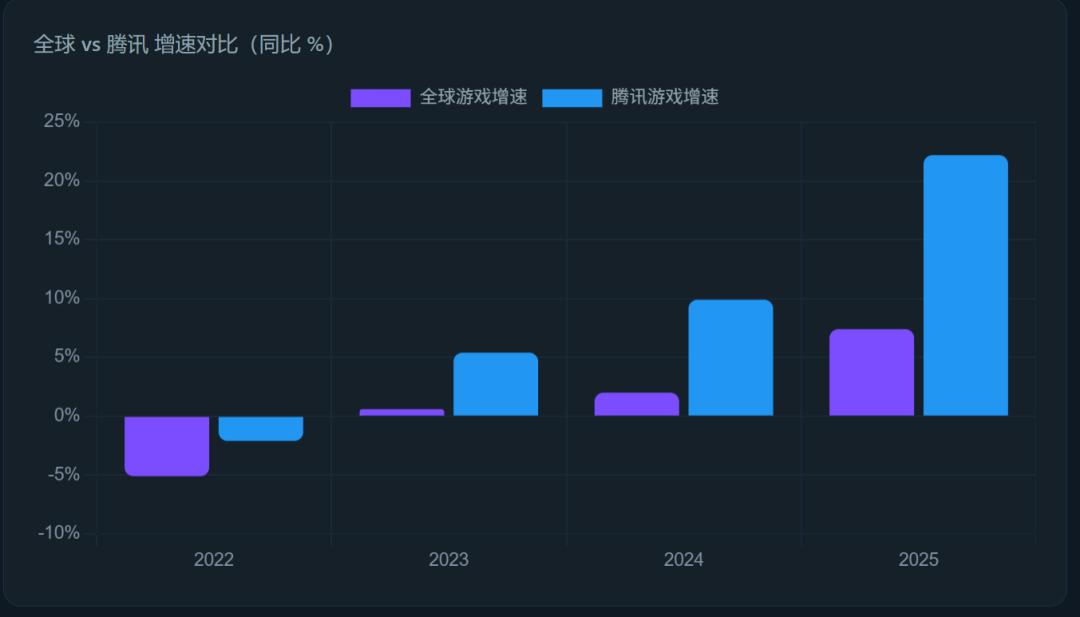
But this is not the normal state of the industry - you know, the growth of the overall game market has almost stagnated, it is increasingly difficult for new titles to break through, and it is not uncommon to see big-budget titles that flop at launch and new games that are shut down one after another... Many traditional methodologies have also failed at this stage.
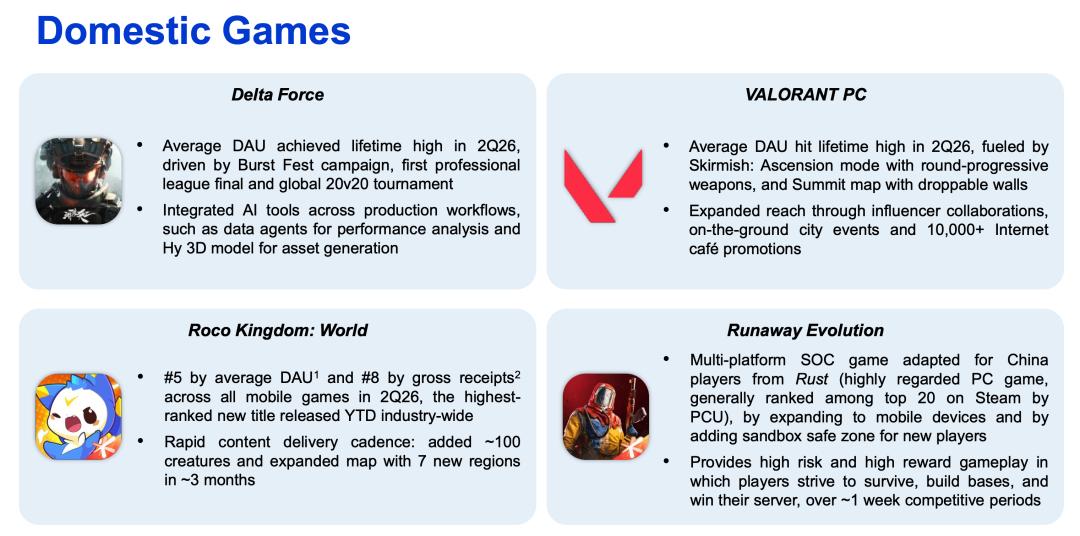
In fact, Tencent also has new titles that are hard to develop, and Roco Kingdom: World is the most typical one - it has no mature GaaS prototype, and needs to solve a large number of unprecedented problems. But in the financial report, Ma Huateng called it a hit title with the highest average daily active users and revenue among new mobile games this year, and many people even think it has the potential to stay popular for a long time. How to explain this?
Recently, we talked to the R&D team of Roco Kingdom: World and the team of the Public Technology Line (Tencent Games Core Technology Middle Platform), and we found some clues from a newly launched AI black technology. The core of this feature is to recommend and teach PvP lineups for players. It also has a corresponding elf image, named "Scarlett".
Imagine a new player who wants to build a PvP lineup, but his idea is very abstract - for example, he wants to build a "tricky but not overpowered" team, what should he do?
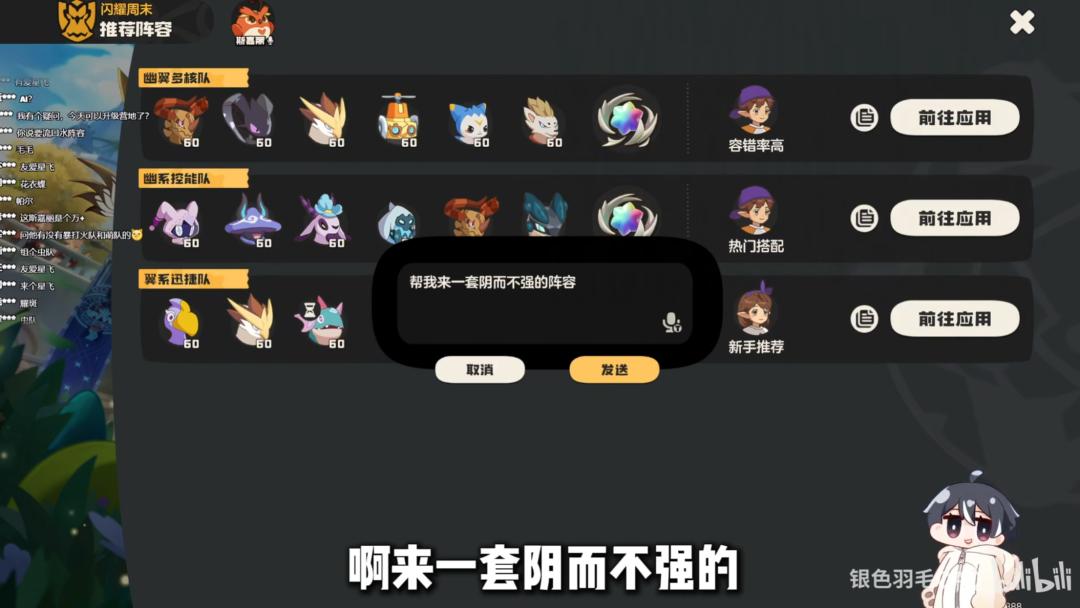
In fact, this is a demand put forward by the streamer @Penguin with Polar Bear during a live test.
For a PvP beginner, this is really difficult: there are more than 400 elves in Roco Kingdom: World at present. You need to have a certain understanding of elf attributes, skills, mechanics, personalities, combinations... to figure it out on your own. Using traditional guides, Wiki, WorkBuddy? None of these are realistic. Asking experts, streamers, or posting in communities? The threshold is also very high. Many people are actually quite interested in PvP, but they are just discouraged by this.
It's okay if only one player faces this problem, but what about millions or tens of millions of players? There is basically no solution, unless everyone has a one-on-one private coach.
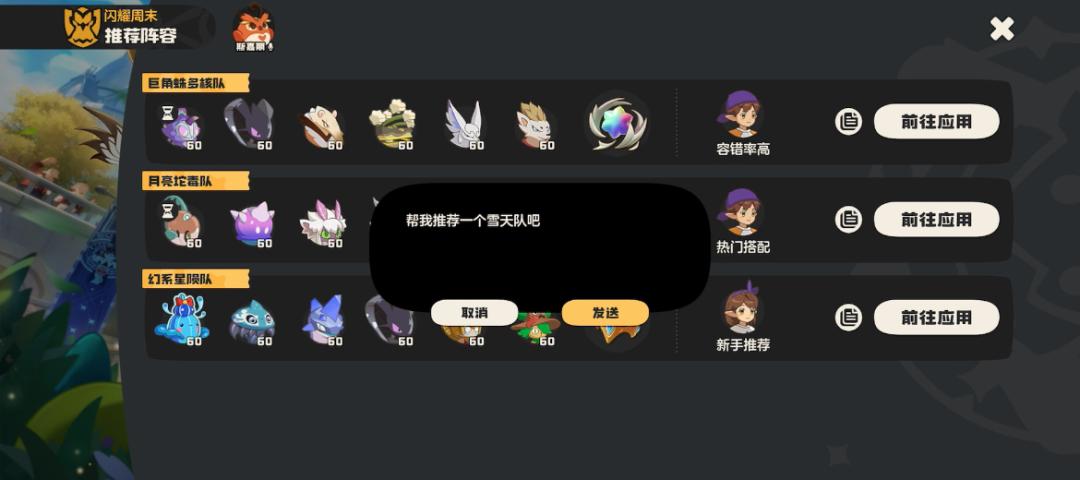
In this case, AI may be the only solution - the built-in Scarlett in the game can read your backpack, understand your needs through dialogue, and give the optimal choice. With just one sentence, it can form a lineup in a few seconds according to your input and the situation of your elf box, and explain the gameplay clearly to you.
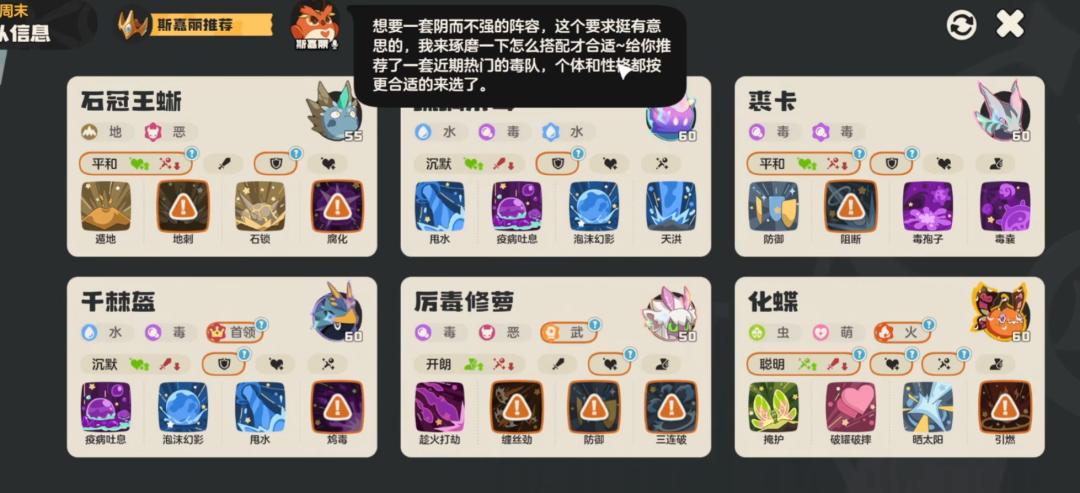
The poison team really fits the meaning of "tricky but not overpowered"
The effect after this feature is launched exceeds many people's imagination: some players have more than a thousand rounds of dialogue with Scarlett in one day; some experts praise that it really understands lineups, and many new players who have never played PvP post to thank it for helping them win their first game.
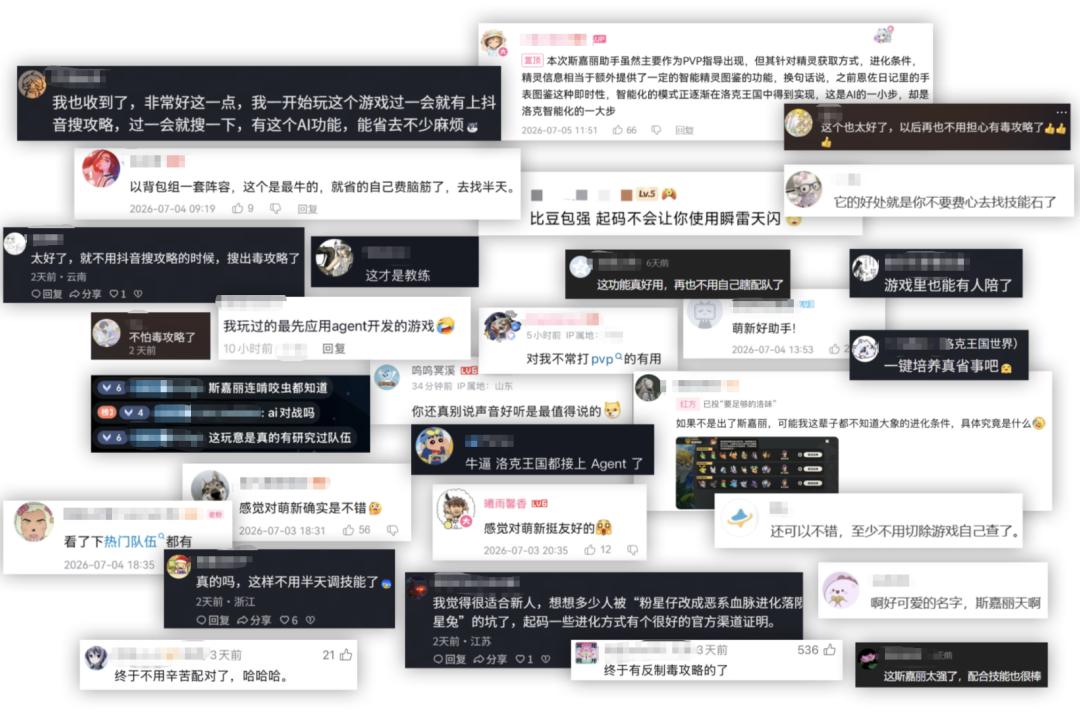
The project team also told us that Scarlett effectively promoted the PvP engagement and activity of the game, and the PvP activation rate increased by 20% during this period - on the premise of a large DAU, this figure is extremely significant.
Some people may think: It's just a built-in AI assistant, is it necessary to exaggerate so much? At first, Grape King thought the same. But after in-depth discussions, I found that things are far from that simple - the impact of AI on the industry has quietly entered a completely different stage from the past.
01
How difficult is it to make AI understand games?
How did the Scarlett project come about? The project team had the idea very early - it came up during the testing phase of Roco Kingdom: World in 2025.
At that time, the Public Technology Line manually made a demonstration Demo, made a video of the imagined AI assistance effect, which looked quite decent. They had a good attitude, thinking "Fake it until you make it". Everything seemed natural, and the player demand existed, so it could always be realized.
But after they actually started, they found that to make a so-called "built-in AI assistant", there were far more pitfalls than imagined.
The team's initial idea was very simple: if the large model is fed enough game materials, it might be able to understand them? It turned out to be the first huge pit - even with the most powerful model, the probability of AI answering correctly in this scenario is terribly low, full of hallucinations.
The reason is very simple: the game knowledge of Roco Kingdom: World is too new, not in the pre-trained corpus of any large model, and there are many confusing corpora - such as the earlier Roco web game... All skills, elves and lineups in the game are new to it, and it is impossible to understand them thoroughly in a short time.
After that, they decided to switch to the RAG architecture: connect a knowledge base and use retrieval augmentation to let the model answer. Then came the second huge pit - large models understand knowledge in a different way from humans, and often cannot master it accurately; while game knowledge is not only massive, but also continuously updated. With the retrieval capability of RAG, it is okay to do simple FAQs, but if you want it to understand game content, it cannot handle it at all.
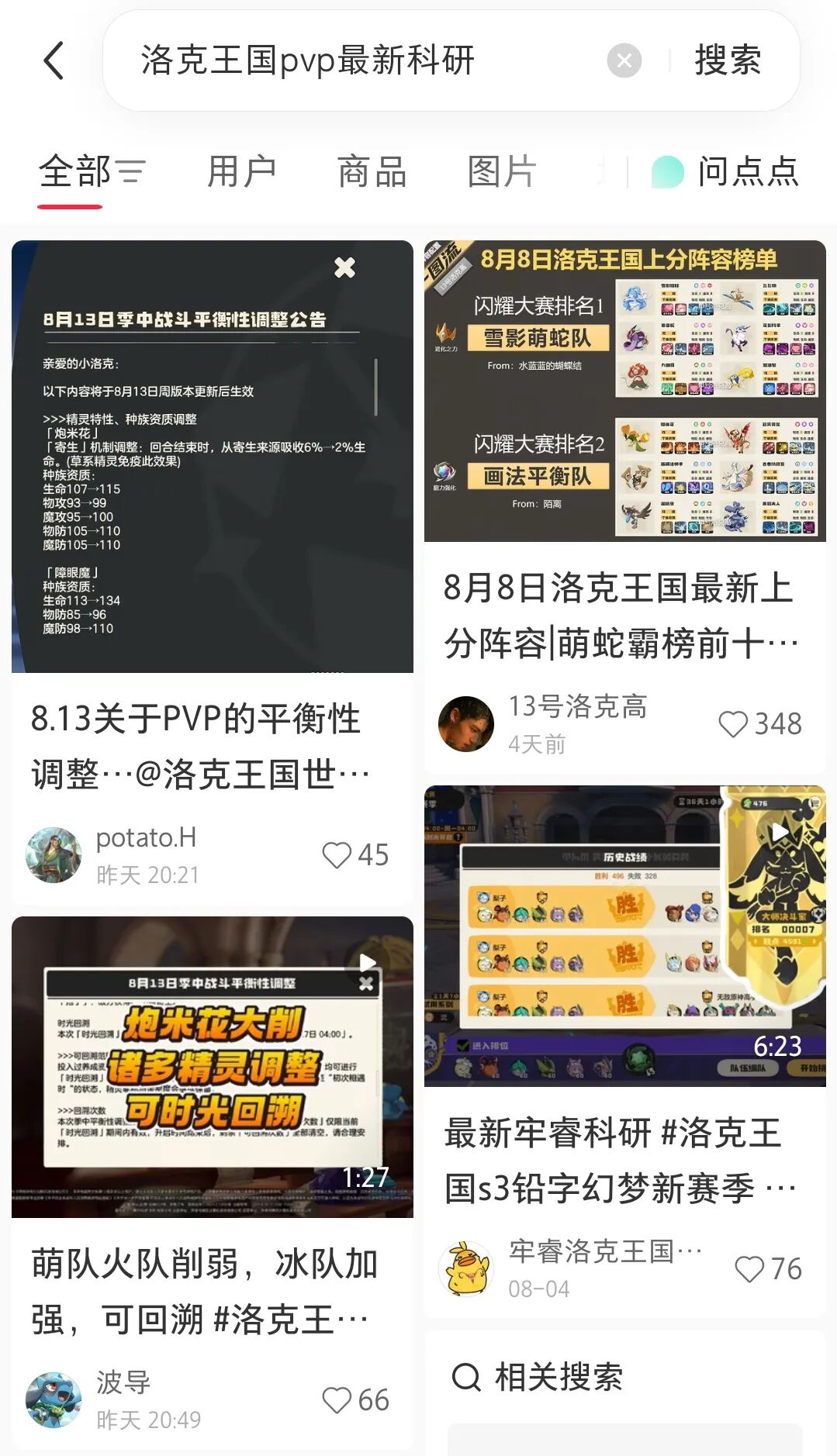
Studying lineups is called "scientific research" by players, and the difficulty is self-evident
Jax, the person in charge of the Scarlett project, gave us an example: How many times the damage will electric skills deal to Lady Cui Ding (wing type + water type)? Many players can answer three times without thinking, but AI can't tell the difference between "restraint" and "strong restraint" at all, and will only confuse them as synonyms... Such a simple question can't be answered accurately, which is ridiculous, right?
After a lot of tossing, the technical team found that the accuracy rate of answers was only 30% to 40%, which was appalling.
After stepping into countless pitfalls, the team realized that they had to start all over again. So they spent more than half a year and developed a fully self-developed multi-module co-evolution Coach Agent architecture.
This architecture mainly does several things: The first is to visualize the abstract "lineup building" as "filling in a form". Each column in the form corresponds to an attribute - the elf's type, skill, personality... After the player's demand is translated, the AI only needs to extract the corresponding elements and fill in this form, so the accuracy rate is much higher.
Yanjie, the person in charge of the recommendation algorithm, said that their inspiration came from a specific Bad Case: many mechanics in the game require the order of skills to be arranged correctly. For example, the mainstream gameplay of Hammer Stork requires players to put Water Gun in the first position to hard-switch to restrain water-weak elves.


How to make AI accurately understand and master such detailed sorting? They found that as long as it is designed as the change of fields in a form, AI can do it - the form is naturally order-preserving.
The form is easy to fill, but what content is correct? This is a bigger problem.
The project team provided a complete design document, but which elf matches whom, when to appear, how to use skills... These can't be manually written one by one for AI. The technical team's solution is to let AI learn from actual combat, and then use rules + large models to deduce actual combat data into structured knowledge.
Up to now, the scale of this knowledge base has reached 1 million entries, covering 82% of players' real questions.
At this stage, AI still makes some common-sense mistakes. There is a classic Bad Case: How does the bug team fight Vulcan? The AI's answer is to let the Flower Butterfly use burn to force it back! However, the Flower Butterfly is three times restrained by Vulcan, and at the same time Vulcan is not affected by the burn negative effect... Players will think at a glance that the AI does not understand the game at all.
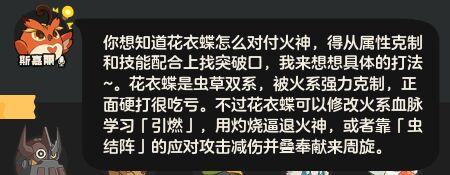
Occasional errors during testing
In order to prevent such errors from recurring, the team added a large number of Harness (constraint mechanisms), through the full solution of building three engines: online teaching, self-evolution knowledge reasoning, evaluation and attribution, the system is responsible for verifying the error-prone fact judgments, and the model is only responsible for organizing the language. Jax summed it up vividly: "We have to be both the psychologist of the large model and its language teacher."
However, the answer is not enough for players. Faced with confused new players, AI also has to explain step by step "how to play with this lineup".
This problem is called the "crown jewel" by the team - it is the most difficult, but players ask the most. The technical team split it into dozens of sub-questions: Who starts first? When to switch elves for joint defense? What is this lineup afraid of? ... Each sub-question corresponds to a special set of solution logic.
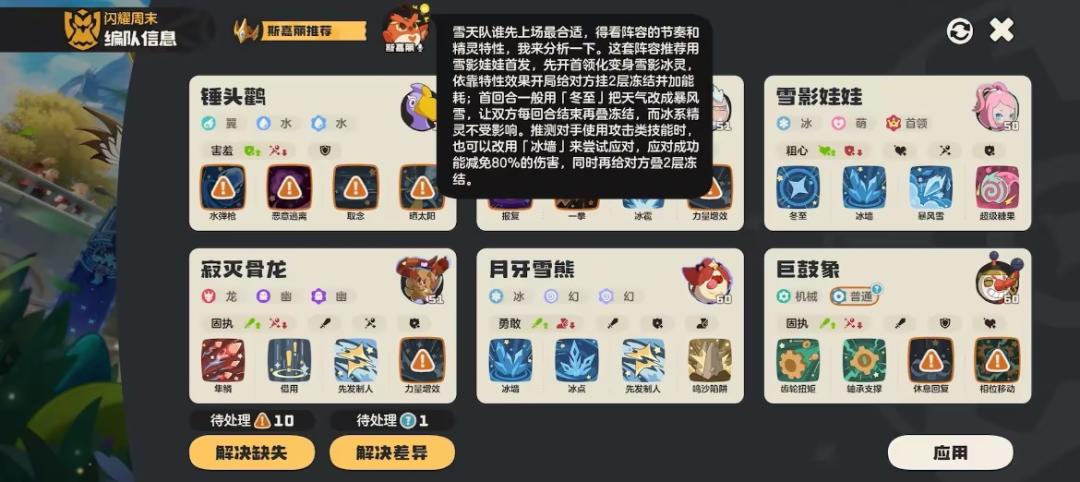
Finally, in order to adapt to the continuously updated content of the game, the system knowledge will also evolve, update the knowledge base through knowledge reasoning, and continuously supplement and iterate. Qizai, the person in charge of Agent technology, said that after such cyclic iteration, Scarlett's response effect gradually improved. Eventually, the accuracy rate can be increased to more than 90%.
There is one more thing that the team spent a lot of effort on, but players hardly perceive - speed.
When Scarlett was first launched, it took 40 seconds to get a response after asking a question, which was enough for most people to lose patience. The technical team optimized at the same time from three levels: engineering, architecture and deployment: changed the serial reasoning link to parallel, compressed unnecessary thinking rounds, and improved the model cache hit rate... Finally, the end-to-end time consumption was reduced to 2-10 seconds, and the average time to the first word was within 2 seconds.
The final effect is that you can really see some players who were originally afraid of trouble and losing start to get in touch with and like PvP because of Scarlett. In the community, content related to Scarlett also exploded all at once, with more than millions of views. This content makes more players interested and ask the AI for advice, forming a virtuous circle.
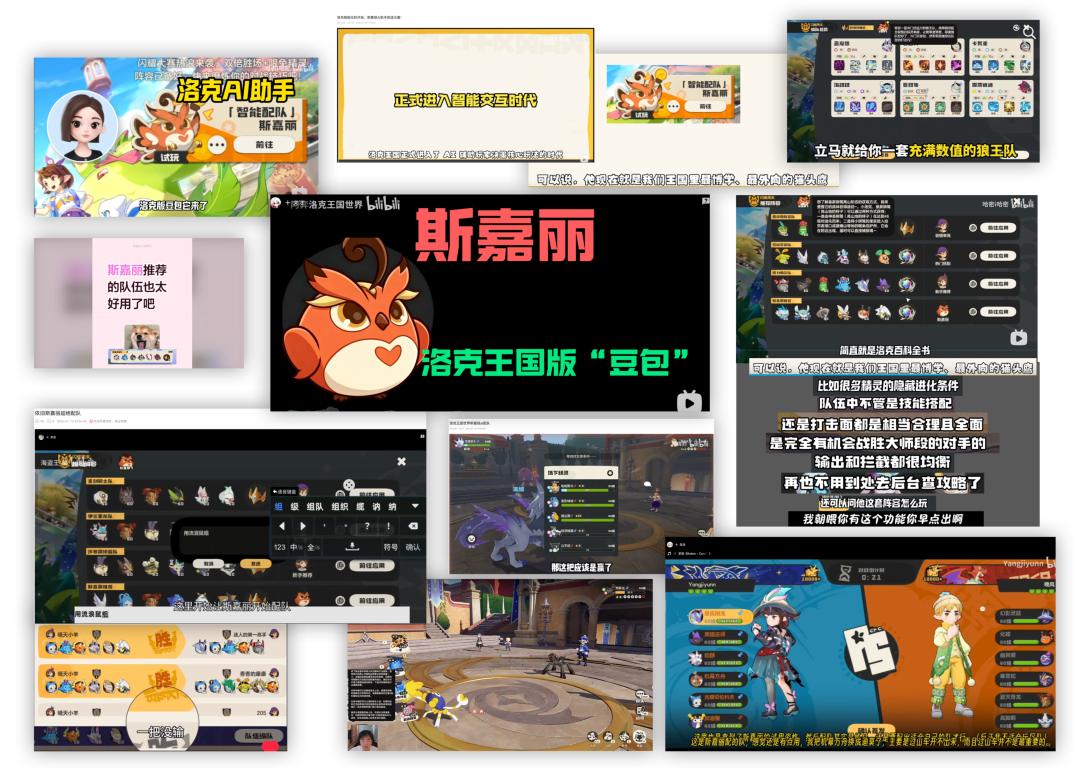
Not only that, because Scarlett itself is a cute owl with its own name, life experience, story and unique experience, she also makes many young Roco fans have emotional attachment to her. Even her voice has been debugged repeatedly, the timbre and speed have been