In the AI era, top scientists are breaking away from employment relationships.
After working at Google for around 27 years, Jeff Dean has decided to leave the company. On local time August 5, one of Google's most representative tech figures announced on social platforms that he will co-found the AI company Discovery Loop with several Google AI researchers. Previously, Jeff Dean served as Chief Scientist of Google Research and Google DeepMind, reporting directly to CEO Sundar Pichai, participating in defining Google's AI research direction and taking charge of key strategic technology projects.
Reports say Jeff Dean's departure is not caused by a single factor, but the combined result of personal pursuit and corporate environment. Pursuing academic freedom to get rid of the big-company bureaucracy, getting tired of product delivery pressure and longing for long-term scientific research, developing along established directions while exploring new directions with greater potential... These contradictions make the problem more specific. When a position in a large company can no longer fully accommodate the personal goals of top researchers, should the enterprise try its best to retain the talent, or redesign the relationship between both sides.
Jeff Dean's departure is not an isolated case. In 2025, Yann LeCun, Chief AI Scientist at Meta, announced he would leave the company where he had worked for more than 10 years to found the AI company AMI Labs. Yann LeCun has long questioned the path to AGI by scaling up large language models, and he values world models that can understand the physical world more. If Yann LeCun's case reflects the divergence between technical routes and corporate priorities, the departure of Jan Leike, former head of the Superalignment team at OpenAI, points to the conflicts between research safety, product speed and resource allocation.
Similar stories also happened in Chinese companies. Lin Junyang, technical lead of Alibaba's Qianwen large model, left his post in March 2026 and founded Pragmatic Tech, shifting his research focus from foundational large models to world models and embodied brains. After Wang Yunhe, head of Huawei's Pangu large model and director of Huawei Noah's Ark Lab, left his position, he founded Primordia Dynamics, which also focuses on the AI Agent field.
These resignations can hardly be explained by changes in salary or position. Top researchers may have their own North Star, for example, gaining academic influence, verifying a technical route that has not yet become mainstream, or solving problems they believe will greatly affect the future of humanity. However, enterprises also have their own constraints: products need to be launched on schedule, huge investments need to be justified, and research directions must align with corporate strategies. When the two sets of goals cannot fully overlap, conflicts may extend from performance evaluation to technical routes, computing power allocation, organizational power and even research ethics.
The AI era has exacerbated such conflicts. In the past, the key conditions for large companies to attract researchers were stable funding, sufficient computing power, excellent colleagues, and a research environment that allowed long-term exploration. Nowadays, technology iteration is getting faster and faster, and the links between research outputs, product competition, capital investment and corporate strategies have become closer than ever. At the same time, the impact of a small number of key researchers on technical directions and team capabilities may far exceed the scope shown by their ranks in the organizational structure.
This poses a series of new challenges for decision-makers. When recruiting researchers, how should both sides clarify the goals and boundaries of the company; after onboarding, should the enterprise trust the judgment of the system, managers, or professionals; if traditional KPIs are difficult to measure cutting-edge research, how should the company allocate resources, evaluate outputs and control risks; when the personal goals of researchers deviate from corporate strategies, should the enterprise correct, tolerate, or allow a new type of organizational relationship to emerge.
With these questions, Suchbright had a conversation with Dr. Tom Zhang, a senior Silicon Valley human resources expert who previously worked in human resources teams at Google Headquarters, Tesla Headquarters and Tencent. With experience across multiple tech companies of different types, he is able to observe how companies get along with high-proficiency talents from multiple links including recruitment, talent development, performance evaluation and talent flow.
The following is the edited excerpt of the interview between Suchbright and Dr. Tom Zhang.
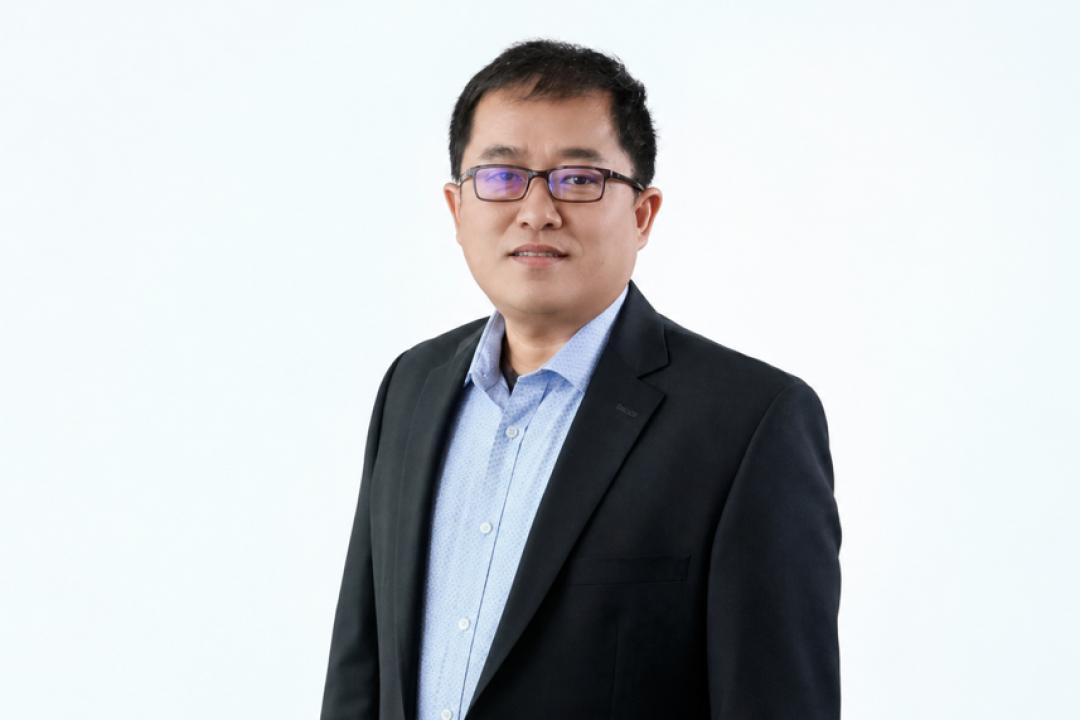
Dr. Tom Zhang, senior Silicon Valley human resources expert, photo provided by the interviewee
01
Similarities and Differences in Talent Management Philosophies of Google, Tesla and Tencent
Suchbright: You used to work in recruitment teams at Google, Tesla and Tencent. From your observation, what are the core differences in the underlying logic of these three companies managing high-proficiency talents such as scientists?
Tom Zhang: All three companies attach great importance to talents and have very strict selection criteria, but their talent management concepts are different.
Google: The Empowering Logic That Pursues "Intellectual Freedom" and "Psychological Safety"
Core logic: Google targets the world's top computer scientists and algorithm engineers, and its management is built on the underlying belief that "smart minds do not need excessive management".
Psychological safety and data-driven decision-making: Google attaches great importance to organizational atmosphere. Managers tend to persuade others through data and logic (such as Google's famous Project Oxygen), emphasizing that managers are "enablers" rather than "supervisors".
Flat and consensus-driven culture: Google's major technical decisions rely on long-term academic discussions, peer review and deep consensus, and encourage bottom-up innovation.
Tesla: The Extreme Logic That Pursues "Ultimate First Principles" and "Mission Fanaticism"
Core logic: Tesla focuses on the hard-core physical world where hardware and software are highly integrated, and its management is built on the underlying logic of "end-state oriented first principles and extreme delivery pressure".
Practical features:
- High pressure and flat structure in parallel
: There is no lengthy hierarchy, and the organizational structure is extremely flat. When encountering technical bottlenecks, senior leaders such as Elon Musk often go deep into frontline R&D to talk directly with experts, forcing breakthroughs through extreme high pressure and extremely dense iteration cycles.
- Result orientation and physical reality
: Seniority and process are not prioritized, only those who can solve problems in the shortest time with the most direct physical laws (first principles) are valued. The code needs to be able to run on vehicles, and the products need to be ready for mass production.
- Mission alignment
: It attracts talents who are willing to devote their passion to "accelerating the world's transition to sustainable energy" or "interplanetary immigration", and eliminates mediocre people who cannot adapt to the fast pace.
As a top internet giant in China, Tencent has formed a very mature and distinctive R&D talent management system after years of technological evolution, from the early massive concurrent architecture to today's AI large models, cloud native and cutting-edge technology exploration.
Tencent established a very clear dual-track system that combines the professional track (T-track) and management track (M-track) very early. Employees can choose to delve into professional technology to become hard-core experts, or move to management positions according to their own characteristics.
Tencent's technical management style has distinct pragmatic genes, such as emphasizing "user value as the priority", "integrity and enterprising spirit". When facing innovation and R&D exploration, it not only requires R&D personnel to have strong business delivery capabilities to overcome tough challenges, but also gradually forms an internal inclusive mechanism for technical trial and error and tackling hard-core problems, ensuring that it continuously maintains the speed of technical iteration in the fierce competition in the second half of internet and AI development.
Suchbright: If we use a more direct comparison dimension, do these three companies trust the system more, trust decision-makers more, or trust professionals more?
Tom Zhang: Tesla's goals are defined by Elon Musk, and the highly aligned professional team with strong execution capabilities will find the path to achieve them. A lot of Google's innovations come from the bottom-up exploration of R&D engineers, and the role of the talent management system is to provide space for such exploration. Like many large companies in China and the US, Tencent adopts a prudent approach in talent recruitment, and most of the externally introduced talents are top industry talents with rich experience proven by practice.
The talent management logic is not an either-or choice. Any company needs system, managers and professionals at the same time, it only places decision-making power and trust in different positions.
Suchbright: Are Google and Tesla bolder in the talent recruitment stage and more willing to take higher risks?
Tom Zhang: On the whole, Silicon Valley companies are more willing to give opportunities to young people who have not yet been fully proven. I call this approach "heavy investment in young talents". There is a saying in Silicon Valley that "Experience is overrated", which means experience is often overestimated. Although young people lack existing experience, they are less restricted by path dependence, and may come up with newer methods.
Many Chinese and American companies do not refuse to hire young people, but they usually expect candidates to have proven themselves in well-known institutions. The difference between the two sides mainly lies in the talent selection stage: one side is more willing to bet on potential in advance, while the other side prefers external validation.
However, bold talent recruitment does not mean long-term tolerance for low performance. Different companies have different validation cycles. Tesla may verify whether a person is suitable in a relatively short period of time, while Google may give longer time to some cutting-edge research projects.
Suchbright: Chinese companies often hope to recruit "god-level talents" with outstanding reputations. Even if these people have strong professional capabilities, they may not really fit the organization. Where does the problem lie?
Tom Zhang: Strong personal ability does not mean that he can definitely cooperate well with the team, nor does it mean that his ability can be implemented in the current organization. This also involves the differences in the organizational structures of Chinese and American companies. The architecture of large Chinese companies is usually centered on departments and positions, a complete organizational chart of the company may not have a single person's name on it, all are department names. Its advantage is that the structure is stable, organizational capabilities are separated from personal capabilities, if one person leaves, another person can take over the position.
The organizational structure of American companies is more centered on specific individuals. The organizational chart of the company is full of people's names, with very few department names. The scope of responsibility of a person is related to his ability and actual influence. This approach more directly recognizes the differences between different people, but the disadvantage is that the organization may rely more on key personnel.
After the emergence of AI, both Chinese and American organizational models are compressing part of the middle layer that mainly undertakes information transmission functions. Executives can directly reach more employees with the help of digital tools, and the organization may become further flattened. In the future, the actual influence of high-proficiency talents in the organization may be more important than their job titles.
Suchbright: Which management method is more conducive to innovation?
Tom Zhang: It is difficult to judge which method is definitely better without considering specific tasks. But from the overall results, the management method of American companies seems to be more likely to produce cutting-edge and exploratory innovations. Google emphasizes free exploration, and Tesla achieves difficult goals with mission and strong execution capabilities.
The prudence of Chinese companies also has its own advantages. Companies like Tencent can make products very solid, and polish the user experience very finely. Different organizations are good at solving different problems: some are more likely to produce cutting-edge breakthroughs, while others are better at product implementation and continuous execution.
Suchbright: What price do you need to pay for cutting-edge innovation?
Tom Zhang: The most direct price is capital consumption. Google recruits a large number of excellent researchers and pays high salaries, but many of them may not produce obvious short-term benefits for a fairly long period of time. Google has thousands of researchers, and only a few of them finally write the Transformer paper. Of course, we cannot conclude that the research of other people is meaningless for this reason.
Because enterprises cannot know in advance which person, which team or which direction the innovations and breakthroughs will come from. To obtain a few major innovations, we must bear the cost that a large number of research projects do not generate returns for the time being.
When reviewing the history of DeepMind's decision to be acquired by Google in 2014, Demis Hassabis, CEO of DeepMind, has repeatedly and frankly talked about the decisive role of capital and computing resources in achieving AGI and scientific breakthroughs.
Hassabis believes that independent startups can hardly afford the astronomical computing power and long-term capital investment required to move towards AGI alone. He once pointed out that Google can provide the "Patient Capital", huge computing infrastructure and distribution capabilities required for their research. In other words, capital and computing power are important backing for Google to support its long-term scientific ambitions such as AlphaGo, AlphaFold and other projects. This statement is very straightforward, but it explains a reality: long-term scientific research not only requires talents and freedom, but also abundant resources.
At the same time, enterprises also have to face financial pressure. Scientific research requires continuous investment, part of which cannot generate returns in the short term; while the capital market and investors will pay attention to quarterly and annual performance. Therefore, even if the enterprise has sufficient funds, it must deal with the contradiction between long-term scientific research and phased financial evaluation.
02
Non-professionals Managing Professionals Should First Define Clear Goals
Suchbright: How should managers who do not understand specific professional knowledge manage professionals?
Tom Zhang: Managers must first define the goals clearly.
John F. Kennedy was not an aerospace scientist and did not understand the specific technology of rocket manufacturing, but he put forward a clear goal: to send an American to the moon and bring him back safely to the earth before the end of the 1960s. Kennedy put forward this goal in 1961, and publicly emphasized it again in 1962. In 1969, Apollo 11 completed the moon landing, Neil Armstrong became the first person to step on the moon, and the astronauts returned safely afterwards. Kennedy did not need to personally decide every technical route. His responsibility was to clarify what the organization needs to accomplish, and scientists and engineers are responsible for solving problems such as how to manufacture rockets, complete moon landing and ensure safety.
Elon Musk's goal of going to Mars is similar. How to manufacture the spacecraft, how to solve the problems of diet, disease and safety during the long voyage, all need to be completed by teams of different majors.
Leaders define goals, and professionals find paths.
Suchbright: Are there similar managers in AI companies?
Tom Zhang: Liang Wenfeng is a typical example. He clearly defined DeepSeek's goal as AGI. He prefers the narrative of "ordinary people doing extraordinary things", emphasizing that we rely on day-to-day polishing, reliability and sense of responsibility, rather than the fleeting inspiration of star talents. I really appreciate this point. He did not limit the goal to a certain short-term user number or revenue indicator, but used a sufficiently large shared mission to unite the team. A clear mission can help researchers understand why they work, and also provide direction for resource allocation and project selection.
Suchbright: But the goal itself may be formulated by non-professionals. If managers set the wrong goal, the stronger the execution ability of the professional team, the further away they may deviate from the correct direction, right?
Tom Zhang: Such risks certainly exist. The problems of enterprise operation are very complex, which may involve products, markets, strategic organization and management. Talents are not a panacea, and you cannot expect that recruiting several AI experts will automatically turn a bad company into a good one.
Goals cannot only be announced unilaterally by leaders, but also need to be discussed and verified by the professional team. Research leaders also need to have the ability to communicate upwards and influence managers. If they think there are problems with the goals or resource allocation, they need to explain the reasons and strive for adjustments.
We cannot attribute all problems to the mechanism. Sometimes the organization does make wrong judgments, and sometimes it also depends on whether the research leader can put forward a convincing alternative plan. Excellent research leaders usually not only have strong professional abilities, but also have communication, organization and resource mobilization capabilities.
Suchbright: What should managers take charge of, and what should they not interfere with?
Tom Zhang: Managers should manage goals, resources and risk boundaries, and should not excessively interfere with technical