After DeepSeek V4 Flash, large models have started to compete fiercely on the "intelligence-efficiency ratio".
In the AI circle, people used to be somewhat "appearance-focused" when choosing models in the past, only looking at who has higher intelligence and who has taken the lead in SOTA. Even if it is a "playboy" that can burn through all your credit in a single day, people will still rush to use it first.
When Agent came along, the whole landscape changed. It needs to search for information, read documents, write code, run tests on its own, and restart the whole process even if it runs into errors. After you give a simple instruction, it may call APIs hundreds of times in the background.
But AI will never work overtime for free. It will only start working after you pay enough, and it will stop running immediately if you pay less or delay the payment even for a second.
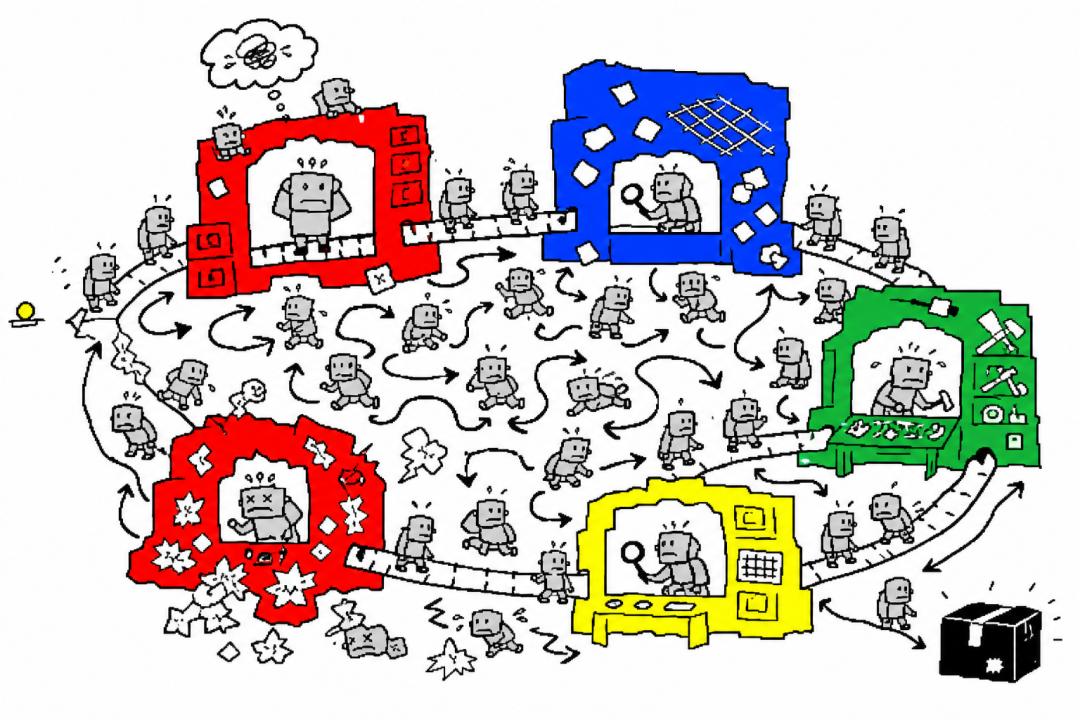
At this point, people finally realize that we can no longer only focus on "appearance", but also need to check whether the model can work steadily for a long time. It should not only complete tasks excellently, but also maintain stable performance and never get tired. Most importantly, you need to be able to cooperate with it stably and sustainably.
In the previous boom of Token-maxxing, many companies encouraged their employees to use AI as much as possible, and those who consumed more Tokens would get better performance reviews. But an Agent can run tens of thousands of rounds a day, even large manufacturers like Microsoft cannot afford such consumption in the end.
After the release of DeepSeek V4 Flash some time ago, people began to study how much AI service they can get with one dollar. Recently, some netizens used V4 Flash to generate a starship with only one dollar, and this topic quickly became a trending search.
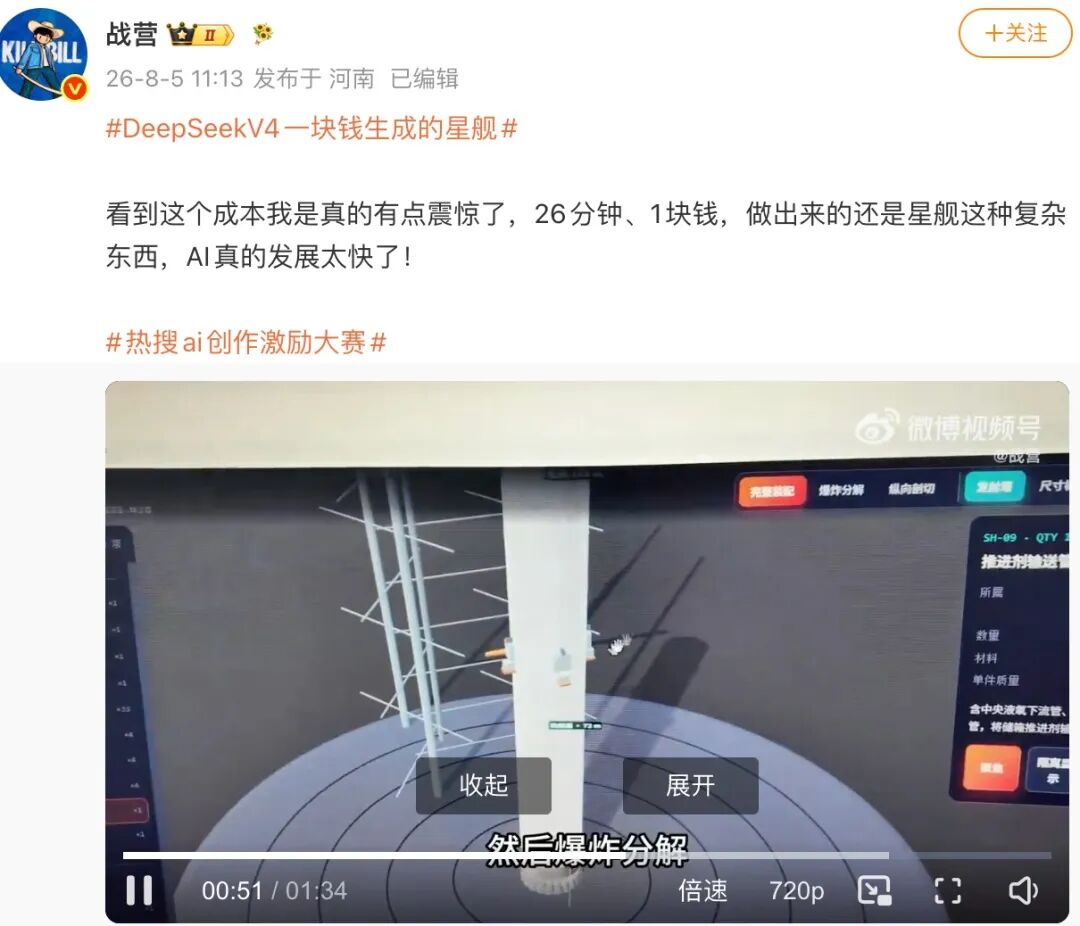
DeepSeek V4 Flash is called the "kill line" of large models. It is not necessarily the best in every test, but its capabilities can cover a large number of real tasks, and its price is low enough.
This cannot be simply summarized as cost-effectiveness. We might as well call it "Intelligence Efficiency Ratio".
If we write it as a formula, the numerator is the model's actual ability to solve problems, and the denominator is the activated parameters, Tokens, time and cost paid for the task.
APPSO has conducted a lot of actual tests on models before, and every time we use the slowest prompt to test its upper limit. This time we want to try a different way: give AI one dollar, see what it can do for us, and whether it can work for us in the long term.
How Much Work Can AI Do For One Dollar
In the past two days, the launch of V4 Pro has been the most concerned event in the AI circle. We use its sibling product DeepSeek V4 Flash Max to build an unofficial status monitoring page for DeepSeek API.
This is not just about writing a page that can be opened. I require the AI to search for information by itself, determine the page structure, design the presentation of status information, and even complete an original two-dimensional mascot.
Let's look at the test results first.
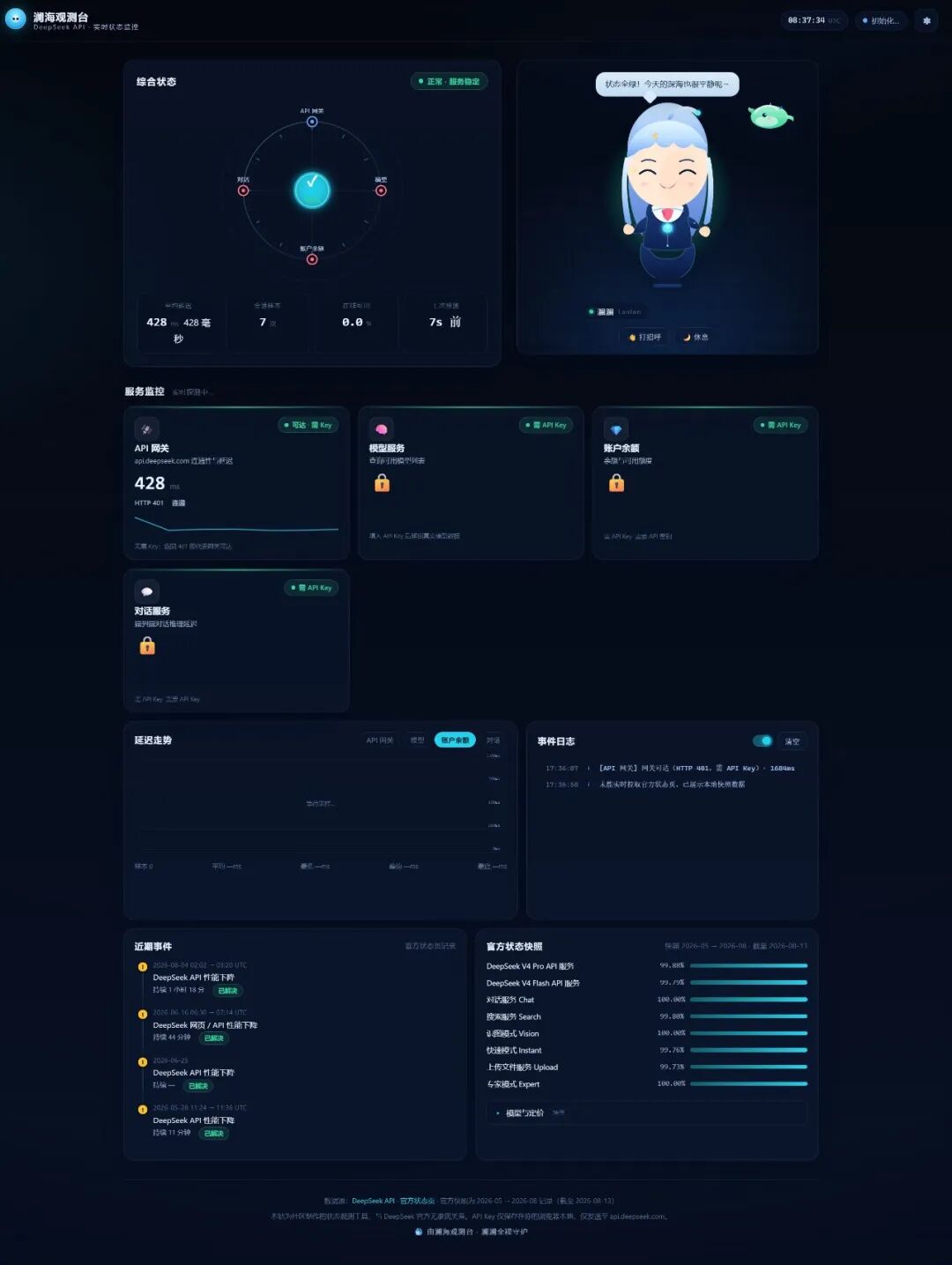
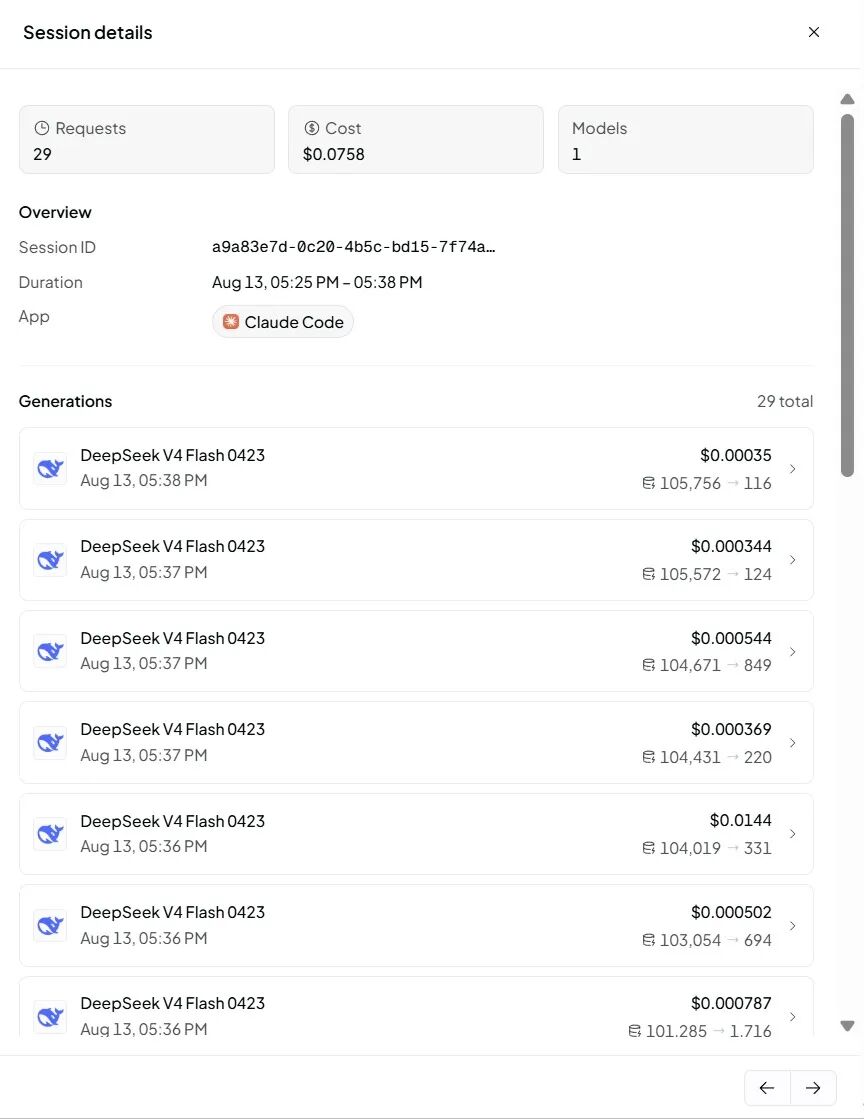
V4 Flash Max ran 25 model calls, with an input volume of 1.22 million Tokens and an output volume of 66,995 Tokens. The total cost was only 0.0758 US dollars, which is really fast, good and economical.
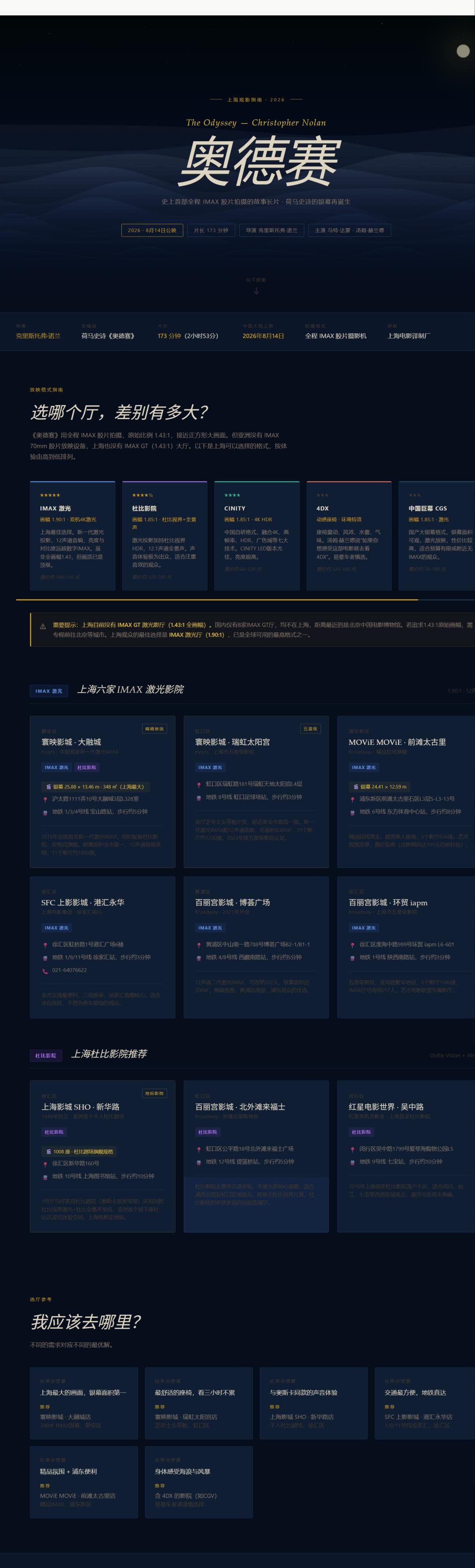
Recently, Nolan's "Odyssey" roadshow screenings are all fully booked, and you have to do a lot of research to choose a suitable cinema. So we continue to assign this task to DeepSeek V4 Flash.
The result delivered by DeepSeek V4 Flash is very detailed and highly referential, but its design still feels a bit unsatisfying.

So I switched to Claude Sonnet 4.6. This time the aesthetic style is indeed closer to the film style of Odyssey, but due to its higher unit price, the total cost reached 2.5 US dollars, which far exceeded our original budget of one dollar.
So we want to find again whether there is a model that performs better than V4 Flash and costs less than Sonnet 4.6.
APPSO checked the Intelligence Index list released by the third-party model evaluation agency Artificial Analysis, and found that besides V4 Flash, there are many new models that achieve excellent cost performance. Among them, there is a model called Ling-3.0-Flash, whose performance is significantly better than other Flash models of the same level with 10B to 15B activated parameters.
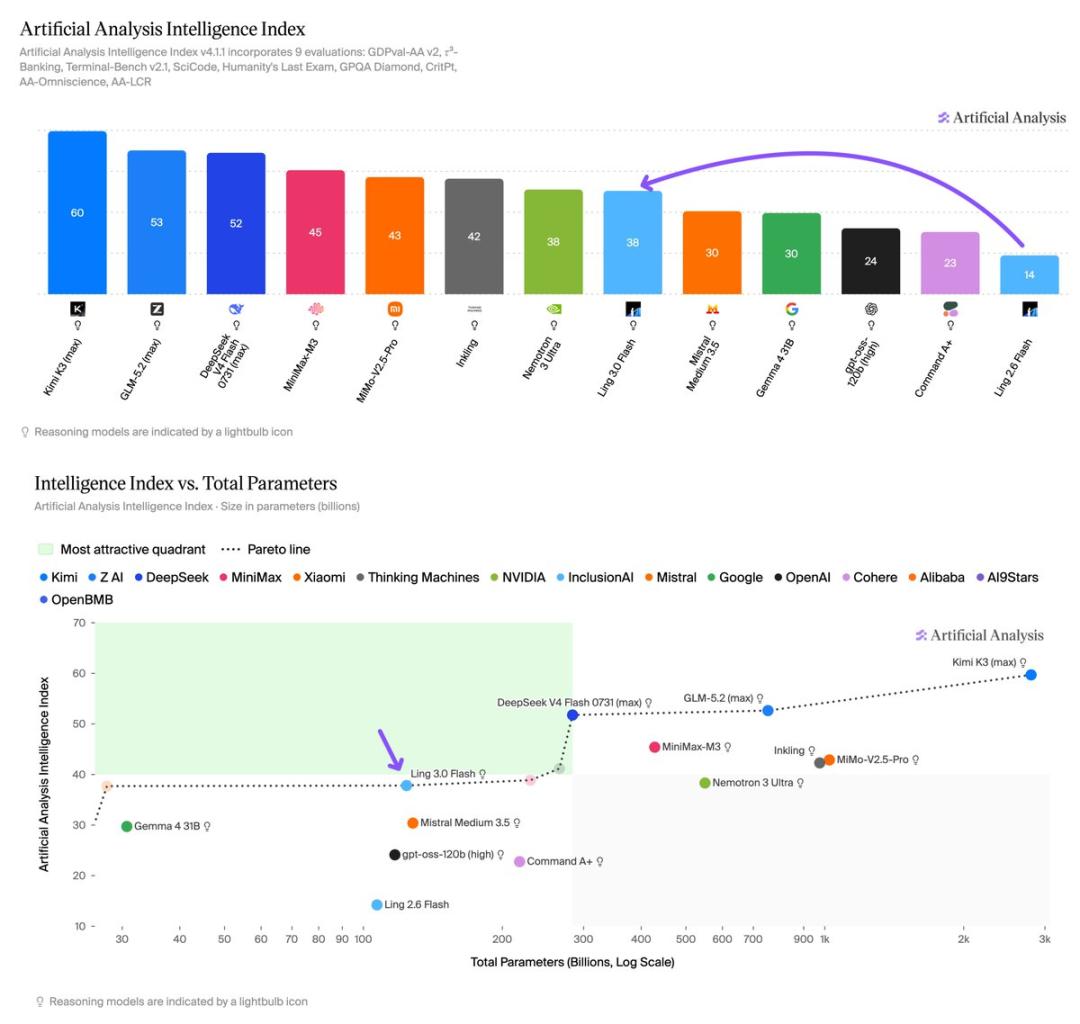
This model from Ant Group is so low-key that I barely noticed it before, but Ling-3.0-Flash scored 38 points in the comprehensive score of the Intelligence Index, tying with MiMo-V2.5 (38 points) and Qwen3.6 27B (38 points).
Although the total parameter volume of Ling-3.0-Flash is 124B, it only activates 5.1B parameters during inference; compared with Qwen3.6 122B which has similar total parameter volume, its activated parameters are only half of the latter.
If we take this score as the "work ability" of the model, the activated parameters are the number of people the AI needs to hire every time it goes to work. The closer it is to the upper left corner of this coordinate axis, the better it can "get big things done with little money".
However, the benchmark score cannot fully represent the actual performance, so we directly let Ling-3.0-Flash redo the previous tasks to see its actual effect.
In the test of the unofficial status monitoring page for DeepSeek API, Ling-3.0-Flash also ran 25 model calls, but the cost was quite different: Ling-3.0-Flash only cost 0.0402 US dollars, 40% cheaper than DeepSeek.
The input volume of DeepSeek reached 1.22 million Tokens, about 30% more than the 940,000 Tokens of Ling-3.0-Flash. The output volume of DeepSeek is 66,995 Tokens, which is 4.5 times that of Ling-3.0-Flash (14,752 Tokens).
This result is a little beyond our expectation. This kind of task can well reflect the sensitivity of high-frequency Agents to model response speed. Ling-3.0-Flash can outperform V4 Flash Max, which makes it feel like a dark horse.
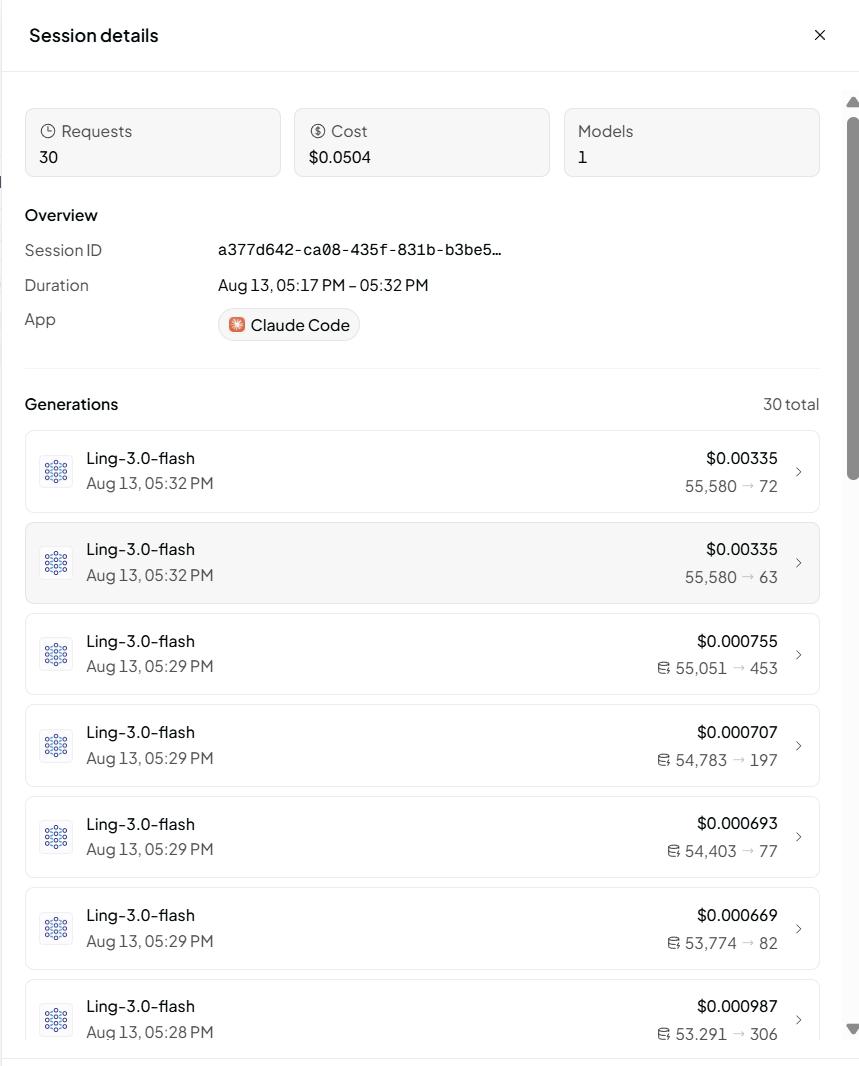
In the case of the "Odyssey" cinema guide, Ling-3.0-Flash took a total of 17 minutes and 55 seconds, with 137 requests recorded in the background, consuming a total of 3.26 million Tokens and costing 0.483 US dollars.
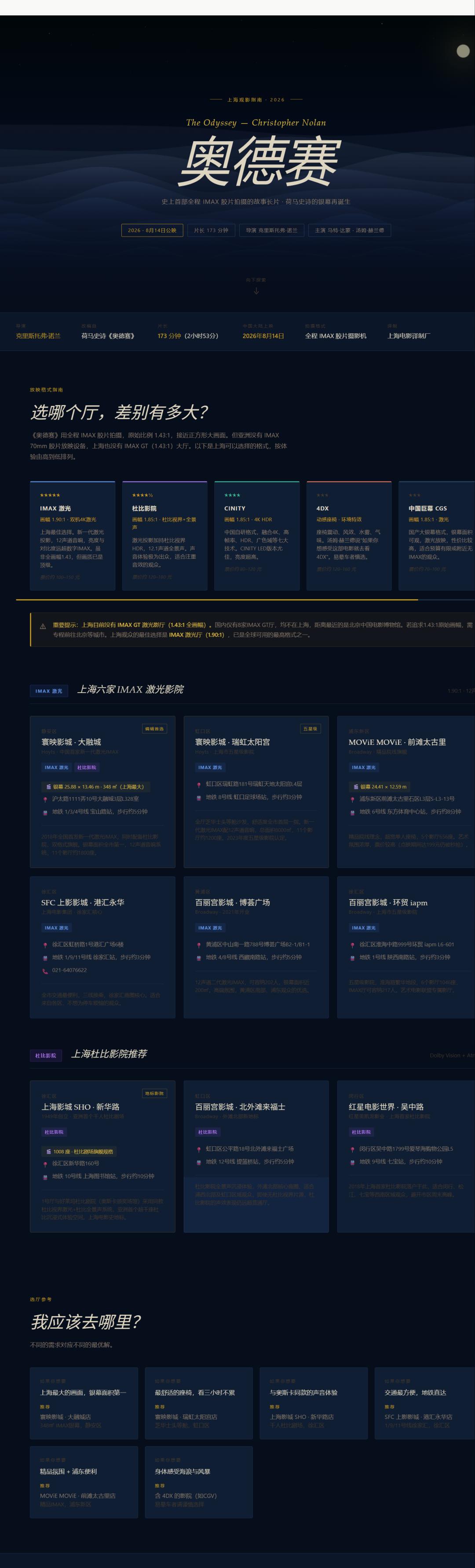
Compared with Claude Sonnet 4.6, which took 16.1 minutes, slightly less than Ling-3.0-Flash, and called tools 14 times, consuming 1.1 million Tokens which seems to be less, but due to its higher unit price, the total cost is 2.5 US dollars, six times that of Ling-3.0-Flash.
However, Ling-3.0-Flash did not completely beat Sonnet 4.6. There are some errors in the cinema recommendations it gave, for example, it recommended the IMAX 70mm format that cannot be watched in the Chinese mainland.
But fortunately, its price is low enough, running the task two or three more times can basically fix these errors, so it is still more cost-effective on the whole.
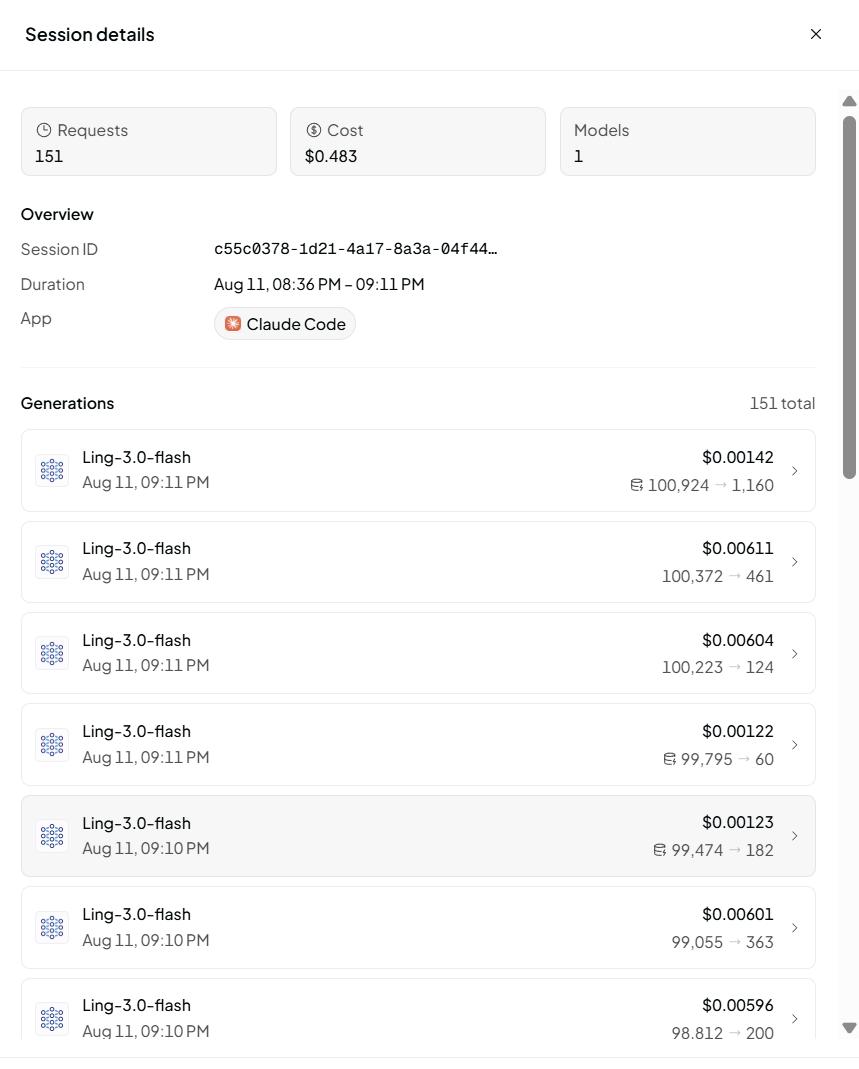
After comprehensive tests, we found that Ling-3.0-Flash is not the model with the highest upper limit of intelligence, but it is very suitable for batch extraction tasks with short input and fixed fields, as well as Agent scenarios that require high-frequency API calls.
The larger the call volume, the more obvious its advantages are. It is definitely a proper dark horse when deployed in the execution layer of high-frequency Agents.
Just as Jensen Huang said, The more you buy, the more you save……
In the Agent Era, How to Choose a "High Intelligence Efficiency Ratio" Model
After seeing the previous tests, you may say that is it necessary to go through all this trouble just to save a few dollars? But what if you multiply this number by thousands or tens of thousands? This is exactly the daily reality of the Agent era.
The unit of AI delivery is changing from individual conversations to complete work tasks.
Data released by OpenAI shows that in May 2026, 70.2% of users have submitted at least one Codex task that requires human workers to spend one hour to complete, and 25.6% of users have submitted at least one task that is estimated to require human workers to spend more than 8 hours to complete.
The top 1% most active users even generate more than 60 hours of Codex Agent running time in a single day. Of course, there are only 24 hours in a day, which means multiple Agents are already working overtime at the same time.
A single task will be split into planning, searching, execution, verification and review. One Agent can call the model for a hundred consecutive rounds, and five Agents can work at the same time.
This is also why DeepSeek V4 Flash caused a "shock" in Silicon Valley. Clem, co-founder of Hugging Face, said that the cost per task varies by about 800 times among different models. The leading flagship models cost more than 31 US dollars per task on average, while V4 Flash Max only costs 0.04 US dollars, which makes open-source models the first choice for cost performance.
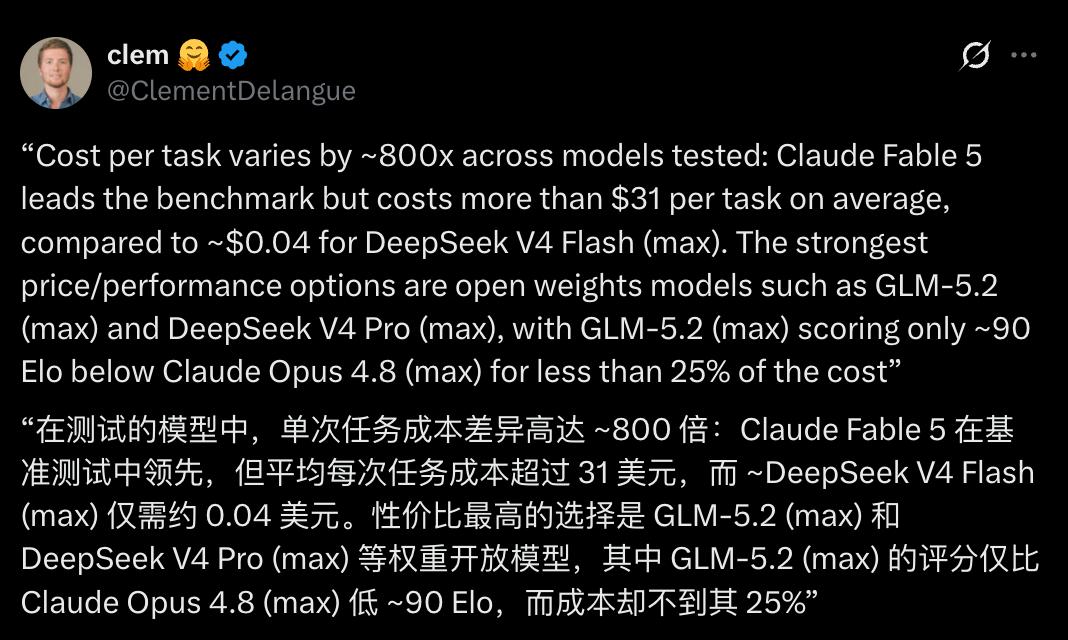
At this point, only when the model has a sufficient "Intelligence Efficiency Ratio", will the Agent dare to check one more source, try three different routes at the same time, and still have the budget to restart after a failed verification.
Open-source AI Agent tool OpenCode posted that the official version of DeepSeek V4 Flash has consumed 8 trillion Tokens through its platform. The Token consumption of this single model on the OpenCode entrance alone in one day exceeds the average daily Token consumption of the entire OpenRouter platform.
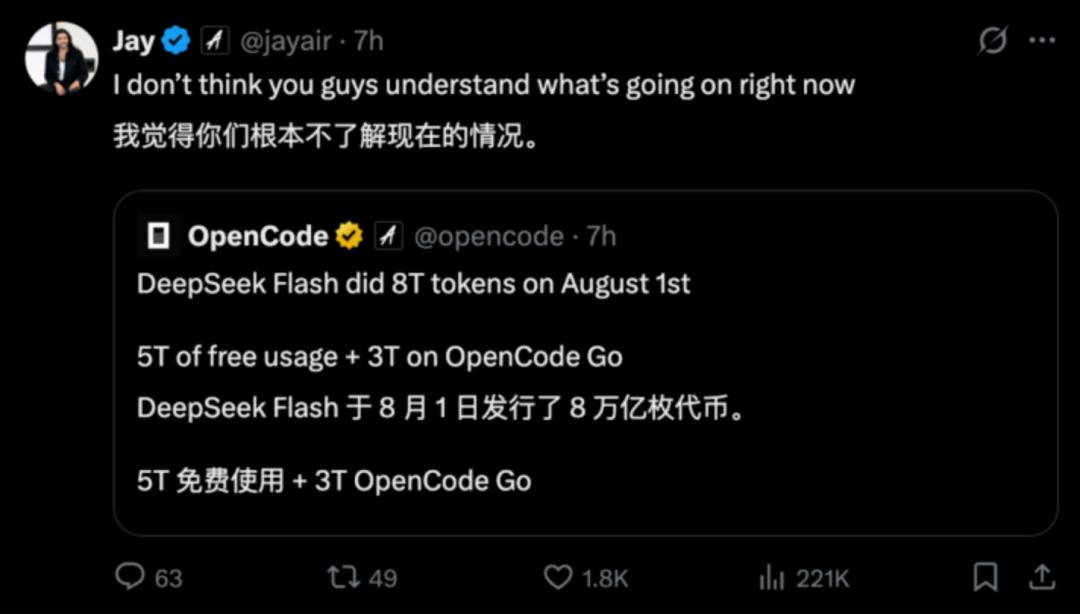
This astonishing data is driven by the "Intelligence Efficiency Ratio". It will determine whether an Agent dares to check one more source, whether it can try three different routes at the same time, and whether it still has the budget to restart after a failed verification.
Only when the response is fast enough, these loops will not queue up layer by layer, dragging a task that originally takes 10 minutes into a marathon. Of course, a model that cannot deliver valid results is just producing rework in batches no matter how low its price is.
