Hands-on test of the official DeepSeek V4 Pro, which has filled the gaps in Agent and image capabilities.
No pre-announcement, no countdown, not even a changelog finished in advance. The official version of DeepSeek V4 Pro has arrived quietly without any fanfare.
In the early hours of August 13, DeepSeek quietly updated its API documentation on the official website. The model name remains deepseek-v4-pro, but the fingerprint has been changed to fp_v4pro_20260812. A quick check of the community shows the news has gone viral — The official V4 Pro is here.
Counting from the launch of the preview version on April 24, it has been a full 111 days.
During this period, the high-profile release of Kimi K3 grabbed all the headlines in the open-source community, the official V4 Flash was launched earlier on July 31, and the notice of API price hike has been hanging over all developers.
Everyone was asking the same question: When will the official Pro version finally arrive?
The answer was on a late night of a Wednesday.
01
Unchanged Architecture, Skyrocketing Performance
Let's start with the hard parameters. The model architecture of the official V4 Pro is completely consistent with the preview version — a MoE structure with 1.6T total parameters and 49B activated parameters, supporting 1M context window and 384K maximum output. What has changed is the post-training, and the change is so huge that it feels like a completely different model.
The most staggering figures come from Agent-related evaluations. DeepSWE, DeepSeek's in-house software engineering benchmark, jumped from 12.8 in the preview version to 62.7, an increase of nearly 50 points. Cybergym rose from 52.7 to 83.3, Terminal Bench from 72.1 to 87.9, and DSBench-Hard more than doubled to 67.2.
All these test items share one common feature — they all involve long-chain code modification, environment operation and tool calling, which was exactly the part where the preview version was most prone to errors.
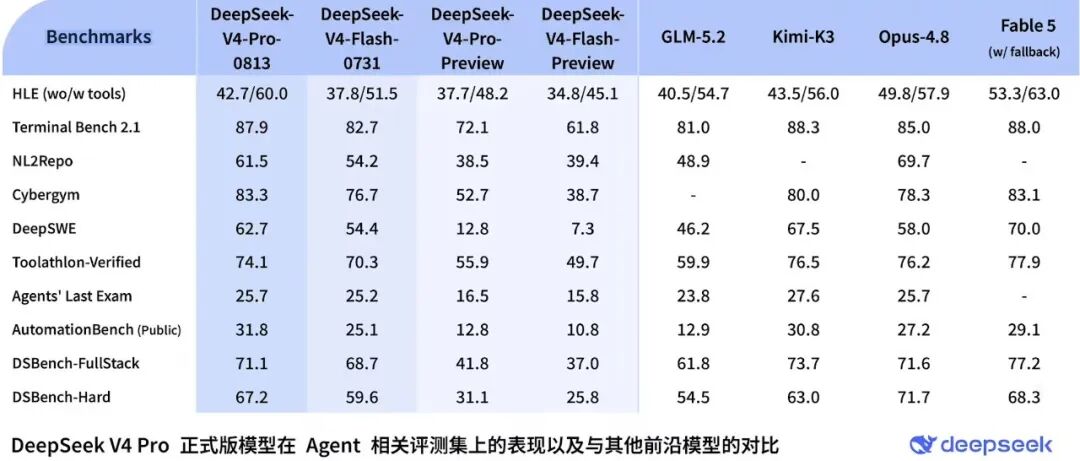
The official DeepSeek V4 Pro has greatly enhanced Agent capabilities | Image source: DeepSeek
It can be inferred from the changelog of the official V4 Flash that the core of this round of upgrade is large-scale post-training for code Agent scenarios. The Flash version has used the same method to make its Agent capabilities reach the level of "far exceeding V4-Pro-Preview in benchmark tests", and the Pro version has just caught up with the same optimization.
Another important change is in multimodality. The preview version is a pure text model, while the official version natively supports image reasoning for the first time. The DeepThink engine can now analyze images, interpret screenshots, and process mixed documents in the same thinking workflow.
This is a breakthrough from scratch for Agent scenarios that require "working with images".
In terms of pricing, it costs 3 yuan per million input tokens and 6 yuan per million output tokens, which is the same as the preview version.
Although DeepSeek has announced on August 6 that it "plans to raise the overall API pricing in the near future with an expected large increase", the 0813 version has not changed its price yet. It is hard to say how long this window will last, so grab the bargain as early as possible if you want to.
02
Performance Ceiling and Characteristics
Good benchmark scores are just an admission ticket, and what really matters is testing the model with real tasks.
Geek Park used the official V4 Pro to run tests in three different directions, trying to answer a question — what level has this model reached in the task of "generating complete and runnable code at one time"?
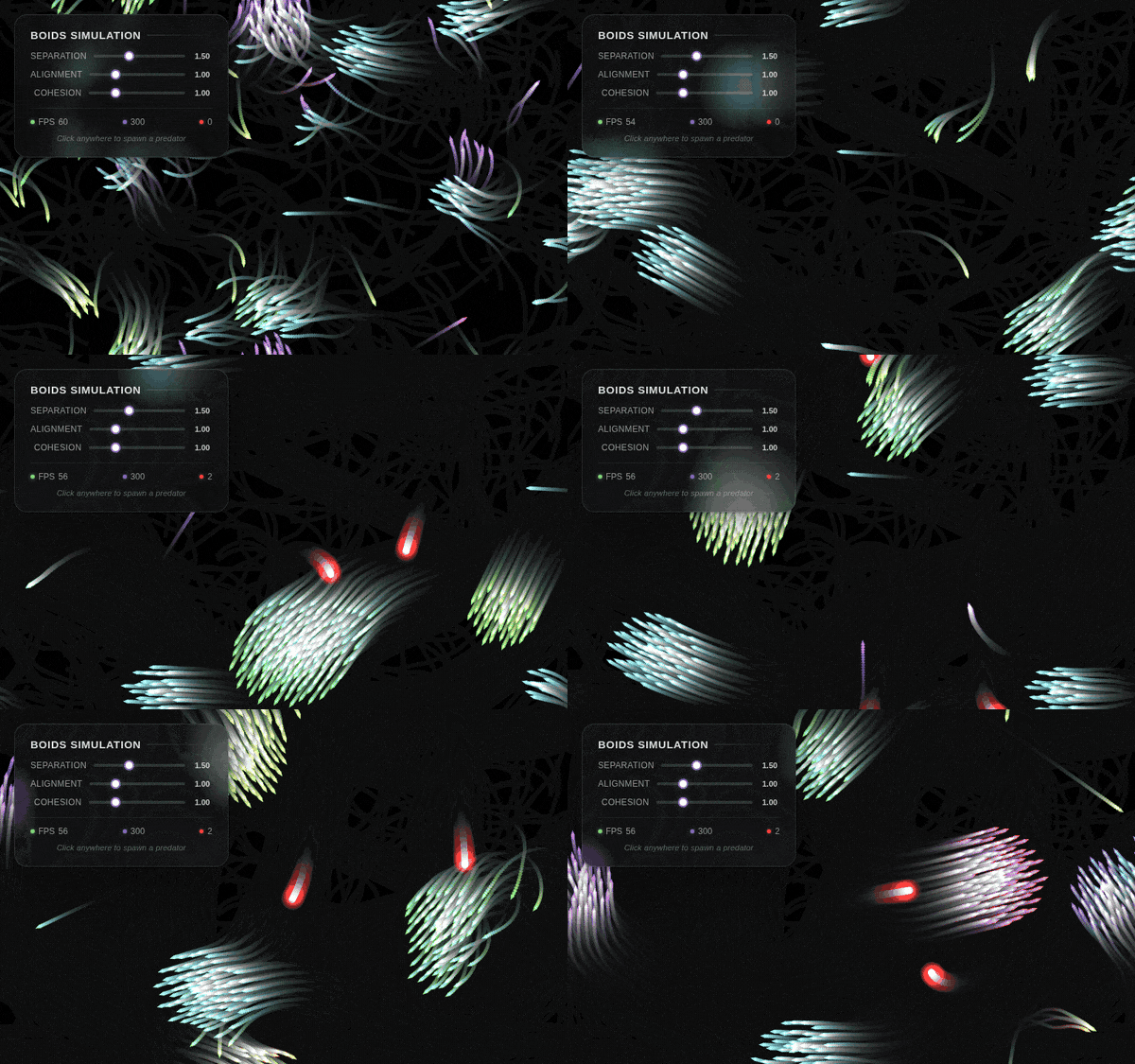
The first task is the Boids swarm emergence simulation. It requires implementing the swarm behavior of 200 triangular boids on Canvas, with three adjustable parameters for separation/alignment/cohesion, colorful trajectories, click to generate predators, and a glassmorphism-style control panel. This is a comprehensive task involving physical simulation, real-time rendering and UI design.
V4 Pro took about 170 seconds to generate 761 lines of complete HTML. When you open the browser, 200 colorful triangles move, gather, disperse and avoid obstacles on the black background, and dragging the slider can change the swarm behavior mode in real time. The effect is smooth, and the code runs successfully at the first attempt.
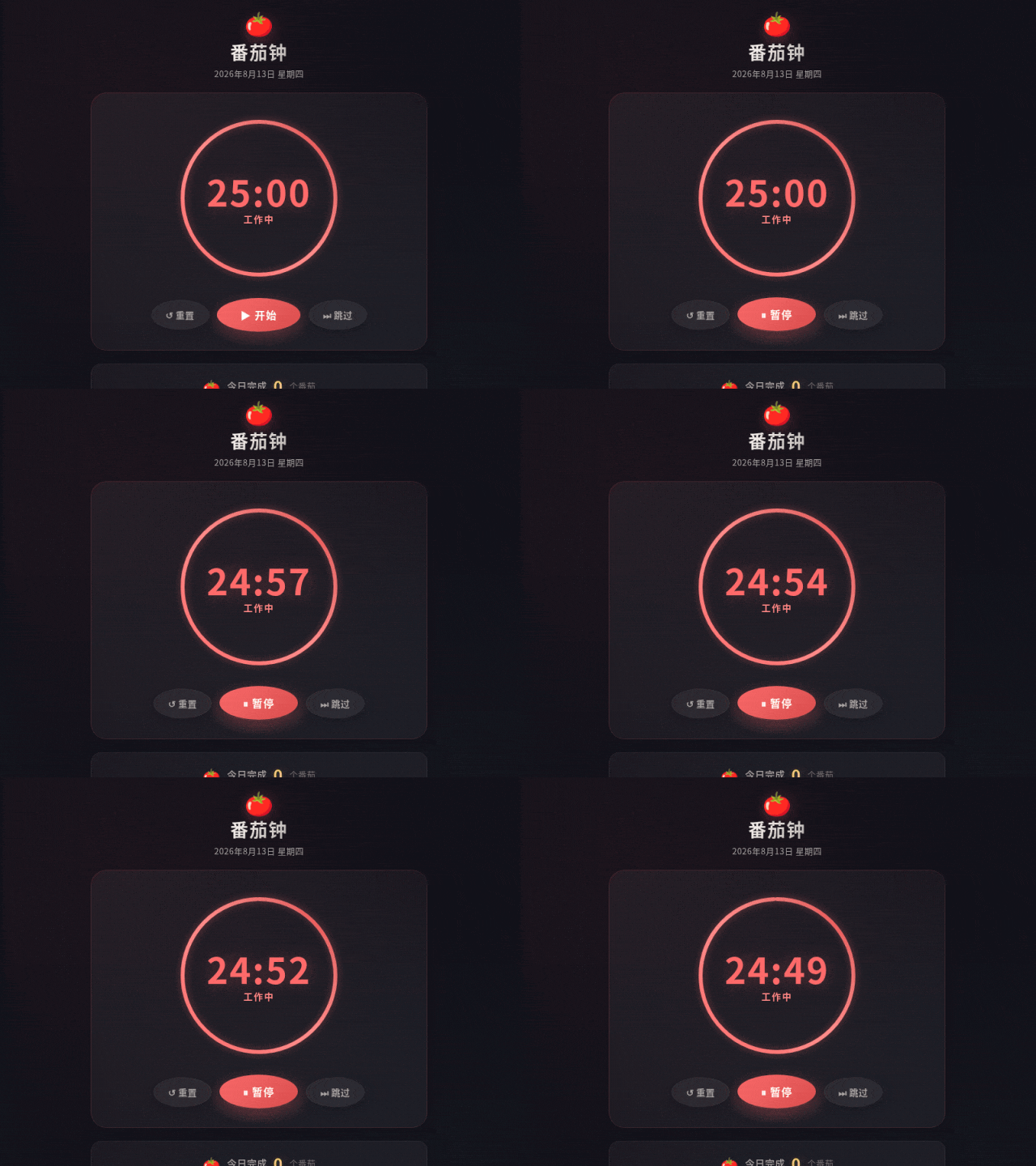
The second task is deliberately vague — tell the model in Chinese "I want a nice Pomodoro work panel", only give a few requirements including "support timing, record tracking, white noise, Chinese interface, and high-quality texture", and leave the rest to the model to decide.
V4 Pro returned 1223 lines of code. In addition to the basic 25/5 minute timing function, it independently added task tags, focus statistics charts, shortcut key support, and even synthesized several types of white noise from scratch using the Web Audio API.
Its ability to "productize and complete" vague requirements has indeed made significant progress compared with the preview version.
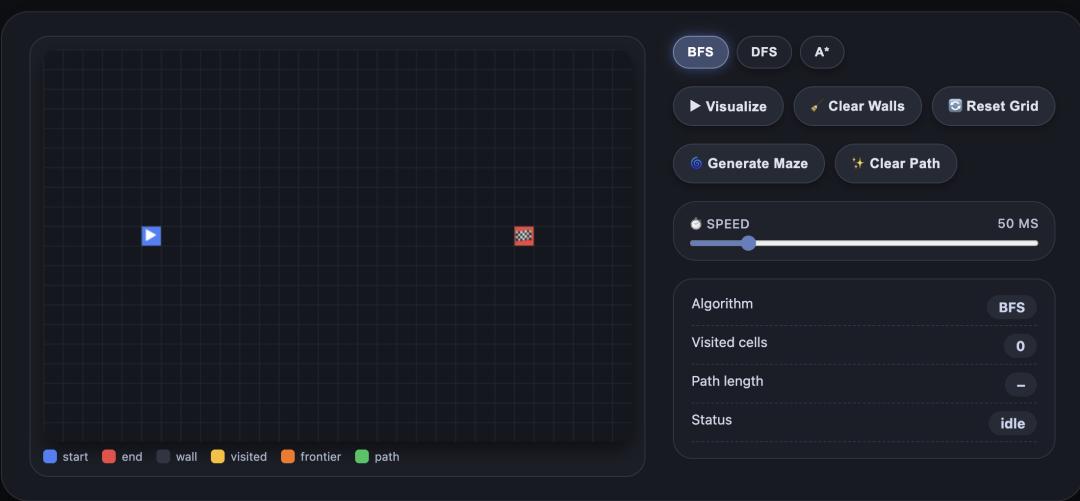
The third task is pathfinding algorithm visualization, which requires implementing step-by-step animations of BFS, DFS and A* algorithms, interactive grid wall drawing, and automatic maze generation. This task has the largest amount of code and is the most error-prone part — but the way it goes wrong is quite interesting.
With the default thinking mode enabled, V4 Pro used up the output quota of 16384 tokens, of which 13394 tokens were spent on "thinking". Less than 3000 tokens were left for the actual code, which was directly truncated, and the HTML was cut off halfway.
Turn off the thinking mode and run it again, it outputs the complete 715 lines of code in 54 seconds, with pathfinding animation, maze generation and dark theme all available.
This is not a bug, but a real feature of the official V4 Pro — in complex code generation scenarios, the reasoning tokens in thinking mode may account for more than 80% of the output, which squeezes the space for actual content instead.
For tasks that require large segments of code output, developers may need to actively turn off thinking mode, or significantly increase max_tokens as a fallback.
03
The Position of the Big Whale
After actual API tests, to be frank, V4 Pro 0813 is not a report card that "beats all rivals in all aspects".
It scores 42.7 in HLE without tool use, lagging behind Claude Opus 4.8's 49.8 and Fable 5's 53.3. It scores 61.5 in NL2Repo, trailing Opus 4.8's 69.7. With Kimi K3 already on the market, it also has a slight gap in some tests.
In terms of pure knowledge reasoning and the most complex software engineering tasks, V4 Pro has not taken the top spot yet.
But DeepSeek never wins by being "the strongest". It wins by the well-known law that everyone can recite — models stronger than me are more expensive, and models cheaper than me are less capable.
The price of 3 yuan per million input tokens is about one-tenth of Fable 5 and one-third of Kimi K3.
After the Agent capability has skyrocketed from "almost unusable" to "able to compete head-on with leading closed-source models", the power of this law is an order of magnitude greater than that in the preview version period.
What is more noteworthy is a line of small text hidden in the changelog of the official V4 Flash — the evaluation uses "DeepSeek Harness Minimal Mode (to be released soon)" as the Agent framework. Combined with the "DeepSeek Harness Team" WeChat official account registered a few days ago and the previous recruitment information, DeepSeek is preparing to launch the model packaged with the Agent runtime framework.
If the past competition was still limited to the dimension of "who has a smarter model", the emergence of Harness means the competition has officially entered the next stage — it is no longer about whose brain is better, but about who can assemble the brain, hands and toolbox into a system that can really work for people.
The official V4 Pro has completed the "brain" part. Next, we just need to see how long we have to wait for that "coming soon" release.
This article is from the WeChat official account "Geek Park" (ID: geekpark), author: Hulin Wuwang, editor: Jing Yu, published with authorization from 36Kr.