11 robotics giants are all in full sprint to go public.
The embodied intelligence track is ushering in a dense wave of IPOs, and the industry is in a critical period of transitioning from technology R&D and early-stage financing to commercial monetization and entry into the capital market. The following is a summary of the listing progress of 11 enterprises that have deployed the humanoid robot track.
1. Unitree Robotics
Unitree Robotics (688836.SH) has entered the final stage of its IPO. The company's application was accepted by the Shanghai Stock Exchange in March 2026, it successfully passed the review and submitted for registration in June, and completed online and offline share subscription on August 10. The issue price is 150.8 yuan per share, corresponding to a total issued market value of about 61 billion yuan. This offering raises 6.099 billion yuan, the online winning rate is only 0.0181%, and the placement ratio for offline investors is 0.0334%, which is a relatively low winning rate.
According to *Core Intelligence Headlines*, Unitree Robotics has a total of 19,414 winning numbers, each of which can only subscribe for 500 A-shares. One winning lot (500 shares) requires a payment of 75,400 yuan, and some winning investors have even put consumption plans such as car purchases on their agenda.
Strategic placement investors including Tencent and DeepSeek are introduced in this offering. After the payment for winning shares and the implementation of subsequent procedures, Unitree Robotics will officially be listed on the A-share market and become "the first A-share humanoid robot stock".
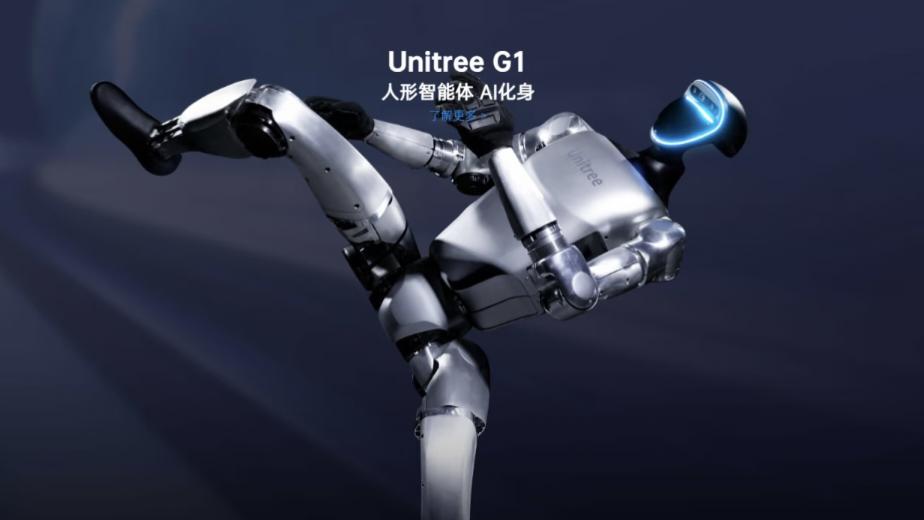
Official data shows that Unitree Robotics achieved revenue of 1.708 billion yuan in 2025, and non-recurring net profit attributable to shareholders of 600 million yuan. To prepare for entering the capital market, Unitree completed the shareholding system reform in May 2025, and the company name was changed from "Hangzhou Unitree Technology Co., Ltd." to "Hangzhou Unitree Technology Co., Ltd.". Shortly afterwards, it completed Series C financing in June, introducing investments from China Mobile, Tencent, Alibaba, Ant Group and other parties. After the financing, the company's registered capital increased from the original 2.889 million yuan to 364 million yuan.
The investor lineup behind Unitree Robotics can be described as "star-studded". In addition to the above-mentioned enterprises, there are also institutions such as Meituan, HSG, CITIC Goldstone, Matrix Partners China, etc. It can be said that Unitree has received multi-party support before entering the capital market, which has laid a solid foundation for its subsequent IPO. In 2025, Unitree shipped more than 5,500 humanoid robots, ranking first in the world, and its global sales of quadruped robots are also leading, with performance and commercialization capabilities leading the industry.
It is worth mentioning that in 2018, DJI had the opportunity to take 17% equity of Unitree with about 10 million yuan, but it did not complete the capital contribution in the end. Calculated at the issue price, this missed investment corresponds to a current market value of as high as 3.7 billion yuan. It is unknown whether DJI will feel regretful when seeing the current prosperous situation of Unitree.
2. Deep Robotics
As one of the "Six Little Dragons of Hangzhou", Deep Robotics' IPO status on the Shanghai Stock Exchange was recently changed to "Inquired", entering the listing review stage. Deep Robotics' application was accepted on May 18 this year. For this IPO, Deep Robotics plans to issue no less than 82.98 million shares, raising 2.503 billion yuan.
The company's revenue last year was 337 million yuan, with a net profit of 28.68 million yuan. In 2025, it completed multiple rounds of intensive financing. The industrial capital among the shareholders includes JD.com, SMIC Puhua, National Artificial Intelligence Industry Fund, etc. In addition, well-known capital institutions such as Dachen Caizhi, CMBC International, and China Asset Management have also taken shares.
Founded in 2017, the company focuses on the R&D, production, sales and service of quadruped robots, humanoid robots and their core components. Among them, the Jueying series quadruped robots developed and produced by the company have been put into actual use, and the DR02 humanoid robot has all-weather operation capability, which brought 322 million yuan of revenue last year. The prospectus cites data from Sullivan showing that in 2025, Deep Robotics ranked first globally in revenue from industrial application of quadruped robots, second globally in total quadruped robot revenue, and fourth globally in embodied intelligent robot revenue.
3. Leju Intelligent
On May 19, 2026, the Shenzhen Stock Exchange accepted the ChiNext IPO application of Leju Intelligent Co., Ltd. This is also the first enterprise that chooses to apply for listing with the fourth set of ChiNext standards, planning to raise 2.6 billion yuan with an estimated valuation of about 10 billion yuan, which is at the first echelon level in the industry.
Leju's 2025 revenue was 258 million yuan. Last year, Leju Robotics announced that it had completed a Pre-IPO round of financing of nearly 1.5 billion yuan. The funds will be used for core technology R&D, deepening industrial chain layout and improving industrial scenario applications, with investors including institutions such as Shenzhen Investment Control Capital, Shenzhen Longhua Capital, and Qianhai Infrastructure Investment.
Founded in 2016, Leju took basic programming education as the market entry point in the early stage, launched its first small humanoid robot product, then began to enter the full-size humanoid robot track in 2018. Its product matrix covers the full-size Kuavo series, small and medium-sized Roban series, and small Aelos series. In 2025, the full-size Kuavo series shipped 577 units, reaching vehicle-grade mass production standards, and has been deployed in scenarios such as scientific research and education, industrial production, and commercial services.
4. Dobot
Dobot's IPO application was reviewed and approved by the Listing Committee on July 22, becoming the first "H-share to A-share" case in the Guangdong-Hong Kong-Macao Greater Bay Area after the implementation of relevant policies for the comprehensive reform pilot in Shenzhen.
Dobot was listed on the Hong Kong Stock Exchange in December 2024, becoming "the first collaborative robot stock on the Hong Kong Stock Exchange". One year after its H-share listing, it officially launched its A-share listing plan in December 2025. It is understood that Dobot's IPO application was accepted on April 27, 2026, and its status was updated to "Inquired" only ten days later.
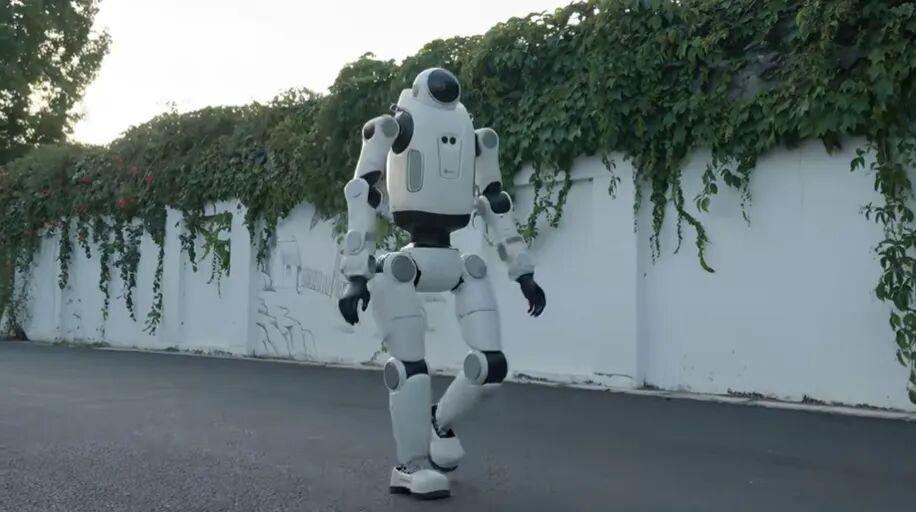
Founded in July 2015, Dobot has received support from dozens of well-known institutions such as Shenzhen Venture Capital Group, Qianhai Mother Fund, China Internet Investment Fund, and Daosheng Capital in its 8 previous rounds of financing. In 2025, Dobot achieved revenue of 493 million yuan, a year-on-year increase of 31.7%. However, such high growth did not bring profitability. From 2023 to 2025, the company's net profit attributable to shareholders was -103 million yuan, -95 million yuan and -84 million yuan respectively, and the loss margin is narrowing year by year.
The company's main business is collaborative robots. In 2025, the annual shipment of Dobot's collaborative robots jumped to the first place in the world, exceeding 100,000 units in total, and continued to maintain the leading position of the largest shipment volume of domestic brand collaborative robots going global.
5. Standard Robots
On July 27, 2026, Standard Robots submitted its prospectus to the Hong Kong Stock Exchange, planning to list on the Hong Kong Main Board. This is another application after its two previous submissions in June 2025 and January 2026 expired.
Founded in 2016, Standard Robots' prospectus shows that starting from the angel round of financing in 2016, it has gone through Pre-A, A, B, Pre-C, C and other rounds, with its valuation rising all the way. The post-investment valuation of the Pre-C round in 2021 was about 2.1 billion yuan. Its investors include Guoke Jiahe, Pine Capital, Source Code Capital, Xiaomi, etc.
The company mainly provides industrial intelligent mobile robots and industrial embodied intelligent robot solutions. Industrial intelligent mobile robots are intelligent robots with autonomous navigation and movement capabilities in industrial scenarios, including AGV (Automated Guided Vehicle) and AMR (Autonomous Mobile Robot), which can independently complete tasks such as path planning, obstacle avoidance, and material handling. In terms of finance, Standard Robots' revenue shows a growing trend. In 2023, 2024 and 2025, the company achieved revenue of about 162 million yuan, 251 million yuan and 301 million yuan respectively; in the first four months of 2026, it achieved revenue of about 107 million yuan.
6. Youibot
Youibot submitted its prospectus to the Hong Kong Stock Exchange again in March 2026, striving to become "the first mobile manipulation robot stock on the Hong Kong Stock Exchange" through the 18C special technology listing rule of the Hong Kong Stock Exchange, with China International Capital Corporation as the sole sponsor. It is currently in the stage of waiting for inquiry after submission. Since its establishment, Youibot has obtained multiple rounds of financing. It ranks leading in the global industrial mobile manipulation robot market, and completed more than 300 million yuan of cumulative financing in the Series B round in 2021. In 2023-2024, it introduced local state-owned capital such as Hefei Dongcheng Industrial Investment, and there was a share transfer of old shares before the IPO application.
Youibot is an industrial embodied intelligent technology company, committed to driving the intelligent transformation of global industrial customers through mobile manipulation robots, to achieve stable, flexible and efficient production. Its revenue in 2025 was 340 million yuan. Its customers include leading global semiconductor wafer foundries, leading Chinese power grid groups and energy groups. According to the Sullivan report, Youibot is the pioneer and leader of global industrial embodied intelligence, which realized the sales of embodied intelligent products as early as 2017, and is one of the world's earliest robot manufacturers to explore embodied intelligence technology and achieve large-scale application.
7. Galaxies
On January 23, 2026, Galaxies officially submitted its listing application to the Main Board of the Hong Kong Stock Exchange, with China International Capital Corporation as the sole sponsor. On the eve of the submission, the company just completed 180 million yuan of financing, with investors including ByteDance, Lenovo Capital, Shenzhen Venture Capital Group, and Supcon Technology. Its pre-investment valuation was 1.95 billion yuan, and post-investment valuation was 2.13 billion yuan.
As one of the few manufacturers in the world with full-stack independent R&D capabilities for mobile robots, all Galaxies' products are built on a unified technology platform, integrating multi-modal perception, self-developed 4C technology architecture and scalable software and hardware stacks, supporting large-scale cluster scheduling of robots. Its products include multiple categories such as autonomous mobile robots, fork-type robots, and outdoor mobile robots. According to data from CIC Consulting, measured by order value, the company has become one of the top ten intelligent mobile robot manufacturers in the world by the beginning of 2026, ranking top 5 globally in the industrial intelligent robot field and top 3 in China, with customers covering more than 20 countries and regions.
8. UBTECH
UBTECH was listed on the Main Board of the Hong Kong Stock Exchange on December 29, 2023, with the stock code 9880.HK, becoming "the first humanoid robot stock on the Hong Kong Stock Exchange". The company's issue price was HK$90 per share, corresponding to a market value of about HK$37.6 billion at the time of issuance. It completed a total of more than 5.6 billion yuan of financing before listing, with investors including Tencent, iFlytek, Qiming Venture Partners and local state-owned platforms.
Since its establishment more than ten years ago, UBTECH has always adhered to full-stack independent R&D of humanoid robots, mastering core capabilities such as hardware control, AI algorithms, and robot operating system ROSA2.0. Among them, the Walker series is one of the earlier full-size humanoid robots in China to achieve commercial implementation. Walker S2 has the world's first 3-minute ultra-fast autonomous battery swapping technology, completed mass delivery of 1,000 units in 2025, and has been deployed in factories of many automobile enterprises such as NIO, covering industrial fields such as aviation and automobile manufacturing, with its market share of industrial humanoid robots ranking top 3 in the world.

In 2025, the company's annual revenue reached 2.001 billion yuan, of which the sales volume of full-size humanoid robots was 1079 units. In 2026, the company accelerated its commercialization, signed a contract to build a humanoid robot final assembly base in Yancheng, Jiangsu in April, with a planned production capacity of 10,000 units. In June, it released the ultra-realistic humanoid robot U1 series, and the total orders across all channels exceeded 13,000 units after launch, which is expected to officially start mass delivery in September, opening up a new track of consumer-grade companion humanoid robots.
9. Agibot
In July 2026, Agibot officially confirmed the launch of the listing process in Hong Kong, with a target valuation of HK$40 billion to HK$50 billion. If the listing goes smoothly, the company will build an "A+H" dual capital platform (it has taken controlling stake in A-share listed Shangwei New Material). The company has completed more than ten rounds of financing in total, with investors including Tencent, BYD, JD Technology, etc.
Agibot is the fastest-growing star enterprise in the embodied intelligence track in recent years, co-founded by Deng Taihua, former senior executive of Huawei, and Peng Zhihui (known as "Zhihui Jun"). In 2025, the company's revenue exceeded 1.05 billion yuan, making it the fastest robot company in China to achieve revenue exceeding 1 billion yuan. It completed the shareholding system reform in November 2025, and there were many rumors in the market about its plan to list in Hong Kong, all of which were refuted by the company.
The latest data shows that in the first half of 2026, Agibot shipped about 8400 units, accounting for 44% of the global market share, surpassing Unitree Robotics to rank first. At the end of March this year, Agibot announced that its 10,000th general embodied robot was officially off the production line, with its large-scale delivery capability far ahead. At present, it has formed four robot series: Yuanzheng, Lingxi, Jingling and Kutoruo, covering multiple forms such as full-size humanoid, semi-humanoid, wheeled and quadruped, which are deployed in scenarios such as industrial manufacturing, logistics, and commercial services. According