The deep-sea robot industry has witnessed explosive growth, giving rise to the most robust Series A financing round.
A landmark financing deal that sets the industry trend has been born.
Today (August 13th), DeepMatrix Intelligence announced that it has completed a Series A financing of over 500 million yuan, with an impressive lineup of investors —
New shareholders include Photon Ventures, Fortune Capital, GGV Capital, Yida Capital, China Insurance Investment, CETC Investment, and the energy technology fund managed by Cathay Capital with TotalEnergies as the capital contributor; at the same time, a group of existing shareholders such as Zhengxuan Investment, Yunze Capital, Yunshi Capital, Gaojie Capital, and Xingzhi Capital have made large-scale follow-on investments.
PE Daily obtained a set of data: as of July this year, DeepMatrix Intelligence has completed hundreds of millions of yuan in new sales contracts for full deep-sea robots, the scale of pending orders to be signed in the next two months is also hundreds of millions of yuan, and there are potential orders worth 10 billion yuan under in-depth negotiations.
The outside world may not know that this Chinese deep-sea robotics enterprise has been expanding its footprint across the globe. At its helm is a veteran of deep-sea technology — Ma Yiming. Three years ago, he led DeepMatrix Intelligence to set sail from the Greater Bay Area, heading straight to the forefront of the global marine industry, and engraved its footprint on the global deep-sea technology map with a series of high-value hard-core orders.
With robots diving into the deep sea, a grand narrative that intertwines global deep-sea exploration and robotics has officially begun.
Top-tier VC/PE Gather Together
Trend Indicator
Looking through this list of Series A investors, there is much food for thought.
First of all, there are four top market-oriented VCs — Photon Ventures, Fortune Capital, GGV Capital, and Yida Capital. As far as we know, this is their first move in the deep-sea track, which reflects the primary market's judgment on the industry inflection point.
This scene coincides with the view of "godfather of entrepreneurship" Professor Li Zexiang: the second half of AI needs to be combined with scenarios, that is, AI + hardware + scenarios, which is a boundary of embodied intelligence. He believes that for different scenarios from sea, land to air, we must fully understand the needs and pain points of users, but the only constant element is market implementation.
This is also why top-tier VCs collectively appear behind a deep-sea robotics enterprise. For them, this is not a random trial, but a strategic layout finalized based on long-term research and evaluation, marking the implementation of embodied intelligence in deep-sea scenarios.
"Our sincerity of visiting the company three times moved the team." Cai Wei, Partner of Photon Ventures, recalled: when the team first contacted DeepMatrix Intelligence, the latter's willingness to raise financing was not strong. To this end, the Photon Ventures team took turns to stay at the enterprise, communicated with the founder about their understanding of the industry from the perspective of investors; at the same time, they helped offer suggestions in areas such as overseas customer referrals, the company's future development layout, product iteration, engineering system and technical route formulation, and finally facilitated this investment.
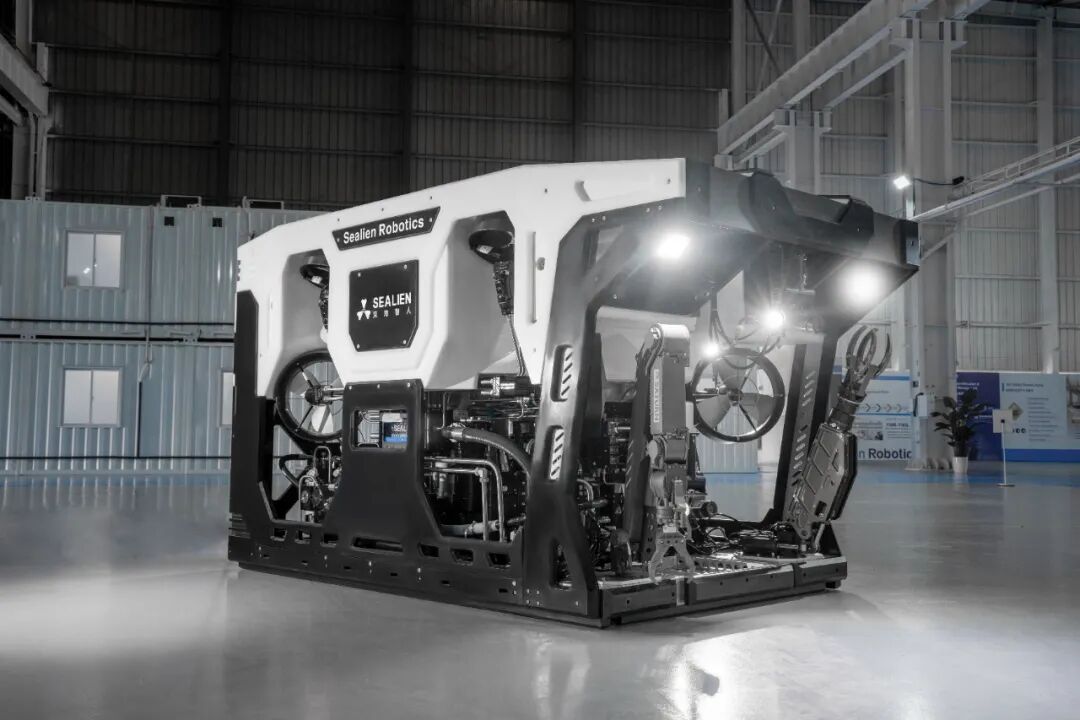
"Singularity" Deep-sea Work-class Robot
The GGV Capital team sees the unlimited space hidden under the sea surface — with the advancement of human science and technology, the boundaries of economic activities are being continuously expanded. In recent years, the deep-sea economy has become a new high ground for global strategic competition: offshore oil and gas development, submarine communication, offshore wind power, as well as a number of trillion-level industries including expanding seabed mineral resource development and seabed computing centers, have spawned a huge deep-sea robot market. "With DeepMatrix Intelligence's integrated capabilities in AI and robot software and hardware, as well as its commercial implementation for scenarios such as oil and gas, mining, and seabed data centers, DeepMatrix is expected to reconstruct deep-sea operation efficiency and service modes, and form a new business model for continuous operation and long-term repurchase."
There are also state-owned capital making joint investments — China Insurance Investment and CETC Investment. Among them, China Insurance Investment acts as the manager of the China Insurance Investment Fund, one of its tenets is to "adhere to serving the national economic development strategy"; CETC Investment is a wholly-owned subsidiary of China Electronics Technology Group, based on the positioning of "strategic investment core support unit". The simultaneous presence of the two major state-owned capitals in one financing, to some extent, represents recognition from the perspective of national strategy.
The industrial signal comes from Cathay Capital's entry. PE Daily learned that the DeepMatrix Intelligence team once flew to Shanghai specially to communicate with the chairman of TotalEnergies' global board of directors. After in-depth evaluation of the company's technical strength, product capability and industrialization prospects, the Cathay Capital Energy Technology Fund with TotalEnergies as the cornerstone LP finally made the investment. At the same time, DeepMatrix Intelligence's technology and products have further reached TotalEnergies' global deep-water projects, further opening up the space for international industrial implementation.
The endorsement of the global energy giant speaks for itself — in the global deep-water oil and gas development field, TotalEnergies is one of the most influential players, and its selection of deep-sea equipment suppliers has always been known for being extremely strict.
Zhang Li, Partner of Cathay Capital, said frankly that the uniqueness of DeepMatrix Intelligence lies in the fact that it is rooted in the most difficult-to-replicate engineering system in extreme environments on one hand, and redefines the new paradigm of deep-sea operations through intelligent models and multi-robot collaboration on the other. "We believe this is not only a growth opportunity for a deep-sea robotics company, but also represents an important direction for artificial intelligence to enter the real industrial world and promote the paradigm shift of marine development."
In addition, there is a large-scale follow-on investment from a group of existing shareholders. At a time when the overall primary market tends to be cautious, the collective follow-on investment of existing shareholders often means high recognition of the company's development rhythm and growth certainty.
Looking back at DeepMatrix Intelligence's financing history, this trend is even clearer: as early as May 2023, the company completed an angel round financing led by Zhengxuan Investment and Shenzhen High-Tech Investment; in July 2024, it completed a Pre-A round financing led by Guangzhou Financial Holdings and Gaojie Capital; from April to June 2025, it obtained a Pre-A+ round financing of hundreds of millions of yuan led by Yunze Capital and Yunshi Capital.
The completion of this Series A financing of over 500 million yuan is the core signal that the primary market votes with real money to confirm the long-term deterministic value of the deep-sea track. An early investor sighed: "Among the projects we have invested in, DeepMatrix Intelligence is the only one that can meet or exceed the goals set at each previous meeting. This kind of certainty is extremely valuable in hard technology entrepreneurship."
A Rising Sample of Deep-sea Robotics
Explosion of Overseas Orders
The most simple consensus in the venture capital circle is that investing means investing in people.
Ma Yiming is undoubtedly the soul figure of DeepMatrix Intelligence. He graduated from the Harbin Engineering University majoring in Naval Architecture and Ocean Engineering in 2013, and has since forged an indissoluble bond with the deep sea. After that, he worked for a long time in internationally renowned deep-sea robotics companies as the chief technical director; he is also the first domestic industrial talent to systematically introduce European and American deep-sea robot technologies.
It is worth mentioning that he has also participated in the formulation of a number of national standards for underwater robots, participated in the completion of the world's first commercial deep-sea mining robot "Nautilus", and led the completion of major R&D projects such as ultra-deep water work-class ROV complete machines and China's first heavy-duty seabed operation robot, promoting the introduction, innovation and commercial implementation of core deep-sea robot technologies.

Many years later, when recalling the scene when he first entered the industry, Ma Yiming still remembers it vividly: completely different from the scattered, handmade "prototypes" in university laboratories that people imagine, rows of heavy-duty work-class deep-sea robots in the workshop are lined up like steel behemoths. "It brought us a subversive shock at the cognitive level, just like people in a repair shop suddenly walked into the final assembly line of Volkswagen."
Until 2023, the sense of shock buried in his heart back then became the most direct driving force for Ma Yiming to make up his mind to independently develop deep-sea robots. So he started his entrepreneurial journey, and DeepMatrix Intelligence came into being.
As we all know, the deep sea of several kilometers is subject to five extreme constraints at the same time: hundreds of times of water pressure, high-salt corrosion, dark and turbid environment, disordered ocean currents, and underwater acoustic communication delay. Looking at the current marine robotics enterprises in the domestic market, most of them focus on consumer-grade or light-industrial-grade underwater robots, with a general operating depth of less than 100 meters, which means they can only complete some specific functions and are completely unable to meet the needs of deep-sea operations.
Since its establishment, DeepMatrix Intelligence has always focused on the rigid industrial scenarios in the deep sea, and this rarity is extremely valuable. The reason behind it is self-evident — the work-class ROV (Remotely Operated Underwater Vehicle), which can work in high-pressure deep-sea environments of thousands of meters or even several kilometers, is an indispensable "national heavy equipment" for deep-sea oil and gas development, submarine communication, offshore wind power, seabed infrastructure construction and future deep-sea mining.
But we cannot ignore a somewhat glaring fact: this "national heavy equipment" has long been dominated by European and American enterprises, leading to China's high-end deep-sea robots relying on international brands and overseas technical systems. What DeepMatrix Intelligence wants to do is to break this situation and achieve breakthroughs of Chinese original technologies on a global scale.
The difficulty is imaginable. On the one hand, the technical architecture of land robots and shallow sea observation equipment cannot be directly reused, and all power, control and sealing systems must be developed from scratch for the deep-sea environment, and the cycle of individual technical research is generally calculated in years; on the other hand, European and American manufacturers have a complete standard system covering 100,000 levels of parts, including design, supply chain management, testing and verification, and project delivery, which is a huge gap for domestic enterprises to cross.
At the beginning of its entrepreneurship, DeepMatrix Intelligence gave up the short-term route of quickly making prototypes, spent a lot of time to precipitate more than 300 self-developed internal standard manuals, fully benchmarked against the world's top offshore engineering specifications, and made up for the shortcomings of complete delivery systems that domestic enterprises lack. "This intangible digital asset has become the core competitiveness that pure hardware integrators and algorithm teams cannot replicate in the short term."
In addition, different from the past industry model of purchasing core components and simple assembly, DeepMatrix Intelligence insists on full-link positive independent R&D of the complete machine pressure-resistant structure, hydraulic manipulator, underwater navigation, underlying control system, and intelligent algorithm. At the same time, it adopts a modular hardware architecture, the general base covers 90% of the industry's needs, and the remaining 10% expands the operation modules as needed, which greatly reduces the cost.
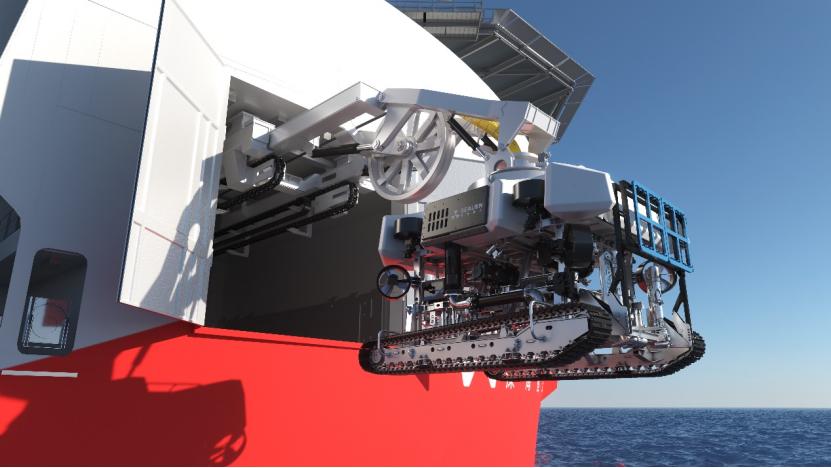
"Phoenix 600" Deep-sea Suspensible Work-class Robot
Thanks to this, DeepMatrix Intelligence's first product "Taurus" deep-sea heavy-duty operation robot took only 10 months from conceptual design to final assembly and commissioning, while European and American enterprises usually take 18-20 months. It is worth mentioning that the first "Taurus" achieved "zero-failure" continuous operation in its first application in the Zhanjiang Wailuo Offshore Wind Farm project of SPIC.
To date, DeepMatrix Intelligence has built a product matrix covering full-water-depth deep-sea operation scenarios, including:
"Singularity" deep-sea work-class robot (operating depth 6,000 meters);
"Phoenix" deep-sea suspensible work-class robot (operating depth 3,000 meters);
"Taurus" deep-sea heavy-duty work-class robot (operating depth 1,000 meters);
Deep Matrix seabed resident unmanned robot cluster solution, which as part of the solution also covers Autonomous Underwater Vehicle (AUV), deep-sea mission decision-making large model system SEAgent, etc.
A very milestone scene came in the summer of 2025, when DeepMatrix Intelligence successfully won an order from Etisalat Group, delivering a "Phoenix 600" deep-sea robot worth nearly 10 million US dollars; in October of the same year, based on the good cooperation experience of the first "Phoenix", Etisalat placed another order, realizing continuous procurement of "1+2".
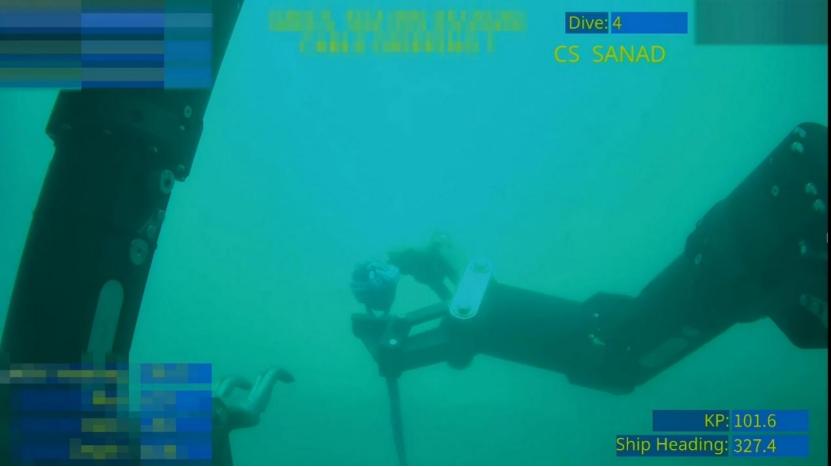
"Phoenix 600" Deep-sea Real-scene Operation
Few people know the story behind it. Ma Yiming said frankly that at that time, the customer was very unfamiliar with DeepMatrix Intelligence, so he personally led the team to Dubai to demonstrate the "Phoenix 600" to the customer in person. The product is a complete suspensible deep-sea pipe and cable laying robot system, with a maximum diving depth of 3000 meters, representing the deepest commercial sea area. Its full set of design, testing and delivery systems are benchmarked against the top European and American standards, fully independently developed by DeepMatrix Intelligence, and empowered by AI.
The expert team of Etisalat then came to China and conducted in-depth research on the company: reviewing the full-process technical documents of projects such as "Taurus"; randomly selecting and visiting more than a dozen core suppliers to check process documents and quality records; conducting marathon-style technical defenses with DeepMatrix Intelligence's mechanical, electrical, software, and hydraulic professional teams, making the company's technical advantages clear at a glance.
In the end, DeepMatrix Intelligence did not rely on low-price competition, but impressed the Middle East customers with a "zero-defect" technical solution, defeated a number of industry giants from the United Kingdom, the Netherlands, Norway and other countries, and achieved a breakthrough of zero commercial export of Chinese deep-sea robots at one stroke. At the end of the same year, DeepMatrix Intelligence obtained an order for submarine cable operation robots from a central enterprise, which is also the first time for a domestic central enterprise to purchase a full domestically-produced local brand deep-sea robot, which is of extraordinary significance.
Up to now, DeepMatrix Intelligence has not only won most of the domestic commercial complete machine orders, but also the only private enterprise in China that has successfully sold deep-sea robot complete machines commercially. Its customers cover the three most mainstream fields with the highest access thresholds: international oil and gas contractors, submarine cable communication contractors, and wind power contractors, spread across dozens of countries including the United Kingdom, the Netherlands, Norway, Brazil, Australia, the United Arab Emirates, Egypt, Singapore, Malaysia, Indonesia, Angola, etc.
Looking back, the rise of DeepMatrix Intelligence is a complete narrative of a Chinese technology sample: instead of taking the traditional path of "introduction - digestion - absorption - re-innovation", it chose a more difficult path — building a complete system from scratch, and using independent technical routes to create a new paradigm for human beings to perceive and develop the deep sea.