Shocking prediction from Altman: Six months later, ChatGPT will completely take over your life.
Sam Altman, CEO of OpenAI, has once again shocked the tech industry.
In a recent conversation with Silicon Valley interns, he stated bluntly that the "ultimate AI assistant" is only "one model iteration / 6 months" away.
In the next 6 months, we are about to usher in a world where the descendants of ChatGPT can watch your screen, record every meeting and call, and fully grasp the full context of your life.
We are only one generation of model iteration away from making this feature extremely practical.
Note that he is not talking about "stronger memory" or "larger context", but continuously watching your screen, recording every meeting and call, and mastering the perfect context of your entire life.
This will be a qualitative change in human-computer relationships: moving from conversation to symbiosis. But this time, is Altman's prediction reliable?
Sam Altman: Let AI remember all your life
Over the past two years, Altman has repeatedly envisioned a vision: hoping to have an extremely small inference model that has a trillion-token context, can remember all your life, and continuously append new content.
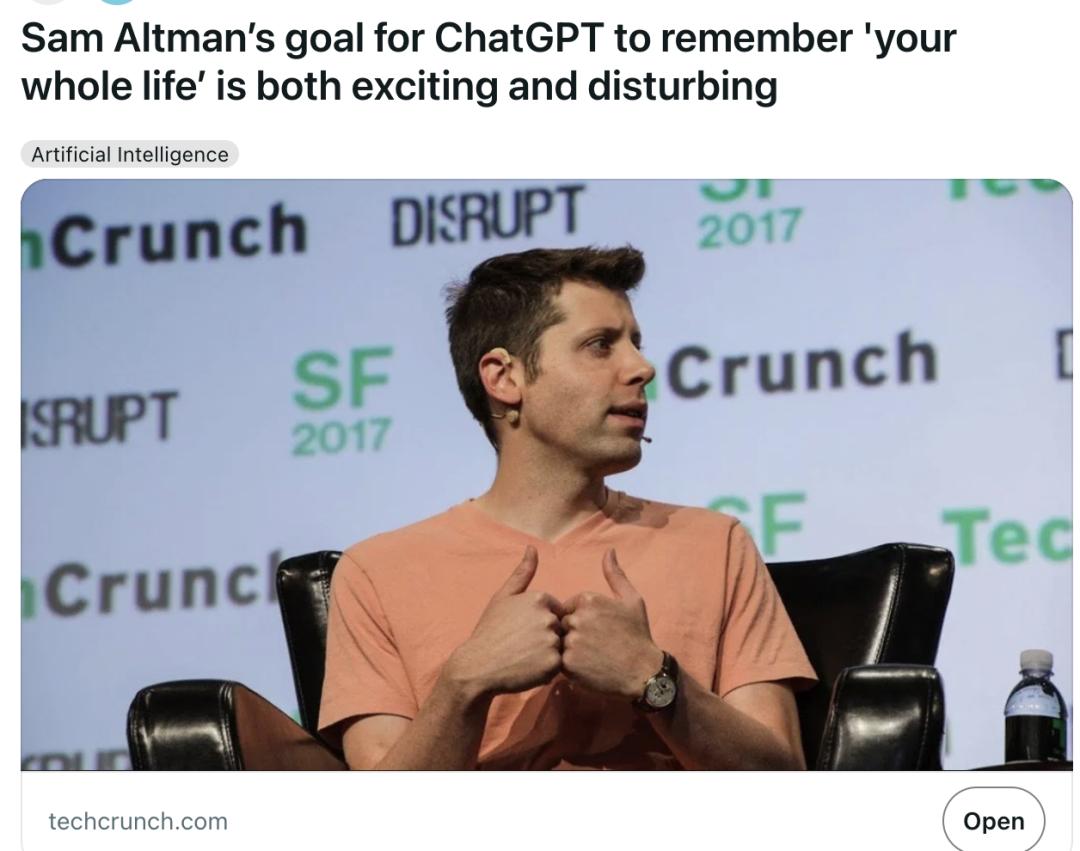
At the Sequoia AI Ascent conference last May, Altman put forward a very convincing observation.
He made a rough but clear division:
Older people treat ChatGPT as a substitute for Google;
People aged 20 to 30 treat it as a life advisor;
College students directly use it as an operating system.
A further trend is that young people "ask ChatGPT first for all major life decisions".
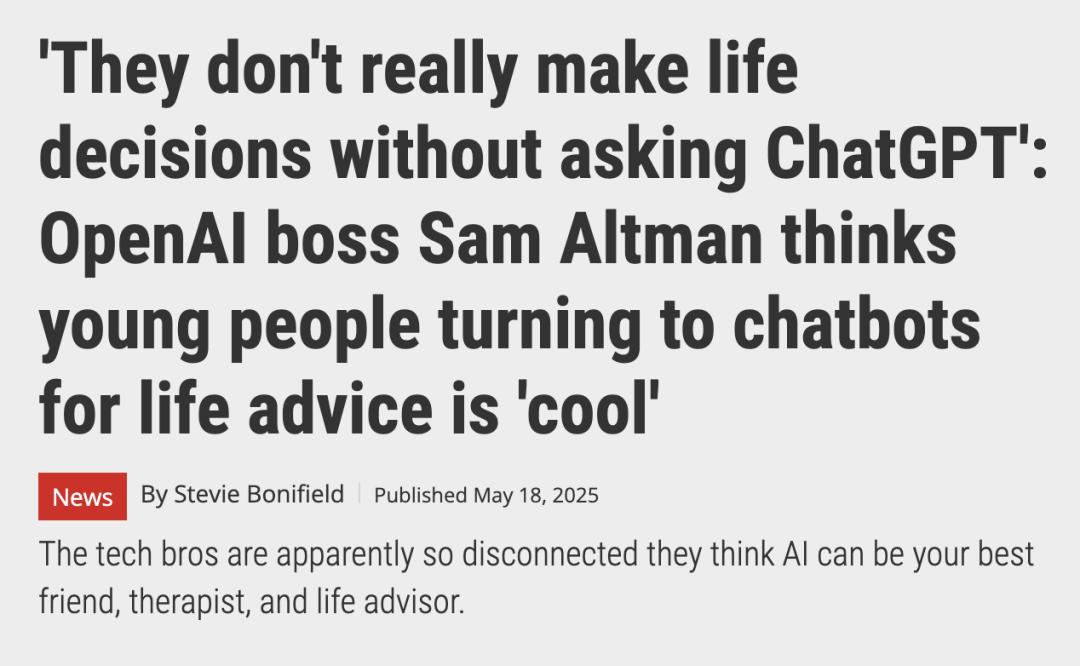
These are all signals of the new form of AI in the future. But this time, he no longer just talks about "memory", but directly points to screen perception and full recording of meetings.
Altman made a bold statement: In the next 6 months, the next-generation AI will fully understand you.
This will be a real leap, changing from "occasional use" to "constant presence", and from "single task" to "life-level context accumulation". The more of your life you invest in this AI, the higher the cost will be to leave it.
Memory evolves from passive storage to active synthesis
The embryonic form has actually begun to emerge: the desktop version of ChatGPT can already obtain screen context in voice mode, and the enterprise version has long had meeting recording and summary functions.
On April 21 this year, OpenAI launched a research preview feature called Chronicle in its programming product Codex.
It generates memories about "what you have been doing recently" through intermittent background screenshots + OCR, saves them as local encrypted Markdown files, helping Codex understand "this", "that" or projects from two weeks ago without users having to repeat descriptions over and over again.
After getting hands-on experience, OpenAI Chairman Greg Brockman said two words: "surprisingly magical".
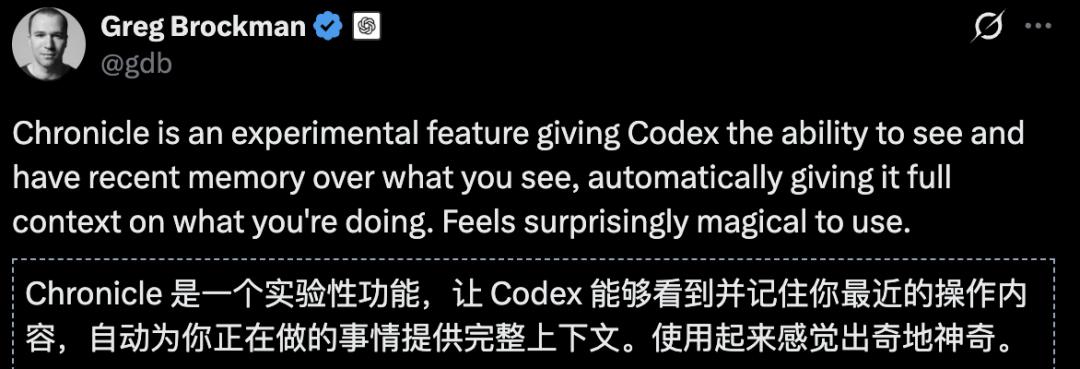
Its internal codename is "telepathy". Altman himself said bluntly: "As the name suggests, that's exactly how it feels."
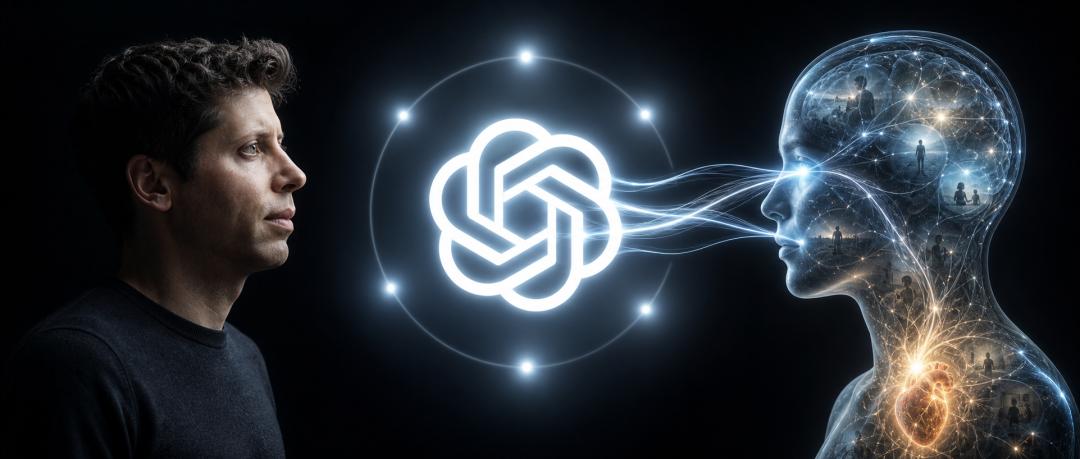
But Chronicle ≠ comprehensive "life context". It mainly serves the Codex programming workflow, captures recent screen content to supplement the context, rather than continuously recording meetings/calls or building a complete personal profile. Users can pause it at any time.
Moreover, it has relatively high risks, and the official document clearly warns of prompt injection, unencrypted local storage, and the requirement for user authorization.
Another move by OpenAI is Dreaming V3 launched by ChatGPT in June this year.
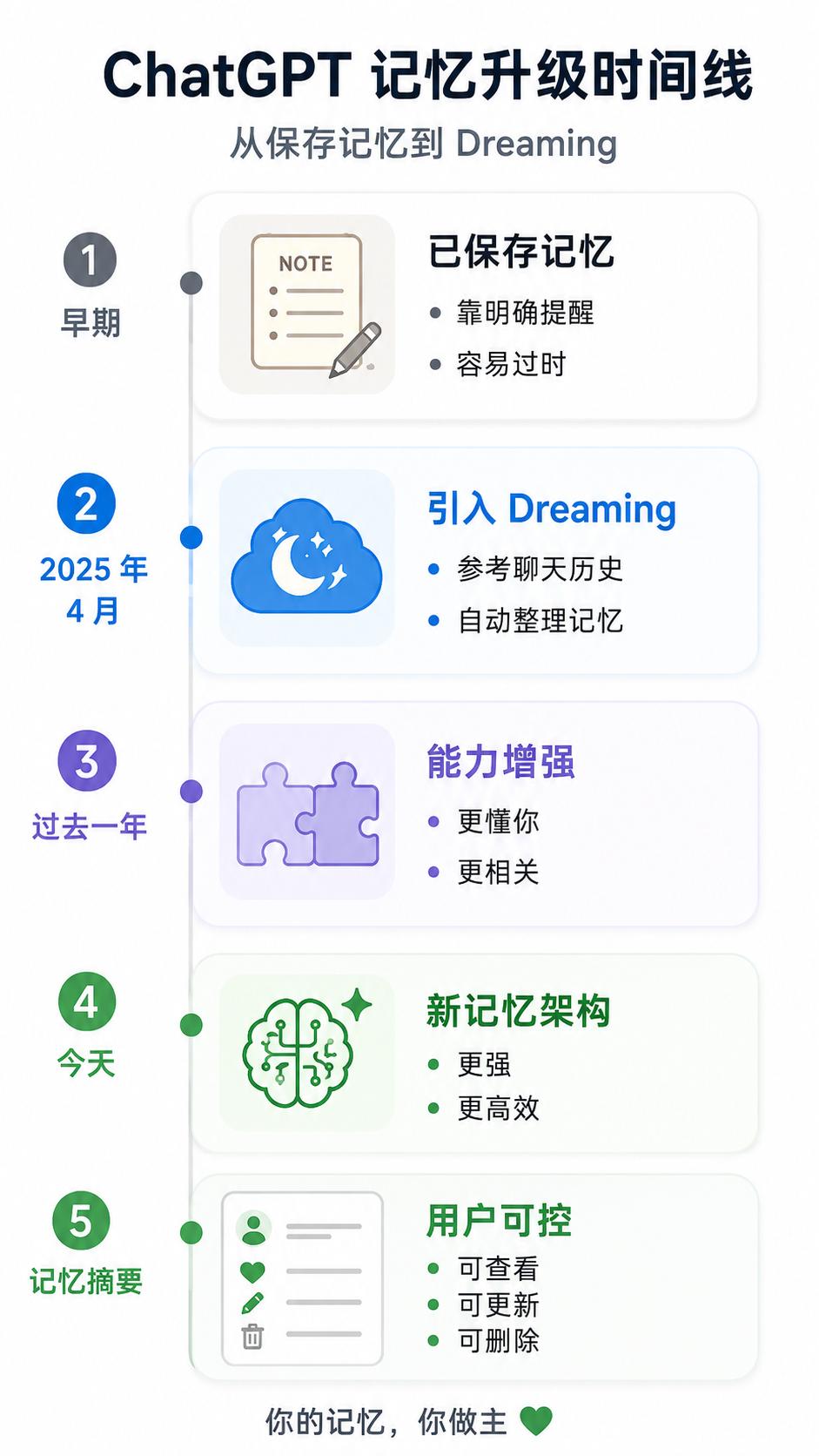
Dreaming V3 is the latest architecture of ChatGPT's memory system: it automatically synthesizes memory states from conversation history in the background, has time perception, reduces outdated information, and improves fact recall and preference adherence.
Users can view/edit through the memory summary page.
The most interesting part is that it has the automatic evolution capability. If you said "I will go to Singapore in July", when the time passes, the system will automatically change the memory to "You went to Singapore in July". Memory is no longer static, but evolves with time.
In OpenAI's internal evaluation, this update has significantly improved performance:
The fact recall rate increased from 67.9% in 2025 to 82.8%;
Preference adherence increased from 55.3% to 71.3%;
Time-sensitive accuracy increased from 52.2% to 75.1%.
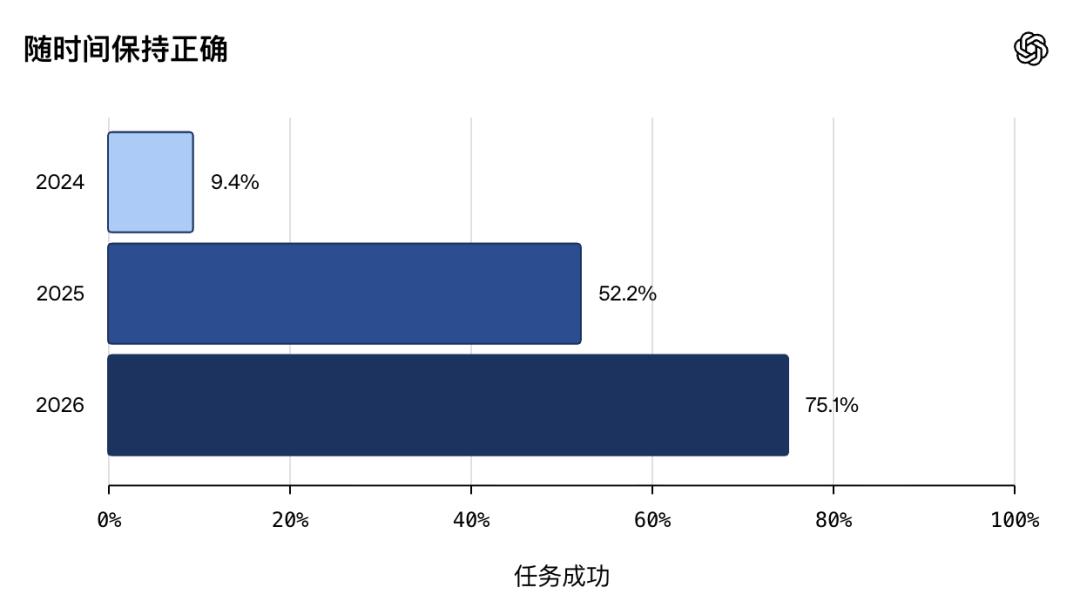
Moreover, the computing efficiency has increased by about 5 times, which is why it can be rolled out to free users.
Dreaming V3 and Chronicle are parallel but different product line progresses — one focuses on screen context (Codex programming scenario), and the other focuses on conversation synthesis (ChatGPT general scenario).
Together, they are closer to the "always-on, deeply personalized" direction described by Altman, but they are still in the research preview/phased push stage.
Memory is becoming the new moat
Altman's vision is not developed in isolation. If we take a broader view, we will find that in the past few months, almost the entire AI industry has bet on the same direction at the same time.
Google is taking the enterprise route.
Memory Bank is launched on Gemini's enterprise-grade Agent platform. Developers can connect their built AI agents to a capability pool that can remember across sessions, automatically extracting user preferences, key nodes, and explicit instructions from conversations.
This line is currently more focused on developer infrastructure, and has not yet been deployed to the Gemini dialog boxes for ordinary consumers, but the direction is consistent with OpenAI's.
Anthropic is not idle either.
In March this year, persistent memory was fully rolled out to all Claude users, both free and paid versions, and the background quietly summarizes your data based on conversations.
In April, it added a public beta version of persistent memory to the managed agents on the developer side. Enterprise customers such as Netflix have already put it into production environments, and one enterprise user reported a 97% reduction in errors.
Third parties are also entering the market, but their strategies are completely opposite.
What memory layer projects like Mem0 want to do is to become a cross-platform memory middleware, connecting OpenAI, Anthropic, and open source models at the same time, so that developers do not have to be locked into a single vendor.
This precisely shows that the industry has realized the problem — if every giant builds its own memory silo in a fragmented way, the users and developers trapped inside will suffer in the end.
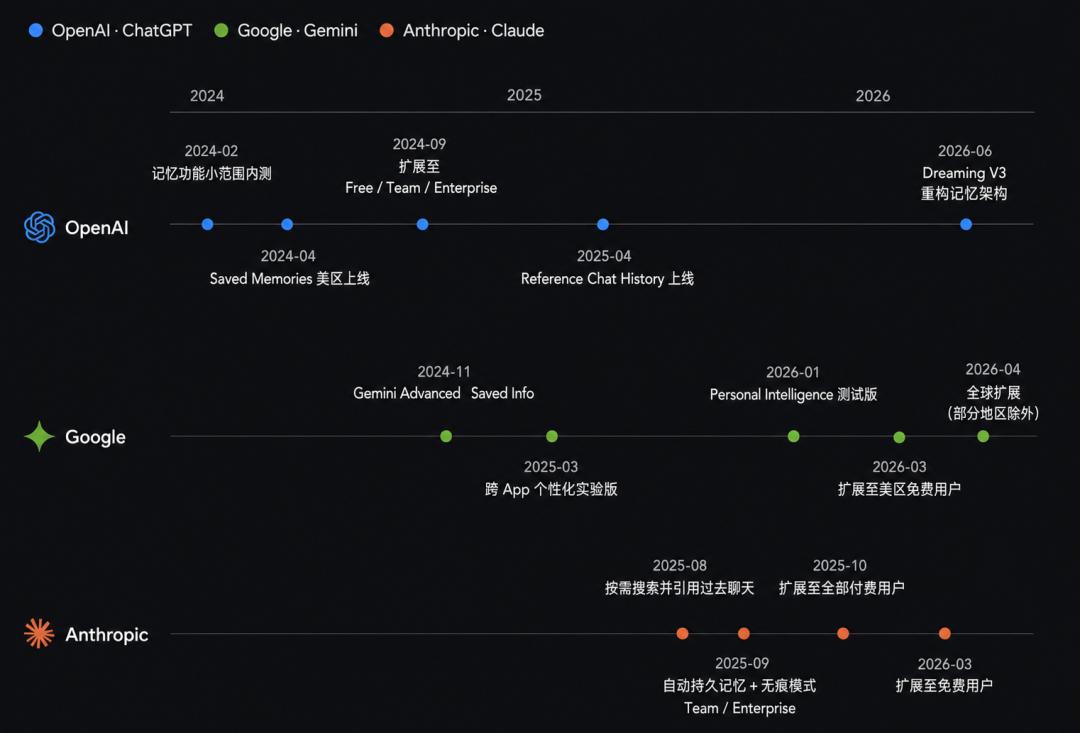
Now almost all giants are sprinting in this direction.
But what no one is really willing to say publicly is that your AI memory is now locked in the platform you use most often. If you switch from ChatGPT to Claude, the memory will be empty, and you have to start all over again. If you use three tools at the same time, you are raising three separate "versions of you" that do not communicate with each other and have completely different development trajectories.
This is a more hidden moat than model performance.
The ranking of model strength may be overturned every three months, but memory accumulates thicker and thicker over time. The longer you accumulate it, the higher the cost of leaving. Whoever accumulates enough user memory first will lock users to their own platform first.
Understanding this layer, you can realize that Altman's words are not just a product vision, but also a commercial prediction.
References:
https://x.com/OpenAIDevs/status/2046288243768082699
https://x.com/haider1/status/2087219995466224120
https://x.com/cory/status/2087060650870907170
https://www.youtube.com/watch?v=gXsutRiJbZI
https://inferencebysequoia.substack.com/p/openais-sam-altman-on-building-the?utm_source=publication-search
This article is from the WeChat official account "AI Era", author: ASI Revelation, published with authorization from 36Kr.