AI detecting AI, the next 100-billion-yuan business
It only took AI 5 years to catch up with the speed of content production by all humans across the globe.
Since January 2020, to continuously track AI-generated content on the Internet, web research firm Graphite has sampled 54,400 URLs and tested them with three AI identification tools, namely Pangram, Copyleaks and GPTZero. An article will be judged as AI-generated if the proportion of content written by real humans in it is lower than 50%.
Graphite found that in the fourth quarter of 2025, the amount of AI-generated content on the Internet exceeded the number of original human creations, reaching a proportion of 50.9%. This figure was only 0.97% back in January 2020. To be precise, AI only spent 3 years to achieve this, because the inflection point for the explosive growth of AI content was November 2022, when OpenAI released ChatGPT.
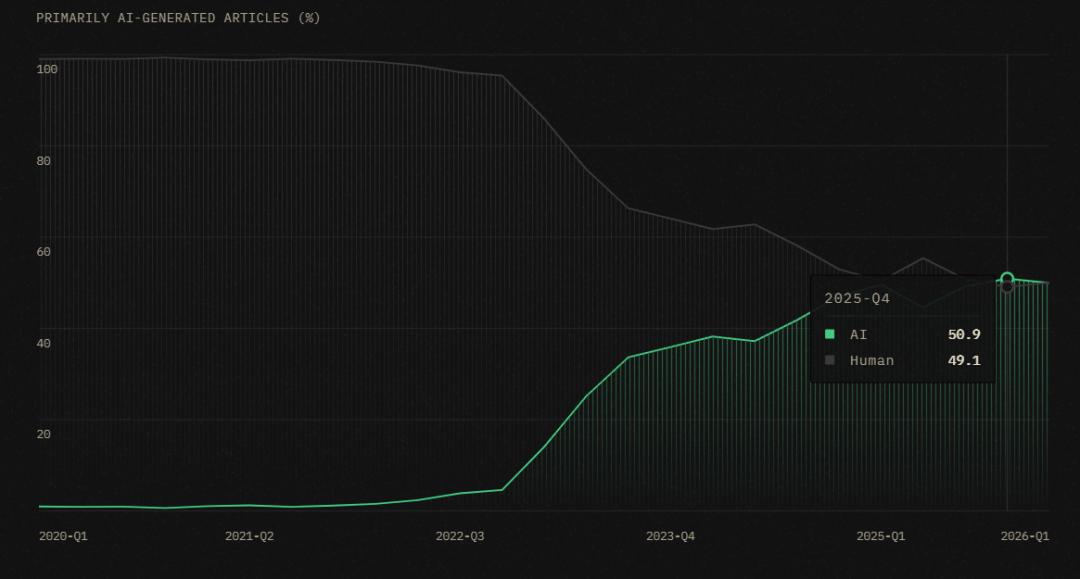
Source: Graphite
From almost zero to occupying half of the market, the high productivity of AI is comparable to that of American cockroaches, and it even starts to squeeze the creative space of human beings. Some derivative industries have seized the opportunity of the production capacity boom to make huge profits from AI, such as infrastructure builders that build data centers for AI, energy companies that dissipate heat for servers, and AI identification tool providers.
After all, the more fiercely the AI industry develops, the stronger the market demand for distinguishing real content from fake content. But if we look at it over a longer time horizon, this may not be a good business.
An intuitive signal is that the difficulty of this defensive battle is rising exponentially. At present, AI detection tools on the market mainly focus on detecting AI text. However, as Deepfake videos, AI images and AI audio flood into the Internet in large numbers, the detection scope has expanded from the AI content proportion of a single article to how much real information is left in the entire digital world.
This points to a disturbing reality: Fake content created by AI is spreading rampantly.
A new industry built on fear
If you have already graduated from university, it seems that the harm caused by the proliferation of AI to you is almost zero. At most, you pass subway advertisements still marked with AI watermarks on your way to work, and there are more articles with robotic tones on your mobile phone. Before being targeted by romance scam groups, life still seems peaceful.
The problem is that Fraudsters are no less motivated to learn AI than the most overworked employees in large tech companies. Deepfake technology can already generate extremely realistic images, sounds or videos. Even when making a video call face to face, it can perform real-time face swapping. This technology, which was originally widely used in film and television production and virtual anchors, has become a powerful tool for cross-border cyber fraud and disinformation dissemination in the hands of scammers.
In 2024, an employee of a multinational company in Hong Kong received a phishing email. The sender claimed to be the CFO of the UK headquarters and pulled him into a multi-person conference. The CFO and "colleagues" in the meeting were actually scammers who used public video and audio materials to swap faces with Deepfake technology. Under their instructions, the employee finally transferred 200 million Hong Kong dollars to the scammer's account.
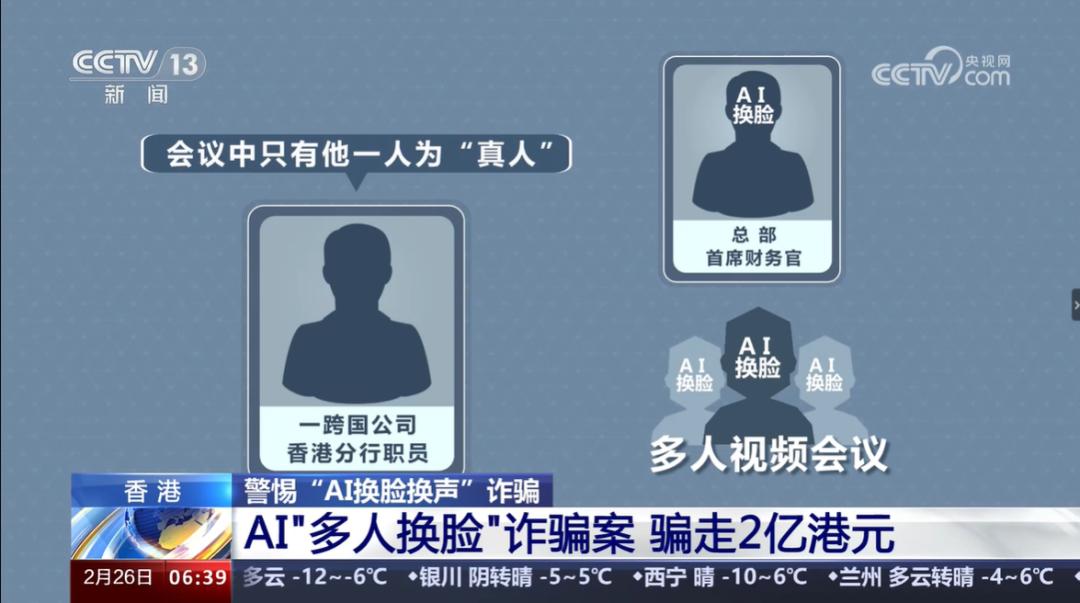
Source: CCTV.com
According to statistics from CSO, the Chief Security Officer think tank, 82.6% of phishing emails used AI technology in 2025, and Deepfake-driven fraud attacks surged by 2137%. The losses caused by AI-driven cyber attacks around the world are expected to reach 30 billion US dollars. Compared with the information explosion brought by the proliferation of AI text, ordinary people need to be more vigilant against scammers who have benefited from AI technology.
Not only individuals, but enterprises also suffer a lot from this. This summer, villagers in Hengshan County, Hunan Province found that no matter which e-commerce platform they ordered durians or cherries from, as long as the delivery address was filled in as Hengshan County, the order would be cancelled, and even if the goods were shipped, they would be intercepted.
The underlying reason is that a man surnamed Tan in Hengshan County frantically bought golden pillow durians and cherries. After receiving the goods, he used AI to generate traces of rot and mildew on the fruits with one click, sent the photos to the platform customer service to apply for a refund, and then resold the durians and cherries on Xianyu.
After placing more than 100 orders in this way, both Tan and the entire Hengshan County were blacklisted by fruit merchants on e-commerce platforms.

Source: CCTV.com
While technology is iterating rapidly, it is also being abused. AI companies package expensive computing power into low-cost Tokens, which also lowers the threshold for forgery and fraud, and becomes a hotbed for academic misconduct, financial fraud, and e-commerce compensation fraud. In the past, people worried about whether AI could create high-quality content, but now they start to worry about whether the content they see in front of them is trustworthy. The dark side of technological convenience is the widespread trust crisis.
Using AI to identify AI is exactly a new industry born in this trust crisis. On the surface, AI identification tools judge whether images, texts or videos are generated by AI. What they actually solve is to help enterprises, organizations and individuals reduce the risks brought by AI forgery.
Global AI police, stand by
AI text detection tools are the first to reap benefits, targeting the education market, which is also the C-end detection business with the most stable cash flow at present.
People will not stay young forever, but there will always be young college students writing graduation theses. Foreign platforms for detecting AI-written theses include Turnitin, GPTZero, etc., and domestic systems such as CNKI and VIP have also launched their own AIGC detection services.

Founded three years ago, GPTZero has raised a total of 13.5 million US dollars in financing, and its annual recurring revenue has reached 30 million US dollars (about 203 million RMB). Turnitin has more than 71 million users and an annual revenue of 105 million US dollars (about 709 million RMB).
Most domestic thesis detection tools have not disclosed their profit models, but AI text detection tools generally make profits from both ends: students subscribe to membership or pay by the number of words to purchase duplicate checking services; universities and educational institutions purchase system licenses on an annual package basis.
More AI detection tools make money from enterprises, mainly providing API interfaces, SaaS subscriptions or customized solutions, which is also the part with the greatest growth potential. What customers buy is a safety net, not 100% accurate detection results:
For example, the AI risk assessment system under Juntong Future is responsible for detecting AI hallucinations and identifying malicious user queries. It received tens of millions of RMB in financing at the angel round right after its establishment, and has achieved profitability in less than two years, serving clients including the Ministry of Industry and Information Technology, ByteDance, Hikvision, Ant Group, etc. The "Baize AI" hallucination governance engine developed by Zhonghui Chuangjie can verify financial terms in real time for bank intelligent customer service systems, verify consultation content for online smart clinics, and deploy AI content supervision platforms for cyberspace administration departments, processing more than 2 million AIGC contents per day. Its revenue jumped from 500,000 RMB to 40 million RMB within three years of establishment.
According to the survey report of consulting agency Dataintelo, the global synthetic media (AI-generated content) detection market size was 3.8 billion US dollars (about 25.7 billion RMB) in 2025, and it is expected to reach 22.6 billion US dollars (about 152.5 billion RMB) by 2034, with a compound annual growth rate of 21.9%.
The huge demand released by the B-end market has evolved AI identification from an additional function to a general underlying infrastructure, and even chip giants can't sit still. On July 21, 2026, NVIDIA announced the launch of the Synthetic Video Detector NIM service, which is claimed to identify AI-generated fake videos frame by frame, with a maximum accuracy of 92%.
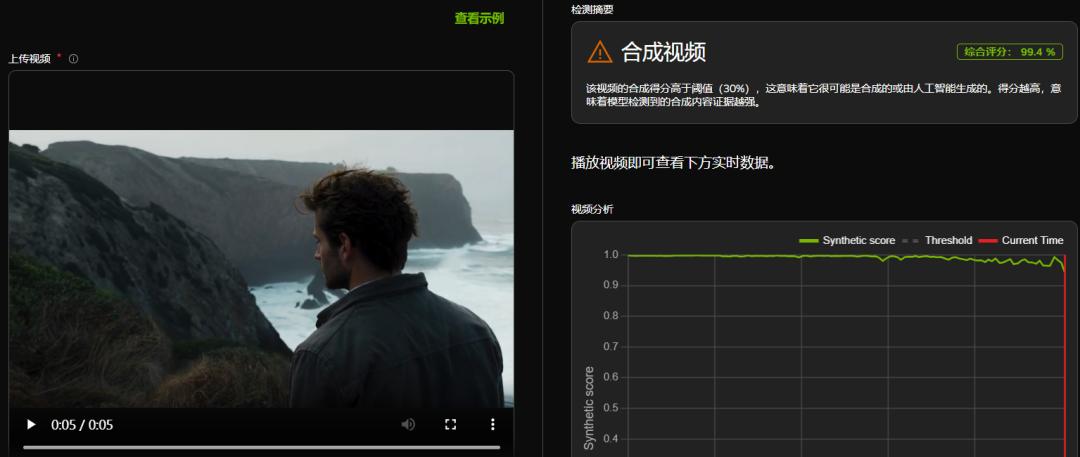
Source: NVIDIA
Selling chips to AI companies, building the NVIDIA NIM microservice platform for enterprises and developers to deploy AI models online, and now providing AI video detection services, in this AI gold rush, NVIDIA can be said to not only sell shovels, but also sell processing machine tools, and now it is going to sell touchstones for gold testing.
It can be seen from this that It is not necessarily the most technically advanced players that can get a seat at the table, but often those who can seamlessly embed detection tools into customers' work processes.
Most of the multi-dimensional AI detection tools for ordinary people still adopt the free trial mode, and their technical practicability still needs to be verified. For example, Tencent's Vermillion Bird AI Detection Assistant and the AI fake identification mini-program of CamScanner launched by HHHT Information provide services to detect text, images and videos. Just last month, the National Anti-Fraud Center App launched the AI content identification function, with technical support from Zhongke Ruijian. Users can upload suspicious videos, voices, images and texts to detect the existence of AI-generated traces with one click, and they have 10 detection opportunities per day.
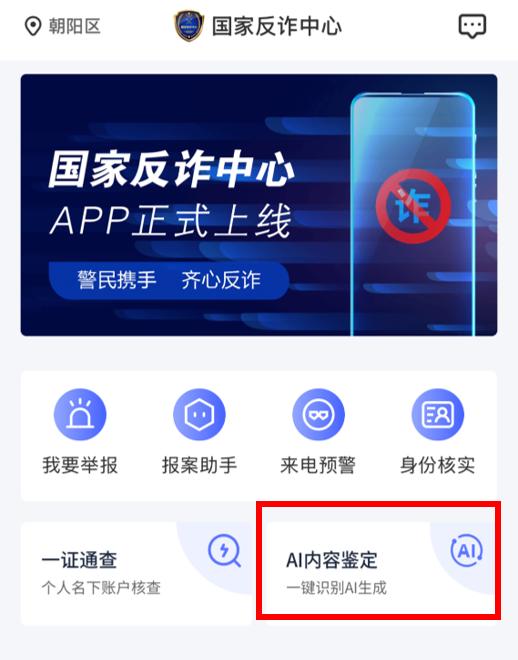
Source: National Anti-Fraud Center App
I tried all three free products for several rounds (after all, they are free). The CamScanner AI fake identification mini-program and the Vermillion Bird AI Detection Assistant successfully identified the AI-generated content. The CamScanner AI fake identification mini-program carefully told me "The AI possibility is 76.55%, 515 characters are suspected to be AI-generated". The National Anti-Fraud Center App got accurate results on text and images, but failed in video detection: for the same short video shot by a real person, it said it was real at one time and AI-generated at another. It seems that the road to anti-fraud still has a long way to go.
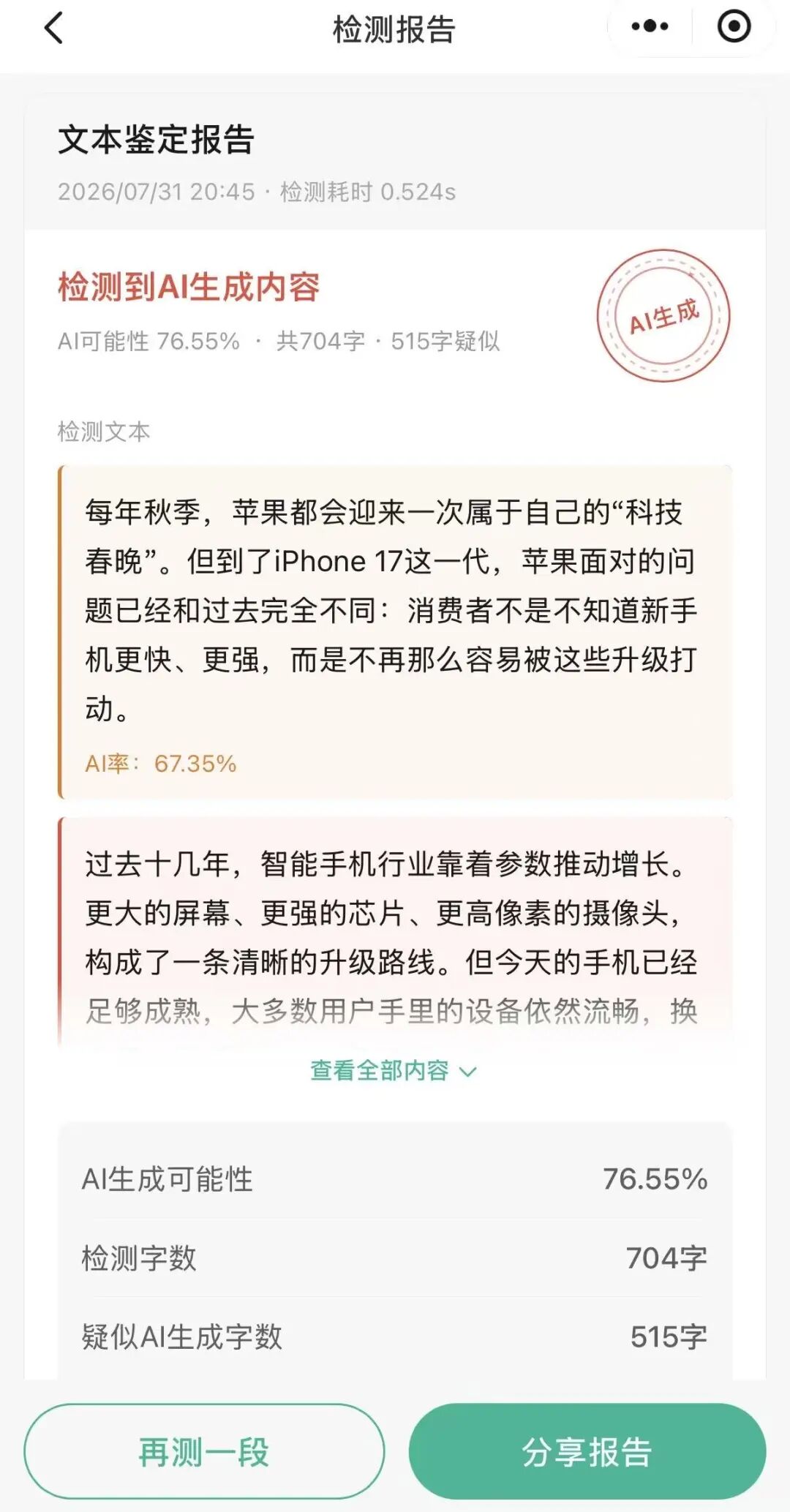
Source: CamScanner AI Fake Identification Mini-program
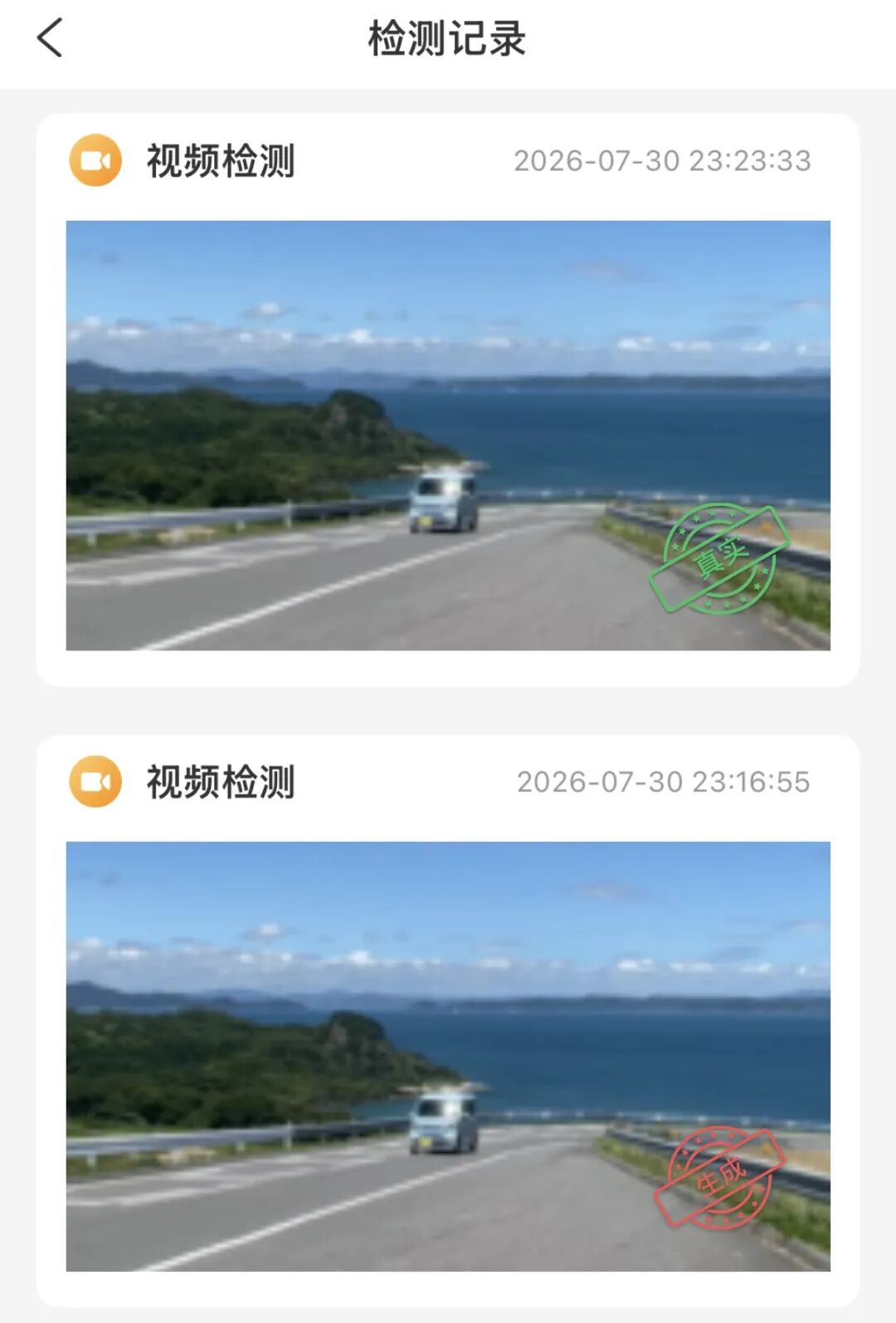
Source: National Anti-Fraud Center App
On Xianyu, I also found some "human tools" who identify AI content with naked eyes and experience, who manually generate identification results, and charge as low as 6 RMB per picture.
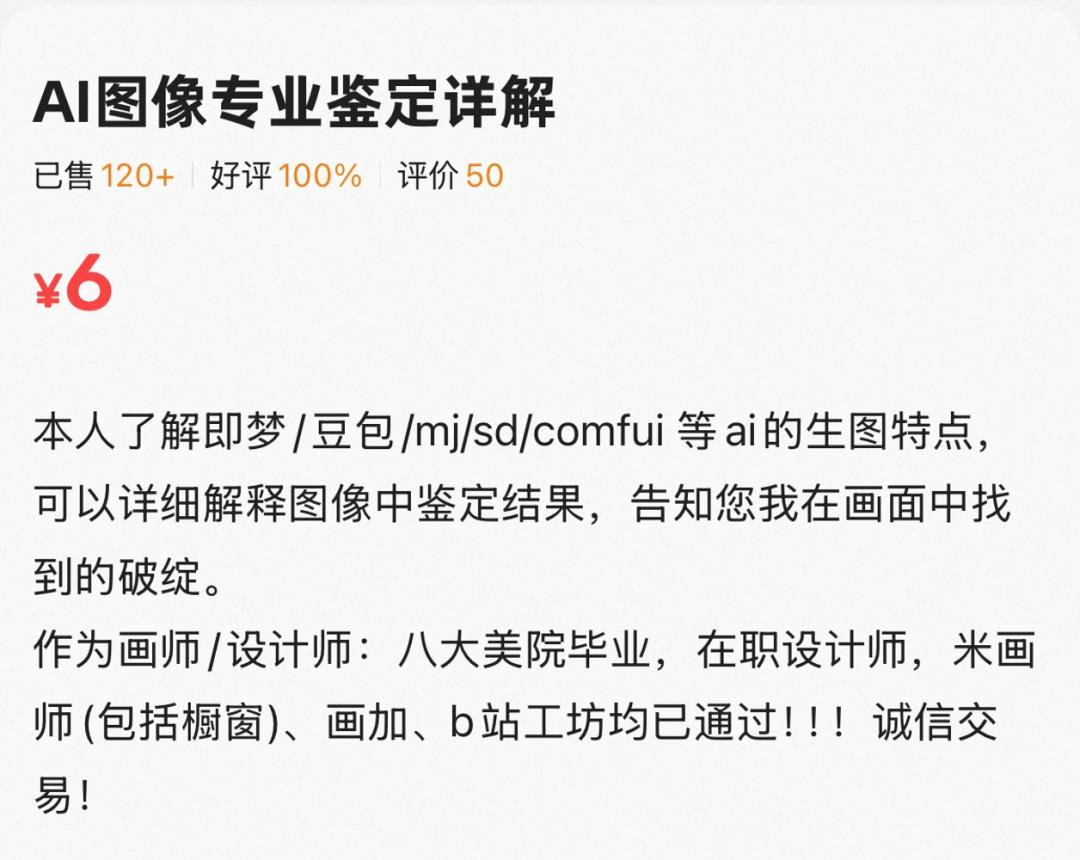
Source: Xianyu
A friend who is an illustrator and designer told me that the accuracy of this kind of identification largely depends on the seller's mastery and understanding of light, shadow, perspective and structure. Sometimes more complex illustrations and thick-painted works are easier to tell whether they have AI traces, while simple works are harder to distinguish. Similar to multi-modal AI detection tools for C-end users, these services also have the risk of "inaccurate detection".
Is it an arms race, or a temporary pain?
From enterprise-level solutions to the entry of tech giants, and then to services for the public, AI identification seems to have logically supported a new blue ocean. But when I actually tested these tools, I found that behind this business lies a bigger contradiction: The tool responsible for finding answers is itself chasing a constantly changing problem.
The most absurd business closed loop in 2026 has taken shape: we spend money on tokens to let large models generate content frantically, and then we have to pay to hire another AI to detect and clean up the hallucinatory garbage created by AI.
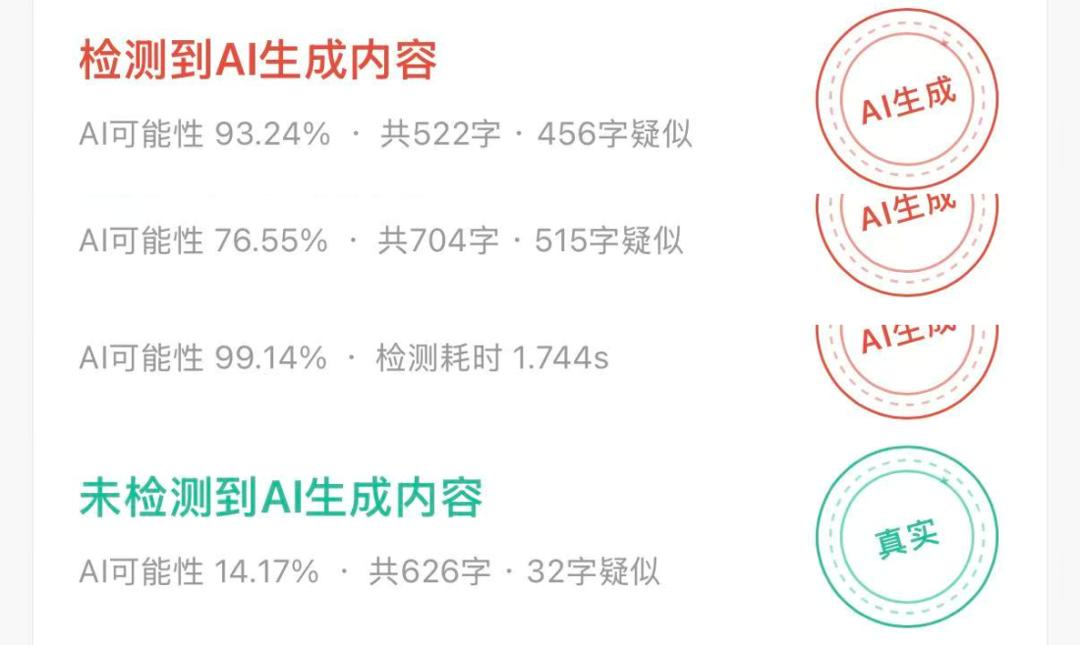
The problem is that detection tools cannot give you 100% certain results. No matter it is text, image, audio or video, they are only looking for traces left by AI, and tell you the statistical probability that the content is AI-generated.
The so-called probability is essentially a large disclaimer, and the results are for reference only.
So this industry has a natural paradox: Only when AI is powerful enough to cause widespread problems can AI detection tools have