When square sensors have become the industry consensus, DJI Osmo 360 II re-explores the upper limit of panoramic imaging.
On the evening of August 13, DJI released its second-generation panoramic camera Osmo 360 II.
A year ago, the first-generation Osmo 360 entered the market with the industry's pioneering square sensor, bringing native 8K resolution to panoramic video for the first time. One year later, the Osmo 360 II pushes this underlying capability to a whole new level: a brand-new imaging platform designed exclusively for 8K/60fps, a fully upgraded imaging pipeline, and a complete set of intelligent features that enable "publish-ready output immediately after shooting".
This is not a regular parameter upgrade. If the first-generation product answered the question of "whether DJI can make a flagship panoramic camera", now that square sensors have been adopted by more and more manufacturers and become the new default for this product category, the Osmo 360 II is set to answer a more challenging question: how high can a company with a full imaging technology stack push this long-niche panoramic track?
A square sensor that rewrites the default value of an entire track
The appeal of panoramic cameras is easy to understand: ordinary cameras can only record the area in front of the lens, while panoramic cameras can capture the entire world around you. But for a very long time, it has remained a niche category — many users bought it, shot a few times, and then left it idle because it was "not user-friendly".
DJI conducted extensive user interviews before launching the project, and the conclusions focused on two points: first, the footage was blurry, especially after re-composing the frame in post-production, it was hard to see clearly; second, the post-production process was too complicated. Users felt great while shooting, but had to adjust the viewing angle frame by frame at home, which was so slow that they lost patience.
"Blurriness" and "complexity" have kept panoramic cameras out of the mainstream market.
The root cause of blurriness lies in the underlying components. The head of DJI's handheld imaging division explained that the vast majority of panoramic cameras on the market use 4:3 rectangular sensors designed for smartphones and regular cameras, and panoramic imaging only uses the inscribed circular area in the middle. Nearly a quarter of the area on both sides does not participate in imaging, but unnecessarily occupies volume, power consumption and cost. The chips also follow the smartphone solution, whose maximum specification is about 4K/120fps, which is exactly 8K/30fps in terms of panoramic throughput after conversion.
Therefore, to make the most of this limited throughput, the industry came up with the odd resolution of 5.7K/60fps — it is not the fault of any single party, but the result of the category's long-term "compromise" with general-purpose supply chains, which no one has tried to change for years. For most manufacturers, this is almost the only cost-effective choice: customizing dedicated components for a still-niche category means several times more R&D cycles, manpower and capital investment, as well as risks with almost no precedent to follow. In a hardware market where rapid iteration is the norm, this calculation is hardly worthwhile.
DJI's approach is to return to the physical nature of imaging: since panoramic imaging only uses a circular area, there is no need to compromise on a rectangular sensor with wasted blank space on both sides. Three years ago, DJI pioneered a square sensor equivalent to a 1-inch panoramic imager in the industry, removing the wasted areas on both sides to make the circular image field fully inscribed, which increased the effective utilization rate of the sensor by about a quarter. It also reallocated pixels, adjusting the height direction from 3K to 4K, and finally achieved native 4K+4K=8K for dual lenses without upsampling, while retaining large 2.4μm pixels. The first-generation Osmo 360 thus pushed panoramic imaging from "capturing everything" to "capturing clear footage".
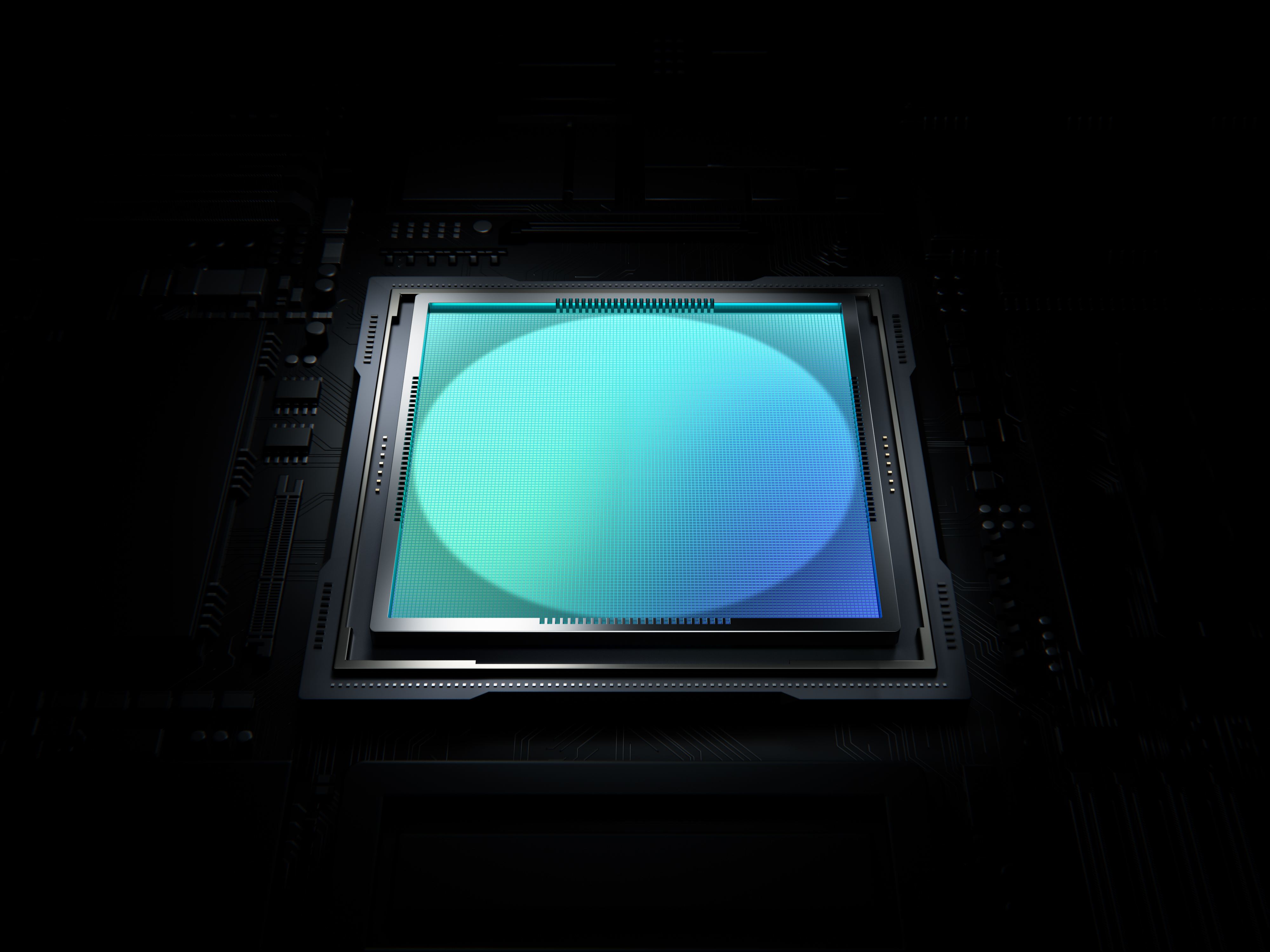
A more thought-provoking change took place later: this square sensor, which was once considered "thankless effort", began to be followed by the whole industry.
When talking about how to view peers adopting the same design idea, the head of DJI's handheld imaging division did not frame it as a competition for victory or defeat. He preferred to talk about another thing: competing for market share in a still very small market has limited significance. What really determines whether this category can grow is whether someone can solve the two fundamental problems of "blurriness" and "complexity".
"If no one steps forward to tackle these fundamental problems, but only launches products with new appearances or gimmicky features, and keeps spinning in the original market size, there will be no progress for the entire industry."
This also responds to a frequently misinterpreted question: is pushing the upper limit of image quality and performance to satisfy a small group of enthusiasts, or to make more users feel more comfortable? In DJI's view, the answer is exactly the latter. The reason why panoramic cameras cannot enter the mass market is precisely because of "blurriness" and "complexity". To keep the footage clear even after re-composition in post-production, a higher native resolution is required as the foundation. To allow users to avoid spending an hour editing after shooting, sufficient computing power is needed to support intelligent framing and automatic footage generation.
Without raising the upper limit, popularization is impossible. "When we do product design, product specifications and parameters are not our top priority," he said. Compared with making a certain number look better, he cares more about whether a solution can truly improve the user experience.
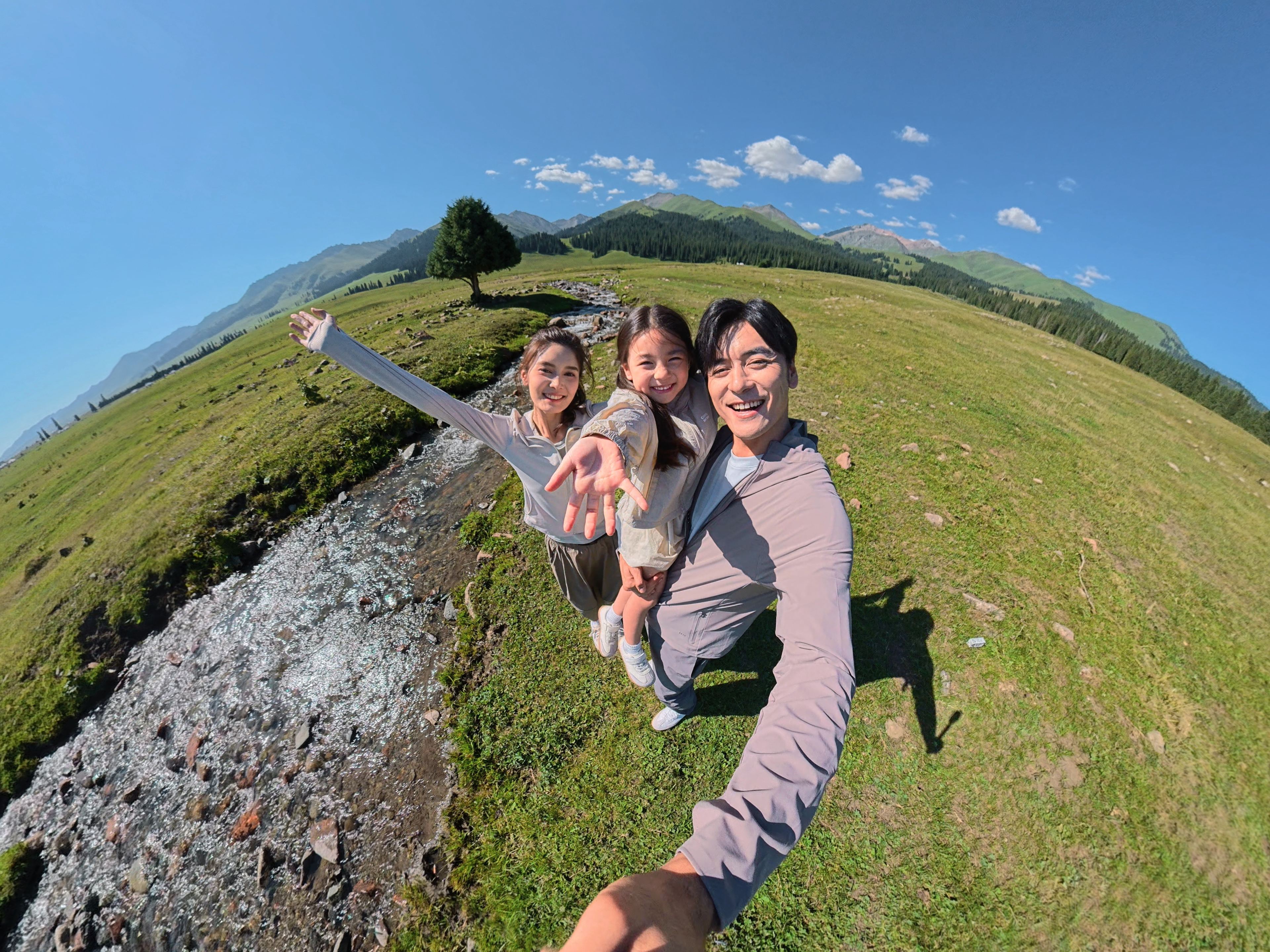
The confidence of the leader comes from a 12-year journey
It is no accident that DJI can quickly lead the standard in a category where it was considered a latecomer. If we look back over a longer timeline, panoramic imaging is just the latest outlet for its 12 years of accumulated imaging technology.
Since the launch of the Osmo series, DJI's handheld imaging business has followed two parallel paths. One path focuses on professional scenarios: from the first-generation Ronin, to the Ronin 2 that can stably support cinema cameras, to the Ronin-S and DJI RS that bring cinema-level stabilization to mirrorless cameras, and finally to the highly integrated Ronin 4D. With this product line, DJI has transformed from a "tool provider" to a "workflow leader" for the first time. The weight of this stabilization technology has two high-profile industry recognitions: the Ronin series won an Emmy Award in 2024, and the Academy Scientific and Technical Award in 2025.
The other path is oriented towards the mass market: in 2015, the Osmo series pioneered the integrated handheld gimbal camera category, the Osmo Pocket put flagship imaging performance in your pocket, and the Osmo Action created the first front screen for action cameras, making selfies and monitoring much more convenient.
These technical accumulations are not confined to their own product lines. When DJI decided to develop panoramic cameras, it could directly call on a full set of proven imaging capabilities that had been verified repeatedly.
Specifically for panoramic imaging, DJI did not start from scratch. "DJI's exploration of panoramic imaging is a continuous technical accumulation process," a DJI spokesperson summarized. From the stitching algorithm on drones, to the industry's first square CMOS for the first-generation product, to the Avata 360 that verified the stability of stitching, every step has laid a solid foundation for today's Osmo 360 II.
The earliest panoramic stitching algorithm was actually polished on drones. Panoramic photos shot by drones need to stitch multiple frames into a complete image of the sky and ground under the conditions of high altitude, strong wind and continuous movement of the fuselage, which puts extremely high requirements on algorithm stability. The real foundation of panoramic imaging was laid in the sky.
Later, this set of capabilities was migrated to handheld devices, and combined with the square sensor, it gave birth to the first-generation Osmo 360.
The launch of the panoramic drone Avata 360 sent the algorithm back to the sky for another round of extreme testing: in the footage of a racing drone drilling through holes, walls and windows, the stitching flaws between near and far scenes are extremely easy to expose. By solving these problems one by one under high-intensity flight conditions, DJI has prepared solutions for high-speed ground scenarios in advance.
More importantly, it can truly restore various motion states at low, medium and high speeds, providing the algorithm with a complete set of samples that are difficult to cover in ground scenarios.
Calculated in this way, although the Osmo 360 II is the second-generation product of the Osmo 360 series, it is already equipped with the third-generation panoramic imaging technology. With the algorithm foundation laid on drones, plus two rounds of optimization from the first-generation Osmo 360 and the panoramic drone Avata 360, the three lines of sensor image quality, stitching algorithm and intelligent experience are fully utilized for the first time in this generation.
Upgrades of the Osmo 360 II: from higher parameters to qualitative leap in experience
If DJI set the standard with its first-generation panoramic camera, the Osmo 360 II is here to prove how far the potential of this standard can be unlocked.
The upgrade starts with the imaging platform. The Osmo 360 II is equipped with a new generation of imaging platform specially built for panoramic cameras, which was designed with 8K/60fps as the target from the very beginning. Some in the industry use multiple chips to stack computing power, but that is often due to insufficient single-chip computing power and can only be a makeshift solution. This new chip takes all panoramic imaging requirements into consideration from the start, eliminating the trouble of coordination and resource contention between multiple chips.
Why insist on achieving 8K/60fps? A practical reason is that this is a path that other manufacturers have no incentive to take.
"For consumer imaging devices, being able to shoot 4K/120fps is already very high. To achieve 8K/60fps additionally requires a huge cost in chip area, and the input-output ratio is not cost-effective," said the head of DJI's handheld imaging division. "But if DJI doesn't do it, few manufacturers in the industry are likely to move in this direction."
Moreover, 60fps is far more than just 10 extra frames compared to 50fps. Nowadays, most smartphones, tablets and computers have 60Hz or 120Hz high refresh rate screens. When playing 50fps footage, the system has to interpolate 1 frame every 5 frames, which causes subtle stuttering in the footage. Eyes that are used to high refresh rates are extremely sensitive to this problem.
8K/60fps makes panoramic imaging run smoothly on mainstream screens for the first time. After the computing power is improved, a series of capabilities are enhanced accordingly: slow motion is increased from 4K/100fps on the previous generation to 240fps, static time-lapse is upgraded from 8K to 16K, and time freeze and HDR photos are also more stable thanks to the surplus computing power.
Another point that required repeated trade-offs is the 14.5-stop dynamic range. The native DCG upper limit of the sensor itself is about 13.5 stops. The reason why the Osmo 360 II can push panoramic HDR to 14.5 stops is that it allows the front and rear lenses to expose independently. When the user holds the selfie stick, they need to keep their own face properly exposed on one side, while possibly facing a bright sky on the other side. Only by taking appropriate exposure for both sides can the layers of the image be retained at the same time. The difficulty is that once the exposure difference is too large, the brightness and color of the overlapping area will be difficult to align during post-stitching.
"The number 14.5 is not arbitrarily set — it is not 15, 16 or 17, but the balance point we found after repeated trade-offs between dynamic range and stitching fusion," he recalled. Until one month before the launch, the team was still testing different exposure combinations repeatedly, looking for the critical point that can expand the dynamic range while ensuring clean stitching. This is a very restrained choice: we will not sacrifice the more important goal of clean stitching just for a more impressive number.
There are also many details that have been polished. The second-generation ultra-hard diamond coating on the outer lens can withstand 2000 times of steel wool friction tests. Starting from this generation, users can replace the lens by themselves, without sending the device back to the service center. For cycling and skiing users who often bump their lenses, this is a very practical improvement.
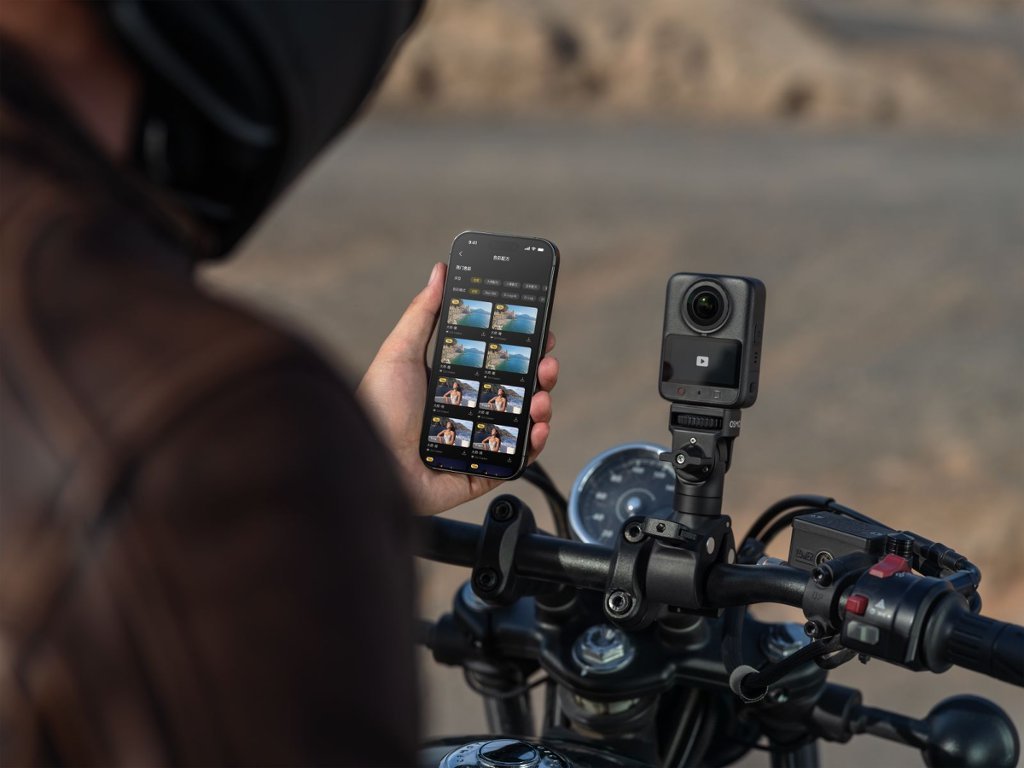
Weight reduction is another unnoticeable but important optimization. Panoramic cameras are mostly mounted on selfie sticks, so every extra gram of the fuselage will be amplified by the lever effect. Many action users also like to fix it on their helmets or chin, and a high center of gravity will easily cause the device to pull down the head and block the line of sight. To reduce the weight of the lens that needs to cover such a large image field, the team extensively uses glass-plastic hybrid aspherical lenses, achieving overall lightweight while ensuring resolution. With the short and stout fuselage design that lowers the center of gravity, the total weight of the device is only 183 grams.
All these full utilization of technologies point to the same thing: when square sensors become the industry consensus, the real gap no longer lies in who owns the sensor, but in who can maximize its potential.
No missed shots, no need for manual camera movement: when professional content creation becomes accessible to all
An inherent feature of panoramic cameras is that they do not record a pre-determined frame, but the entire scene. You do not need to decide the lens direction before pressing the record button, and you can set the composition later. This was originally the most fascinating part of panoramic cameras, but it has also long been the reason why many users are discouraged from using them.
The head of DJI's handheld imaging division has a sharp judgment: the reason why panoramic cameras have long lagged behind action cameras and pocket cameras is precisely because they rely too much on "blind shooting" — all the work is left to post-production when shooting, making post-processing a pure burden. "Normally users want to finish editing and get the output in 15 minutes, but panoramic video editing often takes half an hour or an hour."
The solution of the Osmo 360 II is to let the camera complete the framing and camera movement work first. When you press record in the new "Subject Follow" mode, the camera will automatically lock the human face in the 360° view, and record the camera movement and composition into the footage together. If you have registered a face in advance, it will prioritize following "you". After shooting, connect to the App, and you can export a flat video that always follows the protagonist with one click, no need to slide and select frame by frame.
And it does not lose the possibility of panoramic shooting — the entire 360° space is still fully recorded. If you want the front, left or right viewing angle, you can adjust it in post-production with very little effort. In addition, the Audio Highlight function can automatically tag the footage by identifying sound cues such as laughter and cheers, directly locating the highlight scenes in the material. AI creative templates also allow you to quickly generate finished videos after importing the footage. These features make post-production much easier, compressing the editing process that used to require experience and time into a few simple operations.
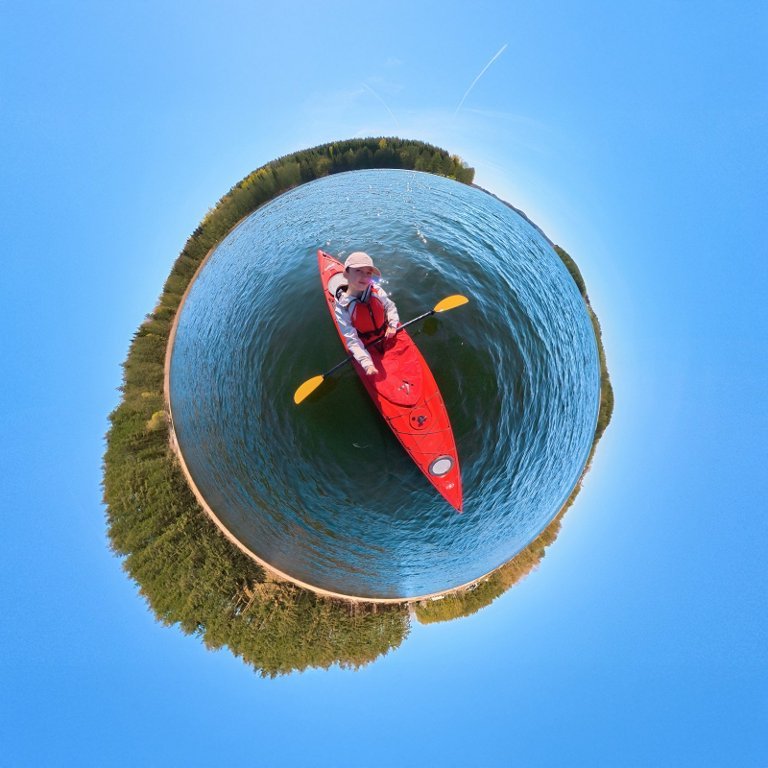
"It is equivalent to having a 360-degree follow-shot director." In the view of the head of DJI's handheld imaging division, this is