Lightweighting is becoming a value stress test for AI glasses.
Walking around the AI glasses booth at WAIC, people will naturally make the same move.
Pick it up, weigh it in the palm first, then put it on the bridge of the nose.
No matter how large the model is, how many functions it has, or whether it can call intelligent agents, all these considerations come after this movement. Glasses are one of the few consumer electronics products that the human body can make a judgment on first without even reading the instruction manual.
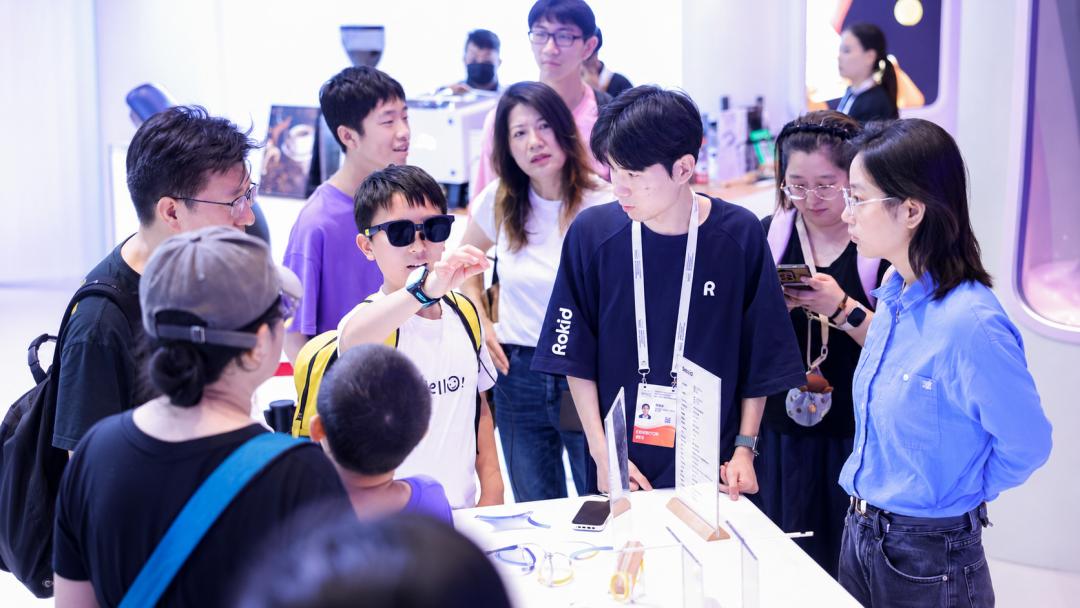
Walking from one booth to another, the stories told by products keep changing, while lightweight design keeps appearing repeatedly.
This "lightness" does not only correspond to the gram weight.
Some products simplify the display, make the camera a detachable module, and transfer more computing work to mobile phones and the cloud; other products retain the camera, near-eye display and spatial perception, and use relatively complete hardware in exchange for a more direct experience. WAIC does not push AI glasses to the same direction, but makes a change more obvious: the capabilities that used to be packed into the frame at the same time are being taken apart again.
This can easily be understood as an engineering competition about trade-offs.
After observing all the displays on site, it is more like a value stress test.
When a pair of AI glasses no longer relies on full configurations and a long list of functions to support its value proposition, the few remaining capabilities begin to bear the weight of the entire product on their own. Lightweight design reduces the physical burden, and also reduces the places where the product value can be hidden.
Glasses can be equipped with fewer components. The question is, can the remaining parts be more valuable?
Hello, this is "AI Wuzao".
With thousands of options available, AI glasses may only end up retaining one core capability in the end
Lightweight design is losing its scarcity
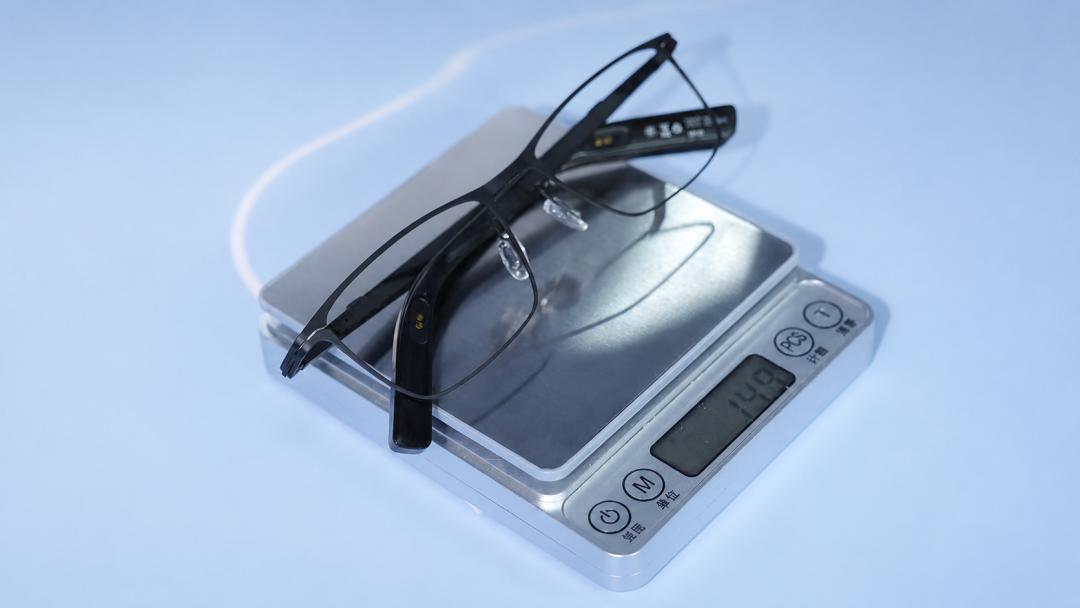
At WAIC, there are increasingly specific figures showing how light a pair of AI glasses can be.
The standard version of Moonix weighs only about 14.9 grams, focusing on sound, recording, reminder and active AI functions; the Pro version with added camera and audio-video recording capabilities weighs about 19.9 grams. The main body of the Li Weike X-AI memory glasses weighs about 26 grams, and the camera is made into a 10-gram magnetic module that can be installed when visual recording is needed and removed in scenarios such as meetings. Both products reduce the weight of the frame, but they have different processing methods and core selling points.
The reason why lightweight design has become the industry consensus first is that it hardly requires additional user education. For a product that needs to be worn for a long time, the change brought by a few grams less weight is often perceived earlier than an additional function.
Demand is already clear, and the supply chain is also catching up rapidly.
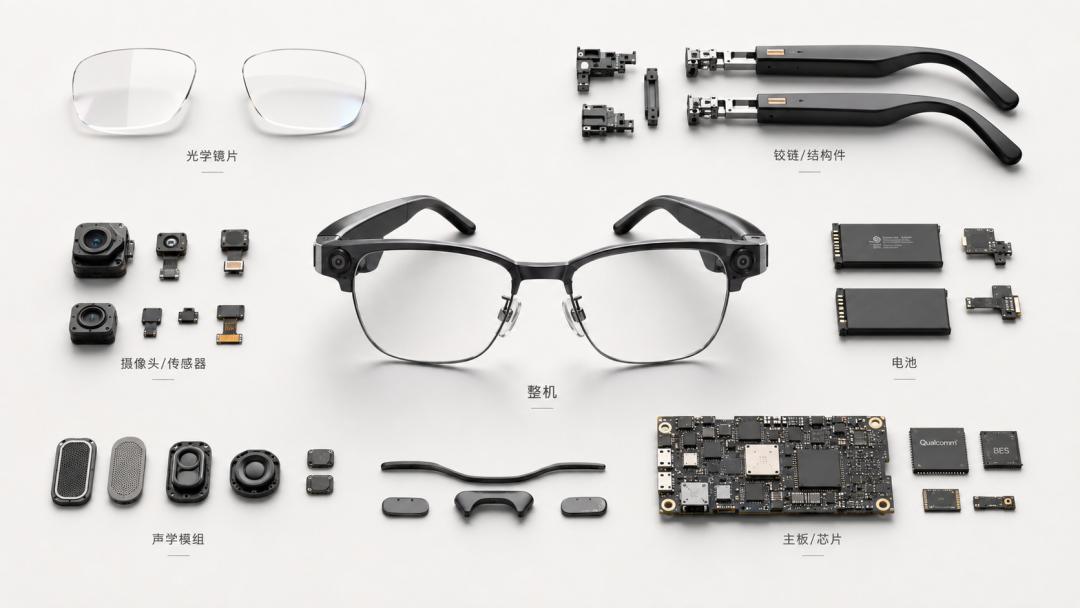
Bao'an, Shenzhen has gathered about 60 smart glasses industry chain enterprises, covering core components, complete machine manufacturing and end brands, and plans to increase the number of industry chain enterprises to more than 100 by 2027. Local policies also take optical waveguide, micro display, battery, rotating shaft, lightweight design and long-endurance complete machine as key development directions.
When structures, acoustics, chips, frames and complete machine solutions can all be obtained from the mature industrial network, the threshold for manufacturing a pair of AI glasses is falling. Lightweight design has gradually changed from the outstanding capability of a few products to the basic indicator that the whole industry is chasing.
In IDC's summary of China's smart glasses market in 2025, lightweight design and AI access have been referred to as the "standard configuration" at the hardware level. As a product with strong wearing attributes, the offline trial wearing, optometry and service capabilities of glasses are also regarded as the parts that need to be continuously tackled in 2026.
This brings a subtle change to "lightness".
Reducing the weight of a pair of glasses from 40 grams to more than 20 grams is definitely a real product progress. However, when more brands can catch up with similar chips, acoustics and manufacturing capabilities, the difference that weight itself can explain will become more and more limited.
Today's lightest record is very likely to be the starting point of the next product.
The supply chain can continue to reduce the weight of the temples, rearrange components and replace materials. What is really difficult to be replicated synchronously is why a company retains a certain capability and how deep it plans to develop this capability.
This is also the first layer of pressure brought by lightweight design to AI glasses:
When "making products lighter" gradually becomes a common capability, what else can products rely on to maintain their core value?
The space in the frame is limited, and every capability is being revalued
Lightweight design does not only happen in materials and structures.
When the space in the temples has been almost occupied by chips, batteries, microphones and optical modules, some products start to optimize the functions themselves to reduce the burden on the frame.
This is not the common choice of the whole industry. Qwen S1, Leqi display-enabled AI glasses, and iFlytek AI glasses still retain display, camera and multi-modal interaction, and continue to balance weight, power consumption and endurance on the basis of relatively complete capabilities.
Other products start to split the configurations that used to be placed together.
Li Weike makes the camera a magnetic module; Halliday and Even retain the display and remove the camera; RayNeo i0, which debuted at ChinaJoy, also cancels the camera module and is positioned as an "all-weather daily wearable AI terminal"; Rokid Style retains shooting, audio and voice AI functions, and no longer adds display.
They do not remove the same component, nor do they bet on the same value.
A more extreme example comes from DuckDuckGo.
It has launched a pair of $35 "zero AI glasses" in cooperation with the sunglasses brand Knockaround: no camera, no microphone, no battery, no any electronic components, and the name is "Normal F***ing Sunglasses".
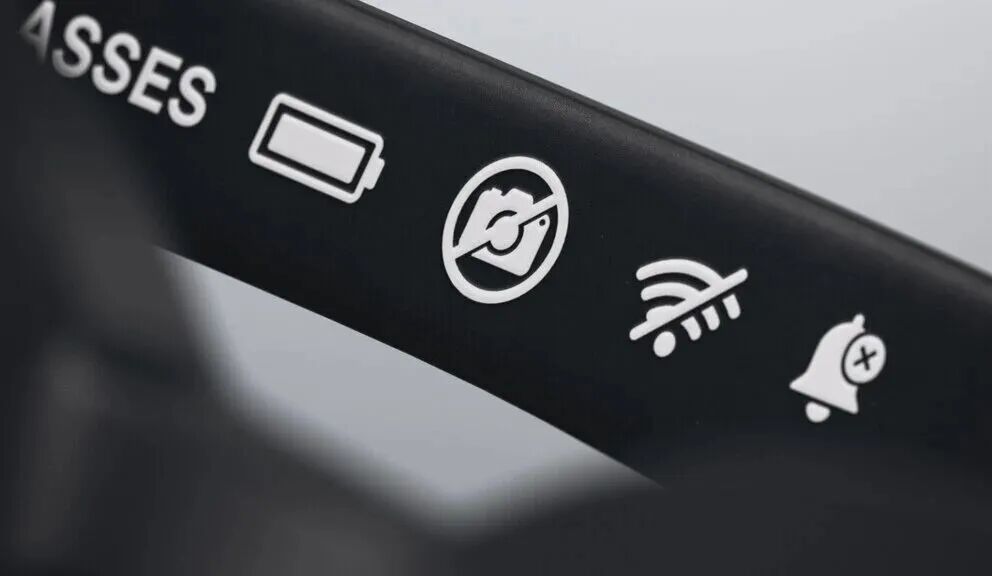
This is certainly not a technical route for AI glasses, but it pushes the subtraction to an almost absurd extreme. When the whole industry is proving what else can be put into the frame, doing nothing has once again become a selling point.
Back to real AI glasses, after the number of functions is reduced, products can concentrate limited power and development resources on a few scenarios, and then connect the information collection, sorting and calling processes.
The pressure also concentrates accordingly.
When one or two capabilities become the core of the product, they need to deliver more complete results. If the meeting recording only completes transcription, what the user gets is still a text that needs to be reorganized. If long-term memory only continuously accumulates summaries, it may eventually become another information warehouse. If the active service cannot accurately judge the timing of appearance, it will change from a step-saving operation to a new disturbance.
Earlier, RayNeo Innovation stated that more than 200 new AI functions have been launched in the industry in the past two years, but the long-term usage rate by users is less than 6%, and a large number of uses are still concentrated in conventional Q&A scenarios such as weather, stocks and news. This is not the unified statement of the whole industry, but it also shows that there is still a gap between the function being embedded in the product and forming stable usage habits.
Reducing the number of functions will not automatically bridge this gap.
The functions of display and shooting can be easily noticed in a short time. Recording, memory and active services need to enter the subsequent workflow and take longer to prove their value. They ultimately need to reduce operations, make information return accurately when needed, and continue to promote the next action.
On the booth, the lightness can be felt by weighing;
After leaving the booth, the remaining value begins to be measured in daily use.
The closer to ordinary glasses, the more comparison objects there are
One of the goals of lightweight design is to make AI glasses closer to ordinary glasses.
The "Beijing Smart Glasses Industry High-Quality Development Action Plan (2026-2030)" clearly proposes to promote products to evolve from the "mask style" to the traditional glasses form, and strengthen the testing of visual health, surface heating and battery safety.
This means that when AI glasses become truly light and thin, the standards they face will also change.
For a tech product with a special appearance and experimental nature, users may temporarily tolerate thicker temples, fewer styles and complex charging methods. Once it starts to approach the ordinary frame, users will naturally examine it in the way they treat a pair of daily glasses.
Whether it fits the face shape, whether the lenses can be optometry-adjusted, whether it presses the nose and clamps the ears after long-term wearing, whether the style can match daily clothes, how to repair the frame after it is damaged, and how to deal with battery attenuation after several years.
The "early adopter exemption" for tech products will be shortened as the appearance becomes more and more daily.
At the same time, AI glasses also need to be compared with mobile phones, earphones and recording devices.
For the same meeting recording scenario, whether glasses are more convenient than placing a mobile phone on the table; for the same voice assistant function, whether it obtains more useful context than earphones; for the same shooting demand, whether the first perspective brings irreplaceable content that mobile phones cannot provide.
The value stress test therefore not only occurs inside the glasses.
It also comes from the mature experience of ordinary glasses and the usage habits that have long been established by existing electronic devices. A pair of AI glasses needs to prove what users get in return for buying one more hardware device, managing one more battery, and connecting one more App.
The market has not given a single answer at present.
IDC data shows that the shipment volume of China's smart glasses market reached 610,000 units in the first quarter of 2026, a year-on-year increase of 23.5%. The total shipment volume of audio glasses and audio-shooting glasses was 358,000 units, a slight year-on-year decrease of 0.1%; among them, the proportion of products with cameras rose to 43.4%, a year-on-year increase of 513.1%. Glasses focusing on multiple segmented directions such as shooting, intelligence and movie watching are all growing.
In 2025, the shipment volume of audio glasses and audio-shooting glasses increased by 122% year-on-year, and the proportion of camera-equipped products rose from 7.1% in the first quarter to 39.4% in the fourth quarter. This shows that consumers do not simply choose "the lighter the better", and first-person shooting and environmental understanding still provide clear purchasing motivation.
In addition, the camera also brings another cost that cannot be calculated only by gram weight.
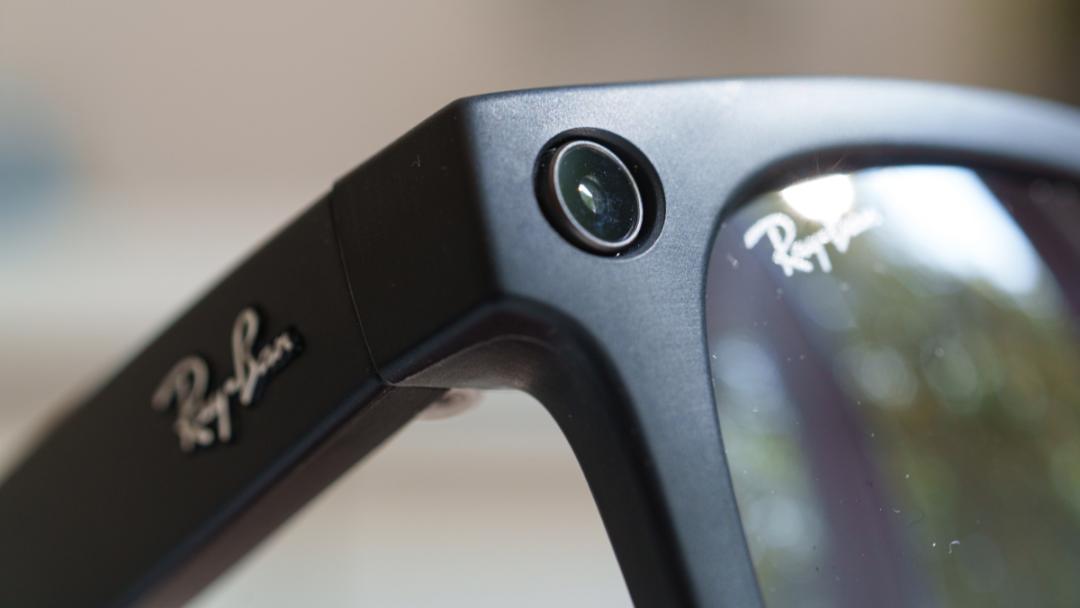
The closer AI glasses are to ordinary frames, the harder it is for people around to judge whether the camera and microphone are working from the appearance. Relevant Beijing industrial policies have proposed to include explicit sensor prompts and informed consent for data collection into industry or group standards.
For the wearer, low sense of presence means natural wearing experience; for public spaces, it also means higher responsibility for explanation.
The more similar to ordinary glasses, the harder it is to be sold only as a tech product, which may be the most severe test of lightweight design.
It gives AI glasses the appearance to enter daily life, and also pushes the product from the few-minute experience on the booth into a very mature life system. At this point, "futuristic sense" is no longer enough to justify the price, and the number of functions can no longer cover up the core capabilities.
A value must be deep enough, or it will soon be taken over by other devices.
AI glasses at WAIC are still looking for answers from different directions. Display, shooting, memory, office, sports and spatial computing can exist at the same time, and may gradually grow into different product branches.
Lightweight design does not select the final outcome for them, it only removes some buffers in advance.
In the past, the limitations of weight, endurance and optics could explain why a pair of AI glasses was not perfect. When the frame becomes lighter and lighter, and the product is more and more close to a pair of glasses that can be worn daily, the questions raised by the market will be more direct: is this remaining capability worth the user buying an extra pair of glasses? Can it occupy a clear and irreplaceable value position between mobile phones, earphones and ordinary frames?
This stress test has only just begun.
The frame will continue to lose weight. What cannot be directly solved by public molds, next-generation chips and a longer function list is whether the product can retain its core value.
This article is from the WeChat official account "AI Wuzao", author: SHEN Ziyan, editor: Lv Xinyi, released by 36Kr with authorization.