Full Reveal of NVIDIA's First CPU: Its Benchmark Performance Leaves X86 Flagships Far Behind, and WoA Completely Fills All Previous Shortcomings
NVIDIA's first-ever CPU, RTX Spark, has finally lifted the veil of mystery.
On August 9, the benchmark score of NVIDIA RTX Spark engineering sample appeared in the Geekbench 7 database, with a single-core score of 2570 and a multi-core score of 23126. Its multi-core performance outperforms the two flagship chips, AMD Ryzen AI Max+ 395 and Intel Core Ultra X9 388H, but still lags behind Apple M5 Max. It is worth mentioning that this chip, with the internal code name N1X, is NVIDIA's first ARM architecture processor designed for Windows PCs.
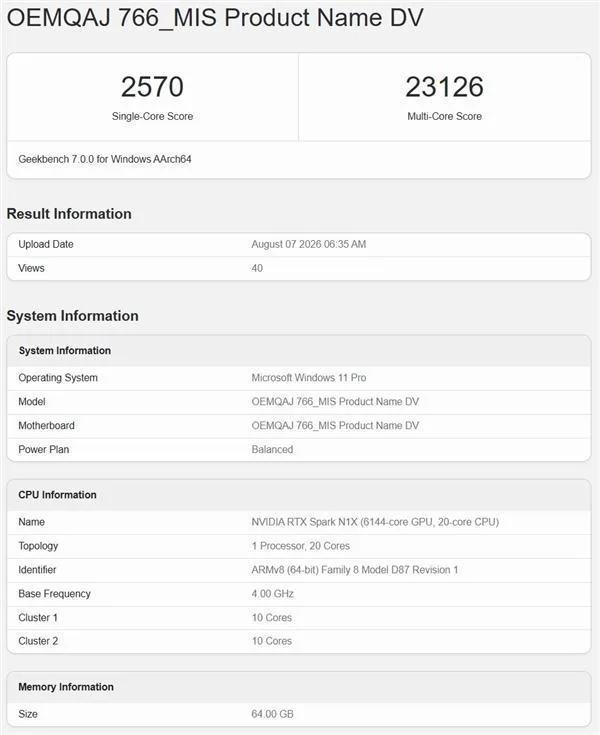
Source: Screenshot of Geekbench 7 Database
Of course, this is only an engineering sample with immature drivers, so we can just take the data with a grain of salt for now.
Lei Tech (ID: leitech) has been keeping a close eye on NVIDIA's CPU project. From the exposure of the code name to the release at Computex, and then to Microsoft's official announcement that Surface Laptop Ultra will be the first device to carry this chip, the benchmark results are now out, which gives us a good chance to discuss intensively why NVIDIA wants to make CPUs, and why Microsoft needs NVIDIA's RTX Spark.
RTX Spark is built on the foundation laid by Qualcomm
Microsoft has been working on WoA (Windows on ARM) for several years. Simply put, it allows the Windows system to run on chips with ARM architecture, which is the same architecture used by smartphone chips.
The biggest advantage of ARM chips is power efficiency, which is why smartphones can last a full day on a single charge. Microsoft wants to bring this power-saving advantage to Windows laptops, to create devices with longer battery life, thinner and lighter form factors, while gradually reducing its dependence on Intel and AMD's x86 architecture.
Qualcomm can be regarded as the first mover in the WoA ecosystem. In May 2024, Microsoft launched Copilot+ PC, whose core chip is Qualcomm Snapdragon X Elite focusing on AI functions. Microsoft has high hopes for this wave of AI PCs. Although there were some setbacks at the initial stage, the flagship Recall feature was forced to be delayed due to security and privacy issues, the CPU performance of Qualcomm Snapdragon X Elite itself is reliable, sufficient for daily office work, with really long battery life, and it delivers the full experience that a thin and light laptop should have.
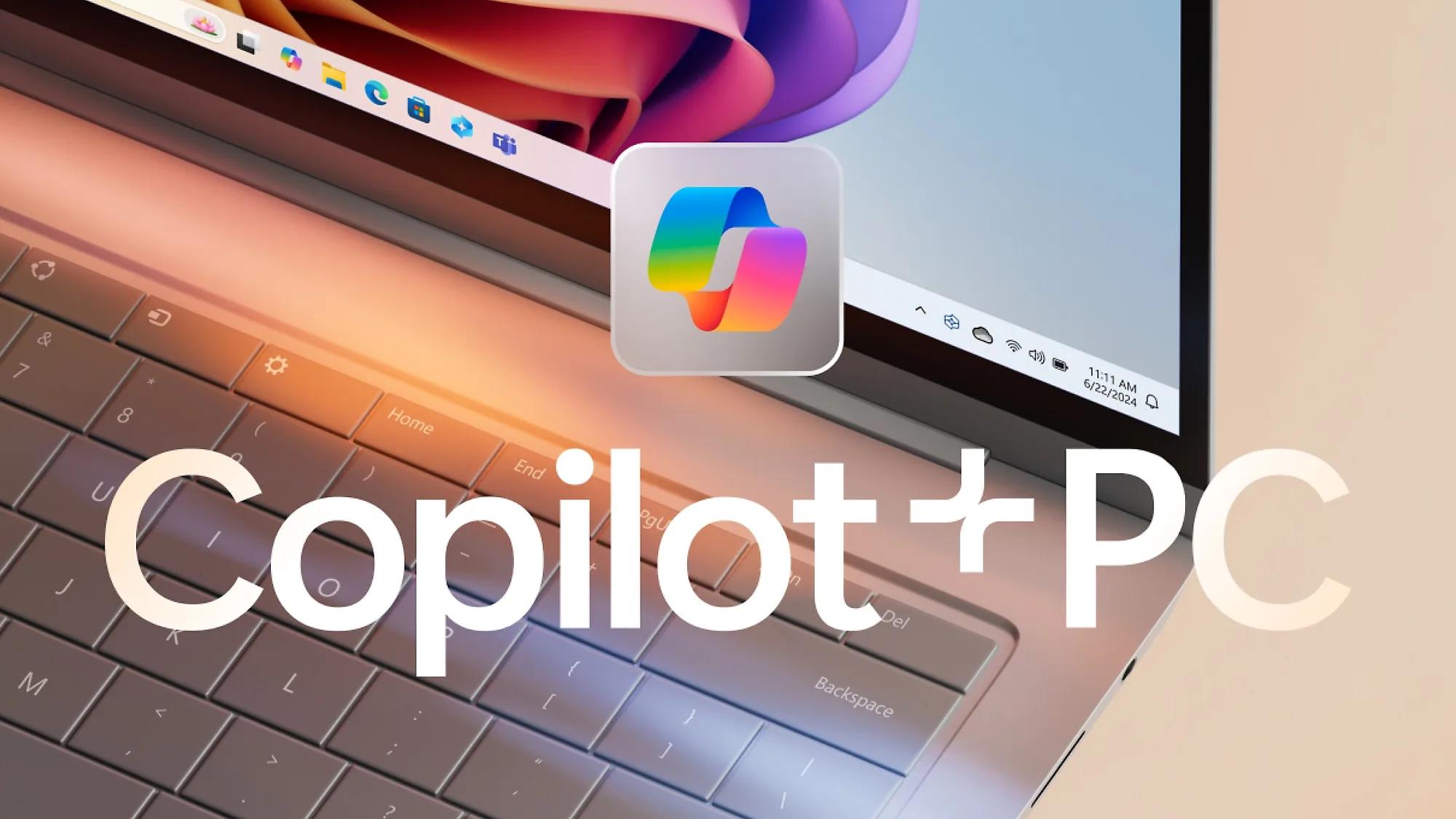
Source: Microsoft
It can be said that Qualcomm has laid the first cornerstone for WoA.
However, for WoA to develop further, thin and light office laptops alone are not enough. There are a large number of creators and developers among Windows users, who buy laptops not just for typing and watching videos. They need to run rendering tasks, train models and play games, all of which heavily rely on GPU performance.
The Snapdragon X Elite is positioned as a low-power SoC, with excellent power efficiency and high integration, performing well in thin and light laptops, but heavy graphics and AI computing are not its design goals. This is not a problem of whether the chip is good or not, but a matter of product positioning.
There is also the long-standing problem of software compatibility. When running Windows on ARM architecture, the biggest pain point is that x86 software has to run through a translation layer, which causes performance loss, and some software cannot run at all or frequently encounters bugs.
Although Microsoft has developed a translation layer called Prism to solve this problem and the effect is gradually improving, the compatibility of professional software and large-scale games still takes time to optimize, which is one of the reasons why WoA laptops have not been able to attract a large number of professional users for a long time.
Qualcomm's expertise lies in smartphone chips, and making low-power SoCs is its core business. The advantages of power saving, high integration and low cost are very important on smartphones, and they also work perfectly when migrated to thin and light laptops.
But there is another group of users in the laptop market who have rigid demand for graphics performance and AI computing power. This part of the demand goes beyond the design scope of low-power SoCs. If an ecosystem only has one chip solution, the user groups it can cover will be limited.
This is not a problem of a single chip manufacturer, but a problem at the current stage of ecosystem development. Qualcomm has helped WoA get off the ground from scratch, and established the basic market of thin and light devices with long battery life. But to bring WoA to more user groups, different types of chip solutions are needed to join in, and NVIDIA's entry is exactly to make up for the shortcomings of WoA.
NVIDIA's killer move: Porting the CUDA ecosystem to WoA
In recent years, NVIDIA has made huge profits from its GPU and AI computing power business. Its data center business is a stable cash cow, and its GeForce discrete graphics cards hold a solid position in gaming laptops and creator laptops.
Originally, everyone stayed in their own lane: you take charge of CPUs, I take charge of GPUs. No one expected that the PC market would usher in what is probably the only major change in the past decade — the rise of AI PC. In addition, Apple's M-series chips have proved the feasibility of ARM architecture on PCs, and Microsoft is also promoting WoA. NVIDIA cannot afford to lose its position in this market, especially in the high-end AI PC segment, which is exactly its home turf.
The GPU scale of RTX Spark is roughly equivalent to the desktop-level RTX 5070, which is the real core of the entire chip, while the CPU performance score is at most a bonus. NVIDIA's train of thought is completely opposite to Qualcomm's: it ports desktop GPUs downwards to directly maximize the laptop-level graphics performance and AI computing power, which is a completely different path from Qualcomm's approach of developing upwards from low-power SoCs.
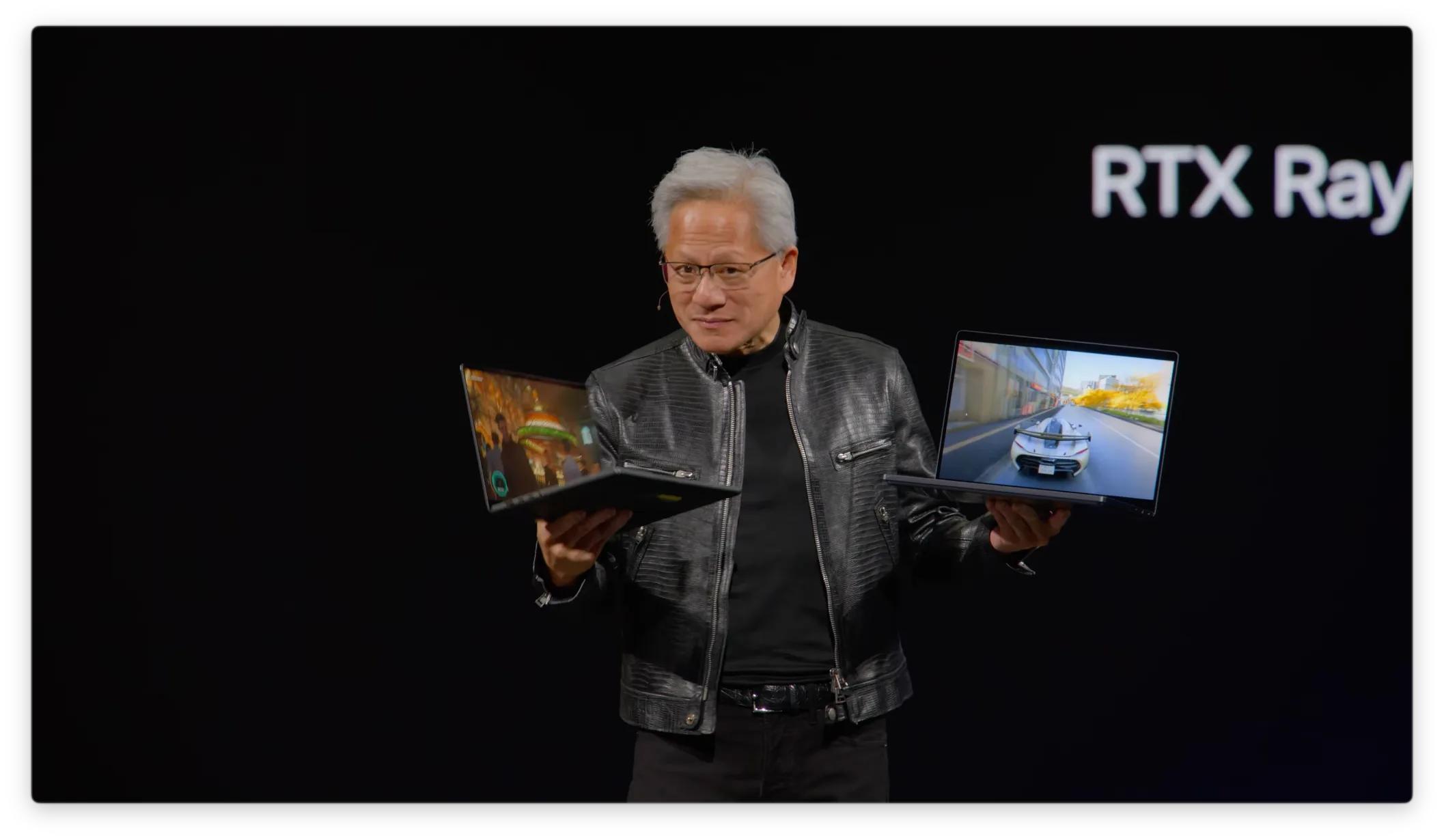
Source: NVIDIA
The biggest killer move is that NVIDIA has brought the entire CUDA ecosystem along with it.
CUDA is NVIDIA's parallel computing platform, on which a large number of toolchains for global AI developers are built. From PyTorch to Stable Diffusion, almost all well-known AI tools rely on it. This moat is extremely deep, not something anyone can catch up with easily.
This perfectly solves one of the previous pain points of WoA. Previously, if developers wanted to carry out AI development on Windows, they could only choose traditional x86 machines equipped with NVIDIA discrete graphics cards. Now RTX Spark ports CUDA to ARM Windows, so developers' original workflows can be used directly without learning a whole new set of tools. This is the real killer move of NVIDIA entering WoA. The performance of the chip itself is only one aspect, and what is really valuable is the entire AI developer ecosystem behind it.
In addition, NVIDIA has accumulated more than 20 years of connections and developer relationships in the gaming industry, which are ready-made resources when promoting software ecosystem adaptation. NVIDIA announced a number of WoA native games at Computex 2026, including Valorant, League of Legends and PUBG, with anti-cheat systems also supported. The speed of WoA's software ecosystem improvement is visible to all, which is driven by NVIDIA's gaming industry resources.
For the software compatibility problem mentioned earlier, relying solely on Microsoft to promote the Prism translation layer is one aspect. With NVIDIA pulling game manufacturers to do native adaptation, the software shortcomings of WoA will be filled much faster.
There is also a detail that RTX Spark is jointly developed by NVIDIA and MediaTek. NVIDIA is good at GPU and AI computing power, but lacks much experience in ARM SoC design. MediaTek has been engaged in the smartphone chip field for decades, with strong advantages in SoC integration and power management. The two companies have highly complementary strengths, which shows that NVIDIA is very clear about its own shortcomings and does not insist on doing everything by itself.
WoA cannot rely on a single type of chip, and local Agent drives hardware upgrading
Surface Laptop Ultra is prominently listed among the first batch of models equipped with RTX Spark. This is the first time that Microsoft has handed over its self-developed Surface product line to a "newcomer" in the CPU field.
Surface is of great significance to Microsoft, as it is the benchmark for Microsoft to define the form of Windows devices. The previous generations of Surface Laptop used Qualcomm Snapdragon X Elite, and there were also versions using AMD and Intel chips before that. But this time, Microsoft skipped Qualcomm and chose NVIDIA, and directly adopted the flagship "Ultra" grade, which shows that Microsoft's positioning of this device is completely different from previous products.
Why does Microsoft need NVIDIA? The core reason is AI PC. Local AI Agent is Microsoft's key direction in the next stage, which allows AI agents to run directly on your local computer without connecting to the cloud. The hardware requirements for this direction are completely different from previous levels.
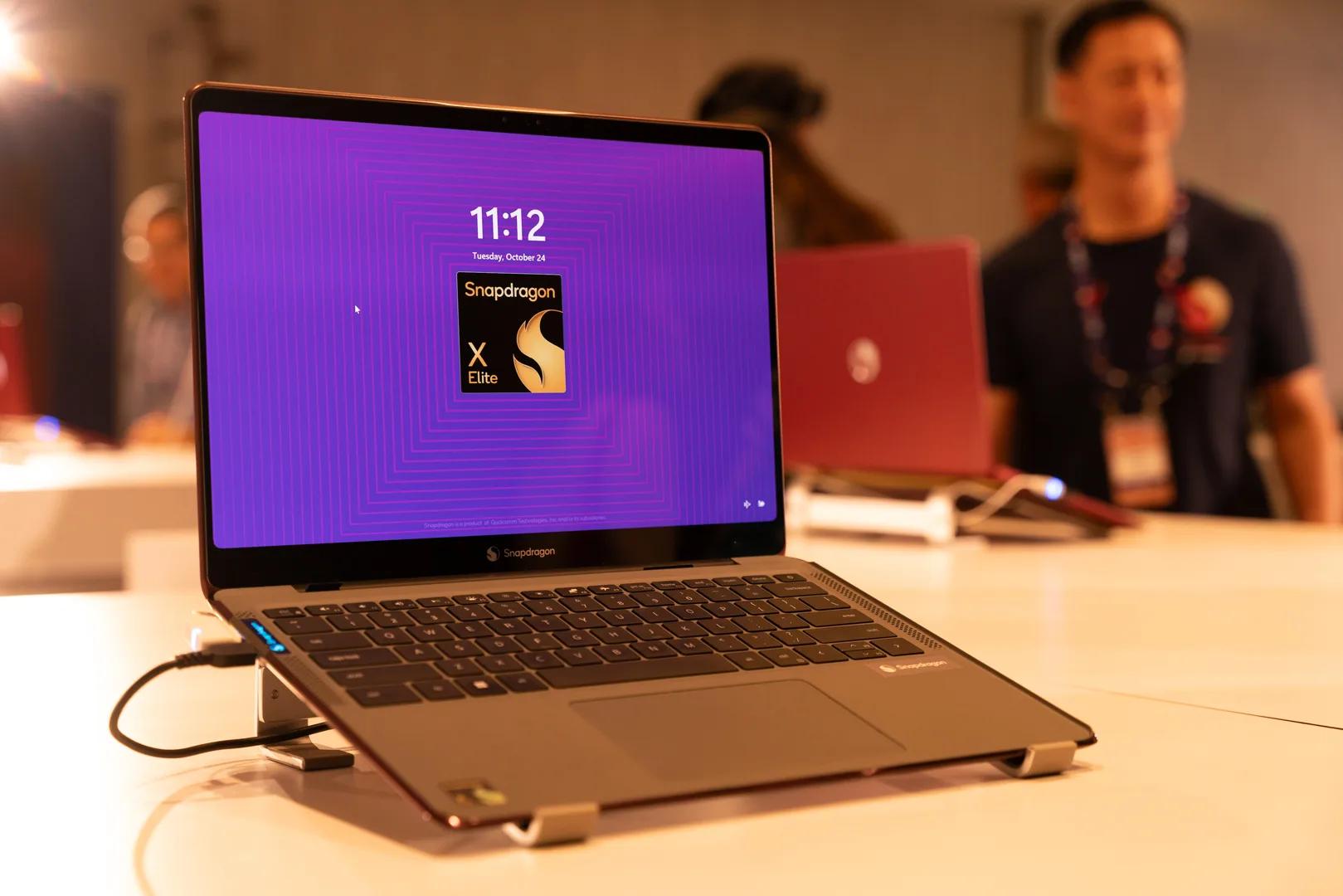
Source: Lei Tech photo
For example, if you ask the AI Agent to help you organize emails, arrange schedules, and automatically reply to messages, these lightweight tasks do not require high computing power, and can also run on the cloud. But if you ask it to help you analyze a dozens-page data report, or run a local AI model for code review, it will heavily rely on GPU performance.
Cloud AI Agent is charged based on usage, the more you use, the more you pay. Running AI Agent locally can save a lot of costs, and local computing power is a rigid demand for enterprises deploying AI Agents on a large scale.
Running local Agent requires a chip with a powerful enough GPU, and NVIDIA's GPU plus the CUDA ecosystem can exactly meet this demand.
In fact, we can also see from the positioning of Surface Laptop Ultra that Microsoft defines this device as "the most powerful Surface device ever", with the promotion focus on local model inference, compilation and dataset processing, and no mention of document processing or web browsing at all.
Obviously, this device is not prepared for ordinary office users, but targeted at developers and AI builders. Microsoft intends to use Surface to define what an AI PC should look like, and only NVIDIA's chips can support this positioning.
WoA has gone through the stage from 0 to 1. In the past, users only needed basic functions, no high requirements, just thin, light and power-efficient. Now WoA needs to be capable of handling heavy workloads. In fact, we can understand Microsoft's sense of urgency for AI PC. Apple has been advancing rapidly in self-developed chips, and the M-series has proved that ARM architecture can not only run on PCs, but also perform very well.
Microsoft can no longer let WoA stay in the stage of thin and light office use. It needs WoA to support the high-end form of AI PC, which requires a chip with strong enough GPU performance, and NVIDIA just appears at the right time.
Conclusion
RTX Spark is currently in the engineering sample stage, the benchmark score does not represent the final performance, and the driver is still in the preview version, so the reference value is limited. The N1X will not be officially launched until later this year, when the new generation of chips from AMD, Qualcomm and Intel will also be unveiled together.
I am not sure that with the efforts of many industry leaders, ARM will replace X86 as the mainstream, but at least the WoA ecosystem no longer needs Qualcomm to carry the banner alone. It has evolved from being only able to make thin and light office laptops to having the opportunity to produce creator laptops and developer laptops. Qualcomm's chips have laid the foundation for WoA, while NVIDIA's chips have raised the upper limit of WoA. WoA may have ushered in the best time in its history, and the future is promising.
This article is from "Lei Tech", authorized to republish by 36Kr.