Secured hundreds of millions of yuan in investment from GL Ventures and other funds, LatentVerse: Rejects the label of world model company, aims to build an embodiment-native brain | 36Kr Exclusive
By Deng Yongyi
Edited by Zhang Yuxin
The embodied intelligence track may no longer need an additional world model company — but a researcher born in 2001 still chose to launch his startup amid this booming trend.
"There are too many companies developing world models in the market, and most of them have no distinct characteristics," said Hu Yucheng, founder of LatentVerse. However, he does not want to be categorized into any of these peers, and what LatentVerse intends to build is not a world model either.
Hu Yucheng is currently a PhD candidate at the Institute for Interdisciplinary Information Sciences of Tsinghua University. In April this year, he resigned from ByteDance Seed, and co-founded "LatentVerse" with team members from institutions including Tsinghua University, Nanyang Technological University, Peking University, Qwen, ByteDance, and Xiaomi, positioning the company to develop native embodied foundational models.
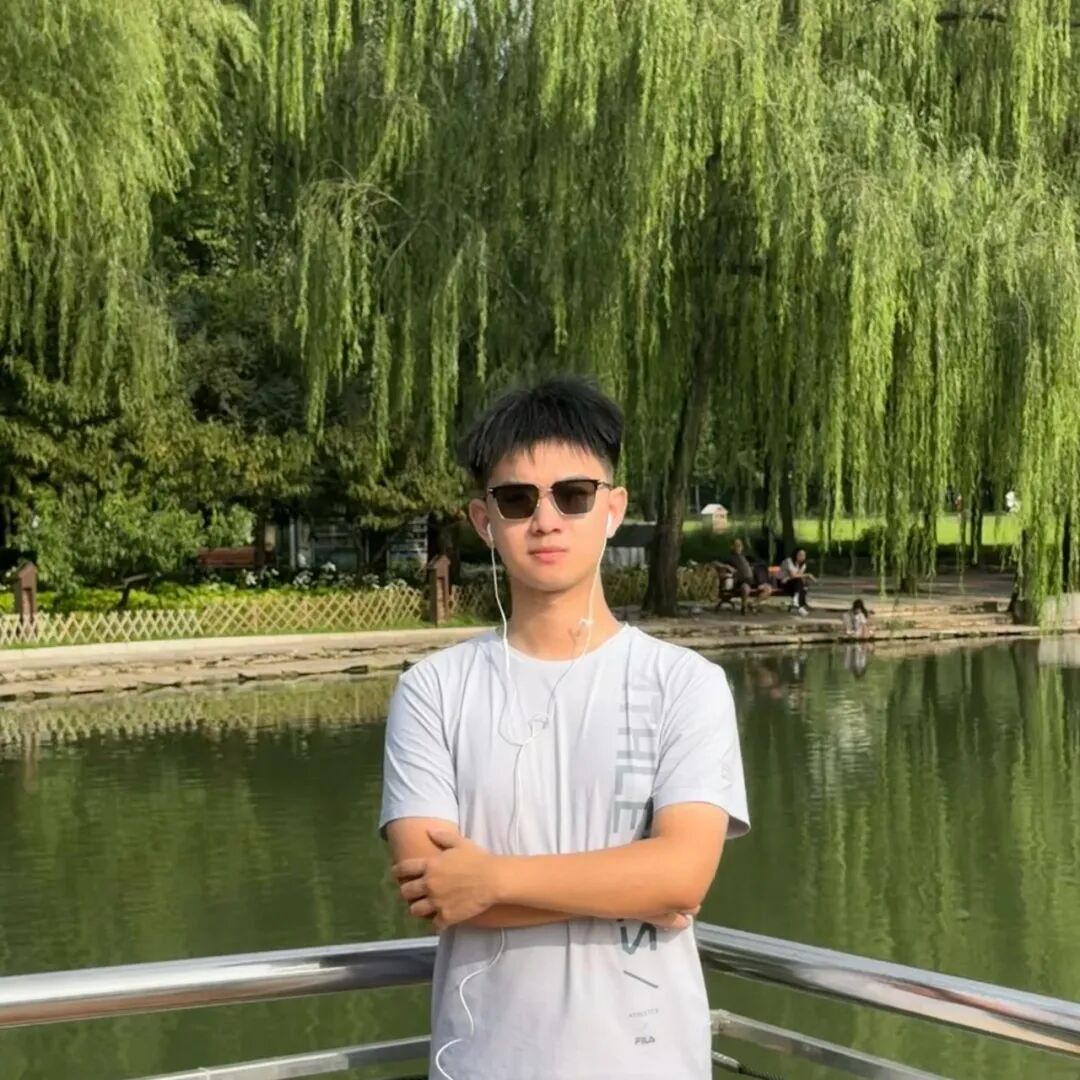
△ Hu Yucheng, CEO of LatentVerse
Exclusive information from Intelligent Emergence shows that embodied intelligence firm LatentVerse has completed a seed round financing of several hundred million RMB, with investors in this first round including GL Ventures, Qingliu Capital, Zhiyuan, StarMotion Era, InnoAngel and other funds.
In the past two years, VLA (Vision-Language-Action) has been the most mainstream technical route for embodied intelligence. From RT-2 to the widely popular Pi-0.5, the default evolution path of the industry is that as long as the vision-language model is connected to action output and fed with sufficient robot operation data, the model can learn to act in the physical world.
However, VLA has a fundamental limitation: it can only utilize data with action annotations. Such data is collected by operating robotic arms manually, with an average cost of more than 1000 yuan per hour, and requires dedicated operators, leading to relatively low efficiency.
Another route is the pure world model — it predicts future states through video generation and then maps them to actions, which lowers the data acquisition cost, as videos on the Internet can all be incorporated into training. But this route cannot make use of general vision-language data, and lacks the semantic understanding and emergent capabilities brought by VLM. A model that only predicts picture changes cannot understand what the instruction "pass the cup to the guest" actually means.
LatentVerse has chosen the third route: it does not develop VLA, nor the currently popular WAM, but unifies VLM and the world model into the same architecture.
In fact, Hu Yucheng is one of the earliest researchers who proved that "world models can directly guide robot actions". In early 2024, he proposed the multimodal diffusion VLA (PAD), and in November of the same year, he proposed VPP, the first video action model that realizes closed-loop reasoning. The latter is known in the industry as the pioneering work of WAM (World Action Model), and later NVIDIA developed DreamZero based on this achievement.
After joining ByteDance Seed, he led the R&D of the BagelVLA series of embodied foundational models, and the publication time of related work was even earlier than Pi07, the representative work of Physical Intelligence.
His experience in the industry made Hu Yucheng witness the arrival of an important technical inflection point: to reach the end point of physical AGI, the key lies in solving the data bottleneck — neither the pure VLA route nor the pure world model route can reach the final goal, and a foundational model that unifies understanding, prediction and action in the same architecture is required.
With the reduction of data collection costs, data has become the most critical issue for embodied intelligence in 2026, which has gradually become a consensus in the embodied intelligence field.
Betting on the Unified Tactile Action Model
The first model UTAM (Unified Tactile Action Model) that LatentVerse is training is evolved from the previously proposed UAM (Unified Action Model), which outputs visual, language and tactile feedback signals at the same time.
More specifically, the model internally contains four expert modules, forming a complete execution chain: the vision-language expert is responsible for understanding task intentions; the world model expert combines the skills previously learned from videos to plan a new task process; the action expert generates a coarse-grained latent action representation from the reasoning chains of the first two modules, which is equivalent to a large action instruction such as "reach out to pick up the cup"; finally, the high-frequency reasoning tactile expert decodes this coarse action into fine end-effector control signals — for example, adjusting the force and posture in real time after the fingers touch the cup wall. The first half is open-loop execution, and the second half is tactile closed-loop correction, which is similar to the human operation logic of "reach out first, then make fine adjustments based on hand feel".
The choice of model route is derived from the reverse deduction of scenarios that the team bets on. "Generalization, long-horizon performance and dexterity are not three independent technical indicators, but capability conditions that must be met simultaneously for the commercialization of robots," Hu Yucheng said. "We believe that the embodied foundational model should have stronger general generalization capabilities, such as adapting to home scenarios."
The technical route that LatentVerse bets on involves more data collection dimensions and longer-horizon tasks. For example, robots need to clean hotel rooms, pack drinks in narrow spaces, grasp soft objects in homes, and so on.
In LatentVerse's framework, robots need to have two capabilities at the same time when entering real scenarios: cognitive intelligence and contact intelligence. Cognitive intelligence is responsible for understanding instructions and planning steps — which is what VLA and world models are already doing.
But cognition alone is not enough. The contact information of the last centimeter determines whether the robot can truly complete the operation. For example, whether the surface of the water cup is smooth, whether deformation occurs when a flexible object is grasped, etc. Such information cannot be obtained purely through vision, and must be corrected in real time through tactile feedback.
These tasks require not only predicting what will happen in the next frame, but also having the capabilities of understanding instructions, planning steps, predicting physical changes, perceiving contacts and generating precise actions at the same time.
In the past two years, what the embodied intelligence track could achieve was some fixed scenarios — such as some precise operations in the industry, but it was still very difficult to achieve capability generalization on routes like VLA.
The advantage of the unified embodied model route is that the range of available data is far larger than that of pure VLA. All operation-related videos, cross-robot machine data, and general VLA data can be incorporated into the training framework. When the data scale increases, the model's generalization ability for scenarios and objects will be significantly improved.
However, the difficulties are also obvious: there is a lack of high-quality data that can be used. Even in the past, the development of the embodied intelligence track rapidly expanded the scale of data collection, but most of these data were collected for specific tasks and are difficult to reuse in the training of general task capabilities.
Hu Yucheng said that to achieve capability leap on the same model route, "first, the data scale needs to be expanded, and second, the model must be able to utilize massive data — not only the data collected by ourselves, but also Internet-scale video data and cross-robot heterogeneous data. The dimension of data processing is also more complex, which requires describing how to decompose the whole task and applying it to different training stages."
For this reason, in the few months since its establishment, LatentVerse has built a complete pipeline covering data collection, data processing and model training. This first includes a self-developed data collection pipeline, as well as the embodied native world model that LatentVerse is training.
From the deployment perspective, native embodied models also have structural advantages.
At present, the embodied intelligence industry generally faces the problem of "good Demo performance but difficult large-scale deployment". The core reason is the insufficient robustness of the model — changes in lighting in real scenarios, human interference, and inconsistent scene layouts will all lead to a failure rate much higher than that in Demos. "The VLM expert can generate human intentions, understand physical information and make next-step judgments. The world model expert can consume massive amounts of data to improve the robustness to scenarios, objects and tasks, and convert discrete text into visually rich semantic signals," Hu Yucheng said.
Technically More Challenging Than VLA, With Broader Scenarios Than Factories
The prerequisite for the native embodied model route to work is data.
Choosing this training route comes at the cost of sharply increased training difficulty: in terms of data processing, it is necessary to decompose long-horizon tasks into several steps and annotate them step by step, which is far more complex than processing images or texts; training requires multi-stage and multi-task execution at the same time; the WAM route relies on diffusion models, and for example, reasoning latency is an engineering problem that has not been fully solved yet.
"Our team has worked on the pure VLA route and the pure world model route, so we know the limitations of each," said Hu Yucheng, the founder. Another example is that another co-founder of LatentVerse is in charge of dexterous hand algorithm and motion control, which can make up for the shortcomings on the control side — after the data pipeline from the robot body to the human hand is connected, LatentVerse hopes to build a data flywheel for embodied scenarios.
To this end, LatentVerse has also formed a young and refined team. The algorithm team covers core algorithm modules of embodied intelligence, dexterous hands, simulation, 3D vision and other robot-related sub-fields.
At present, LatentVerse's data strategy is divided into three layers: manipulated data (VR collection, with precise action annotations) is only used to train the action expert; ego-centric human hand collected data and open source video data are used to train the understanding expert and the world model expert.
On the data collection side, LatentVerse bets on the robot-free data collection route. The team is also developing a self-made data collection glove, and has established preliminary cooperation with several data collection bases. "The existing data collection gloves are not sufficient to meet our requirements," Hu Yucheng said. In the future, by allowing non-professionals to participate in data collection through wearable devices and even integrate it into daily life, LatentVerse's data collection solution reduces the per-hour collection cost from the thousand-yuan level to less than 100 yuan.
However, what determines the model capability is more about data quality and how the data is used.
Another uniqueness of the LatentVerse team is that the core members of the team started working on the unified model route in early 2024, and most of their work is pioneering rather than following existing routes, which has become an important technical foundation of the industry.
For example, Zhang Jianke, another co-founder of LatentVerse, is the leader of many pioneering works in the embodied intelligence field — from HiRT (the fast-slow system for embodied intelligence, which is followed by Figure's Helix) to UP-VLA (the first generation-integrated embodied model for understanding), and then to VLM4VLA, which systematically proves the inherent limitations of VLM as an embodied foundation model.
"The capability emergence of embodied models cannot simply copy the development path of LLM. While promoting large-scale data, we should also make full use of the structured information in various heterogeneous data to build unified representations," Hu Yucheng said.
According to LatentVerse's plan, the company will release its first 16B-parameter embodied foundational model in one quarter, and accumulate hundreds of thousands of hours of training data within one to one and a half years.
In terms of scenario selection, LatentVerse hopes to incorporate signals of more complex dimensions such as tactile sense into the model. After achieving strong general generalization capabilities, it will cover a wider range of industrial, commercial, household and other scenarios.
This comes from the LatentVerse team's different understanding of world models. In his definition, any model that predicts the next token can be regarded as a world model, and the real route difference among different companies lies in how to define the state space. "We believe we are a native embodied world model, a world model built for robotics."
Behind this definition is actually a judgment of scenarios. The main reason why embodied intelligence can only be applied in vertical scenarios is that its "brain capability" is not sufficient. Only when generalization and generalization capabilities are fully achieved can it enter unstructured scenarios such as homes.
"What embodied intelligence needs to cross is the last centimeter between cognition and contact." In Hu Yucheng's view, robots should not only learn to see the world, but also learn to touch the world. First of all, we need to let robots learn to provide practical value in the real world.
Image Source | AI Generated
Welcome for communication

Welcome to follow us
This article is from the WeChat official account "Intelligent Emergence", author: Deng Yongyi, released by 36Kr with authorization.