From AI Video to AI World: Why Is Decart AI Backed by Top Silicon Valley Capitals?
In 2025, the AI video sector witnessed explosive growth.
OpenAI released Sora, Google launched Veo, and companies including Runway, Pika, and Luma kept pushing the boundaries of generation quality. In just one year, AI video has evolved from several-second short clips to film-grade visual outputs, with the entire industry seemingly locked in competition centered around "model capabilities".
However, as more and more enterprises begin to deploy AI video in real scenarios, a more pragmatic issue has come to the surface.
Nearly all models share the same bottleneck — they are far too slow.
A single video generation process often takes tens of seconds or even several minutes, which means AI can barely be applied to scenarios requiring real-time feedback such as live streaming, gaming, robotics, and digital humans. No matter how powerful a model is, it can hardly become the next-generation computing platform if it cannot run in real time.
Against this backdrop, Decart AI has rapidly emerged as one of the most high-profile new-generation AI infrastructure companies in Silicon Valley.
01
Founded for less than two years, valuation nears $4 billion
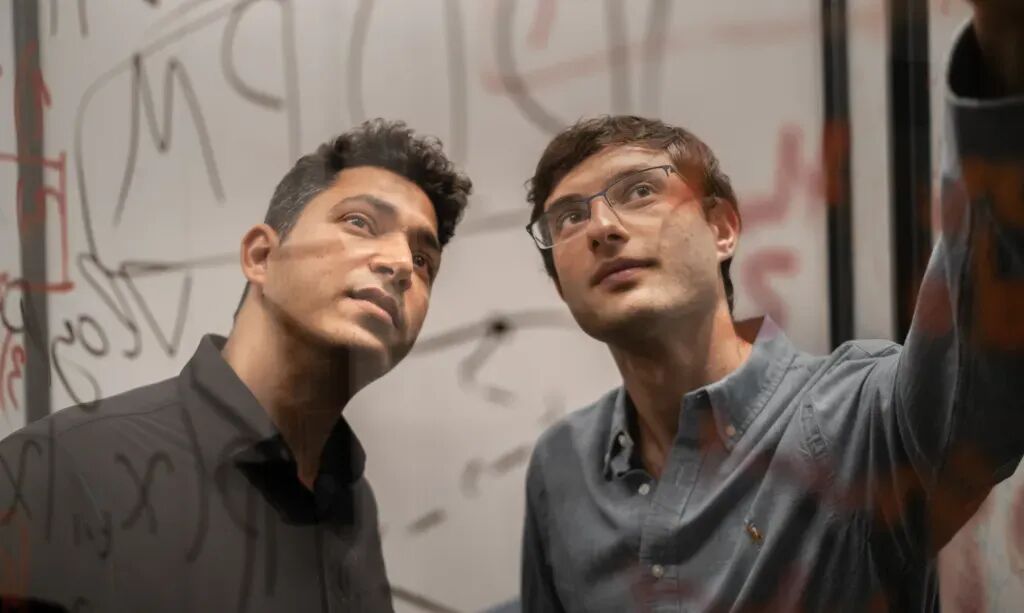
Decart AI was founded by serial Israeli entrepreneurs Dean Leitersdorf and Moshe Shalev. The company initially focused on optimizing AI inference efficiency, and soon entered the real-time generative AI infrastructure track.
The company has seen an extremely fast financing pace since its establishment.
In 2024, the company closed a $21 million Seed round led by Sequoia Capital; later Benchmark led its Series A round, pushing the company's valuation past $500 million rapidly. In 2026, the company completed another $300 million financing, with total raised capital exceeding $450 million. Its backers include top global institutions such as Radical Ventures, NVIDIA, Benchmark, Sequoia Capital, Toyota Ventures, Adobe Ventures, lifting the company's valuation to around $3.9 billion.
For a company that has been in operation for less than two years, such a financing rhythm is very rare.
More notably, Decart's investors are not only financial backers, many of whom have also become the company's partners and clients. This means the capital market is betting not just on a single technology, but on the future development direction of AI infrastructure.
02
What Decart sells is not AI video, but the "real-time capability" of AI
Most people who get to know Decart for the first time are attracted by its demo videos. Whether it is modifying live stream footage in real time or generating interactive AI worlds, the product appears to come from an AI video company. But a deeper look into Decart reveals that its business model does not rely on video generation itself.
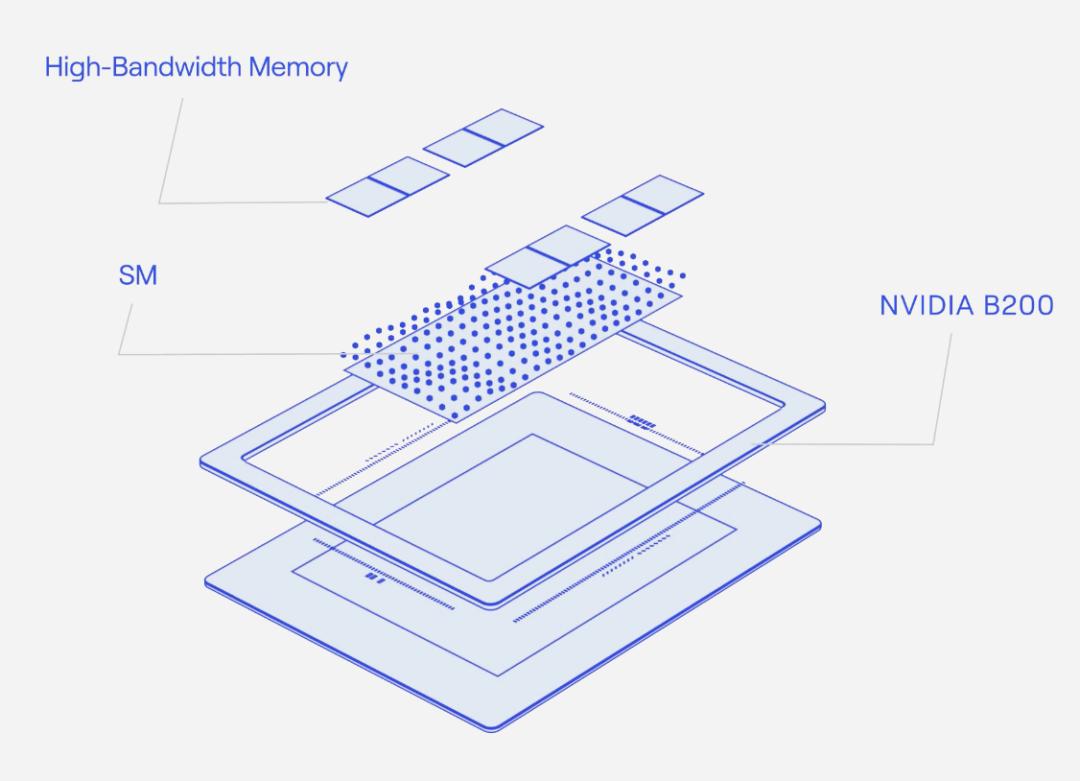
The company's actual core product is an AI inference optimization platform called Decart Optimization Stack (DOS). Situated between AI models and GPUs, this system can conduct unified optimization for different hardware including NVIDIA GPUs, AWS Trainium, and Google TPUs, significantly boosting the efficiency of large model training and inference while cutting computing costs.
For AI labs, this means the same amount of computing power can run more models; for enterprise clients, it means lower AI deployment costs and reduced latency.
In other words, Decart is more like an "operating system" in the AI ecosystem, rather than a standalone AI application.
03
One company, three product lines
At present, Decart has formed a relatively complete product system.
The first product line is DOS (Decart Optimization Stack). As the company's core infrastructure offering, it is also its main commercial direction so far. Enterprises and AI labs can deploy models across different chip platforms via DOS, and obtain higher inference efficiency, lower GPU costs and better resource utilization.
The second product line is Lucy.
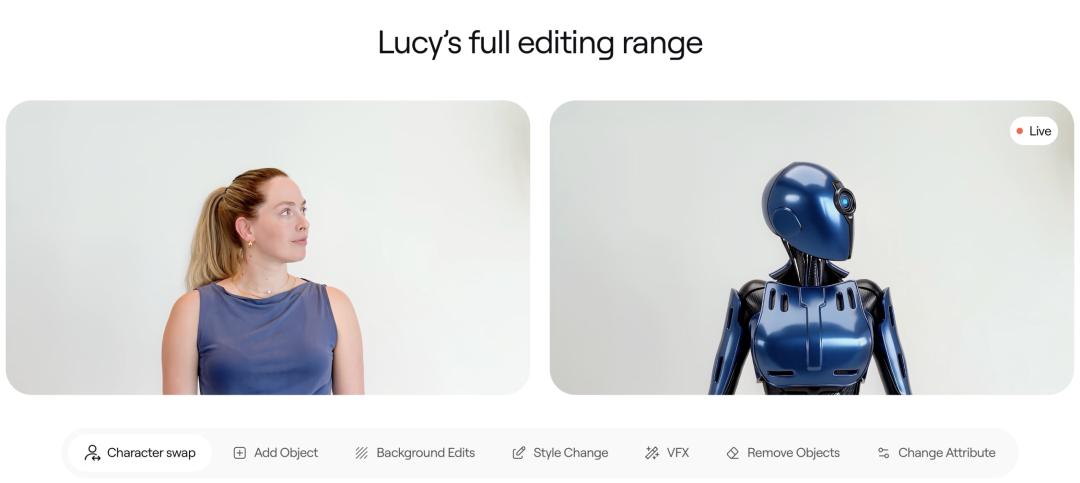
Lucy is a real-time video generation and editing model that can instantly complete character replacement, scene transition, ad placement and visual effect generation during live streaming, realizing near-zero-latency video processing. This capability can be widely applied in fields including live streaming, e-commerce, film and television production, digital humans and content creation in the future.
The third product line is Oasis.
Compared with traditional video models, Oasis goes a step further by building an interactive World Model. Users can interact with the AI-generated 3D world in real time, instead of watching pre-rendered videos. The latest version of Oasis released by the company has started exploring scenarios such as robot training, autonomous driving simulation and physical world modeling.
Though targeting different markets, all three product lines are built on the real-time inference capability of DOS at the underlying layer, forming strong technical synergy.
04
Will real-time AI become the next trillion-dollar market?
In the past few years, the largest application scenario for large models has remained text. In the coming years, AI is gradually moving from "chatting" to "taking action".
Digital employees need to understand users and respond in real time; robots need to perceive the surrounding environment continuously; autonomous driving systems need to make decisions at the millisecond level; characters in AI-powered games need to evolve constantly based on players' behaviors; live streaming content needs to be generated and modified instantly.
All these applications share one common feature — no tolerance for waiting.
The traditional large model inference architecture is mostly designed for offline generation, rather than real-time interaction. What Decart addresses is exactly this industry-wide pain point. It aims to evolve AI from "generating content" to "running in real time", enabling AI to perceive, infer and respond to the real world continuously just like an operating system.
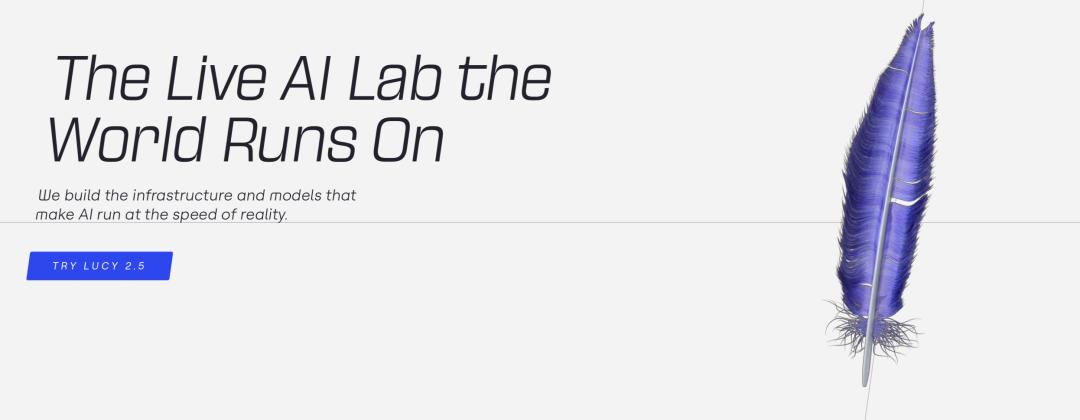
This is also why the company positions itself as The Live AI Lab — it not only builds models, but also develops the underlying infrastructure that allows AI to run in the real world in real time.

05
Why is Decart worthy of long-term attention?
In the past few years, the hotspots of AI startups have almost all focused on the model layer. As model capabilities gradually converge, industry competition is shifting to another dimension — infrastructure efficiency.
Models are getting larger, GPUs are getting more expensive, and inference costs keep rising. For enterprises, what actually affects the speed of commercialization is not only whether the model is smart enough, but whether it can be stably deployed to real business scenarios at low costs.
Decart is positioned right at the center of this value chain. It serves not only model companies, but also cloud vendors, enterprise clients and robotics firms, and does not rely on the development of any single model vendor.
More importantly, the company does not limit itself to the AI video track, and keeps expanding to larger markets such as AI inference platforms, world models and physical AI. With the development of sectors including robotics, autonomous driving and digital twins, the importance of real-time AI infrastructure will only rise further.
For investors, the biggest value of such a company does not lie in one hit application, but its potential to become a shared underlying infrastructure that the entire future AI industry depends on.
Epilogue
The next stop for AI is the "real-time world"
If we say that large models have transformed information production in the past three years, AI's bigger opportunities in the next decade may well lie in the physical real world.
Robots need to understand their environment in real time, digital humans need to interact in real time, autonomous driving needs to make decisions in real time, and a large number of future AI applications are all built on the foundation of "low latency and high efficiency".
Decart has taken a different path from most AI startups. Instead of training the largest model or building a new AI assistant, it is constructing a set of infrastructure that enables all models to run faster, cheaper and in real time.
This is probably why top Silicon Valley capitals keep betting on Decart: what is truly worth investing in is not necessarily the next AI application, but the underlying capability that supports the continuous development of the entire AI industry.
This article is from the WeChat official account "Silicon Rabbit Jun", author: Silicon Rabbit Jun, republished with authorization from 36Kr.