The next AI moat will not be a better model
The Translated Bureau is the translation team under 36Kr, focusing on sectors including technology, business, workplace and life, with a core focus on introducing new technologies, new perspectives and new global trends from overseas.
Editor's Note: Stop the blind race for larger models! The core bottleneck holding back the real-world deployment of physical AI is not insufficient model intelligence, but the outdated engineering verification workflow. Without addressing the inefficiency of integration and testing, even the most cutting-edge AI will remain nothing more than a laboratory toy. This article comes from a translated piece.
Over the next decade, billions of machines will become autonomous or intelligent. From passenger cars, trucks, tractors and mining haulage vehicles, to defense systems, warehouse robots and humanoid robots — the entire physical economy will be reshaped around software that can perceive, make decisions and take actions.
The industry's current widespread assumption about how to achieve this goal roughly goes as follows: models will keep improving, world models will mature, foundational large models for the robotics field will emerge, and autonomy will eventually come naturally. Intelligence is seen as the entire focus of this race; as long as we scale up intelligence, machine autonomy will be achieved effortlessly.
For the past ten years, I have been dedicated to helping Applied Intuition build the software infrastructure behind many of the world's most ambitious physical AI projects, covering software-defined vehicles, autonomous trucks, construction machinery, mining systems, defense platforms and robotics. This perspective has allowed me to observe up close where the industry is accelerating and where it keeps hitting roadblocks. I am as bullish on the development of intelligence as anyone else, but this widespread assumption has a fundamental logical flaw. Deployed physical AI is the product of two variables: first, the inherent capability of the model, and second, the throughput and carrying capacity of the engineering system built around the model — that is, how requirements are translated into software, how software is verified, and how verified systems are deployed, monitored and continuously improved. The industry has poured almost all its resources into the first variable, while the second variable remains at the level it was a decade ago, still designed for quarterly releases and integration teams of hundreds of people. Running traditional engineering systems on top of cutting-edge intelligence cannot deliver cutting-edge results, because the outdated engineering system itself is the biggest bottleneck.
Therefore, this counter-consensus bet is not to dismiss intelligence itself, but to argue that the next order-of-magnitude leap for physical AI will come from making engineering systems as intelligent as the models they support. However, the industry's current technology roadmap is still built on a handful of assumptions that were once reasonable but no longer align with the direction of physical AI's progress.
Smarter models cannot directly translate to deployable machines
There is a huge gap between a high-capability model and a certified, stably operating machine, and this gap cannot be filled by simply improving model quality. A model with 20% better performance in benchmark tests still needs to be integrated with many other software components, tested across millions of derived scenarios, traced against safety requirements, verified on hardware, then distributed to the vehicle fleet, and monitored in real time at real operation sites. In typical projects, it is this pipeline that determines the R&D rhythm, not the model itself. After teams get a model with substantial performance breakthroughs, they often need to spend two quarters proving it is safe enough for release.
This is why while world models are impressive, they cannot bring us to a fully autonomous future on their own. The speed of model evolution has already outpaced the absorptive capacity of engineering R&D organizations. Every leap in model capability only shifts the bottleneck, rather than eliminating it. The limiting factor keeps moving downstream: from "can the machine perceive the world?" to "can we verify, integrate and operate the capabilities the machine now has?" If a team's verification cycle lasts for months, it essentially drags the operating speed of cutting-edge AI down to the pace of its own processes.
This is a corollary that the entire industry has not fully accounted for in costs: as models become increasingly commoditized at the cutting edge, two companies with the same level of intelligence will face completely different outcomes. The gap between them depends on how fast their respective engineering systems can digest and absorb the capabilities the model possesses. Intelligence is becoming ubiquitous, but the ability to engineer, deploy and operate it in the real world is not.
Lessons from digital AI cannot be directly applied to physical AI
The second assumption is more subtle: that the ongoing Agent revolution in the digital space will automatically extend to physical AI. Simply putting code Agents and Copilots into the autonomous driving technology stack will deliver the same productivity gains.
This is not the case, because most digital AI only operates on documents, conversations and code. The operating scenarios for physical AI are different: it exists in driving logs and sensor data, simulation runs and hardware-in-the-loop (HIL) test benches, as well as requirement databases and verification reports; it exists in fleet telemetry data streams transmitted on real roads and work sites. An Agent that has never seen a Disengagement event, does not understand why Perception Regression matters, and cannot trace requirements back to test cases, is not a productivity tool in this field — it is a hidden risk wrapped in a friendly interface.
Enabling Agents to have real practical capabilities in the process of deploying physical AI is itself a cutting-edge intelligence problem, completely different from training larger models. Agents need direct access to the industry's core data and tools — such as simulators, data pipelines and verification systems — through sufficiently reliable and trustworthy interfaces. They need to embed domain expertise, accumulate deep industry knowledge, and understand what "passing verification" actually means when the deliverable is loaded onto a multi-ton machine. In addition, they must have built-in evaluation and governance mechanisms, because in this field, even the slightest deviation between a "plausible answer" and a "truly correct answer" can lead to fatal consequences.
When I say physical AI needs its own Agent platform, I mean a platform that can deeply embed state-of-the-art models into the underlying data, toolchains and domain expertise of physical systems, with natively integrated evaluation and governance capabilities. It is not a simple chatbot attached to engineering tools, nor can it be obtained by fine-tuning general-purpose Agents. This is a brand new architecture that demands no less AI innovation than the models themselves.
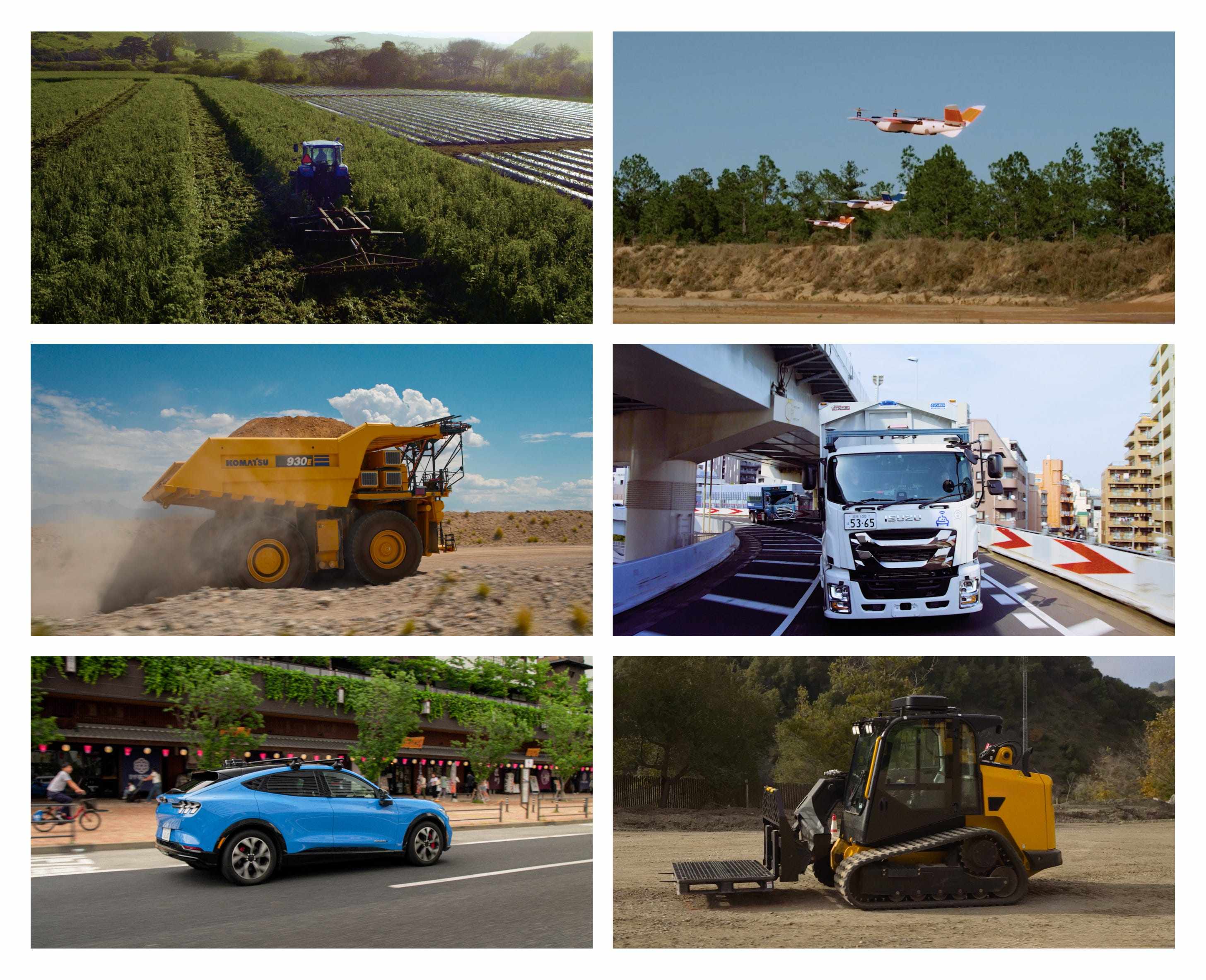
The future of physical AI depends not only on the smartest models, but also on engineering systems that can translate intelligence into autonomous machines at scale.
Speed does not come at the cost of safety
When discussing Agent capabilities in physical AI R&D, the reflexive objection people raise is usually: Agents should not be used in safety-critical engineering fields. Automation means pursuing speed, which may lead to errors. This concern is undoubtedly reasonable when the object in question weighs several tons.
However, in safety-critical systems, the speed of the feedback loop itself is a safety mechanism. When verification takes weeks, teams can only run tests at irregular milestone points; when verification is shortened to minutes, every code change triggers a test. Problems come to light much earlier, when the cost of fixing them is extremely low. Coverage can also expand to thousands of times more diverse scenarios. Requirements are implemented more accurately, and verification frequency increases significantly. A process that appears slow and cautious is not necessarily the safest in essence — it often means defects have been hidden in the dark for months before being discovered.
In this field, the real way to keep Agents safe is not to slow them down, but to establish clear boundaries of authority and responsibility. Automate the workflows of development, verification and operation to resolve safety-critical issues faster, while never automating certification, regulatory signing and final engineering decisions. At key nodes, Agents propose solutions, and humans make the final call. Any operation that touches the production system must run after passing through an approval checkpoint. This is not a temporary compromise during model improvement, but the long-term correct architecture for physical AI, just like a well-designed autonomous car has a clear Operational Design Domain (ODD) rather than unlimited control authority.
When Agents help build physical AI faster, this development speed will in turn make the final product safer.
Models cannot drive compound effects, systems can
Once we realize these assumptions are holding back the development of physical AI, the logical next step is to combine more powerful intelligence with faster learning, to create an Agent flywheel where cutting-edge models and cutting-edge engineering systems nourish each other.
A continuously operating flywheel works roughly as follows: the machine underperforms in real operation, the Agent mines operational data to identify what the problem is and why it occurs, or synthesizes a specific scenario that can expose the defect; the analysis conclusions are translated into R&D requirements, which are then translated into test cases; the test cases evolve into verified software, which is then deployed to the machine fleet; the fleet generates new data that improves model capabilities, which in turn feeds back to enhance Agent performance and speeds up the next cycle. In the past, each cycle took months and required a whole room of experts. Every stage accelerated by Agents not only saves time, but also increases the frequency of flywheel rotation, and every rotation compounds speed and intelligence. Smarter models drive the flywheel to spin faster, and a faster flywheel in turn makes the models smarter. If the industry treats intelligence as the entire focus of the race, it will abandon this huge compound effect.
We are confident that this flywheel is real and effective, because we have already put it into practice in our own business. Applied Intuition has been exploring the frontiers of physical intelligence for ten years — covering perception, simulation, verification and full-vehicle software for the automotive, trucking, mining, agriculture and defense sectors. Over the past year, we have built an Agent platform on top of this infrastructure, named Dana. Our engineers have built thousands of internal applications and Agents on it. With Dana, development cycles have been shortened by roughly 20 times, while delivery quality has improved significantly. Deployment frequency has increased from once every few weeks to multiple times per day. Applications that once took months to build now only take days or even hours. More illuminatingly, applications that were previously too costly to start are now regular R&D projects. When construction costs drop by an order of magnitude, the boundary of what is worth building expands by more than an order of magnitude.
Intelligence enables powerful engineering systems, and engineering systems make intelligence truly valuable. Neither can work effectively without the other.
What this means for the next decade
If the entire industry continues to bet solely on intelligence itself, the next ten years of physical AI will progress slowly: full of dazzling demos, multi-year R&D projects, and a growing gap between the capabilities of machines in the laboratory and their actual performance in the real world. Models will be exceptionally good, but the deployment curve will remain stubbornly flat, because every technological breakthrough will have to queue up for absorption by engineering organizations that still operate at the old pace.
Combining cutting-edge intelligence with Agent engineering systems will make this curve turn upward. Physical AI will begin to unlock its full potential: farms can maintain stable production despite labor shortages and climate shocks; mines achieve continuous, safer operations; freight networks can autonomously reroute when unexpected situations arise; defense systems can maintain operational resilience under damaged or harsh conditions. A market worth trillions of dollars is converging on the same technology stack, and the closed learning loop is the core of all of this.
Software devoured the world because it drastically reduced the cost of building applications for the digital economy. Physical AI will repeat this process for the physical world, but only if building intelligent machines can be as fast and iterative as building software, without sacrificing the rigor required for safety-critical systems. This requires not only the top-tier models, but also a restructuring of our engineering paradigms — and almost no one has started building this second part yet.
Twenty years from now, people will not remember which company had the best world model in 2027, but they will remember which company figured out how to continuously translate intelligence into real deployed systems. That is exactly the problem we have been working to solve.
Translator: boxi.