New position in the robotics industry: "Orthopedic Doctor" with a monthly income of 6,000 yuan, who specializes in repairing robots with broken arms and legs.
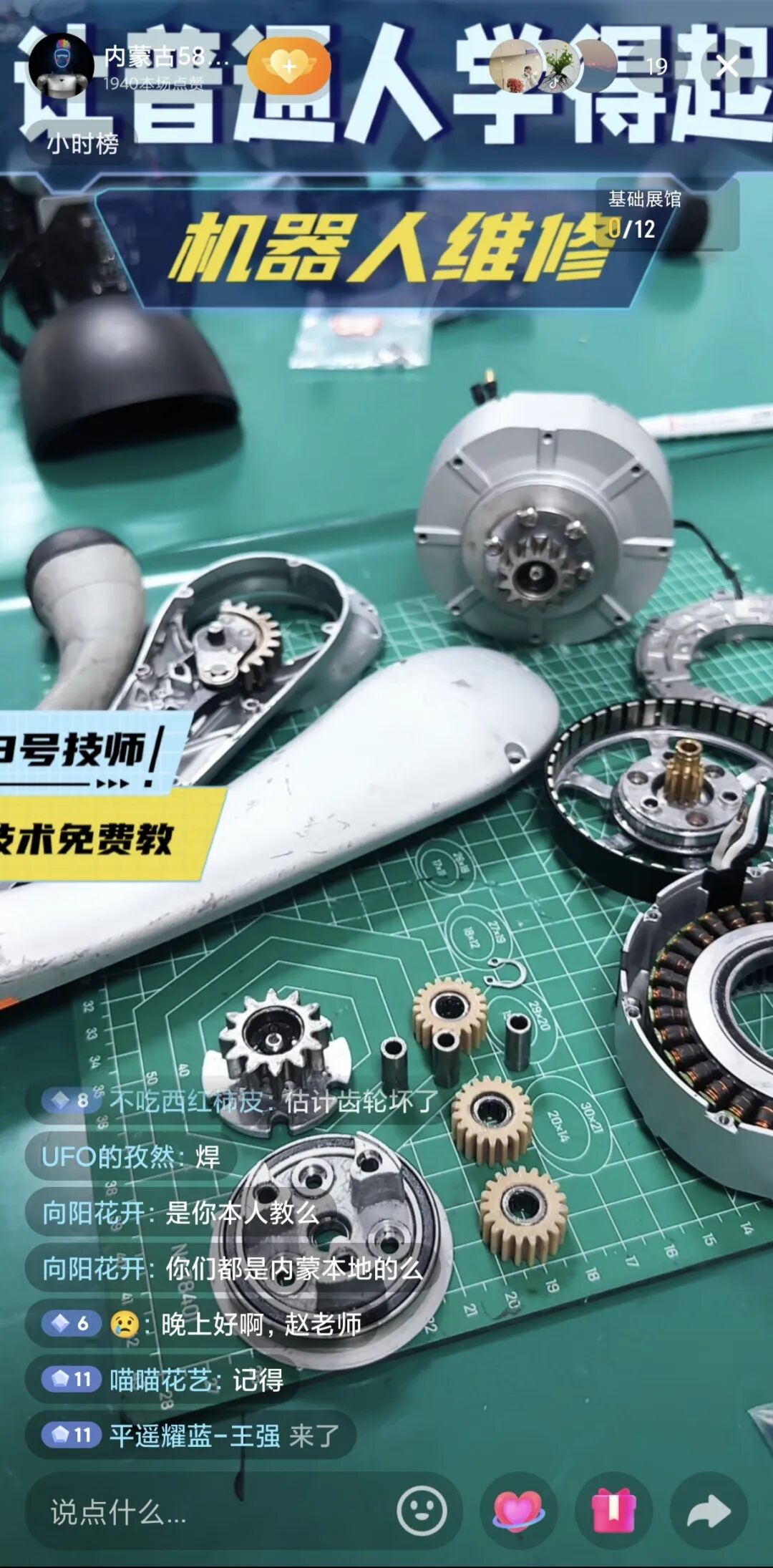
At 9:20 p.m., Zhao Xin appears on the Douyin live stream on time.
During the live stream the previous day, a follower mentioned that the knee joint of their robotic dog made abnormal noises. Zhao Xin planned to disassemble the knee joint motor of one leg of the robotic dog in front of the camera, not only teaching disassembly and assembly skills, but also giving the follower a remote diagnostic check.
Zhao Xin has summed up his own experience: a "rustling" sound usually means lubrication is needed, a "clacking" sound generally indicates a problem with the gears of the planetary reducer, while a "buzzing" current sound may be caused by a short circuit on the circuit board.
By teaching robot repair knowledge, each of Zhao Xin's live streams can attract more than 1,700 viewers, with over 40 people watching at the same time. Although the audience size is not large, many viewers watch very carefully, and there are even long-time fans who tune in to the live stream every day.
Why are people willing to watch a live stream of robot repair?
You may have seen these robot-related videos: a robot carried away on a stretcher after finishing a marathon, a robot whose head was knocked off while fighting in an octagonal cage, or a robot that suddenly stumbled and fell apart during a performance...
The number of robots is growing explosively. Data from IDC, a well-known market research institution, shows that in 2025, the global shipment of humanoid robots was about 18,000 units; while officials from the Ministry of Industry and Information Technology predict that the total output of humanoid robots in China is expected to exceed 100,000 units in 2026.
As the number of robots increases, the demand for maintenance and repair positions is also rising, and the first movers have already emerged in the market.
The technical threshold for robot repair is not high
Zhao Xin works at a robot and drone repair training institution in Ordos, Inner Mongolia. His public persona on Douyin is an ordinary person who learned robot repair from scratch.
This is very similar to his real experience. Zhao Xin was born in 1990, majored in civil engineering in junior college, and his work experience was mainly in the service industry. Although he had a hobby of disassembling and assembling electronic products, he had never done repair work before, and he was almost entirely self-taught in robot repair.
It was only half a year ago that he disassembled his first robotic dog. When he finished disassembling it and reassembled it for the first time, he was left with 10 extra screws and had no idea where they belonged, so he had to disassemble another robotic dog and compare them one by one to find the correct positions.
The first time he disassembled a humanoid robot, he broke three screws and two clamps. Some screw holes are reinforced with anaerobic adhesive. After he used a heat gun to melt the adhesive, the screws became soft and broke as soon as he tightened them with force.
On another occasion, a robot he was repairing was supposed to stand up from a squatting position, but instead of moving forward, it exerted force backward and fell directly into a split pose. He and his colleagues studied it for a long time, and finally found that the square inertial measurement unit (IMU) chip on the robot's waist was installed 180 degrees backwards. Even though the software did not report an error, the robot's force direction was completely reversed.
In addition to repair, robots and robotic dogs also require regular daily maintenance.
Zhao Xin once encountered a robotic dog that did not report any faults in the App, but the machine could not stand stably. After disassembling it step by step, he found that the problem was with a bearing in the leg joint connecting rod, which had been worn with two deep grooves, caused by the lack of timely maintenance.
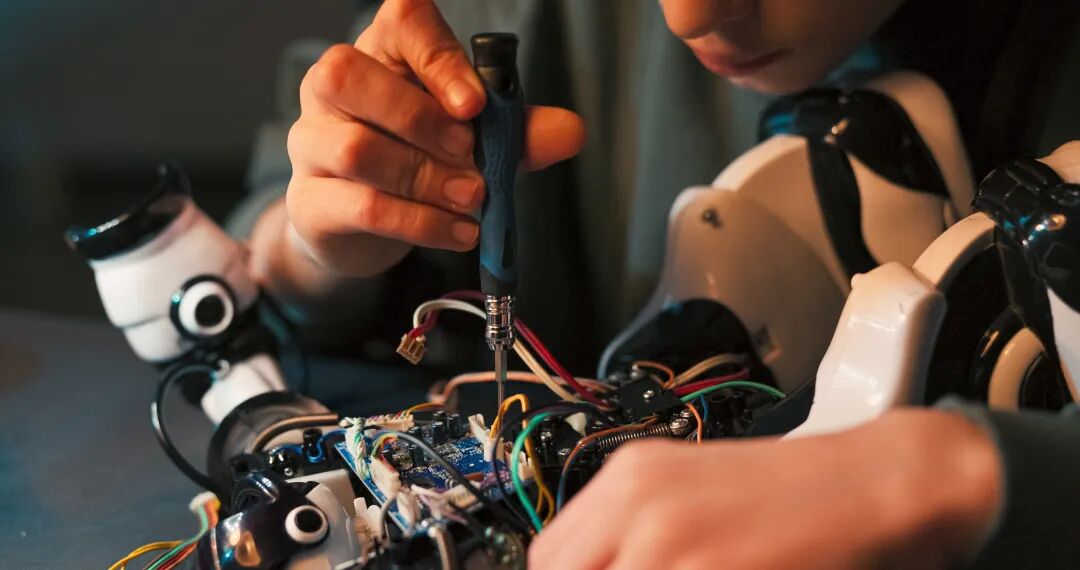
Although he stepped into many pitfalls at the beginning, Zhao Xin repeatedly emphasized that the technical threshold for robot repair is actually not high.
The first robotic dog Zhao Xin repaired had a communication failure. He replaced a flexible flat cable and soldered it, and the problem was solved in just 1 hour.
Generally, combining the fault described by the customer and the error report in the App, you can roughly locate which part has the problem. For damaged parts, you usually do not need to go to great lengths to repair them, but directly replace them with new ones.
Practitioners generally say that the difficulty of repairing robots and robotic dogs is even lower than that of repairing sweeping robots or drones.
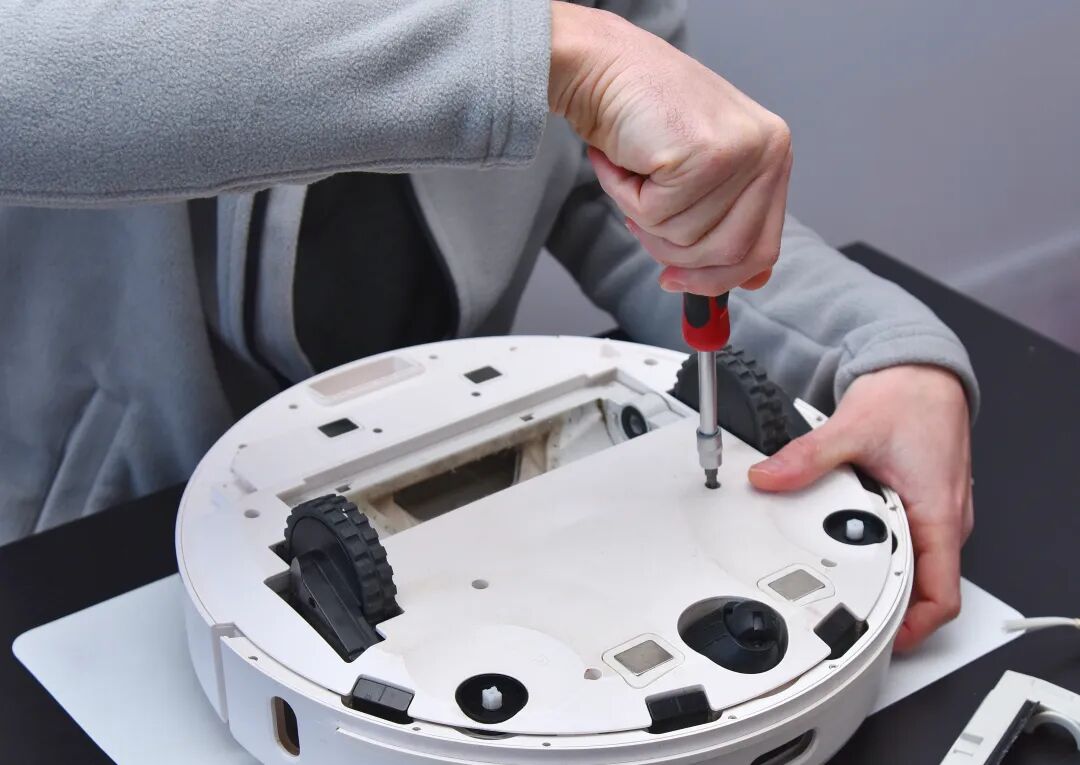
A greater variety of accessories also means more complex repair work. Compared with sweeping robots, the parts of humanoid robots and robotic dogs are much simpler, mainly composed of joint modules (including motors, reducers, encoders, drive boards, bearings, etc.), perception systems (radar, cameras, IMUs, etc.), motherboards, batteries and other components.
Repairing robots and robotic dogs does not require extremely complex skills either. Unlike drones, which often require operations on circuit boards as small as a fingernail. There is a repair technique called "flying wire", which uses 0.2 mm copper wire to wrap a small circle on the solder joint to restore the connection between the chip and the circuit board. The whole process is completed under a stereo microscope, which is very demanding on technique and patience.
Zhao Xin says that people with zero foundation can master robot repair skills after one month of learning. If they have knowledge of electronic circuits and repair experience, they will learn even more easily.
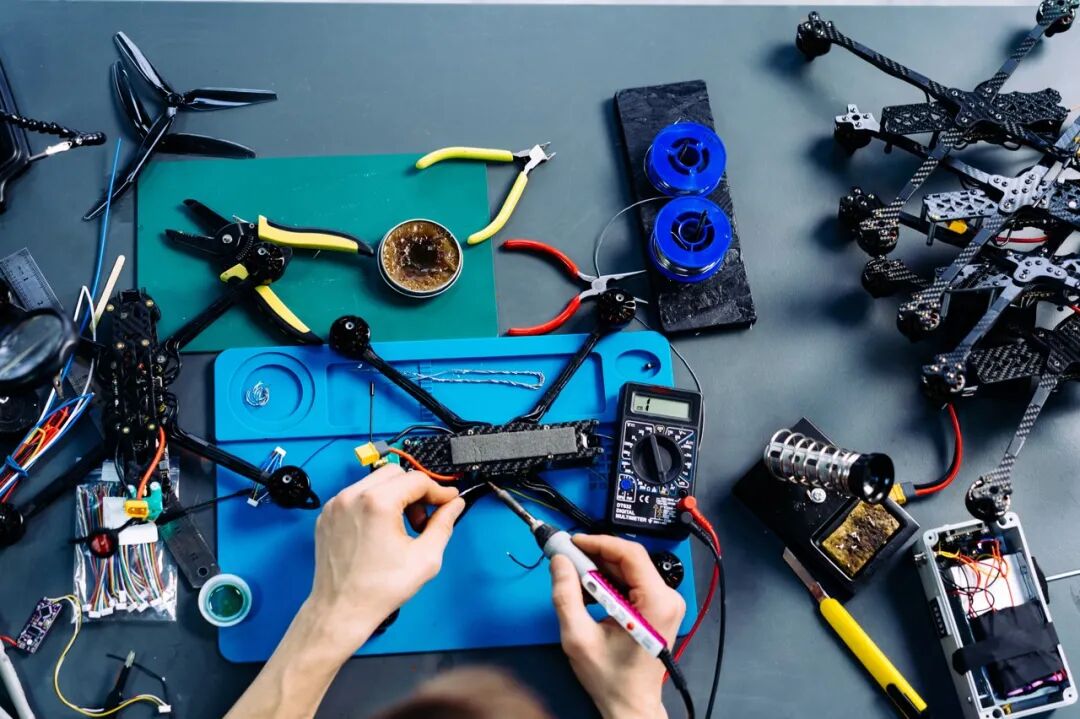
The hardest part of robot repair is not the technology, but the fact that accessories are monopolized by manufacturers.
The core accessories of robots are basically customized by manufacturers, are not universal between different brands, and there are almost no non-original spare parts. Authorized dealers can purchase accessories from manufacturers, but they are often restricted by regions and usage purposes; unlicensed merchants can only find second-hand dismantled parts or look for alternative channels on their own.
When repairing mobile phones or drones, you can check the function of each chip and their circuit connections from the public circuit diagrams of various models. Robots and robotic dogs not only do not have such circuit diagrams, but even the names or logos of some chips are deliberately polished off before leaving the factory.
Even the peripheral products of robots are not cheap. When the rubber on the sole of the robot's foot was worn out, replacing a pair cost 400 yuan, while the shoes Zhao Xin wears himself only cost 59 yuan.
Last year, the institution where Zhao Xin works bought a suit for robots to wear during performances, which cost 800 yuan. Some garment factories with a keen sense of smell have already started to produce clothing and accessories specially made for robots.
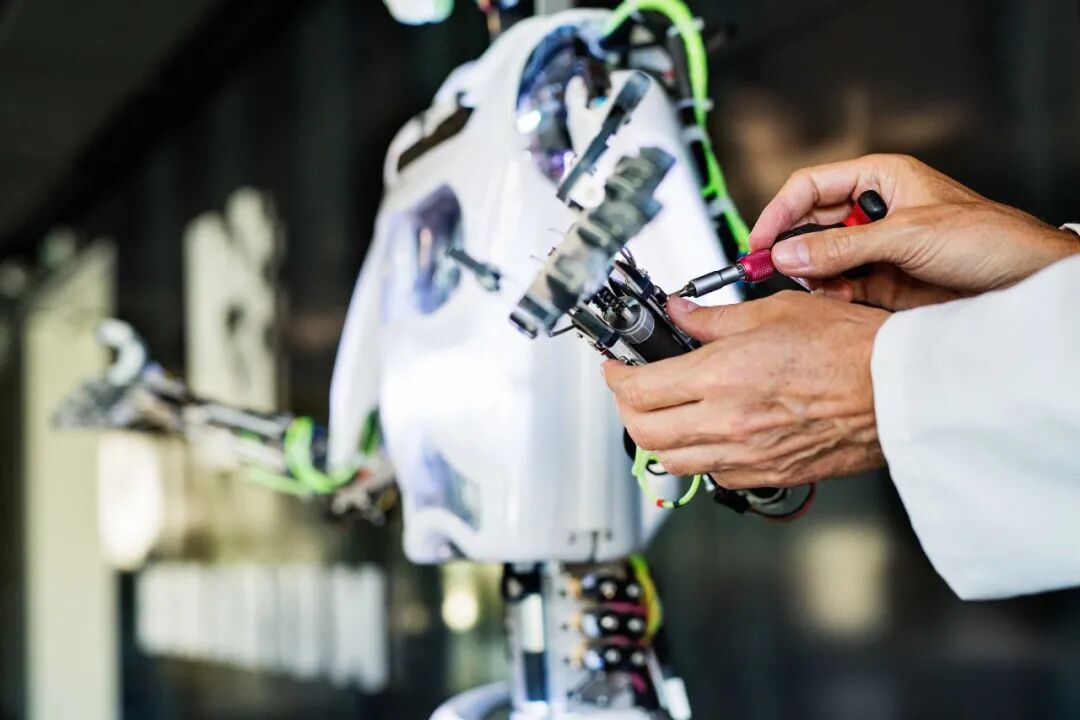
Third-party repair is cheaper and more time-efficient
It took Zhao Xin only more than ten minutes to disassemble one leg of the robotic dog in front of the camera. He neatly arranged the parts on the table, and explained their structure, functions and working principles to the audience one by one.
This robotic dog model is Unitree's Go2. The Go2 series and Unitree's humanoid robot G1 are currently the most common brand models in third-party repair shops and training institutions.
In 2025, Unitree ranked first in the shipment of humanoid robots, selling more than 5,500 units for the whole year, while Agibotic ranked second with more than 5,100 units, leaving a large gap between the two and other competitors.
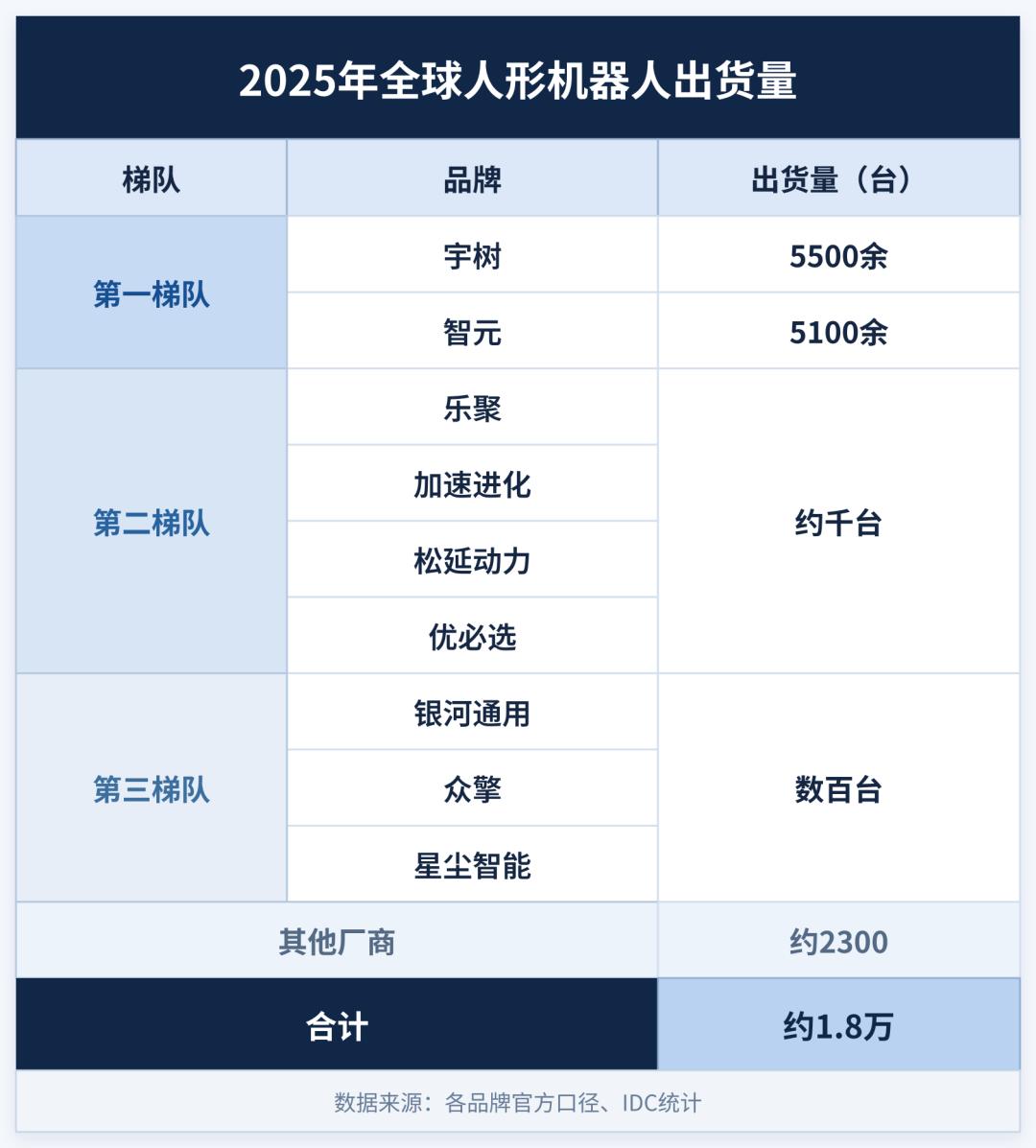
This number is still growing rapidly. A senior executive of Unitree predicts that the company's total shipment in 2026 is expected to at least double compared with last year, and may even nearly triple; Agibotic also announced at the end of June 2026 that the cumulative production of general-purpose embodied robots has exceeded 15,000 units.
Unitree is also the leader in the robotic dog market. Wang Xingxing, the founder of Unitree, said in July 2025 that the sales volume of Unitree's quadruped robots accounts for 60% to 70% of the global shipment.
The sales volume of robotic dogs is higher than that of humanoid robots. According to statistics from the Gaogong Robot Industry Research Institute, the sales volume of quadruped robots in China in 2025 was about 57,600 units, nearly three times that of humanoid robots.
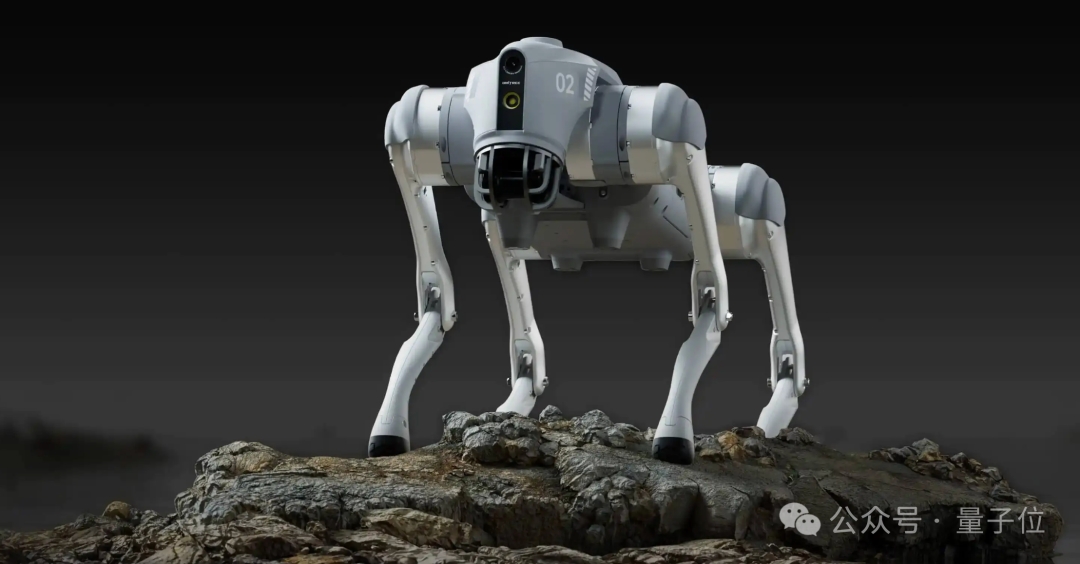
Unitree quadruped robot Go2 (image from official website)
With the growth of the overall shipment of robots, brands other than Unitree are gradually getting repair orders. Fang Jinghua, General Manager of Nanjing Kaigong Yunji Robot Technology Co., Ltd., said that they have set up 5 repair points across the country. Since the beginning of this year, the number of robots of other brands such as Agibotic, Leju, and Deep Robotics that they repair has gradually increased.
Although the overall landing application of robots is still in a very early stage, the landing scenarios of different brands have already shown signs of differentiation.
Unitree and Agibotic, which have the highest sales volume, both focus on general platforms and full-scenario applications, but Unitree's humanoid robots are mostly used for scientific research and performances, and robotic dogs are mostly used for inspection, survey and emergency response; Agibotic's main landing directions are industrial manufacturing, commercial retail, cleaning and inspection, etc.
Other brands with lower sales volume: Leju focuses on data collection and scientific research; Ubtech focuses on industrial scenarios; Accelerated Evolution's main scenarios are competitions and scientific research; Songyan Power's small robots are mainly used for entertainment performances; Fourier Intelligence's biggest feature is medical health care; Galaxy Universal focuses on commercial retail, industrial manufacturing, cultural tourism and other scenarios.
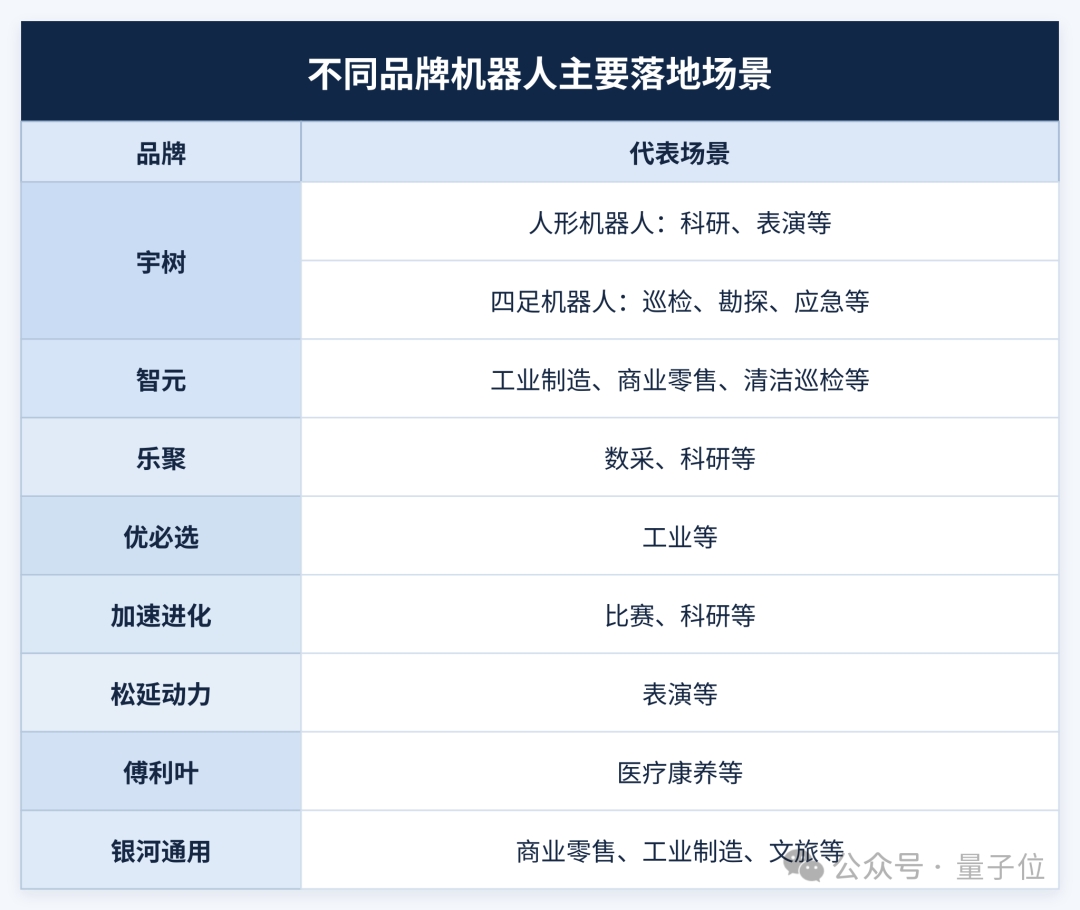
Note: The official statements of the above brands all cover multiple application scenarios, and this article only lists the more representative or characteristic scenarios in actual applications.
The warranty period for mainstream model robots and robotic dogs is usually about one year. Within the warranty period, returning them to the original factory for repair is the choice of the vast majority of people.
Robot manufacturers usually stipulate that non-human-caused product quality problems within the warranty period can enjoy free repair; while failures caused by human damage, unauthorized disassembly or failure to operate according to the instruction manual require the user to bear the repair cost.
Robots and robotic dogs out of warranty no longer enjoy free repair, and third-party repair with higher cost-effectiveness has its advantages.
Fang Jinghua said that the customer unit price of their repair services is usually 10%-15% of the robot's selling price, which is 20% cheaper than returning the robot to the factory for repair. A merchant in Shenzhen even said that their repair service can be 50% cheaper than factory repair.
In terms of time, the cycle of factory repair is generally more than one month, while third-party repair can usually be completed in about a week.
The most mainstream landing scenario for robots at present is scientific research. According to the "2025–2026 Humanoid Robot Industry Development Research Report" released by the Humanoid Robot Scenario Application Alliance, education and scientific research account for 42% of application scenarios, followed by data collection, services and performances, and industrial scenarios account for the smallest proportion.
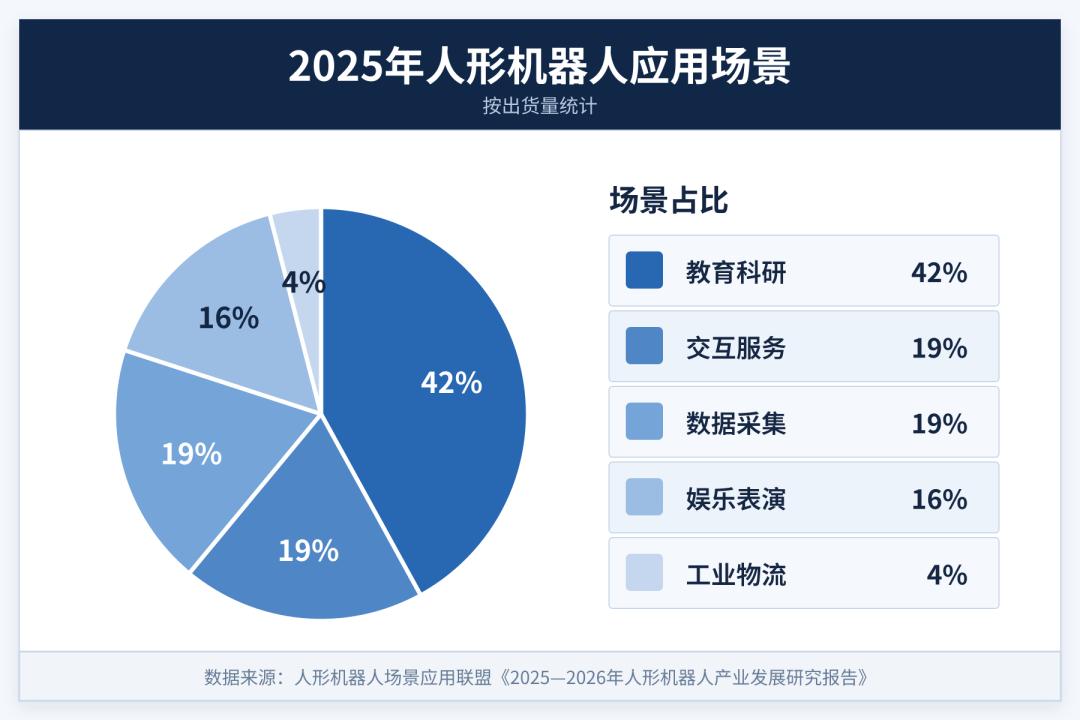
However, most of the robots that come to third-party repair shops are damaged due to entertainment performances. Most of the customers are "individual businesses" such as robot leasing companies and self-media bloggers.
Interestingly, the period before May 1st every year is the peak season for new businesses to open, with high demand for entertainment performances, which is also the peak season for third-party robot repair; in summer, the outdoor temperature is high, there are fewer commercial activities, and the repair industry also enters the off-season.
However, institutions that use robots for scenarios such as scientific research, development, and data collection are usually price-insensitive institutional customers, and they prefer to return the robots to the factory for repair.