The former richest man who had been out of public sight for a decade suddenly returned to China, snapping up a hotel in Shanghai at the market bottom with 220 million yuan.
Chen Tianqiao, China's former richest man who has stayed out of the public eye for years, is making a comeback.
According to multiple media reports, the standalone property project located at No. 233 South Shaanxi Road, Huangpu District, Shanghai – the Mia Hotel – has completed equity delivery. Shanda Group under Chen Tianqiao took over the Mia Hotel from logistics giant GLP at a price of about 220 million yuan.
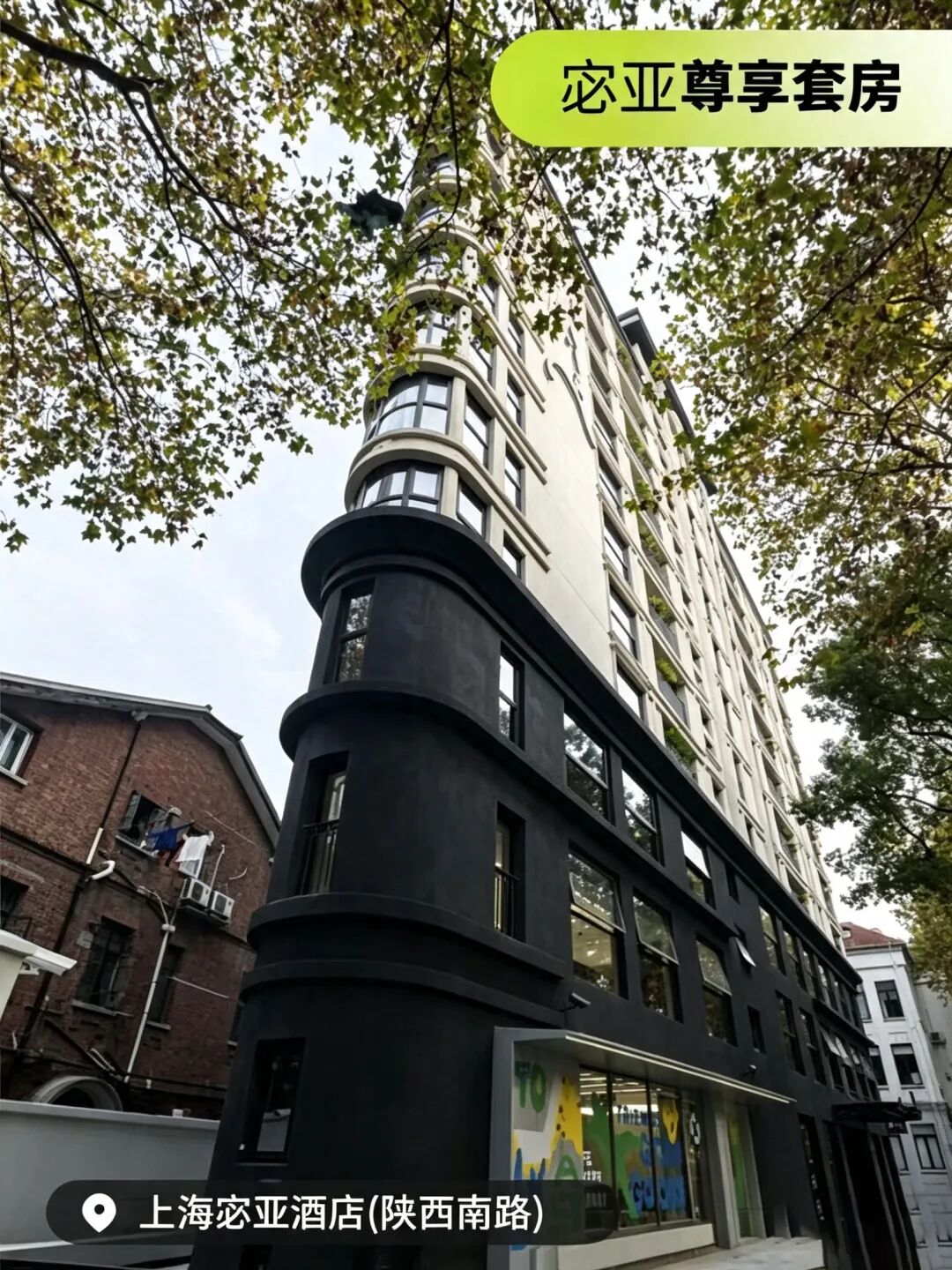
The hotel covers an area of less than 4,000 square meters, with 11 floors, 80 guest rooms and an iron-shaped appearance. Local Shanghai residents call it "Little Wukang" because its shape is extremely similar to the well-known Wukang Building not far away.
Judging from the figures alone, the price of 220 million yuan is not exaggerated in large-scale hotel transactions. The really interesting part lies in the hotel property itself and Chen Tianqiao.
What is the background of Shanghai Mia Hotel?
Shanghai Mia Hotel is located in the core of the Hengfu Historic and Cultural Conservation Zone, surrounded by a large number of old villas and former residences of celebrities. Its location is extremely superior, making it a scarce standalone property in the city center, which can be described as one of a kind with no more similar properties coming to the market.
Chen Tianqiao acquired it at the price of 220 million yuan, which is nearly 30% off compared with the previous listing price of 312 million yuan, equivalent to about 56,000 yuan per square meter.
On the housing platform Lianjia, the listing prices of second-hand houses around the South Shaanxi Road subway station range from 59,000 yuan to 124,000 yuan per square meter.
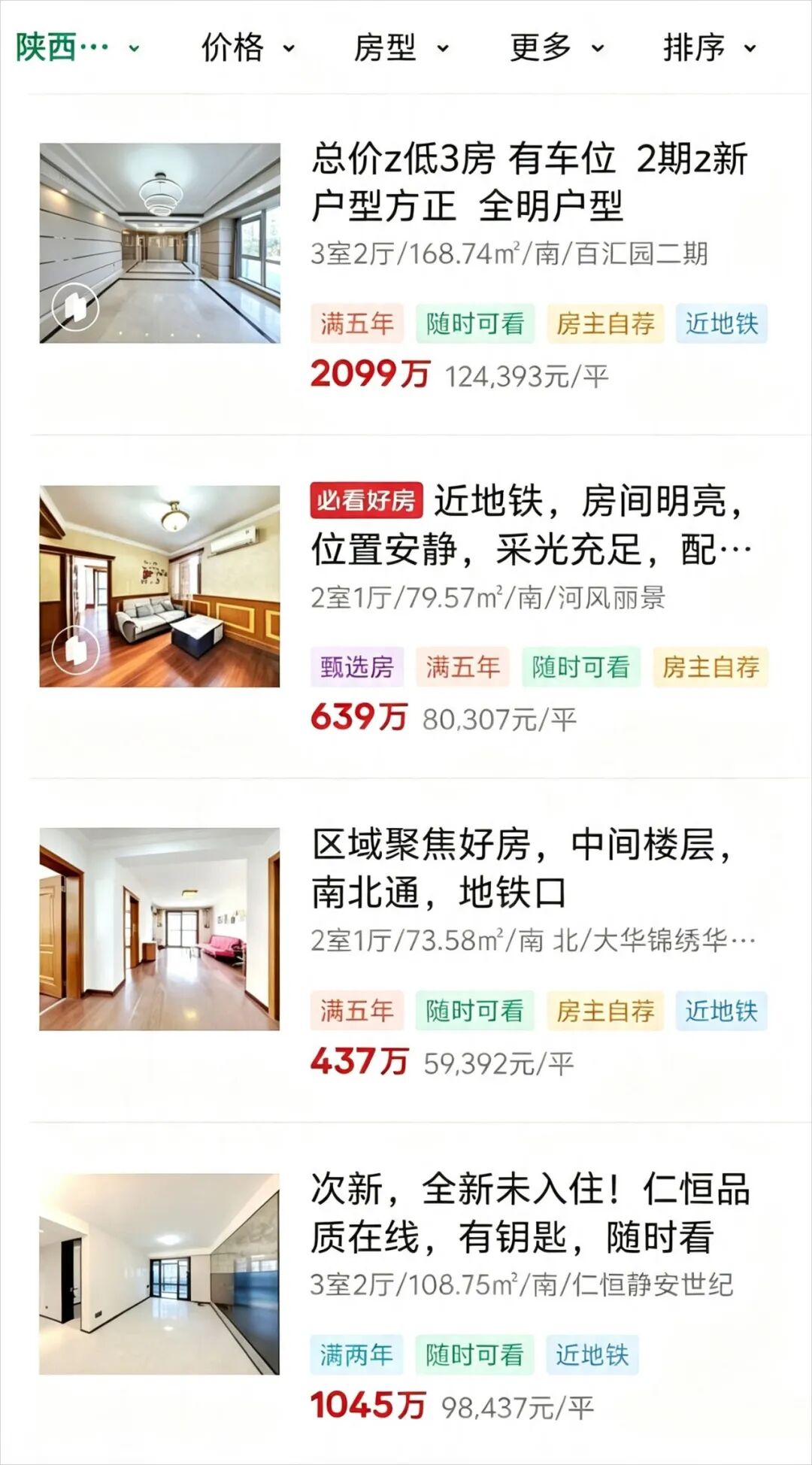
Although the two types of properties are completely different in property attributes, land tenure and operating income models, and have no direct comparable value, the price difference is enough to reflect that the valuation of core commercial hotel assets has been significantly corrected at present.
In addition to the prime location, the "resume" of Mia Hotel itself is also very remarkable.
Counting Chen Tianqiao, this is the fourth time the building has changed ownership. The building was originally called Gaozi Building, and its predecessor was a Hanting Premium economy hotel with room rates of 200-400 yuan, which was an asset of a building materials company.
Later, the building materials company borrowed from financial institutions and mortgaged the entire building. Due to overdue loans and inability to repay, it became a non-performing asset of overdue mortgage held by the bank.
However, banks are not good at operating real estate and hotels, and will not hold and operate them themselves, so they can only dispose of the creditor's rights externally. At that time, the building still had some property right defects and could not be directly auctioned for ownership transfer.
In 2018, Dingyi Investment, a leading domestic private equity fund for distressed real estate, did not buy the building directly. Instead, it first acquired the non-performing creditor's rights from the bank, then completed the right confirmation, stripped off the original debts and cleared the old leases through judicial procedures, and finally obtained the complete property right of the property.
Dingyi did not plan to operate the hotel for a long time. Its plan was to acquire the defective core property at a low price, polish it up and then sell it to the next buyer to earn the price difference.
The reason for taking a fancy to this building is very simple: it is located in a prime location, and it is a scarce standalone property in Shanghai's Hengfu Historic and Cultural Conservation Zone. It only became a non-performing asset because of debt problems, and the asset quality is very good.
The third owner is the seller of this transaction – GLP, the global logistics real estate giant.
GLP's main business is global warehousing and logistics real estate. Back then, with a large amount of capital in hand, it wanted to diversify its business. So in August 2020, it bought 100% equity of this project at a price of 210 million yuan.
Compared with large commercial complexes with tens of thousands of square meters, No. 233 South Shaanxi Road is like an exquisite bonsai.
It is close to the Hengfu Historic and Cultural Conservation Zone, with two subway lines intersecting nearby, making every inch of land precious. When GLP crossed into this sector to acquire it and rebuild it into Mia Hotel, it was full of ambition.
Unfortunately, GLP is better at standardized warehousing, while the operation of high-quality urban boutique hotels follows a completely different logic.
The renovation of properties in the conservation zone has high costs and many restrictions. GLP invested huge funds in full renovation, completely redecorated the interior, and upgraded the hotel from an economy hotel to a boutique design hotel, raising the room rate directly to 800-1200 yuan.
However, the non-standard boutique hotel business is far more tricky than logistics real estate. The actual operating return is far less than expected. Mia Hotel only opened two branches, and never formed a "second growth curve" that can support large-scale expansion.
With a floor area of 4,200 square meters, the hotel can only have 50 to 80 guest rooms at most. This scale of "small standalone hotel" means that it cannot rely on the huge member traffic pool to achieve low-cost customer acquisition like chain giants such as Huazhu and Jin Jiang; costs such as labor, energy consumption and linen washing cannot be diluted by scale effect.
By 2026, the downward cycle of commodities and real estate has made everyone sober. In the defensive cycle that requires "deleveraging and ensuring liquidity", an unprofitable standalone hotel has naturally become the first non-core asset that GLP chooses to divest.
Interestingly, GLP spent 210 million yuan to buy the building back then, and finally sold it for 220 million yuan. It not only made no profit, but also lost the decoration and operation costs it spent in the middle. This can be said to be the most expensive tuition fee paid by cross-border capital that blindly poured into the hotel and tourism industry in the past few years.
Why did the former richest man suddenly buy the hotel at a low price?
After learning about Mia Hotel and the seller GLP, it is time to get to know the other protagonist of this transaction – Chen Tianqiao.
Chen Tianqiao was once a legend in China's internet industry.
If you have heard the line "I am Zhang Jiahui, come and fight me if you are my brother", you should have some impression of the game *Legend*. In the era when most parents regarded online games as a harmful scourge, it was this game that sent Chen Tianqiao, who was only 31 years old at that time, to the throne of "the youngest richest man in Chinese history".
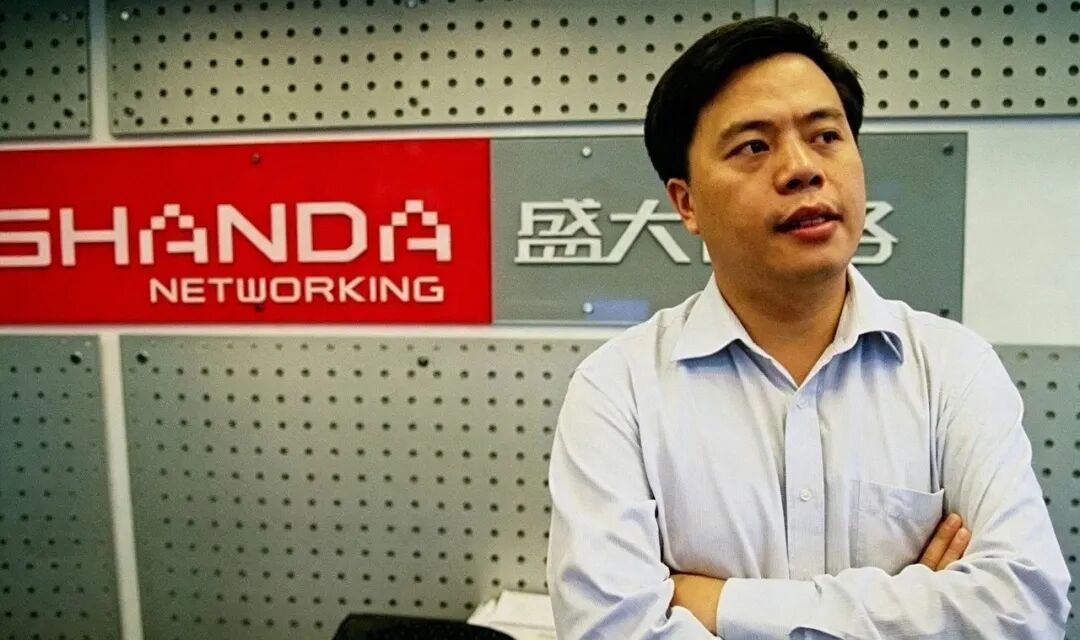
After fading out of the internet industry, Chen Tianqiao started buying land wildly abroad, with a total of more than 700,000 acres of land in the United States and Canada, making him the second largest foreign land owner in the United States. In addition to buying land, Chen Tianqiao also acquired landmark properties in core cities: he obtained the Vanderbilt Building in Manhattan in 2018; he acquired a century-old historical manor in Los Angeles in 2021.
In comparison, buying Mia Hotel for 220 million yuan is really not a risky move for Chen Tianqiao.
With this 220 million yuan, what Chen Tianqiao bought back is not only land and reinforced concrete, but also the intangible assets that GLP spent tens of millions of yuan to build.
To convert an old building into a four-star boutique hotel, fire safety approval, structural reinforcement, sewage pipe network expansion, and large-capacity power introduction are all projects that cost huge sums of money. When GLP divested the asset, it essentially gave Shanda all these fully compliant infrastructures that had passed all the acceptance checks for free.
What Chen Tianqiao took over is a "mature hotel asset" that does not need to pay repeated tuition fees, has complete fire safety approval, and can directly enter the secondary decoration stage.
At a time when the commercial real estate bubble is being cleared at an accelerated pace, Shanda almost got the hotel that the previous owner spent years painstakingly operating for free at a near "zero cost".
If we summarize Chen Tianqiao's investment logic, it is: counter-cyclical, long-term focused, and core assets oriented.
Chen Tianqiao's bottom-fishing acquisition of core Shanghai hotel assets like Mia Hotel just shows that the "anti-cyclical" attribute of such assets is being re-priced.
The era of professional hotel operation is coming
Now when you search for "Mia Hotel" on OTA platforms, you can only find the "Xujiahui Jiao Tong University Branch". The Mia Hotel at No. 233 South Shaanxi Road has been removed from mainstream booking platforms, and the future of this hotel remains uncertain.
Then why do we still regard this hotel acquisition case as a weathervane? It is not only because Chen Tianqiao, as a top wealthy individual, has information and resource advantages, but also because capital chases returns, and real money is bet on these major moves.
The change of ownership of Mia Hotel is by no means an isolated case. This large transaction fully outlines the current status of China's high-end hotel investment market in 2026, sending a clear industry signal to hotel investors and practitioners:
First, the divestment of Mia Hotel is not an individual case.
In April this year, The Westin Wuhan Wuchang, which owns the first-line Yangtze River view in Wuhan, was acquired by Ningbo businessman Bi Weiguo at a 44% discount to its original price;
In July this year, Sheraton Ningbo Hotel was listed for sale on the Ali Assets platform;
MGM Hotel Shenzhen Prince Bay and Jingzhou International Hotel Shijiazhuang also changed ownership in 2026, and their transaction prices were generally lower than the assessed value.
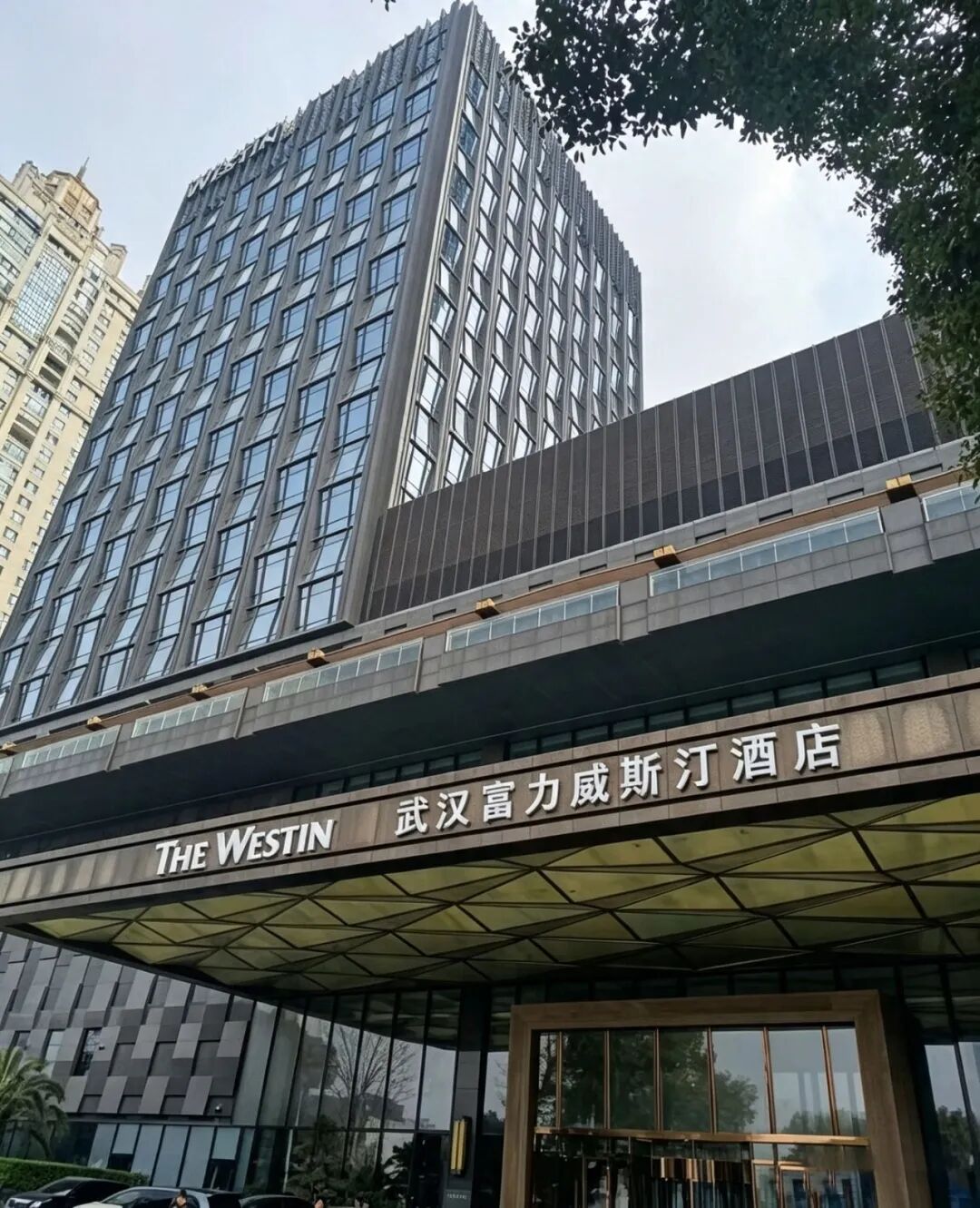
What seems to be a trend of low-price ownership transfer of leading high-end hotels is actually the value reconstruction of the entire high-end hotel industry.
The industry has long been trapped in the triple dilemma of over-supply, rigid costs and weak profitability. The brand premium and location advantages of established high-star hotels are continuously losing their effectiveness, and even turning into debt burdens.
Mass consumption has returned to rationality. If a hotel only provides accommodation services, there is no reason for guests to choose a standalone hotel instead of chain hotels that offer more standard services at lower prices. The cold winter has come. If the hotel cannot quickly find its own positioning and way out, being eliminated is only a matter of time.
Second, No. 233 South Shaanxi Road was originally listed for 312 million yuan, but was finally acquired by Chen Tianqiao for 220 million yuan. This price means that the asset bubble has been completely squeezed out.
Properties blindly purchased during the "real estate boom period" in the past few years are now being divested in batches by cash-hungry cross-border enterprises. This may be a once-in-30-years opportunity to pick up high-quality assets at low prices, and it may also be another trap prepared for greedy ambitious people in the stock era.
Hotel investment has entered the deep water zone, and it is no longer the blue ocean era where big fish thrive in wide waters as it used to be.
As the hotel and tourism consumer market becomes increasingly rational, the value creation logic of hotels has undergone fundamental changes.
The value of hotel assets is shifting from being attached to prime locations to being rooted in operation capabilities.
Hotel investment has bid farewell to the wild era that relied on luck, and entered a professional era that requires precise calculation, systematic operation and long-term patience.
The hotel investors who can survive and thrive in the future must be the most sober, rational and evolutionary group.
This article is from the WeChat official account "Hotel Management Finance", written by Xin Yi, and authorized for release by 36Kr.