The brain of embodied intelligence, an admission ticket priced at 20 billion yuan.
Zhifang and Zibianliang are at loggerheads again.
A few days ago, Bloomberg just broke the news that Zhifang plans to launch an IPO in Hong Kong next year, and immediately after, news came out that Zibianliang had secretly submitted a listing application to the Hong Kong Stock Exchange.
This is no coincidence. Just over a month ago, on June 29, the two companies announced the completion of a new round of financing on the same day, with post-money valuations both exceeding 20 billion yuan.
The 20 billion yuan figure was unimaginable in previous years. Now it has become the new threshold for leading embodied intelligence companies.
According to public disclosures, excluding dexterous hand component manufacturers, there are at least five enterprises that have entered the 20 billion yuan embodied intelligence "club": Zhifang, Zibianliang, Xinghaitu, Qianxun Intelligence and Galaxy Universal.
It should be noted that this 20 billion yuan club has been selected amid industry contraction.
According to the "2026 H1 In-depth Analysis Report on China's Private Equity Market" published by Xiniu Data, as of July 5, 2026, capital contributions from LPs (private equity fund investors) have dropped by 32.65%, government-backed LPs have halved directly, and the average amount per single transaction has shrunk by 44.8% in five years. At the same time, the report also pointed out that the number of embodied intelligence financing events has increased by 107% year-on-year, accounting for 4 seats in the top 10 newly emerging unicorn enterprises.
Before the commercialization path is verified, the five companies quickly crossed the 20 billion yuan valuation line through high-density financing. This is the highest price tier that the primary market can offer at present.
To go higher, they can only rely on IPO, such as Unitree and Agibot.
Unitree, which focuses on robot bodies, has industry-leading motion control technology and cost control capabilities. In 2025, Unitree shipped 5,500 humanoid robots with revenue of about 1.7 billion yuan; Agibot's shipment volume is comparable, exceeding 5,000 units, with revenue exceeding 1.05 billion yuan.
Recently, Unitree's issue price has just been released, with a listing valuation of 60.9 billion yuan. After entering the IPO stage, Agibot's target valuation is 36.3 to 43.3 billion yuan.
Compared with the two giants above, the members of the 20 billion yuan club are different, and their shipment volume has just barely reached the threshold of top-tier players. So what supports this valuation?
Refer to the "certainty pricing" in the market. Based on the revenue, the price-to-sales ratio of Unitree's 61 billion yuan issue price and Agibot's target valuation are both in the range of 35-40 times. Using this standard to measure the "20 billion yuan club", the corresponding annual revenue should be around 500 million yuan. If the revenue cannot reach this level, it only proves that the premium objectively exists.
It is not difficult to find that all five companies have unanimously focused their core bets on the "brain" of robots. The capital market's preference for robot brains is becoming a common judgment among investment institutions. In other words, the market generally believes that the brain part is more valuable.
This trend is also obvious in overseas markets. For example, Skild AI, which does not produce robot bodies, its core product is a general model that can be adapted to robotic arms, humanoid robots and quadruped robots. Its valuation soared to 14 billion US dollars this year. Physical Intelligence also focuses on cross-body and cross-task embodied foundation models, and its valuation rose from 2 billion US dollars to 5.6 billion US dollars within one year.
Compared with companies below the 20 billion yuan range, the five companies not only chose the correct path of focusing on the brain, but also have relatively cutting-edge foundation models, solid data closed loops, and clear application scenarios.
Capital is re-pricing this track at an unprecedented speed. The question is, what does the 20 billion yuan price mean in the embodied intelligence industry? What exactly is this 20 billion yuan paying for?
Five Types of Brains Solve the Same Set of Problems
When the commercialization path has not been fully explored, technical strength has become another criterion for measuring corporate value.
On the surface, this 20 billion yuan is paying for the brain, or the foundation model. In fact, the technical stacks of the five companies are all different, but they also penetrate each other.
At present, the mainstream route on the brain side in the market is still VLA. The difference lies in whether to strengthen on the basis of VLA, or to integrate the world model with VLA. The enhanced VLA is mainly to solve the problem that the model "understands slowly but acts fast". Adding the world model gives the model an extra layer of reasoning ability to deal with generalization in unfamiliar scenarios.
Zhifang, Xinghaitu and Qianxun Intelligence all follow the enhanced VLA route.
In order to solve the conflict between model reasoning speed and real-time control, Zhifang's FiS-VLA adopts a dual fast-slow system structure. The slow system is responsible for understanding instructions, disassembling tasks and high-level reasoning, while the fast system is responsible for generating actions. This is not a simple splicing of two models, but embedding the fast system into the slow system, sharing some parameters and running asynchronously at different frequencies. In short, it not only retains the end-to-end "fast response", but also enables the whole system to "think" with the help of the L (language model).
In 2026, this technology was further transformed into the NeuroVLA large model, forming a three-layer brain-like structure of "cortex - cerebellum - spinal cord". The added cerebellum module is responsible for maintaining the stability of movements, such as quickly responding after a collision. From an architectural perspective, it further strengthens the response of the "fast system".
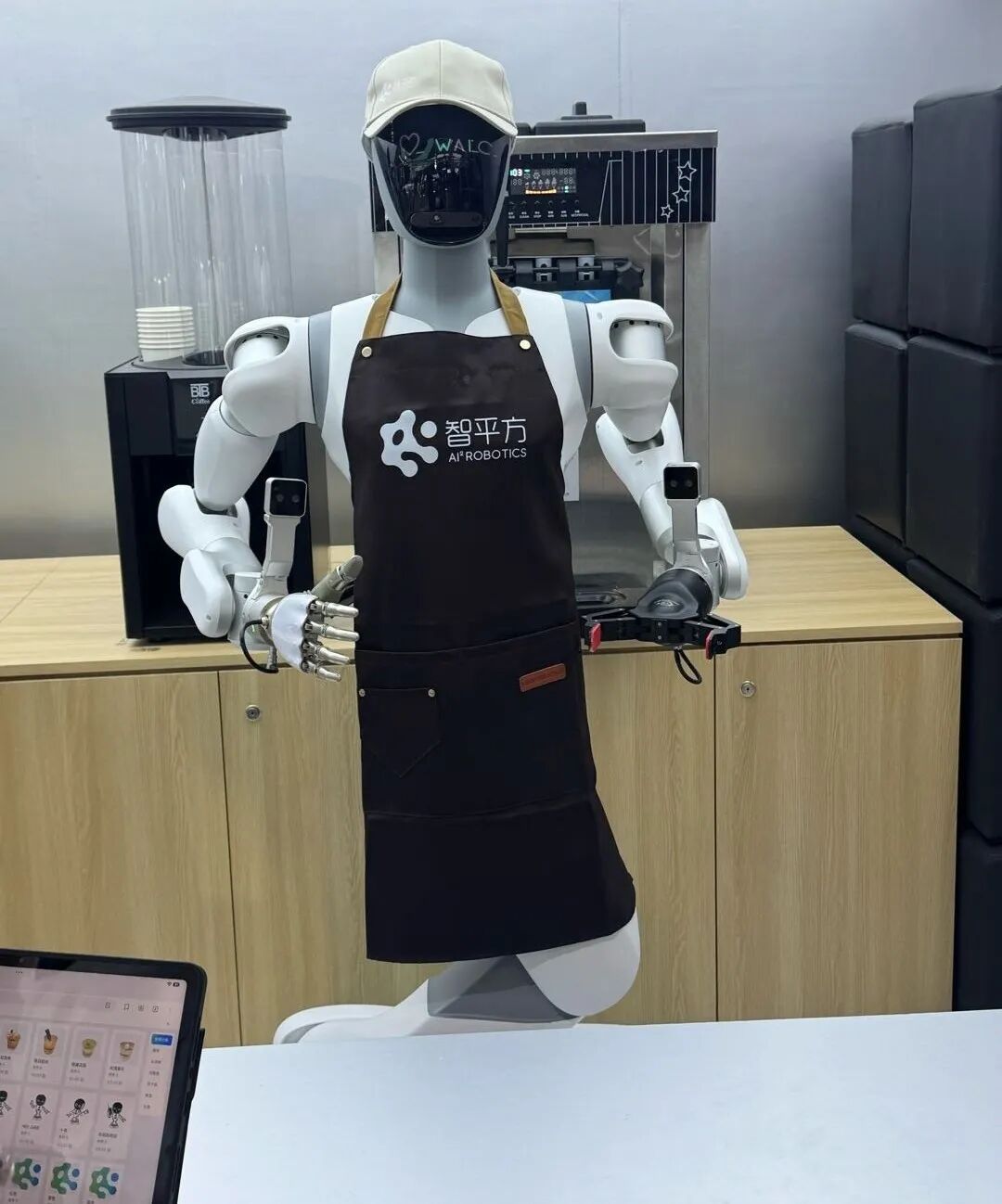
Also aiming to speed up the response, Xinghaitu's solution is to optimize the information transmission method inside the model.
In early VLA, the communication between vision, language and action relied on encoders for translation, and information would inevitably be compressed and lost during transmission. Therefore, Xinghaitu's G0.5 adopts a unified autoregressive architecture, removes the intermediate encoder, converts images, reasoning and actions into unified internal Tokens, and puts them into the same sequence for generation. In this way, reasoning is no longer just the input of the action model, but becomes part of action generation, making the whole process smoother.
Compared with the first two that focus on architectural optimization, Qianxun Intelligence is more "fundamentalist", and has more faith in the scaling capability of VLA itself.
Qianxun Intelligence's Spirit v1.5 tries to make the model have stronger cross-scenario generalization ability by expanding the scale and complexity of data. In particular, it uses unfiltered "dirty data" such as occlusion, pauses and failures, to prevent the model from only imitating standard actions without understanding complex long-tail information.
However, the enhanced VLA route still has limitations.
Because the higher-level goal of the embodied model is still the understanding and generalization of the physical world. Traditional VLA can take the next action through observation and instructions, but cannot predict according to the environment, such as where the cup will fall after you release your hand. The route of integrating the world model with VLA is designed to make up for this shortboard.
Zibianliang's WALL-B puts physical prediction, vision, language and action into the same network for joint training, so that the robot not only imitates the actions in training, but also can predict the possible results of actions before executing them.
Galaxy Universal has the most complex model architecture, because it does not use one model to cover all capabilities, but places several VLA models on one foundation. These include GALBOTVLA responsible for upper-body grasping, TrackVLA responsible for lower-body movement, plus a human-computer interaction layer for understanding instructions. The whole set is called GALBOT VLA.
This year, the GALBOT VLA foundation has been uniformly evolved into AstraBrain. It is split into: Brain (WAM 0.5), Cerebellum (WBC 0.5), and Dexterous Hand Neural Control (DexNDM). Does it look a bit similar to Zhifang's brain-like structure? Moreover, the connection method between the cerebrum and cerebellum in this foundation also adopts the same fast-slow dual system as Zhifang.
In WAM 0.5 as the brain, the role of the world model is not only to provide a prediction layer, but to jointly model with VLA in one model and directly participate in action planning.
All in all, from an architectural perspective, each company has its own route, but in the whole industry, they are actually solving the same set of problems: whether the robot can move from executing a single action to completing tasks composed of dozens of steps; whether it can generalize from seen objects to unfamiliar objects; whether it can transfer the capabilities learned by one robot body to another type of robot; whether it can recover autonomously after an action fails.
Interestingly, behind the comparison of several technical routes, there is another signal: after the competition of routes goes to the end, the architectures begin to "learn from each other". This may indicate that after the 20 billion yuan mark, the competition is no longer about who chooses the right path, but about who runs faster on the chosen path.
To run faster, it is far from enough to only work on the model. The more critical bottleneck lies in data.
Data Reshapes the Power of Models
The model architecture determines how the robot thinks, but whether the model can continue to evolve ultimately depends on what data it can access.
In terms of the proportion of data types, the industry is roughly divided into two types: focusing more on real data, or preferring simulation data.
Real data is a common pain point in the industry: it is small in quantity, high in price, and complex long-tail data is difficult to collect in large quantities. Its advantage is also obvious: it is real, leading to smaller errors when transferred to training.
The advantage of the simulation route lies in its large scale, low cost, and the ability to actively generate failure cases that are difficult to collect in the real world. But its problems are also obvious: the simulation environment cannot fully reproduce the texture of the real world, and faces the "Sim-to-Real Gap" problem when transferred to real robots.
At present, the industry still mainly relies on real data. However, the specific collection methods, whether leaning towards teleoperation, non-robot-body collection, or letting robots directly go to the field, have different focuses for different companies.
Non-robot-body collection is almost recognized as the lowest cost way to collect real data. This is the EGO route created by NVIDIA. This method is more accurate than real human video, and cheaper than teleoperation.
For example, Qianxun Intelligence mainly expands collection efficiency through self-developed wearable devices. This path can record human operations at low cost, without configuring one robot for each piece of data.
However, the degrees of freedom, force bearing and motion range of the human body and the robot body are not completely consistent. How to accurately map human motions to robot motions remains a problem.
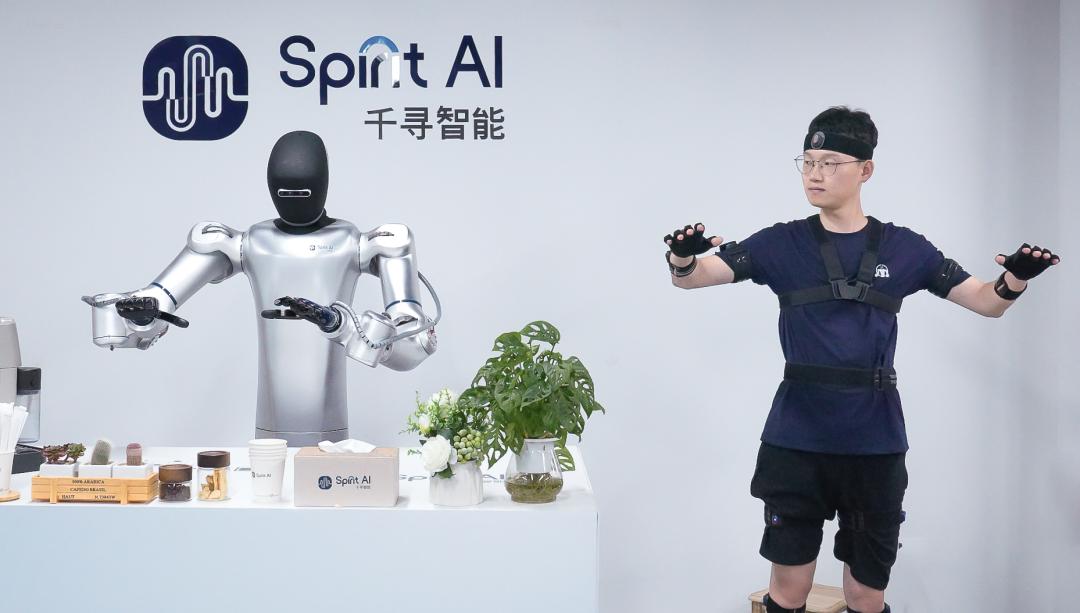
Many companies directly use their products as collection tools, binding the model to the robot body. The robot generates data while working, and then the data flows back to model training, forming a closed loop. This is called data "deployment reflux" in the industry. Compared with EGO and teleoperation, deployment reflux solves the problem of real distribution alignment + continuous evolution, which can be regarded as the top-level and most valuable data.
Xinghaitu, Qianxun Intelligence, Zibianliang and Zhifang prefer this model, but their data entry points are different, and the difficulty chosen by manufacturers is also different.
Xinghaitu's data source mainly relies on developers. Most developers have no adaptation requirements, so the deployment cost is lower, but the collected data is also more mixed.
Qianxun Intelligence and Zhifang tend to use industrial data, such as letting robots undertake inspection, assembly, logistics and other work in factories. This type of data is the most effective for improving commercial delivery capabilities.
The problem is that the coverage is usually narrow. The data distribution of one automobile production line and one semiconductor factory may be completely different. If re-development is required for each new customer, the data closed loop may fall back to the project-based system.
Zibianliang focuses on the most complex family data. For example, letting robots follow cleaners to customers' homes to tidy up tables and fold clothes. A hundred families may have a hundred kinds of environments, and light, object placement, movement of people and pets are all variables. This means that the data standardization of this route is more difficult.
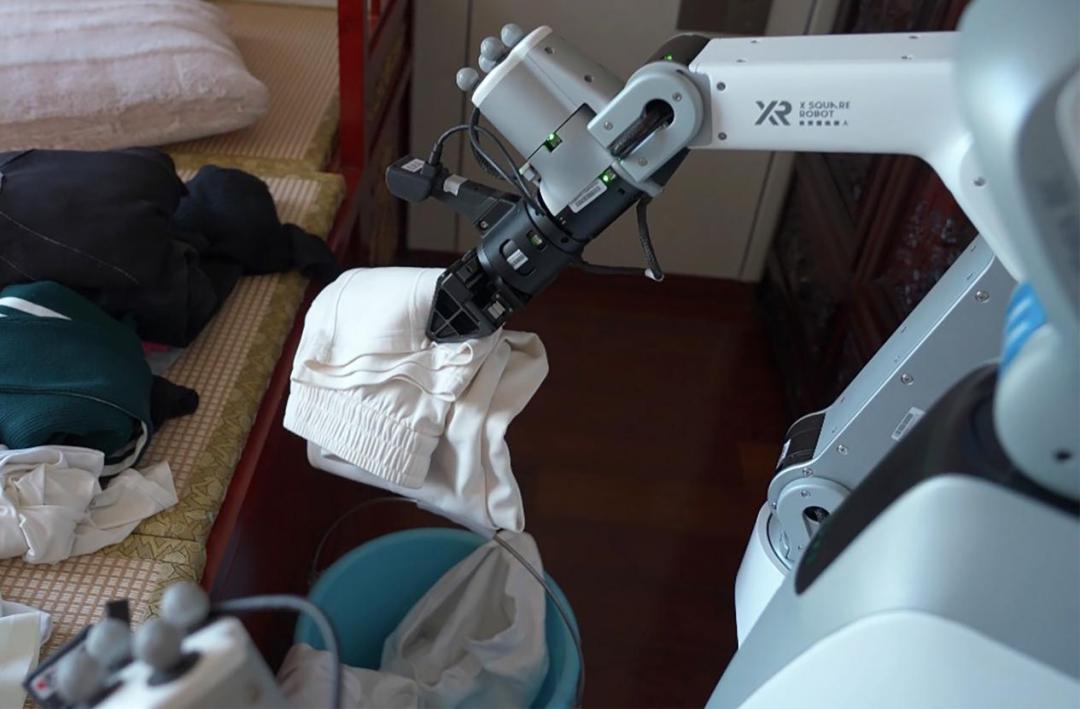
In any case, for most companies, real data is the base of model training and also defines the boundary of model capabilities.
However, there is no shortage of mavericks in the industry, and Galaxy Universal is one of the companies that bet on simulation synthetic data on a large scale earlier. Its GraspVLA is almost completely pre-trained based on synthetic action data, and the synthetic data set contains one billion frames of robot grasping data.
In the simulation environment, by changing the material, position and background of objects, the robot can experience different states in a short time and quickly acquire some skills. But in the post-training and real-world adaptation stage, real robot data is still needed for calibration and reinforcement. Therefore, Galaxy Universal is also transforming from pure simulation to a mixed direction. Its data base covers not only Internet videos and simulation synthesis, but also real robot teleoperation and robot reflux data.
On the surface, capital pays for the brain part of these five companies, but behind it, it is actually buying different model architectures and data production methods.
To move from a valuation of 20 billion yuan to a higher level, the final competition is not only about how many evaluation indicators the model beats when it is released, but about who can continuously obtain data, so that every deployed robot can become the training entry for the next generation of models.
But at the current stage, none of the robots from any company has reached a truly fully operational state. The model architecture and data closed loop are all to adjust to a better starting posture before the large-scale outbreak.
The Brain Is Priced in Landing Practices
The rapid technological iteration and unproven commercialization have led to constantly changing evaluation criteria for the embodied intelligence industry. Although the 20 billion yuan valuation represents a long-term expectation, capital needs to see clear landing possibilities.
From this year's WAIC, it can be seen that the industry's trend of pursuing real landing is becoming more and more obvious. All robots are working: some moved the automobile production line to the exhibition hall, letting robots demonstrate loading and unloading; some set up scenarios as supermarkets and pharmacies, where robots are responsible for delivering goods from shelves; some built family living room scenarios, where robots help people put clothes into washing machines.
Although all of them are performing work tasks, there are differences between different scenarios.
The industrial sector is regarded by the market as the first scenario where embodied intelligence can realize commercialization.
The process of such scenarios is relatively clear, and the value is easy to quantify. Whether the robot can complete the task can be directly measured by cycle time, success rate, fault interval and labor replacement rate. Once verified, the possibility of customer repurchase is also relatively high.
In CATL's factory, robots