Just now, GPT-5.6 has been fully opened for free to all users! The next-generation behemoth Astra has launched a blitzkrieg.
Wait, is this real?
Even GPT-5.6 is now completely free for all users!

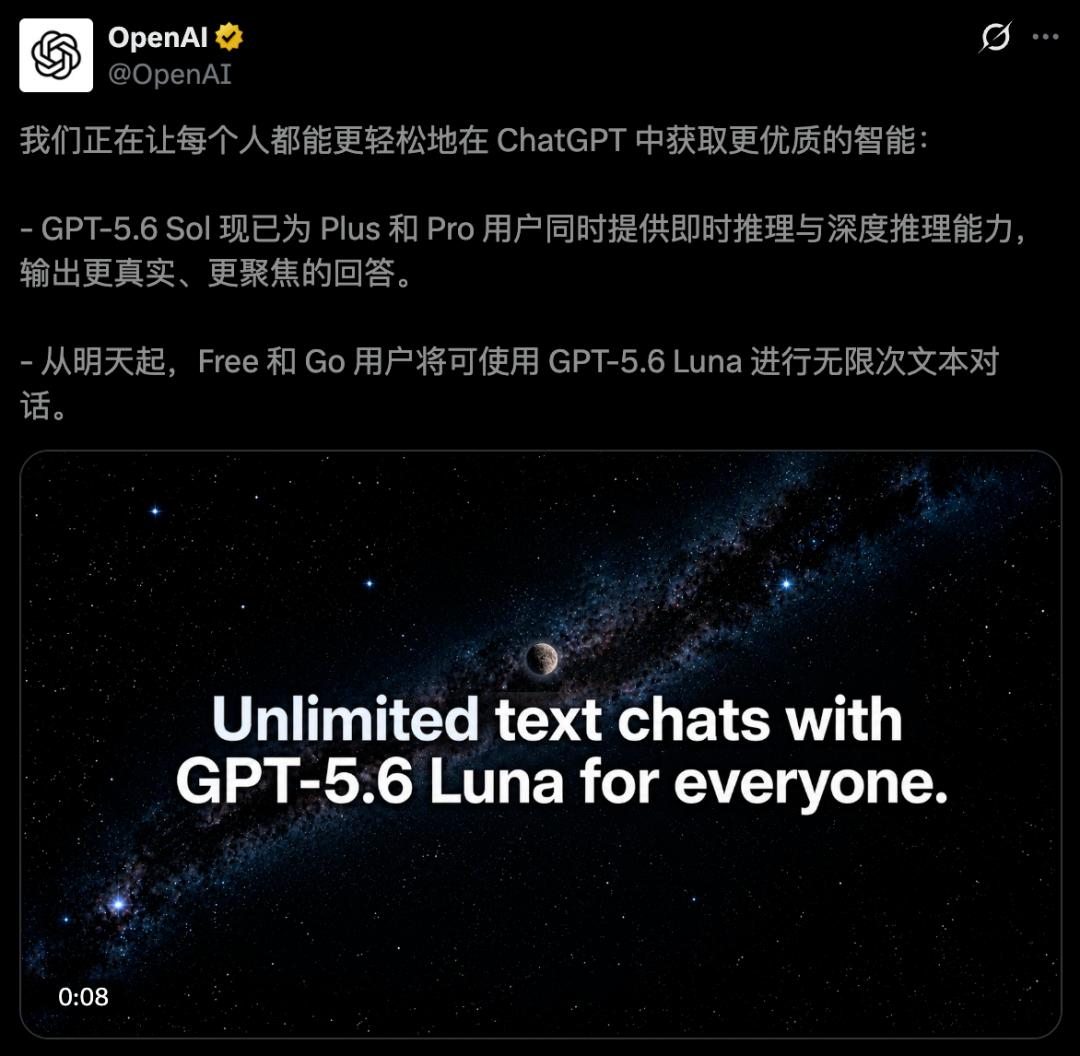
Earlier today, OpenAI made a major official announcement that text conversations on GPT-5.6 Luna are now unlimited.
One billion users worldwide can access it for free directly.
At the same time, GPT-5.6 Sol has received a brand new upgrade —
A new slider has been added to the ChatGPT interface, integrating the Instant and Thinking modes, allowing Sol to decide how long it spends reasoning on every single query.
GPT-5.6 Is Now Truly Free
On July 9, OpenAI launched the full GPT-5.6 family at once, with Sol outperforming the top-tier Fable 5 by a wide margin.
Less than a month later, GPT-5.6 Luna is now directly open to the public for free.
Unlimited access sounds great, but there is one point that needs to be clarified.
Luna is the smallest model in the GPT-5.6 family, focused on ultra-fast response and low cost, while the lineup also includes Terra and Sol.
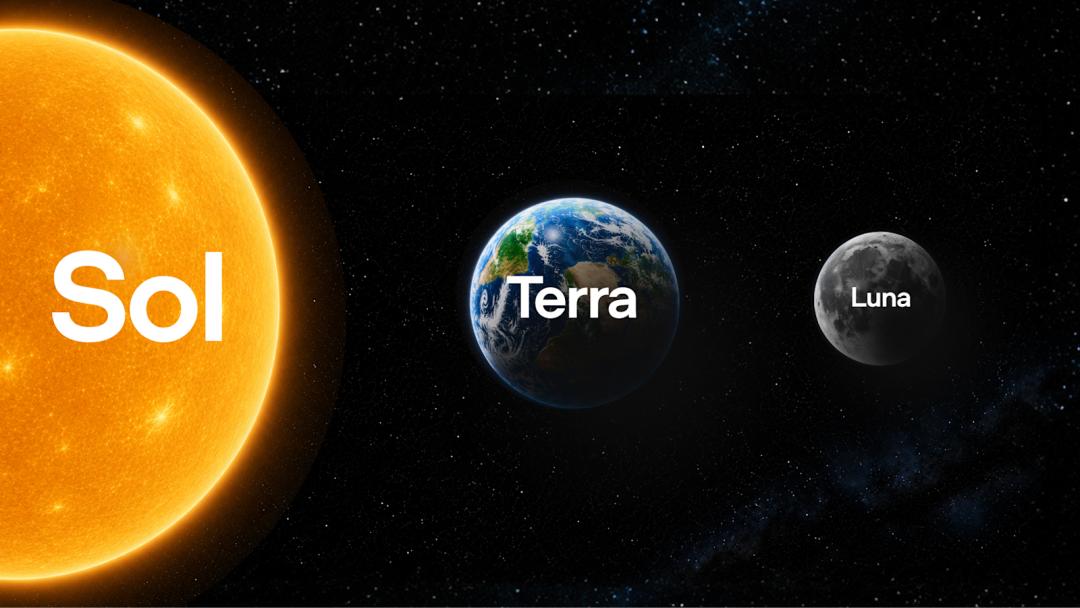
Starting today, the lightweight Luna will become the default model for Free and Go tiers, directly replacing GPT-5.5.
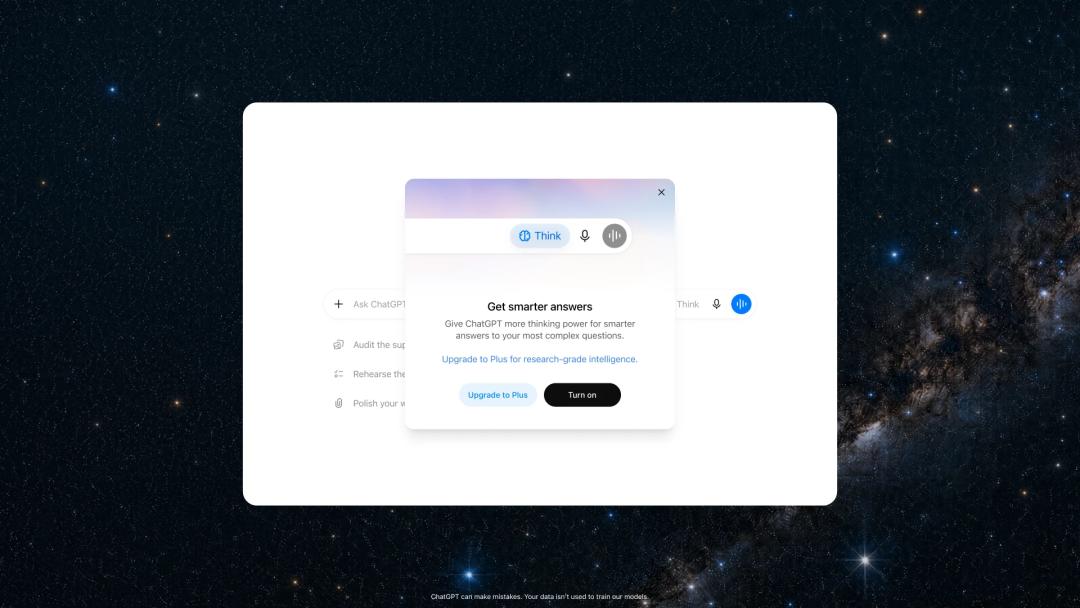
In addition, OpenAI has also added a new "Think" button to the free version of ChatGPT —
Tap it when you encounter a difficult question to let the model spend more time reasoning before giving an answer, this is the first time free users can actively enable higher reasoning intensity.
However, the only feature that is unlimited under this free policy is text conversation.
File upload, image generation, voice and other functions still follow the original quota limits, and users will still hit usage caps.
The Top-tier Sol Gets Brand New Upgrade
As part of this wave of benefits, OpenAI also upgraded its most powerful GPT-5.6 Sol.
In previous versions of ChatGPT, the fast-response Instant mode and the slow-reasoning Thinking mode behaved almost like two separate personalities:
They had different tones, different formatting, and switching between them felt like using a completely different model.
Now Sol handles all requests uniformly, with fully adjustable speed, the only difference is the length of its reasoning time, and there is no disjointed feeling at all.
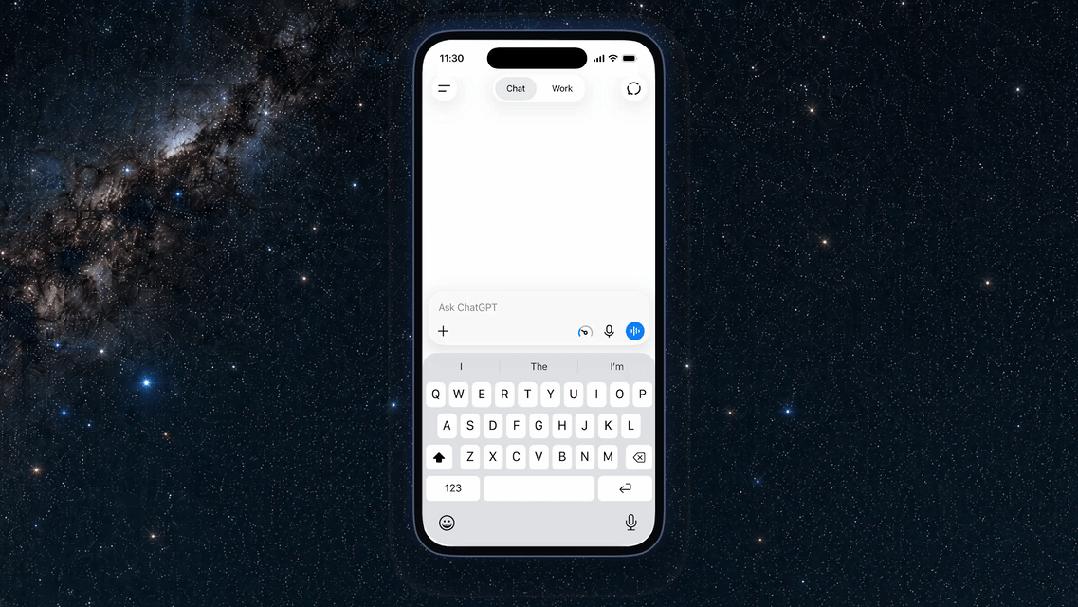
The 5-level reasoning slider feature that was previously exclusive to ChatGPT Work is now available in the regular chat interface for all users!
Everyone can freely adjust the AI's depth of reasoning.
The most intuitive change of the new version of Sol is that it gives shorter, more concise and to-the-point responses.
In its official blog, OpenAI gave an example: "If I ride a bike from Mission to the beach after work, will I get completely soaked in the rain?"
The old Instant mode gave a long-winded response covering rainfall, wind speed, temperature, sea fog, beach hazard warnings, plus a note saying "you might feel sticky if you wear a cotton T-shirt".
The new Sol gives the conclusion in the very first sentence: You won't get soaked, the real issue is the headwind, with west wind blowing at 10 to 20 miles per hour, you only need to bring a thin lightweight windbreaker.
Then when the user follows up saying "I will leave at 5:30", the old version repeats the entire weather forecast again, while the new version only updates the relevant conclusion.
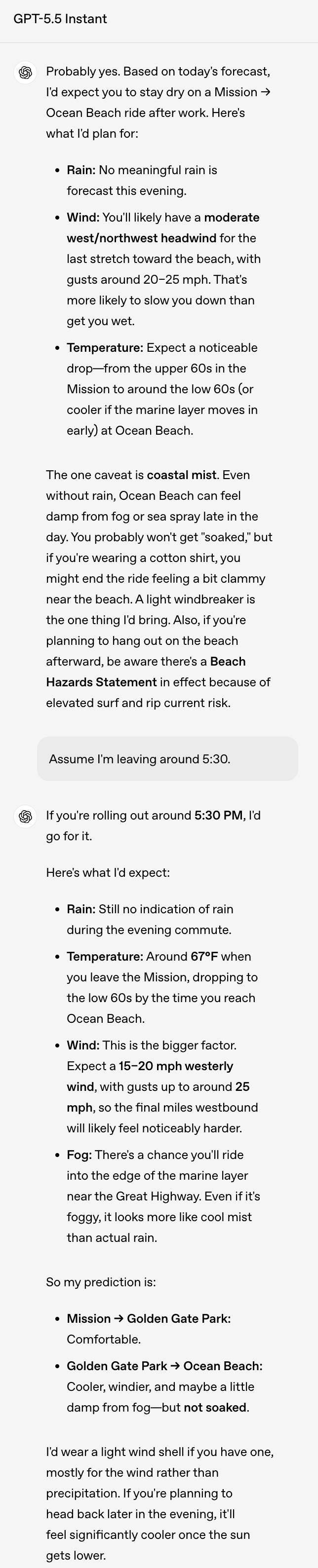
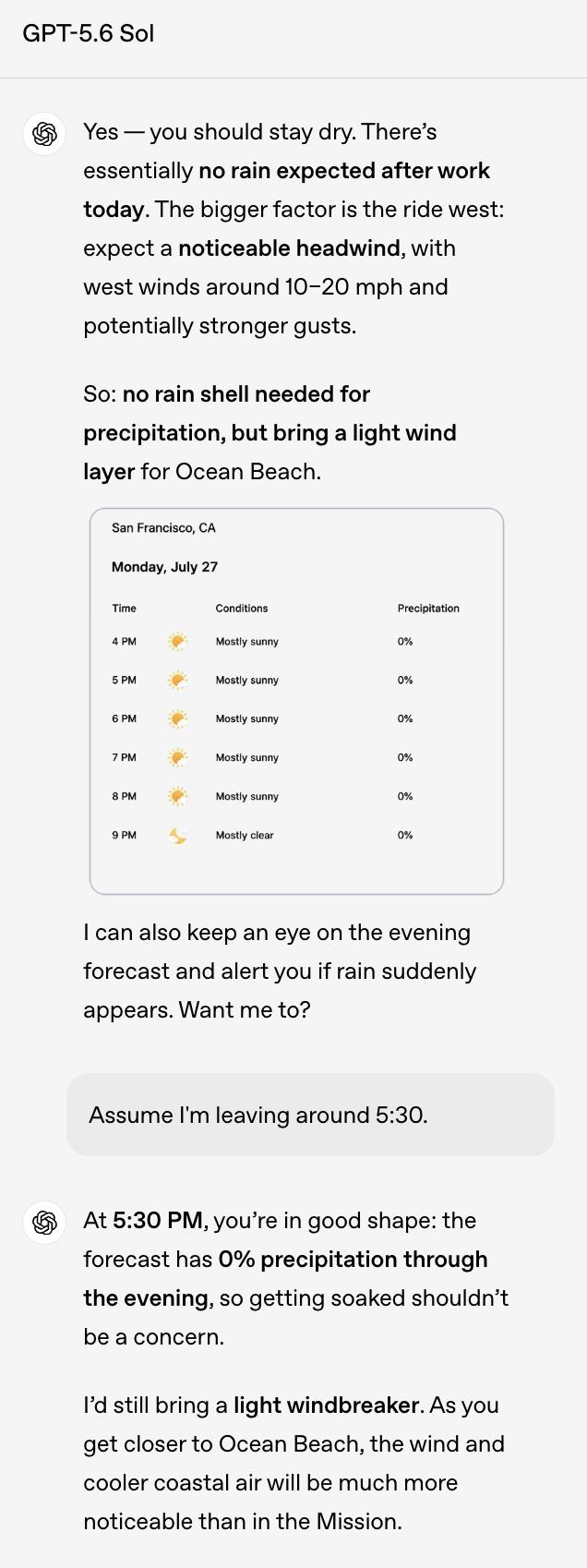
This is the core characteristic of the GPT-5.6 Sol update: it replaces overly verbose details with focused, key information.
Error Rate Plunges by 68%
There is another more important update: the factual accuracy of the entire GPT-5.6 family has been greatly improved this time.
The evaluation criteria used this time are extremely strict.
They specifically selected questions from the three fields of finance, healthcare and law, where factual errors are least acceptable, to conduct internal testing.
If a single factual error appears in a response, the entire response is marked as incorrect.
The results show that GPT-5.6 Sol has a 68% lower error rate than GPT-5.5 Instant, and Luna has a 62% lower error rate.
Is GPT-6 Coming Next Week?
The free access is only the appetizer.
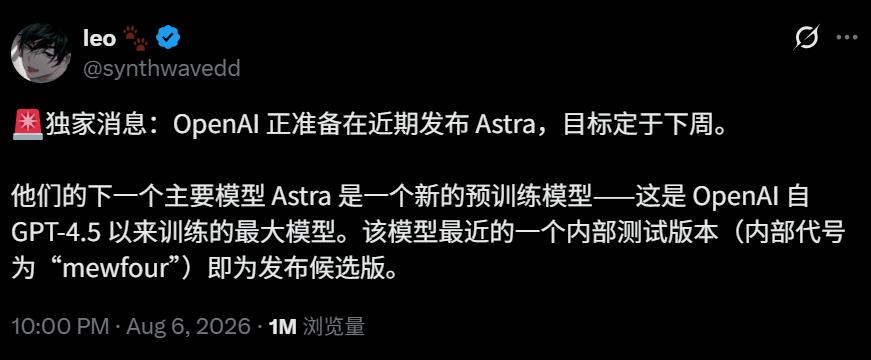
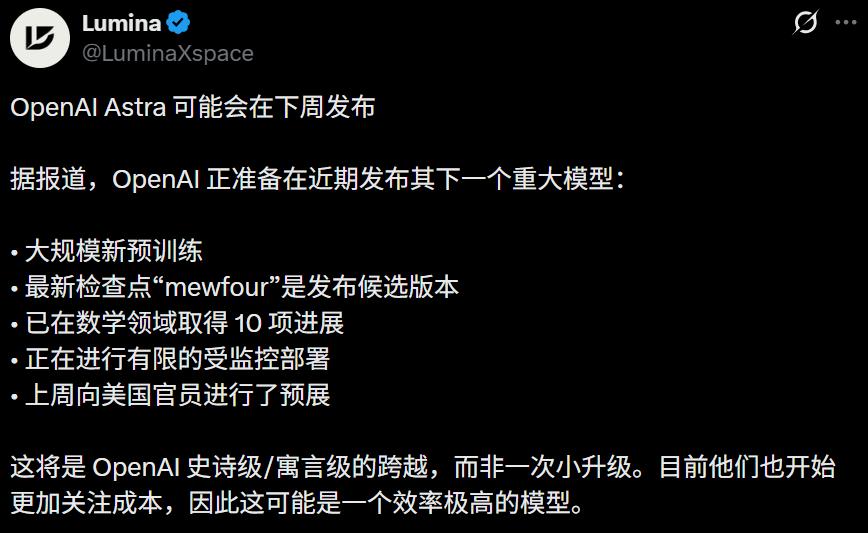
Earlier today, well-known industry insider leo released exclusive news: OpenAI is preparing to launch its next-generation flagship model, codenamed Astra, next week.
Astra is a completely new pre-trained model, the largest model OpenAI has trained since GPT-4.5. Its latest internal checkpoint, codenamed "mewfour", has already reached Release Candidate status.
RC means the final version before official release!
In fact, there have been a lot of obvious traces of this development for a while.
On July 30, a preview video from OpenAI was quickly deleted. Some users managed to take a screenshot, showing the word "mewthree" flashing on the screen.
This week, more leaks followed: mewfour is already in internal testing.
Counting from mew, mewtwo all the way up, OpenAI's "Mewtwo" series of models has quietly evolved to its fourth form.
More interestingly, the official announcement was actually already out in the open.
On August 1, OpenAI published a mathematics blog post, stating that its model has solved 10 open mathematical problems that have remained unsolved for more than a decade.
No one expected that the announcement of the next-generation model was hidden in this blog post:
These results were achieved by an internal build of Astra — it is our next major model.
So what exactly is this Astra model?
Based on current leaks, it is positioned for long-duration, multi-agent collaboration. That means multiple AI instances can work together for hours or even days to tackle a large complex problem.
There are two different rumored specifications.
Some previous media reports say it is twice the size of GPT-5.6 Sol; well-known developer Haider estimates that GPT-4.5 has around 5T parameters, while Astra may reach 7-10T parameters. In short, it is a massive model.
However, with stronger infrastructure and optimizations, plus a large amount of new computing power coming online this year, the service cost for OpenAI to run this massive model may even be lower than that of Anthropic's Mythos 5.

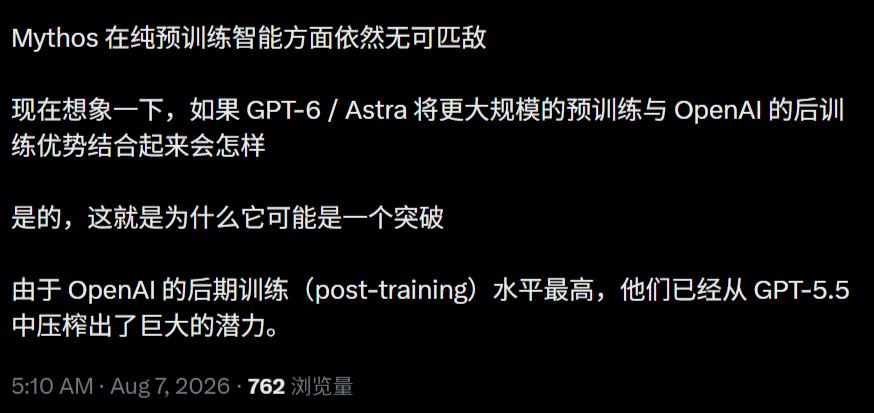
According to Haider, OpenAI has the strongest post-training capabilities in the entire industry, which is how GPT-5.5 achieved its current performance; its only disadvantage compared to Mythos was its pre-training foundation.
This time, this shortcoming has been upgraded to the largest pre-training base in history.
Top-tier fine-tuning paired with the largest model base — this is the full logic behind why Astra could achieve a major breakthrough.
In other words, this will be a Mythos/Fable level leap for OpenAI.
And all of this is for one single goal — to dethrone Anthropic's Fable 5 from its leading position.
Whether Astra will completely outperform its competitors by a huge margin, or only take a small lead?
The answer will likely be revealed within a week.
References:
https://openai.com/index/improving-gpt-5-6-sol-in-chatgpt/
https://x.com/OpenAI/status/2085434712429052386?s=20
This article is from WeChat official account "AI Era", edited by Taozi and Haokun, published with authorization from 36Kr.