Baidu, Alibaba and Tencent meet again on the AI office track, and data is the decisive factor for victory.
Within a week, Baidu, Alibaba and Tencent have all stepped into the AI office track.
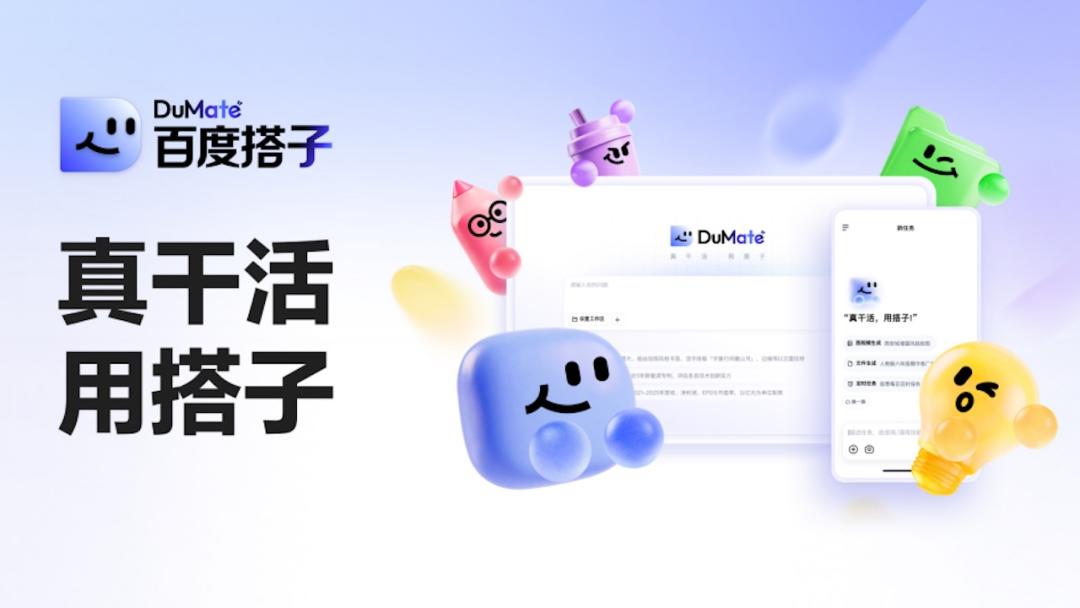
At the end of July, Tencent merged the WorkBuddy and CodeBuddy teams and upgraded their business, making it clear that WorkBuddy is the flagship AI office product; on August 3, Alibaba integrated three products including QoderWork, Wukong and MuleRun into Qwen Office and officially launched the public beta; in early August, Baidu completed a new round of integration of its AIWork product line, forming an AI office product matrix represented by DuMate, GenFlow and Miaoda.
The familiar smell of gunpowder is in the air. The vigorous BAT war a few years ago seems to be staged again in a brand-new form.
This makes everyone wonder: why are the big tech companies converging their scattered resources at this very moment and putting an end to the "internal horse race" mechanism?
The wild growth in the past two years has proved that although the parallel operation of multiple product lines has yielded many single-point functions, it has also led to scattered computing power, overlapping product positioning and fragmented user perception. As the AI industry shifts from showcasing technologies to delivering tangible results, big tech companies must integrate their model, Agent, tool and data capabilities into one unified flagship entry, and concentrate resources to fight a positional battle.
The deeper logic is that AI office is the super scenario with the highest certainty of large model implementation and the clearest commercial closed loop at present.
From "Horse Race" to "Positional Battle"
The biggest change in the AI industry in 2026 is that the era of dialogue boxes has truly come to an end.
The trigger of all this can be traced back to OpenClaw, the open-source Agent framework that became a hit at the beginning of the year. The reason why OpenClaw sparked widespread discussion and even set off a national "raise your own OpenClaw" craze is that it began to truly invade users' computer desktops and directly take over browsers, local files and terminal software.
Humans have seen the possibility that AI can shift from passively answering questions to actively executing tasks.
Precisely because the experience of "AI can directly execute tasks" is so impressive, a wave of new Agent gameplay has emerged in the market over the past six months. From automated report sorting and cross-platform data crawling to 24/7 online digital avatars, all these popular features are without exception penetrating into the same group — white-collar workers who take computers as their core productivity tools.
This group of people is exactly the core high-value office crowd that the major internet giants have spared no effort to compete for and accumulate over the past decade. They control the most critical work files and business flows of enterprises, and are the most sensitive rigid experiencers of "efficiency improvement"; at the same time, they are usually the group with strong learning ability and motivation for progress. The desktops of this group of people have naturally become the battlefield where large models are commercialized the fastest, with the highest user stickiness and the most immersive data assets.
For decades, the computer desktops of this group have always been a must-contested place for all players in the industry.
On the one hand, the implementation scenario is the most precise. Compared with vertical industrial scenarios that have low fault tolerance, long processes and are difficult to standardize, office scenarios are inherently characterized by high frequency, high standardization and high data precipitation. Whether it is document processing, data analysis or code generation, the standards for task delivery are extremely clear, and Agents can take the lead in realizing commercial-level implementation of "from dialogue to execution".
On the other hand, its commercial space is extremely considerable. Looking across the world, the overseas high-payment market represented by OpenAI and Anthropic whose annual recurring revenue (ARR) is both approaching the 100 billion USD mark, has demonstrated a long-tail ceiling of over one trillion RMB.
In the domestic stock market, the SaaS subscription and C-end payment habits of hundreds of millions of office workers using computers have begun to take shape at an accelerated pace.
At the C-end, the payment logic of individual users is being completely reshaped. As large models take over desktops, AI office tools are rapidly changing from casual chat toys for trial use to rigid productivity tools. Heavy white-collar workers and professional groups are no longer resistant to paid subscriptions. When 10%-15% of the high-frequency core users among hundreds of millions of office workers with computers are converted into stable payers, the C-end payment alone can generate very considerable and stable revenue.
At the B-end, enterprises' procurement models are also undergoing upgrading. What enterprises buy is no longer just software accounts, but digital employees and automated computing power that can replace repetitive labor. Whether it is the AI value-added services of mainstream collaboration suites, or the payment model settled by Agent execution nodes and Token consumption, the customer unit price of enterprise customers has been increased several times.
Following this trend, with hundreds of millions of core office users plus the computing power consumption of enterprise-level services, the domestic AI office market will steadily support a basic market starting at the level of 10 billion RMB. This is not only the cash flow source for large tech companies to realize commercial closed loop, but also the most solid training ground before they push their business to the global trillion-level market.
From this perspective, the reason why large internet companies develop AI office business is not out of the popular "FOMO (Fear Of Missing Out)" concept in previous years, but a judgment made after confirming the future development direction.
From the perspective of competition among large companies, betting on AI office at this moment is also a natural choice. The capabilities of large models are rapidly converging. Whether it is reasoning ability, long text processing or Agent scheduling, the gap between leading models is no longer enough to determine product competitiveness alone. Therefore, for them, continuing to develop more Agents is no longer the focus. How to truly organize the model capabilities to complete real work tasks has become the new core of competition.
With the superposition of multiple factors, Baidu, Alibaba and Tencent are now standing on the same starting line again, and their goals are almost the same: to build the next-generation productivity entry.
Why Are These Large Companies Still The Leading Players?
Since ChatGPT set off the global large model wave in 2023, a large number of startups have emerged. Unicorns developing base large models, AI applications cutting into vertical scenarios, and new forces focusing on general Agents have all once stood in the spotlight.
But today, when the tough battle of AI office is truly launched, people find that the players who finally stand in the center of the stage, hold the highest winning odds and the most attention, are still those few internet giants.
Why?
On the surface, AI office is just an Agent that can write documents, make PPTs and analyze data; but after entering the real enterprise scenario, to complete a work task, the Agent needs far more than calling a large model once. It needs to understand enterprise knowledge bases and historical files, connect different systems such as WeChat, emails, documents, calendars and databases, call various tools within the scope of authority, and meet enterprises' requirements for data security, authority management and private deployment. Finally, it also needs to enter the daily workflow of an enterprise through a mature sales and delivery system.
This puts extremely strict requirements on AI office service providers, and once again confirms the classic iron law in the To B field: the long board determines the upper limit, and the short board determines the life and death of the business. Different from the C-end entertainment scenarios with high fault tolerance, the serious office scenarios have almost zero-tolerance rigid requirements for accuracy, stability and data security. Only players with no dead angle in comprehensive capabilities can really get this admission ticket.
Therefore, these large companies have extremely strong competitiveness in the AI office track. To break down the advantages, they can be roughly divided into four dimensions.
The first is model capability, which is the admission ticket for all AI office products. The ERNIE large model 5.1 ranks first in China on the LMArena search list; Tencent Hunyuan is led by Yao Shuny u to build a group-level RL infrastructure; Alibaba's Tongyi series continues to be strengthened in the Coding/Cowork direction. BAT's continuous pursuit of enhanced reasoning, Agent scheduling, Coding and other capabilities provides underlying support for office Agents.
The second is data assets, which is where the three companies really begin to differentiate. For Agents to truly complete work tasks, they must have sufficiently rich and real context. Tencent's most important data comes from communication relationships and collaboration networks; Alibaba accumulates enterprise organization, approval and process data; Baidu has large-scale work files and knowledge assets precipitated by Baidu Netdisk. The different types of data mastered by the three companies also determine that they have chosen different development paths.
The third is the tool ecosystem. The value of Agent lies in its ability to execute tasks across tools. Tencent has a product matrix including WeChat, WeCom and Tencent Docs; Alibaba has DingTalk and Alibaba Cloud's enterprise ecosystem; Baidu has gradually integrated the product capabilities of search, Netdisk, Famou and Miaoda into a unified system. The stronger the ecological connection capability, the more complex tasks the Agent can complete.
The fourth is enterprise delivery capability. AI office is ultimately a To B business. No matter how strong the product capability is, it needs to rely on a mature cloud service system, industry solutions and sales network to deploy Agents into the enterprise. This is the common advantage owned by Tencent Cloud, Alibaba Cloud and Baidu Intelligent Cloud, and it is also the capability that a large number of startups cannot build in a short time.
However, although all of them have raised AI office to a group-level strategy, the starting points of BAT are different, which is related to the gene of each company.
Tencent chooses to connect "people".
From WeChat, WeCom to Tencent Docs, Tencent's biggest advantage has always been the connection between people.
WorkBuddy also follows this logic, and it acts more as a collaborator: understanding communication context, sorting chat records, calling tools such as documents and meetings, and building a new collaboration mode between people. The relationship chain is Tencent's biggest asset, and also the most natural entry for WorkBuddy.
Alibaba chooses to connect "organizations".
DingTalk has precipitated a large number of internal enterprise organizational structures, approval processes, project collaboration and management systems. Qwen Office is not built from scratch, but based on the operation of enterprise organizations, allowing Agents to directly participate in business processes such as approval, project management and knowledge management. Compared with personal efficiency tools, Alibaba hopes to make Agents part of the enterprise digital system.
Baidu chooses to connect "data". To be precise, it is to connect the data assets generated continuously in the work process.
Whether it is documents, spreadsheets, pictures, videos, or meeting materials and project plans, they will eventually precipitate into work files. The massive file data accumulated by Baidu Netdisk for a long time constitutes Baidu's biggest underlying advantage to enter the AI office track.
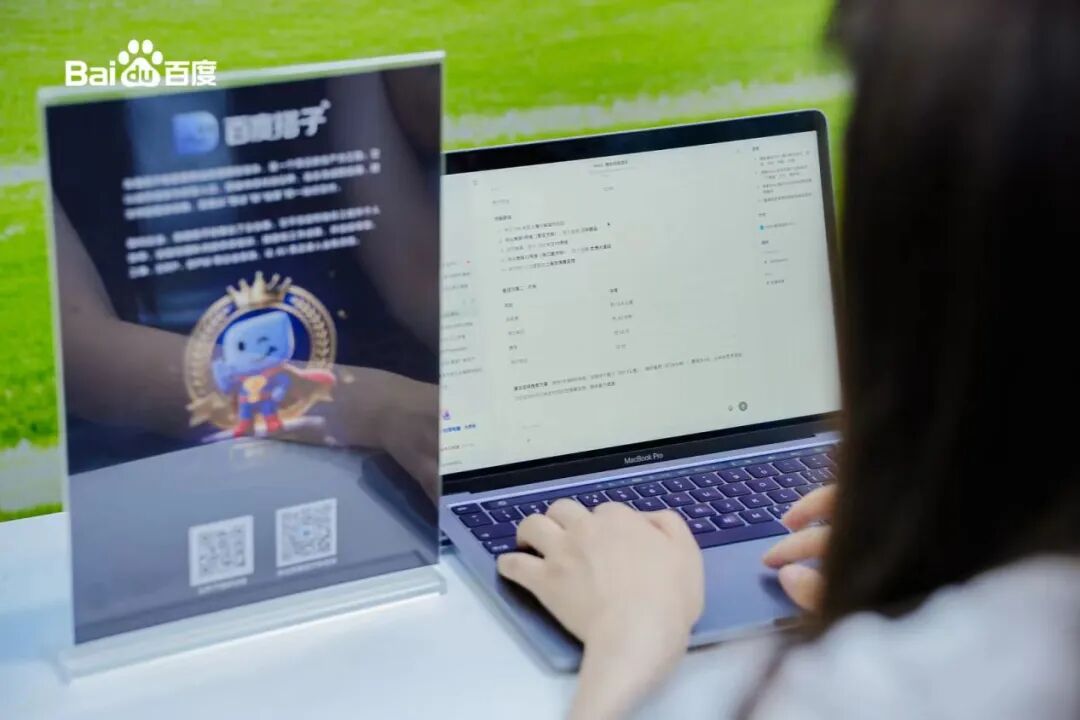
This also determines that DuMate, Baidu's AI office product, did not define itself as a chatbot from the very beginning, but a desktop-level general Agent that can understand files, call files, process files, and further execute tasks.
The three paths have no absolute advantages or disadvantages.
Communication relationships make Agents better understand the collaboration between people; organizational relationships make Agents better understand how enterprises operate; file data makes Agents better understand how a specific work task is completed.
However, as the Agent's ability to complete tasks continues to increase, the importance of data is rising rapidly. Whether an Agent can really "get work done" often depends on whether it has sufficient rich context, and most of these contexts come from the data precipitated in the real work process, that is, documents, spreadsheets, codes, design drafts and project materials.
Baidu's "Data Counterattack"
Connecting people, connecting organizations and connecting data represent three different competitive ideas.
Baidu's next step is to rebuild its AI Work product system around "data + Agent". The new round of product integration completed in August this year is the most critical step for the implementation of this strategy — DuMate, the desktop-level general Agent that was fully launched in March this year, has been officially pushed to the center of the stage, becoming the unified flagship and core entry of the entire AIWork product line.
This has laid a very unique competitive posture for Baidu: Baidu's DuMate is directly built on data and execution capabilities. It does not depend on any existing software, but is a global brain that comes with its own ammunition and can directly take over the desktop.
The reason why DuMate can take the lead lies in a very complete group army collaboration logic behind it:
There is massive data support at the bottom. The 1 billion users and more than 1000 billion GB of work files precipitated by Baidu Netdisk provide the core "raw material" for Agent to fulfill tasks. The capability of directly accessing and understanding the assets in the Netdisk when making PPTs or analyzing spreadsheets constitutes a data barrier that competitors cannot reach in the short term.
On the left flank, GenFlow supports in-depth scenarios. With the scenario capability verified by 100 million monthly active users, GenFlow is good at long document extraction, report writing and video editing based on Netdisk assets, and these scenario-based capabilities provide unique support for Baidu's competition in the AI office field.
On the right flank, Miaoda expands the capability boundary. With more than 35 million users and more than 3.5 million generated applications, Miaoda provides zero-threshold no-code development capabilities, allowing Agents to generate micro-applications and lightweight tools in real time to fulfill personalized and cross-system long-tail business demands.
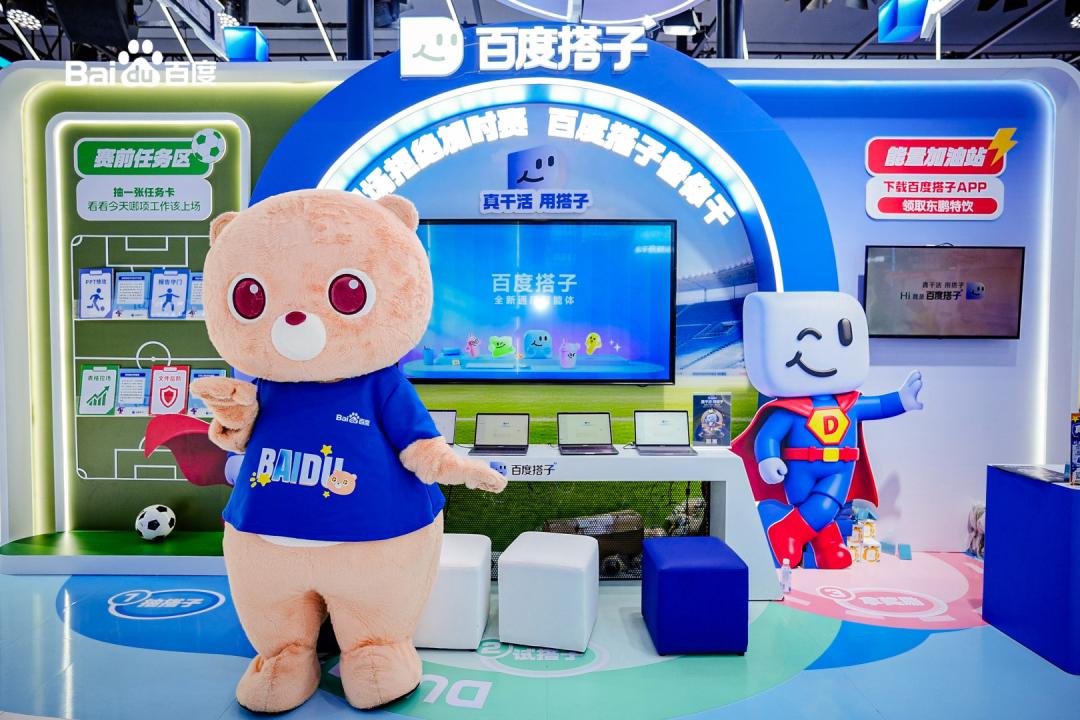
Under the rapid product iteration (maintaining "daily update" and quickly connecting mainstream tools such as WeChat, Feishu and Ruliu) and the protection of "security sandbox + folder-level authority control", DuMate not only won the only "Pavilion Treasure" award in the general Agent field at WAIC 2026, but also completed the leap from a single product to a platform-based ecosystem.
The convergence of such a product matrix is of enlightening significance for the development of the entire industry.
Before that, the AI office products of large internet companies generally faced the awkward situation of "many innovations but lack of refinement, and extremely fragmented experience". Users need to find files in the cloud disk, write outlines in the library, and then jump to third-party tools to make PPTs, so data is repeatedly transferred between different Apps. Baidu's integration of these in-depth scenario capabilities into DuMate essentially puts an end to the repeated development of the same function and internal entry consumption within the company. By building a unified desktop-level Agent, "DuMate" becomes a global scheduling brain, all complex calculations, data calls and tool generation are automatically closed in the background, realizing real one-stop delivery.
At the commercial level, this reconstruction can also fundamentally solve the payment problems and delivery dilemmas left over from the SaaS era.
The traditional To B SaaS model has long faced the dilemma of low payment willingness and difficult to increase ARPU (Average Revenue Per User) in China. Instead of selling scattered single-point plugins or "chatbot" accounts to users, DuMate directly delivers "digital employees" with end-to-end execution capabilities to users relying on the capabilities of "desktop takeover + real-time tool construction + private asset access". For high-value white-collar workers and enterprise customers, paying for the saved working hours and certain result delivery has far higher commercial premium space than pure software subscription.
The convergence of this product architecture is highly consistent with Li Yanhong's judgment at the Create 2026 conference that "the core of AI competition has shifted from model capability to execution capability".
As a unified entry, DuMate makes every long document extraction, complex spreadsheet analysis and micro-application construction become high-value Agent execution. This high-frequency desktop-level execution can not only form a commercial closed loop of "the more complex the task, the higher the delivery value, and the stronger the user stickiness", but also precipitate high-quality data in high-frequency interactions, feed back the reasoning and planning capabilities of the underlying large model, and form a continuous flywheel.