Unitary Quantum has closed its Series A financing round, with Capital Link participating in the investment, to deepen its footprint in the cutting-edge technology field.
Investment Updates
Recently, Hefei Youzheng Quantum Technology Co., Ltd. (hereinafter referred to as "Youzheng Quantum") announced the completion of a Series A financing of several hundred million yuan. This round of financing is led by SZVC, with joint investment from Social Security Fund Bay Area Science and Technology Innovation Equity Investment Fund (Shenzhen) Partnership (Limited Partnership) and Shenzhen Innovation Capital Investment Co., Ltd. Many well-known institutions including Kailian Capital, GF Xinde, Jingming Capital, Puhua Capital, Qifu Capital, Xingtai Capital, Dachen Finance & Intelligence, Huakong Fund, Shoucheng Holdings (0697.HK), GCL Energy Technology, Haojun Investment, Xineng Venture Capital and Zhongwei Capital participated in the follow-up investment.
Incubated from the team of Academician Guo Guangcan of the University of Science and Technology of China, Youzheng Quantum is a leading domestic enterprise in quantum computing that adopts the ion trap QCCD technical route. In the four years since its establishment, the company has developed into an important industrial force full of innovation vitality in China. Kailian Capital highly recognizes the tenacity and confidence of Youzheng in continuous technical breakthroughs, and is optimistic that Youzheng will grow into a benchmark in China's quantum computing sector in the future.
01. The Century-Long Journey of Quantum Theory
Looking back at the development history of quantum mechanics and theories, we are amazed by human's exploration of the micro world, from theoretical innovation that subverts the cognition of classical physics to technological breakthroughs that reshape the future computing power pattern. Quantum mechanics is a "century-old discipline", which is the result of the joint promotion of many scientists in different stages and across fields. In 1900, Planck first proposed the hypothesis of energy quantization, opening the door to the quantum world. Since then, famous physicists such as Einstein, Bohr and Schrödinger have all made important discoveries and researches in this field. On July 29, 1925, Heisenberg published *Quantum-Theoretical Re-interpretation of Kinematic and Mechanical Relations*, and matrix mechanics came into being formally, marking the official birth of modern quantum mechanics. Therefore, quantum mechanics is a system jointly established by many famous scientists. Up to now, more than 50 Nobel laureates have emerged in this field.
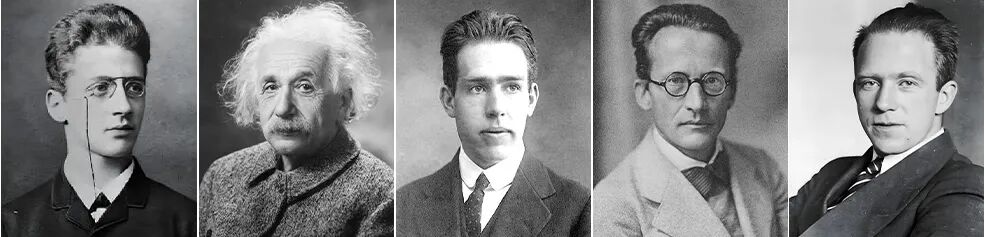
Note: From left to right are Planck, Einstein, Bohr, Schrödinger, and Heisenberg
Of course, quantum theory also develops forward amid controversies, and has given birth to many classic quotes and experiments that are widely known today.
Since Newton and Maxwell established classical physics, physicists have defaulted to an axiom for more than 200 years: the universe is strictly causal and deterministic. Given all the conditions of a system at this moment, theoretically all states of the past and future can be accurately calculated, and all randomness is pseudo-random. However, with the inexplicability of multiple experimental observation results in classical mechanics, the Copenhagen School represented by Bohr put forward the Copenhagen interpretation: electrons have no definite position before observation, only probability; under the same initial condition, measurement can get completely different results. Einstein could not accept it at first, and he raised a serious question about it: Does God play dice? Today, with the in-depth research of human beings on the micro physical world, we can give a definite answer: God does play dice, and the micro world does have original and essential true randomness. In order to further refute the Copenhagen interpretation, Schrödinger put forward a classic thought experiment: Schrödinger's cat, and stated the paradox that a cat cannot be both alive and dead. Until the later decoherence theory explained that macroscopic objects will not have the superposition of life and death, resolving this paradox.

Note: This image is generated by AI

Note: This image is generated by AI
02. Quantum Technology Gradually Moves from Theory to Application
Entering the 21st century, the second disciplinary leap relying on micro laws such as quantum superposition and quantum entanglement has been fully launched. Quantum technology has gradually moved from the theoretical laboratory of quantum mechanics to engineering exploration and scenario implementation, forming three core tracks of quantum communication, quantum precision measurement and quantum computing. Quantum communication has taken the lead in achieving practical breakthroughs, building a secure encryption system with the help of the quantum no-cloning theorem. The "Micius" quantum satellite and the Beijing-Shanghai quantum trunk line have completed satellite-ground and long-distance optical fiber quantum key transmission, building a bottom information security barrier for government affairs and finance. Relying on the advantage of ultra-high sensitivity, quantum precision measurement promotes the implementation of quantum gyroscopes, atomic clocks and quantum magnetic sensors, empowering navigation exploration, power grid monitoring and non-invasive medical detection. Quantum computing continues to break through the boundary of computing power. Many countries have successively built quantum computing prototypes to verify quantum advantage, which is expected to play a valuable role in fields that classical computers are difficult to cope with, such as new drug molecular simulation, complex optimization and material R&D. Among them, quantum computing is the application direction with the most imagination space and development potential.

Note: This image is generated by AI
At present, there are four main technical routes for quantum computing: superconductivity, ion trap, photonics, and neutral atom. The industrialization progress of the superconductivity route is leading, which relies on semiconductor micro-processing technology to rapidly expand the scale of quantum bits, but it is limited by the shortcomings of extremely low temperature conditions and short coherence time. The ion trap route has significant advantages in quantum gate fidelity and coherence duration, which is suitable for high-precision quantum simulation and error correction experiments. The difficulty lies in the high cost of large-scale qubit expansion and slow operation speed at present. The photonic quantum route can operate at room temperature and is naturally compatible with quantum communication. China has achieved a breakthrough in quantum advantage in the direction of Gaussian boson sampling. At this stage, the core bottlenecks are the deterministic two-photon entanglement gate and optical path loss. The neutral atom route has risen rapidly in recent years, which is expected to overcome the difficulty of quantum gate manipulation accuracy, but stability and other aspects are the main bottlenecks. However, quantum computing is still in the early stage of application. The four routes each have opportunities to adapt to differentiated scenarios, and the long-term goal is to jointly move towards a fault-tolerant general-purpose quantum computer.
Compared with the international leading level, Youzheng Quantum shows solid engineering capabilities: in 2024, the company successfully delivered the first complete ion trap quantum computer; recently, Youzheng completed 12-qubit full-connectivity manipulation in the high-throughput optical blade-type ion trap system, becoming the first quantum computing company publicly reported in China to strictly achieve QV32 (quantum volume 32). In addition, Youzheng took the lead in undertaking the major special project of Anhui Provincial Science and Technology Innovation Breakthrough Plan, focusing on the R&D of QCCD ion trap quantum computers. The ion trap chip designed and developed by the company has gone through more than ten iterations, and its main performance indicators have approached the international advanced level. On this basis, the company has realized ion trapping and two-qubit gate operation on China's first 4K cryogenic surface chip trap.

Note: The picture shows the ion trap quantum computer developed by Youzheng Quantum
03. Quantum Supremacy and Great Power Game
In 2012, American physicist John Preskill first proposed the concept of Quantum Supremacy, which is used to define the critical node where quantum computing devices surpass classical supercomputers in specific tasks. However, it does not mean that quantum computers completely outperform all classical computers, but only achieves computing power leadership in exclusive problems such as carefully selected random quantum sampling, which is an important phased milestone in the development process of quantum computing.
With the intensification of the situation of great power technology competition, quantum supremacy has gradually evolved into a symbolic symbol of the global quantum technology game. Quantum computing has the subversive potential to crack the existing encryption system, revolutionize material R&D, and reshape the computing power base, which is related to national information security, industrial innovation and the right to speak in cutting-edge technology. Major countries/regions such as China, the United States, Europe, Japan and South Korea have successively elevated it to a national strategy to continuously increase investment. Teams from all countries are competing to achieve experimental breakthroughs in quantum advantage, which is not only a laboratory scientific competition, but also a forward-looking contest to seize the first-mover advantage in the next generation of information technology track.
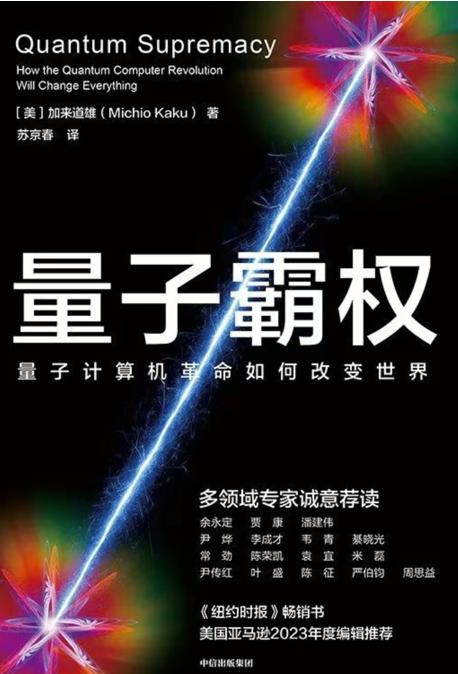
Chinese book title: *Quantum Supremacy: How the Quantum Computer Revolution Will Change the World*
Original English title: *Quantum Supremacy: How the Quantum Computer Revolution Will Change Everything* Author: [US] Michio Kaku (well-known theoretical physicist, founder of superstring theory)
In October 2019, Google made a breakthrough through the superconducting quantum processor "Sycamore", making the United States the first country in the world to achieve quantum advantage. In December 2020, the journal *Science* announced the major breakthrough of the "Jiuzhang" computer, making China the second country in the world to achieve "quantum computational advantage". Then in June 2021, the "Zuchongzhi" superconducting quantum computer realized quantum advantage. The United States suddenly felt a sharp increase in competitive pressure, and immediately pressed the sanction button: in November 2021, the US Department of Commerce included the Hefei National Research Center for Physical Sciences at the Microscale, where the Jiuzhang and Zuchongzhi teams are located, in the entity list. In May 2024, the US Department of Commerce further included 37 Chinese entities in the export control entity list, of which 22 quantum technology R&D institutions were all included, covering core units from scientific research institutes to enterprises. Through the intervention of administrative means, the United States has accelerated the cut-off of technology and industrial exchanges with China in the field of quantum computing, in an attempt to form a generation gap lead over China in some technical directions.
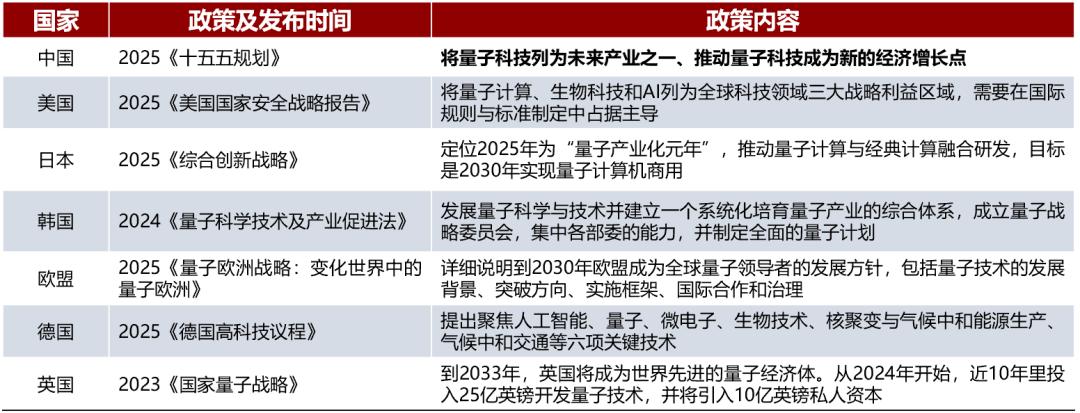
Therefore, the future development of quantum computing in China will inevitably be an independent path that will eventually move towards victory despite the difficult process. In recent years, we have reaped many achievements: the 4th generation of Jiuzhang has refreshed the world record of quantum advantage, and the 3rd generation of Zuchongzhi continues to lead the superconducting system quantum random circuit sampling experiment; China has realized independent controllability of software and hardware such as quantum chips, measurement and control systems, and quantum operating systems, and built a quantum cloud platform to open computing power to the world; the industrial end has gathered a number of local enterprises, and initially built an industrial chain from core devices, complete machine systems to cloud services.
At the same time, the state's policy support for the science and innovation industry is further exerting force, continuously increasing support for the technology industry with new quality productive forces as the main line, taking quantum technology, artificial intelligence and integrated circuits as key directions; strengthening original innovation relying on major scientific research projects, improving the risk sharing mechanism of future industries, guiding patient capital to invest in hard technology, broadening the capital market channels for science and innovation enterprises, promoting industry-university-research collaboration and achievement transformation, and jointly supporting China's long-term international competition in the field of cutting-edge technology.
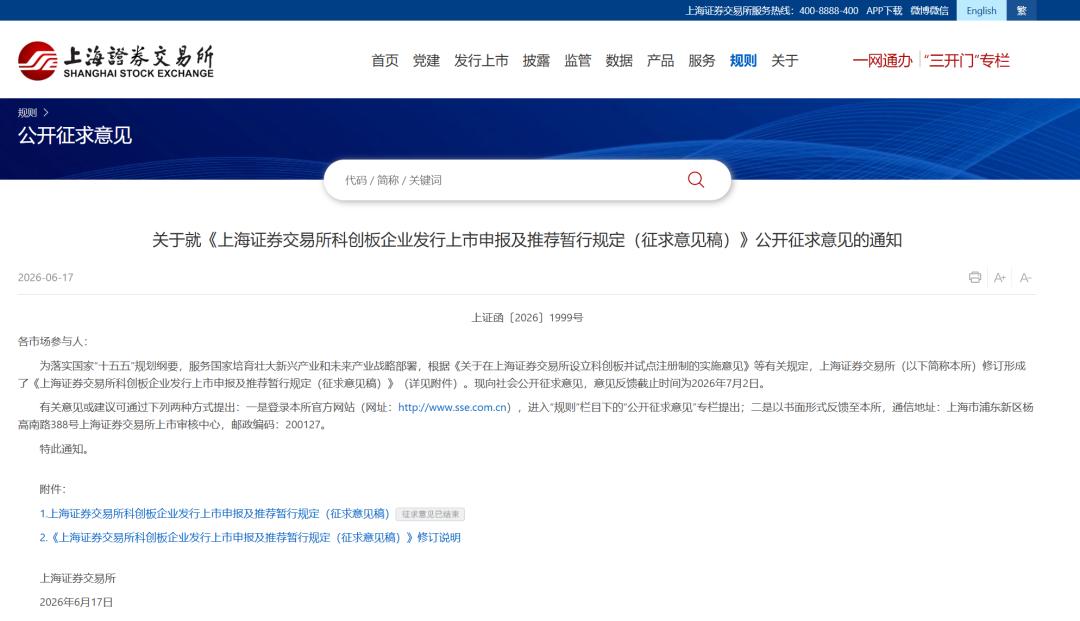
Note: Content of the Shanghai Stock Exchange on supporting the listing of cutting-edge technology enterprises on the STAR Market
04. Independent Technology R&D and Upward Investment
John Mearsheimer, a well-known American scholar of international relations, put forward in his book *The Tragedy of Great Power Politics* that all major powers naturally have structural pressure of continuous competition. This kind of competition is more reflected in the forms of technology and trade among major power relations today, rather than hot wars. Disruptive technologies such as quantum technology and artificial intelligence will directly reshape the long-term national strength, which is not only a race of technology and industry, but also an extension of global leadership. Therefore, realizing independent technological innovation is very important and critical, which is one of the important supports for China to gain advantages in future international relations competition and pattern evolution.
As a Chinese venture capital institution with many years of deep cultivation, Kailian Capital unswervingly moves forward with the country, responds to the national call, actively embraces emerging technology fields, continuously deepens industrial investment layout, and devotes itself to the rolling tide of the times with a consistent upward attitude and spirit.

Note: The chip-type ion trap developed by Youzheng Quantum
This article is from the WeChat official account "Kailian Capital", and is authorized for release by 36Kr.