Meta has launched its first programming Agent, whose underlying model capabilities are catching up closely with Opus 5.
Finally, Meta has officially stepped into the Coding Agent arena.
Today, Meta officially released the beta version of Muse Code. This is an AI coding Agent running in the terminal, powered by the latest Muse Spark 1.2 model. Mark Zuckerberg posted that: "It can complete complex software engineering tasks in large code repositories, including analyzing projects, planning modifications, writing code, running tools and verifying results."
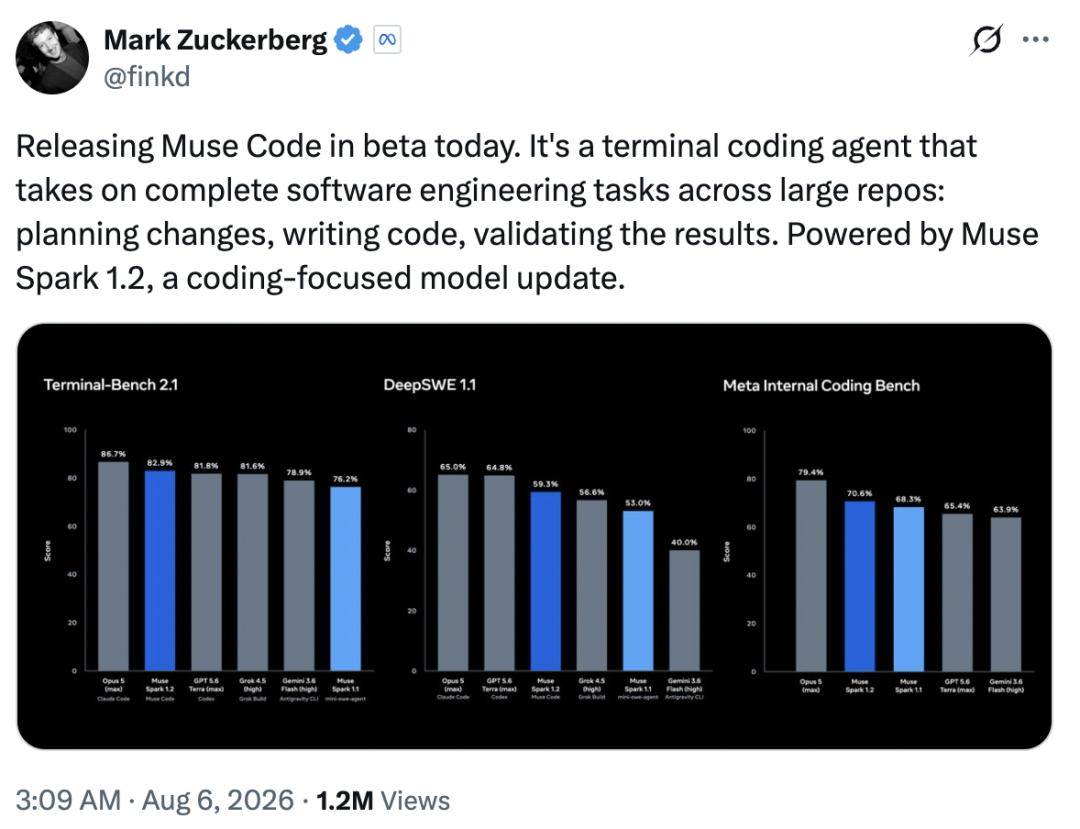
This also means that Meta, OpenAI and Anthropic have finally encountered each other head-on on the popular track of coding Agent.

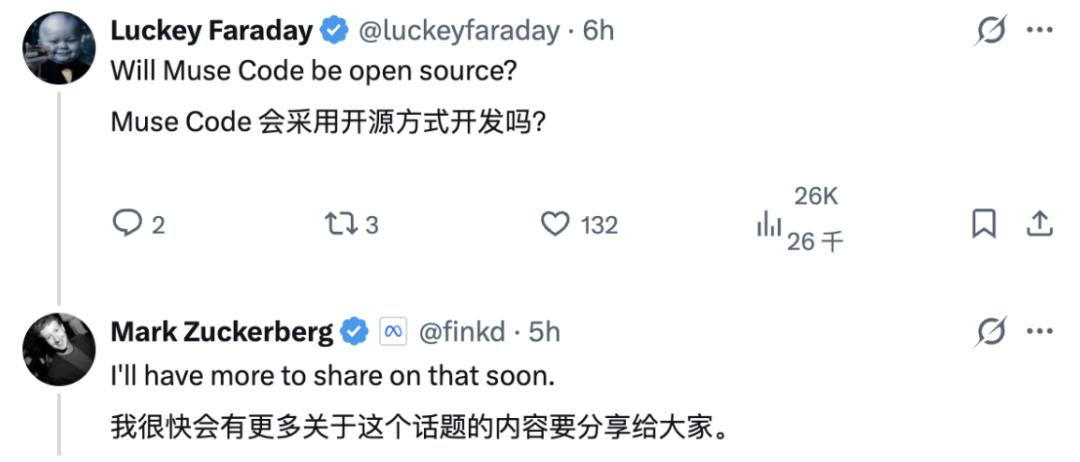
As soon as the product was released, it sparked heated discussions among netizens. One netizen directly asked about the widely discussed open-source topic at present, asking "Will Muse Code be open-sourced?" Mark Zuckerberg also responded immediately: "There will be more content to share on this topic soon."
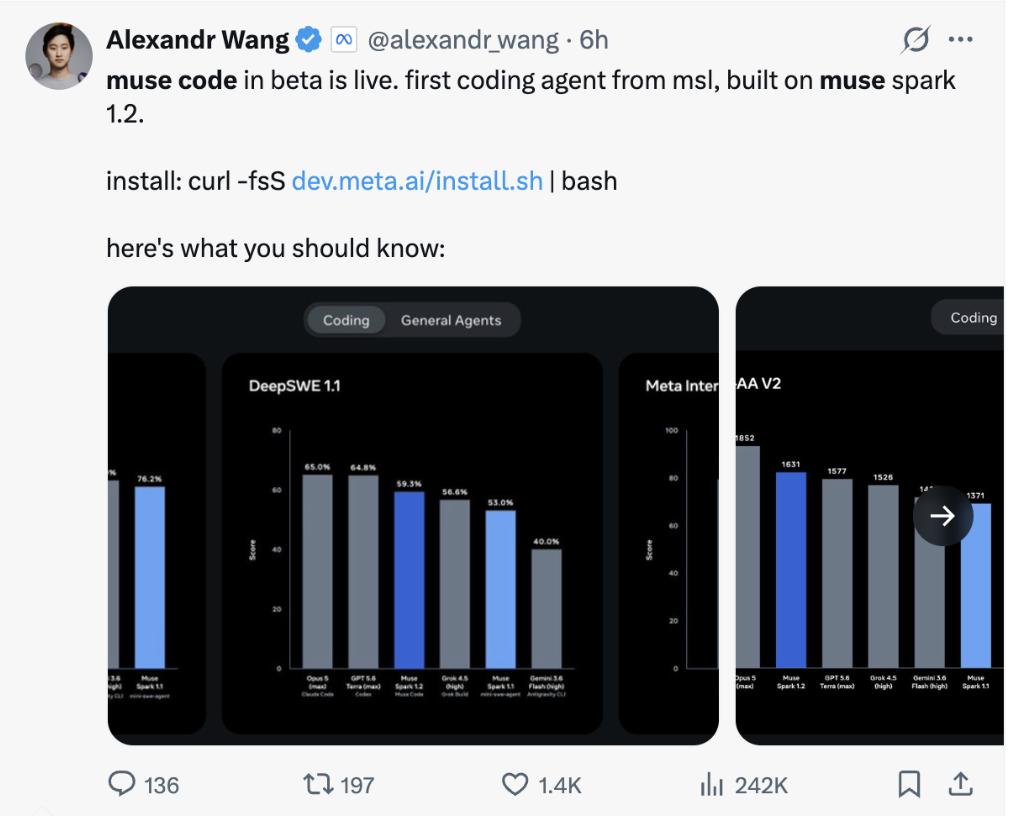
At present, Muse Code supports macOS and Linux, and can be installed via a single terminal command. Users can directly submit a complete requirement to it, such as fixing bugs spanning multiple modules, adding a new feature, or refactoring a large project. After receiving the task, Muse Code will first understand the code base, then make plans, modify files, run tests, and continue to adjust according to the results.
Now, let's take a closer look at it.
Muse Code: Meta's first AI programming agent
Muse Code adopts a simple agent loop, paired with a set of asynchronous background agents to enhance the capability of the main agent.
These dedicated background agents run continuously throughout the entire session, instead of being launched temporarily for each task, which reduces repeated information collection. They can independently perform subsequent steps and judge when to feed back results to the main agent.
This continuous running mechanism can reduce latency and reduce the main agent's reliance on human guidance when handling complex, multi-step tasks.
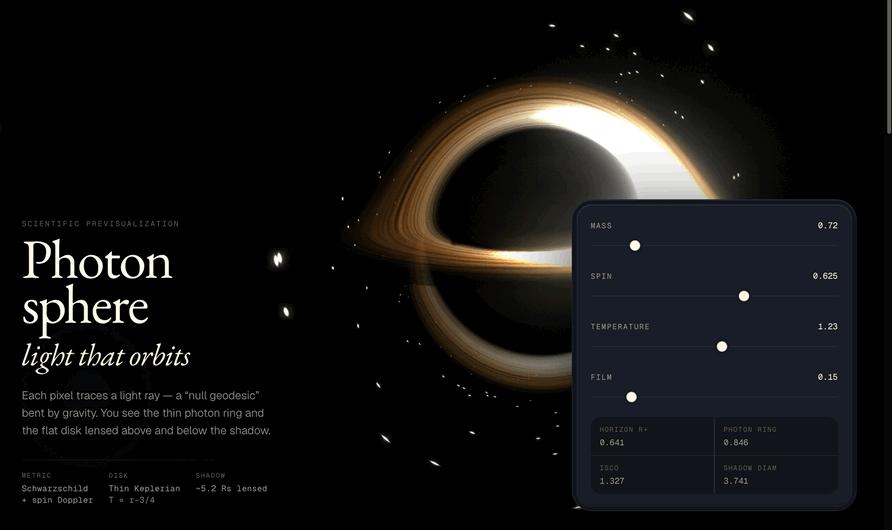
Demo showcase
Muse Code has two core features:
The first is runtime design.
Muse Code uses a local event log, where model calls, tool runs, approval operations and code modifications are recorded in sequence. As the only trusted data source, this log mechanism allows the running process to be accurately replayed and safely restored after a restart. Even if the program crashes, the agent can resume execution from the point of interruption.
With this capability, Muse Code can handle long-running tasks without causing the entire process to deviate or be interrupted due to mid-way failures.
The second is built-in skills.
Muse Code provides multiple skills by default. "/plan" can break down tasks into a plan that requires approval before execution; "/grill" will repeatedly stress test the plan until the solution is sufficiently reliable; "/goal" will continuously advance around the specified target until the task is successfully completed.
Muse Spark 1.2: A more powerful model behind the agent
Muse Spark 1.2 is an upgraded version with enhanced programming capabilities based on Muse Spark 1.1, focusing on improving performance in code generation, complex problem debugging, code repository understanding, and the end-to-end development process.
During the training of Muse Spark 1.2, Meta significantly increased the training computing power for programming tasks, while expanding the diversity of the training environment. At the same time, the model still maintains strong performance in other key capabilities such as general agents.
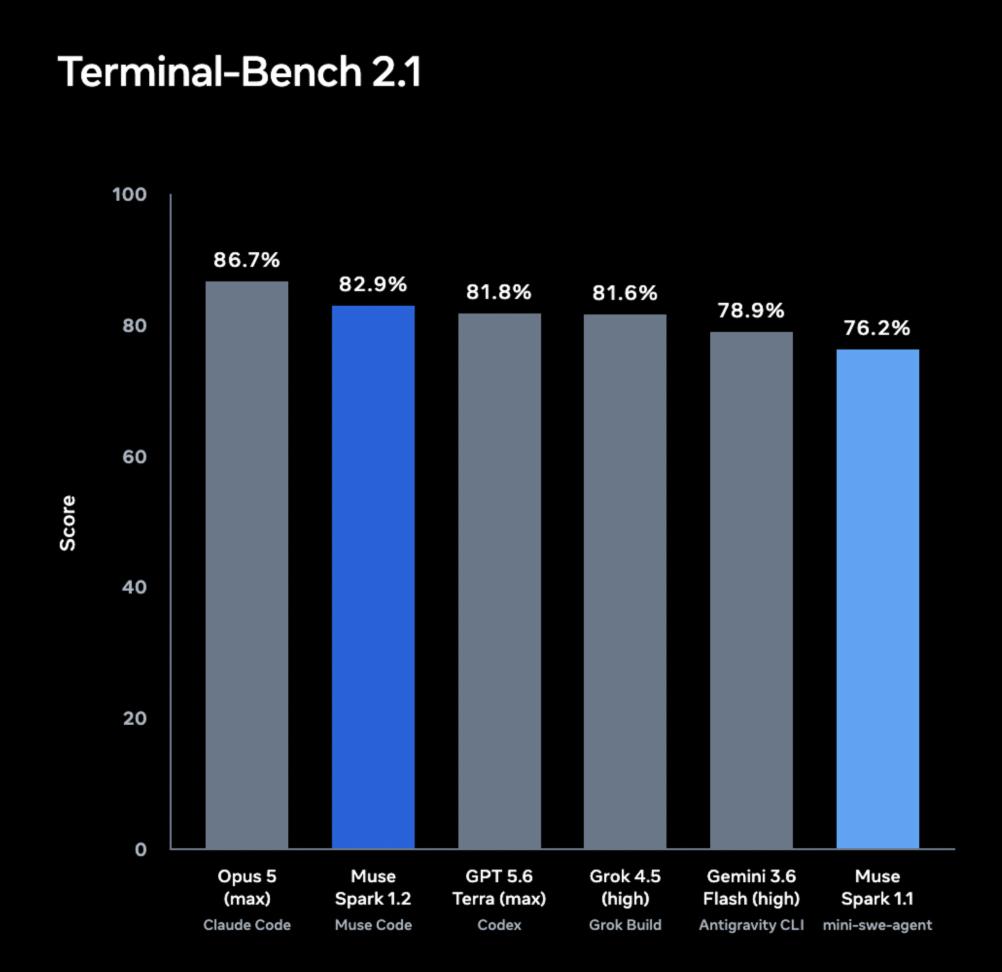
On Terminal-Bench 2.1, which evaluates the task completion capability of agents in the terminal environment, Muse Spark 1.2 is only outperformed by Opus 5 (max).
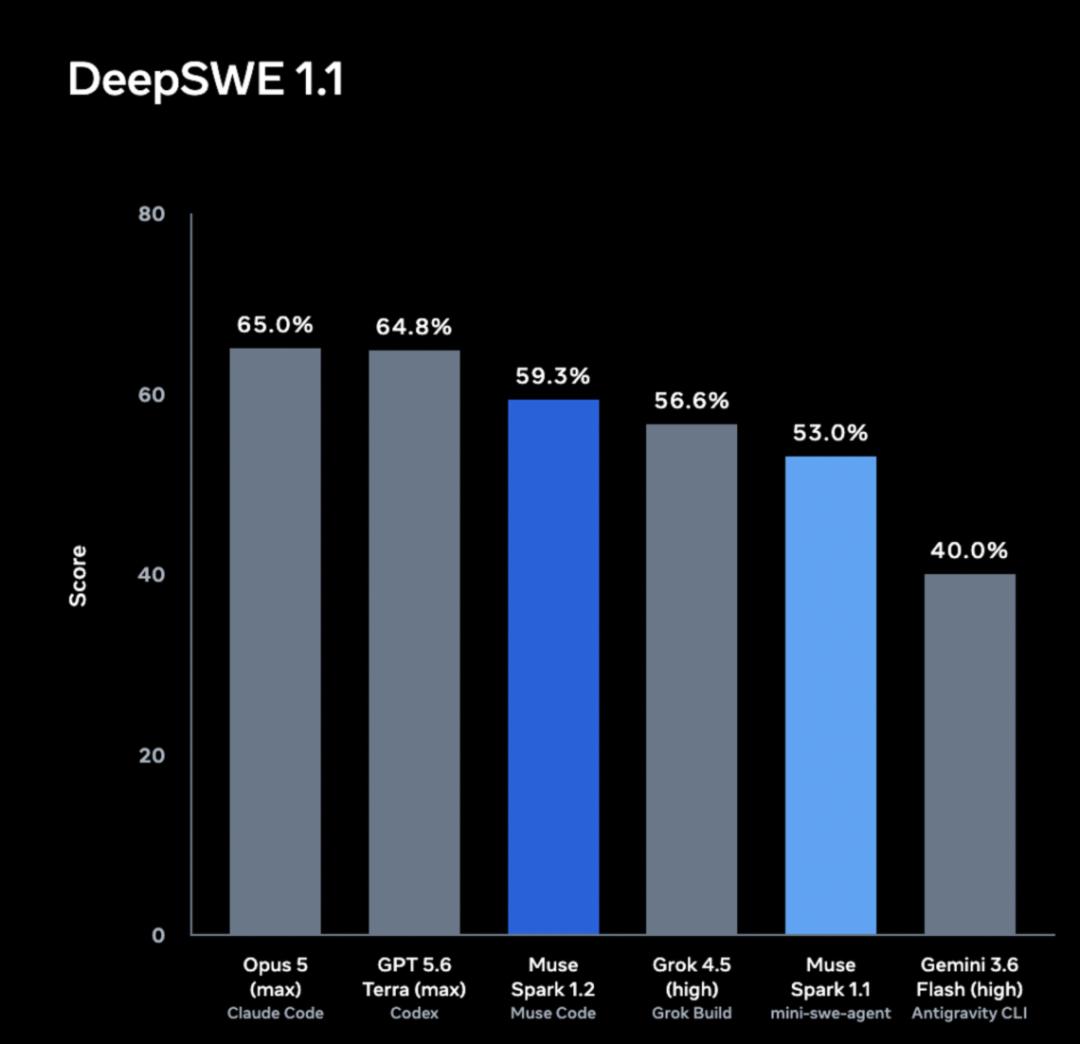
On DeepSWE 1.1, Muse Spark 1.2 is outperformed by Opus 5 (max) and GPT-5.6 Terra (max). DeepSWE defines 113 tasks covering 91 code repositories and five programming languages, namely TypeScript, Go, Python, JavaScript and Rust. Each task is equipped with a manually written functional verification program and regression test.
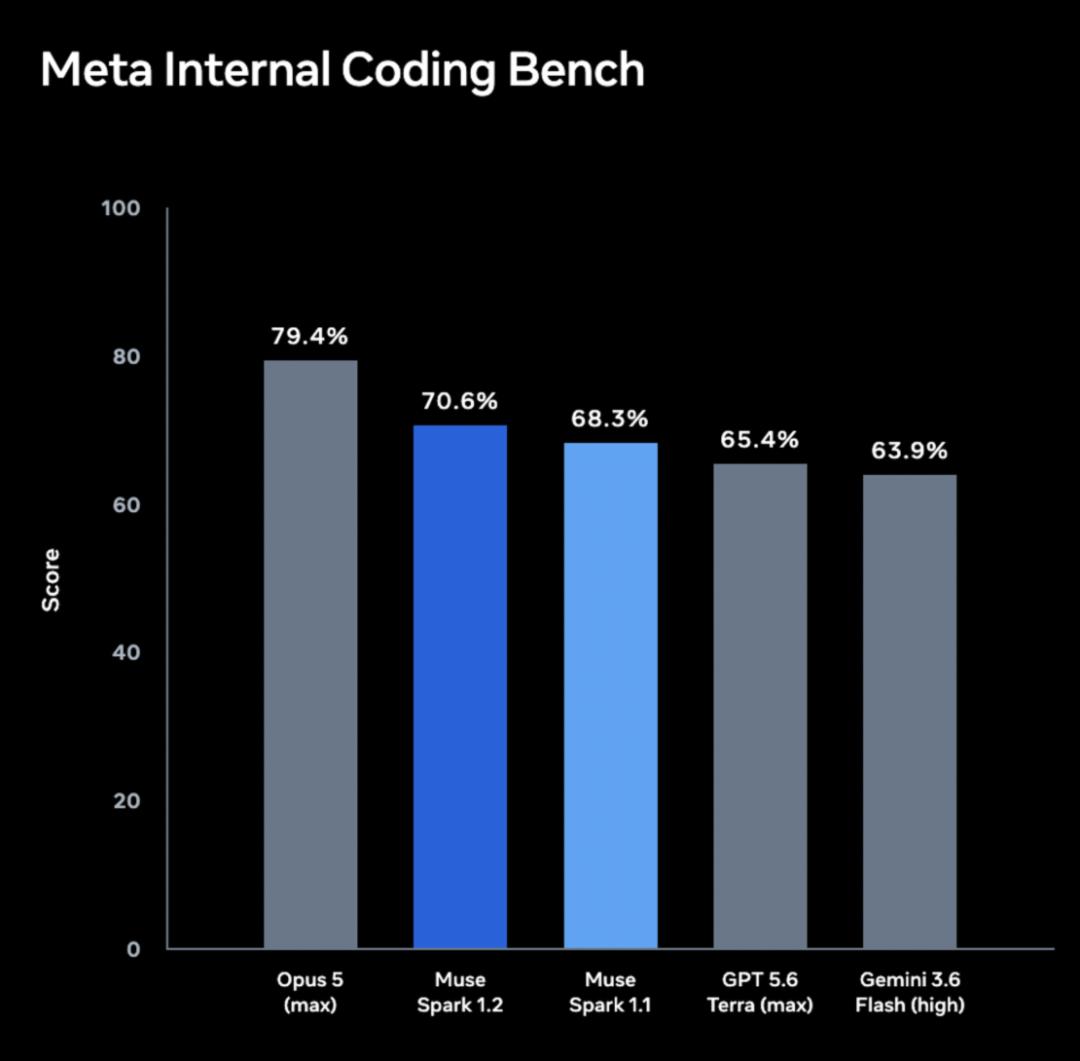
On Meta Internal Coding Bench from Meta's internal code repository, Muse Spark 1.2 is also only outperformed by Opus 5 (max). This benchmark contains 440 tasks. These tasks are built based on real internal pull requests, covering vulnerability fixing, feature development, code refactoring, code cleanup and other software engineering work.
Such impressive benchmark scores benefit from the following three technical improvements:
The first is co-training with Muse Code.
Muse Spark 1.2 and Muse Code are co-trained to ensure that when used together, they can give full play to the model performance and provide a better programming experience.
During the training process, agent operation trajectories based on rejection sampling are introduced, and training methods are optimized around target execution, context compression and sub-agent links. At the same time, the team also integrated the Muse Code toolset into the training to improve the compatibility between the model and the agent operation framework.
The second is the capability for long-horizon tasks.
Muse Spark 1.2 has undergone large-scale training for long-horizon programming tasks, including full code repository generation, large end-to-end projects and automated research.
The model will arrange the task sequence through planning, maintain the execution direction through target condition constraints, and retain the key information needed to continuously advance the task with the help of context compression.
The third is self-improvement capability.
Meta also used Muse Spark 1.1 to generate highly difficult programming environments and instruction following templates, and then the model evaluates the degree to which candidate solutions meet various requirements, thus building a set of scalable training data for Muse Spark 1.2.
This self-improvement mechanism helps Muse Spark 1.2 execute complex instructions more accurately, surpassing the previous generation model in instruction following capability.
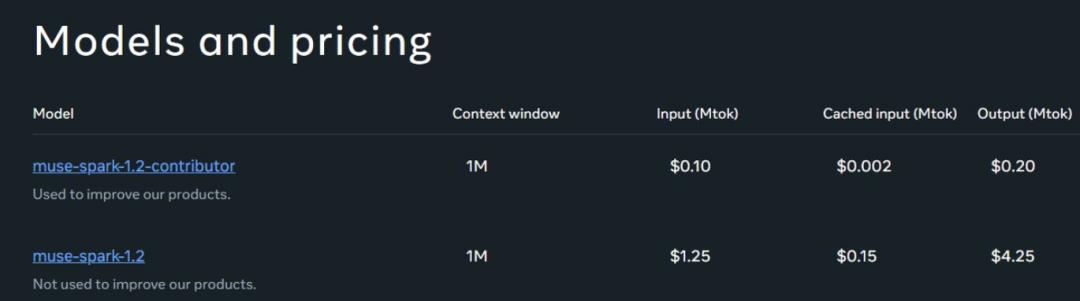
In terms of pricing, the standard version costs $1.25 per million tokens for input, $0.15 for cached input, and $4.25 for output; the Contributor version costs $0.10 per million tokens for input, $0.002 for cached input, and $0.20 for output.
Reference links:
https://research.meta.ai/blog/introducing-muse-code-and-muse-spark-1-2
https://x.com/finkd/status/2085080750034940201
This article is from the WeChat official account "JI QI ZHI XIN" (ID: almosthuman2014), edited by Du Wei, Youli , and published with authorization from 36Kr.