Shocking! Elon Musk teams up with Jensen Huang to unveil the Star Brain! The AI computing power center is launched into space.
SpaceX has released its first public financial report.
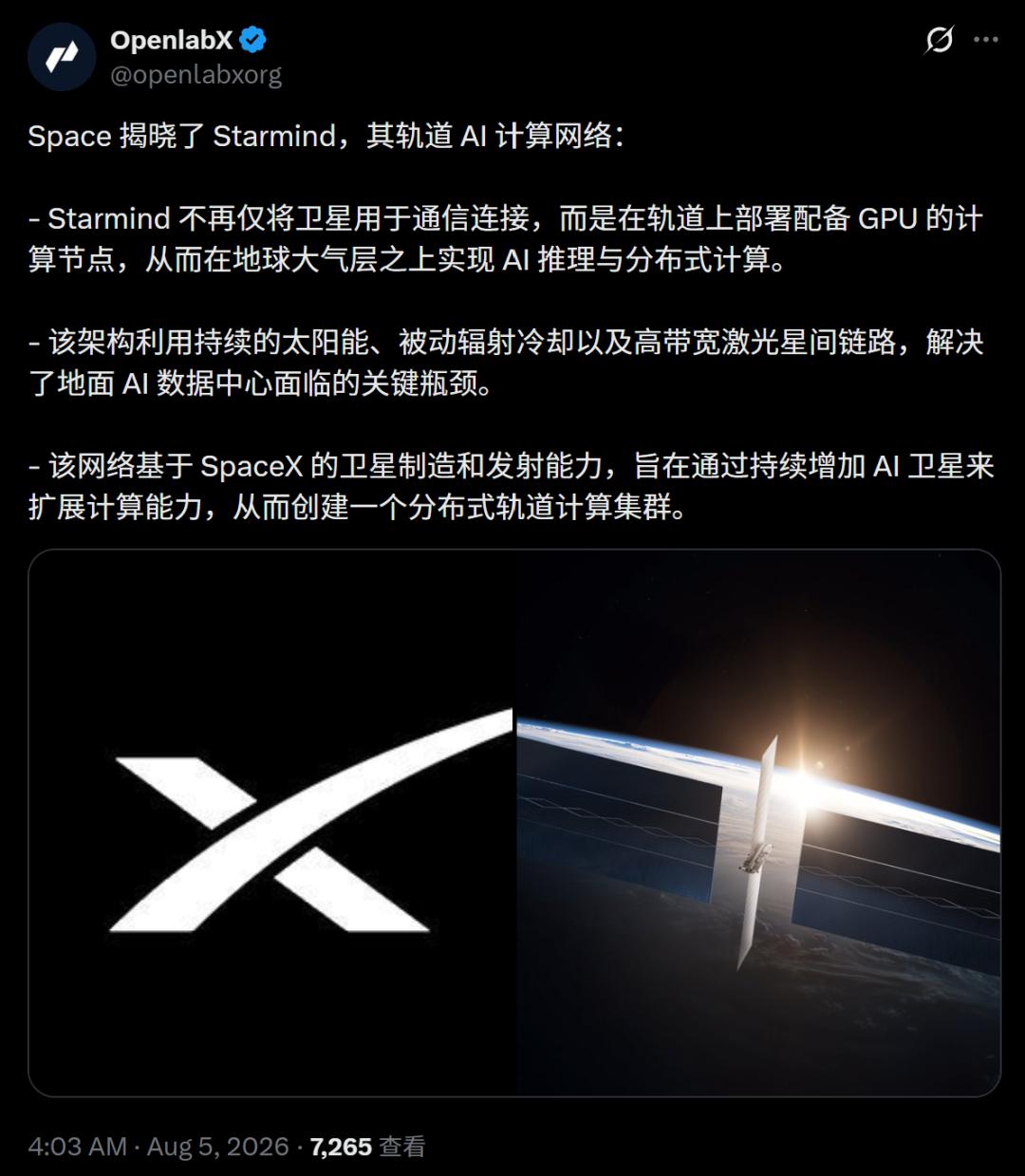
In the financial report, SpaceX officially announced that it has partnered with NVIDIA to launch an orbital AI computing network — Starmind.
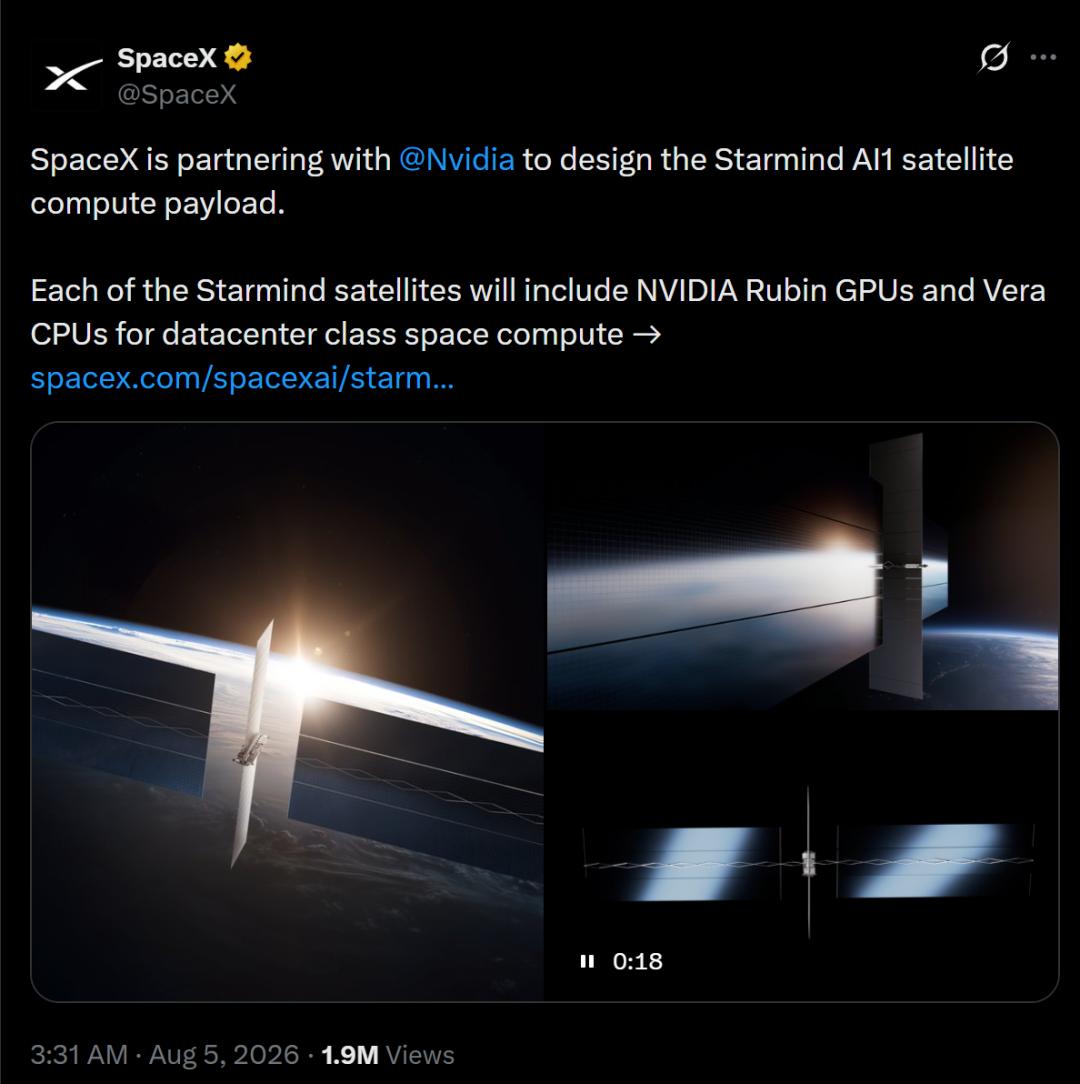
This time, Elon Musk intends to use a sprawling matrix of satellites to build a "space AI brain" beyond the Earth's atmosphere, which features unlimited scalability, unlimited energy supply and absolute zero heat dissipation!
Starmind moves the computing power base of AI directly from the Earth's surface into space.
Elon Musk plans to use this interstellar computing network to completely solve the power consumption and heat dissipation concerns of AI. As expected, the Earth is no longer big enough for his ambitions.
Everyone thought Musk's ultimate goal was Mars, but on his way to Mars, he inadvertently reshaped the entire landscape of human AI computing power.
This image is AI-generated
Escape from Earth: Breaking the "deadlock" of AI computing power
The data from this exposed financial report is very impressive: revenue skyrocketed by 92% to reach 7.8 billion US dollars. The number of Starlink users even doubled directly, exceeding the 12 million mark.
However, these figures are far less attractive than the interstellar computing network.
The current development of AI is facing a deadlock — shortage of power, water and land.
A large AI data center consumes as much power as a medium-sized city. The Earth's energy network is almost unable to support the evolution of AI.
Musk said: Since the Earth cannot hold it, let's put it in space!
In SpaceX's latest blueprint, the Starmind project puts forward a genius-level solution —
Launch data centers equipped with NVIDIA's most top-tier chips directly into the Sun-synchronous orbit!
Why space? Musk gave a domineering explanation in an interview.
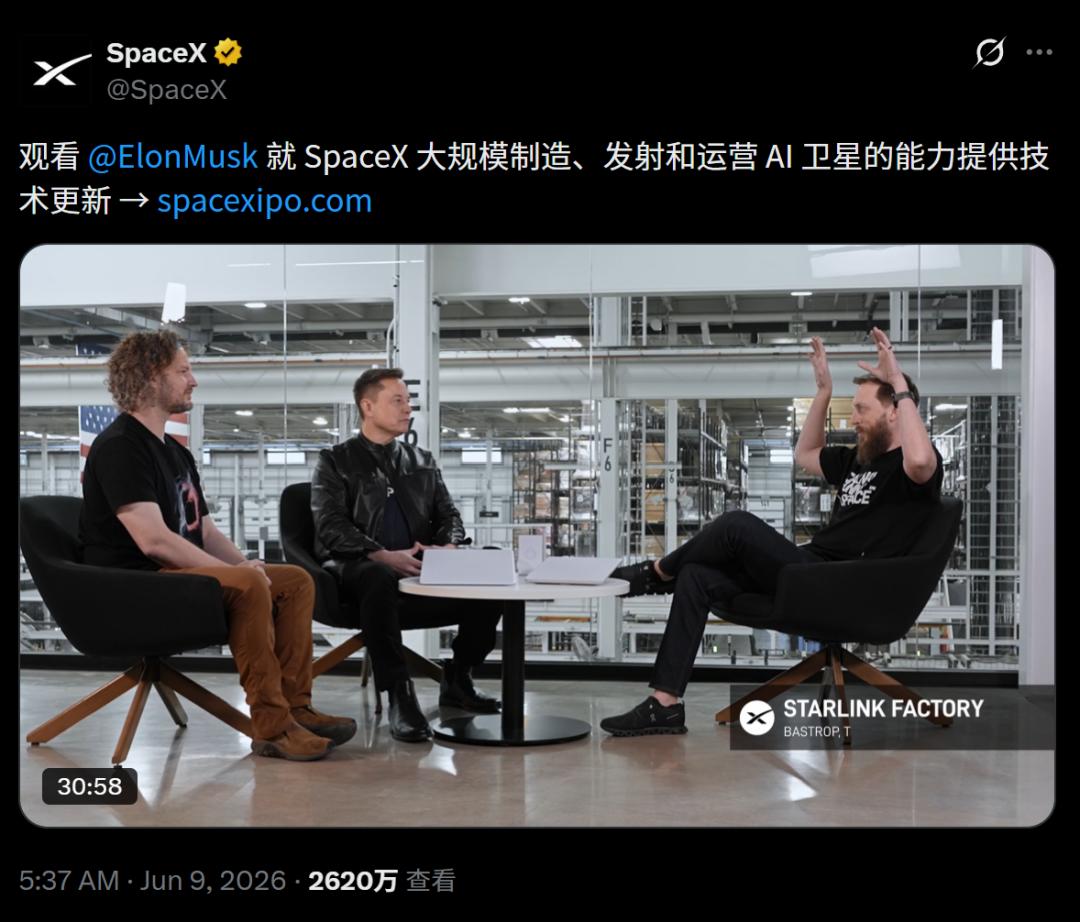
First of all, there is always sunlight in space.
70% of the Earth's surface is covered by water, and even on the remaining land, the high-quality area available for laying solar panels is extremely scarce.
"If aliens came to visit us, they would probably wonder why we call this planet Earth when it is mostly covered by water," Musk quipped.
But in the Sun-synchronous orbit in space, there is no night, no weather interference, and no atmospheric attenuation. AI satellites can be bathed in pure solar energy 24 hours a day, obtaining an energy density several times higher than that on the ground.
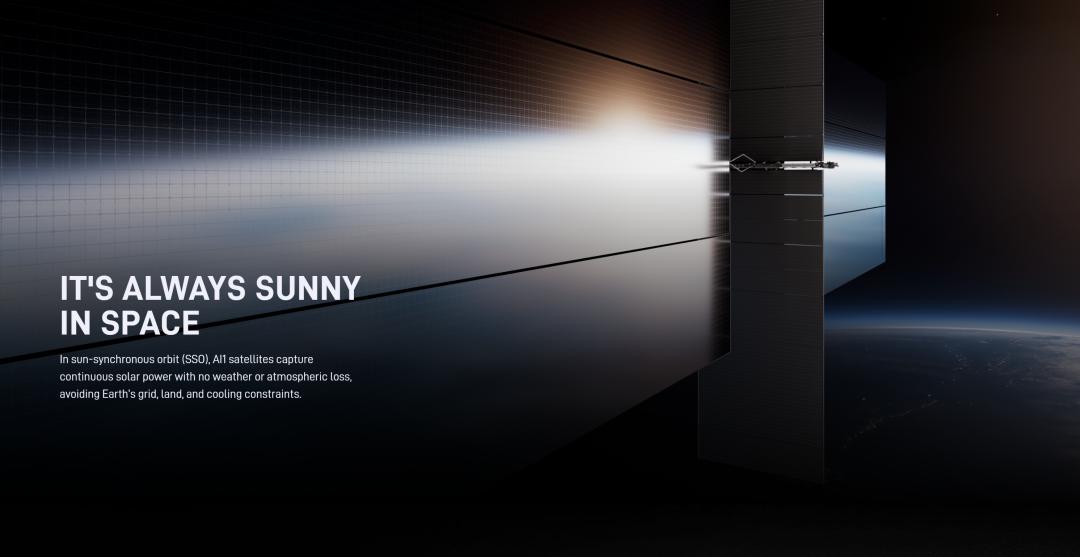
The second reason is perfect vacuum heat dissipation.
Data centers on Earth consume astronomical amounts of energy for liquid cooling and air conditioning systems. In space, the heat dissipation problem is solved easily — it can directly radiate waste heat into the deep, cold vacuum of the universe!
Therefore, Starmind satellites do not need those high-energy-consuming cooling towers, fans or dry coolers used on Earth.
Even more impressively, leveraging its rich experience in operating spacecraft in space, SpaceX has designed a deployable liquid radiator with an area of up to 160 square meters, which directly reduces the cooling energy consumption of the computing cluster by an order of magnitude.
In addition, if you want to build a large computing power center on Earth, you have to go through land approval, deal with environmental protests, and the power grid may not even be able to support it.
But in space, Musk smiles calmly — there is no land lease fee, no one will come to your doorstep holding signs to protest. Solar energy is free, vacuum cooling is free, and operating costs are almost infinitely close to zero!
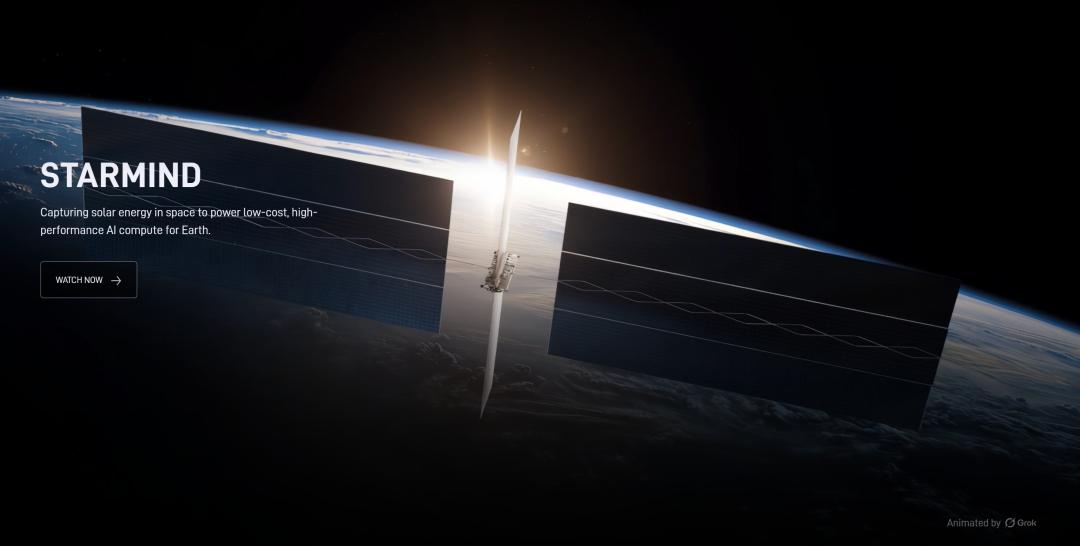
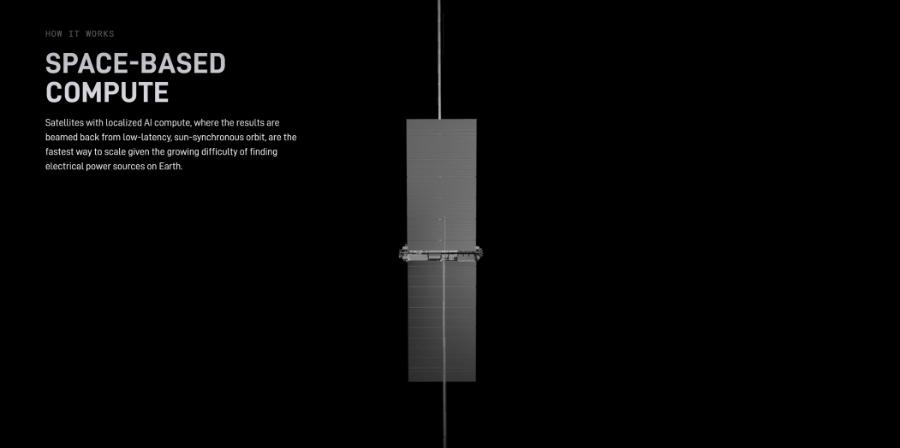
Starmind AI1: A "space computing power behemoth" with a 75-meter wingspan
Is a space data center just a simple ground computer server room wrapped in an iron shell and thrown into space? Obviously not.
The first computing node jointly built by SpaceX and NVIDIA — the Starmind AI1 satellite, is a veritable space industrial artwork!
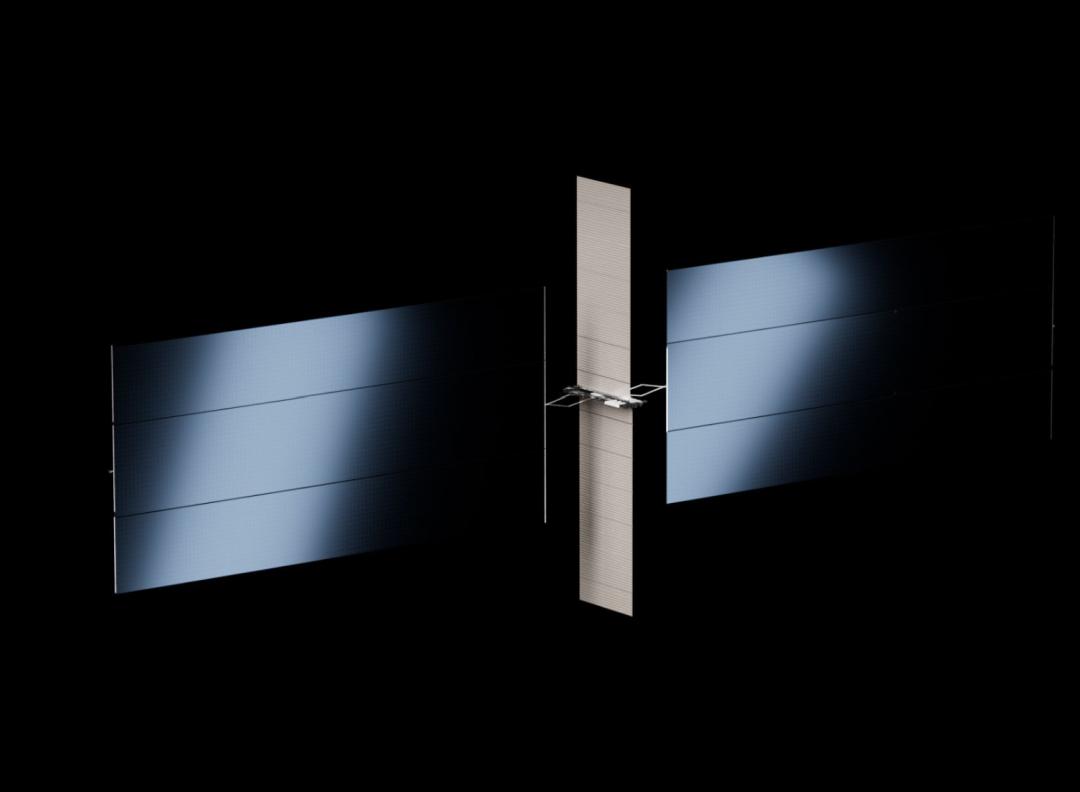
According to the published technical details, this satellite is nothing short of a behemoth.
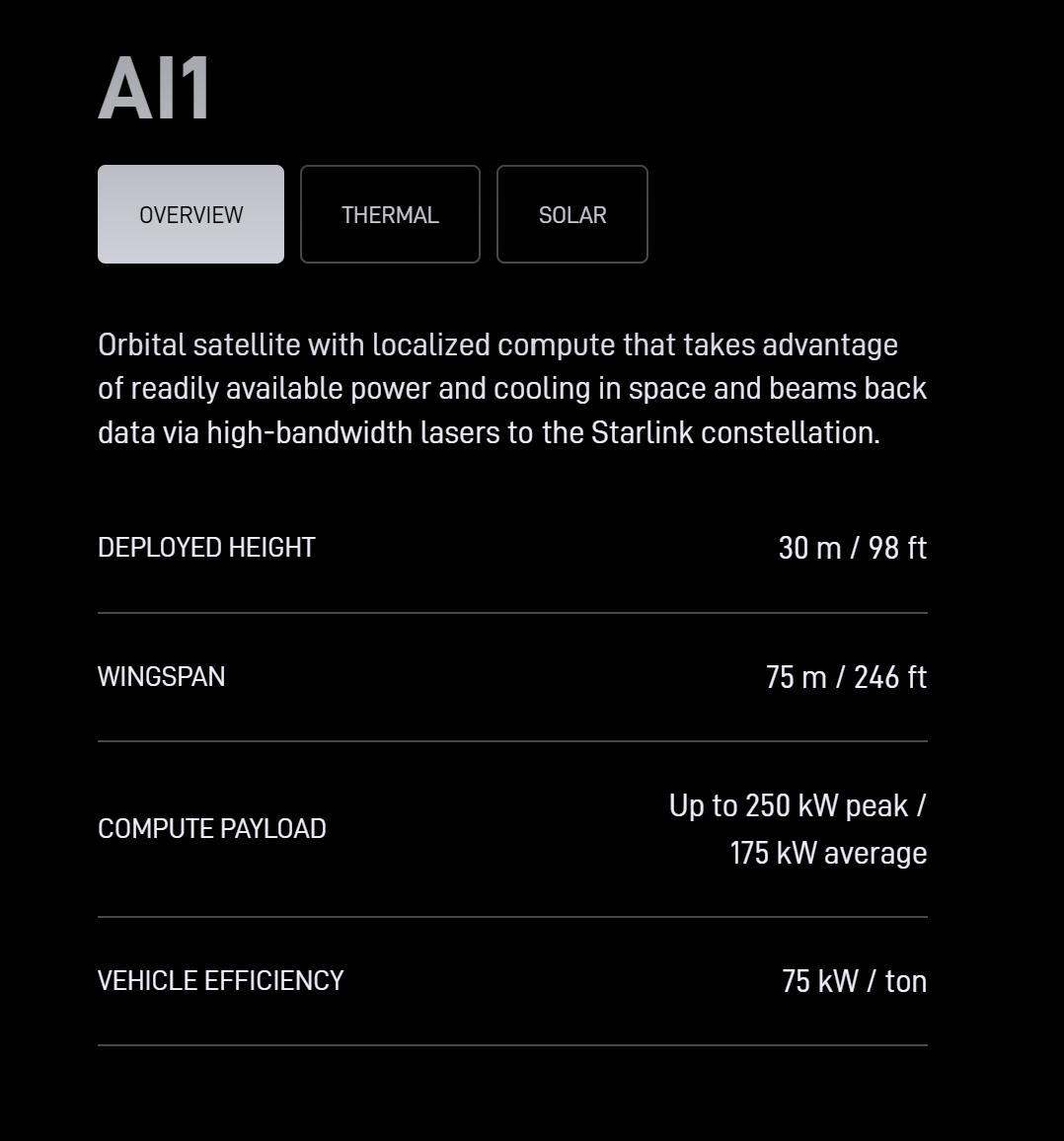
Its wingspan is as long as 75 meters (nearly the length of a football field).
The solar array has an output power of up to 210 kilowatts.
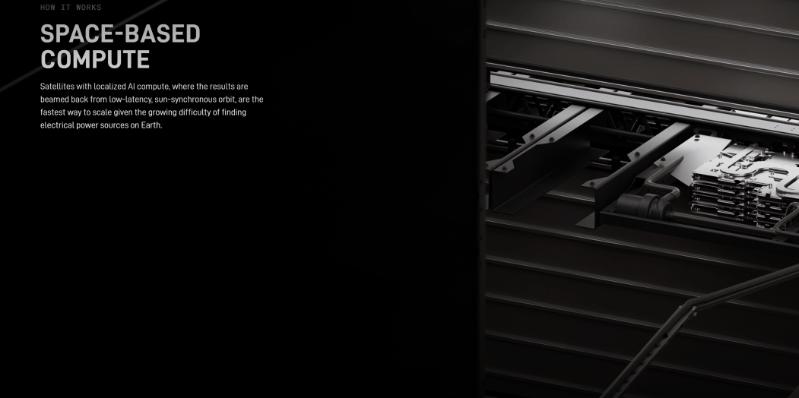
The peak power of the computing payload reaches 150 kilowatts, with an average power of 120 kilowatts.
150 kilowatts perfectly matches the power consumption of an entire NVIDIA GB300 supercomputer rack!
Musk has made it clear: "SpaceX currently commits to exclusive use of NVIDIA GPUs because they are the best."
These satellites will be equipped with NVIDIA's not-yet-widely-deployed Rubin GPU and Vera CPU to start high-intensity computing in space.
Some people may ask: If the servers are placed so high, won't the network latency be unbearable?
This is exactly SpaceX's real moat — the Starlink network.
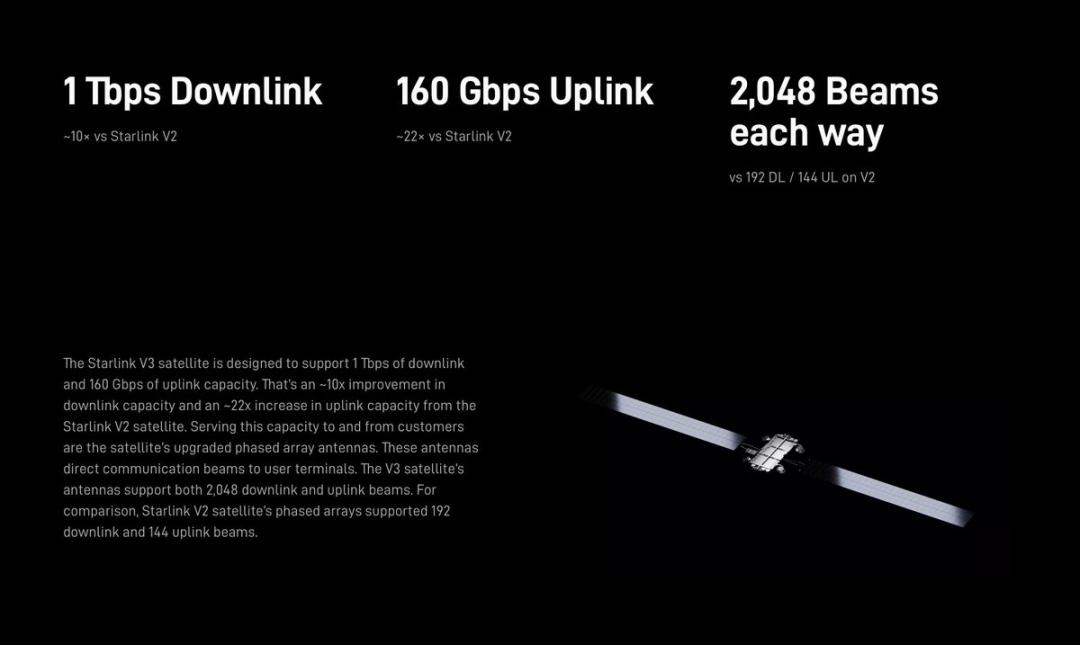
Starmind satellites do not have those complex phased array antennas on Starlink, they are extremely pure "computing satellites". They are directly networked with the existing Starlink constellation through terabit-level ultra-high-speed laser links.
"People always worry that space computing will have high latency," Musk said dismissively in the interview, "but the speed of light is very fast."
The AI satellite is only 600 to 800 kilometers away from the ground, and the speed of light travels 300 kilometers per millisecond. This means that the physical latency from the space computing power center to your mobile phone or computer is only a mere 3 milliseconds!
At this speed, distance is no longer a problem at all.
In the future, you can directly ask questions to xAI's Grok large model on your mobile phone. Your question will go through Starlink directly to the NVIDIA computing cluster in space, and after the reasoning is completed, it will be transmitted back to your screen instantly.
And all of this is completely free from the constraints of ground power grids and optical cables!
Musk's confidence: Starship and the trillion-level manufacturing powerhouse
Why is Musk the only one who can make this happen? Why can other tech giants only compete fiercely on Earth?
Bret Johnsen, Chief Financial Officer of SpaceX, pointed out the core truth: "Without heavy-lift rockets that are extremely low-cost, fully and rapidly reusable, the space AI brain is nothing but a fantasy."
The most core key piece of the puzzle on Musk's board is Starship.
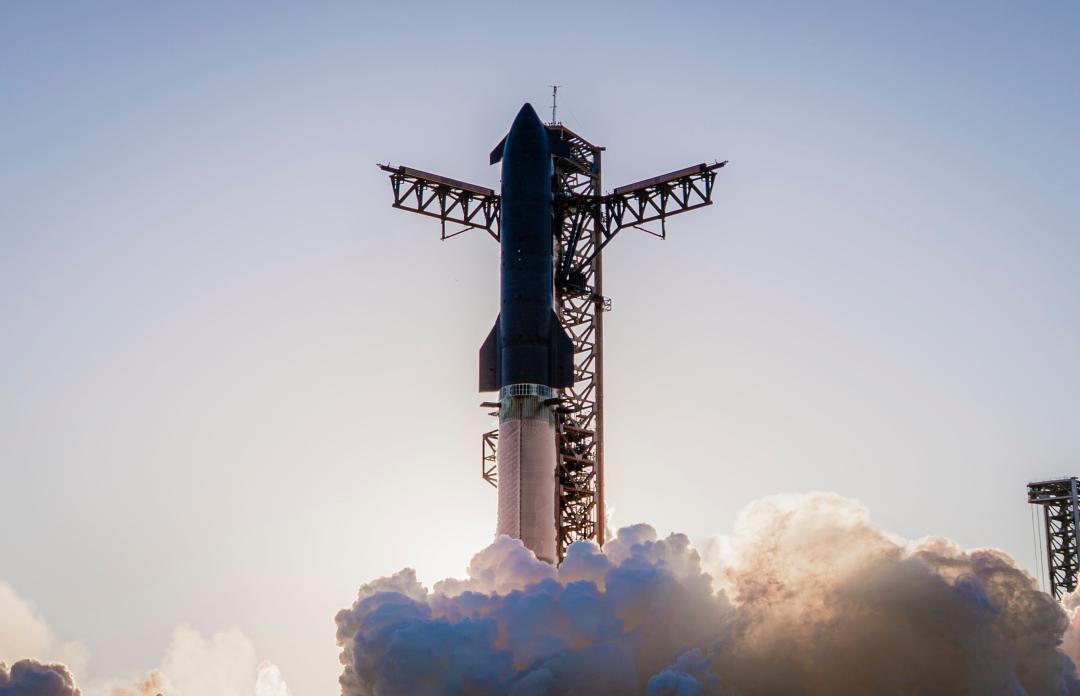
In the just-concluded V3 test flight, Starship demonstrated outstanding performance. It is the largest, heaviest, and most powerful aircraft ever built by humanity (with more than twice the thrust of the Saturn V rocket used for the Apollo moon landing mission).
The traditional rocket's cost of transporting supplies into space is extremely high, while Starship's goal is to launch, land, and re-launch within a single day, just like a civil airliner.
Nowadays, nearly 90% of the world's mass sent into orbit is completed by SpaceX's Falcon series rockets. With Starship, SpaceX's goal is to increase its annual orbital launch capacity from 2,500 tons to 1 million tons per year in about three years!
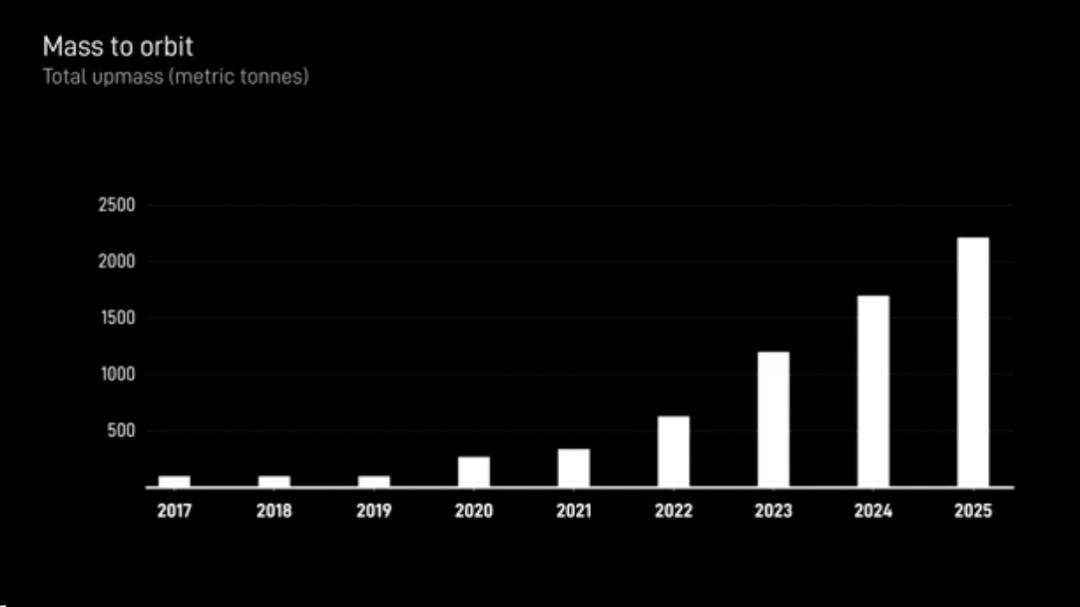
Without Starship's huge transport capacity, it is impossible to send tens of thousands of AI satellites weighing several tons each into orbit.
To support this "space city-building campaign", SpaceX's manufacturing capacity is also undergoing an epic expansion — they are building the Gigasat super factory in Bastrop, Texas, planning to achieve mass production of thousands of AI satellites by the end of 2027.
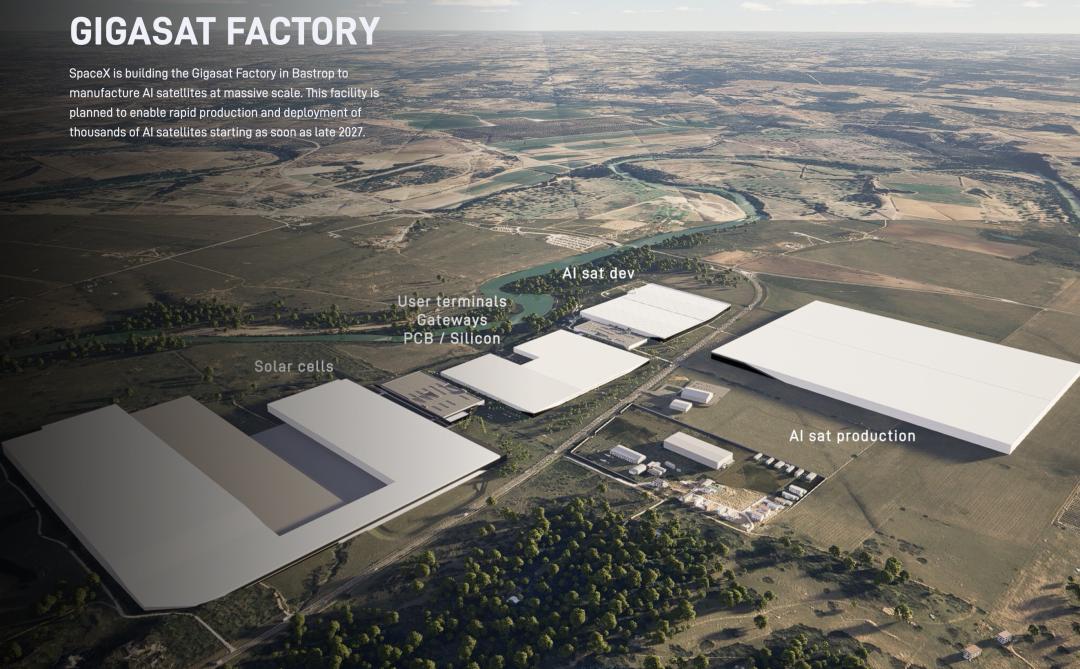
But that's not enough. To support the space AI computing power demand of hundreds of gigawatts (GW) per year and eventually 1 terawatt (TW, equal to 1000 GW), SpaceX and Tesla have jointly planned an astonishing Terafab (terawatt-level chip manufacturing plant) project.
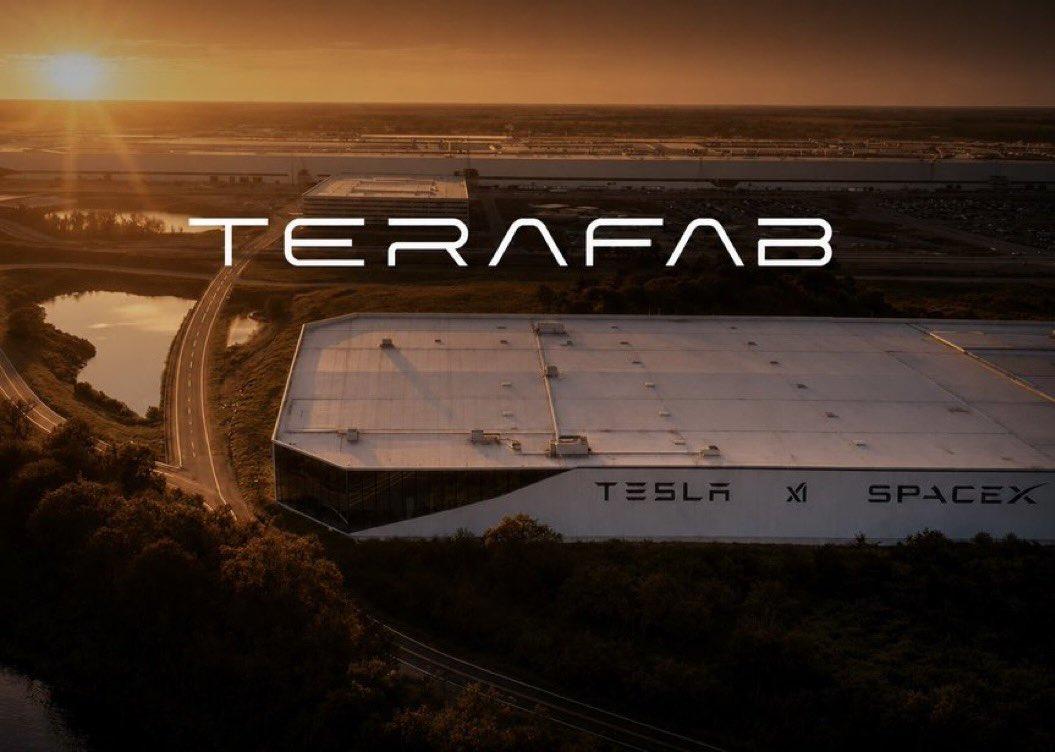
Its floor area will reach an astonishing 100 million square feet, which is exactly 10 times the size of the huge existing Tesla Texas Gigafactory.
Musk's business closed loop is fully demonstrated here —
Massive cash flow from Starlink -> R&D of Starship -> Starship sends massive Starmind satellites into space -> Build space AI brain to empower xAI -> Earn profits of a higher dimension.
Every part is closely connected, forming a perfect closed loop that no competitor can copy, and only he can make it happen.
What's even more remarkable is that every link is open to competitors.
Competitors can buy SpaceX's launch services, use Starlink's communication, and even rent computing power on Starmind. But Musk doesn't care, because when you are the infrastructure of all tracks, you become the track itself.
