A Westlake University professor has founded a startup dedicated to developing embodied general brain, which has completed 4 rounds of financing totaling 500 million yuan within half a year | Hard Krypton Exclusive First Release
Author | Huang Nan
Editor | Yuan Silai
Hard Krypton learned that Westlake Robotics, an enterprise dedicated to general embodied intelligence brain, has recently completed its Series A financing, raising 500 million yuan in 6 months. So far, its investor lineup covers many well-known institutions such as SAIF Partners, Xiaomiao Langcheng, Huirong Fund of Henan Investment Group, and Haiyuan Fund. The funds will be mainly invested in the R&D of the unified full-body large model for humanoid robots, focus on building a highland for embodied intelligence talents, accelerate the realization of the GPT moment for embodied intelligence, and drive industrial transformation with original technologies.
This round of financing is less than a month away from the company's previous closing. In just half a year, Westlake Robotics has completed 4 rounds of financing.
Westlake Robotics' business was launched in January 2024, and it is the first achievement transformation enterprise of Westlake University in the field of artificial intelligence and robotics. The company focuses on the collaborative R&D of end-to-end embodied intelligence large models and robot bodies. It has released the world's first general motion large model GAE and the world's first general dual pre-training architecture for cerebrum and cerebellum, built a complete full-body unified large model system, and launched the "Westlake o1" humanoid robot body with full-stack self-development.
The company's founding team has profound academic and industrial backgrounds. Founder Wang Donglin is the chief scientist of the National Science and Technology Innovation 2030 Major Project, tenured professor of Westlake University, deputy head of the Department of Artificial Intelligence, and winner of the AAAI Best Paper Award in 2026. He is a leading figure in the field of embodied intelligence and robot learning in China. Co-founder Zhang Yue is a tenured professor of Westlake University, vice dean of the School of Engineering, and an internationally renowned expert in natural language processing, who leads the exploration of cutting-edge large model technologies.
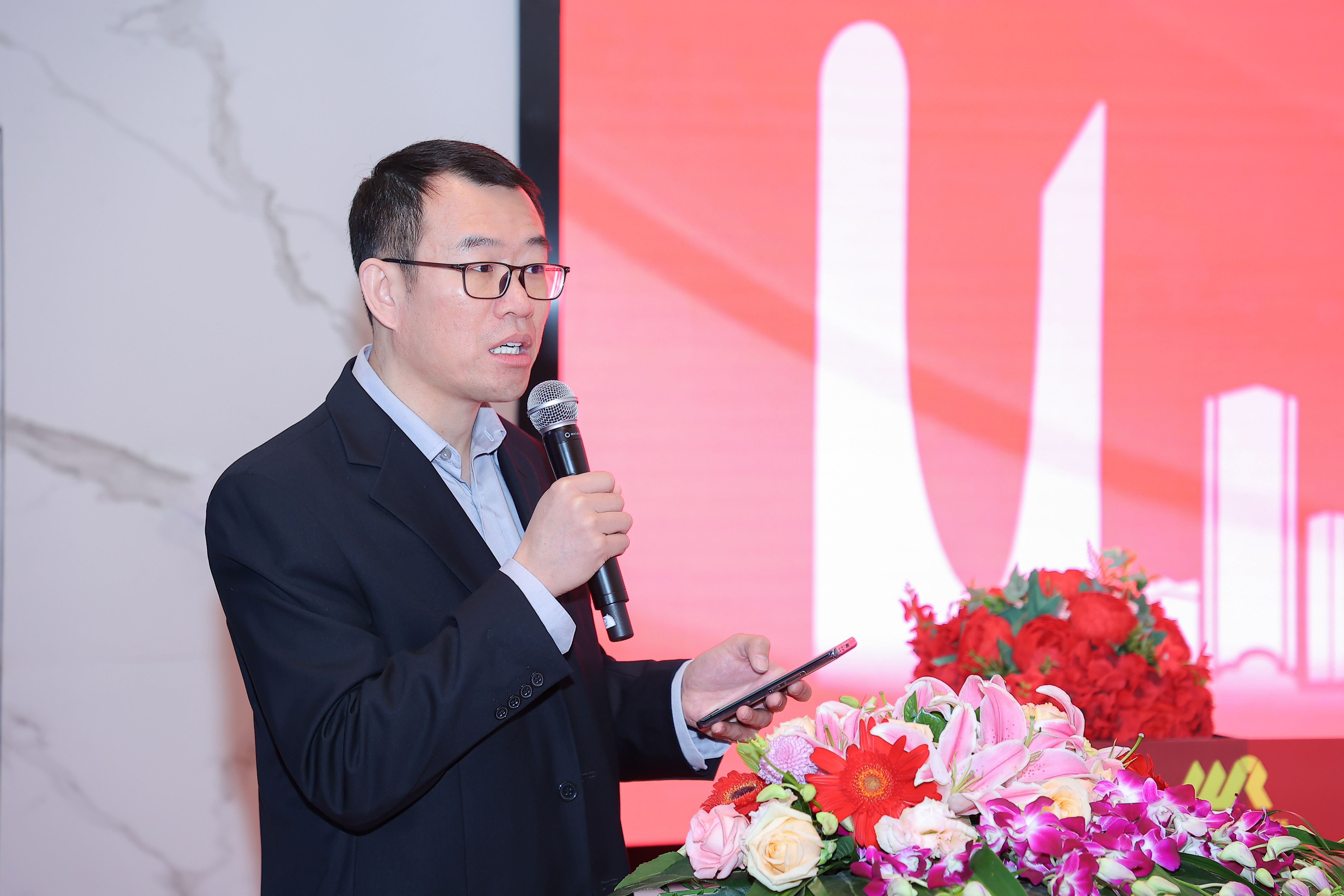
Professor Wang Donglin, Founder and Chairman of Westlake Robotics (Source: Enterprise)
The core R&D members come from leading technology companies such as Alibaba, ByteDance, Tencent, Huawei, as well as top universities at home and abroad including University of Oxford, University of Cambridge, Carnegie Mellon University, UC Berkeley, Technical University of Munich, Tsinghua University, and Zhejiang University. They have published more than 300 papers in top conferences such as ICML, NeurIPS, CVPR, and RSS. A number of self-developed cutting-edge scientific research achievements have been applied to underlying algorithm R&D and engineering implementation.
The narrative of embodied intelligence is shifting from upper-level task planning to reliable execution in real physical environments. After large models endow robots with stronger scene understanding capabilities, the industry has begun to realize a new bottleneck: a stable coordination mechanism has not yet been formed between high-level cognition and underlying motion control. When humanoid robots operate in complex environments, they also need to handle motion balance, and their control difficulty is far higher than that of robotic arms on fixed stations.
In the past few years, mainstream solutions have followed the technical inertia of the robotic arm era, that is, using the vision-language model as the front end and lightweight action mapping as the end, trying to use the "brain" to directly drive the "hands and feet". This logic is feasible in standardized scenarios, but when robots need to perform full-body collaborative operations such as pushing doors and making beds, low success rate and weak stability are exposed.
The core contradiction lies in the fact that the embodied foundation model of humanoid robots lacks the modeling ability of its own state, dynamic constraints, contact relationship and environmental feedback.
Professor Wang Donglin, founder of Westlake Robotics, believes that to achieve real versatility for humanoid robots, the key bottleneck of "humanoid full-body general motion control" must be solved first, rather than directly stacking upper-level perception capabilities.
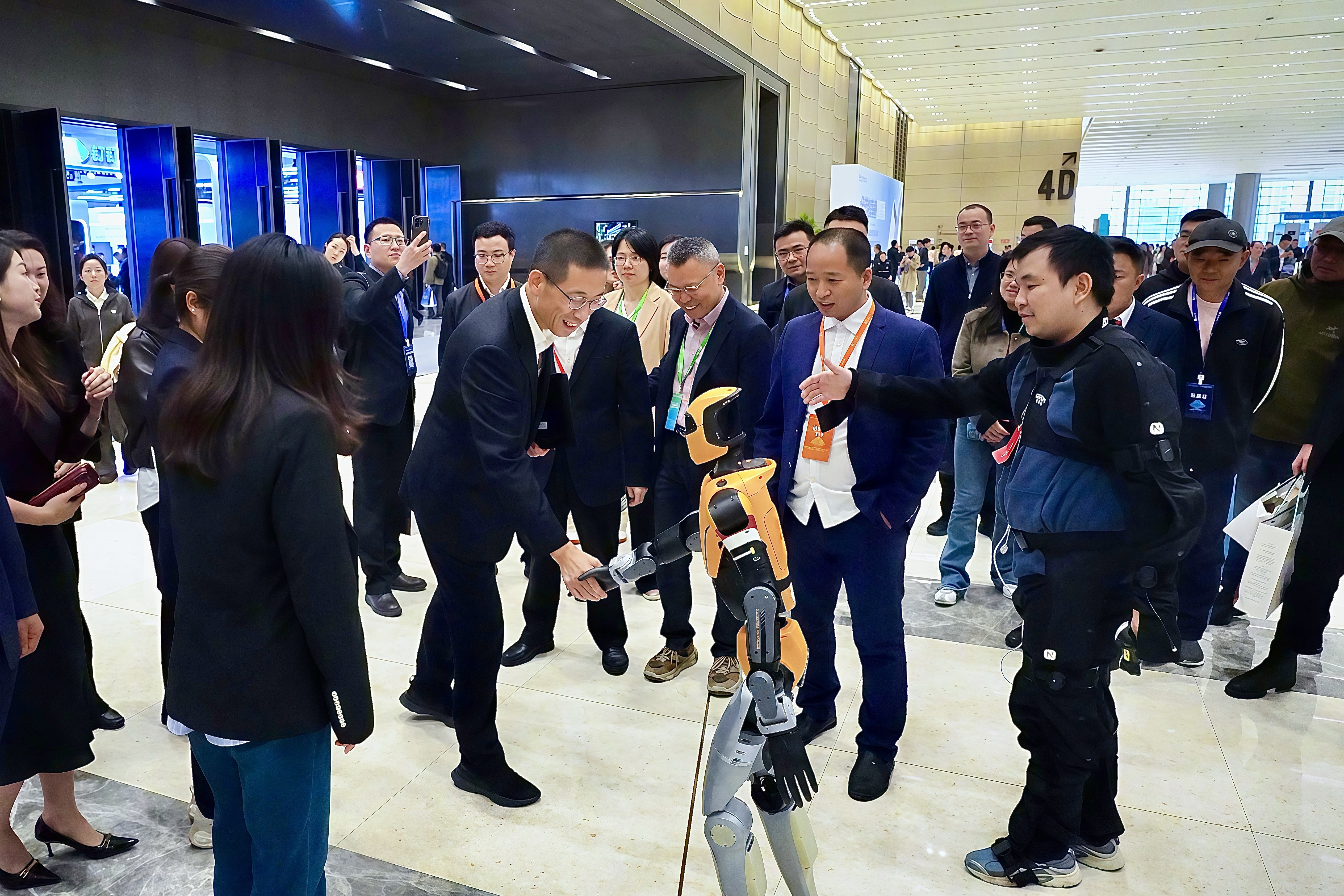
President Shi Yigong of Westlake University shakes hands with Westlake o1 (Source: Enterprise)
"If we develop the humanoid brain in the way of robotic arms, the action space will be extremely large, and the stability and robustness will face great challenges," Professor Wang Donglin told Hard Krypton. "We have verified in the early stage that the effect of migrating the original VLA model to humanoid full-body motion control is often not as expected."
The reason for this difference is that the underlying control of the robotic arm is guaranteed by the encapsulated joint controller, and the model mainly provides algorithms at the end trajectory level. However, the whole body of a humanoid robot involves the coordination of dozens of joints, real-time center of gravity adjustment, and ground reaction force feedback, which is a strongly dynamic nonlinear high-dimensional control problem. Therefore, traditional control theory tends to fail when the model is inaccurate, and shallow reinforcement learning is difficult to cover massive action modes.
To solve the above bottleneck, Westlake Robotics' answer is GAE (General Action Expert), a general motion large model based on Transformer architecture.
The GAE general motion large model integrates massive daily action modes into a unified center. Any intention or instruction from users can be directly mapped to stable full-body motion without presets or programming. Dances or complex operations that originally required months of choreography can be generated in real time through motion capture.
As a cross-body general motion large model, GAE can be deployed in humanoid robots of different manufacturers and support the implementation of scenarios of "remote operation + dangerous substitution". By allowing operators to remotely control humanoid robots to enter dangerous scenarios to perform tasks, it can quickly occupy application scenarios and accumulate valuable data feedback to feed back the training of the large model.
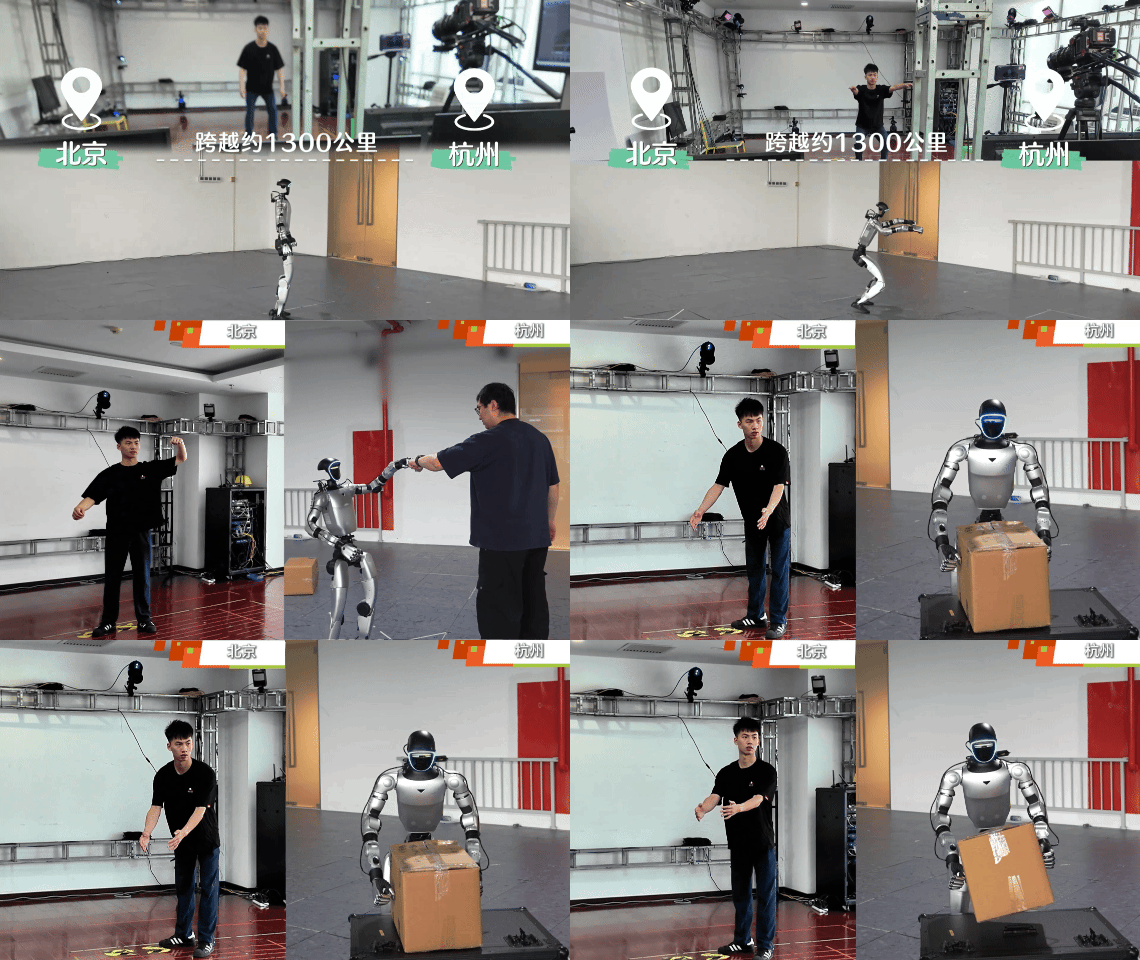
GAE realizes remote teleoperation across different robot bodies and over a distance of 1300 kilometers (Source: Enterprise)
After GAE lays a solid "physical foundation", Westlake Robotics has built a complete general dual pre-training architecture for cerebrum and cerebellum at the embodied brain end. This architecture splits the "cerebrum" and "cerebellum" into two modules that are pre-trained independently first and then connected collaboratively. The front-end cerebrum integrates the vision-language-action model (VLA) and the world model (WM), which is responsible for perception and autonomous task decision-making, and outputs action Tokens. The back-end cerebellum, namely GAE, is responsible for millisecond-level full-body motion execution, dynamic balance, and real-time posture correction after receiving the Tokens, to implement fine limb movements.
In terms of specific model performance, the differentiation is reflected in three dimensions: layered decoupling allows the cerebrum and cerebellum to iterate independently with higher engineering efficiency; the standardized Token interface enables GAE to adapt to different robot models; domain-specific pre-training ensures that each module is optimized independently in its exclusive data domain without occupying each other's resources.
The superiority of the architecture ultimately needs to be realized through model performance. The emergent capabilities of the foundation model rely on high-quality, large-scale and diverse training data. The high-quality full-body data of humanoid robots is exactly the most scarce resource in the current industry.
Professor Wang Donglin pointed out that the existing simulation data, first-person perspective videos and single-arm operation trajectories cannot completely record the most critical information in human actions — how the center of gravity transfers from the left foot to the right foot, how the torso tilts to borrow force, and how the two arms coordinate to counteract torque. "Hand trajectories can only record where the action goes, while full-body data reveals why the action can happen."
To this end, Westlake Robotics focuses its data collection on "real-scene practical training", allowing robots to enter real scenarios such as emergency rescue, power inspection, and home service, to collect real machine data with complete full-body posture labels in physical interactions. Although this data collection method is costly, Wang Donglin believes it is an unavoidable path that cannot be bypassed.
In terms of the robot body, Westlake Robotics released its first humanoid robot product "Westlake o1" in 2026. Professor Wang Donglin pointed out that the hardware body is not the company's core competitive main line, but it is an indispensable key carrier in the industrial chain layout.
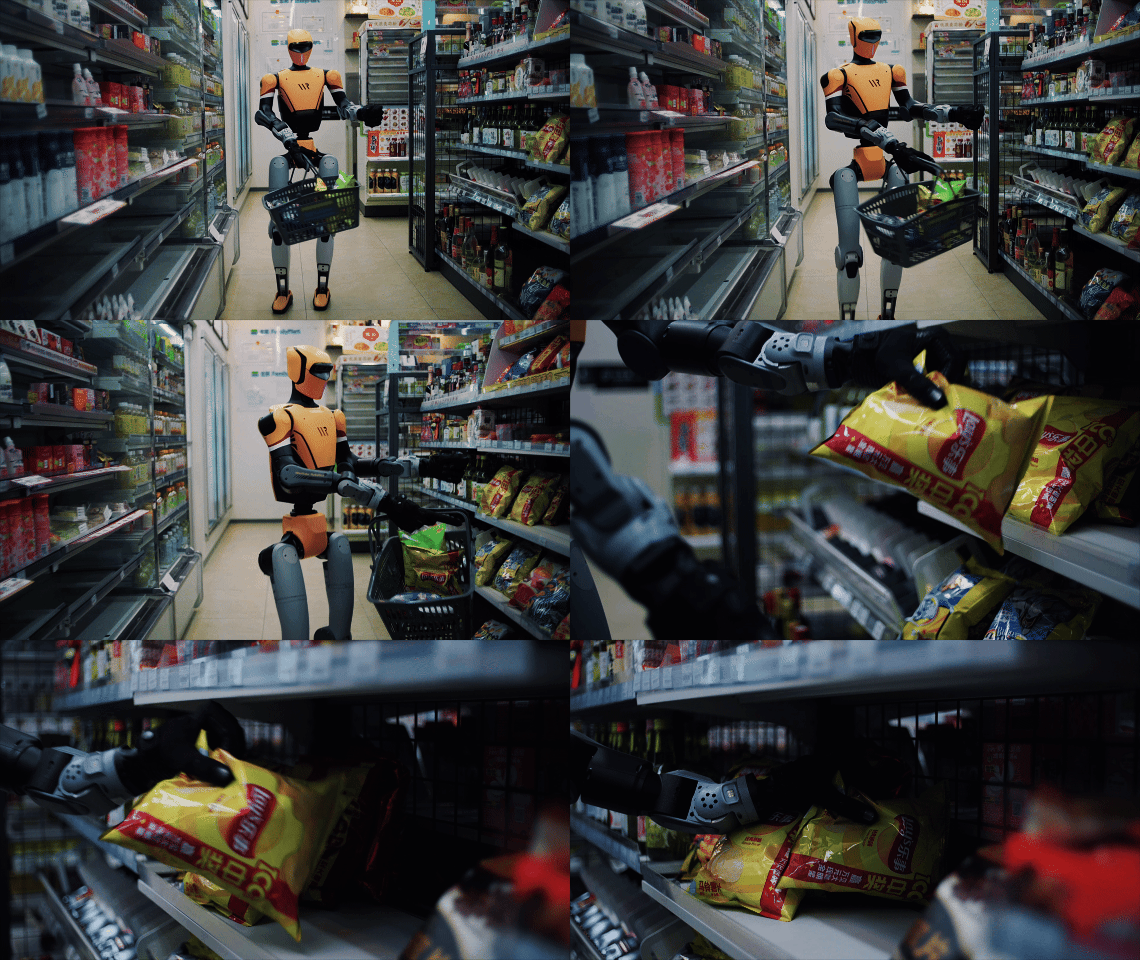
Westlake o1 is put into work in a supermarket (Source: Enterprise)
At present, the software and hardware of general humanoid equipment are significantly separated, and the mechanical threshold and joint delay lead to huge deviation between simulation and real machine actions, resulting in stiff actions and reduced generalization ability after model migration. Westlake Robotics' self-developed full-link hardware of "Westlake o1" is designed to drive model iteration in reverse through real machine verification. Through the real feedback of mechanical structure, dynamic balance and multi-joint coordination, it continuously optimizes the motion reasoning and posture correction algorithms, forming a closed loop of "hardware actual measurement — data return — model iteration".
At present, Westlake Robotics has completed the full-stack self-developed closed loop from algorithms, models to complete machines. Behind its path choice is a calm judgment: when the industry is generally competing for the "understanding ability" of the brain, what restricts humanoid robots from going out of the laboratory is whether the "body" can interact with the world stably and coordinately like a human.
This path is longer and more arduous, but it may be closer to the end. In Professor Wang Donglin's view, at the key node where humanoid robots move from demonstration to operation, whoever can make the "physical ability" stable and reliable first will get the ticket to define the next generation of implementation standards.
The following is an excerpt from the interview between Hard Krypton and Professor Wang Donglin, Founder and Chairman of Westlake Robotics (slightly edited):
Hard Krypton: The GAE model is positioned as the world's first general motion large model, how is its versatility reflected? What is the difference between it and the current mainstream expert models?
Wang Donglin: The underlying logic of the two is completely different.
The industry's general solution adopts the mode of "one action, one model". Different actions such as dancing and Tai Chi need to be trained separately for independent models and then spliced together. GAE uses a single Transformer architecture model with hundreds of millions of parameters to support all actions, and only needs to input the target instruction to complete the execution, solving the industry pain points such as stiff actions and imbalance of humanoid robots in terms of dynamic balance, precise regulation and real-time environmental feedback.
How to demonstrate this versatility? When a person wears a motion capture suit to perform actions, the robot can reproduce them one-to-one in real time through instructions, without switching codes or models. This is also why Westlake Robotics' general model can adapt to the bodies of different manufacturers, because GAE outputs general motion trajectories, not joint angle instructions for a specific model.
In terms of architecture, Westlake Robotics adopts the "general dual pre-training for cerebrum and cerebellum" solution: the front-end VLA and world model are responsible for perception and understanding, and output action Tokens; the back-end GAE receives the Tokens and converts them into full-body actions. The dual models form a closed loop through two-way data return, which ensures generalization ability while taking into account reasoning efficiency, and has stably supported the continuous execution of long-sequence, multi-step composite tasks.
Westlake Robotics' long-term goal is "Embodied GPT", and GAE is a phased solution to this goal as well as a commercial transition. At present, GAE has been implemented in scenarios such as pan-entertainment, scientific research and inspection, which significantly improves the performance of existing robots, with related orders reaching hundreds of millions of yuan; in dangerous scenarios such as live-wire operation, GAE also has the ability to implement combined with remote operation.
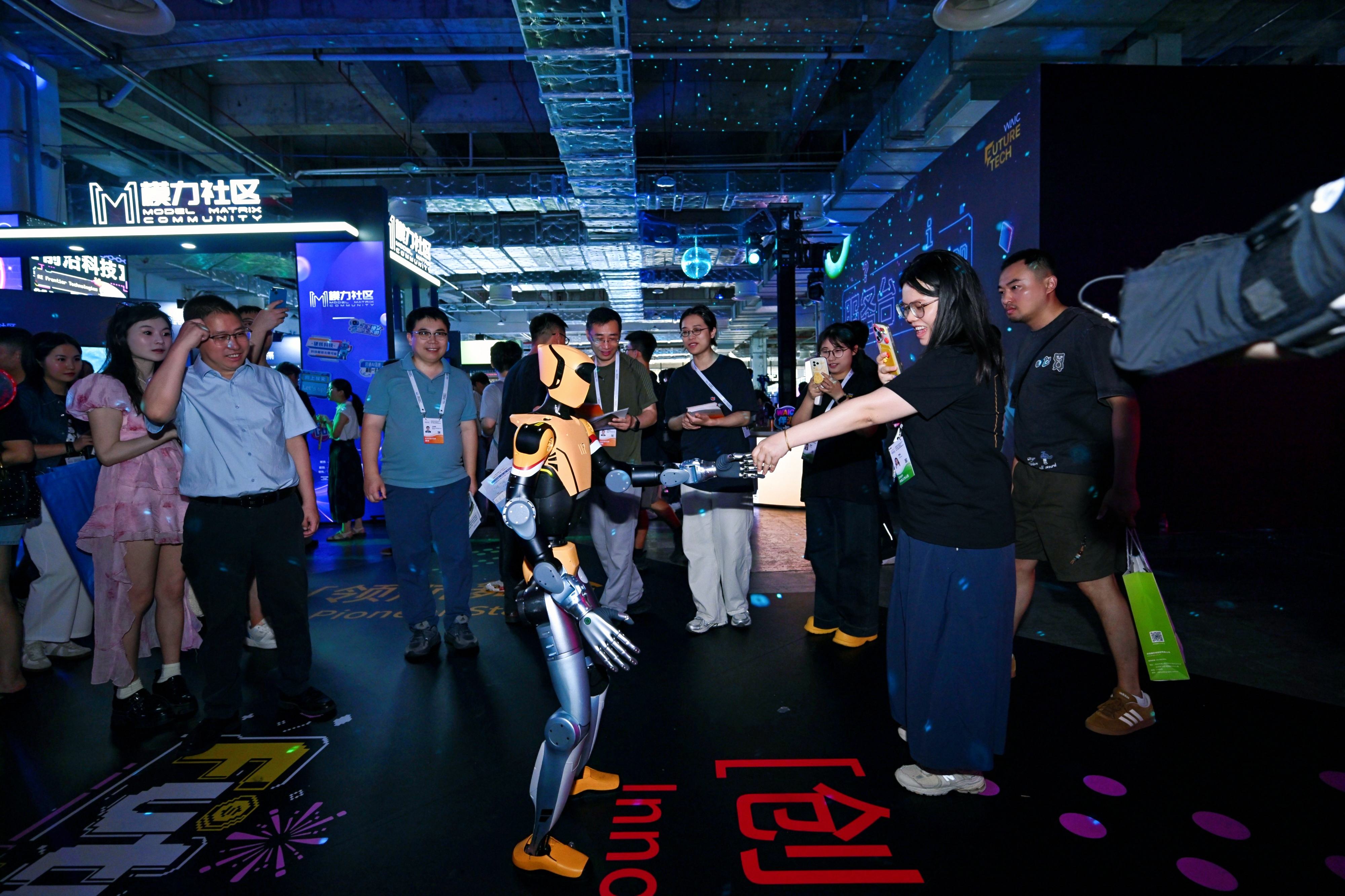
Westlake o1 interacts with the audience on site at WAIC 2026 (Source: Enterprise)
Hard Krypton: This year Westlake Robotics launched its self-developed robot body "Westlake o1". As an enterprise focusing on foundation models, what is the necessity of developing the robot body?
Wang Donglin: The positioning of "Westlake o1" in our internal system is very clear. Hardware is not the core main line, but it is an indispensable part of the industrial chain layout.
Why must we develop it by ourselves? I started working on Robot Learning in China quite early. I set up a laboratory at Westlake University in 2017 and have dealt with various robot body manufacturers for many times. A deep experience is that you must step into the pit of hardware by yourself, and then you can know the difference between simulation and reality.
There is a common problem in the industry: we take a general humanoid device back and run our own model, only to find that the actions are always awkward, the joint response has delay, and the actions that are very smooth in the simulation environment become stiff on the real machine. The reason is very simple, the physical factors such as mechanical threshold and transmission clearance cannot be simulated in the simulation environment at all.
If you don't get your hands dirty on hardware, you will never know which direction the model should be adjusted.
The core value of self-developed "Westlake o1" is not that we want to transform into a hardware company, but to open up the real machine verification closed loop from mechanical structure to multi-joint coordination. With this link, the embodied large model can iterate in real physical feedback — posture correction and motion reasoning are all polished repeatedly on the real machine.
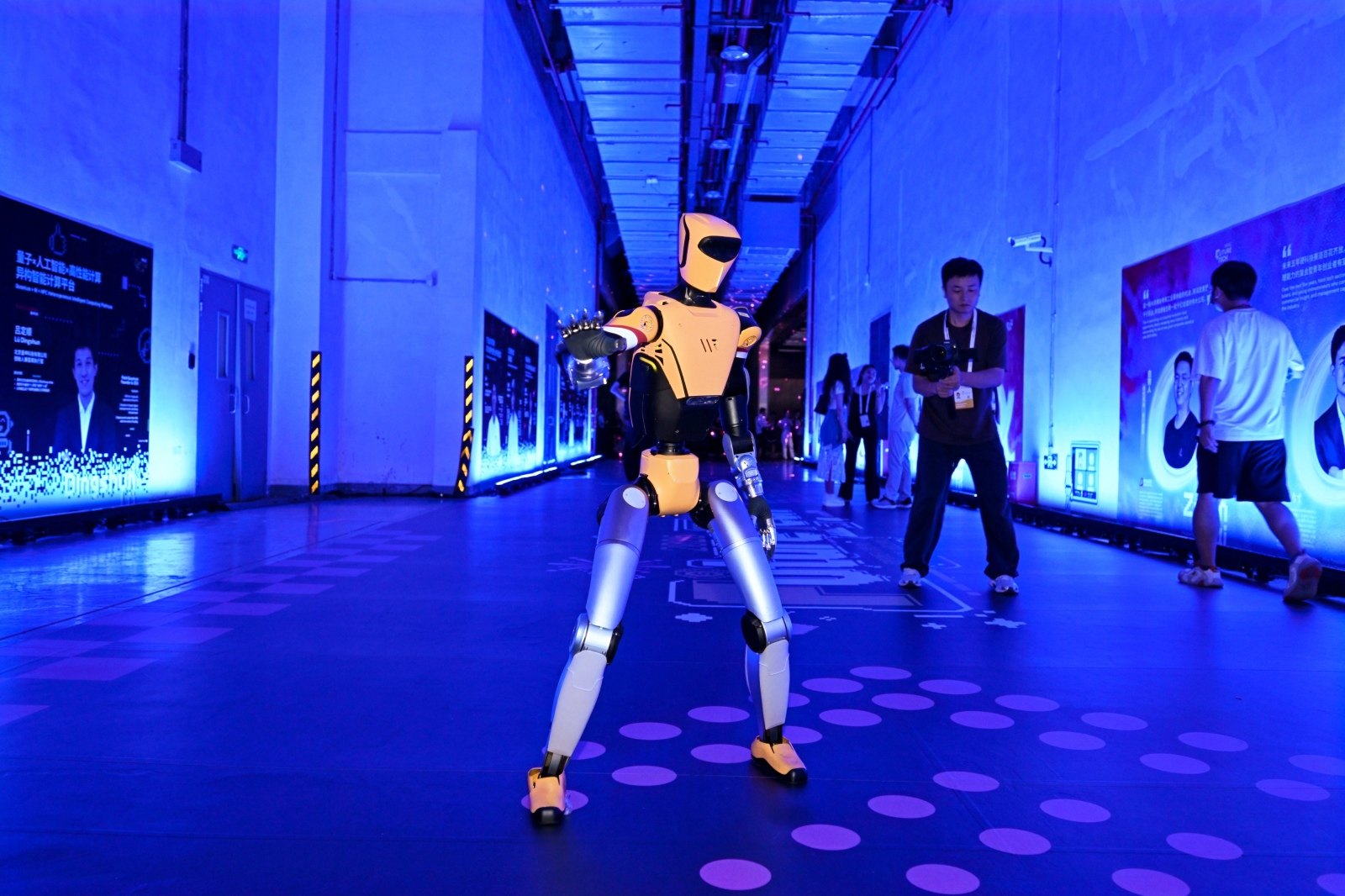
Westlake o1 performs a flash dance show at WAIC 2026 (Source: Enterprise)
Another advantage of self-developed hardware is the freedom of adaptation. The force of pushing a door and the center of gravity adjustment for crossing obstacles can be quickly verified on our own robot body; if we rely on purchasing complete machines from outside, each adjustment needs to wait for the cooperation of manufacturers, and the R&D cycle and discourse power will be limited.
As the hardware supply chain matures in two or three years, our hardware team will have accumulated sufficient experience by then. For commercialization, we can choose to output models to adapt to third-party robot bodies, or deliver the complete "Westlake o1" solution. It is very important to hold the initiative in our own hands.
Hard Krypton: The core competition in the embodied intelligence industry ultimately boils down to talent competition. We learned that Westlake Robotics is building a highland for embodied intelligence talents, what is the specific planning and implementation approach?
Wang Donglin: The final competition of embodied intelligence will eventually fall on a very simple indicator: who can gather the most top R&D talents.
Westlake Robotics' core judgment is that the underlying technology of this industry is far from finalized. The real barrier is