From Experiment to Production Line — Scalability Challenges and Collaborative Ecosystem of AI Workflows | 2026 ChinaJoy AI Future Ecosystem Conference
How can AI workflows move from the "stunning moment" in the lab to the "daily operation" on the production line? When generative capabilities are no longer a threshold, where is the bottleneck for large-scale implementation, and what role should people play?
Content production is undergoing a critical leap from "technical verification" to "industrial implementation". It is easy to achieve breakthroughs at a single point, but difficult to realize systematic collaboration. The real challenge lies not in whether the model can generate outputs, but in whether the workflow can operate stably and whether the collaboration ecosystem can be effectively built. The technological dividend will eventually flatten out. After crossing the threshold of large-scale implementation, what the industry ultimately competes for is the depth of understanding of scenarios and the engineering implementation capabilities. At the 2026 ChinaJoy AI Future Ecosystem Summit, 36Kr Games, together with industry pioneers including Funloom AI, Alibaba Cloud, VAST, and Pole Interactive, jointly held a roundtable discussion.
Roundtable Guests:
Liu Shiwu | Chief Editor of 36Kr Games (Host)
Wu Tong | CEO of Funloom AI
Ai Wen | Deputy General Manager of the AI Native Business Unit of Alibaba Cloud Intelligence Group Public Cloud
Luo Xiaowo | Head of Strategy of VAST
Yang Sheng | Founder of Pole Interactive Technology
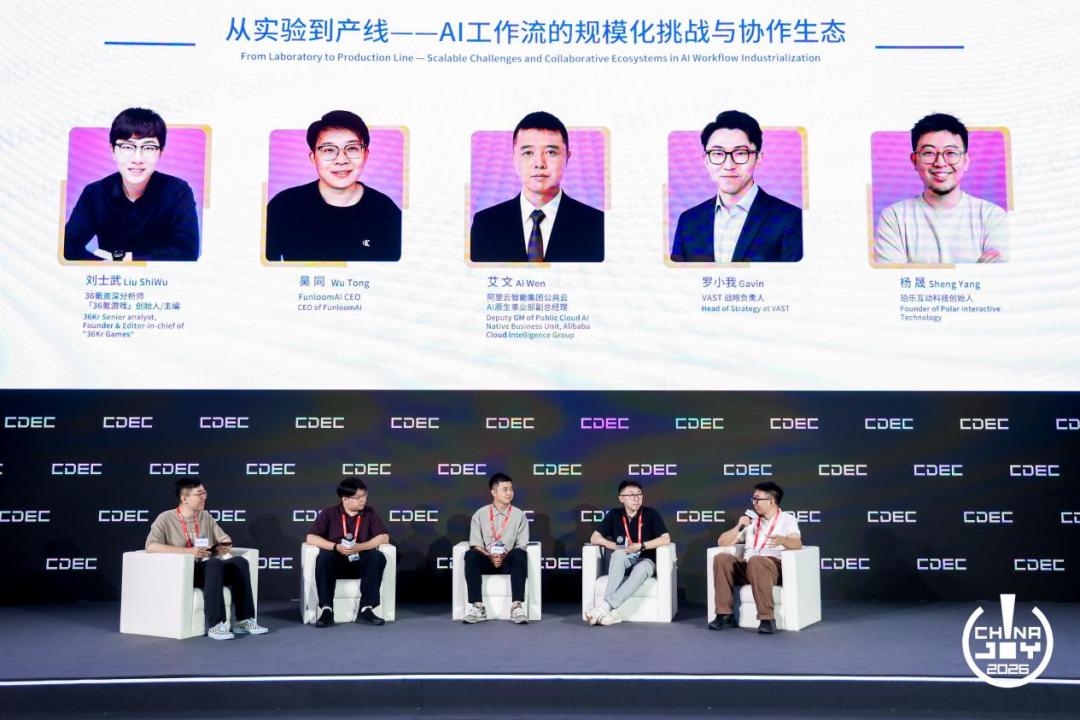
From Lab to Production Line — Scaling Challenges and Collaborative Ecosystem of AI Workflows
The following is the content of the roundtable dialogue, organized and edited by 36Kr:
Liu Shiwu: Hello everyone! I am the host of this roundtable, Liu Shiwu, Chief Editor of 36Kr Games. The theme of our roundtable today is from lab to production line, the scaling challenges and collaborative ecosystem of AI workflows. The four guests at our roundtable today, Mr. Wu Tong from Funloom AI, Mr. Ai Wen from Alibaba Cloud, Mr. Luo Xiaowo from VAST, and Mr. Yang Sheng from Pole Interactive, represent different roles on the AI production line and are working on different directions respectively.
Today we will talk about some small details under the big topic, talk about some pitfalls encountered in the application of AI in the game industry workflow, and how everyone solves these problems. First of all, let's invite each guest to introduce themselves.
Wu Tong: Hello everyone, I am Wu Tong, CEO of Funloom. Our product is Funloom AI, which is a UGC AI interactive content co-creation platform. We are committed to helping UGC users turn their simple ideas into high-quality, commercializable content works. Of course, the forms of these content works include games, film and television, literature and many other fields.
Ai Wen: Hello everyone, I am Ai Wen from the Alibaba Cloud AI Native Business Unit. The main service targets of the Alibaba Cloud AI Native Business Unit are AI native customers with AI as the core generative power. Our customers rely on AI capabilities, MaaS capabilities, and Tokens to transform from traditional cloud service providers to MaaS, Tokens, and Agent tool service providers, supporting these customers who we believe "can fly higher with the wings of AI".
Luo Xiaowo: Hello everyone, I am Luo Xiaowo from VAST. VAST is a technology company focused on AI 3D and world models. Since its establishment, the company has maintained close ties with the game industry, and I am very happy to be here.
Yang Sheng: Hello everyone, I am Yang Sheng from Pole Interactive. We focus on the application of technology in the pan-entertainment field, with business covering games, content and other pan-entertainment products.
Liu Shiwu: Today I hope everyone can talk about some interesting things on the roundtable that you usually don't hear, things we can discuss in private.
First of all, I would like to ask Mr. Wu Tong. As a very young entrepreneur, Funloom just completed its pre-A round of financing not long ago. We also observed that Funloom has gradually upgraded its earliest AI text game to a three-in-one architecture of AI, text RPG and interactive games. What changes have taken place in the product form from tools to AI native games? How do you and your team understand the current AI native games?
Wu Tong: The RPG mode and interactive video game mode exhibited by Funloom at this ChinaJoy are already in our product line plan. As a UGC content co-creation platform, Funloom hopes to lower the threshold for users to create games while ensuring that the quality of the produced games is quite controllable, and hopes to balance both. We have been researching this for two years, during which we also tried to achieve this goal through the Vibe Coding route, we did a lot of experiments and encountered many setbacks.
Regarding AI native games, the earliest ones we came into contact with were AI text games. I think this model has realized AI native at the minimum level. Its most fascinating point is that it allows creators and consumers to build the flow state of cultural works together. I think the most important thing for a content work is the flow state. The author wants to carry his own creation, creativity, ideas and other things in the form of works, and transmit them to consumers through various possible modalities. In essence, it is the resonance between people. The AI text game allows you to only make the game settings, but the game content experience is not completely determined by the creator, it also allows consumers to participate in this link, which made me see at that time that there might be a modality that is really low-threshold and at the same time ensures the playability of the game.
I once saw many people playing AI native text games on Xiaohongshu and overseas platforms, and at that time I thought this was a model that had been recognized by everyone, so we first switched our technical path to making AI native text games. But we didn't stop at making a text game, I still hope it can finally be presented to more mass users in rich and varied modalities. Now our state is more like taking the AI text game as a brand new human-computer interaction mode, allowing creators to output their ideas. Because when doing Vibe Coding, you will find that many people don't understand business logic, there are many Bugs in the works, and it is even difficult to iterate their creative ideas smoothly. The AI text game mode allows creators to focus more on the content itself.
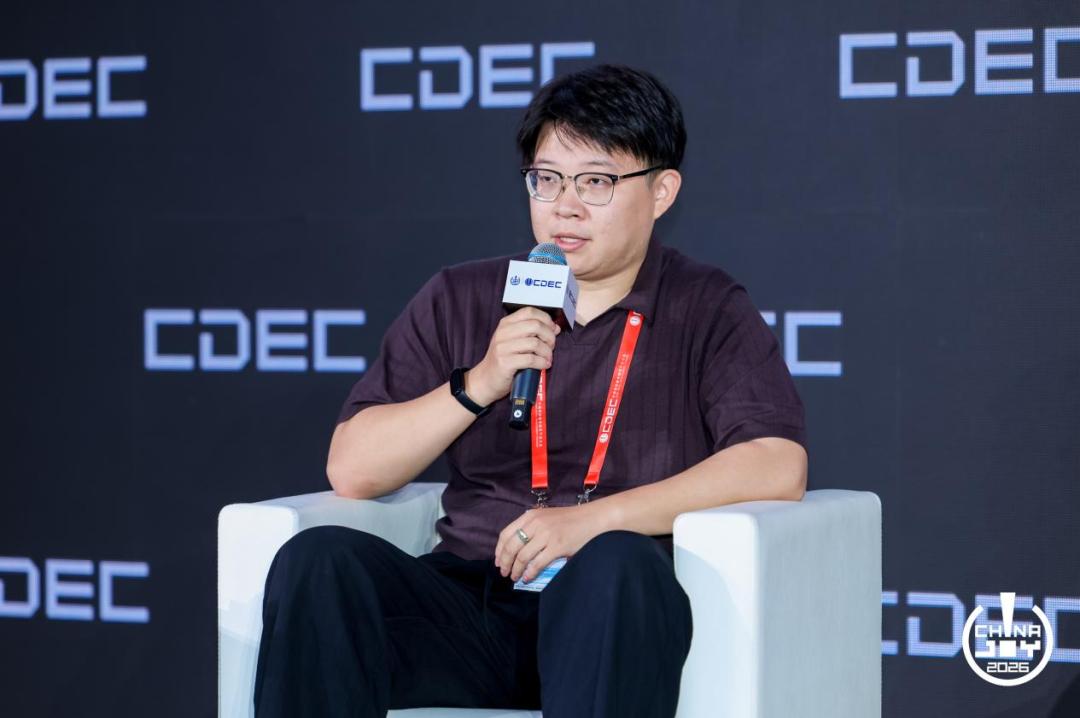
Wu Tong | CEO of Funloom AI
Under the creation mode of AI text games, creators can first polish their own flow state experience, this process has actually output a very complete idea for your game, it is a bit like building a dedicated large model fine-tuning layer for your game. After obtaining sufficient information, on the one hand, we can train models dedicated to game design and game planning based on this; on the other hand, this information allows us to intervene in the subsequent implementation and development process, which actually supports our core capability — we can take the text game made by the AI text game as a sample, and directly convert it into RPG games and interactive video games with one click. We have already demonstrated the Demo in Hall C N2 of this year's CJ, and I also made a demonstration case. If you are interested, you are welcome to go to the offline experience and trial play directly, which supports fully automated generation.
Liu Shiwu: Many creators, including me, may have the same feeling. Our expression sometimes needs to be polished. Now the first step of Funloom is to help our users express themselves well, and then we will do other extensions.
Next, I would like to ask Mr. Ai Wen. We know that Alibaba Cloud has deep roots in the game industry for many years, and its full-link platform advantages from cloud services to AI have gradually emerged. Nowadays, more and more game manufacturers are starting to use AIGC. As a cloud manufacturer, under this trend, will Alibaba Cloud change the cooperation relationship and business model between Alibaba Cloud and content manufacturers?
Ai Wen: AI has widened and deepened the cooperation dimensions between us and game customers. First of all, a brand new cooperation field has been formed outside the cloud infrastructure. Secondly, relying on the natural super-large-scale basic resource elasticity of the cloud, it can better carry the natural tidal and burr traffic of games. Cloud + AI has become a brand new base for the game industry, which accelerates the exploration and practice of the game industry in the AI field.
In the AI era, Alibaba Cloud's Qwen large model also directly acts on the game link. We have observed several scenarios:
- Chat companionship / knowledge Q&A / game assistant: Chat companion NPC: the simplest implementation scenario, no external knowledge base required
- Knowledge Q&A NPC: Usually requires an external knowledge base, superimposed with intent recognition, product retrieval, etc.
- AI NPC participating in game interaction: Battle AI: upgrade the bot of a to AI NPC, which can bring players a better game experience through natural language understanding + game Agent.
- Instruction-controlled autonomous running NPC: Players directly issue instructions to the NPC through voice, text and other means, and the NPC independently plans actions and responds to instructions according to its own environment. The core is to be able to understand the virtual world.
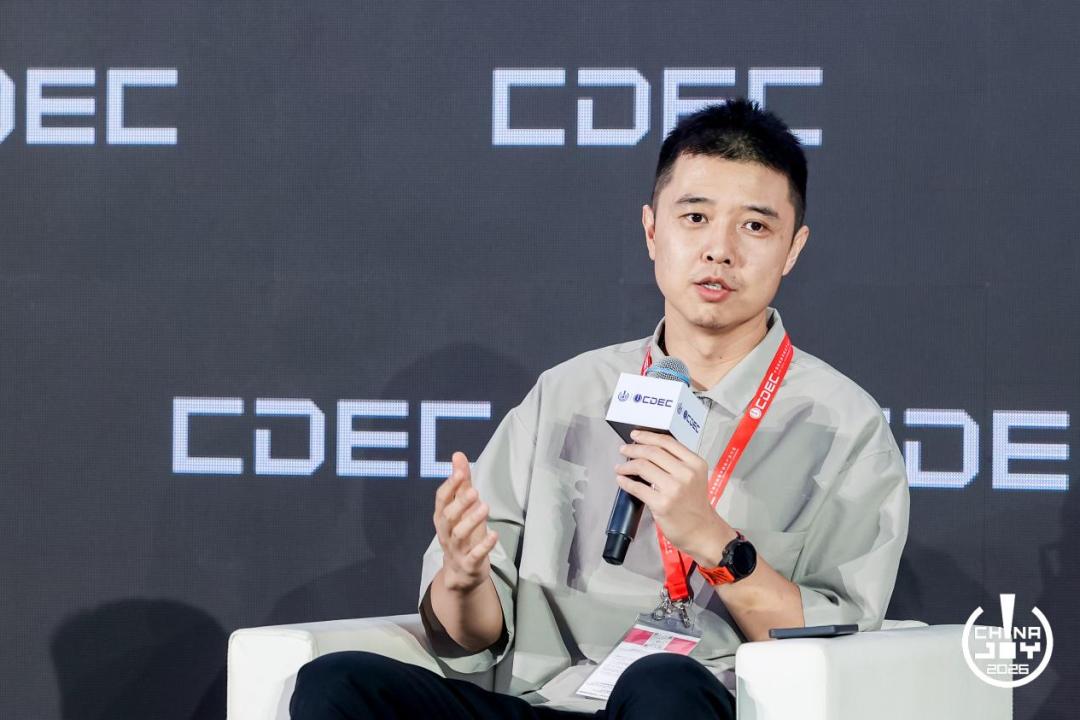
Ai Wen | Deputy General Manager of the AI Native Business Unit of Alibaba Cloud Intelligence Group Public Cloud
Liu Shiwu: The game industry is inseparable from providers of basic computing power and basic services. Next, let's ask Mr. Luo. We know that VAST has developed rapidly in the past two years, from AI 3D technology to the world model we see today. Now more and more people in the game industry are using 3D large models, many game developers are mentioning the Tripo model to me. From your perspective, how big is the span from the beginning when we made Tripo to now being able to put the large model into the pipeline, and then further launching the world model? For these game manufacturers or content developers, how should they adapt to this type of product?
Luo Xiaowo: From the perspective of VAST's development experience, we have roughly gone through three important thresholds: the first is "able to generate", the second is "able to produce", and the third is "able to run".
- First of all, "able to generate". How to understand this concept? When AI 3D technology was not popular, we realized that traditional 3D modeling was a labor-intensive and time-consuming thing. Therefore, we initially cooperated with Stability AI to make the Tripo S2 open source model together. This open source model can quickly generate a single picture into 3D content within 0.5 seconds, with real-time generation capability. Later, we made a higher-definition model — the H3.1 model, which is now very popular among game companies and studios, and everyone is using it intensively. It can greatly improve the geometric quality, and also improve the input alignment and generalization capabilities. This is the generation problem that I think was solved earliest.
- Secondly, "able to produce". This is the Know-How we have accumulated in recent years. At the earliest time, this thing was very cool and beautiful, like a Demo, which may be similar to other AI modalities. Everyone made a lot of beautiful Demos, which are very attractive and everyone can use them. But in the game industry, game teams have their own workflows, they may not need some beautiful screenshots or a cool Demo, but they need assets that can be modified and accepted, and can be imported into their own pipelines, so we have done a lot of iterations on the model and product side. For example, the Tripo P1.0 model we made in the first half of this year is actually to meet the industry's professional needs for topology structure, face number control and UV rationality, and generate a model with good effect under the condition of controllable face number, which can really solve many production-side needs of everyone. Later, we also did some explorations such as bone binding, solving complex structures, and animation models.
- Third, "able to run". This is also a Know-How accumulated in recent years. At the beginning when we made the model, many people could call our API, but in fact, expanding to a wider range of creators or game studios, they need a full-chain product more. Therefore, we made our own Studio SaaS product, which connects generation, editing and import into a workflow with DCC software, Blender, Unity, Unreal and other DCC Breech.
In summary, from the earliest technical exploration to truly walking together with the industry and creators, and letting everyone use these tools, I think we have gone through the above process.
Liu Shiwu: This is a very difficult process. Just as Mr. Wu Tong and Mr. Ai Wen just mentioned, everyone will encounter difficulties in the iteration process.
I discussed with a friend from a large engine manufacturer before, and he believes that the future challenge to himself may not necessarily be the engine company, because the workflow is constantly changing. In the past, when we developed a product, the process was relatively fixed, but today the process is changing, everyone will play different roles in the future, but they may not conflict with each other.
Next, I would like to ask Mr. Yang Sheng. We have met with Pole Interactive at ChinaJoy for several consecutive years. Last year, Pole Interactive launched a very popular AI comic drama Monday Tomorrow, which became a phenomenal work with 50 episodes, 45 days, and a team of only a few people. But after that period of time, everyone began to consider that if AI only compresses the production cycle, will we eventually fall into the vicious circle of involution where everyone competes for lower prices. As the first team to run through this production pipeline, what do you think the solution to this problem is? What deeper changes has AI brought to our production pipeline?
Yang Sheng: At this time last year, people didn't quite believe in the concept of AI comic drama. In the past year, we clearly felt that a new track has been formed in the pan-entertainment field, so cloud manufacturers have also begun to enter, and Tokens have also started to sell explosively. But we believe that the price of Token is essentially the price of electricity, and how to sell the electricity at a higher price is the fundamental. A toy sold at the price of PVC may only cost 60 or 70 cents; but if a well-known IP is added, the added value rises, and a blind box can be sold for 39.9 yuan. Similarly, how to make infrastructure and computing power sell at higher prices under higher added value is the next step we want to take after completing the previous verification.
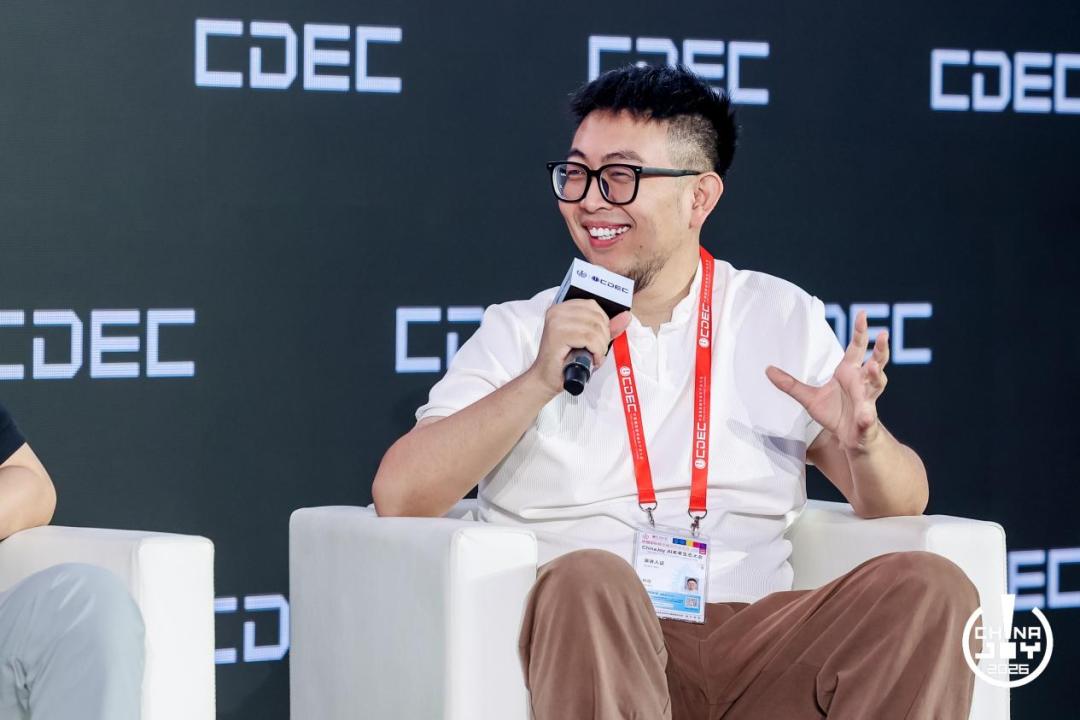
Yang Sheng | Founder of Pole Interactive Technology
A while ago, we officially announced the new project Never Say Die in cooperation with Alibaba Cloud and Kaixin Mahua. The original price of Token was at this level, but if we introduce the characters of Never Say Die for Happy Horse and Happy Oyster on the Alibaba Cloud platform, allowing creators and OPCs to use these characters and establish a corresponding revenue sharing mechanism, will the entire ecosystem become broader? For IP holders, cloud manufacturers, and base model providers, everyone is tapping into the added value beyond computing power and electricity. We believe that this is the way to make the industry bigger.
I believe the same is true for Funloom. Interactive games that all use original IP are completely incomparable in playability and attractiveness to the audience compared to those with one or two super IPs or well-known digital assets involved. Therefore, what Pole Interactive is focusing on now is how to make digital assets circulate between different base models and different cloud manufacturers, and price them. We