A growing number of smart people are quietly starting to "disconnect from the internet".
Shen Translation is a translation team under 36Kr, focusing on sectors including technology, business, workplace and life, with a highlight on introducing new technologies, new perspectives and new trends from overseas.
Editor's Note: A great number of intelligent people have quietly walked away from the online noise, voluntarily detaching themselves from the impetuous online circle culture, merely to retrieve their own attention. This translated article hopes to bring you some inspiration.
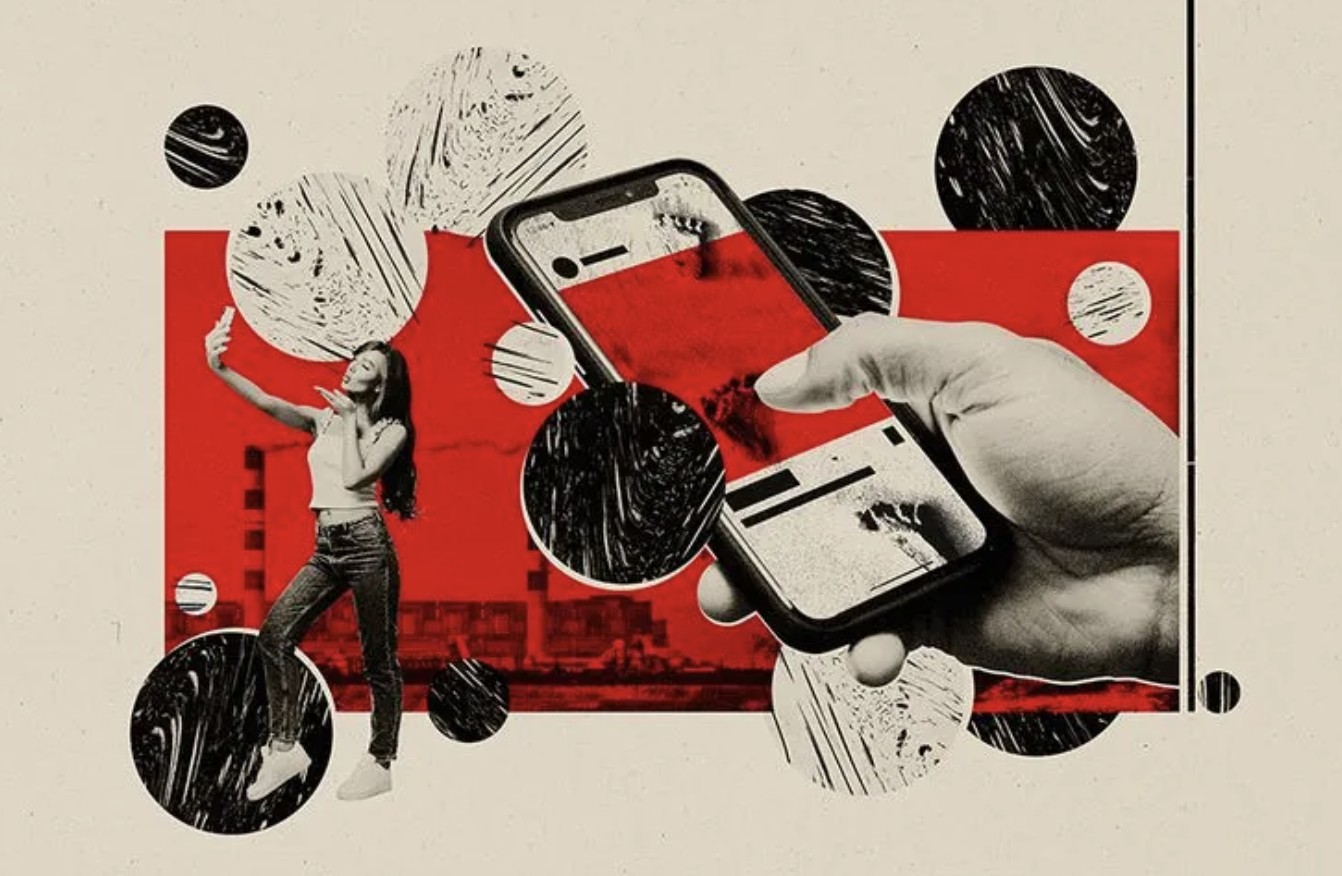
Image source: Rebecca Lennon
Human civilization has spent thousands of years trying to eliminate loneliness, yet modern technology has created an absurd situation: a person can receive 340 messages a week, but deep inside they still feel like a lighthouse keeper abandoned by the world, lonely and helpless.
Oddly enough, most people cannot even notice that online culture is eroding their minds. The subtlety of this mechanism lies in its imperceptible influence that makes people get used to it unconsciously. Changes always come quietly. A few years ago, people focused entirely on the movie when watching it; now half of people will scroll through other viewers' comments at the same time while watching a movie. In this way, people have turned leisure and relaxation into a multi-tasking race.
This is probably the reason why some smart people have quietly and completely stayed away from online circle culture. It is not that they suddenly hate technology, nor do they want to seclude themselves and become a hermit who works at desk for seven hours by candlelight. It is just that they have finally reached a tipping point where they can no longer ignore the endless noise around them. The brain is filled with all kinds of information all the time, and every application is demanding emotional value: getting angry for it, making statements on it, competing with others for it, laughing at it, feeling panic for it, making impulsive purchases...
I have a friend who quietly faded out of social media last year. There was no grand farewell post, nor did he publish any so-called remarks about "protecting his own energy". One day, he completely disappeared from the online world. A few months later when I met him, I immediately sensed the change in him. He had a rare ability to focus that is rarely seen today. When talking, he devoted himself entirely to the conversation, no longer in the common state of modern people: nodding in agreement while thinking about the social media post draft in his mind, and constantly checking whether the mobile phone at the other end of the table is vibrating.
I asked him if he missed social media. He smiled and said: "The most terrifying thing is that I used to think I could only keep up with information through the Internet. After leaving, I realized that 90% of the content on the Internet is nothing but trivial things that people rush to tell each other that don't matter at all."
This sentence sounds funny at first, but it is extremely realistic when you think deeply. Online culture has created a weird illusion: continuously receiving information is equivalent to having wisdom. People endlessly listen to podcasts, browse posts, scroll through short videos, and absorb all kinds of opinions and so-called "in-depth content" every day, but it is very difficult for them to calm down and stay alone with their own thoughts for even 15 minutes. The brain becomes good at collecting all kinds of sensory stimulation, but loses the ability to think deeply. Some people can name five psychological terms they learned from short videos, but they can never clearly explain the root cause of their long-term anxiety.
Smart people will eventually notice this contradiction. They see clearly that the current online circle culture advocates immediate emotional output over calm reflection, pursues speed at the expense of depth, values exposure and popularity while ignoring real insights. The loudest people on the Internet are often not the smartest ones in the group, they are just the best at attracting attention. There is an essential difference between the two.
And attention has already become the most fiercely contested resource on the planet. Oil once triggered wars, while attention has spawned many enterprises with a market value of over one trillion US dollars.
Nowadays, all platforms are like casinos carefully built by behavioral psychologists: infinitely scrolling information feeds, push notifications, random reward mechanisms, bright color schemes, and emotional trigger points set layer by layer. In ancient times, humans relied on their instincts to avoid beasts in the jungle; now, this set of instincts is utilized by platforms to lure people to continuously invest their emotions.
After years of wandering online, smart people will also discover another uncomfortable truth: online culture is slowly depriving people of the ability to experience life privately. Everything seems incomplete if it is not shared online. A meal becomes material, a trip becomes proof, and even emotions are reduced to performances. People no longer cry silently alone, but set up fill lights, add subtitles, and vent their sadness in public.
Even if the reason deliberately turns a blind eye to it, the human nervous system can perceive this kind of incongruity and distortion.
That is why many smart people have gradually started to withdraw. They no longer post their thoughts the moment they have them; no longer argue online with strange netizens whose profile pictures are sword-wielding anime characters; no longer mistake exposure for emotional connection. They begin to value quietness, because the quiet time spent alone has now become a scarce and luxurious thing.
Ironically, after breaking away from online circles, these people's social state has become healthier instead. The continuous information flow no longer fragments their thoughts, and conversations have become more in-depth. They can calm down to read longer texts, think for a longer time, and notice more details around them. They are not easily provoked, and their emotions are no longer arbitrarily driven by algorithms every eight seconds, like an emotional shopping cart pushed around by others.
The most ridiculous point is that online circles often believe that these people have missed out on life. But in fact, many people do not truly retrieve life itself until they step away from the internet. They still use technology normally, they do not hide in caves or live next to waterfalls and feed on wild fruits. They just no longer voluntarily hand over their own nervous system to the public for watching and consuming.
Frankly speaking, this is probably one of the wisest choices a person can make in this era.
Translator: Teresa