Field visit to the graphics card price surge in Huaqiangbei: the price of some graphics cards has skyrocketed by 4,000 yuan in a single week, and merchants say the price is so high that they dare not even place new stock orders.
Graphics card prices have suddenly skyrocketed.
On July 31, a reporter from Time Weekly visited Huaqiang North in Shenzhen and found that the prices of consumer-grade graphics cards have risen significantly again. Taking the RTX 5060 Ti 8GB product as an example, the current market price has risen to 3400 yuan to 3500 yuan, an increase of 700 yuan compared with the 2800 yuan price last week; the price of RTX 5070 has even risen from around 5000 yuan to around 6000 yuan, a 1000-yuan increase in just one week.
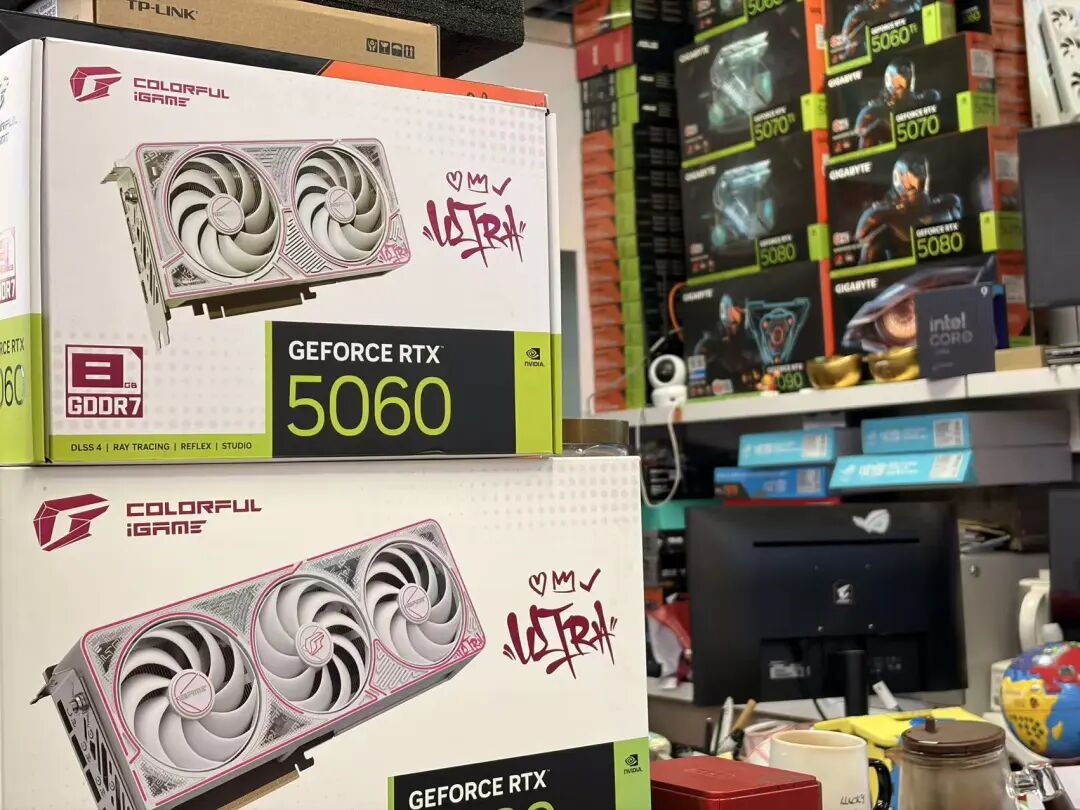
Source: Photo by Time Weekly reporter
The price increase of high-end products is even more staggering. A graphics card merchant in Huaqiang North pointed out that the price of the RTX 5090 series has risen from around 30,200 yuan last week to around 34,000 yuan, a price increase of nearly 4,000 yuan in about a week.
The industry generally believes that this sharp surge in graphics card prices is not caused by a sudden increase in consumer-side demand. The explosive demand for AI servers has squeezed the supply of consumer-grade video memory, pushing up the upstream material cost of graphics cards, and the terminal retail price has risen accordingly.
Prices have soared to the point where merchants dare not hoard goods
According to the consistent recollections of multiple Huaqiang North merchants, this round of crazy price hikes for graphics cards started on July 23. At that time, the supply of spot graphics cards began to tighten, and the existing inventory became a "scarce commodity" overnight. In this case, distributors generally hoarded goods and were reluctant to sell, and some models even faced a situation where "one card is hard to come by", so the price of graphics cards skyrocketed rapidly.
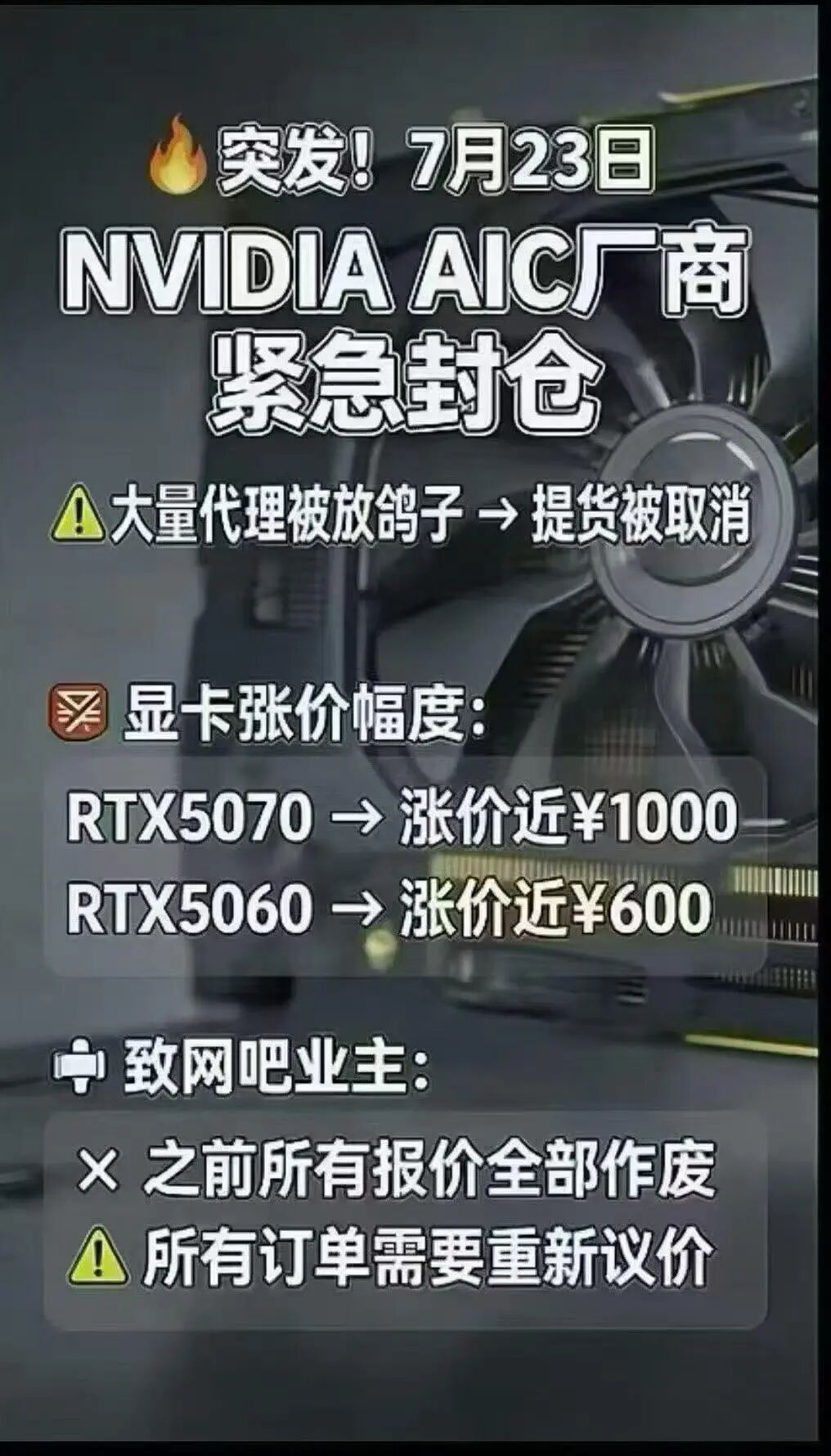
Screenshot of a WeChat Moments post from a computer merchant in Huaqiang North
The trigger for all this came from a new round of price increase notices issued by NVIDIA to its authorized graphics card manufacturers worldwide. "Right now, all major brand factories are sealing their warehouses and suspending bulk shipments to the outside," a Huaqiang North graphics card wholesale merchant told the Time Weekly reporter.
According to a report by CLP on July 24, NVIDIA has once again issued a notice of price increase for GPU kits (GPU + video memory chips) to downstream graphics card manufacturers, and the core reason is still the continuous rise in memory prices.
The above report further pointed out that this price increase involves both GDDR7 video memory and the previous generation of GDDR6 video memory. This means that in addition to most 50-series graphics cards using the Blackwell architecture, the RTX 5050 and even older graphics cards will also be affected. This round of price increases is the latest adjustment after NVIDIA raised the price of the GPU kit for its flagship graphics card RTX 5090 (including the China-exclusive version RTX 5090D V2) in May this year. In that price increase, other graphics cards were not affected.
It is not only graphics cards that are affected by rising memory prices. The prices of core hardware such as solid-state drives and memory sticks have also continued to rise recently. Taking a 16G DDR4 memory stick as an example, its price has risen from 200 yuan to 300 yuan last year to over 600 yuan; the 16G DDR5 memory stick has even risen from 300 yuan to 400 yuan in the same period last year to more than 1,000 yuan at present.
The summer vacation every year has always been the traditional peak season for college freshmen to buy computers and office workers to update their equipment. However, with the sharp rise in the prices of core components such as graphics cards and memory, this year has become the "most expensive PC assembly season", and many consumers have adopted a cautious attitude as a result.
A Huaqiang North merchant focusing on PC assembly revealed to the Time Weekly reporter that the flow of student customers coming to buy assembled computers this summer vacation has decreased by one-third to two-thirds. "Although the number of customers entering the store is still there, most of them are very price-sensitive and will compare prices with last year's prices. Once they compare, they feel the price has risen too much and will not make a deal immediately."
The soaring prices have also exacerbated the unease in the hearts of many merchants. Zhang Jing, a graphics card merchant in Huaqiang North, confessed to the Time Weekly reporter that she is currently only planning to sell off her existing inventory and will not restock new goods for the time being.
"It's too expensive. Now you have to spend tens of thousands of yuan to assemble any computer casually, who can afford to buy it?" said Zhang Jing.
Will graphics card prices continue to rise?
Looking ahead to the market, many Huaqiang North merchants believe that this round of sharp price surge for graphics cards is mainly caused by price fluctuations due to upstream agents sealing their warehouses. In the short term, as the market supply stabilizes, graphics card prices will drop slightly. But from a longer-term perspective, as the cost of all key components continues to increase, graphics card prices will most likely continue the upward trend.
For example, Zhang Jing believes that the cost of many key components including video memory and capacitors continues to rise at present. With the continuous accumulation of cost pressure, graphics cards will only become more and more expensive.
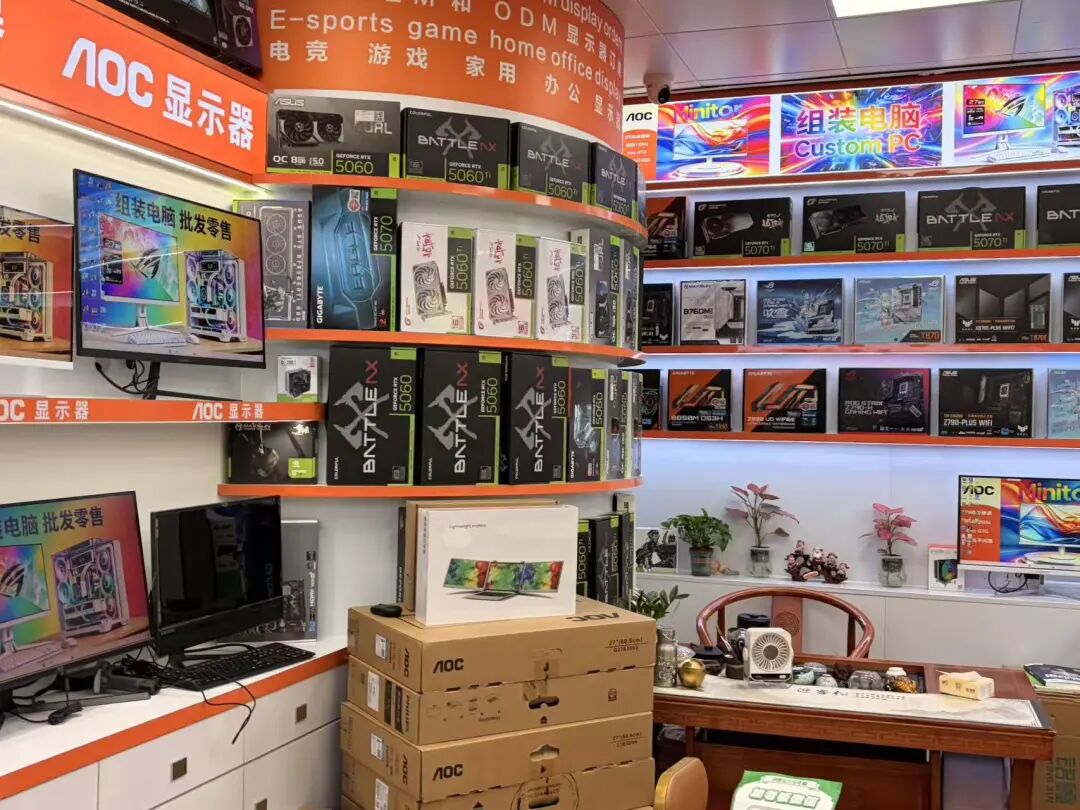
Source: Photo by Time Weekly reporter
Take video memory, a key component, as an example. The core reason for this round of memory price hikes is that the explosive demand for AI servers has seized memory production capacity. The three major memory manufacturers Samsung, SK Hynix, and Micron have generally adopted strategies to stabilize prices and ensure profits, shifting advanced production capacity to higher-margin HBM high-bandwidth memory. The production capacity for consumer-grade DRAM and NAND flash memory has been continuously squeezed, and the supply-demand gap continues to widen.
From the perspective of the industrial chain, the expansion cycle of memory chips is as long as 18 to 24 months, so the memory supply gap is difficult to fill in the short term, and the tight supply and demand pattern is difficult to reverse.
For example, Kim Jae-jun, Vice President of Samsung Electronics and Head of the Memory Business, pointed out at the Q2 2026 earnings conference that the supply gap caused by computing power demand is accumulating year by year. The unmet market demand this year will be postponed to next year, and it is expected that the chip supply shortage will further intensify in 2027 and continue until 2028.
This can also be verified from reports of third-party institutions. According to the latest memory industry research from TrendForce, memory demand in 2027 will still be dominated by AI applications. As HBM continues to squeeze DRAM production capacity, AI Server demand remains strong, the procurement momentum for memory used in CPUs and HBM continues to increase, the market maintains a tight supply pattern, and prices show a strong upward trend.
"New production capacity will not be released until after 2027, and the cost-driven graphics card market will see prices rise easily but fall hard," Zhang Xiaorong, Dean of Deep Science and Technology Research Institute, analyzed to the Time Weekly reporter. However, Zhang Xiaorong believes that if AI demand slows down or HBM capacity expansion exceeds expectations, the supply and demand situation may reverse. Once the continuously high prices suppress terminal consumption, the price hike cycle may also be broken.
Guo Tao, a senior artificial intelligence expert, believes that although graphics card prices are related to video memory costs, they do not follow a simple linear linkage. High video memory prices will raise the cost base of graphics cards and support the price of the whole machine, compressing the space for significant price cuts. However, the terminal market of graphics cards is mainly determined by GPU core supply, market demand and channel inventory.
Guo Tao further analyzed to the Time Weekly reporter that currently, AI computing power drives strong orders for high-end GPUs, chip supply is tight, coupled with stocking and reluctance to sell at the channel side, which further amplifies the price increase. If the GPU chip production capacity is released later and the supply is improved, even if the video memory remains at a high price, the pace of graphics card price hikes will slow down, and some models will even see price corrections.
"At the same time, we need to distinguish between AI graphics cards and consumer gaming graphics cards. AI graphics cards are more dependent on video memory capacity and are more affected by rising memory prices; consumer-grade graphics cards are also disturbed by game market demand and the release of channel hoarded goods. Graphics card manufacturers can also offset part of the material cost increase through product configuration adjustments and new generation product iterations," said Guo Tao.
This article is from the WeChat official account "Time Weekly" (ID: timeweekly), author: Xie Silin, Zhao Peng, editor: Wang Ying, published with authorization from 36Kr.