AI accelerates science and is also hollowing out universities.
Two years after winning the Nobel Prize, the original team behind Google AlphaFold has been split up.
According to the Financial Times, most of the original authors of the AlphaFold paper have been reassigned over the past year, with nearly a quarter of the full-time core authors having left Google entirely.
Those who stayed have shifted to fields such as Gemini scientific research Agents, enzyme design, genomics and nuclear fusion, while some have simply joined Isomorphic Labs, a drug R&D company under Alphabet.
Even Nobel laureates John Jumper and Jonas Adler were once transferred to the Code Strike team to focus on AI coding capabilities. But as we all know from the follow-up events, the two top researchers eventually moved to Anthropic.

On the left is Demis Hassabis, CEO of Google DeepMind, on the right is John Jumper. The original report link is https://www.ft.com/content/61b2953d-ee0d-45de-af6e-a9c1cf524b33?utm_source=chatgpt.com&syn-25a6b1a6=1
In response to this report, Pushmeet Kohli, Google's Vice President of Research for AI for Science, stated that DeepMind's science team has not changed its direction, but only expanded the scope of its work. The team is still advancing protein, genome and enzyme design, and accelerating scientific research with the help of Gemini.
AlphaFold once represented a relatively traditional scientific research organization model: forming a team around a clear problem, making long-term investments, concentrating resources, and finally delivering results.
Nowadays, similar teams are gradually giving way to more general-purpose model platforms. Proteins, mathematics, genomes, nuclear fusion and code, which seem to belong to different disciplines, can all become a set of capability modules of Gemini after entering AI companies.
At the same time, scientific research talents, computing resources and the dominance of research topics are increasingly concentrated in the hands of a few AI companies.
"I'm going to join Anthropic"
In the past few years, a growing number of mathematicians, physicists, biologists and computer science professors have joined the AI industry.
For example, Anthropic has been continuously recruiting physicists, economists and philosophers; OpenAI has gathered researchers studying black holes, string theory and pure mathematics; DeepMind has also brought together experts in biology and nuclear fusion.
Not long ago, Subbarao Kambhampati, a professor at Arizona State University, joked that there is a new meme in the academic circle recently: "I'm going to join Anthropic."
According to rough statistics from The Atlantic, at least more than 80 current or former professors are gathered in only four leading AI companies.
The direction of talent flow is also becoming more and more single.
The AI Index Report from Stanford University shows that in 2011, the proportion of AI PhD graduates entering enterprises and academia was roughly equivalent, at 40.9% and 41.6% respectively. By 2022, the proportion entering enterprises rose to 70.7%, while the proportion entering academia dropped to 20%.
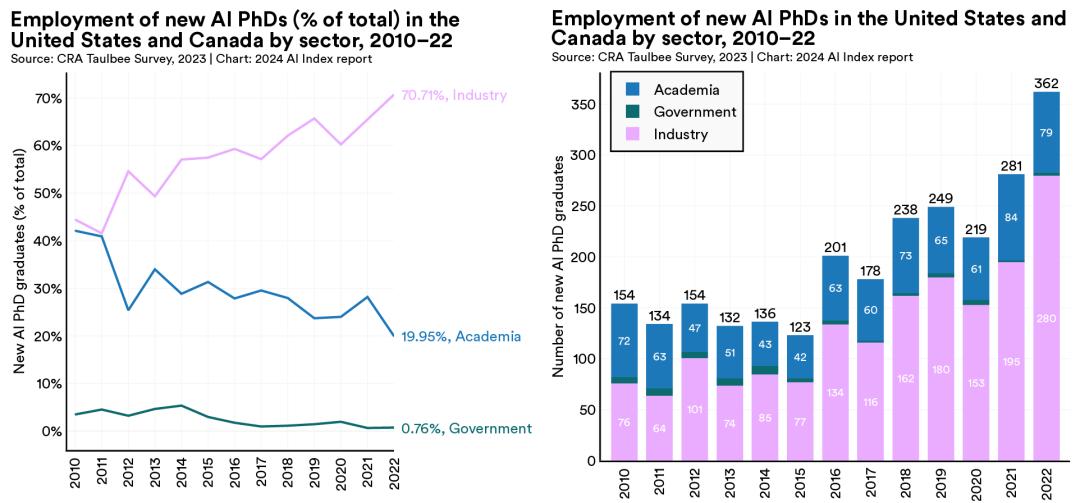
A 2026 NBER working paper tracked about 42,000 AI researchers in the United States. Researchers under the age of 40 are about six times more likely to leave universities than those over 40; about 70% of those who changed jobs still stay in enterprises five years later.
Money is certainly important. The annual income of the top 1% of AI researchers in enterprises has risen from $595,000 to $1.94 million; the same tier of researchers in universities has only risen from $301,000 to $392,000. The gap between the two sides has expanded to about $1.5 million.
What is even harder to refuse is the scientific research conditions.
In the early 2010s, about 65% of large-scale machine learning models were independently developed by academic laboratories. After entering the 2020s, this proportion fell to less than 10%. By 2022, about 81% of cutting-edge models have been independently completed by enterprises.
When UC Berkeley professor Anca Dragan joined DeepMind, she made her demands clear: she needed the "data, computing power and budget" necessary for cutting-edge safety research.
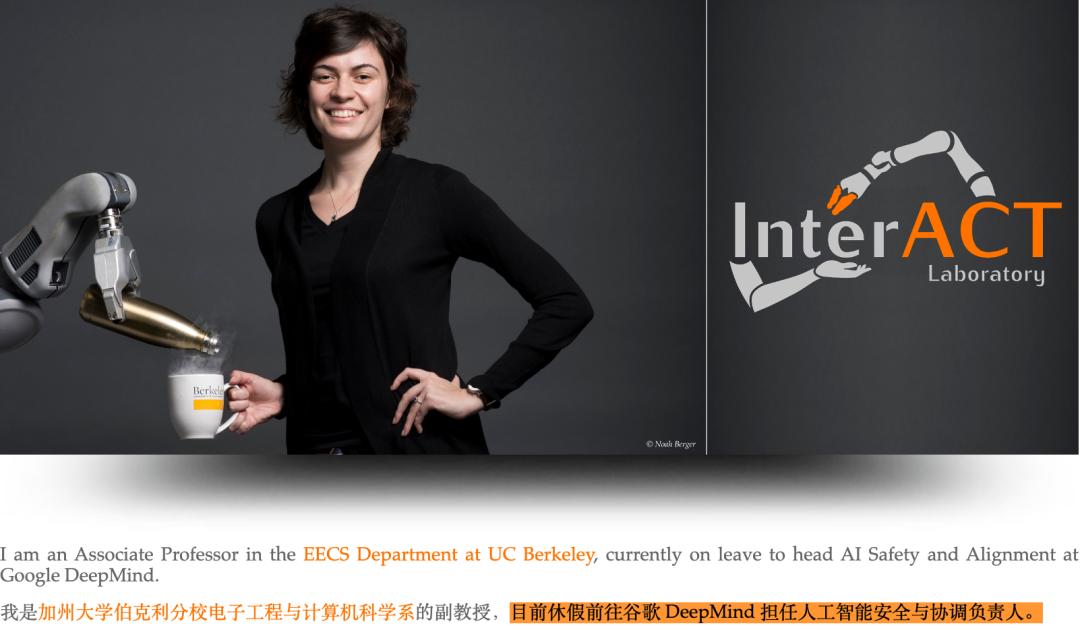
In contrast, a research project in a university may need to apply for funding first, purchase equipment, recruit engineering personnel, and then wait in line for computing resources. After joining an AI company, the same researcher can directly access large-scale models, proprietary data, distributed computing power and an engineering system of hundreds of people.
However, when a top professor leaves the university, the loss is far more than just a few papers. The university loses a mentor, a research group, a doctoral student training chain, and the research directions that may be formed in the next ten years.
In the past, technology companies purchased research results from universities. Now, they have begun to directly recruit the people who produce the research results. What the enterprise gets is a single person, but what the university loses may be an entire generation of researchers.
Of course, attributing all talent flows to the decline of academia will also underestimate the value created by enterprise scientific research.
AlphaFold has proved that enterprises can deliver results that change the history of science. More than 200 million protein structure predictions have saved a large number of biologists months or even years of work that they used to spend.
Bell Labs has long proved that corporate research institutes can also change science. At its peak, it had about 1,200 doctors and produced at least 10 Nobel Prizes. Demis Hassabis has repeatedly taken it as a reference for DeepMind.
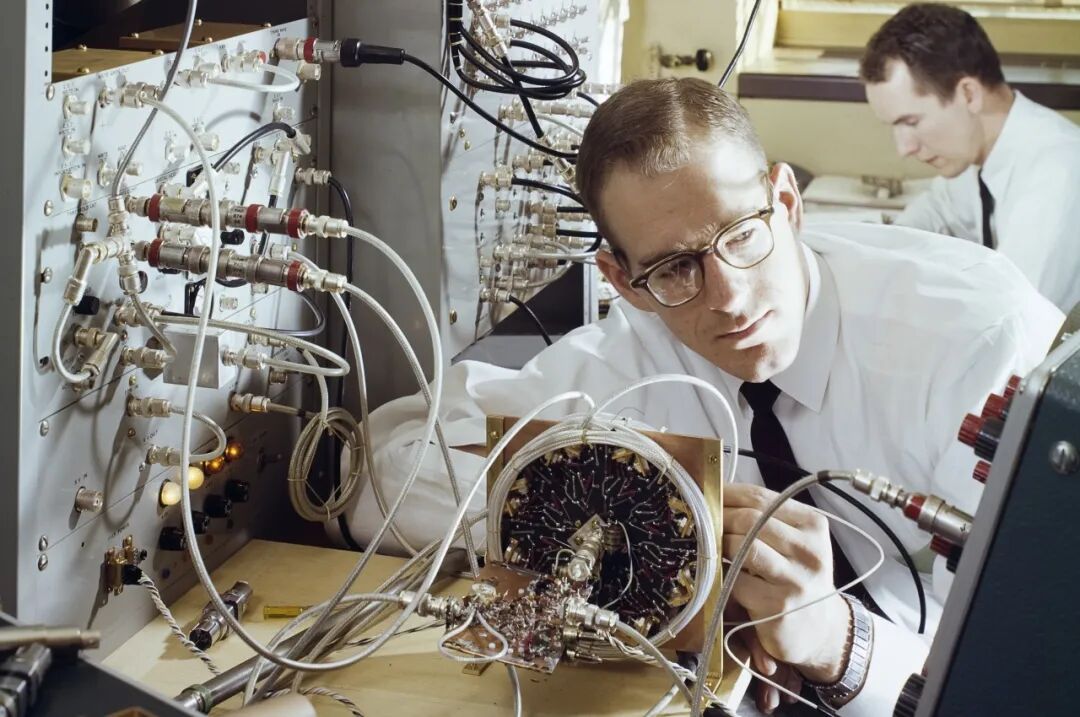
AI companies are indeed increasingly evolving into a new type of research institute that covers multiple disciplines, has strong engineering capabilities and commercial export channels.
DeepMind connects Gemini to mathematics, genomes and nuclear fusion; Isomorphic Labs cooperates with pharmaceutical companies to develop new drugs; Anthropic has launched Claude Science; OpenAI has integrated ChatGPT and Codex into the scientific research process.
Relevant results have already emerged. Physicist Rogerio Jorge used AI to develop open-source nuclear fusion software, while theoretical computer scientist Barna Saha and others used GPT-5.5 Pro to assist in high-dimensional geometry proofs.
OpenAI stated that about 1.3 million people use ChatGPT to handle advanced scientific and mathematical tasks every week, and plans to provide 100,000 university researchers with free access to cutting-edge models and Codex.
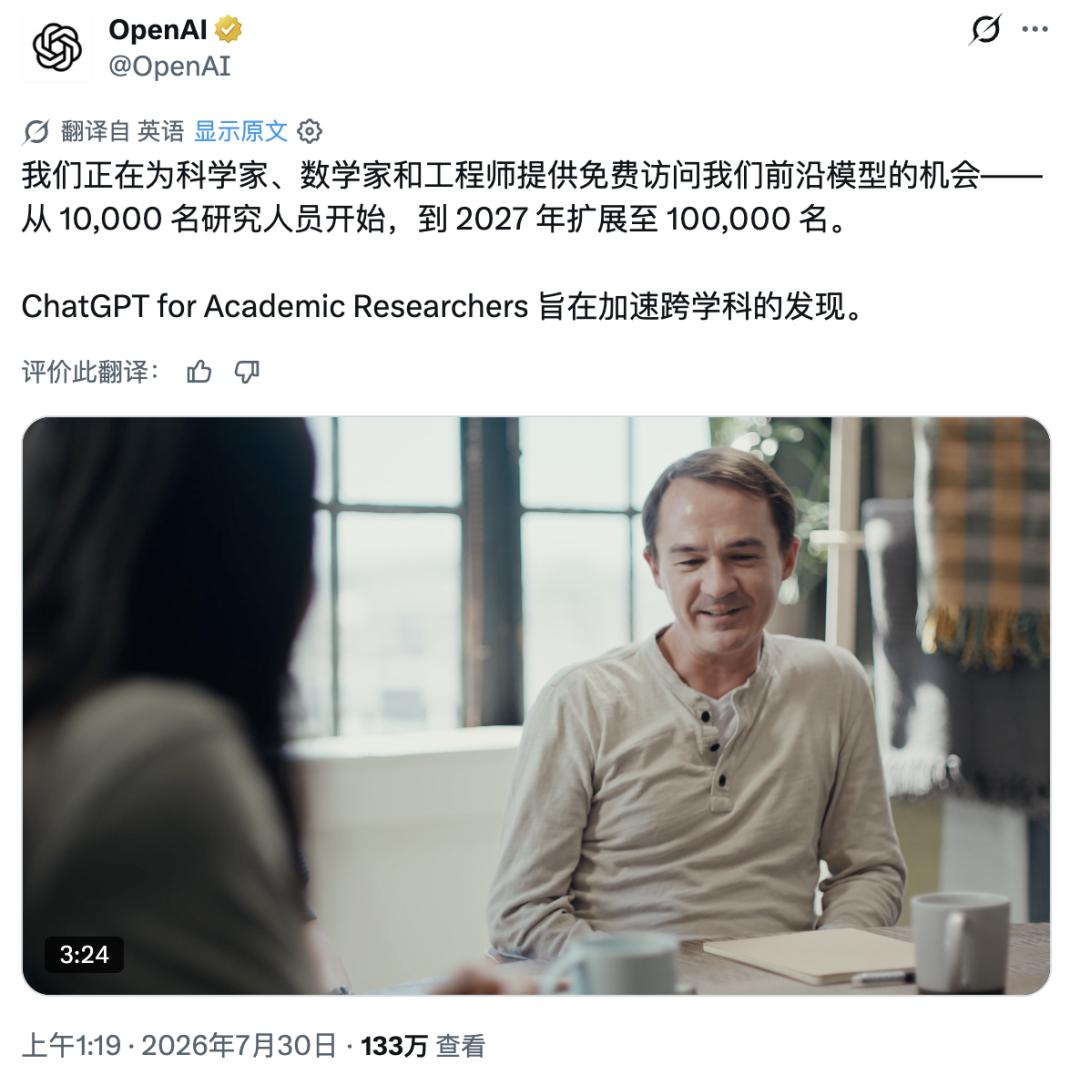
From the perspective of personal influence, the role of a scientist may even be amplified after joining an enterprise. As mentioned above, he may lead more than a dozen students in a university, but in an AI company he can mobilize hundreds of engineers, massive computing resources and a global data platform. Methods that originally stayed in papers can also be more easily applied to drugs, software, experimental equipment and industrial systems.
But the cost is self-evident.
NBER research found that after AI scholars transfer to enterprises for a long time, their paper output decreases by an average of 65%. From 2000 to 2019, the proportion of AI researchers employed by enterprises rose from 48% to 68%, their share of papers only rose from 27% to 32%, but their share of patents rose from 86% to 95%.
Researchers are still doing research, but the results are flowing from papers to patents, internal models and trade secrets. Google made Transformer public back then and nurtured the entire industry. Today, training data, model weights and failure records are increasingly difficult to leave the servers of enterprises.
Science is still accelerating, but open science may hit the brakes.
Scientists are not leaving science, science is leaving universities
AI companies can become research institutes, but they can hardly become universities.
Universities undertake a frequently overlooked task: they need to train a large number of students who have not yet proved themselves, and preserve research problems that have no practical application for the time being, cannot be priced, or may only show their value decades later.
However, AI companies prefer proven professors and senior researchers, and are less patient with training new talents. SignalFire data shows that new graduates only accounted for 7% of the recruits of large technology companies in 2024, dropping by more than half compared with 2019.
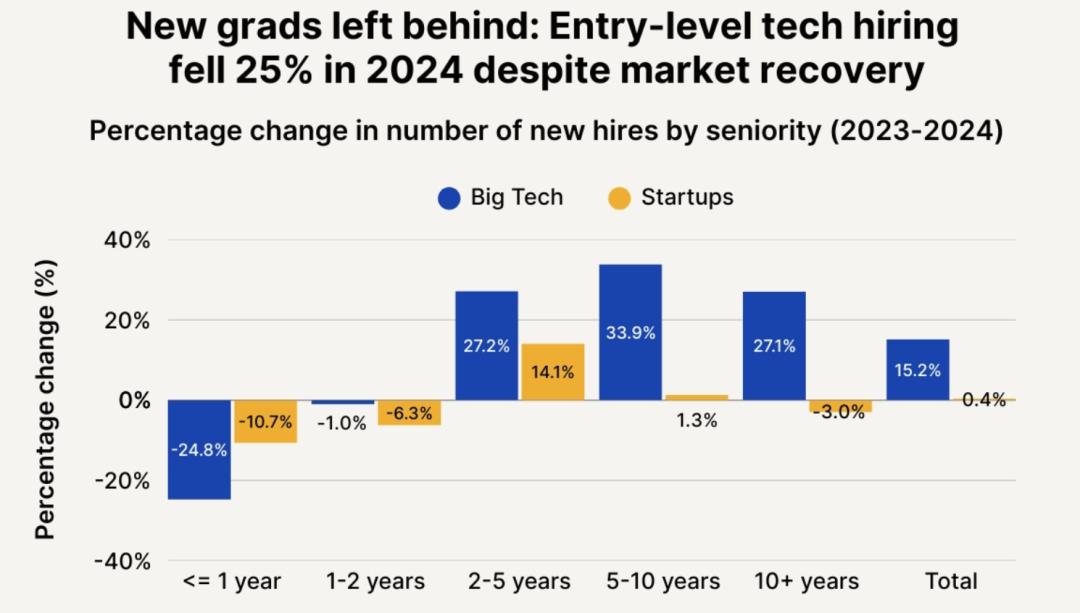
🔗 https://www.signalfire.com/blog/signalfire-state-of-talent-report-2025
While enterprises absorb top professors and mature researchers from universities, they reduce junior positions and investment in training. They can gather a group of top scientists, but they may not take the responsibility of training the next generation of scientists on a large scale.
Related impacts have already appeared in university classrooms. Students interviewed by The Atlantic found that some courses were suddenly suspended, for a very realistic reason: the professors have gone on "leave" at AI companies.
At the same time, after star professors leave, doctoral students lose not only a course, but also recommendation resources, research networks, topic organization capabilities, and access to cutting-edge problems.
A more subtle change is taking place in research topics.
Drug design, programming, mathematical reasoning and material discovery can enhance models and form products, so they are easier to get resource support. Topics such as long-term field research and ecological conservation are often in an awkward position.
However, history just likes to play jokes on short-term returns.
Number theory, which was long regarded as the purest and least practical branch of mathematics, later became the foundation of modern cryptography. When the laser first appeared, it was once called "a solution looking for a problem". The early Internet was also impossible to measure with commercial models.

The significance of the public scientific research system lies precisely in that it allows human beings to study those problems whose value cannot be explained for the time being.
Today's AI companies are in a high-intensity competition of model performance, product launch and capital investment. Even if they are willing to invest in basic science, resources are more likely to flow to directions that can enhance models, support products or generate patents.
A kind of awkward prosperity is likely to emerge in the future.
Human beings can develop new drugs, prove theorems and discover materials faster, and the best scientists also have the most powerful tools in history. At the same time, who decides what to research, who will train the next generation of scientists, and who will be willing to continue doing those unpaid researches have all become problems.
Scientists are not leaving science. It's just that science is accelerating its escape from universities.
Sometimes I think of universities and AI companies as two ends of a river. Universities are more like the upper reaches. The water flows slowly, with a lot of sediment, and a large number of tributaries seem to be useless. Some people measure, record and argue there, and some people spend their entire lives studying a small stream that eventually does not flow to the city.
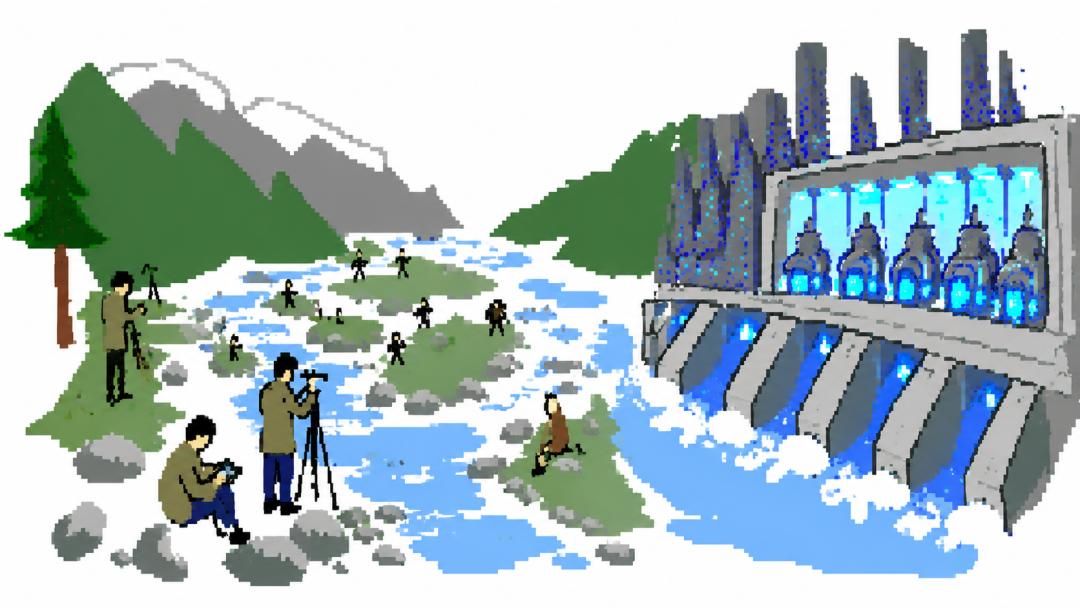
AI companies are more like hydropower stations in the lower reaches. They can concentrate the water flow, drive machines, generate huge amounts of energy, and quickly bring science into drugs, software and industries.
Hydropower stations are of course important. Without them, the river water just flows past.
But if everyone runs to the lower reaches to generate electricity, the water source in the upper reaches will gradually dry up, and after a few years, everyone can only sit in the machine room waiting for a river that no longer flows.
When mathematicians are busy improving models, biologists are busy training Agents, and physicists are busy expanding the boundaries of computing power, humanity may get a stronger AI. Those problems left behind have no product roadmap, no return on investment, and no practical use that can be explained for the time being.
They are very quiet. So quiet that it is easy to make people mistakenly think that they are not important.
This article is from the WeChat official account "APPSO", written by Feng Yi, and published with authorization by 36Kr.