Google has tightened ADB access, making it increasingly difficult to root Android devices.
By cracking down on sideloading and blocking BootLoader unlocking, today's Android has become increasingly unfamiliar to its once die-hard fans, and this mobile operating system, once renowned for its freedom and openness, is constantly losing its own characteristics. Google has used the strategy of boiling a frog in warm water to turn Android into an ecosystem that claims to be open-source and open, but is actually "autonomously controlled".

Nowadays, Android may take another step forward on the road to closure. Recently, overseas tech media Android Authority revealed that according to Google's official Issue Tracker log, the company is evaluating new solutions to limit the access scope of the ADB daemon (hereinafter referred to as adbd).
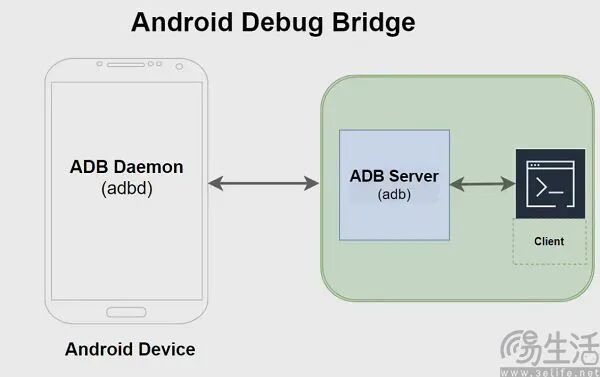
ADB, or Android Debug Bridge, is a command-line debugging tool in the Android SDK. Its core functions include device detection, app installation and uninstallation, file transfer, log capture, and system-level Shell operations. The well-known "USB debugging mode" is implemented based on ADB. ADB adopts a client-server-daemon architecture: the client runs on the development machine to send commands, the server manages communication in the background, and the daemon resides on the device to execute instructions.
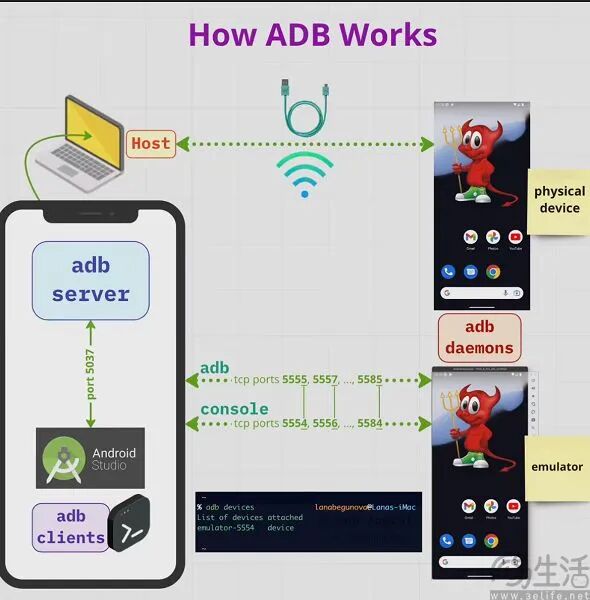
adbd not only provides developers with a channel to access device hardware and software status and supports app debugging, but also serves as a critical tool for device manufacturers, ROM developers and security researchers to analyze and improve Android devices. adbd plays a key role in various security audits, performance tests and app optimization work, and has a far-reaching impact on the entire Android ecosystem.
According to Google's plan, in the future, the access scope of adbd will be limited to Wi-Fi or USB connections, and local loopback addresses such as 127.0.0.1 will be blocked. Google stated that this move is aimed at addressing the residual risk of the CVE-2026-0073 vulnerability, which led to the bypass of wireless ADB authentication.
Since local loopback connections allow the device to access itself through internal network protocols, terminal emulators can send debugging commands to the local system with the help of such connections. If adbd cannot use the local loopback, the ADB on the device side will become almost unusable in the future. That's right, Google has once again played the "security card" to restrict tools that rely on device-side ADB to achieve Root-free customization, such as the Termux terminal emulator and the Shizuku privilege escalation tool.
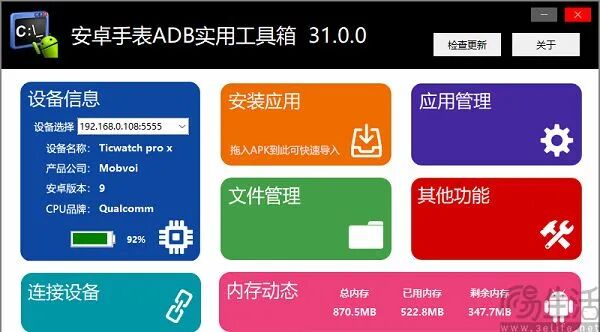
Generally speaking, the "ROOT" that Android users often refer to means unlocking the BootLoader and entering Recovery mode to obtain super administrator privileges, but this path has become increasingly difficult to follow now. Since seven or eight years ago, mobile phone manufacturers have either chosen to no longer provide users with channels to unlock the BootLoader lock, or have greatly raised the threshold for unlocking.
Nowadays, if Android users want to obtain formal ROOT qualifications from mobile phone manufacturers, the twists and turns involved are comparable to the journey of obtaining scriptures with 81 difficulties. Now compliant ROOT is almost "theoretically allowed", so if you want to ROOT your phone and make your device completely belong to you, you naturally have to find another way.
Termux and Shizuku are solutions proposed by Android developers based on the reality that mobile phone manufacturers are tightening BootLoader unlocking. They do not require full Root privileges, but create a system service with higher privileges through ADB, so as to implement functions that can only be achieved based on system APIs, such as Black Domain (managing/restricting app background processes), Permission Dog (managing/restricting app permissions), Ice Box (freezing apps), Install Lion (taking over the system app installation program), and Auto Skip (skipping splash screen ads).
When Google tightens the ADB access scope, it will be difficult for users to send debugging commands to the local system through the emulator on their phones in the future. Although Google's original intention may indeed be to ensure the security of the Android system and prevent hackers from using this channel to attack users' devices, the playability of Android devices will be further reduced.
Obviously this is not a good sign. If in the future, it is difficult for Android to install apps from third-party channels, and it is impossible to perform various functions that mobile phone manufacturers do not open to users, where will the difference between it and iOS be reflected?
Apple can implement the "overprotective parent" style of overall control because iOS provides a stable, convenient and easy-to-use ecosystem. In contrast, in the Android ecosystem, just GMS has divided Android into two parts. Moreover, even for GMS maintained by Google itself, the Play Store is still flooded with all kinds of counterfeit shell apps, and even truly malicious rogue apps.
In other words, although Google says it is tightening the open ecosystem for users' security, it still cannot "clean up the house before inviting guests" on its own.
This article is from the WeChat official account "San Yi Life" (ID: IT-3eLife), written by San Yijun, published with authorization from 36Kr.