Do concerts crowd out sports event schedules? The survival ledger and path to break the deadlock for the "sports-performance game" of large venues
The operational game of large-scale sports stadiums between sports events and performance activities has long gone beyond a simple "scheduling conflict".
In the summer of 2026, the schedules of major urban venues across China have become more crowded than ever before. Popular venues were still packed with crowds for top singers' concerts last weekend, and this weekend they have to rush to repair the lawn for a football match. Looking across to North America, Hard Rock Stadium in Miami, which was renovated and opened to welcome the 2026 FIFA World Cup co-hosted by the United States, Canada and Mexico, just finished its NFL season earlier, and soon launched the lawn replacement and maintenance plan for the World Cup.
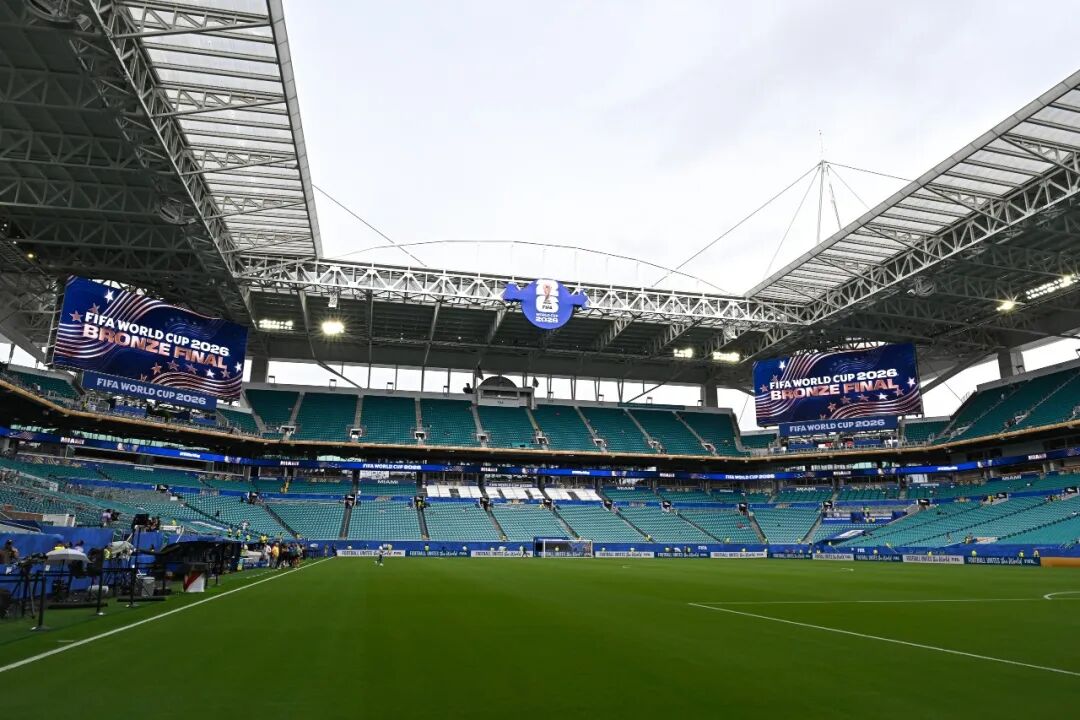
This high-intensity operation with "seamless connection" makes the "scheduling conflict" no longer a simple scheduling problem, but evolves into a fierce game between sports events and performance activities over the resources of large venues. Behind this, there are not only technical difficulties in lawn maintenance and repair, but also the difficult balance of the city's core assets between public welfare attributes and commercial survival, as well as between cash flow and ecological value.
Combined with the operation logic of the 2026 FIFA World Cup venues and cutting-edge domestic cases, I will try to sort out from the following 5 core dimensions and put forward some breakthrough attempts and suggestions.
Core Game: "Ebb and Flow" Under Survival Pressure
From the underlying logic of venue operation, the game between sports events and performance activities is first reflected in the life-and-death choice between "external blood transfusion" and "self-blood production".
At present, the disputes mainly focus on resource competition. Large domestic venues are generally faced with high construction costs and daily maintenance pressures (including facilities, lawns, energy consumption, management costs, etc.). Sports events are featured with "high threshold" and low return, especially high-level sports events (such as World Cup qualifiers, tennis masters tournaments, etc.) have extremely strict requirements on the venue. Taking the maintenance of natural turf as an example, after a high-intensity football match, the turf usually needs a "maintenance period" of up to two weeks, and the maintenance plan needs to be adjusted according to local climate conditions. However, despite the high event specifications, many domestic venues can only charge basic venue rent or operation and maintenance fees when hosting events. Due to the lack of a mature commercial development system (such as high broadcasting rights sharing and long-term VIP ticketing system), the revenue from events is often difficult to cover the management cost of the venue.
In contrast, performance activities, with the characteristics of high box office and fast return, have become a lifeline for venues to "generate income independently". The single-day venue rental income of a concert by a top-tier singer may be equivalent to the sum of the income from several sports events.
This overwhelming commercial logic directly leads to fierce competition for physical space and schedules. The schedules of popular venues usually need to be booked one year in advance. The whole cycle of a concert from setup to performance and then dismantling is relatively long, which is easy to cause irreversible damage to venue hardware such as lawn, so a repair cycle needs to be reserved. At the same time, the high frequency of commercial performances inevitably compresses the opening time of venues as public infrastructure, and the weakening of the "people-benefiting" function has caused many "disputes" that public resources are excessively occupied by commercialization.
Differences in Operation Logic: The Underlying Gap of "Space Efficiency" and "Monetization" Between Chinese and American Venues
The key to solving this game is not to restrict either side in an "either-or" manner, but to improve the "operational flexibility" and "asset value" of the venue. There are fundamental differences in the operation logic between Chinese and American venues, which directly determine the level of space efficiency.
The United States has taken multi-functionality into consideration from the very beginning of the design of large venues. For example, many venues of the 2026 World Cup (such as SoFi Stadium and AT&T Stadium in the United States) were originally NFL football fields, which can not only host sports events, but also be quickly converted into large-scale concert modes through modular design.
Its revenue structure presents several layers: the bottom layer is fixed cash flow for more than ten years such as season tickets, naming rights and annual fees for luxury boxes; the middle layer is venue rent for events and concerts, and ticket revenue sharing; the top layer is non-event income such as commercial development, food, beverage and peripheral products. This mode enables it to achieve extremely high "space efficiency" with non-stop operation all year round.
In contrast, most domestic venues are invested by local governments, and the primary consideration is public welfare services. Their revenue structure is highly dependent on "venue rent". Once there are no large-scale events or performances, the venues will face the dilemma of "locking the gate and leaving the lawn uncared for", with weak risk resistance. In addition, the standards for holding events in domestic venues are inconsistent, making it difficult to form a large secondary closed loop of franchising, commercial entertainment and other sectors like American venues, leading to the situation that "the crowd disperses completely within 20 minutes after the event ends, and no one stays to spend money on a beer".
Cross-border Integration: Shanghai Sample from "Single-point Rental" to "Culture, Business, Tourism and Sports Ecosystem"
Facing the pain points, leading domestic cities are reshaping the space efficiency logic of venues through "cross-border integration". Shanghai's exploration in sports and performance activities provides a good model.
The Chinese F1 Grand Prix has been upgraded from a simple "car engine" to an "economic engine". Through the mode of "Chequered Flag Carnival" and "event + business district", it extends the value of a single ticket stub to the whole city. During the 2026 F1 event, the passenger flow of West Bund Dream Center business district in Xuhui, Shanghai surged by 62.7%, with a direct economic impact of 2.47 billion yuan.
The core of this mode is to transform the venue from a "space provider" to a "content operator". Through the "ticket stub economy", the audience flow inside the venue is converted into "consumption flow" of surrounding catering, accommodation, cultural tourism industries. Today's young people are no longer satisfied with simply "watching a match" or "listening to a song", but pursue "emotional value" and "immersive experience". In response to the consumption trend pursued by young people, venues can try to develop lightweight, site-unrestricted derivatives (such as blind boxes, cultural and creative souvenirs, badges and other peripheral products) to effectively break the limitation of physical space and achieve exponential growth of space efficiency.
The hosting of the 2028 Los Angeles Olympics Qualifier Series once again verifies Shanghai's mature ability to integrate sports event IP into urban public spaces. Judging from the experience in 2024, such urban landscape events (such as rock climbing, skateboarding, BMX, etc.) themselves need to be deeply integrated with urban landmarks, instead of being enclosed in traditional sports venues. This means that the boundary of venue operation is further broken. Events are no longer limited to "inside the venue", but can be extended to the urban public spaces "outside the venue". Operators can take this opportunity to explore the composite operation mode of "event + business district + cultural tourism", and amplify the space efficiency of a single venue into the comprehensive benefit of the urban area.
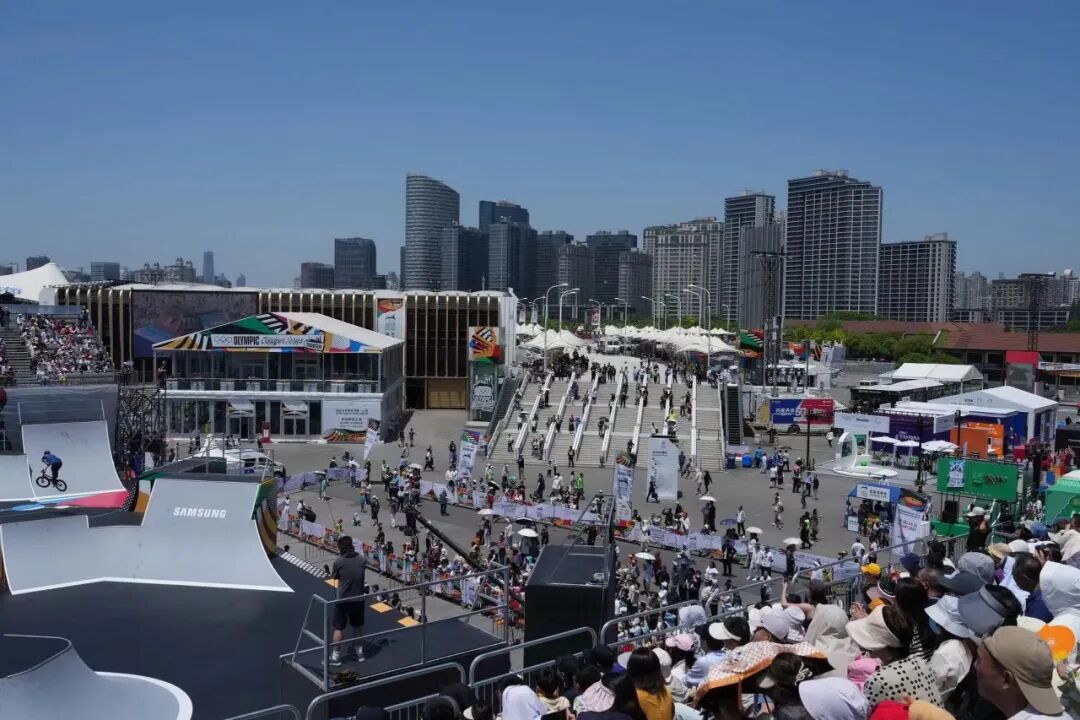
It forms a "relay effect" with the F1 mode, and the event period in May is just after the Chinese F1 Grand Prix (usually held in March). This provides a delicate "time wedge" for the "dual-track of sports and performance" scheduling of large venues in Shanghai, which not only inherits the spring event popularity and cross-city passenger flow brought by F1, but also does not excessively squeeze the golden schedule of concerts. The annual rhythm design of "F1 in spring + Olympic qualifiers in early summer + performance activities in summer vacation" is a mature symbol of venue operation evolving from "single-point rental" to "content planning", which is worthy of reference by other domestic cities.
Breakthrough Layout: Refined Operation and the Future Path of "Dual-track of Sports and Performance"
The future layout of venues must go beyond the zero-sum thinking of "either-or", and move towards refined "dual-track of sports and performance" and "shared benefits for locals and visitors".
The first is the "dynamic balance" of hardware and schedules. Newly built venues must break the "architecture first" thinking, put the market-oriented operation moving line and variable capacity design in the design stage in advance, realize the rapid switching between sports mode and performance mode through modular facilities, and improve the hardware facility system of venues.
Internationally, SoFi Stadium provides a benchmark for modular switching. Opened in 2020, this venue has successively hosted top events such as the Super Bowl and WrestleMania, as well as many concerts of superstars, and will also host the opening and closing ceremonies of the 2028 Olympic Games. Its lawn system adopts a modular design, which can disassemble and replace specific areas without rebuilding the entire surface; when holding large-scale music events, the lawn is usually covered with several layers of protective flooring. During the just-concluded 2026 World Cup, the venue replaced the artificial turf with natural turf that meets FIFA standards, and reconfigured the seats to adapt to the larger football field. This capability of "completing the gorgeous transformation from a football field to a concert stage within 48 hours" is exactly the direction that domestic venues need to catch up with at the hardware level.
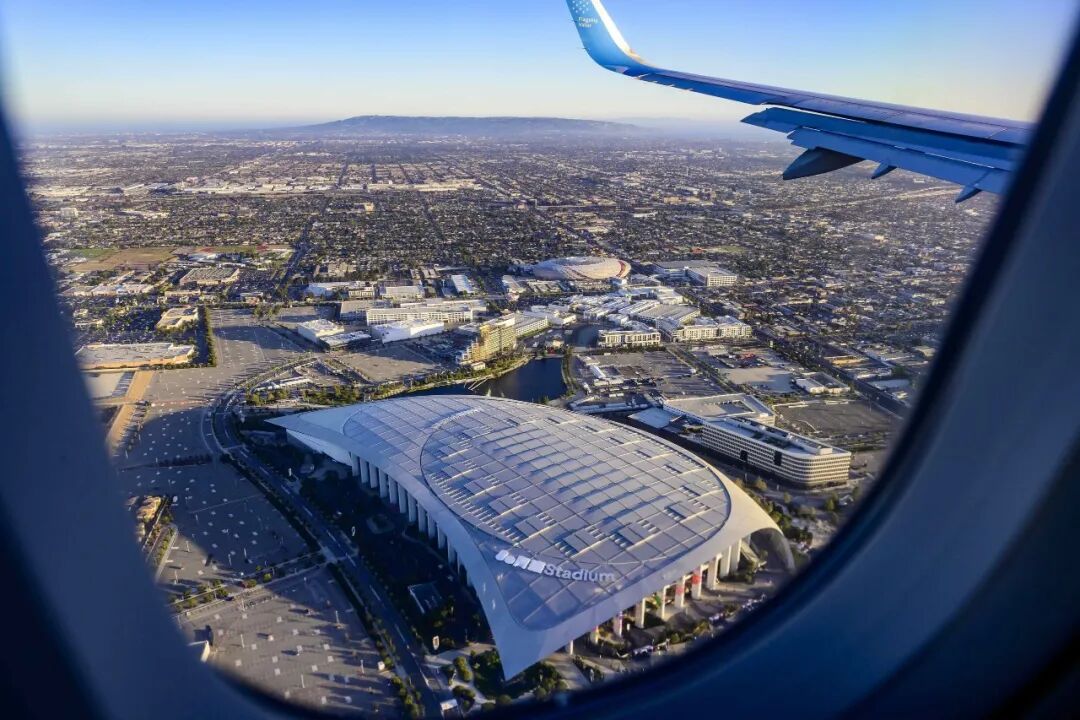
A bird's-eye view of SoFi Stadium
The second is the "refined collaboration" of the management mechanism. In view of the external problems caused by concerts such as disturbing residents and traffic control, urban management needs to establish a cross-departmental special working group for collaboration. Through the linkage of "special policies + urban cultural tourism IP", measures such as public transfer services, free admission to scenic spots, and accommodation and catering discounts are provided to truly form a flow entry for the city.
In 2025, Chengdu Fenghuangshan Wuliangye Cultural and Sports Center hosted more than 150 large-scale cultural and sports events with over 10,000 participants, received nearly 4 million spectators, the weekly comprehensive utilization rate of large events in the venue reached more than 80%, generating a total box office of nearly 2 billion yuan, driving comprehensive consumption of nearly 13 billion yuan. The event and performance flow benefits it created attracted more than 60% of cross-city consumers.
Finally, we need to stick to the livelihood bottom line of "shared benefits for locals and visitors". While pursuing commercial space efficiency, certain public open spaces should be reserved around the venues, so that non-spectator citizens can also enjoy the lively atmosphere and urban vibe around the venues. This is not only the key to resolving public opinion pressure, but also the only way to truly integrate venues into the urban life system and achieve long-term sustainable operation.
Empowered by Technology: The Efficiency Revolution from "Labor-intensive" to "Smart Operation"
At the time node of 2026, the "game between sports events and performances" of large venues can no longer be solved only by traditional scheduling coordination, and AI technology must be used to improve the "density" and "precision" of operation. Combined with the current development trend of the event economy, venue operators should regard digital transformation as a key starting point to solve the survival problems, and build the future ecosystem of "AI venue" to achieve the dual goals of cost reduction, efficiency improvement and experience upgrading.
Intelligent infrastructure can build a digital base for space efficiency improvement. Venue operators should learn to use cutting-edge AI technologies. For example, through the intelligent venue flow system, the thermal distribution, crowd trajectory and consumption preference inside and outside the venue can be captured in real time. Based on these data, the venue can carry out more precise moving line planning and commercial layout between the concert mode and the event mode. During the peak period of audience dispersal after the concert, AI agents push surrounding catering discounts to convert the originally disordered crowd into orderly consumption flow, thus greatly improving the space utilization rate of the venue during non-event periods.
Scene integration: reconstruct the consumption closed loop with the "ticket stub economy". Venue operators can consider developing "sports + performance" virtual space technology to digitize physical ticket stubs and rationalize their assets, while curbing the behavior of illegal vendors selling paper tickets. For example, audiences holding physical tickets can unlock exclusive virtual ticket stubs or themed badges on the venue's intelligent agent platform. This "virtual-real integrated" gameplay can effectively extend users' stay time and emotional stickiness. At the same time, by linking the ticketing system with urban cultural tourism big data, the venue can accurately identify the audience's demands for "sports, performance, tourism and commerce", and provide one-stop packaged services such as "ticket + hotel + scenic spot + catering", so as to truly realize "converting the flow of sports events and performances into development increment".
Refined management: solve the technical problems of "lawn protection" and "scheduling conflict", and try specific solutions with technological means. Modular movable lawn systems and intelligent monitoring equipment can be introduced. At the hardware level, the modular system like that of SoFi Stadium can greatly shorten the switching time from "sports mode" to "performance mode". At the software level, by establishing a full life cycle facility maintenance model, the system can automatically warn of the lawn recovery cycle, and forcibly avoid excessive pressure damage caused by commercial performances, thus ensuring the feasibility of the "dual-track of sports and performance" at the physical level. For venues, the application of AI technology is not only a guarantee to improve the safety coefficient, but also a manifestation of the balance between public welfare attributes and commercial interests. Through technical means, venues can carry more frequent activities at lower costs, and finally achieve the transformation from "space lessor" to "data operator".
Conclusion
The operational game of large venues is ostensibly a conflict between sports events and performance activities, but essentially a trade-off of "urban value". The "dual-wheel drive" mode of "quasi-public welfare + marketization" can resolve the binary opposition between "public welfare vs. commerce". In the future, top-tier venues should no longer be isolated landmark concrete buildings, but become "super interfaces" that connect sports, culture, business, technology and the city. They can not only carry the carnival of tens of thousands of people singing together, but also accommodate the figures of citizens jogging in the morning; they can not only create high commercial space efficiency, but also nourish the urban sports spirit. They not only maintain the public attribute of the venue, but also leave flexible space for commercial operation. This, perhaps, is the ultimate answer to solving the "scheduling conflict".
This article is from the WeChat Official Account "Lanxiong Sports" (ID: lanxiongsports), written by Jia Mu, and published with authorization from 36Kr.