Valued at 20 billion U.S. dollars, FIFA is selling the "equity" of the World Cup to carry out capital operations.
If this plan is implemented, it will mark the first time in history that the World Cup has truly become a veritable "capital game".
The FIFA World Cup has reaped an unexpected extra 2 billion U.S. dollars in revenue, and FIFA has found a new way to make huge profits — by following the sports operation models from the United States, its profit prospects are extremely promising!
FIFA's total revenue for the 4-year cycle of the 2026 FIFA World Cup in the United States, Canada and Mexico (2023-2026) has reached 150 billion U.S. dollars, exceeding the pre-tournament expectation of 130 billion U.S. dollars. The newly introduced official resale ticketing mechanism, as well as the upgraded on-site peripheral and catering sales system and VIP hospitality mechanism built on the ultra-high-standard stadium operation experience of the United States, have ensured that the tournament organizer can continuously generate revenue and achieve extremely lucrative returns.
Still riding the wave of huge profits from the once-every-four-years tournament, FIFA is planning a more ambitious commercial roadmap featuring "in-depth reforms".
FIFA Marches Toward More Profits
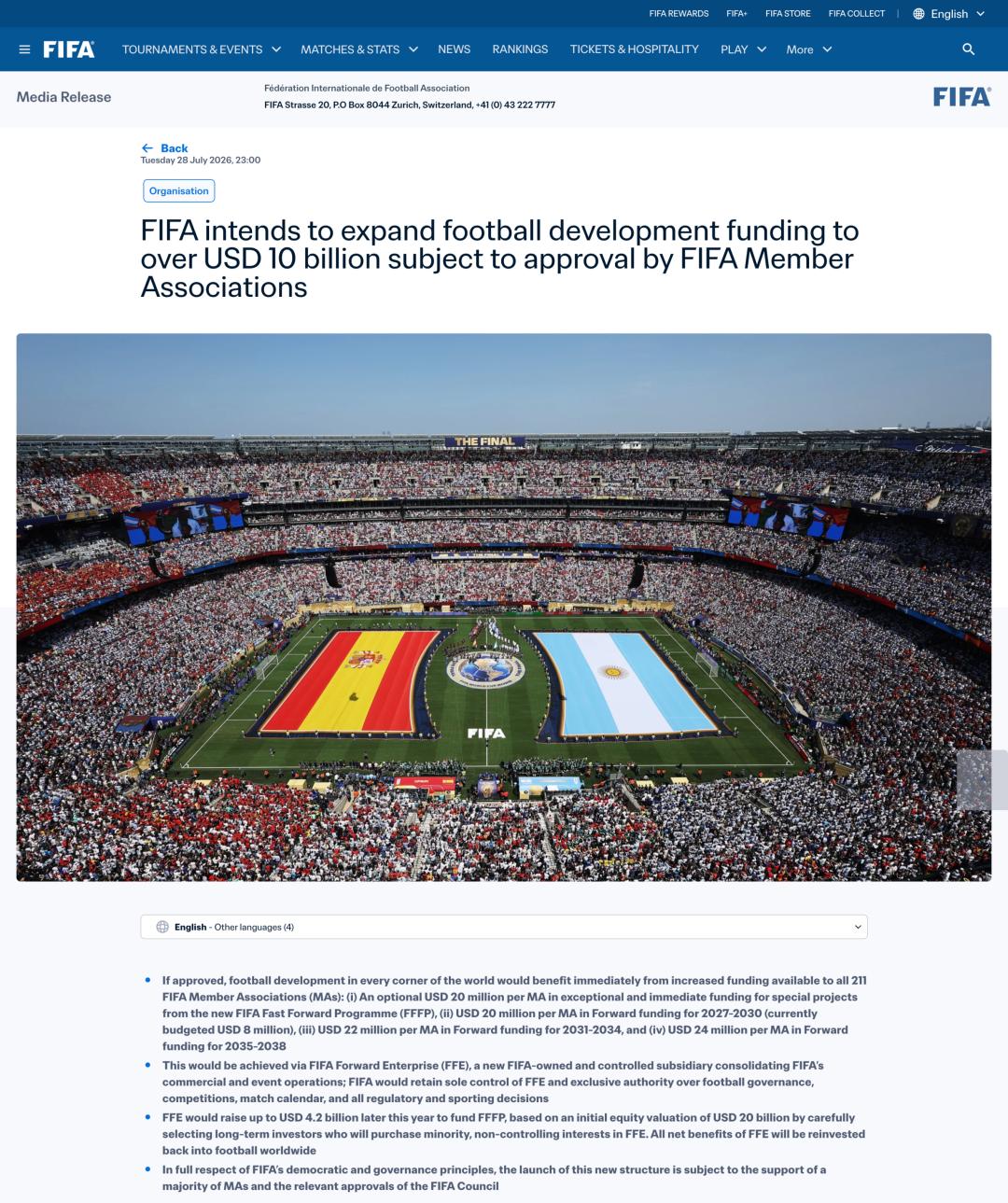
On July 28, FIFA announced plans to establish FIFA Forward Enterprise (abbreviated as FFE), which will serve as the commercial development and management entity for all FIFA-owned tournaments, including the men's and women's FIFA World Cup, the FIFA Club World Cup, and other events.
The most bold step of the newly established company is to sell 21% of its shares to external investors at a valuation of 200 billion U.S. dollars, with a target fundraising amount of 42 billion U.S. dollars.
If this plan is implemented, it will mark the first time in history that the World Cup has truly become a veritable "capital game": FIFA is nominally a "non-profit organization", and all commercial revenue generated by the intellectual property of tournaments like the World Cup is supposed to be used to develop football globally. Previously, other enterprises could only share the dividends of the tournaments by providing execution services for events, or by becoming official commercial partners to obtain the rights to use tournament intellectual property for marketing activities. But now, those so-called "minority shareholders" of FFE will be able to easily enjoy the profit sharing from all FIFA-owned tournaments.
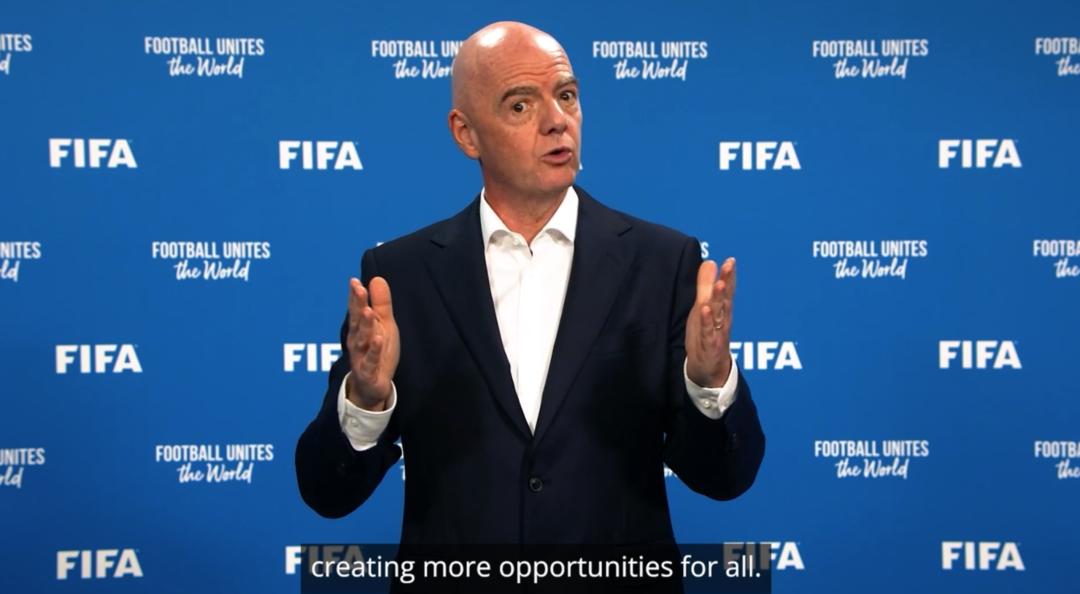
FIFA President Infantino introducing the FFE plan, Source: Screenshot from FIFA official video
Under this circumstance, even the nominal principle that "profits from FIFA tournaments will be used to support football development" has been broken. According to FIFA's previous estimates, FIFA's revenue in 2026 will reach 8.9 billion U.S. dollars, and the cost of hosting the World Cup is 3.7 billion U.S. dollars, leaving a net profit of 5.2 billion U.S. dollars. Investors can get nearly 1.1 billion U.S. dollars in dividends from this sum, and they can use this money to buy sports cars, yachts, wineries, private islands, private jets, and even private armed forces...
Even if we ignore the fact that this financial calculation formula is relatively simple, does not distinguish between "gross profit" and "profit attributable to shareholders", does not take into account the taxes that shareholders need to pay, and does not clarify the specific income and expenditure items of FFE, the core truth is still obvious to all —
The nature of the World Cup's revenue distribution mechanism has been completely changed.
Of course, FIFA still packages this reform with slogans such as "promoting the development of football". FIFA promises that if the share sale of FFE goes smoothly, it will launch the "FIFA Fast Forward Programme", under which each of its 211 member associations can apply for a special subsidy of up to 20 million U.S. dollars. Starting from 2027, the total subsidies that each member association can receive in the next three four-year cycles will reach 66 million U.S. dollars (20 million, 22 million and 24 million U.S. dollars respectively for each cycle).
The expected four-year subsidy under the current "FIFA Forward Programme" is only 8 million U.S. dollars. With a 60% increase in subsidies, does this mean the reform has a promising prospect?
FIFA President Gianni Infantino is expected to win his fourth term in 2027 without any accidents. Four years later, Infantino will have to step down from his position as the head of FIFA. However, if FFE is established, he can take the position of CEO of this company that controls the core revenue lifeline of FIFA.
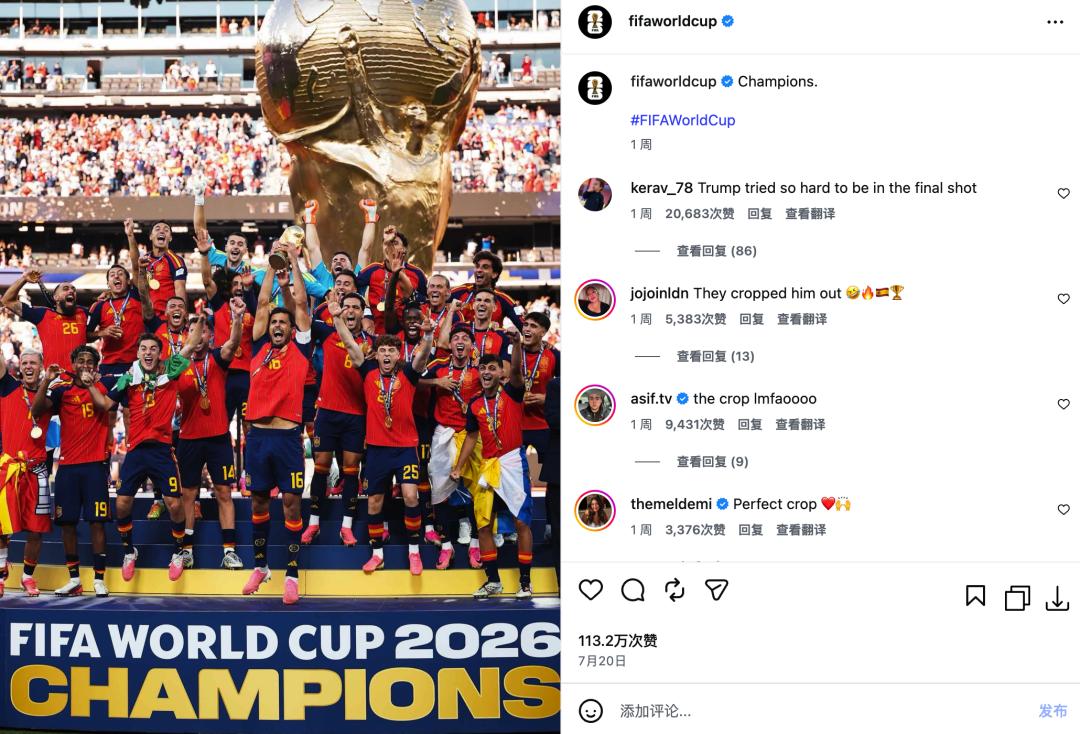
Judging from Infantino's move at the 2026 World Cup award ceremony, when he tried hard to ask U.S. President Donald Trump to give up the center stage, the Swiss man still has his own "bottom line". So we should not demonize the grand blueprint of FFE prematurely, but examine whether it has a realistic foundation for implementation.
Infantino has tried similar capital introduction reforms before. Back in 2018, he intended to introduce investors such as Saudi Arabian capital and Japan's SoftBank Group to launch an expanded World Cup and a new global national league. However, the focus of the controversy at that time was that the global national league would take up too much of the existing match calendar, rather than the problem of capital seeking profits from football.
Now FIFA has clearly cooperated with JPMorgan Chase to polish the FFE financing plan, and Italian financial firm OpenEconomics will also provide suggestions for investor selection. FIFA officially stated that the new investors will be as global as the sport of football, with representatives from Europe, America, Asia, Africa and other regions.
It is expected that the lead investor will be Thrive Capital, whose founder is Joshua Kushner, the brother of Jared Kushner, son-in-law of former U.S. President Trump. Sports website The Athletic also revealed that U.S.-based Apollo Sports Capital is one of the potential investors. The most well-known recent investment of this company is that it became the major shareholder of La Liga powerhouse Atletico Madrid in March 2026.
Professional investment banks are designing the investment mechanism, and candidate investors have been shortlisted. The financial process is the most solid part of the FFE plan.
Strong Opposition from Europe
In terms of public opinion, the World Cup expansion promoted by Infantino has allowed more non-traditional football-developing regions to gain exposure on the world stage, and the promised subsidy increase is indeed very impressive. In FIFA, the traditional European factions still have deep-rooted influence, but under the simple principle of "one member association, one vote" and "the minority is subordinate to the majority", Infantino is fully capable of winning enough supporting votes.
This means that if European forces want to hinder FIFA's plan, they can only take more extreme measures. "This move crosses a line that football governing bodies must never cross...", UEFA released a strongly worded statement, "...the soul and governance of football are not tradable assets — especially when the distribution of financial benefits is completely non-transparent. None of us is the owner of football. It is by no means a commodity that FIFA can sell."
But apart from issuing statements to arouse public resonance, the biggest threat from UEFA is probably the "boycott", which means uniting its member associations to boycott FIFA tournaments including the World Cup.
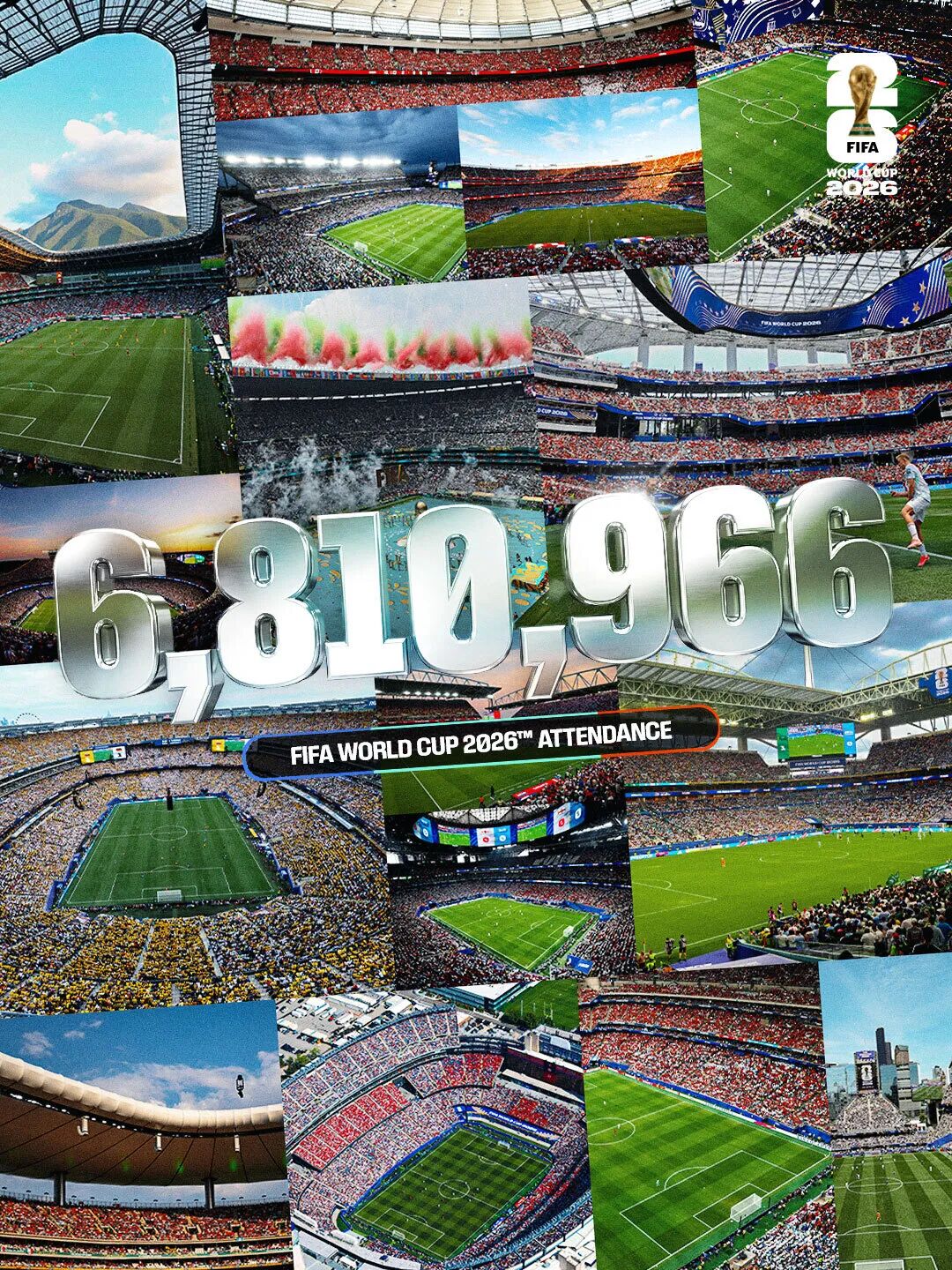
The total attendance of the United States-Canada-Mexico World Cup has exceeded 6.8 million person-times, Source: FIFA social media
Europe is the birthplace of modern football, but the success of the 2026 World Cup in North America has made European football practitioners and fans realize that the world outside Europe is developing rapidly. The high-standard stadiums and fully upgraded sports presentation content have brought a brand-new carnival experience to large-scale football tournaments, which makes European football that takes pride in its "community-based" features feel mixed.
However, the greater the contrast, the more unwilling the European "old money" is to allow the equally "advanced" American financial skills to interfere with the football economy: Europeans have already complained that watching football matches in the United States is too expensive, but they have to admit that the experience is really good. But asking European players to play their best on the pitch while American capital helps FIFA make huge profits in the capital market is absolutely unacceptable.
The confidence of European football lies in the charm of the World Cup, which cannot be separated from both "Europe" and the rest of the "world". The latter guarantees the diversity of the tournament's charm, while the former guarantees the competitiveness of the matches. If the extreme scenario of European football boycotting the World Cup really happens, it will definitely pose a huge threat to the FFE plan.
U.S. Capital "Penetrates" Global Football Circles
Sports Money has been viewing a series of recent football economic events from the perspective of U.S. capital's involvement in European football. The 2021 European Super League incident showed that it is difficult to directly transplant the U.S. sports system to Europe. But from the economic success of the 2026 World Cup to the FFE plan, it reveals another path for U.S. sports to conquer football — to shake the classic confidence of European football with high-level event operation capabilities, to reshape the profit distribution mechanism of the world's top football tournament with financial skills, and finally let the global football industry see that following the U.S. system can bring huge benefits, thus accelerating the penetration of U.S. capital and U.S. operation models.
Sports Money speculates that European football can still unite against common enemies when facing such a major issue. The newly elected British Prime Minister Andy Burnham, who is known for his image as a diehard football fan, has already stood up and called out that "football belongs to fans rather than investors", even if the investors have close ties with his ally Trump. After the new leader of the British Labour Party mobilizes the local fans' sentiment to safeguard traditional football, public opinion may be strong enough to affect the advancement of the FFE plan, just like the European Super League plan collapsed quickly due to the strong opposition of fans of top clubs.
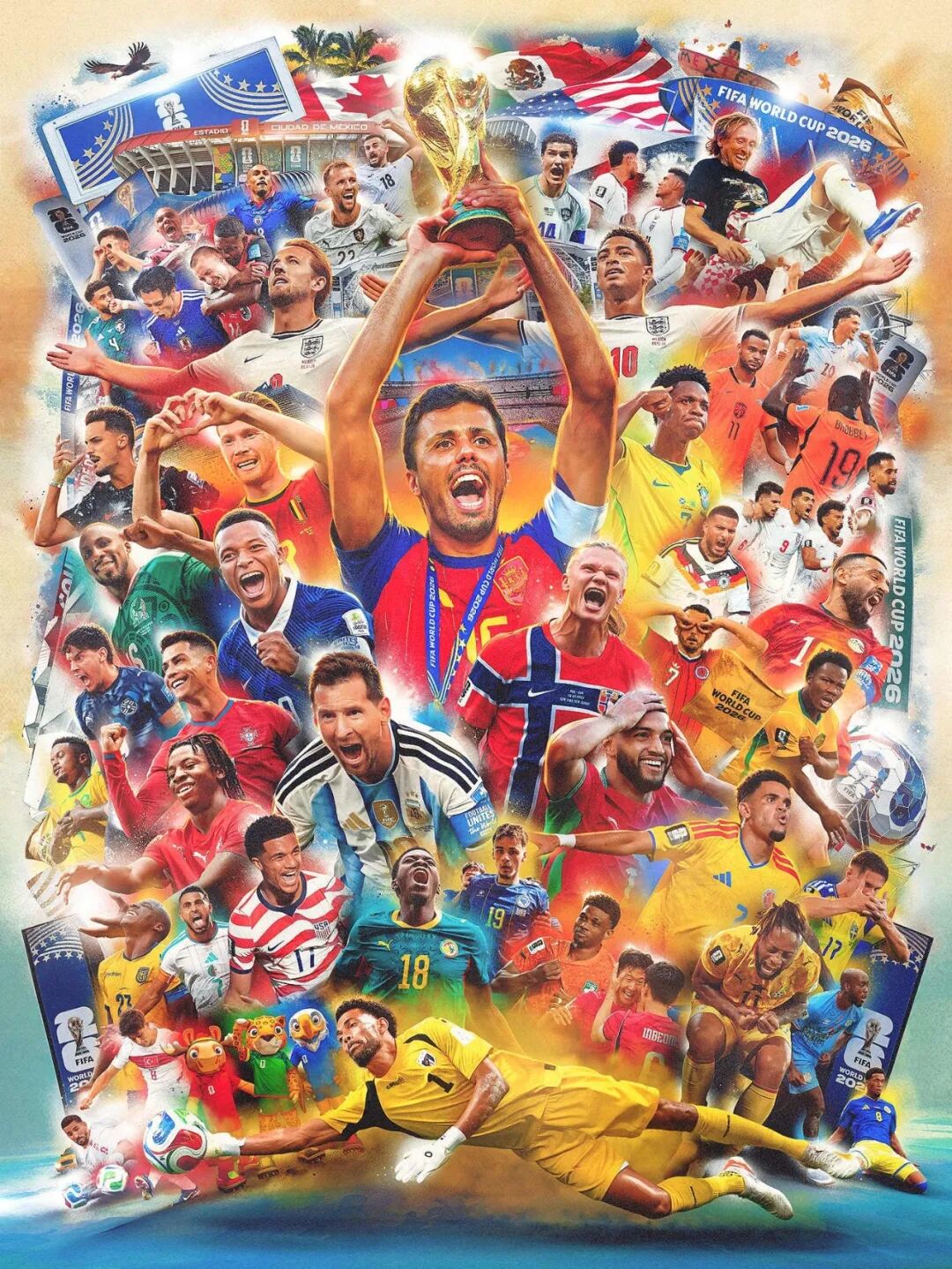
Wonderful moments of the United States-Canada-Mexico World Cup, Source: FIFA social media
Another interesting voice comes from former FIFA President Sepp Blatter, who implicitly mentioned Trump: "The close relationship between FIFA President and the U.S. President has extended to the economic field, which has seriously harmed football." His words sound a bit sour — it was the U.S. Federal Bureau of Investigation that sent Blatter to prison, which allowed Infantino to rise to power, and now he is in charge of a huge football business that Blatter could never imagine in his tenure.
The enemy of my enemy is my friend. The chairmen of Real Madrid and Barcelona, the two giants that still stick to the European Super League plan and confront UEFA and La Liga management, may have reasons to help Infantino lobby for the plan. However, neither of them has made a public statement yet, probably waiting for the right moment to take action.
The positions of intermediate parties and third-party stakeholders in other regions are still unclear, but as mentioned earlier, Infantino has the capital to win over the "third world" football associations. This capital-level confrontation between Europe and the United States has not yet reached the stage where all cards are laid on the table.
But is the FFE plan really a capital profit-seeking move that harms football?
"Harm" is a value judgment issue, and different people with different stances may have different opinions. As for "profit-seeking", we will list some similar scenarios for comparison, and leave the rest for readers to form their own views: La Liga, Bundesliga and Serie A all have plans to introduce external investment to their respective leagues.
The most typical case is the cooperation agreement between La Liga and CVC Capital Partners. La Liga has prepaid 10% of its broadcasting rights and commercial development revenue for the next 50 years in exchange for 2.7 billion euros in financing. Although La Liga is known as the "second best league in the world", it is essentially dominated by two top clubs, Real Madrid and Barcelona, while other clubs have low valuations and high operating pressure, lacking overall competitive advantages compared with clubs in the "world's top" Premier League.
Bundesliga and Serie A are also facing the situation where most clubs have urgent needs to increase revenue, so they are seeking opportunities to use external investment to improve their financial situation.
And FIFA, just happily announced to the public that it has earned an extra 2 billion U.S. dollars in this four-year cycle, reaching a total of 150 billion U.S. dollars.
This article is from the WeChat Official Account "Sports Money" (ID: sportsmoney), written by Luo Ranfeng, authorized for release by 36Kr.