Yangqing Jia has launched a second startup, assembled a powerful AI team, and achieved a 534% speedup for GLM-5.2.
July 29, Zhidx News: Yangqing Jia, AI technical leader, former Vice President of Alibaba Cloud and founder of Lepton AI, has launched a new venture about one month after leaving NVIDIA, announcing the launch of Intent Lab and the establishment of an autonomous AI team named Fleet, aiming to directly convert user-proposed intents into production-grade software systems.
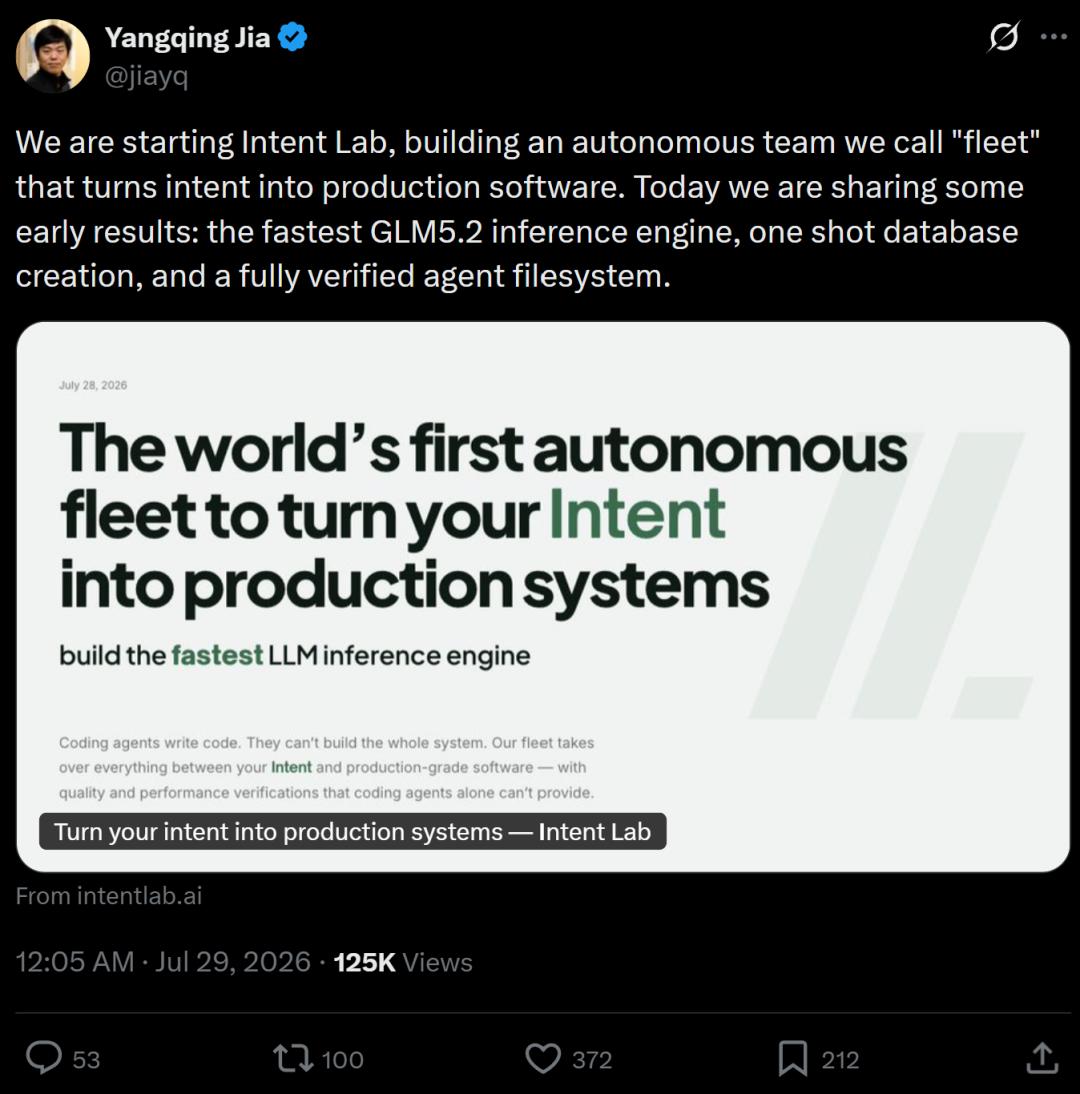
Yangqing Jia introduces Intent Lab's products (Source: X)
Different from coding agents that are mainly responsible for writing code, Fleet attempts to undertake the work of a complete engineering team, from understanding requirements, designing architectures, coordinating tasks, to writing code, testing and verification, and continuous improvement after launch.
Intent Lab has unveiled three early achievements of Fleet this time:
First, by redesigning the code of TensorRT-LLM, the inference optimization tool for large models, the inference speed of GLM-5.2 has been increased by 534%. Intent Lab states that this is currently the fastest inference speed for GLM-5.2.
Second, based on an initial instruction, it builds a database that matches the external behavior of SQLite from scratch. The entire run generates 87.2 million output tokens, and finally passes all 6 million acceptance tests. When all open-source models are used, the cost is about 350 USD (equivalent to about 2368 RMB).
Third, it builds AgentFS, a distributed file system for agents, with some performance reaching 626 times that of EFS, and completes formal model checking of about 1.9 million states and about 300 integration tests.
01. From understanding intents to continuous evolution, covering six links of software development
Intent Lab states that Fleet works like a software team following engineering principles, and the entire development process includes six links: understanding, design, coordination, construction, verification and evolution.
Since most projects start with a relatively vague intent, Fleet will first clarify the goal together with the user, convert it into specific results, and define constraints and acceptance criteria. All subsequent work will be carried out around these criteria.
After completing requirement understanding, Fleet will weigh different solutions, determine the system interface and architecture that meet the requirements, and continuously record how each decision will affect other parts of the system. For large systems composed of multiple components, it will also split tasks, assign responsibilities, and manage dependencies between tasks.
Later, Fleet will improve the design while implementing the system. When new information emerges during the development process, it will update the architecture and code synchronously to keep the design scheme consistent with the actually running system. Verification will also run through the entire construction process. Fleet will comprehensively use methods such as formal proof, integration testing, and runtime fault injection to discover problems as much as possible while the code is still changing.
After the software is put into production, Fleet's work will not stop. It will continue to observe the actual performance of the system, and feed back information such as usage, performance and cost to the design, so that the software can continuously improve as user needs change.
02. GLM-5.2 inference speed increased by 534% to 647 token/s
The first task Intent Lab set for Fleet was to redesign the code of TensorRT-LLM, NVIDIA's large model inference optimization tool, so that GLM-5.2 runs on the Grace Blackwell computing node, and independently finds, implements and verifies optimization solutions.
Since TRT-LLM itself has undergone a large number of performance optimizations, it is not easy to further increase the speed. Fleet finally starts from four aspects: kernel, runtime, communication and speculative decoding.
At the kernel level, Fleet reduces kernel startup through kernel fusion and PTX and SASS code generated by agents, increasing inference performance by 24%; at the runtime level, it uses H2D batching to achieve zero-copy steady-state decoding, increasing performance by 16%; at the communication level, it integrates collective communication, residual addition and RMSNorm, increasing performance by 18%; in terms of speculative decoding, it adds DSpark to propose and verify multiple candidate tokens at one time, further increasing the inference speed by about 4 times. In the end, the end-to-end inference performance is 534% higher than the original TRT-LLM.
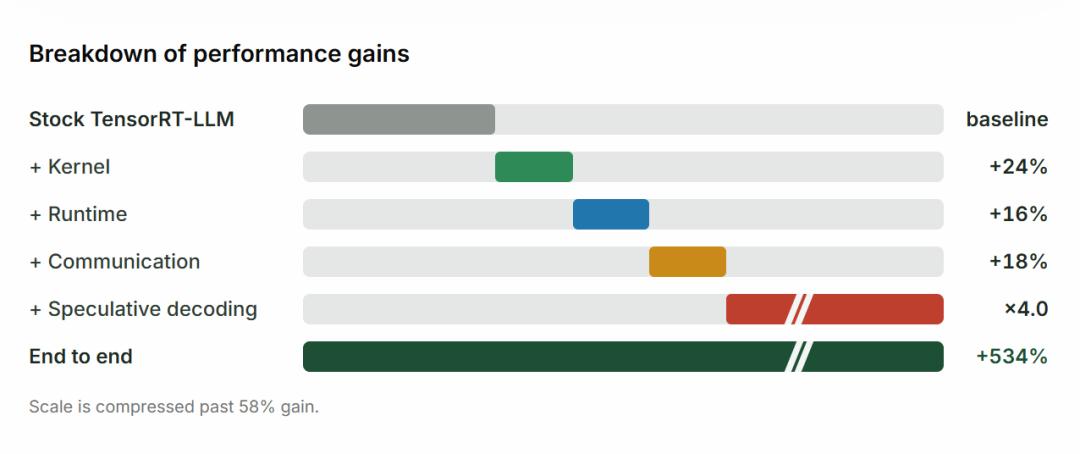
Performance improvement of kernel, runtime, communication and speculative decoding (Source: Intent Lab)
The entire optimization process is independently advanced by Fleet. The system first analyzes the performance upper limit, identifies bottlenecks, then proposes and verifies optimization solutions. Solutions that fail to pass the verification will be abandoned and retried, and solutions that pass the verification will be retained before entering the next round of optimization.
Test results show that the speed of the original TensorRT-LLM running GLM-5.2 is 102 token/s, which increases to 161 token/s after completing kernel, runtime and communication optimizations, and reaches 647 token/s after adding DSpark, with an end-to-end performance increase of 534%.
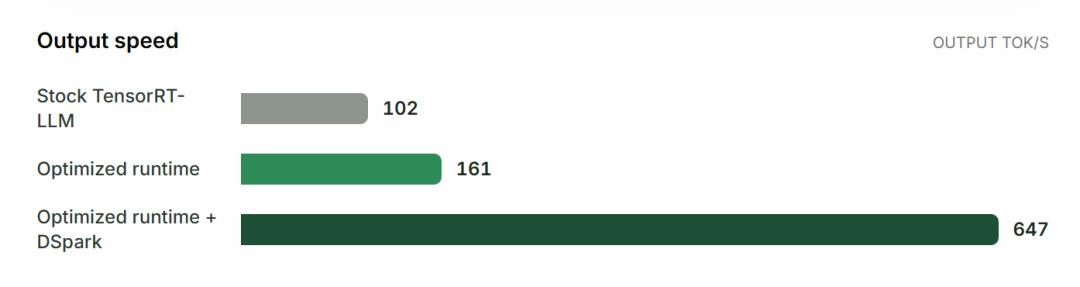
Output speed improvement (Source: Intent Lab)
According to Intent Lab, this is also the fastest inference speed GLM-5.2 has achieved so far. The whole process is completed end-to-end by Fleet without human intervention.
03. Build a database from scratch with one instruction, generating 87.2 million output tokens
Fleet's second task is to build a new system that is compatible with existing systems but has a completely internally redesigned architecture from scratch.
System modernization is not simply modifying old code, but redesigning the internal architecture while keeping external behavior unchanged. In this task, Fleet did not refer to SQLite's existing code and documentation, but took the SQLite test suite as the acceptance criterion.
Intent Lab only provided one instruction: "Build a SQL database engine compatible with SQLite, so that it can pass all sqllogictest test cases, with performance reaching or exceeding SQLite."
Fleet divides the work into different roles such as decision-making, architecture design, coding, testing, review, and quality assurance. All roles collaborate repeatedly throughout the process, continuously adjusting the design, conducting tests and reviews as the code changes.
The entire run generates a total of 87.2 million output tokens. Among them, coding accounts for 38.6%, testing accounts for 21.7%, decision-making and architecture design account for 17.8% and 13.3% respectively, and review and quality assurance together account for 8.6%. This means that building a database is not just about generating code, a lot of work is also spent on design, decision-making and verification.
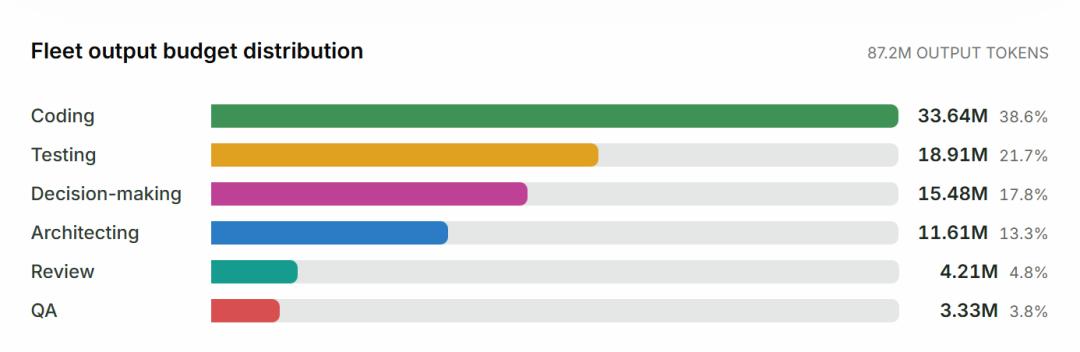
Distribution of Fleet's output tokens (Source: Intent Lab)
Fleet completed the database modernization transformation with only one line of prompt words, designed and verified the system from scratch, and finally passed all 6 million acceptance tests.
The same Fleet can use different models to complete tasks. When using Opus 4.8, the cost of the entire run is about 2000 USD (equivalent to about 13532 RMB); when all open-source models are used, the cost is about 350 USD (equivalent to about 2368 RMB).
04. Build a distributed file system from scratch, with directory query speed reaching 626 times
Fleet's third task is to build a distributed file system optimized for agent usage patterns in a cloud environment, and strictly check its correctness and fault tolerance.
Agents frequently create sandboxes, scan directories, and process a large number of small files in shared cloud storage. Intent Lab tried off-the-shelf solutions such as Amazon EFS and S3FS, but these products all have limitations under agent workloads, so Fleet built AgentFS from scratch.
In the mdtest test, the speed of AgentFS performing directory and file creation operations is 45 times that of EFS, and the file reading speed is 30 times that of EFS. In the state query operations frequently used by agents, its advantages are even more obvious: the directory state query speed reaches 626 times that of EFS, and the file state query speed reaches 625 times that of EFS.
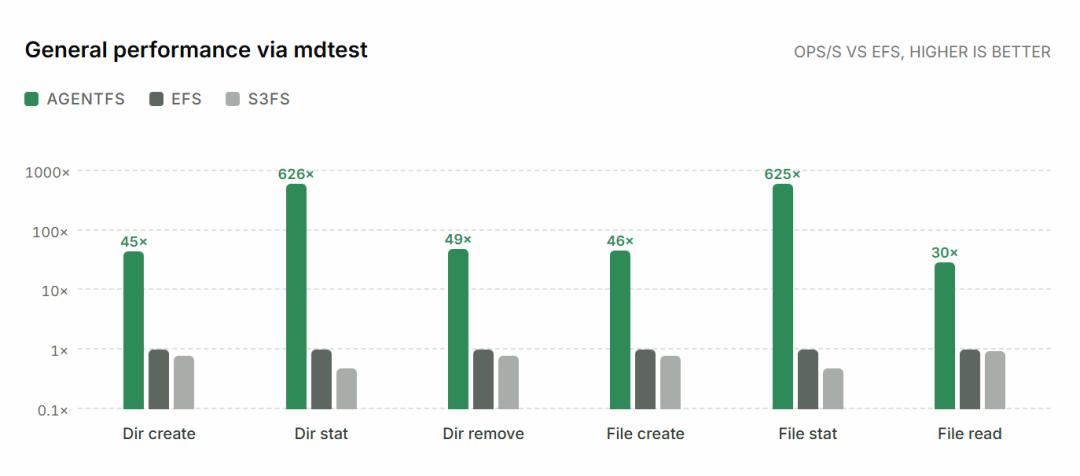
mdtest test results (Source: Intent Lab)
In the Git repository test, the speed of AgentFS cloning the repository is about 2.5 to 3 times that of EFS, the speed of querying repository status is about 6.9 to 9.5 times that of EFS, and the speed of deleting the repository is about 13 to 14 times that of EFS. The tests used etcd and Kubernetes as small and large code repositories respectively. S3FS failed to fully check out the Kubernetes repository, so only partial results were obtained.
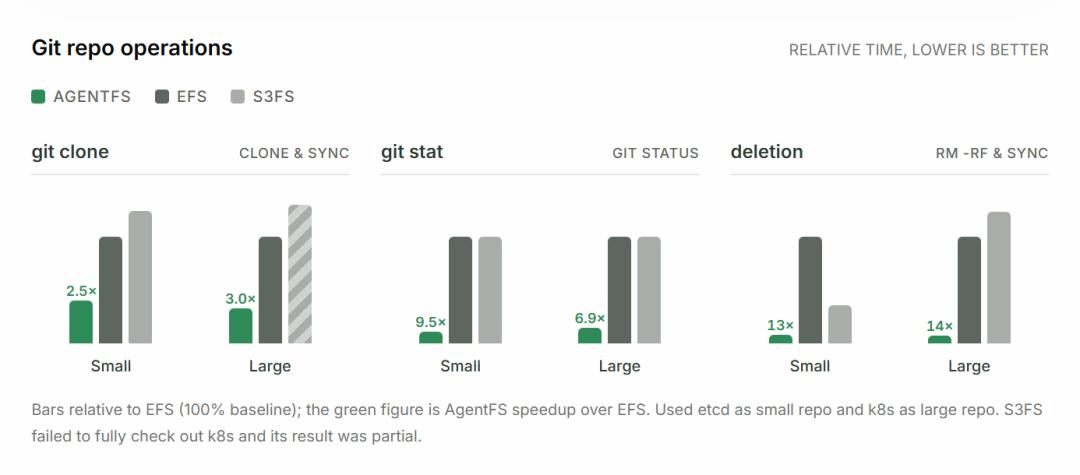
Git repository test results (Source: Intent Lab)
In addition to performance, AgentFS has also undergone strict verification. Fleet checked about 1.9 million reachable states in 31 models, covering different concurrency sequences, system crashes and race conditions. AgentFS also completed about 300 integration tests, as well as fault injection and fuzz testing.
During the verification process, Fleet discovered a bug introduced by the coding agent, which may cause data corruption in distributed creation and deletion operations. After fixing and re-verifying, the corrupted state in the system was eliminated.
05. Conclusion: From "AI writing code" to "AI building systems"
Intent Lab attempts to let multiple agents form an autonomous engineering team with different divisions of labor. From inference engine optimization, database reconstruction to distributed file system creation, Fleet needs to design solutions, coordinate tasks, complete development and verify results by itself. This means that AI programming is trying to step beyond the simple code generation link and further enter the complete software engineering process.
However, these are still early results announced by Intent Lab. Whether autonomous AI teams can stably handle more complex real-world projects and run for a long time at an acceptable cost requires more practical verification.
This article is from the WeChat official account "Zhidx" (ID: zhidxc om), Author: Yang Jingli, Editor: Li Shuiqing, published with authorization from 36Kr.