A major mining enterprise that raised 2.7 billion yuan in financing has transformed its business to become an AI data center landlord and successfully completed its IPO.
A company that rose from the ruins of Bitcoin mining sites has just made its debut on the Nasdaq.
On July 28, 2026, Ionic Digital listed on the Nasdaq under the ticker symbol "IOND". Its share price surged 25% on the first trading day, pushing its market capitalization to approximately 2.4 billion US dollars.
Just a few weeks prior, it closed a 400 million US dollar (2.7 billion RMB) private financing round, co-led by Attestor, Oaktree Capital, and Sachem Head, with Citadel participating as a follow-on investor.
The pre-money valuation of this financing round stood at 2 billion US dollars.
Ionic Digital's business model is straightforward: it converts low-cost electricity and land in Texas into AI data centers, which are then fully leased to cloud vendors and AI enterprises.
More crucially, even before the data centers are fully completed, the company has secured 2 billion US dollars worth of pre-committed orders.
On the listing day, CEO Matt Prusak made a frank remark: "The market is rewarding us for repurposing Bitcoin mining facilities into AI data centers."
The story of this company is worth exploring in depth: it grew out of the 2022 bankruptcy of crypto giant Celsius Network, emerging from a messy predicament to become a new player in the AI computing infrastructure track.
01 Orders Come Before Data Centers
Ionic Digital's operation model is different from most AI computing power companies — it signs contracts first, then builds the data centers.
In October 2025, it signed a 10.5-year lease agreement with Nscale, a global cloud service provider. Ionic's flagship data center located in Ward County, Texas, with a total capacity of 234 MW, is fully leased to Nscale. The total value of the contract is approximately 1.95 billion US dollars.
In February 2026, the two parties renewed the agreement: Nscale committed to leasing an additional 89 MW under the same terms. If the expansion is completed smoothly in the second half of 2027, the total contract value will rise to around 2.6 billion US dollars.
To put it simply: a 234 MW data center, which is still under construction, has already locked in at least 2 billion US dollars in revenue over the next ten years. What's more, it is a "triple net lease" — the tenant bears all taxes, insurance, and maintenance costs, meaning Ionic essentially collects rent passively.
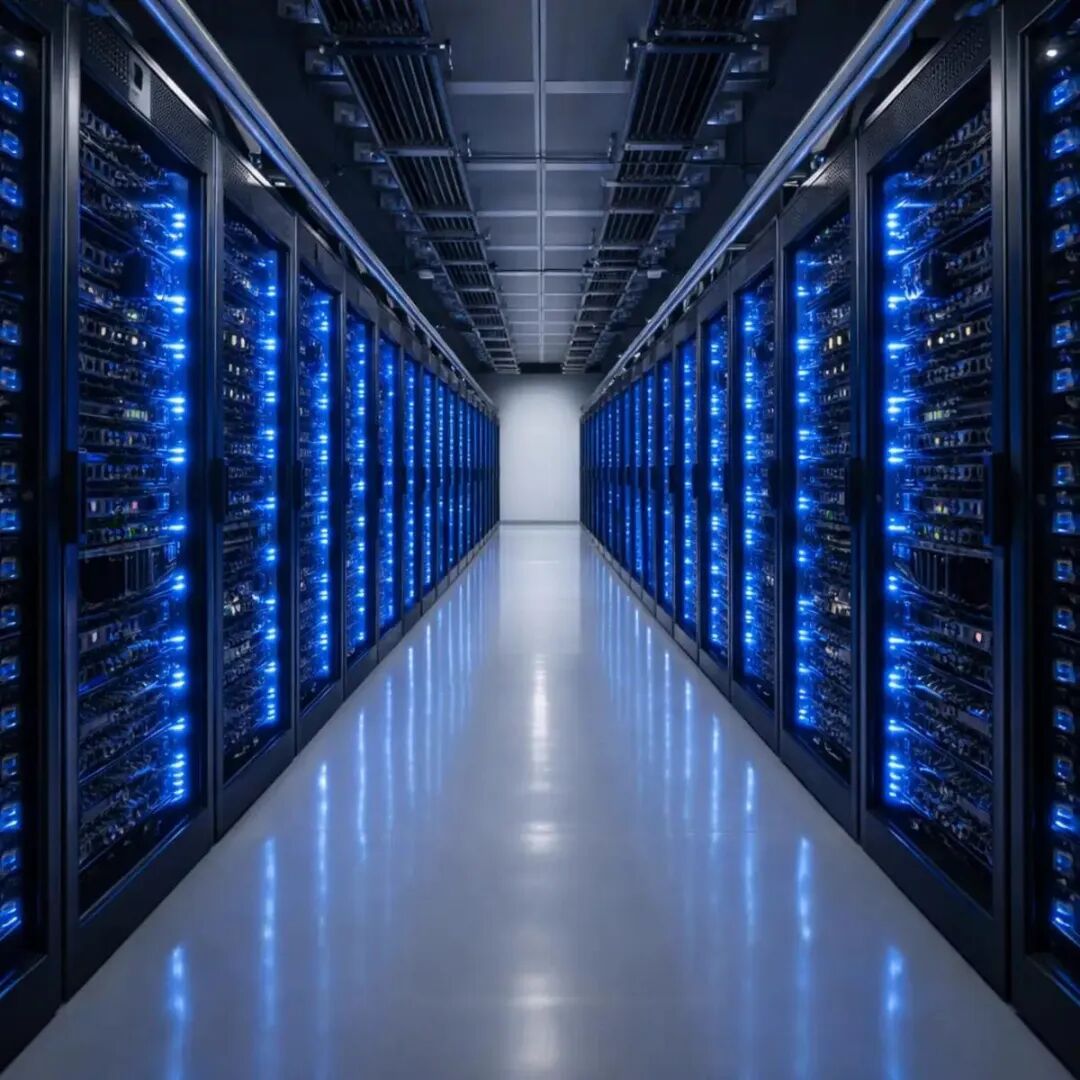
Interior of a modern data center server room Source: swikblog
The transformation results are already reflected in the financial statements. In the first quarter of 2026, the company's revenue reached 51.4 million US dollars, of which data center leasing accounted for 44 million US dollars, and Bitcoin mining only contributed 7.4 million US dollars. A year earlier, all of its revenue came from mining — the figure for Q1 2025 was 41.1 million US dollars.
The company projects full-year 2026 revenue to be between 190 million and 195 million US dollars. Though it is still operating at a loss — mainly due to one-off upfront investments in data center construction — the cash flow returns are already predictable.
The logic is straightforward: electricity is cheap in Texas, high-power computing data centers are scarce, and rental prices are on the rise, while Ionic has already locked in long-term lease agreements. As long as the data centers operate normally, revenue will keep flowing in steadily.
The listing approach is also notable. Instead of taking the traditional IPO route, Ionic opted for a direct listing: no new shares were issued, no new capital was raised, and existing shareholders directly sold their outstanding shares.
Having already raised 400 million US dollars in financing in June, the company has sufficient cash on hand. The benefits of a direct listing include no dilution of existing shareholders' equity and no need to pay high underwriting fees. JPMorgan Chase, Jefferies and BTIG provided advisory services for the listing.
Meanwhile, Ionic also announced its Q2 2026 performance guidance: projected revenue ranges from 48 million to 51 million US dollars, and adjusted EBITDA is expected to be between 10 million and 12 million US dollars.
02 Others Chase GPUs, Ionic Secures Power Supply
This track is far from empty, with a number of leading players already in the market.
CoreWeave — a GPU cloud service provider built specifically for high-performance computing, focused on supporting large-scale AI and machine learning workloads. It has signed multi-year agreements with Core Scientific to expand its infrastructure to Texas, Nebraska and Ohio, with a total capacity of up to 1.3 GW.
Lambda Labs — a provider of AI computing cloud services, charges 2.99 US dollars per hour for H100 GPU usage and 0.3 US dollars per million tokens for API services, taking a cost-effective market positioning.
Vast Data — focused on AI data center infrastructure, with partnerships with both CoreWeave and Lambda, specializing in underlying storage and data management.
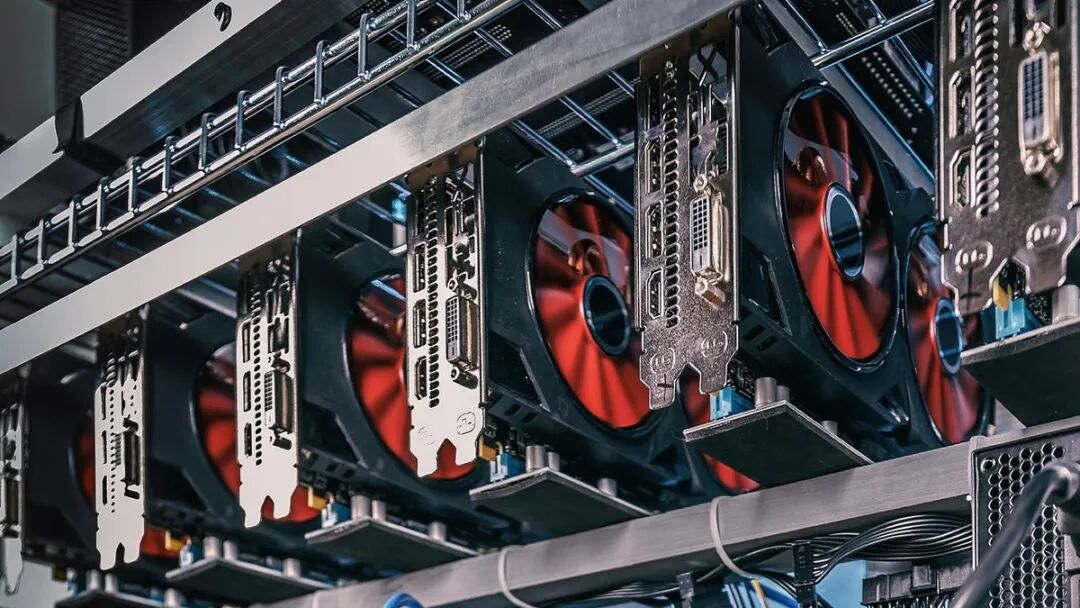
High-performance GPU server racks
Core Scientific — Ionic's most direct competitor. Having also transformed from Bitcoin mining facilities to AI data centers, it signed a 15-year 529 MW infrastructure cooperation agreement with AMD on July 27, 2026, which is expected to generate more than 14 billion US dollars in base contractual revenue.
These players have different focuses, but they all share the same core logic: to ensure AI enterprises have access to sufficient computing power.
Ionic's distinctiveness lies in its starting point: power supply, not computing power.
Building data centers in-house is capital-intensive and generates returns slowly, but it allows for strong cost control. In a business where electricity prices determine profit margins, the party with the cheapest electricity holds the dominant position. The 234 MW power capacity of its Ward County data center already forms its strongest competitive moat.
Electricity is becoming the most scarce resource in the AI industry. Whoever secures large-scale power supply first will gain pricing power.
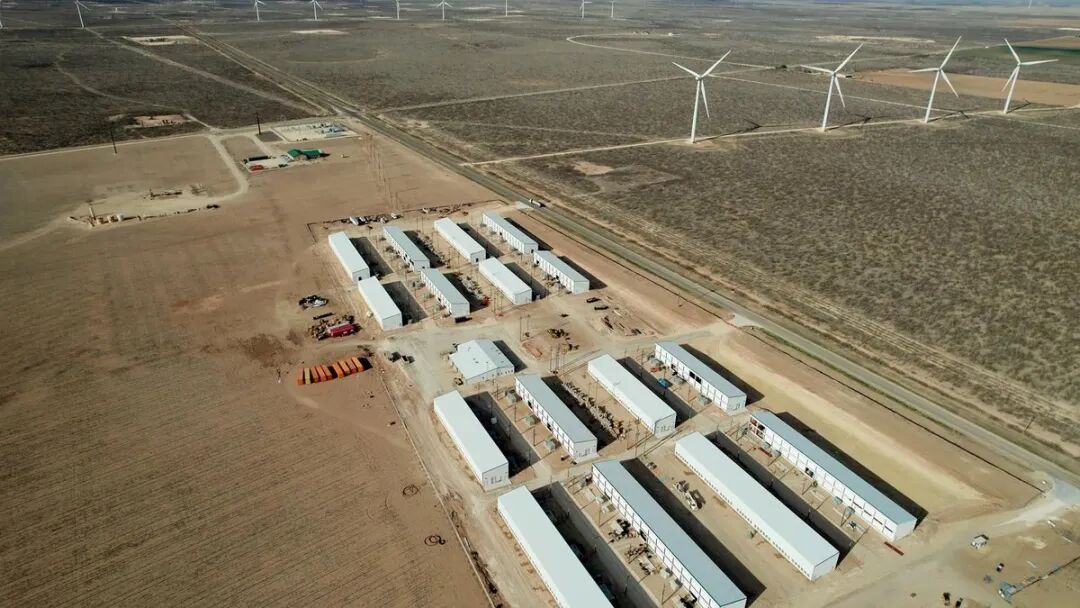
Aerial view of a large-scale computing mining site in Texas, equipped with wind power generation facilities Source: easymining
Ionic is still expanding its capacity. It plans to increase the capacity of its Ward County site from 234 MW to 700 MW, with an additional 40 million US dollars of investment scheduled for the first half of 2027.
Where will the funding come from? Its existing cash reserves, or partial sale of its Bitcoin holdings. CEO Prusak stated after the listing: "We are already one of the largest power-intensive data center campuses in Texas, and we are actively exploring partnerships to advance multi-gigawatt scale expansion in Ward County."
Speaking of Bitcoin — as of March 31, 2026, Ionic holds approximately 120,600 mining rigs, but only around 23,200 of them are in operation, with the total computing power dropping to 2.0 EH/s, mainly due to aging mining rigs and economic considerations amid high electricity prices.
In the first quarter of 2026, the company mined 95.7 Bitcoins, all of which remain unsold, bringing its total Bitcoin holdings at the end of the quarter to 2,861 units. Based on the market price at that time, this was worth around 250 million US dollars. Its strategy is to "mine first and do not sell", which is equivalent to holding a call option on Bitcoin.
However, the Bitcoin mining business is shrinking at an accelerated pace. In Q1 2026, Bitcoin mining revenue plummeted 82% year-on-year, accounting for less than 15% of the company's total revenue.
The company still retains mining operations at four sites in the Midland area of Texas, with a total power capacity of 112 MW, but its core focus has fully shifted to AI data center leasing.
In addition, there is a familiar face on Ionic's board of directors — former Core Scientific CEO Mike Levitt. He joined the board of Ionic Digital in April 2026, serving as a member of the Audit Committee and the Compensation Committee.
The addition of a senior executive from a rival company to the board indicates that Ionic is taking this transformation battle very seriously.
03 Capital Is Shifting From "Betting on Models" to "Betting on Power Meters"
Ionic's financing and listing send a clear signal: the capital market is shifting its focus from "betting on AI models" to "betting on power meters".
Over the past two years, capital has been pouring into AI companies building large models. However, large models are burning cash at an increasingly fast pace, while the path to commercialization is becoming more and more ambiguous. Computing power leasing is different — its logic is simple: use electricity to build data centers, lease the facilities to AI companies, and collect rent. Revenue is predictable, and cash flow can be accurately calculated.
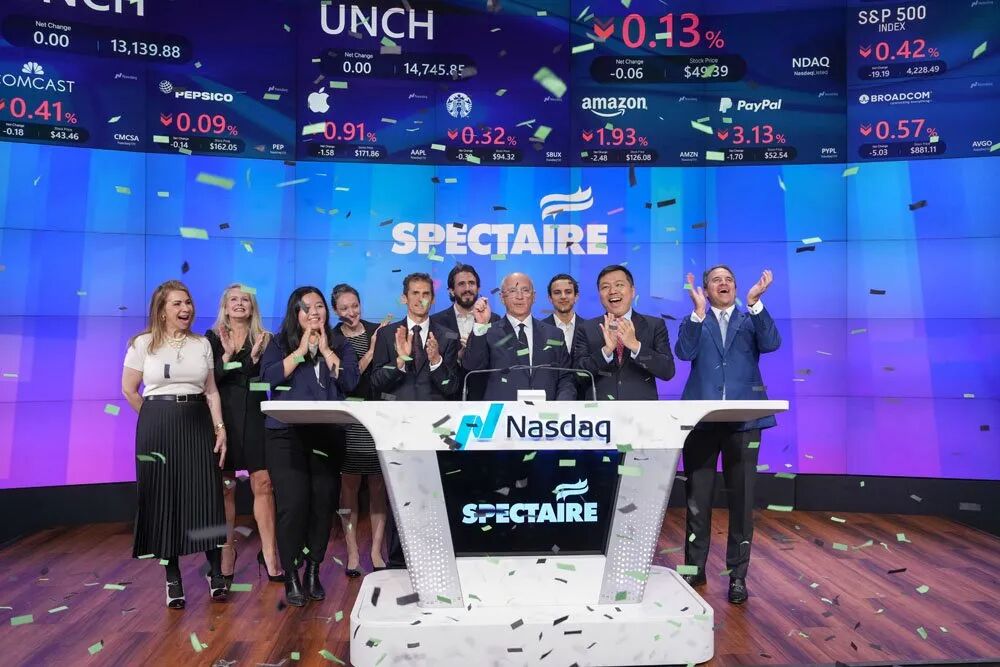
Nasdaq listing bell-ringing ceremony Source: Official website of Nasdaq
Looking at Ionic's order structure, it is easy to see that a 10.5-year lease has locked in 2 billion US dollars in revenue. This level of "revenue visibility" is extremely rare in the AI industry. Even OpenAI cannot predict how much revenue it will generate next year, but Ionic knows exactly how much rent it will receive each year over the next decade.
This is why traditional asset investors like Oaktree Capital are placing bets on it — they are not betting on specific technical routes, but on the fact that "places with cheap electricity will always have demand for computing data centers".
The story of Ionic Digital tells us that from the Bitcoin mining crash, the most scarce asset in the AI era has emerged — electricity.
It did not turn around thanks to technological breakthroughs, but by transforming the most cumbersome, least glamorous assets (electricity, land, data centers) into the most valuable ticket to the AI era. From a bankrupt mining site to the Nasdaq, the only thing in between is a successful transformation.
For entrepreneurs, the inspiration from this case is that the AI industry is undergoing a transition from "model competition" to "resource positioning". Whoever locks in large-scale, low-cost power supply first will take the lead.
Of course, the risks are also obvious: the tenant base is highly concentrated, with Nscale accounting for almost all of the company's revenue. If Nscale runs into operational problems one day, the 2 billion US dollars worth of orders will become nothing but paper value.
Ionic also explicitly lists "tenant default risk" as one of its most important risk factors in its prospectus.
The company is currently highly dependent on Nscale's ability to pay rent, and any credit event involving the tenant may have a significant adverse impact on the company's financial position.
Another risk relates to construction progress. Ionic's Ward County data center is still in the expansion phase. Any construction delays, cost overruns, or equipment delivery lags will affect the timeline for revenue recognition.
But at least for the next ten years, Ionic Digital has firmly tied itself to the AI computing infrastructure track. How far it can go will depend on how much power supply it can secure and how many data centers it can build.
As CEO Prusak said: "Now is the perfect time to leverage the incredible tailwinds of artificial intelligence, and we are excited to execute our growth plans through our innovative business model."
This article is from the WeChat Official Account "Pencil News" (ID: pencilnews), authored by Pencil News, and published with authorization from 36Kr.