Codex finally surpassed Claude Code, but at a heavy cost.
Sam Altman of OpenAI recently attended an interview.
In the interview, he described OpenAI's decision to catch up with Claude Code as a "kamikaze mission". This term is chosen for a reason: the essence of a kamikaze mission has never been courage, but a total disregard for any cost.
To make its coding product Codex catch up with Claude Code, OpenAI shut down the video generation tool Sora in the past six months, axed the independent browser Atlas, multiplied its internal coding computing power by 100 times, and allowed a set of user subsidy systems with almost no upper limit.
The host asked Altman: "Won't Sora be successful?" "No, it will be extremely successful," he said, "It's just that devoting more computing power and energy to coding agents is more important."
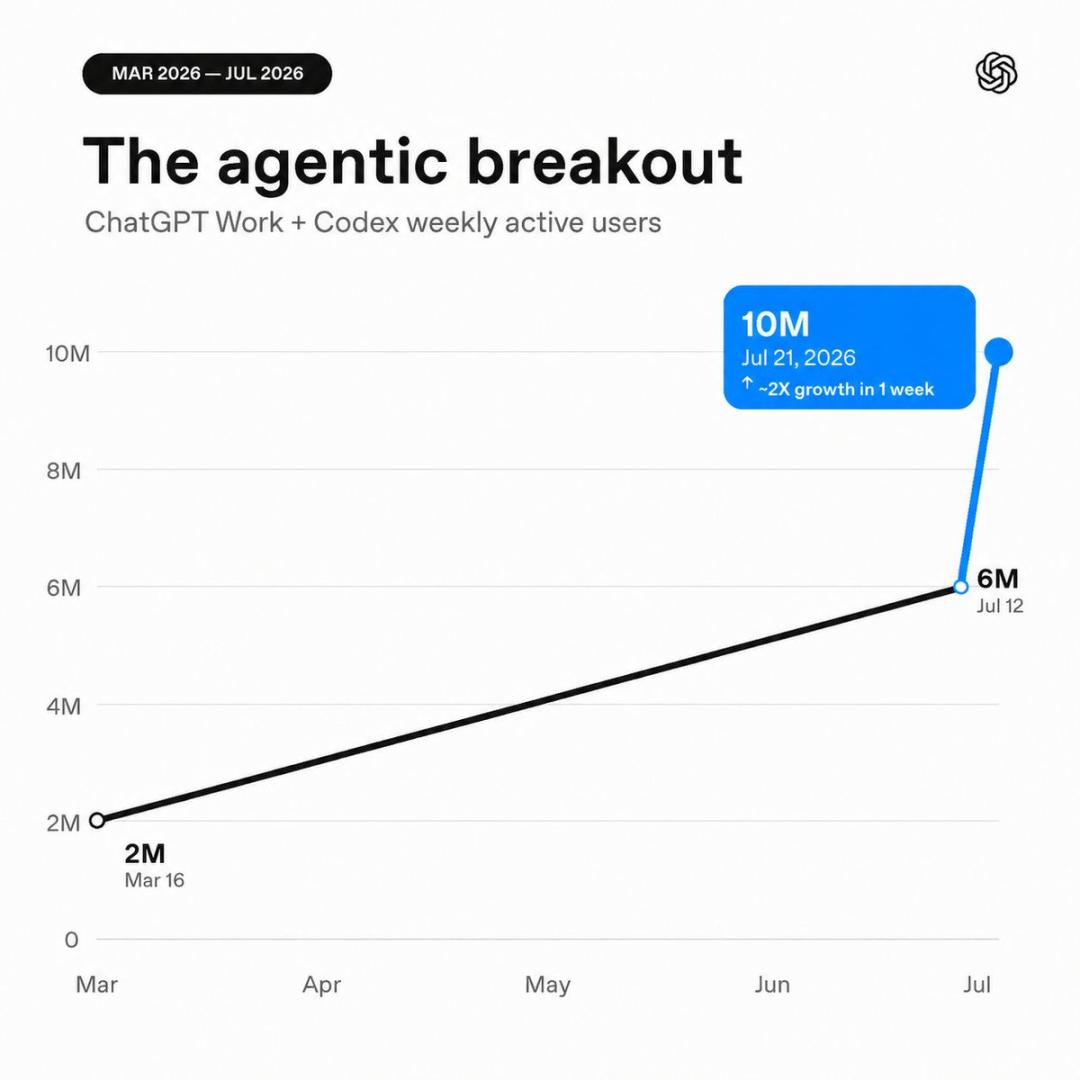
The outcome of this kamikaze mission is obvious to all. This July, the combined weekly active users of Codex and ChatGPT Work have exceeded 10 million. This catch-up took only half a year. How did OpenAI pull it off?
A battle that should never have been fought
At the beginning of this year, if you stopped any developer at random and asked "Have you used Codex?", you would most likely get a rhetorical question: "What is Codex?"
No one can be blamed for that.
A global survey by JetBrains in January this year showed that only 3% of developers used Codex at work, and less than 30% had even heard of the name.
During the same period, six months after Claude Code was launched, its annualized revenue had already hit 1 billion US dollars. By February, the figure had crossed 2.5 billion.
In Menlo Ventures' estimate of generative AI spending by US enterprises, Anthropic took 54% of the coding market share, while OpenAI only took 21%.
With such a huge gap, Claude Code is no longer just a product, it has almost become a work habit. It directly reads code repositories, modifies files, runs tests in the terminal, fixes errors by itself, and continues working after repairs. For the first time, developers found that they could hand over entire tasks to the model to complete, instead of asking line by line and pasting section by section.
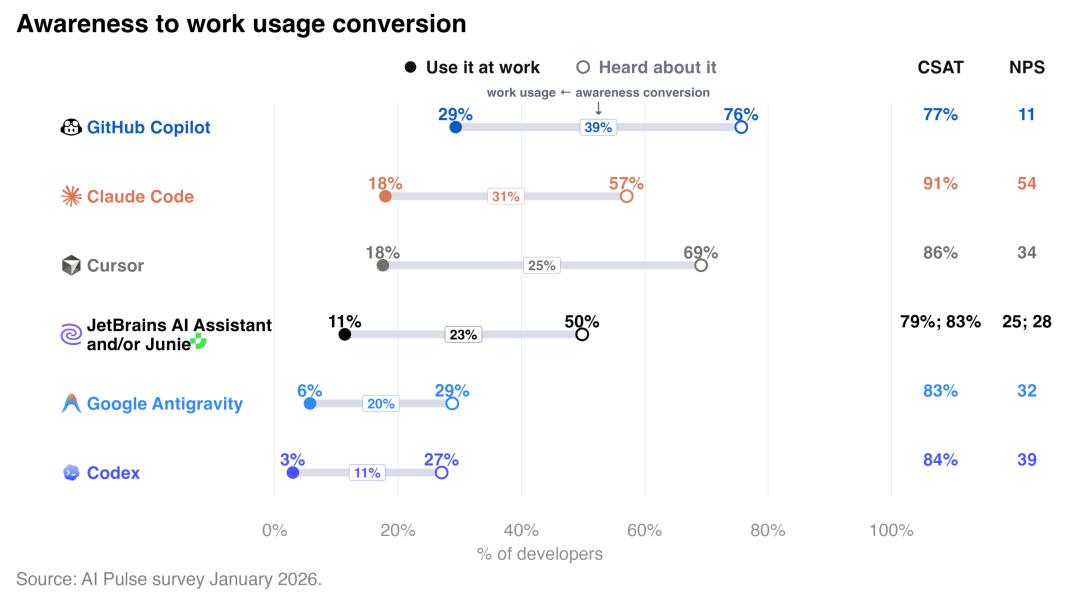
Ironically, it was OpenAI itself that first worked on AI coding. The first-generation Codex released in 2021 supported GitHub Copilot, but the imagination of that generation of products stopped at code completion. OpenAI believed at the time that Copilot was the end point. This misjudgment gave away the first-mover advantage that should have belonged to it. Claude Code entered the market later, but it accurately understood what developers wanted: they were no longer satisfied with letting AI help complete code, what they wanted was an agent that could work independently.
OpenAI did make efforts. Codex CLI was released in April 2025, the cloud-based coding agent was launched in May, GPT-5-Codex designed specifically for agentic coding was launched in September, and Codex was officially spun off into a full product in October. It took many actions, but for developers, it was always just "another option to try", and the default tool was still Claude Code.
According to interviews by WIRED with more than 30 relevant people, by September 2025, Codex's user base was only about 5% of Claude Code's. The number is not the most tricky part. The real difficulty is that you have to convince a group of developers who have already integrated Claude Code into their daily muscle memory to switch tools.
Making a bold move to cut non-core assets
If AI coding was just an ordinary fast-growing market, OpenAI might have chosen to let it go. They have ChatGPT, image generation, browsers, and countless other stories to tell. But Altman gave a reason in the interview that they cannot afford to let go: RSI, Recursive Self-Improvement.
A coding agent can write software for customers, which is its value as a commodity. But it can also do another thing: participate in the training of the next generation of models. It can check training code, analyze failed experiments, fix infrastructure, deploy new versions, and bring improvements into the next round of R&D. A sufficiently powerful coding agent is not only a product sold to customers, but also a tool for building the next generation of products.
"This is happening too fast and is far too important," Altman said, "We cannot afford to lose."
OpenAI even specially designed a set of "RSI Index" to quantify the model's ability to participate in its own iteration, covering four dimensions: troubleshooting, underlying optimization, pre-training scheme improvement, and post-training process optimization. From GPT-5.5 to 5.6, this index jumped from 41.7 to 57.9.
In December 2025, the turning point came. Altman internally announced a "code red" status, requiring the company to postpone projects such as advertising, shopping, and personal assistants, and concentrate resources on the speed, reliability and quality of core products.
What happened next says more about OpenAI's determination than any internal memo.
This March, Sora was shut down. Three months earlier, Disney had just reached a cooperation with OpenAI, preparing to authorize more than 200 classic characters to Sora, accompanied by a 1 billion US dollar investment. With Sora shut down, this not-yet-fully-launched cooperation died prematurely.
In July, the independent browser Atlas, which had been online for only nine months, was announced to be decommissioned. The capabilities of the browser agent were split into ChatGPT and Codex, but Atlas as a product has completely disappeared.

Altman described this as OpenAI's consistent practice: "When one thing really starts to work, we kill other good things to let the best thing grow faster." When GPT-3 proved viable, the company directly cut its robotics business. This time, as the coding agent proved its value, Sora and Atlas became those "good things" that were cut.
In addition to cutting products, OpenAI is also pouring resources into Codex. The company disclosed that from the beginning of 2026 to July, the share of internal computing power used for coding reasoning has increased by a full 100 times, and the tokens consumed by internal agent tasks have increased by about 22 times.
Moreover, the original head of Codex product Tibo was promoted to "Head of Core Products and Platforms" at OpenAI, with Codex, ChatGPT, and APIs all under his jurisdiction (yes, the person who announces to reset your quota for free on X every few days). On July 9, OpenAI directly handed over its largest product entry to Codex: it was incorporated into the ChatGPT app in terms of product form.

Codex's catch-up did not only rely on the efforts of the model team. OpenAI has truly bet the entire fate of the company on it.
Speed is the ultimate weapon
With so many resources invested, the way Codex finally caught up was unexpected. It did not create a model that outperforms Claude in every dimension. What finally helped it break into the market was an advantage that does not sound decisive: speed.
Imagine you are a software engineer, and your daily work is to supplement tests, modify interfaces, and fix edge cases. You have two choices: Claude Code with stronger capabilities but half the speed, and Codex with sufficient capabilities that only takes half the time to complete tasks. Which one will you choose?
The latest coding agent evaluation from Artificial Analysis gave a meaningful result: the top-tier configurations of Claude and Codex both scored 67 in total, evenly matched. They each have their own strengths in sub-items: Codex is better at code repository modification and terminal operations, while Claude Code is better at understanding code repositories and answering questions. But what really makes the difference is time: Claude Code takes an average of 23.6 minutes to complete a task, while Codex only takes 10.2 minutes.
A team of a cloud coding platform also tested with their own code repository and reached a similar conclusion: the code written by Claude's Fable 5 and Opus 4.8 has higher quality, but GPT-5.6 works five times faster. In the end, they set GPT-5.6 Sol as their daily default tool, and only use Claude Code when reviewing code quality.
Why is GPT-5.6 Sol so much faster? The same set of evaluation data reveals some clues. To complete the same task, Claude Code needs an average of 153 rounds of interaction with the model, while Codex only needs 114 rounds; the former consumes an average of 21.8 million tokens, while the latter consumes 13.2 million.
OpenAI's explanation is that GPT-5.6 is trained to be better at making every token do something effective. When encountering tool-intensive tasks, it tends to write a piece of code by itself to process intermediate results and decide the next step, instead of feeding all information back to the model for judgment every time it gets a tool return. For the same task, it uses fewer tokens and fewer back-and-forth interactions.
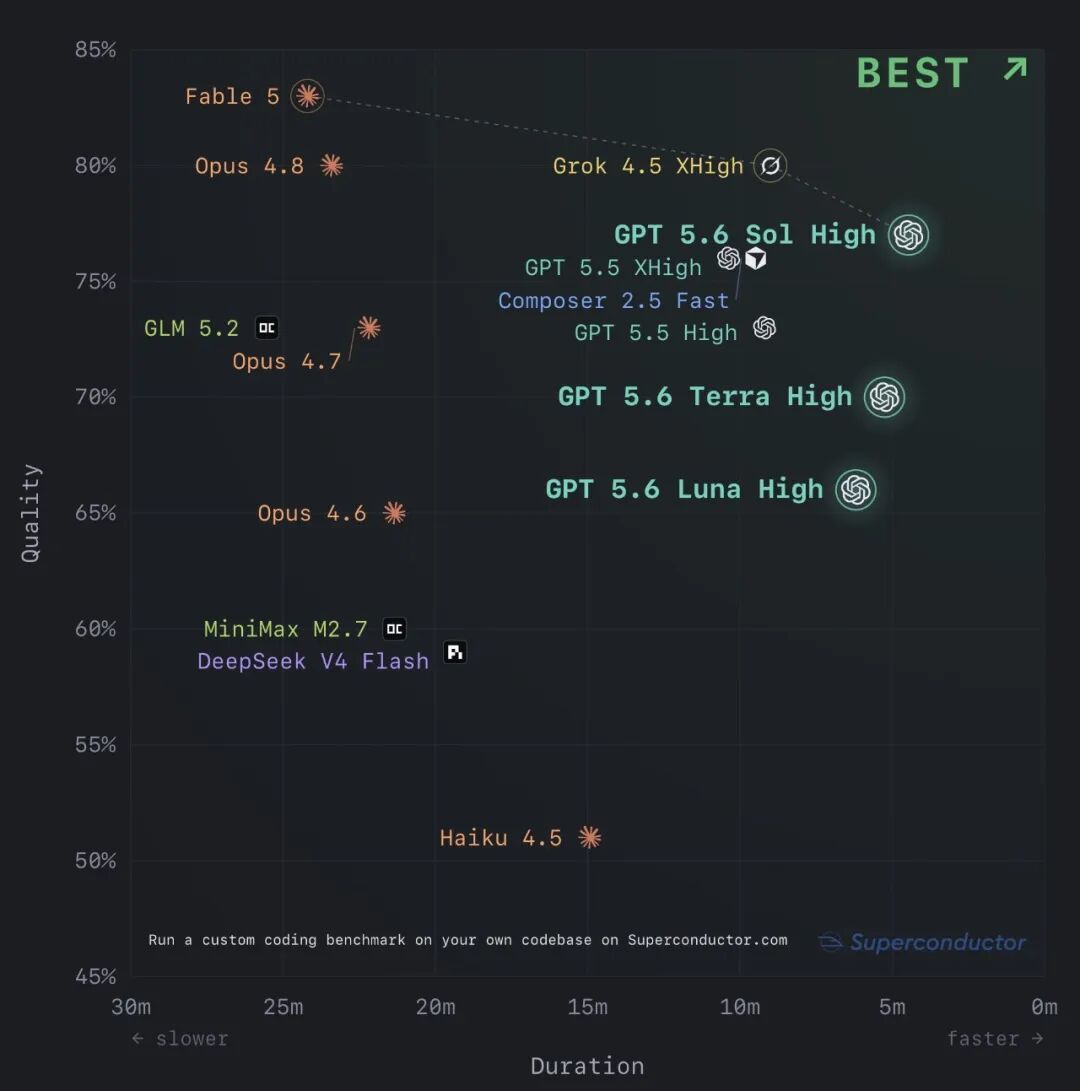
In short, GPT-5.6 Sol is fast not only because it runs fast, but also because it can take shortcuts on its own.
This exactly hits the core of Codex's strategy to steal users from Claude Code. Real software development is not all large-scale projects such as refactoring architecture or rewriting from scratch. Most of the time, it is just adding a set of tests, modifying an interface, or fixing an edge case. For these daily tasks, developers care about whether the tool can finish the work as soon as possible, instead of waiting for the most powerful model to slowly give a carefully considered perfect answer every time.
After the speed advantage was established, OpenAI's distribution capabilities began to amplify it. Codex was directly included in the existing ChatGPT plans, free users can use it with a limited quota, and paid users only get a larger quota. Want to try Codex? The threshold is almost non-existent.
The effect is immediate. Data obtained by WIRED shows that Codex's user volume in September 2025 was only 5% of Claude Code's, and by January 2026 it was close to 40%. After the desktop app was launched in February, the growth continued to accelerate: weekly active users exceeded 3 million in early April, 4 million two weeks later, and over 7 million on July 14.
Last week, the combined weekly active users of Codex and GPT Work reached a brand new milestone: 10 million.
This was almost unimaginable half a year ago.
After catching up, what comes next?
OpenAI paid a painful price for this battle. The disappearance of Sora and Atlas are the most visible costs, but far from all of them.
The cost is even directly reflected in GPT's capabilities.
In January this year, when Codex just entered the full-speed catch-up phase, someone at an OpenAI developer symposium asked Altman: Why is the GPT-5 series so strong in coding but regressed in writing? Altman did not evade: "I think we did mess this up." Most of the energy was devoted to reasoning, coding and engineering, and writing and conversation experiences had to be temporarily put on the back burner.
A model cannot sprint in every direction at the same time. Choosing coding means temporarily giving up optimizing writing capabilities.
Writing capability regression is an invisible cost. The visible cost also includes staggering computing power expenditure. Multiple developers interviewed by WIRED said that for both Codex and Claude Code, the actual model usage provided by the $200 monthly plan often exceeds $1000.
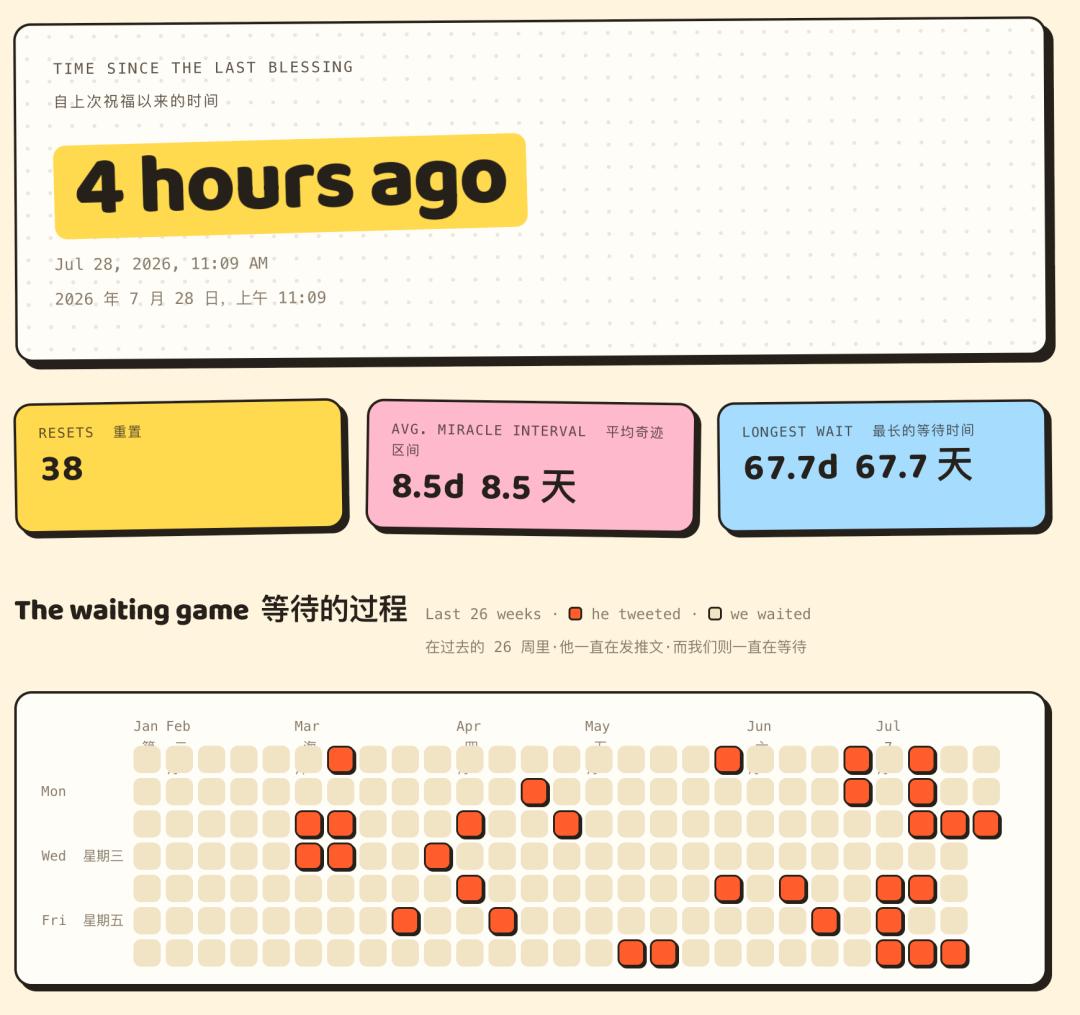
And OpenAI's generosity in subsidies is almost absurd. Tibo announces on X every few days that he will reset the usage quota for all users for free.
On the day Codex's weekly active users reached 3 million, he promised to reset the quota every time the user base increases by 1 million until it hits 10 million. But the actual number of resets far exceeded the promise: new product version released? Reset. System failure? Reset. Quota bug? Still reset.
On average, a reset happens in less than 9 days, and in July the interval was even shortened to once every 3 days.
Someone on X even built a website codex-resets.com to count how many times Tibo has issued quota resets.
What's more exaggerated is that even if you run out of your quota in the middle of a task, Codex will finish the work in hand before stopping, and will never abandon the task halfway. Some users discovered this mechanism and deliberately gave it a huge complex task right when the quota was about to run out. Even when the subscription expires, the service will not be cut off immediately - many users reported that days after their subscription expired, their Pro benefits on the account were still silently active.
Subsidies did bring in a large number of users. But the more users there are, the more glaring the cost of this practice becomes.
Judging from public figures, Claude Code is still a more dazzling star in terms of commercial performance. Its annualized revenue announced in February exceeded 2.5 billion US dollars; data obtained by WIRED shows that Codex only crossed the 1 billion mark at the end of January. Estimates from TickerTrends' model show that OpenAI's growth curve is accelerating, and Codex is likely to be an important driver of this acceleration; Anthropic's growth rate has slowed down after reaching a high level, but it still maintains a lead with a revenue scale of about 1.8 times that of Codex.
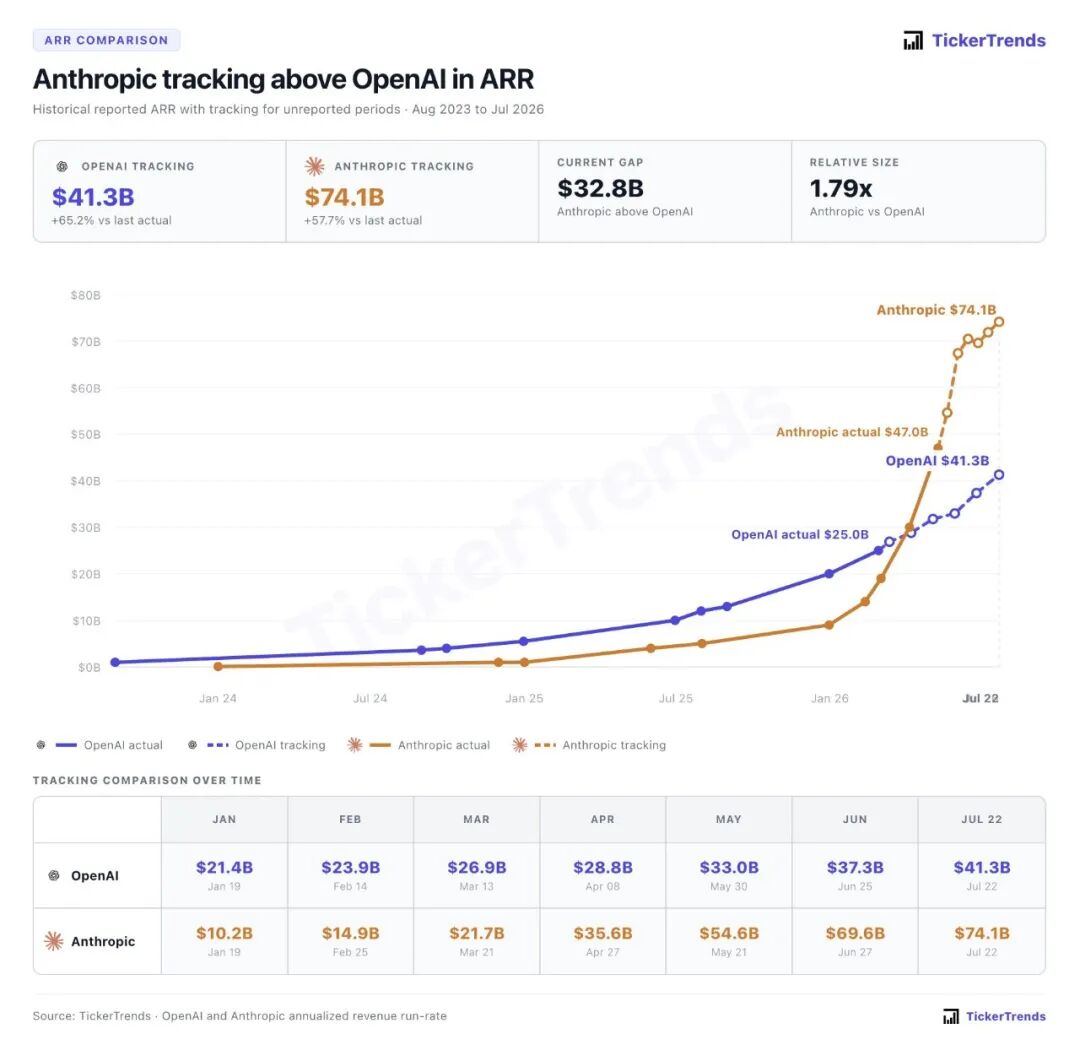
Codex has made developers choose it, but it has not yet proven that it can achieve full victory in terms of revenue and unit economics