A female Tsinghua PhD born in 1999 launched her entrepreneurial venture: equipping batteries with AI brains, cutting the 90-day work period down to just 2 days.
What new opportunities can emerge from the integration of AI and batteries? A project that once required two engineers three months to complete can now be finished by several AI agents in just 2 to 3 days.
Recently, a 1999-born PhD graduate from Tsinghua University has started a business focusing on this exact direction.
She is Lu Yufang, Founder of Cycle AI, who aims to equip batteries with an AI brain: using AI to optimize the entire lifecycle of battery products, from development and operation to degradation and recycling.
Lu Yufang says the new opportunity she sees is not about reinventing a new type of battery, but reimagining services for the entire battery industry. In the future, a single battery expert will be able to lead a team of AI agents to complete their work.
Is there a viable future for AI-powered batteries?
I am the founder of Cycle AI, born on December 31, 1999.
In 2016, at the age of 16, I enrolled in the Department of Automotive Engineering at Tsinghua University for my undergraduate studies. In the fall of 2018, I went to Princeton University as an exchange student for one semester. After graduating with my bachelor's degree in 2020, I continued my direct doctoral program at Tsinghua, with my research focus always centered on lithium batteries.

Lu Yufang, a Capricorn
Why did I pay special attention to the combination of AI and batteries? Because starting from 2020, I began researching the optimal fast-charging solutions for power batteries.
Back then, even with fast-charging technology, pure electric vehicles usually required over an hour to fully charge.
By 2025, the flash charging technology released by BYD had shortened the charging time to less than 10 minutes.
I happened to witness the years of rapid development in fast-charging technology.
My research does not only solve a single isolated problem, but focuses on optimizing fast-charging strategies from individual cells, modules, all the way to the complete battery pack.
For example, batteries degrade after a period of use. When the battery ages, can the original charging strategy still be used? How to detect side reactions during the charging process? How to adjust the charging strategy? How to estimate the remaining lifespan of the battery? How to evaluate the increasingly obvious inconsistencies between different battery cells?
All these issues need to be considered comprehensively.
During my doctoral studies, I published 7 SCI papers and 3 EI papers as the first author, all related to battery algorithms and fast charging.
Some of these research results have been applied in projects of enterprises including CATL, BYD, and CALB.
This experience made me increasingly certain that I am well-suited for applied research.
Less than 5 people, already profitable
At the end of September 2024, I registered Cycle AI in Suzhou and settled in Suzhou Industrial Park.
The company name "Cycle AI" refers to intelligent services covering the full lifecycle of batteries. We hope to use a dual-drive approach combining AI and electrochemical mechanisms to solve problems encountered throughout the battery lifecycle, from product R&D, operation to degradation.

The skyline of Suzhou Industrial Park
When the company was first established, an individual investor and I invested a sum of capital, starting operations on a small scale. We did not rush to expand our team, nor did we immediately seek VC financing.
Because this is my second entrepreneurial venture.
During my first startup, I partnered with a senior fellow apprentice, focusing on low-temperature fast heating and charging for electric vehicle batteries, as well as services related to vehicle-to-grid interaction and microgrids.
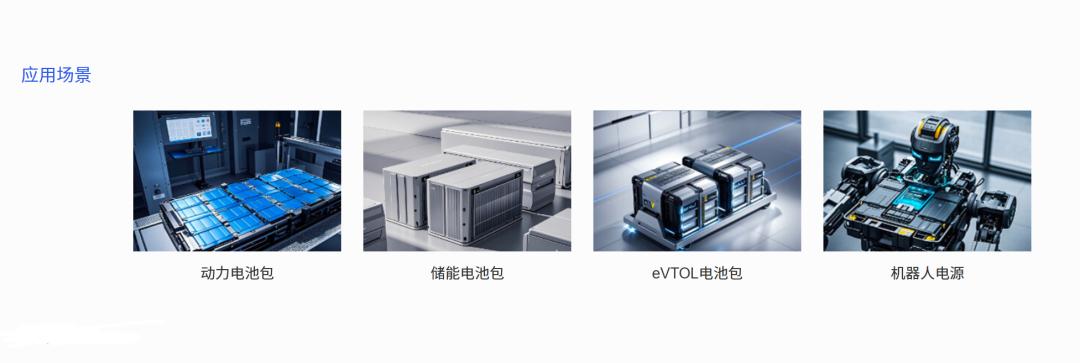
Partial application scenarios of Cycle AI
At that time, the new energy industry was developing rapidly, our team members all came from Tsinghua, and our first round of financing went extremely smoothly.
However, getting capital too easily actually sowed hidden problems. Back then, our first thought was how to spend money and expand our scale, but we never truly clarified who our target customers were, and what their most urgent pain points were.
As a result, we spent a lot of money but failed to commercialize our product, and the second round of financing became far more difficult.
Therefore, in this entrepreneurial venture that I lead, before we clearly figure out where every dollar should be spent, we must ensure that we can achieve self-sufficiency and survive on our own first.
At present, Cycle AI has fewer than 5 full-time employees (including part-time staff), and the company is already profitable. Every engineer is a super-individual who leads a team of AI agents.
Projects taking 3 months can be completed by AI in 2-3 days
In its early stage, Cycle AI mainly solves several specific problems: safe battery operation, risk early warning, state prediction, and lifespan estimation.
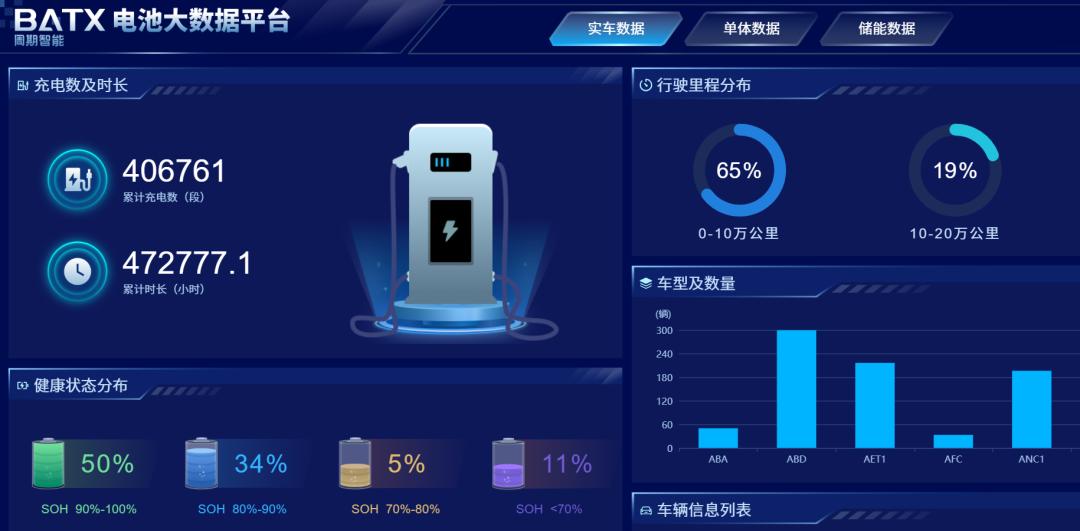
In the past, this type of project was mainly completed manually.
The data quality from different customers varies greatly. After obtaining the data, engineers first need to clean it, perform preprocessing, and unify all data formats. After processing the data, they also need to train models, adjust algorithms, and optimize parameters repeatedly.
All these tasks are extremely time-consuming.
An engineer might try two or three models, and after continuous debugging for a period, they will get tired and be unwilling to try more algorithms. Therefore, the delivery cycle of a single project usually takes at least 3 months, and complex projects even require more than half a year.
Since 2026, AI models and agent technology have developed rapidly. By chance, we took a project we had completed the previous year and let our AI agents redo it from scratch.
We packaged all the original materials and handed them over to the agents. The system will automatically determine how many agents are needed for the project based on the project materials and requirements. Some projects need 3 agents, others need 5.
These agents have different divisions of labor. Some are responsible for data processing, some for project review, some for project management, and others for technical delivery.
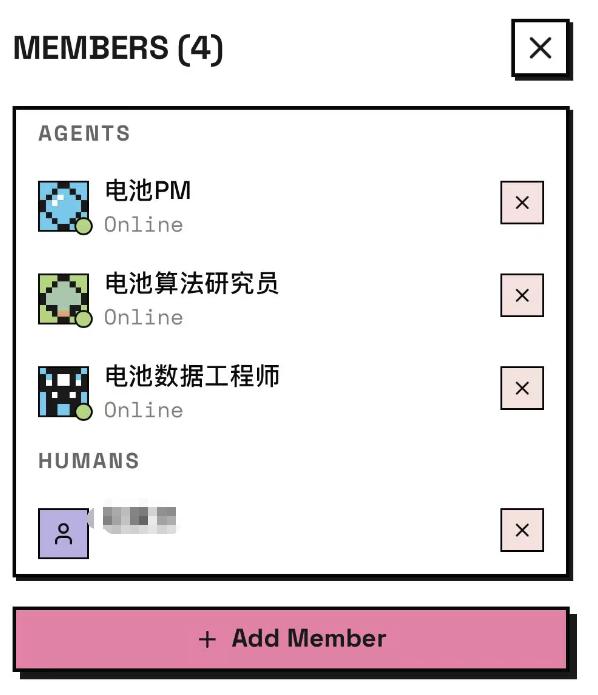
The work group chat of Cycle AI
Tasks that once required two engineers three months to complete can now be finished by the agent team in about 2 to 3 days.
In some stages, humans might only be willing to try two or three algorithms, but AI agents can continuously test 10, 20, or even more. They do not get tired, nor will they develop negative emotions after successive failures.
We also conducted tests using a set of public scientific research data. In less than a week, the AI agents exceeded some of the original performance metrics.
This result shocked us greatly.
It means that after AI enters the industrial field, the first things it changes may not be grand industry concepts, but very specific work processes one by one.
This is exactly the opportunity we truly see.
Will AI replace battery experts?
I believe AI will not replace battery experts, but it will completely reshape how experts work.
Batteries are complex electrochemical systems. Many problems cannot be solved simply by feeding data into a model and expecting it to automatically find the answers.
When facing more difficult problems, experts with long-term research experience in batteries are still needed to determine exactly where the problem lies, starting from the electrochemical mechanism, material reactions, and failure causes.
Therefore, the approach we are adopting now is not "one agent replaces one engineer", but "one engineer leads a team of AI agents".
Engineers are responsible for understanding customer problems, arranging tasks, determining the correct direction, and correcting the agents from a professional perspective. The agents are responsible for completing a large amount of data processing, algorithm testing, and repetitive execution work.
The value of humans has shifted from completing every step personally, to asking the right questions, arranging work, and judging the correctness of the final results.
This is also the biggest difference between industrial agents and general office agents.
General capabilities such as writing documents, processing expense reimbursements, and organizing materials will very likely be directly covered by foundational models in the future. Simply adding an application layer on top of these capabilities does not create high competitive barriers.
The real competitive advantage of industrial agents lies in what they have actually learned, and what they have truly mastered.
For example: agents derived from a foundational model are like a group of freshmen who have just entered Tsinghua University. They are all very smart, but some study law, some learn office software, and others focus on battery technology.
In the end, what determines the problems they can solve is not just their intelligence level, but the professional training they have received, and the industry knowledge they have mastered.
A large amount of process data, experimental data, and failure data from battery companies are not publicly available on the internet. Why do side reactions occur in batteries? What are the common failure modes? Why do abnormalities appear in a certain process on the production line? All these problems have underlying professional mechanisms behind them.
Only by truly understanding these problems can agents become more than just chat software, but "digital engineers" capable of completing technical work.
New opportunities in the battery industry
China's battery industry has now entered a new stage of development.
In the past, we focused more on how to learn foreign technologies and catch up with overseas enterprises. But at least in the battery field where I work, China has already taken the lead globally.
What we are thinking about more now is not how to introduce advanced foreign technologies, but how to export our own technologies and products. Currently, some of the big clients we are in contact with are foreign-funded enterprises themselves.
As the battery industry enters a mature phase, the market opportunities are also changing.
In the past, the core opportunities were to increase energy density, reduce costs, expand production capacity, and manufacture more batteries. Going forward, new demands will emerge around the full lifecycle of batteries, including safety, lifespan, efficiency, state prediction, and intelligent management.
New energy vehicles need batteries, energy storage systems need batteries, and new products such as low-altitude aircraft and embodied robots also require new battery packs and new management methods.
At present, Cycle AI remains focused on intelligent battery systems, while also conducting research on battery packs used in the low-altitude field and embodied robots. However, these directions are still in the exploratory stage.
For a small company, talking about how many hundreds of billions of yuan a market is worth does not make much practical sense.
I do not know how big the agent market will eventually be, nor whether agents will be replaced by another "new species" in two years.
I am only certain of one thing: battery companies have real, existing problems, and we can use new methods to improve the efficiency of solving these problems.
Success in entrepreneurship is always for the few, and failure is the normal state.
What I can do is remain sensitive to technological changes, continuously identify more precise product directions, and when decisions need to be made, act as quickly and decisively as possible.
During my first entrepreneurial venture, I thought that good technology alone would be enough to develop great products.
In my second startup, I prefer to start from a real demand and specific problem: for work that once required two engineers three months to complete, can one engineer leading several agents finish it within a few days?
If this problem can be solved, a new form of productivity will be added to the battery industry.
This is exactly the opportunity I see right now.
This article is from WeChat official account "Pencil News" (ID: pencilnews), authored by Pencil News, and published by 36Kr with authorization.