NVIDIA has taken action. The practical test of AI video analysis tools shows that most of them perform poorly, but they are still better than nothing.
Huang Renxun, who is frequently impersonated in AI-generated videos across the internet, has decided to take action.
Recently, NVIDIA announced the launch of Synthetic Video Detector NIM, a toolset that claims to analyze videos frame by frame, identifying AI-generated content via statistical and frequency-domain traces left by generative models, with a maximum accuracy rate of 92%.
(Image source: NVIDIA)
There's no other choice, as the barrier to creating fake images and synthetic videos has become increasingly low nowadays.
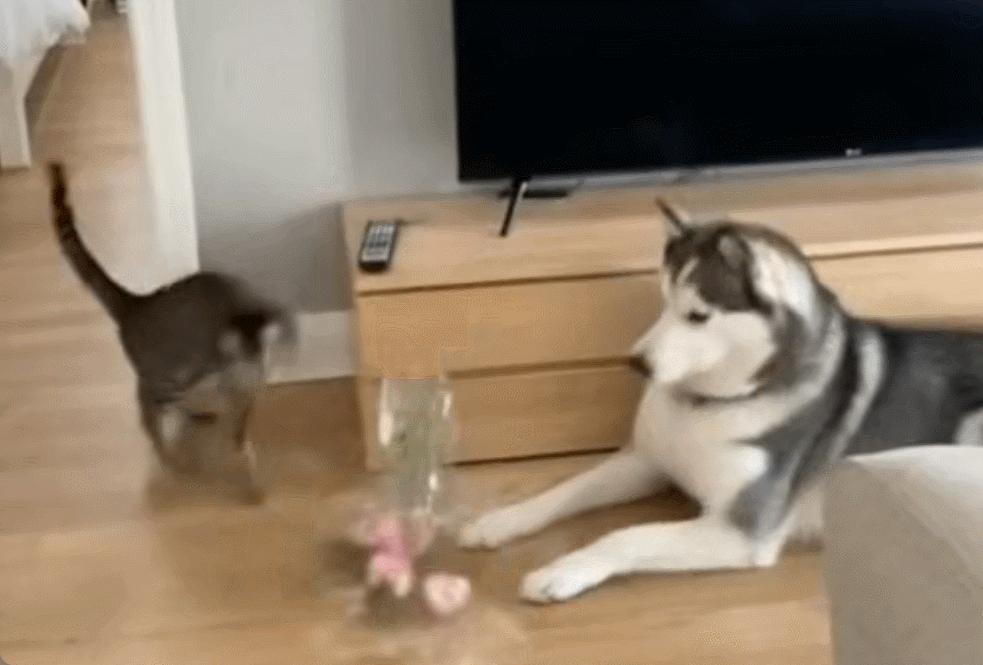
Take a video I came across a while ago as an example: the plot is quite simple, a cat just knocks over a vase and immediately bolts away faster than anything else, while a dog nearby freezes on the spot, frantically waving its paws to explain, with an expression that seems to say: It wasn't me, it really wasn't me.
(Image source: Douyin)
Pretty funny, right? It would be even better if it weren't an AI-generated video.
The more troublesome part is that in the past, identifying fake videos could rely on obvious visual flaws, such as mismatched lip movements or incorrect finger counts; but video generation models are advancing at a breakneck pace, and most generated content no longer leaves such obvious loopholes — no wonder the elders in my family fall for them every day.
Since ordinary people don't know how to tell the difference, it's about time detection tools stepped into the spotlight.
NVIDIA Joins the "Detect AI with AI" Movement
To give a brief introduction: NVIDIA announced the NVIDIA Inference Microservices, abbreviated as NIM, in March 2024. Essentially, it packages "models + inference engines + API interfaces + runtime environments" into a deployment tool, a way for developers to quickly access AI services.
The newly launched Synthetic Video Detector NIM can be understood as an AI video detection service packaged by NVIDIA under the NIM standard.
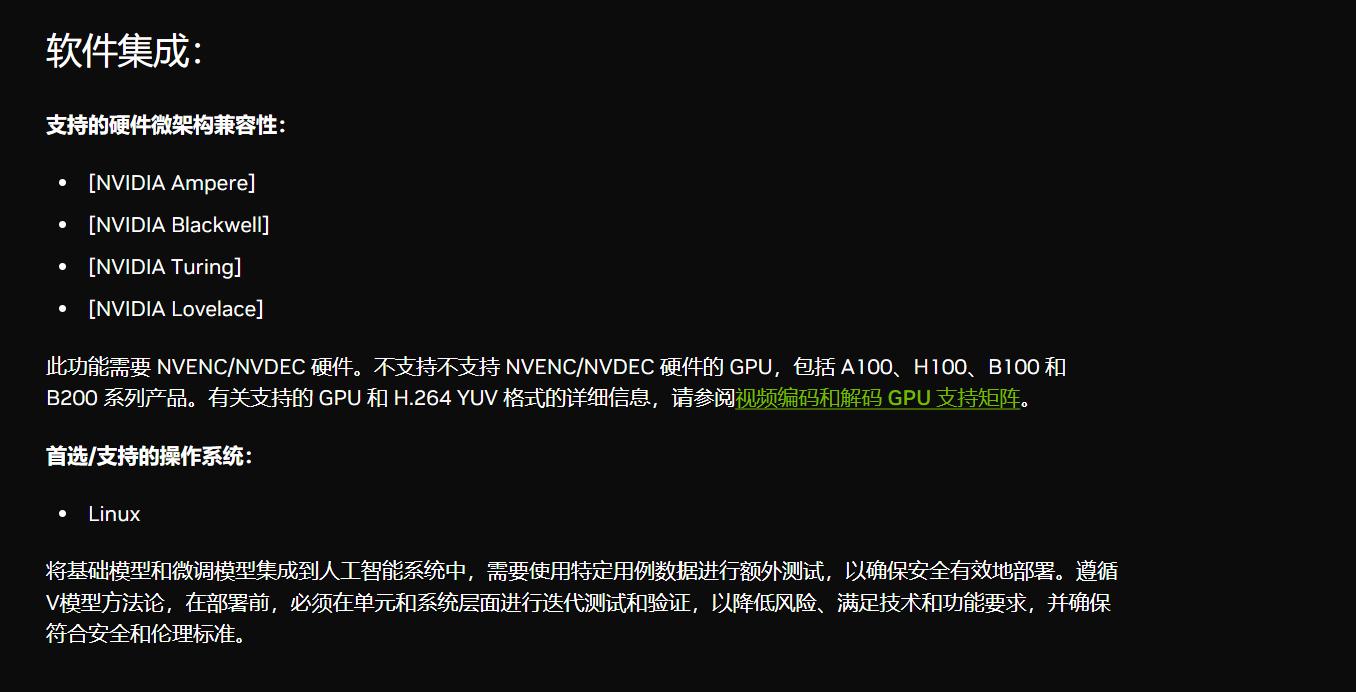
Since this tool is primarily designed for local deployment, online access currently requires approval via NVIDIA's media testing application, while local deployment demands a Linux system and hardware compatible with NVENC/NVENC video codec — making it rather difficult for ordinary users to get their hands on it.
(Image source: NVIDIA)
But not being able to use it firsthand doesn't stop us from discussing it thoroughly based on available documentation and demos.
According to official descriptions, after a video is uploaded, SVD NIM first splits the H.264-encoded MP4 into individual frames, then passes them to a vision model composed of DINOv2 and DINOv3 for analysis. It scores each frame, aggregates the results, and tells you how likely the entire video is to be AI-generated.
The key point is that it doesn't fixate on traditional flaws like six-fingered hands, character clipping, or water glasses suddenly disappearing.
As NVIDIA states, SVD NIM identifies underlying statistical features, frequency anomalies left during the generation and denoising processes, and pixel patterns that normal cameras rarely capture. Even if users compress and re-encode the video, it can still maintain a high detection accuracy rate.
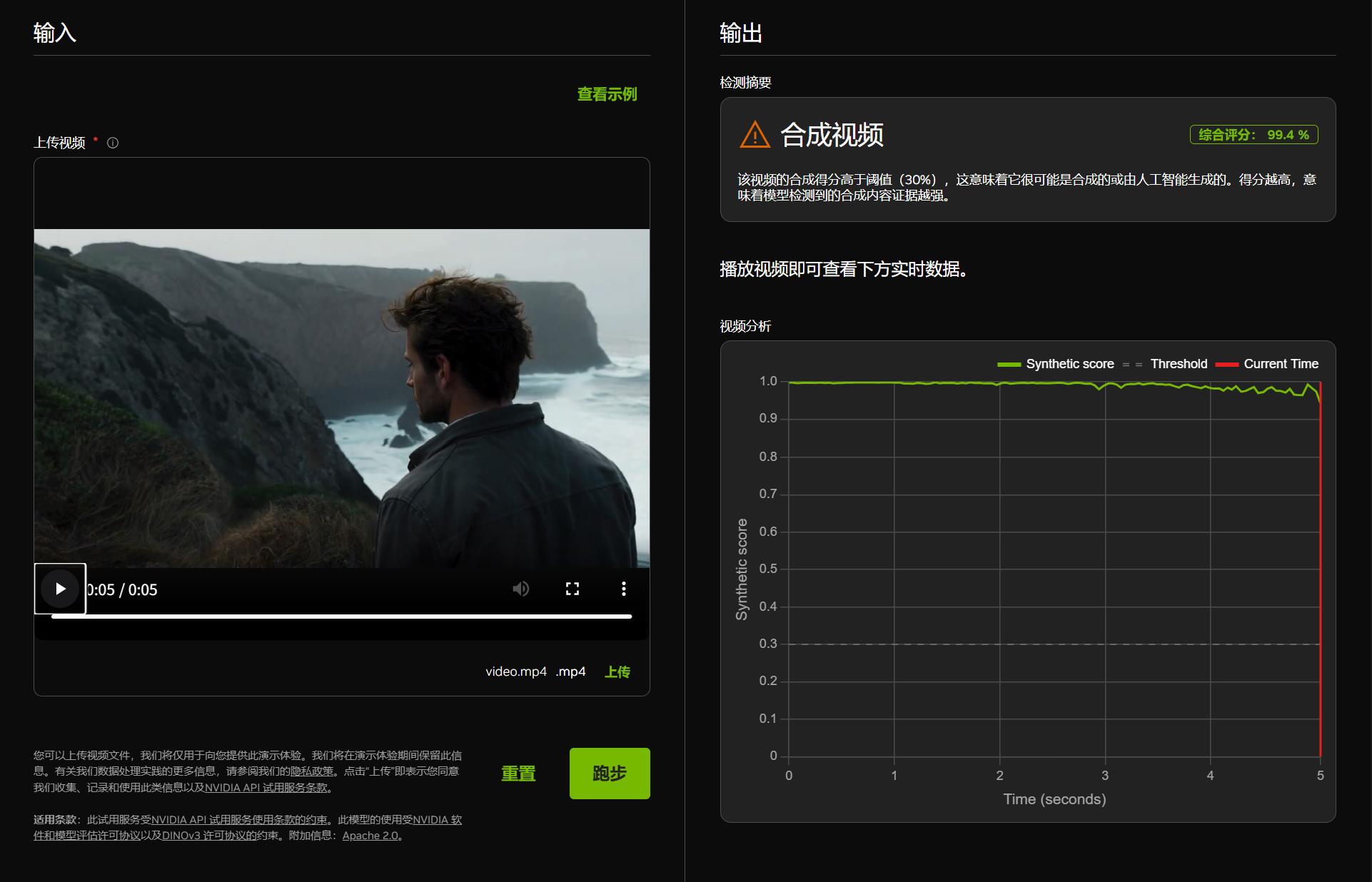
(Image source: NVIDIA)
Looking at the official demo case, the video itself doesn't show the broken visuals or inconsistencies typical of early AI videos, yet SVD NIM still outputs a combined score as high as 99%.
Admittedly, this video is obviously fake at first glance... after all, the camera movement is unnaturally smooth.
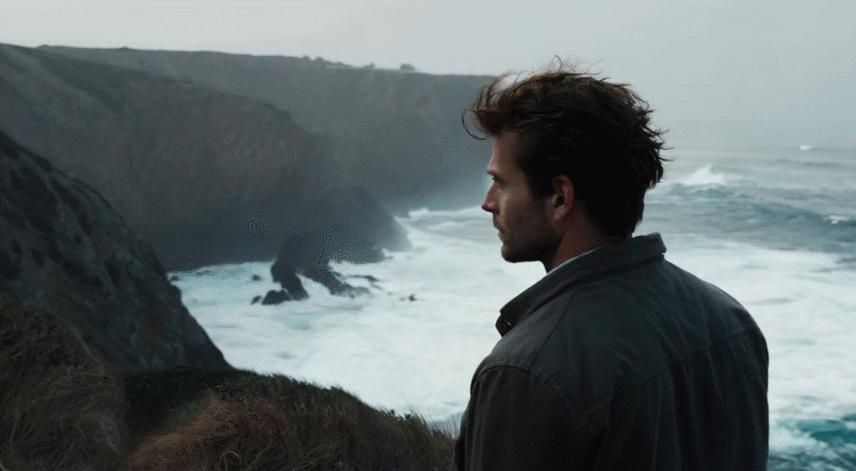
(Image source: NVIDIA)
If you ask me, NVIDIA's approach is indeed more reliable than hunting for obvious visual flaws.
After all, without any prior context, if you show the following video to most people, I'd say at least 80% of them wouldn't realize it's entirely AI-generated — and that's exactly how powerful current video generation models like Seedance and Kling have become.
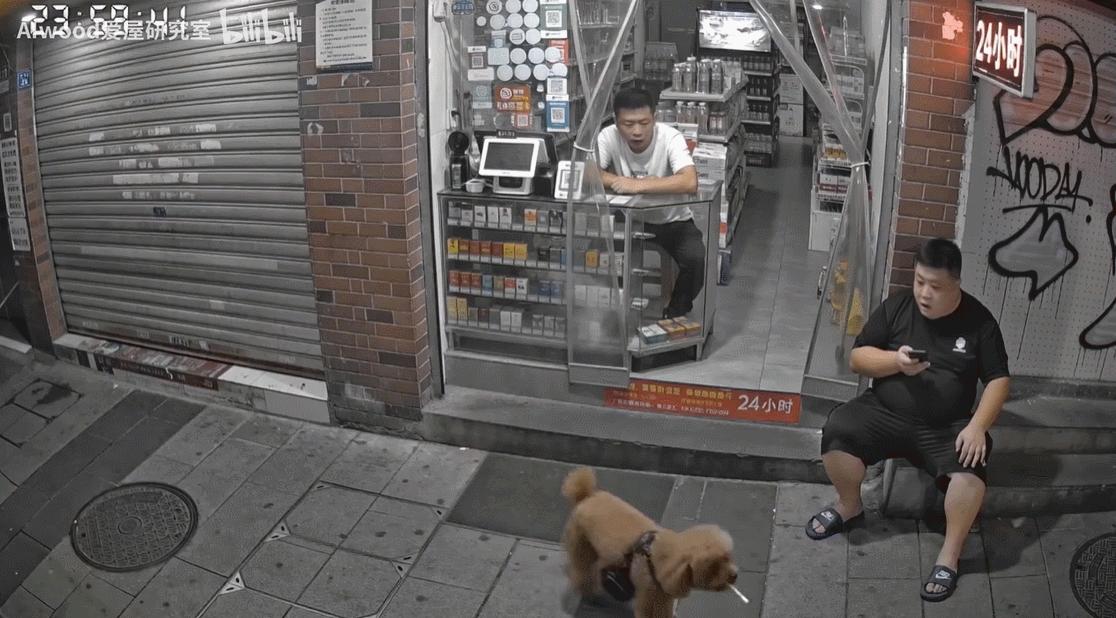
(Image source: bilibili)
According to NVIDIA, they prepared an internal test set of over 4000 videos, and SVD NIM achieved a detection success rate of 85.64%, with the accuracy for uncompressed videos reaching up to 92%.
Of course, a 92% accuracy rate doesn't mean every test will be perfectly correct.
Although not mentioned in the press release, NVIDIA noted in its documentation that this high accuracy rate is sampled using a relatively strict threshold, which may lead to a large number of false positives in real-world scenarios. Therefore, this tool is more suitable for video platforms to perform initial screening — any suspicious content should still be manually verified afterward.
Moreover, this accuracy figure is obtained from H.264-encoded MP4 videos; any transcoding or compression will reduce the accuracy. It's fair to say Jensen Huang's disclaimer is extremely professionally worded.
Real-World Anti-AI Test: Zhuque Performs Decently, Anti-Fraud Center Is Unstable
For now, NVIDIA's SVD NIM is still far from being accessible to ordinary users.
However, there are similar detection tools available domestically that can be used directly in browsers. One is Tencent's Zhuque AI Detection Assistant, and the other is the "AI Content Identification" feature in the Anti-Fraud Center App. Both apps support text/image/video detection, and offer a certain number of free detection attempts per day.
To verify how reliably AI can catch AI-generated content, I designed a mixed test set:
Several images directly generated by mainstream models, several real photos taken with a smartphone; a carefully selected AI-generated video, paired with a real Vlog-style video. I also sent some of these materials through WeChat and took screenshots of them, to observe how the tools perform when handling secondary compressed content.
In the first round, we test AI-generated videos.

(Image source: bilibili)
I think this video is pretty well made overall: the slightly blurry resolution, gently shaking simulated camera, and characters' natural movements and expressions blend together perfectly, creating a genuine old-film vibe. The creator hand-drawn a large number of storyboards for the model to reference, fully showcasing the capabilities of Seedance.
And Tencent Zhuque failed the first test immediately.
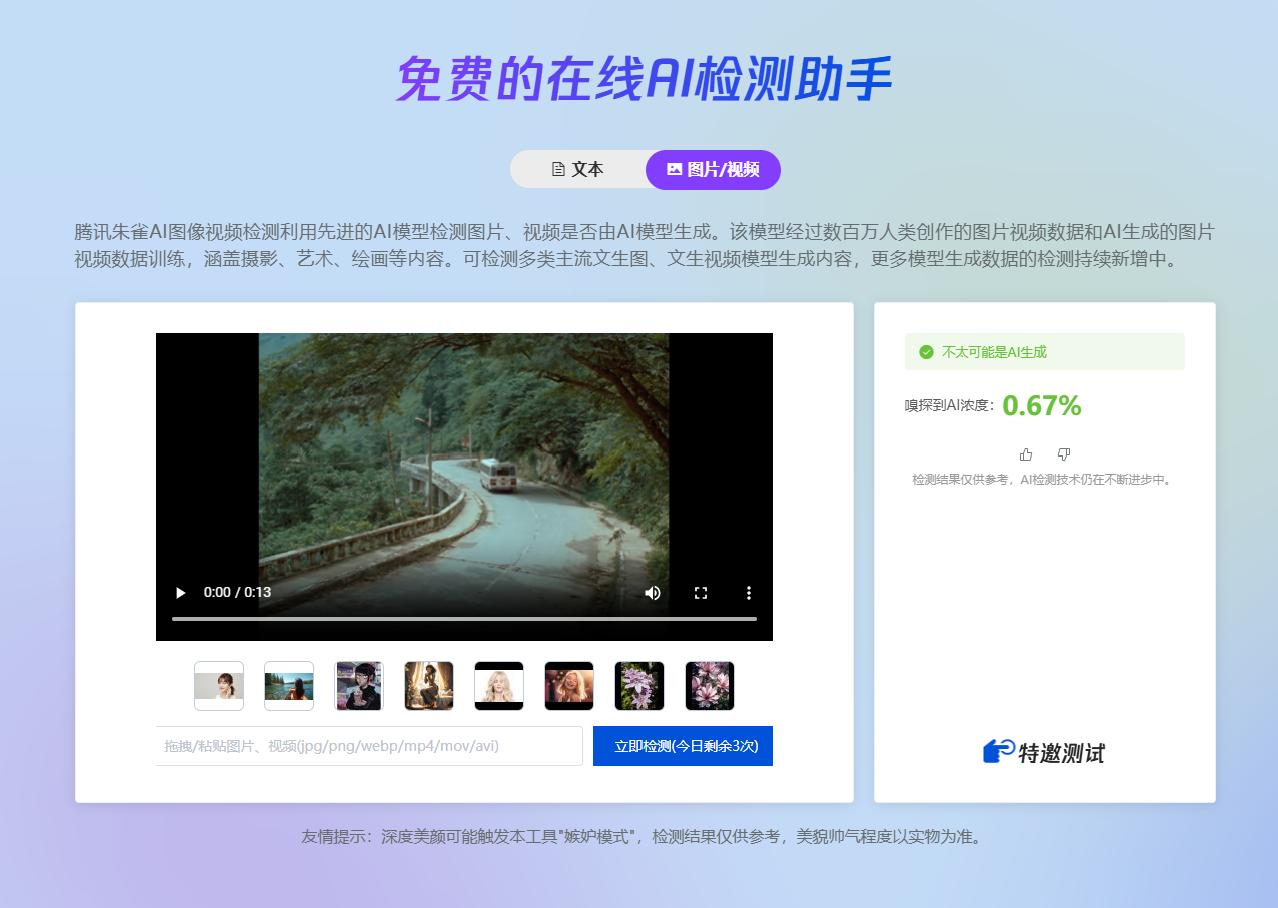
(Image source: Lei Technology)
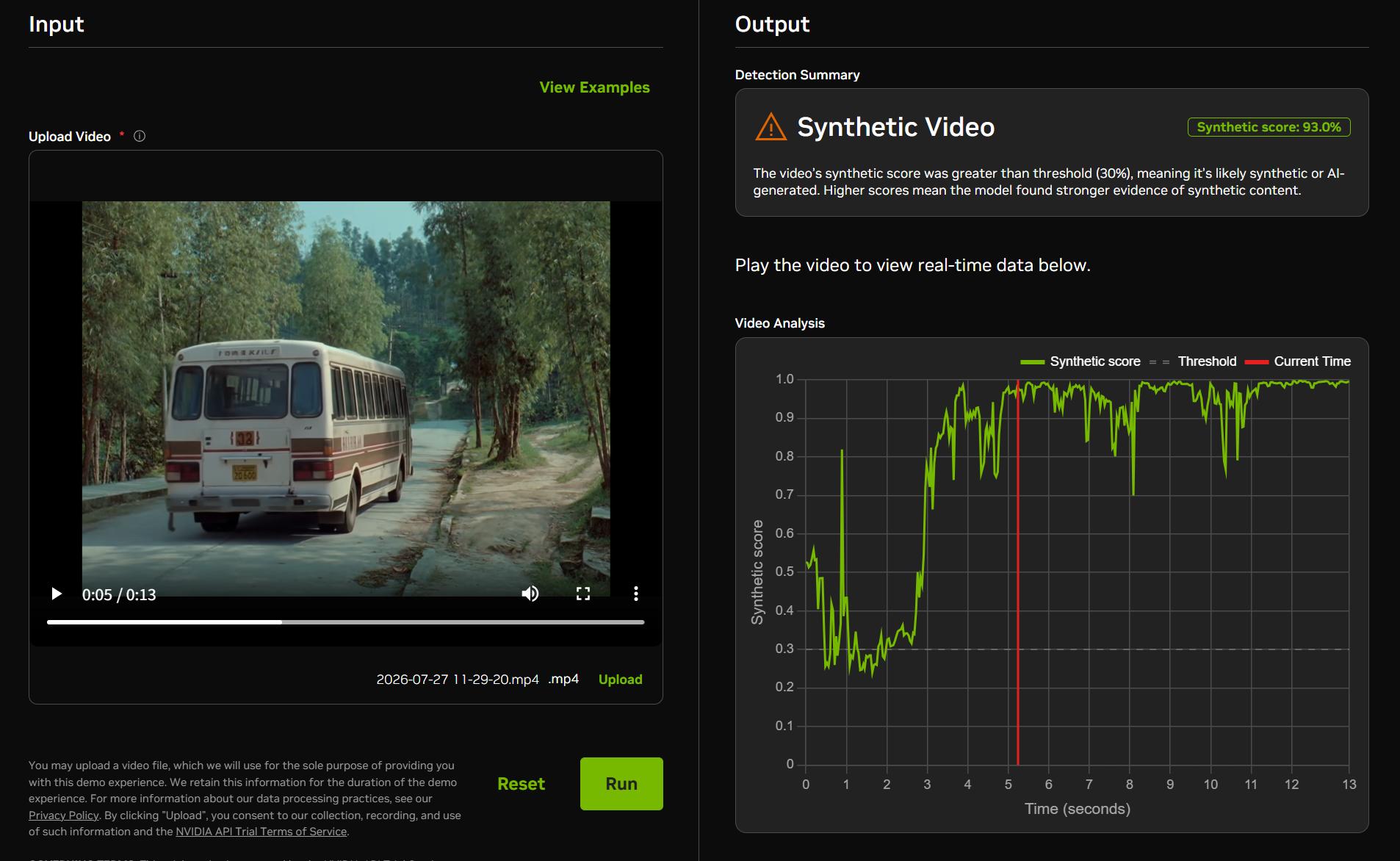
As a comparison, I borrowed a SVD NIM account from a friend who passed NVIDIA's media application — you can see SVD NIM gives a combined score as high as 93%, indicating this video is very likely AI-synthesized, while frame-by-frame detection anomalies are clearly marked on the coordinate system.
The only downside is its slow detection speed: a 13-second video took two full minutes to process.
(Image source: Lei Technology)
Even more surprisingly, the Anti-Fraud Center's content detection feature: I tried for half an hour and still couldn't upload the video, so I had to give up eventually.
In the second round, we test real videos.
(Image source: Lei Technology)
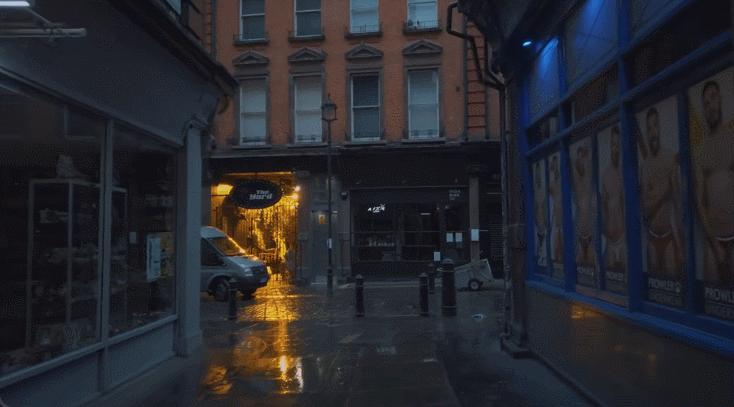
Of course, it can't be a simple real video. I picked a Vlog-style video that many video generation models love to imitate: the creator used a high-quality camera, the transitions between shots are smooth and natural, and the street lighting has excellent texture — making it impossible to tell if it's real or fake at first glance.
Guess what? Tencent Zhuque messed up again.

(Image source: Lei Technology)
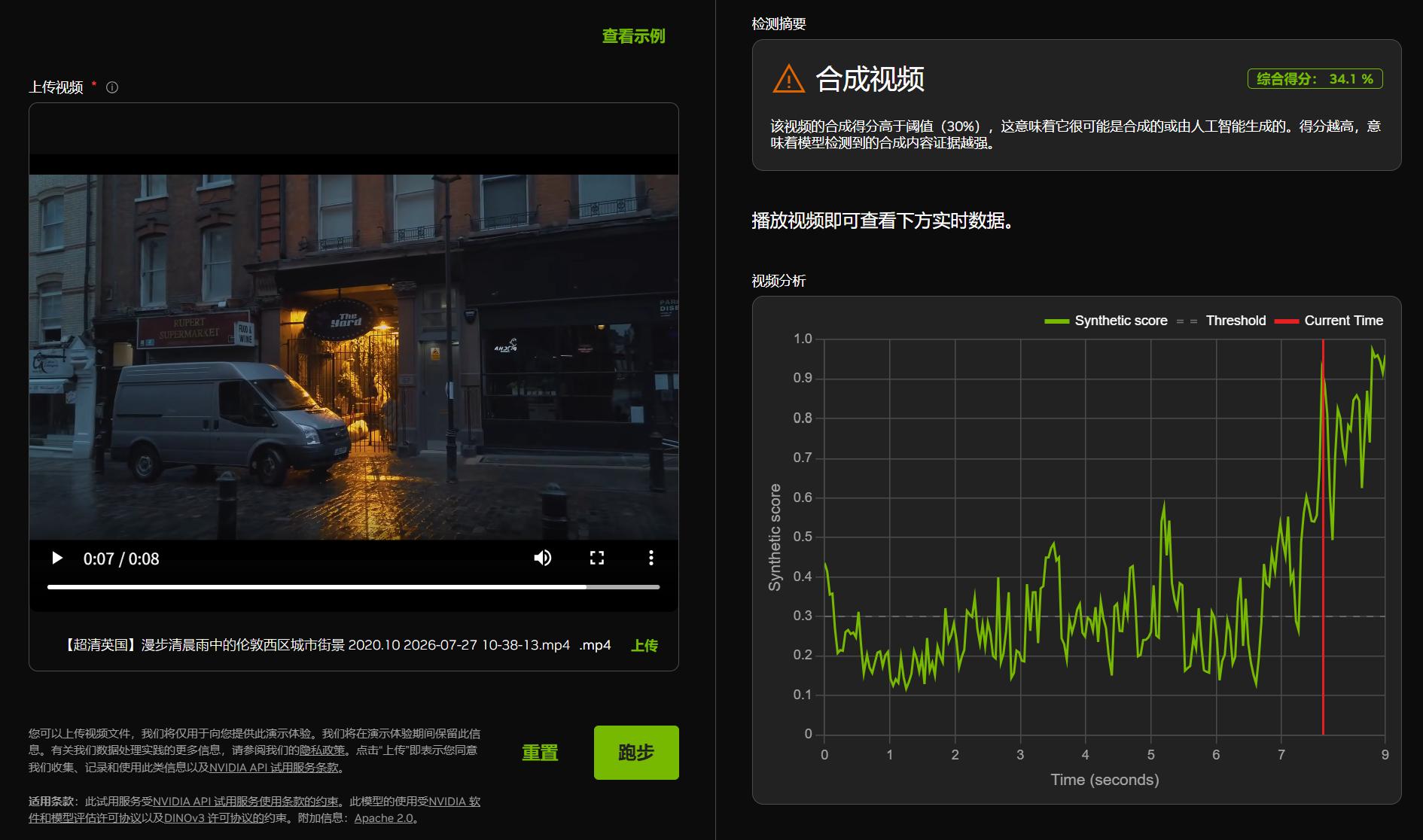
NVIDIA's tool performs significantly better here: although it also outputs a 34% combined score, this is just a reference value, indicating the model didn't find much evidence of synthetic content.
(Image source: Lei Technology)
As for the Anti-Fraud Center, I still couldn't upload the video successfully — elderly users who actually want to use this feature would have a terrible experience.
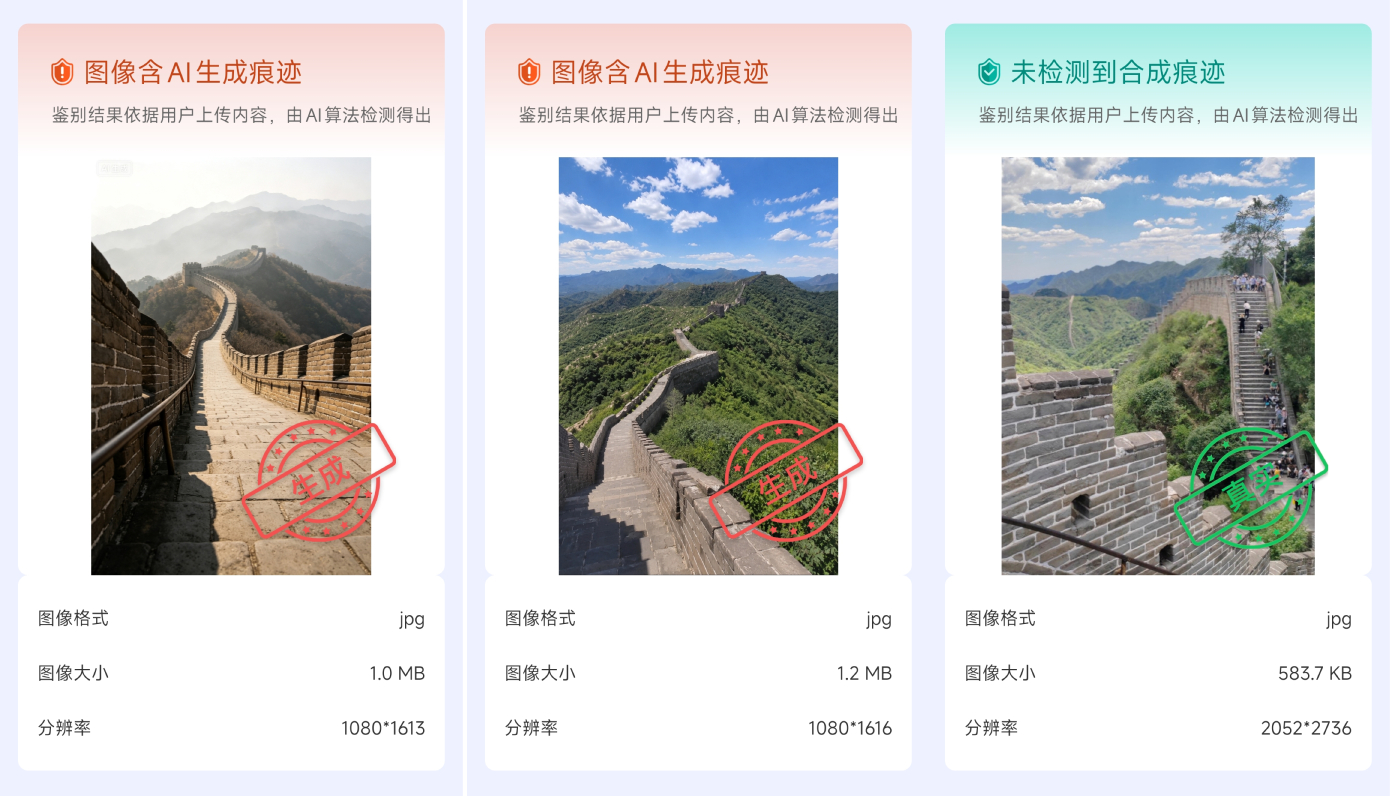
Next, we test images. I won't go into too much detail here: the test set includes real photos of the same subject, plus two AI-generated images created by Doubao and Image 2, both of which had their watermarks removed via post-processing and compression.
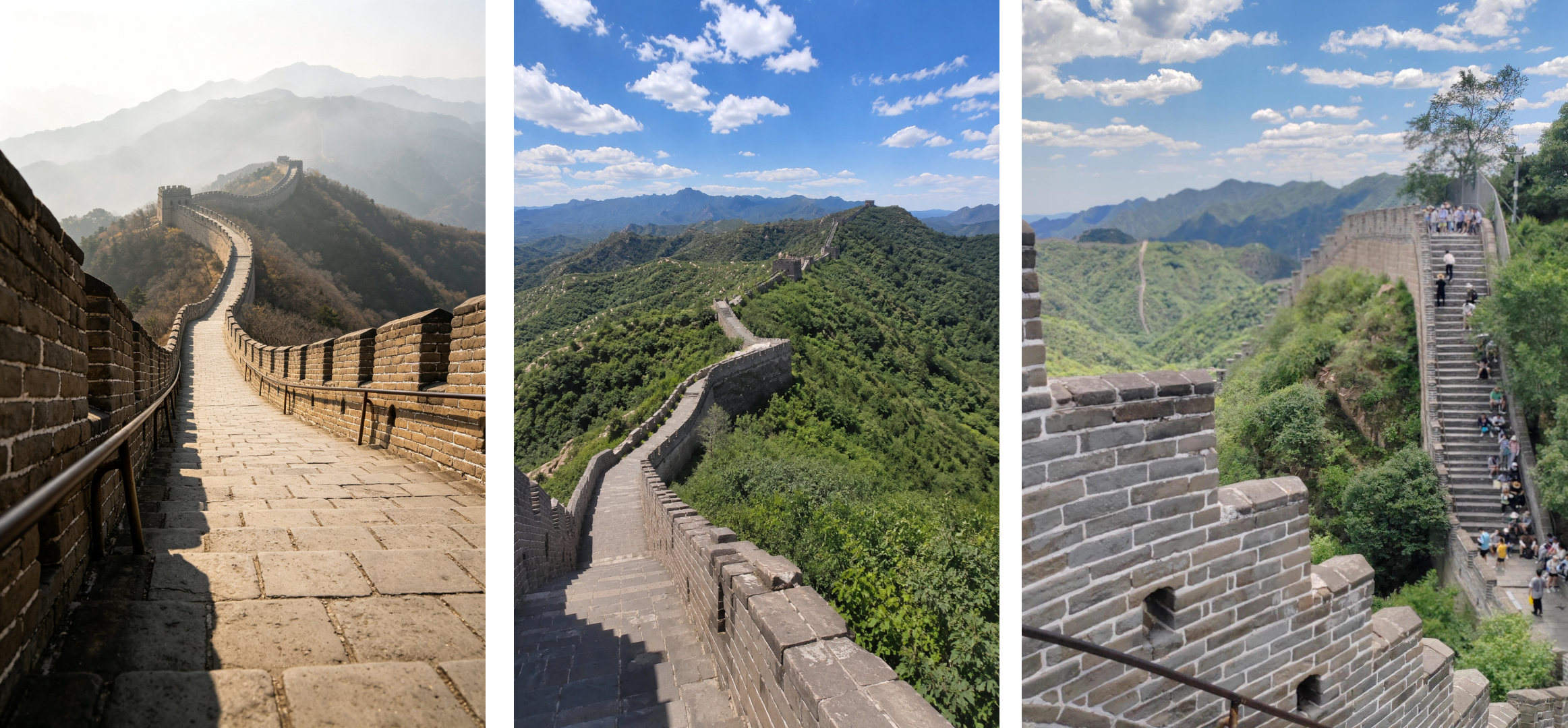
(Image source: Lei Technology, from left to right: Doubao, Image 2, and real photo)
Just as I was about to praise Zhuque for correctly identifying the AI-generated images this time, it pulled a stunt by marking the real photo as AI-generated too.

(Image source: Lei Technology)
On the contrary, the content detection feature that failed to upload videos multiple times earlier got all three image tests right this time — it seems the Anti-Fraud Center still has some advantages in algorithm design.