AI is "laying siege to" traditional advertising, who is "reviving" the going-global brands?
Search engine ranking, performance ad placement, splash screen redirection... Over the past decade, in an era of such thriving social media, brands have accumulated a relatively stable set of survival techniques to sustain their growth as commercial entities. The underlying assumption of this strategy is that consumers will actively seek you out, and you only need to ensure that you rank at the top when they are looking for relevant offerings.
But this assumption is losing its validity.
According to an exclusive EMARKETER survey of more than 1,000 U.S. consumers, nearly one in five respondents have placed orders directly based on AI recommendations without any verification via traditional searches in between. Among Gen Z and millennials, this proportion is 2.5 times that of the Baby Boomer generation. The same survey also shows that 59% of consumers say they are very likely to visit a brand's website if the brand is mentioned by AI.
AI is playing two roles at the same time. For some people, it directly replaces search and price comparison, and the answer given by AI is the final destination; for others, it is the entry point to trigger interest and guide follow-up actions. No matter which path consumers take, their behavior trajectories are being rewritten by AI, and most brands have not even realized the significance of this shift.
For brands expanding overseas, the problem is particularly severe. They are already facing an unfamiliar market and need to build awareness and trust from scratch. Cultural barriers, channel fragmentation, insufficient localization and many other difficulties have already piled up in the past, and now there is an additional layer of screening imposed by AI.
This is the real dilemma that overseas brands are facing right now. The efficiency of the old customer acquisition paths is declining, the new consumer decision-making chain has not yet been clearly defined, and AI is acting as an opaque gatekeeper in the middle. The tools in the hands of marketing teams, whether SEO, paid search ads, or KOL placement, are all designed for the previous generation of consumer behavior.
What the AI era requires may be a completely different set of trust-building methods.
Part 1: AI's Content Selection Preference, What Trust Assets Are Needed?
Fortunately, AI's screening logic is semi-public.
When various large language models receive consumption-related queries, they will retrieve content from the entire network, sort the credibility of sources, and give priority to adopting high-weight, highly independent third-party content, such as reports from professional media, analysis from independent reviewers, and discussions from real users in communities.
This is why Reddit marketing has suddenly gained popularity overseas in the past two years. AI crawls a large amount of question-and-answer content produced by real users on Reddit and assigns it a very high weight, because the content is of high quality and high credibility, which fits AI's content selection logic.
At the same time, a phenomenon that can already be observed is that brands' rankings on Google are decoupling from their presence in AI-generated answers. According to analysis from GEO consulting agency Brandlight, the overlap rate between links at the top of search results and sources actually cited by AI has dropped from about 70% to less than 20%.
A brand may rank very well on Google, but AI does not cite it. In simple terms, it has done a great job in SEO, but it does not exist at all in AI's answers.
Of course, this may be interpreted as GEO endorsing its own business. But it is certain that the value of "independent third-party" content has been amplified. How many media outlets have written about it, how many creators have tested its products, how many users have discussed it in communities... The density and quality of these third-party contents are the trust assets of the brand in the eyes of AI.
This preference is not actually created by AI. The signal theory in economics described the same mechanism long ago: in a market with asymmetric information between buyers and sellers, the seller's claim that its offerings are good is a cheap signal, because it costs nothing to say so, and anyone can make such claims. However, signals such as third parties who are willing to endorse, evaluate and discuss based on their own reputation are truly valuable because they are difficult to forge.
Consumers have always trusted the latter more. AI has just solidified this ancient trust logic into its content selection algorithm.
The problem is that brands can of course negotiate with media outlets one by one and find bloggers one by one, but this method is inefficient and unsustainable. It requires a mechanism that can connect media, content creators, evaluation institutions and strategic partners on a large scale to continuously produce third-party content.
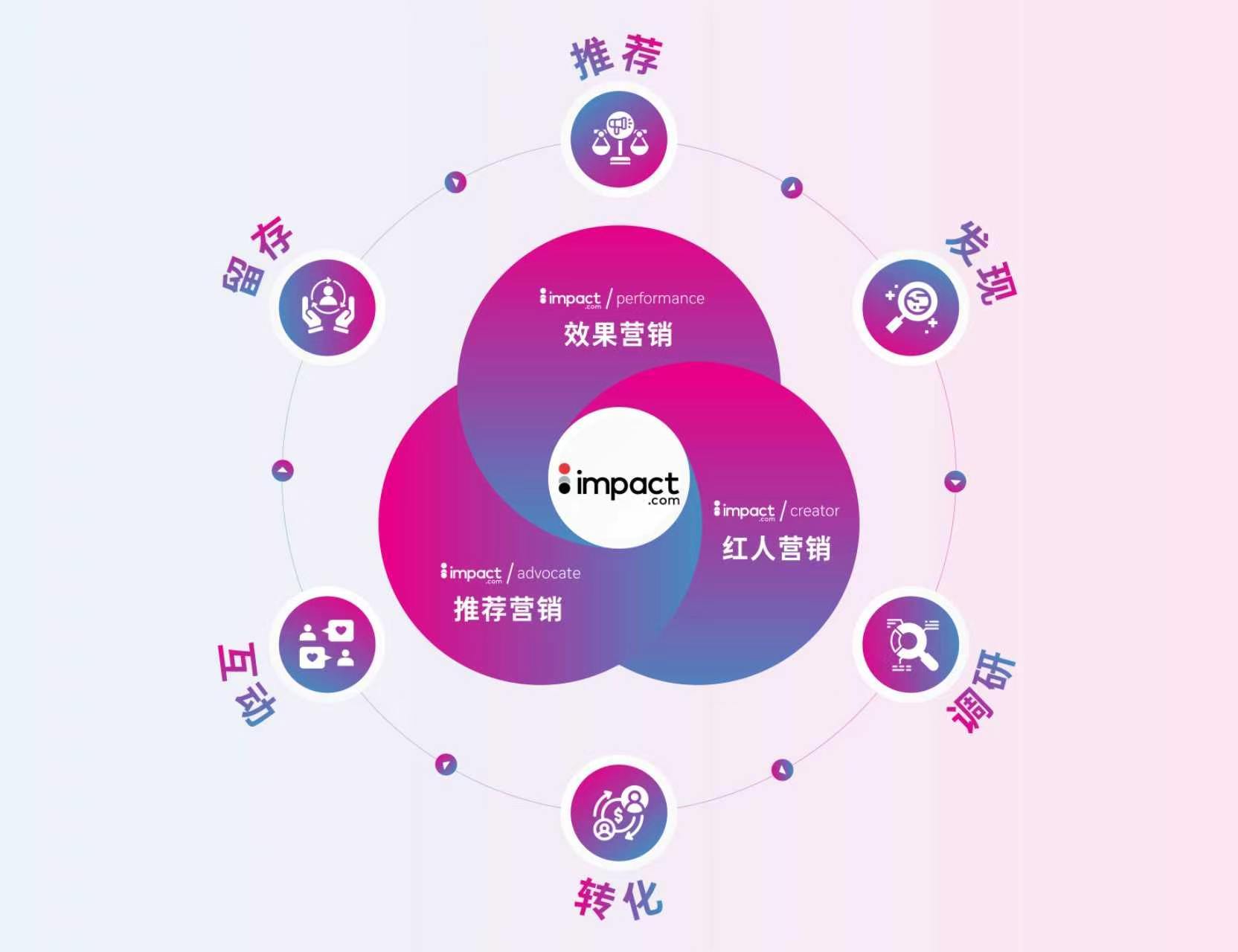
This mechanism has a name that has existed for many years: partner marketing, which refers to the form where brands systematically cooperate with all types of third parties to produce content. It is the integration of content marketing, influencer marketing, strategic cooperation and content collaboration. Take impact.com, a relatively mature platform in this field, as an example, everything from partner discovery and recruitment to relationship management and performance tracking can be completed on the same platform, saving brands a lot of manpower and material resources. It turns the brand's "connecting to the outside world" from scattered resource operations into a scalable operational capability.
Many brands with sharp business acumen have already captured this point. The Global Partner Marketing Insight Report (hereinafter referred to as the Report) previously released by impact.com shows that brands cooperate with 3-4 types of partners on average. Among them, the expected net growth of cooperation with social media influencers & content partners, and evaluation partners is 14 percentage points and 11 percentage points respectively. The focus of brands' new cooperation is shifting to third-party nodes that can participate in product discovery, cognitive education and trust building.
Under AI's content selection logic, it happens to be an effective way for brands to acquire trust assets in batches, which is the certainty that brands can grasp in the AI era.
Part 2: An Account That Should Have Been Settled Long Ago
Partner marketing is actually not a new concept. Affiliate marketing, KOL cooperation, strategic alliances, many brands have come into contact with it in different forms.
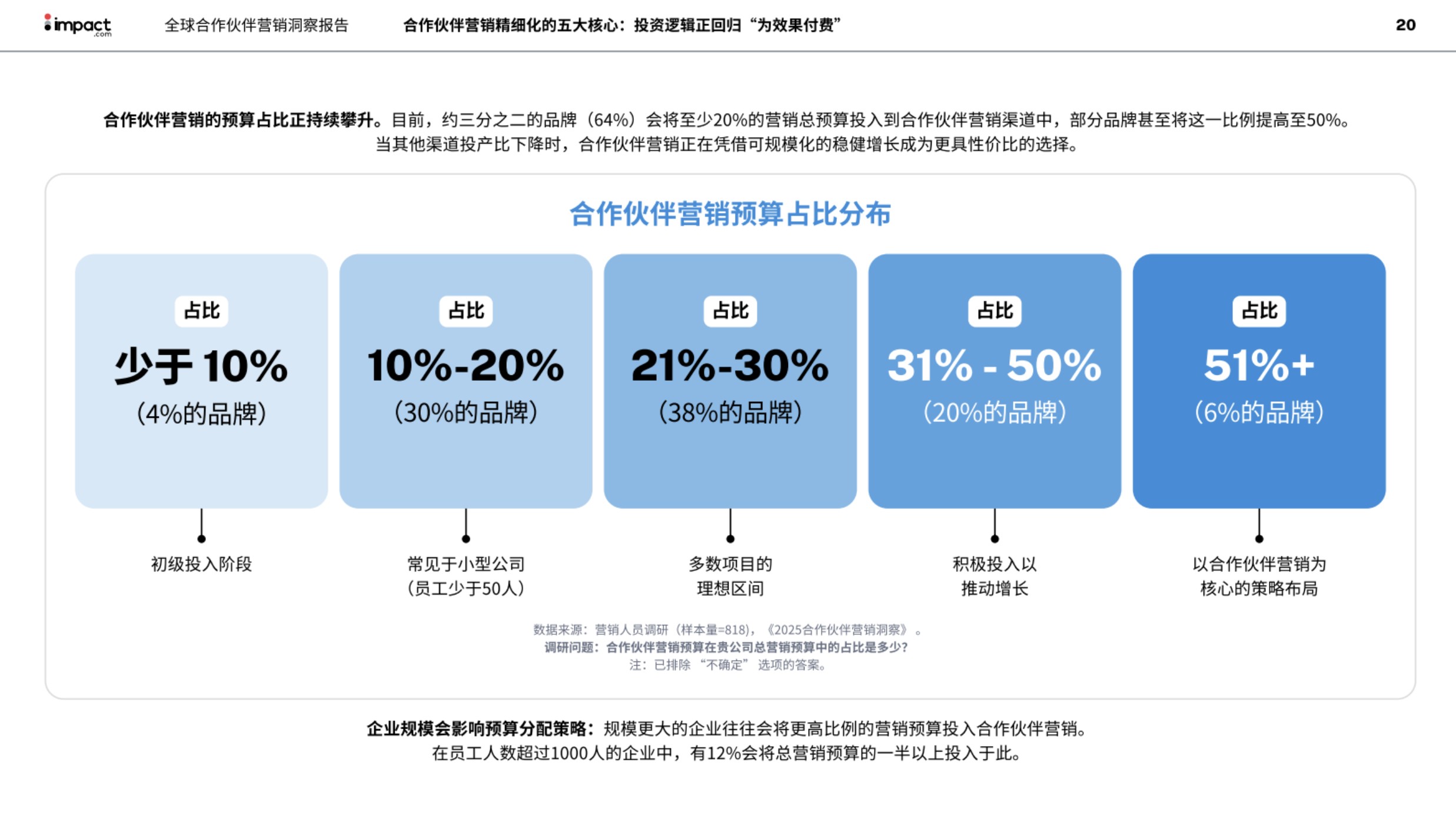
Even, in the past year, this trend has become increasingly obvious. The Report shows that 74% of brands have significantly increased their investment in partner marketing in the past year, the main incentive being that the cost of traditional marketing channels has approached or even exceeded the returns. About 38% of brands have allocated 21%-30% of their marketing budget to partner channels, and even 6% of radical pioneers have poured more than half of their budget into this field.
But the value of a methodology is always determined by two things together: what it creates, and how it is measured. For the former, partner marketing does fit the logic of the AI era better, but for the latter, it still remains in the previous era.
Most brands' marketing attribution still measures the last click. Whoever drives the consumer's last click gets all the credit. This logic was born in an era with very short decision paths, and has been used ever since because it is convenient and hassle-free.
The distortion that was covered up in the growth era has been highlighted again in the stock era.
After all, consumers' decision-making has long been non-linear. A purchase is more like a long journey spanning several weeks: you first get to know the brand in a professional review, then develop a favorable impression in a YouTube blogger's video, and finally complete the order on an independent site or coupon website, while the last-click attribution gives all the credit to the latter.
The AI era has suddenly increased the cost of this unclear accounting. Those content producers whose "contributions cannot be clearly calculated" at the front end are precisely the third parties that AI prefers to cite when generating answers. Brands expect their content to enrich their trust assets in the eyes of AI, but at the same time pay them based on an accounting system that cannot recognize their contributions.
The generation of value and the measurement of value point to two different directions. If this gap is not filled, trust assets cannot be accumulated.
For this reason, brands are also seeking solutions. The Report also shows that 94% of brands plan to try or consider new attribution models in the next year. As for partners, their preference is very clear: 32% of content creators prefer first-click attribution, which also indicates from the side that contributions occurring at the front end of cognition are demanding to be re-measured.
impact.com, a platform that has been deeply engaged in the partner marketing field for many years, has put a lot of effort in this regard. Its full-link tracking and attribution system transforms the conventional marketing attribution that "only focuses on the last step" into full-link visibility, so that the real contribution of each partner on the entire consumer decision-making chain can be seen.
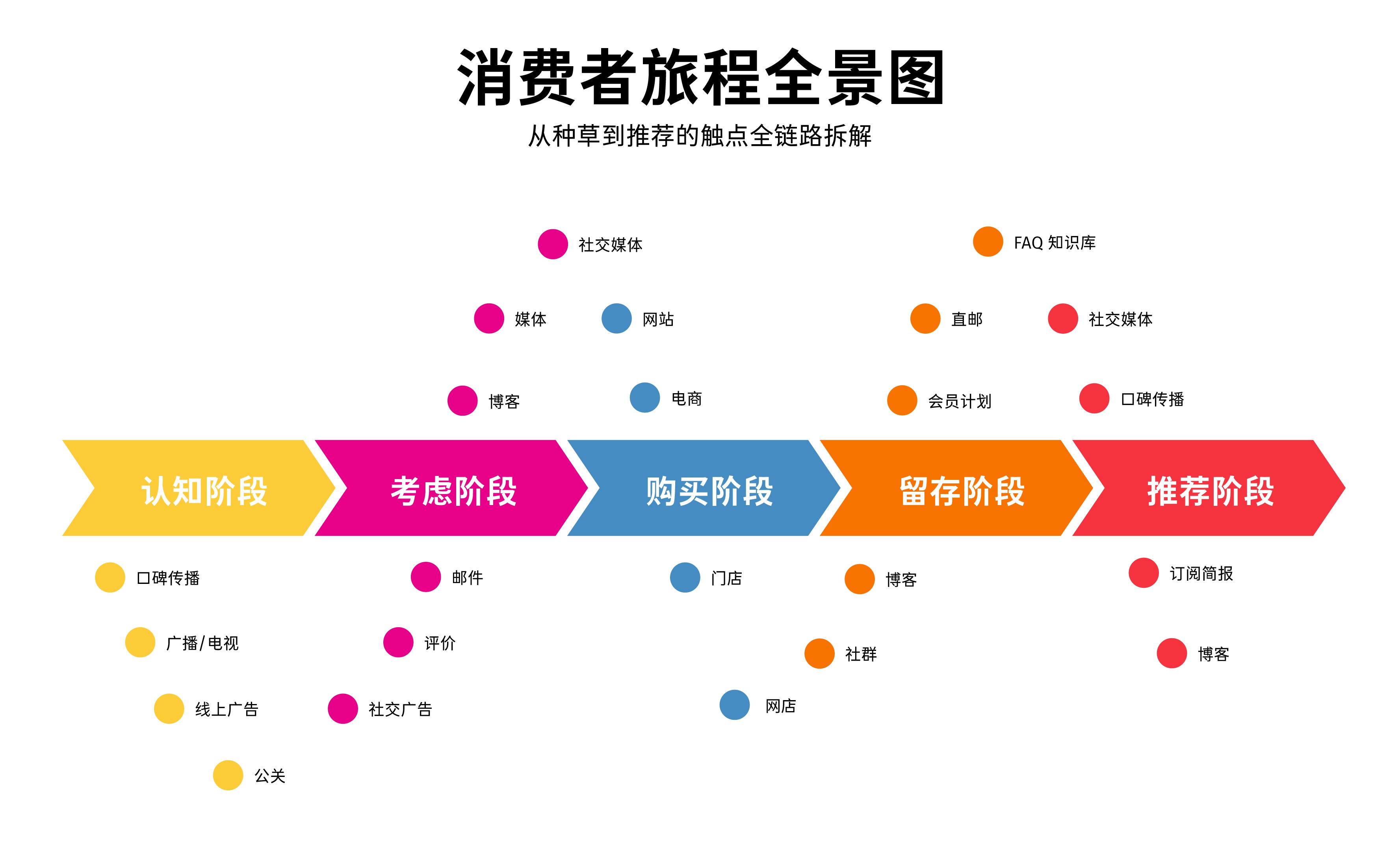
This means that with the help of this core capability, brands can identify who exerted influence at which link and to what extent, so as to make reasonable evaluations of partners, and clearly explain the value of this channel internally.
The high-end custom jewelry brand Taylor & Hart is a representative case.
As a typical high-unit-price category, Taylor & Hart's consumer groups have a longer decision-making cycle. It often takes consumers weeks or even months from being attracted to placing an order, with far more touchpoints in the middle than general categories. The brand was once seriously troubled by traffic fraud, and its budget was consumed by fake traffic. Before accessing impact.com for full-link tracking, the team's evaluation criteria still revolved around the conversion data of the last step.
The change happened after they began to evaluate each partner based on full-link contributions. Those partners who seemed to "have no output" under the last-click mechanism have actually been doing mind-building work at the front end of decision-making, but have never been correctly measured. Furthermore, the team connected impact.com's marketing data to Salesforce, so that channel performance is directly linked to inquiry volume and transaction volume.
Marketing figures have finally been translated into business language, and the management can directly see what this channel brings to the business itself. In the end, the ROI driven by this system reached 37.55.
And this new set of accounts has another necessary premise: the data must be authentic.
The AI era has amplified the harm of traffic fraud. In the past, fake traffic ate up the budget, which was a one-time loss. Now it pollutes the data that brands use to judge "who is influencing consumer minds". The essence of full-link attribution is a map for brands to perceive the market. Once fake touchpoints are mixed into the link, every subsequent decision will deviate systematically.
Preventing traffic fraud and ensuring data transparency are the basic conditions for building long-term competitiveness. This is also why impact.com puts data protection and anti-fraud capabilities at the same priority as tracking and attribution: what it protects is not just the budget itself, but also the premise for brands to make correct decisions.
Part 3: Go Deeper Into the AI-Native Field
AI's preference for third-party content in content selection, full-link attribution to make value visible, and data authenticity as the foundation of everything, these apply to all overseas brands.
However, those software and hardware enterprises that grew up with the AI wave have extremely urgent demand for this set of logic, and the verification comes extremely quickly. More and more such enterprises are appearing on impact.com's platform.
The situation of these companies carries the unique tension of the era: they are born because of AI, and are examined by the trust rules of the AI era earlier.
On the one hand, it is the reality of enterprise survival. Most AI-native companies are still in the stage of burning money for growth, the will to survive overrides everything, and they are extremely sensitive to the return rate of every marketing expenditure. Partner marketing is billed based on actual conversion and performance-oriented, which naturally fits this survival rhythm.
On the other hand, it is the realization of trust value, which refers to the trustworthiness in AI's cognition as well as in the public's cognition. After all, most of the products of these AI-native companies are new species themselves. When consumers face an AI product, there is no ready-made reference frame for them to judge whether it is reliable or worth paying for.
The trust of old categories can be migrated along the category experience, while the trust of new species can only be built from scratch. In this process, reports from independent media, evaluations from professional bloggers, and analysis from industry institutions are more needed to complete accumulation in unfamiliar markets. As the natives of the AI era, this group of companies often have a deeper understanding of this point than anyone else.
For them, building a partner network through impact.com is using one set of strategies to respond to two demands at the same time: direct customer acquisition and conversion, and brand visibility construction in the AI search ecosystem. In the early stage of overseas expansion full of uncertainties, being able to cover both of these two things at the same time is efficiency in itself.
Notta AI is a representative sample. It is an AI-based speech-to-text tool. Its affiliate marketing-focused partner project has achieved remarkable results in the core market of Japan first, then the team began to replicate this strategy in the U.S. market, connecting with more diverse affiliate partners to obtain higher-quality traffic.
As a SaaS manufacturer, the Notta team knows the value of professional tools to efficiency very well, and hoped to find a platform that can match its own growth rhythm from the very beginning. After comprehensively evaluating factors such as brand awareness, influence, platform functions and technical support, the team finally chose impact.com. With the help of the platform's capabilities, Notta quickly recruited high-quality affiliate partners and realized batch management, and continuously optimized promotion effects through data reports. On the premise of reducing the cost of affiliate marketing, the time efficiency increased by 50%, and the monthly revenue increased by 10 times.
It can be seen that Taylor & Hart and Notta, one is a traditional category with high unit price, the other is a fast-growing AI-native new species. They are in different industries and different stages, but verify the same set of logic: when the three things of connecting third parties, tracking the full link and ensuring data authenticity are undertaken in a unified manner, partner marketing will evolve from a concept to an operable growth engine.
Consumers' decision-making chains and trust sources are all migrating to AI, and traditional attribution methods are disconnected from the real value distribution, which constitutes the core challenge faced by this generation of overseas brands in marketing.
After the partner marketing model emerged, the environment it is in has been changing, and its value presentation has also changed accordingly. In the mobile Internet era, its core value is more accurate and diversified reach. In the AI era, it is being re-presented as a trust building method that is more in line with AI's content selection logic, and more recognizable and adoptable by generative engines.
The methodology is not new, but the underlying rules are new.
impact.com itself is also iterating along this line. On the one hand, it continues to embed AI capabilities in its products, and on the other hand, it carries out technical docking and strategic cooperation with enterprises that are good at AI in the ecosystem.
According to impact.com's official disclosure, it is currently exploring how to provide enterprises with more flexible cooperation methods. Brands can filter partners who have higher visibility in AI search, and can directly send cooperation invitations regardless of whether a cooperation relationship has been established. If this step is successfully implemented, AI search visibility will change from an indicator that can only be passively observed to a growth action that can be actively operated on the platform.
Overseas brands are in a transition period where the rules are being rewritten, but the new rules have not yet been fully clarified. In the past, brands were used to controlling the narrative themselves, and official website content and ad placements were all tightly held in their own hands. The AI era is changing this premise: brands' images are increasingly shaped by third-party content that they cannot control, and AI will read all this content for consumers and make judgments on their behalf.
In this environment, what brands need to focus on building is precisely this capability of "connecting to the outside world": finding more trusted third parties