Are Li Auto and Hongmeng both poised to enter the market? The battery swapping boom is burning ever more vigorously.
Recently, two rumors in the new energy industry have been quite interesting: Li Auto was exposed that it may access CATL's Choco-SEB battery swapping network through vehicle model modification; Harmony Intelligent Mobility is also rumored to join the Choco-SEB battery swapping system.
One is a leading player in the ultra-fast charging network, and the other is a firm promoter of 800V high-voltage fast charging. Why are they all turning their attention to battery swapping?
If you look at this report card from NIO, the "top student" in battery swapping, you might think "it's really possible."
In June 2026, NIO delivered 40,597 new vehicles, hitting the highest level since the beginning of this year, with a year-on-year increase of 62.9%. The cumulative delivery in the first half of the year reached 191,123 units, a year-on-year increase of 67.4%.
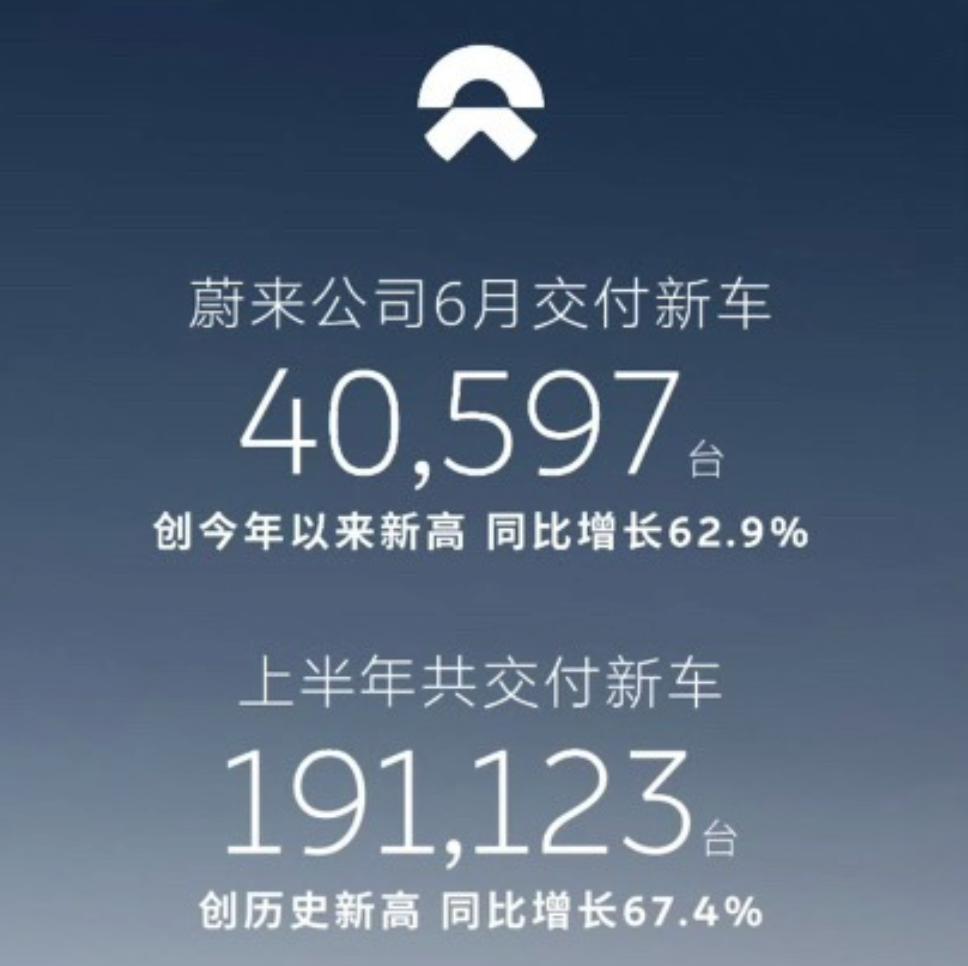
Figure / NIO's delivery volume in June 2026, Source / Screenshot from New Energy Observer on the Internet
Moreover, based on the available financial data, NIO has achieved profitability for two consecutive quarters. In contrast, Li Auto and Seres have shifted from profit to loss.
On the other hand, the battery swapping ecosystem itself is also growing rapidly. Automakers including FAW, Changan, BAIC, Chery, and GAC have jointly released 10 battery-swappable models. Battery swapping is evolving from a "niche option" into infrastructure that mainstream players are seriously considering.
Just as the construction of battery swapping networks is in full swing, operational vehicles equipped with CALB's 177Ah LFP cells have experienced concentrated failures, with some owners being told after driving 150,000 kilometers that they need to spend tens of thousands of yuan out of pocket to replace the battery pack.
Overall, the value of battery swapping is indeed continuing to rise.
1. Giants are "switching sides" one after another, and the battery swapping ecosystem is undergoing fission
If Li Auto and Harmony Intelligent Mobility joining the Choco-SEB battery swapping program had happened two years ago, it would have probably been immediately dismissed as a "rumor."
Li Auto is a firm advocate of ultra-fast charging, with its 5C ultra-fast charging piles being widely deployed successfully. Harmony Intelligent Mobility is even more a spokesperson for 800V high-voltage fast charging. Why are they now setting their sights on battery swapping?
Let's first look at the current scale of Choco-SEB battery swapping. As of June 30, 2026, CATL's Choco-SEB battery swapping has built a total of 2,000 battery swapping stations nationwide, covering 180 cities in 31 provinces. Nearly 1,000 new stations were added in the first half of this year, roughly equal to the total number for the whole of last year. According to the plan, the number will reach 3,000 by the end of the year, covering more than 190 cities.
CATL has also launched the "Ultra-Charge & Swapping Integrated" initiative, where all Choco-SEB stations are fully equipped with Shenxing ultra-fast charging piles, supporting both charging and swapping. A total of 4,000 Ultra-Charge & Swapping Integrated stations will be completed by the end of 2026.
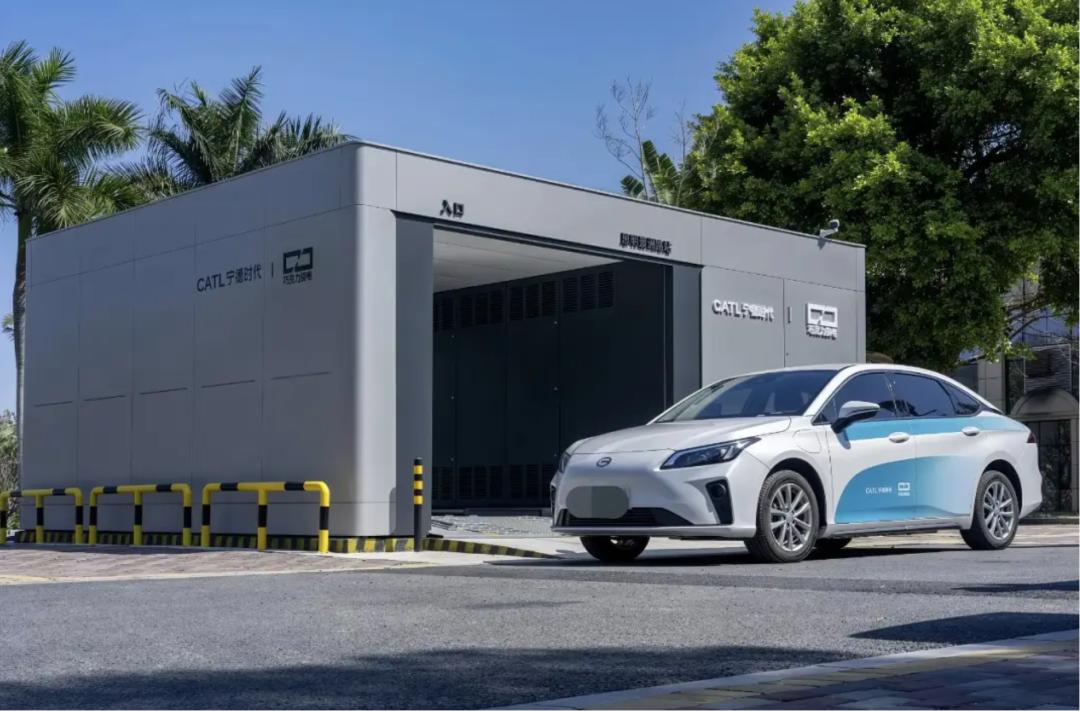
Figure / Choco-SEB battery swapping station, Source / Screenshot from New Energy Observer on the Internet
In terms of vehicle models, 10 Choco-SEB battery-swappable models have been released, including FAW Hongqi EH7, Changan Qiyuan A05/A07, Deepal SL03, BAIC Arcfox, GAC AION series, Chery iCAR V23, etc. The first Choco-SEB battery swapping station in Xining has started construction, which is compatible with battery-swappable models from 18 mainstream automakers such as GAC AION, BAIC Arcfox, FAW Hongqi, and Chery iCAR.
Battery swapping can be completed in just 99 seconds, faster than refueling, and this ecosystem is expanding at a speed visible to the naked eye.
Now let's turn our attention to NIO. From the launch of its first battery swapping station in 2018 to the present, this journey has taken nearly a decade. As of July 1, 2026, NIO has deployed 9,056 charging and swapping stations nationwide, including 3,958 battery swapping stations, 5,098 charging stations, and 29,357 charging piles.
NIO plans to build more than 1,000 new battery swapping stations in 2026, with the total number exceeding 4,600 by the end of the year.
The battery swapping model, which was once questioned for burning money, is now reaping rewards. Delivering over 40,000 units in June 2026, with a vehicle gross margin of 18.8% and profitability for two consecutive quarters, behind these figures, battery swapping has become an indispensable plus. For many users, battery swapping is one of the core reasons for choosing NIO.
NIO's technical confidence in battery swapping is also solid. The entire process is automated, allowing drivers to set off with a fully charged battery in 3 minutes. Each battery swapping operation automatically completes battery health checks, and abnormal batteries are isolated in real time. This mechanism has withstood hundreds of millions of practical tests.
If Li Auto and Harmony Intelligent Mobility really enter this field, it's not just following the trend, but because they have seen a proven correct answer being replicated across the industry. When leading players in ultra-fast charging start to take battery swapping seriously, this in itself speaks volumes.
2. The "destiny" of a battery: How does battery swapping rewrite it?
The ongoing scandal with the highly popular ride-hailing car AION has left many ride-hailing drivers overwhelmed and full of regret. Many people suddenly realize that battery swapping seems to be a better fit for ride-hailing vehicles.
As is known to all, some operational vehicles of GAC AION S equipped with CALB's 177Ah LFP cells have experienced concentrated battery failures, including cell swelling, liquid leakage, and insulation faults. Third-party test reports from multiple car owners confirm that after excluding external factors such as collisions and water immersion, the failures are attributed to internal manufacturing defects in the batteries.
Failures mainly occur at the mileage range of 150,000 to 300,000 kilometers, and many ride-hailing drivers have been told that they need to spend tens of thousands of yuan to replace the battery pack. Considering how little their current vehicles are worth, spending tens of thousands on battery replacement is a heavy blow. Originally, they bought the cars to make money from ride-hailing, but unexpectedly encountered such a setback.
GAC AION subsequently announced that it will extend the battery warranty period from 8 years/150,000 km to 8 years/300,000 km, while strengthening big data monitoring of batteries, so that abnormal vehicles can get free maintenance or battery pack replacement. CALB also issued a statement saying that it has launched relevant maintenance services through 4S stores.
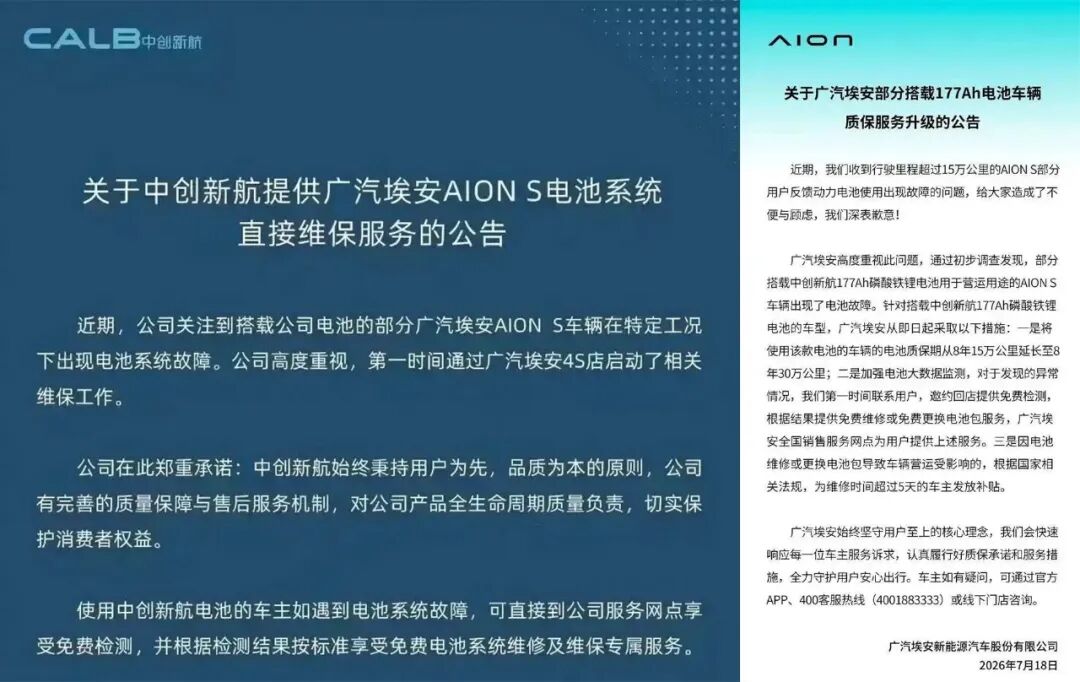
Figure / Announcements released by CALB and GAC AION, Source / Screenshot from New Energy Observer on the Internet
This incident exposed a deeper problem: For ordinary car owners, the battery is a "black box." You never know when it will go wrong, nor what its actual health status is. It's fine when the vehicle is under warranty, but once the warranty expires, all risks fall on the car owners themselves. A battery costs tens of thousands of yuan, which is painful to replace, but you don't dare to drive the car without replacing it.
However, the solution offered by the battery swapping model is to turn the battery from "user-owned private property" into "public asset."
Each battery swapping operation is a thorough health check. Batteries enter the station, undergo testing, assessment, and are then put back into use — abnormal batteries are identified in real time and taken out of service. This closed-loop management ensures that every battery in circulation is in good working condition.
At the national standard level, the "Specification for Defect Monitoring and Analysis of Traction Batteries in Battery Swapping Scenarios" (GB/T 47283—2026) has been implemented since June 1, 2026, which stipulates the defect monitoring and analysis procedures for traction batteries in battery swapping scenarios. This standard focuses on prominent issues such as scattered operation data and inconsistent monitoring methods for traction batteries in battery swapping scenarios.
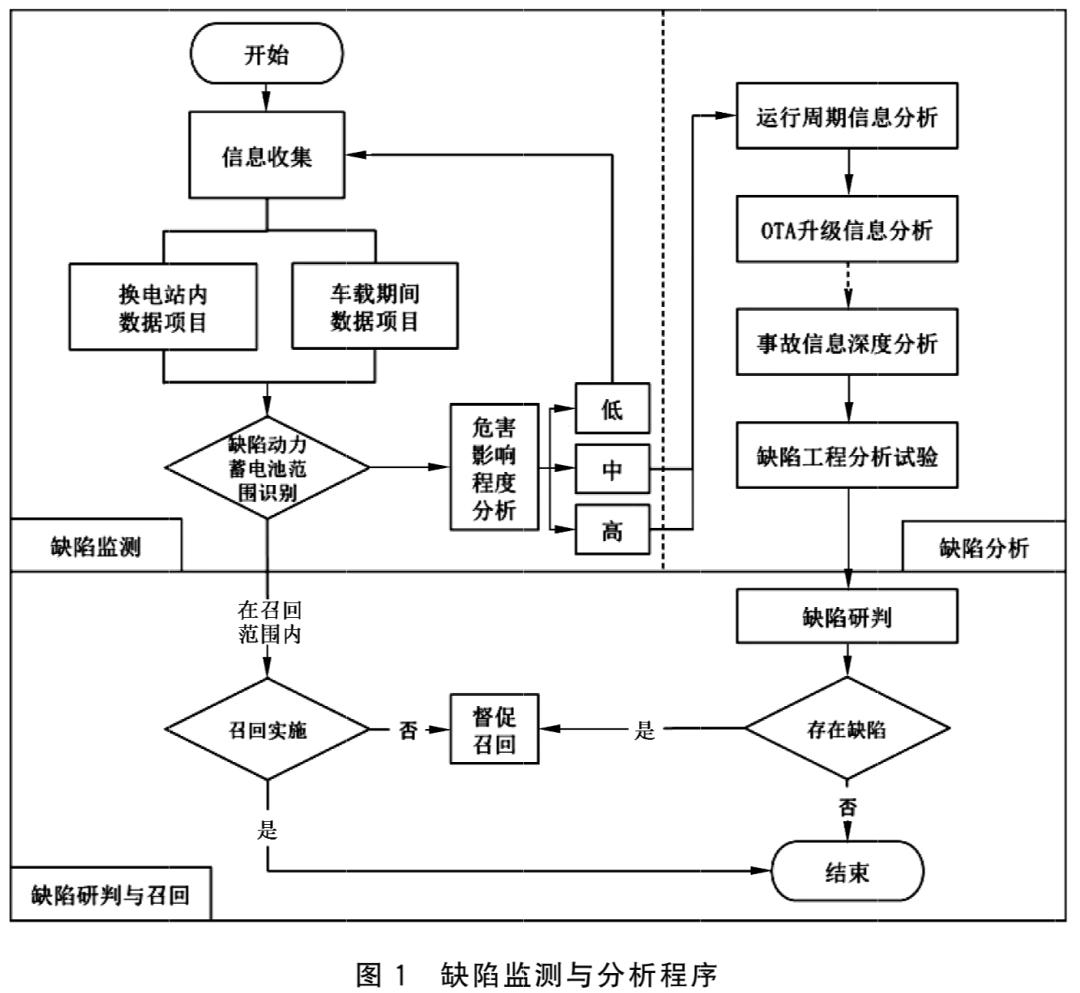
Figure / Defect detection and analysis procedures, Source / Screenshot from New Energy Observer on the Internet
If that batch of CALB's 177Ah batteries had been circulated in the battery swapping system, the situation where the car suddenly loses power and breaks down on the highway would never have happened to the owners.
The risk of battery degradation and the uncertainty of residual value are transferred from individual users to the system. The party that holds the battery is responsible for its maintenance and bears the risks — it's obvious to all that this is the real value of the battery swapping model.
3. The convergence of giants: The next step for battery swapping
NIO has been on the battery swapping path for nine years. To borrow a popular meme on social media now — "The mocking laughter back then was so loud!" Now, battery swapping has gone from being ridiculed to being followed. But working alone and industry-wide convergence are two completely different magnitudes of things.
The unified-specification batteries promoted by Choco-SEB are creating a positive cycle: The more automakers join, the more battery swapping stations there will be; the more battery swapping stations there are, the more users they can attract; the more users there are, the more automakers will be attracted to join. This flywheel is accelerating its rotation.
The value of battery-separated ownership is also being recognized by more people. For example, under NIO's BaaS (Battery as a Service) model, users buy the car without purchasing the battery, and rent the battery on a monthly basis. The risk of battery degradation and the uncertainty of used car residual value are no longer borne by users.
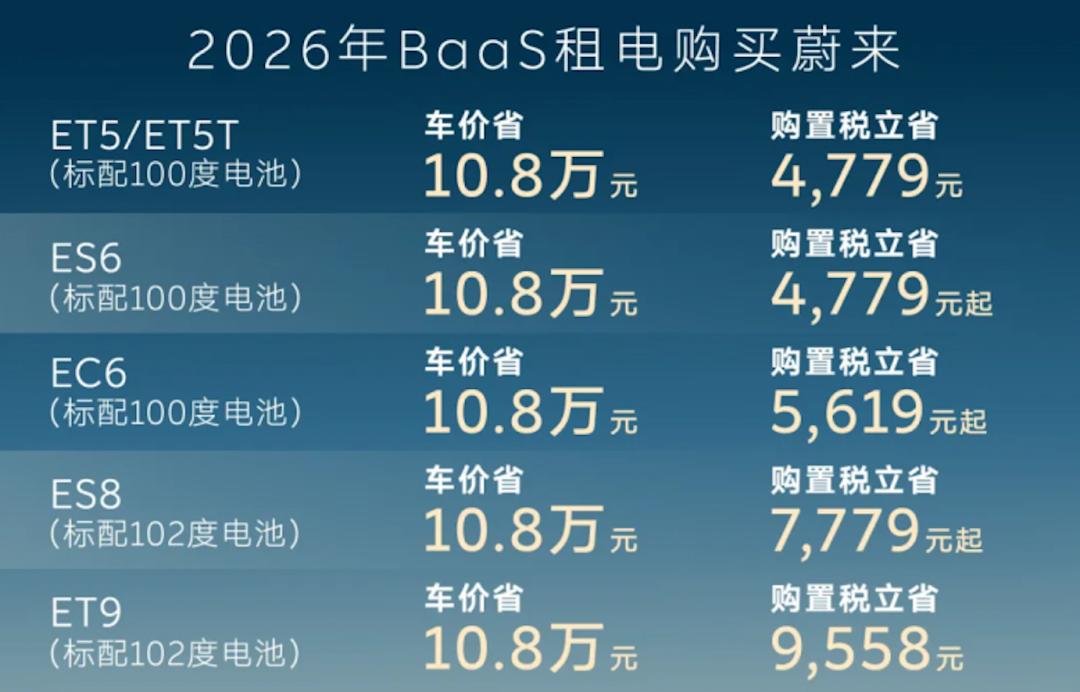
Figure / Prices of some NIO models under the BaaS model, Source / Screenshot from New Energy Observer on the Internet
This is particularly friendly to operational vehicles. Ride-hailing cars and taxis can travel hundreds of thousands of kilometers a year, and their battery degradation rate is much faster than that of private cars. The battery swapping model turns the battery into a "service" that can be used on demand, rather than a "burden" that depreciates more and more over time.
The network density of battery swapping stations is also increasing rapidly. CATL plans to build 30,000 battery swapping stations in the long term. NIO plans to build more than 1,000 new battery swapping stations in 2026. When battery swapping stations are as ubiquitous as gas stations, the energy replenishment experience will truly be comparable to that of fuel vehicles. Whether it's a 3-minute or 99-minute full-charge departure, consumers don't need to queue up for charging piles, and don't have to worry about battery health.
Giants are entering this field not because ultra-fast charging is not good enough. Ultra-fast charging has its own advantages, and battery swapping has irreplaceable value. These two approaches can coexist in parallel, and there is no need for one to replace the other.
From investing over 20 billion yuan in building stations, to achieving over 170,000 daily battery swapping operations, with 20% of the battery swapping stations being profitable, NIO has finally achieved profitability for two consecutive quarters. The business model that was once considered "impossible to make money" is now being validated by the market.
With 2,000 stations, 10 vehicle models, and 18 cooperating automakers, CATL is pushing battery swapping from "one company's exploration" to "the infrastructure of the entire industry."
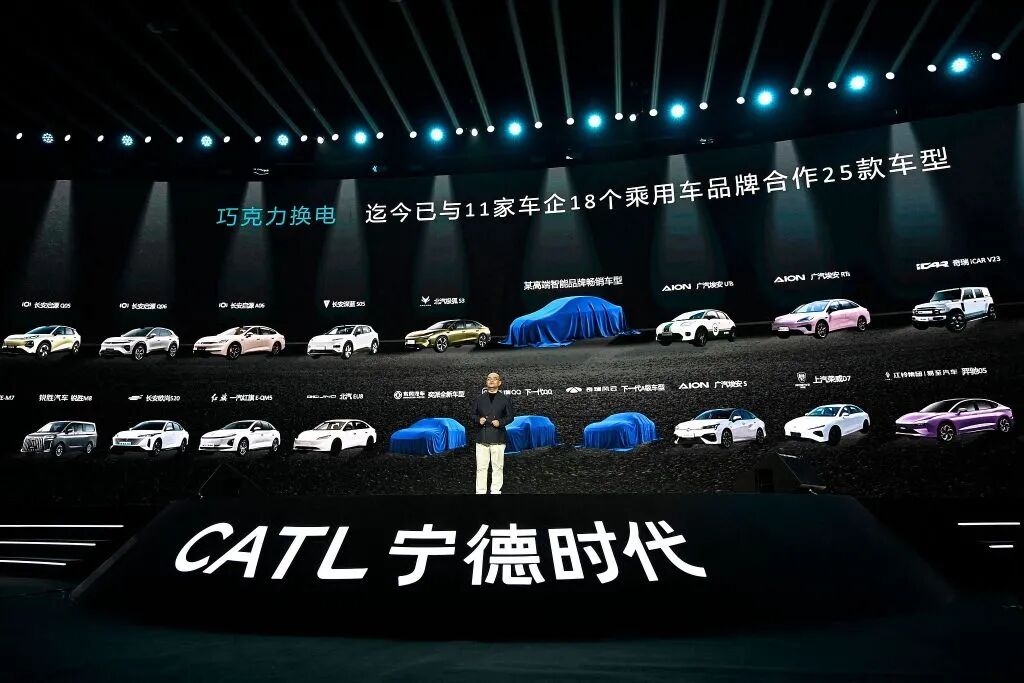
Figure / Models supporting Choco-SEB battery swapping, Source / Screenshot from New Energy Observer on the Internet
If Li Auto and Harmony Intelligent Mobility really join in, the fire of battery swapping will burn even more vigorously. Even if they don't join in the end, there will be other automakers that we can't think of now joining. The landscape of battery swapping has already been opened up.