Tech giants are collectively placing their bets, and AI programming education company imagi has secured 30 million yuan in seed round investment.
According to TechDuozhi's report on July 26, edtech startup imagi recently announced the completion of a $4.5 million seed funding round. This round was led by Brighteye Ventures and Day One Capital, with participation from FemInvest Ventures, We Are Human (a VC co-founded by Jamie Brooker and Johan Brand, co-founders of the gamified learning platform Kahoot!), Morgan Stanley, and Sparkmind Capital.
In addition, this funding round also attracted multiple angel investors, including Mati Staniszewski, founder of ElevenLabs; Thomas Dohmke, former CEO of GitHub; Fredrik Hjelm, CEO and co-founder of Voi; musician and tech investor will.i.am; Sophia Amoruso, founder of Nasty Gal; and entrepreneur Simon Squibb.
It is worth noting that in overseas markets such as the UK and the US, the education To G (government/school) market is often more robust than the To C market. A large number of edtech companies in these regions target public schools, universities, and related institutions as their core customers, rather than directly serving parents and students.
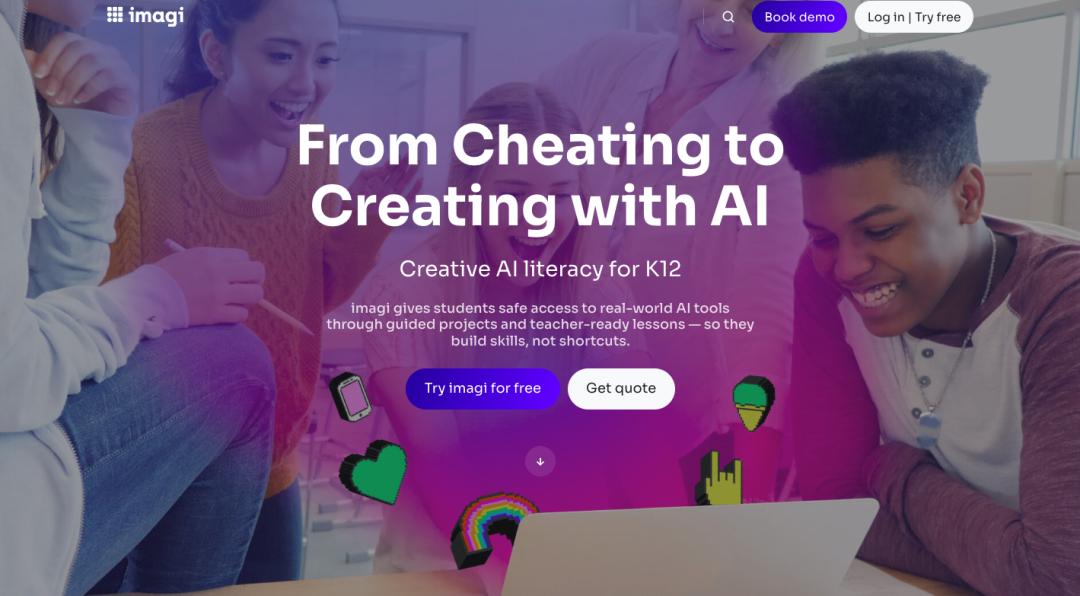
The protagonist of this article, imagi, is one such company.
imagi was co-founded in 2018 by Dora Palfi and Beatrice Ionascu, dedicated to providing safe AI education solutions for K12 schools. Dora Palfi serves as CEO, and Beatrice Ionascu serves as CTO. The company expanded its footprint in the US K12 market in 2024, and is currently headquartered in New York, USA.
In November 2025, imagi also appointed Sari Hurme-Mehtälä as Chief Growth Officer. Sari is a former entrepreneur whose previous venture, Kide Science, was acquired by US-based STEM education solution provider Accelerate Learning in October 2023.
In an era where AI is reshaping every field, for AI natives, the question is no longer "will children use AI," but "how to ensure they learn to use AI safely, creatively, and responsibly." This is exactly where imagi finds its market entry point.
imagi positions its platform as a security education layer between AI tools and schools. Through partnerships with OpenAI and Lovable, imagi provides K12 students and teachers with learning tools for programming, computational thinking, and AI literacy, while building robust safety mechanisms. According to Dora Palfi, every prompt and response generated on the platform goes through pre-filtering, and non-compliant content is removed before it reaches students.
As AI becomes increasingly accessible, schools need not just access to tools, but also proper frameworks, safety guardrails, and teaching methods to help students become creators, rather than just passive consumers of technology.
Dora Palfi stated: "Today's children are the first generation of AI natives. This means AI education will not only become a new form of information technology, but also a new form of literacy. Unlike reading education, AI was not designed with children at its core. Therefore, we need to provide children with safe, verified AI education..."
For school administrators, imagi provides a structured implementation framework, eliminating the need for each teacher to individually evaluate every model, product, and potential security risk.
Since its launch, imagi has operated in over 100 school districts across all 50 US states, with more than 700,000 students from 140 countries having used the platform. The company reports that its user base has grown 30 times year-over-year, and its annual recurring revenue has tripled.
Notably, last November, imagi announced a partnership with programming tool Lovable. This tool allows teachers to create courses and grant students controlled access to AI tools, enabling them to turn their ideas into real, functional projects. OpenAI has also provided $1 million in credits to help schools access the imagi x Lovable platform for free.
Teachers and students have created numerous works using imagi and Lovable. For example, one student built a website to promote a lawn care business, complete with a calendar that allows people to book appointments directly online; another student developed a digital wardrobe app called Alta; a third student created an application that can detect emotions and provide relevant suggestions; and one teacher developed a teaching app that can translate course content into multiple languages.
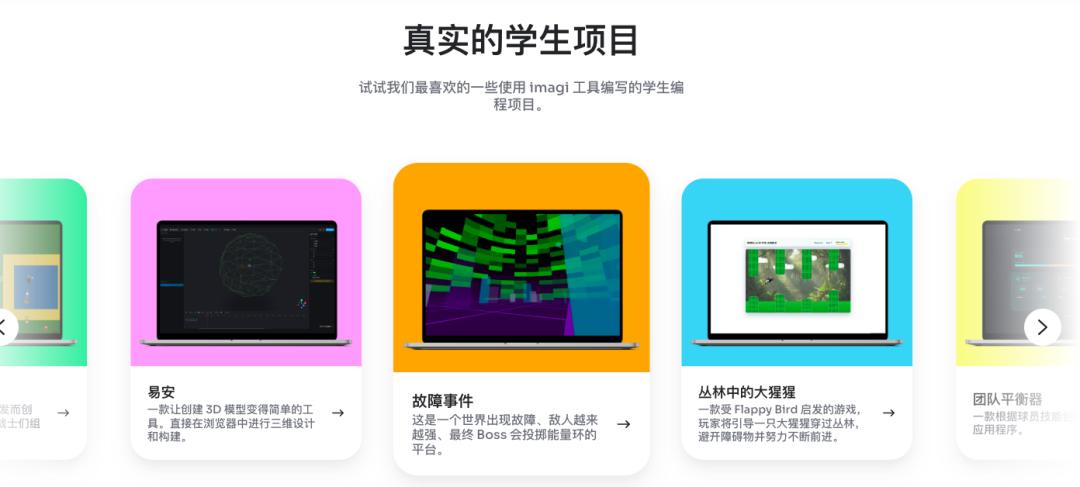
(Partial student projects showcased on imagi's official website)
These are not just "learn to code" exercises, but examples of the younger generation using technology to solve real-world problems.
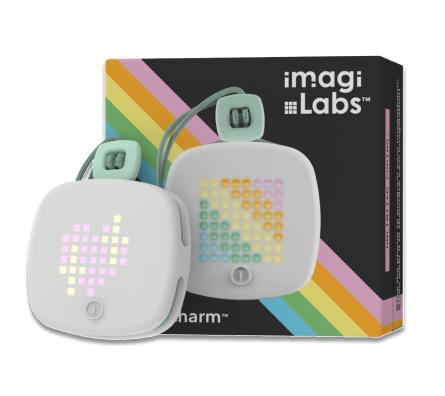
imagi has also launched an entry-level hardware product, imagiCharm, priced at $112, designed to spark beginners' interest in programming. Equipped with 64 programmable colored LEDs, users can write Python code via the supporting app to light up various pixel patterns, texts, and animations.

Benoit Wirz, Founding Partner of lead investor Brighteye Ventures, said: "imagi perfectly aligns with two core trends in the education industry: first, AI is becoming mainstream, and second, there is an urgent market demand for systematic, safe, and reliable digital literacy education."
"We believe the shift from 'consuming technology' to 'creating with technology' will become one of the most defining educational opportunities in the AI era," stated investor FemInvest Ventures. "imagi sits at the intersection of several key areas we see as critical to the future: AI, education, digital inclusion, and responsible technology. The company is addressing an issue that is growing in importance as AI adoption accelerates: How can we help children and teachers prepare for an AI-shaped world, while ensuring that technology is introduced in a thoughtful and safe manner? We believe the answer lies in the fact that education must evolve in tandem with technology, and imagi is making that evolution possible."
imagi revealed that the new funding will be used to develop more AI tools, expand partnerships with additional K12 schools, scale up teacher training, grow the team, and launch a new platform next month.
This article is from the WeChat public account "TechDuozhi" (ID: duozhiwang), written by XU Jingjing, and published with authorization from 36Kr.