The year 2026 has just passed its midpoint, and 20 beauty enterprises are heading for bankruptcy.
In recent years, the global consumer market has continued to cool down, with overseas brands accelerating their withdrawal and offline stores closing frequently becoming the industry norm. Against this backdrop, a large number of cosmetics enterprises are facing unprecedented severe survival challenges, and industry reshuffling is accelerating.
Recently, Jumeili found on the National Enterprise Bankruptcy and Reorganization Case Information Network that several more bankrupt enterprises have been added.
Bankruptcy of a cosmetics enterprise with a history of over 40 years!
Recently, Shanghai Meilan Cosmetics Co., Ltd. (hereinafter referred to as Shanghai Meilan) was declared bankrupt by the People's Court of Pudong New Area, Shanghai.
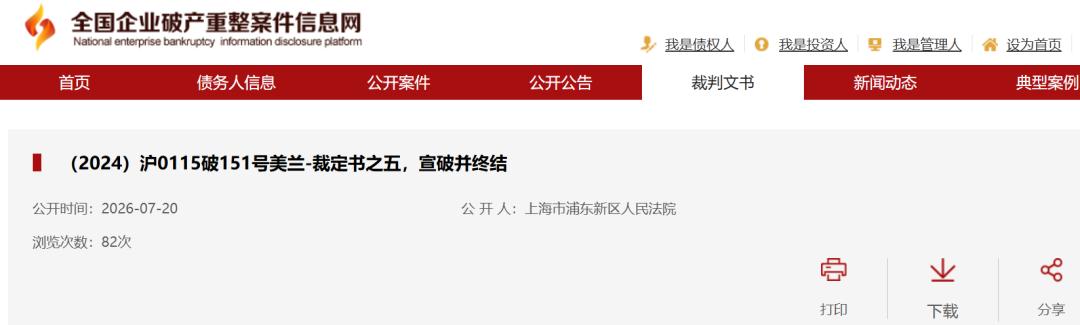
Source: National Enterprise Bankruptcy and Reorganization Case Information Network
Shanghai Meilan was founded in 2016 with a registered capital of 30 million yuan. Its business scope mainly includes disinfectant production (excluding hazardous chemicals), cosmetics production and sales, and the enterprise is currently operating in an active status.
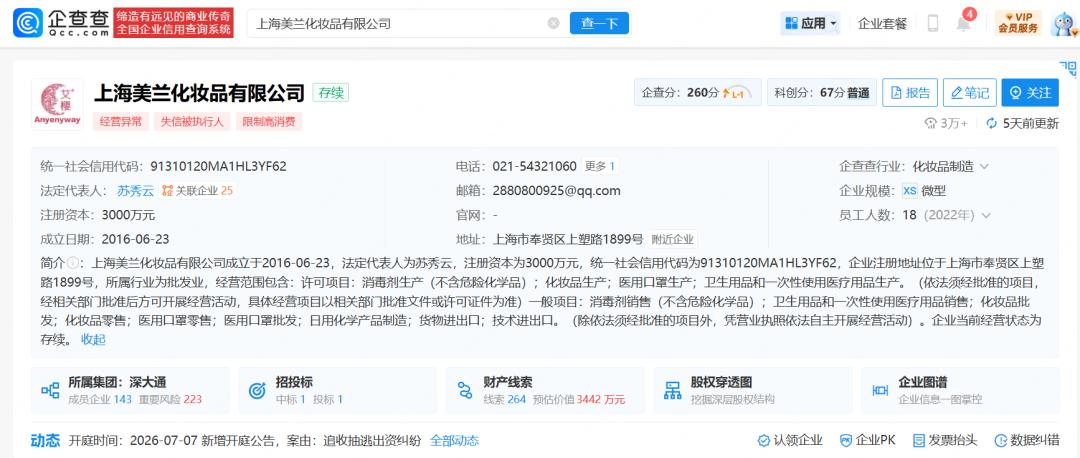
Source: Qichacha
Looking back at its development history, its predecessor, "Shanghai Meilan Cosmetics Factory", was formally established in 1984. As one of the first batch of licensed cosmetics production enterprises in Shanghai, Shanghai Meilan initially focused on domestic products such as old Shanghai vanishing cream, and deployed channels such as offline supermarkets and wholesale markets.
In 2014, Shanghai Meilan launched the national trend beauty souvenir brand "Zhen Gege", focusing on court ancient-style pearl cream, entering the cultural tourism souvenir track. In the early stage, the brand only deployed small-scale goods in scenic area shops, and then gradually expanded, laying out more than 670 marketing outlets in multiple channels such as national 5A-level scenic spots, airports, high-speed railways and train systems [1].
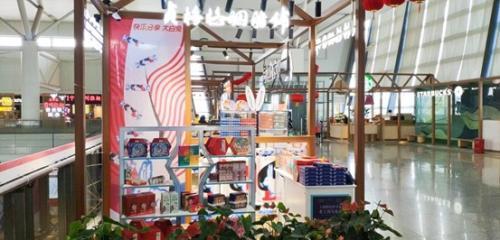
Source: FabuYi
In 2021, Shanghai Meilan was acquired and controlled by Shenzhen Datong Industrial Co., Ltd. (a delisted veteran A-share enterprise) and incorporated into its health ecosystem sector; in the same year, the EEBESS amino acid facial cleanser produced by Shanghai Meilan was publicly notified by the Shanghai Medical Products Administration for illegally using a prohibited preservative (isobutyl 4-hydroxybenzoate).

Source: Shanghai Medical Products Administration
In 2024, Shanghai Meilan suffered a concentrated outbreak of judicial crises, involving more than 50 disputes over sales contracts and service contracts throughout the year. Due to the absence of property available for execution in multiple cases, the enterprise was included in the list of dishonest debtors and subjected to high-consumption restrictions. Subsequently, its raw material supplier Shanghai Beile Oil Co., Ltd. submitted a bankruptcy liquidation application to the Pudong Court, and Shanghai Meilan officially entered the bankruptcy review process [2].
After two years of bankruptcy liquidation procedures, the People's Court of Pudong New Area, Shanghai, made a ruling in accordance with the law, formally declaring Shanghai Meilan bankrupt and terminating its bankruptcy proceedings.
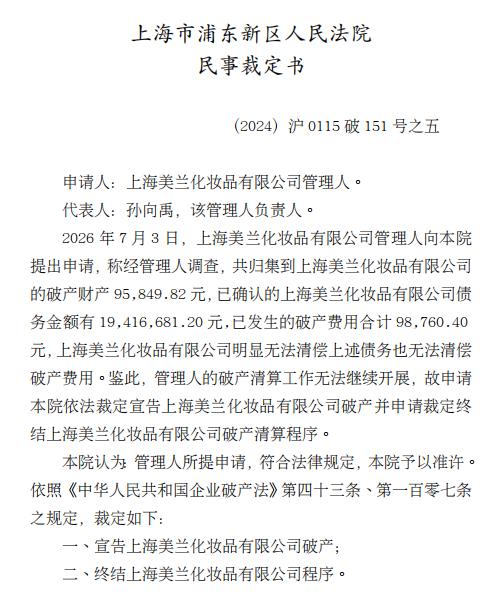
Source: National Enterprise Bankruptcy and Reorganization Case Information Network
From a well-known local enterprise of considerable scale in the past to fading out sadly after being mired in debt, the end of Shanghai Meilan is lamentable. This is not just the failure of a veteran enterprise, but also a microcosm of the accelerated clearance of the cosmetics industry in the era of stock game.
In less than 8 months, more than 20 enterprises went bankrupt
It is worth noting that in addition to Shanghai Meilan mentioned above, two other cosmetics enterprises filed for bankruptcy in July 2026. Among them, Jinhua Weizixiu Cosmetics Co., Ltd. is involved in a bankruptcy case; Beijing Tongrentang Cosmetics Co., Ltd. is involved in a compulsory liquidation case.
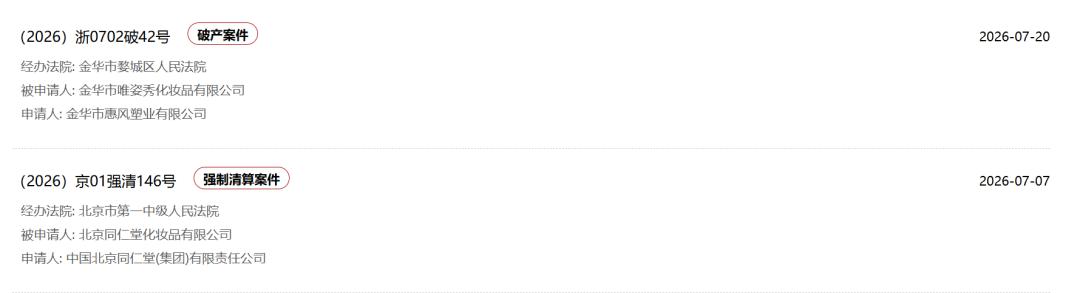
Source: National Enterprise Bankruptcy and Reorganization Case Information Network
Extending the timeline, Jumeili searched the National Enterprise Bankruptcy and Reorganization Case Information Network with the keyword "cosmetics". According to incomplete statistics, 20 cosmetics enterprises have gone bankrupt since 2026.
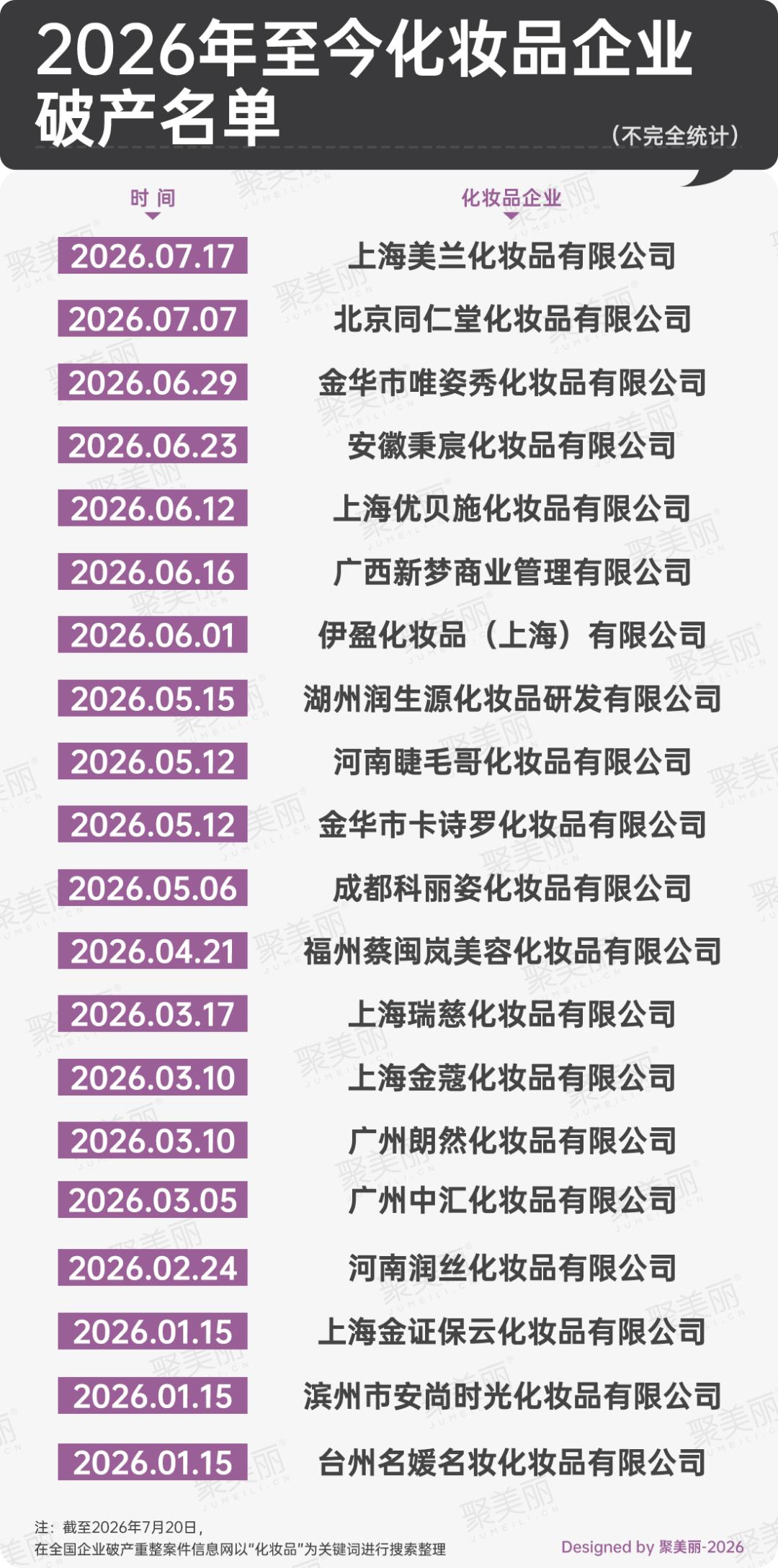
In terms of industrial chain distribution, these 20 enterprises cover 9 channel distributors, 5 OEM factories, 4 brand owners and 2 chain stores. Among them, channel distributors and OEM factories together account for 70%, becoming the most severely impacted links in this round of industry reshuffling.
The reason is that these two types of enterprises are in the "sandwich layer" of the industrial chain, and are particularly vulnerable under multiple pressures.
For channel distributors, on the one hand, the continuous squeeze of online channels and the shrinking of offline passenger flow are fatal blows. In recent years, the proportion of online cosmetics sales has been rising, the living space of traditional offline channels has been greatly compressed, and channel distributors that rely heavily on offline traffic are the first to be affected. On the other hand, the upstream brand owners are under profit pressure, which will further transmit risks to downstream channels, leading to the accelerated clearance of small and medium-sized channel distributors in the stock competition.
For OEM factories, affected by the general environment, the demand on the brand side has shrunk and orders have declined. In addition, many brand owners have built their own factories to control the supply chain, resulting in the dilemma of "no orders to take" for OEM factories. At the same time, the dual thresholds of compliance and capital also bring pressure. Small and medium-sized OEM factories often face regulatory penalties due to problems such as insufficient compliance funds, lack of professional talents, and extensive production process control, and are eventually accelerated to be cleared in the cruel industry reshuffling.
In addition to the industrial chain distribution, these 20 bankrupt enterprises also show an obvious concentration trend in terms of capital scale, geographical distribution and case types.
In terms of registered capital, most of the bankrupt enterprises in the above figure are concentrated between 1 million yuan and 10 million yuan, mostly small and medium-sized enterprises, totaling 13, accounting for nearly 70%; only Shanghai Meilan mentioned above has a registered capital of more than 10 million yuan. In addition, 6 enterprises have a registered capital of no more than 500,000 yuan.
In terms of geographical distribution, these bankrupt enterprises are mainly concentrated in Shanghai and Zhejiang. Among them, Shanghai ranks first with 5, accounting for nearly 30%; followed by Zhejiang with 4 and Guangdong with 2; Shandong, Anhui, Fujian, Guangxi and other regions each have 1.
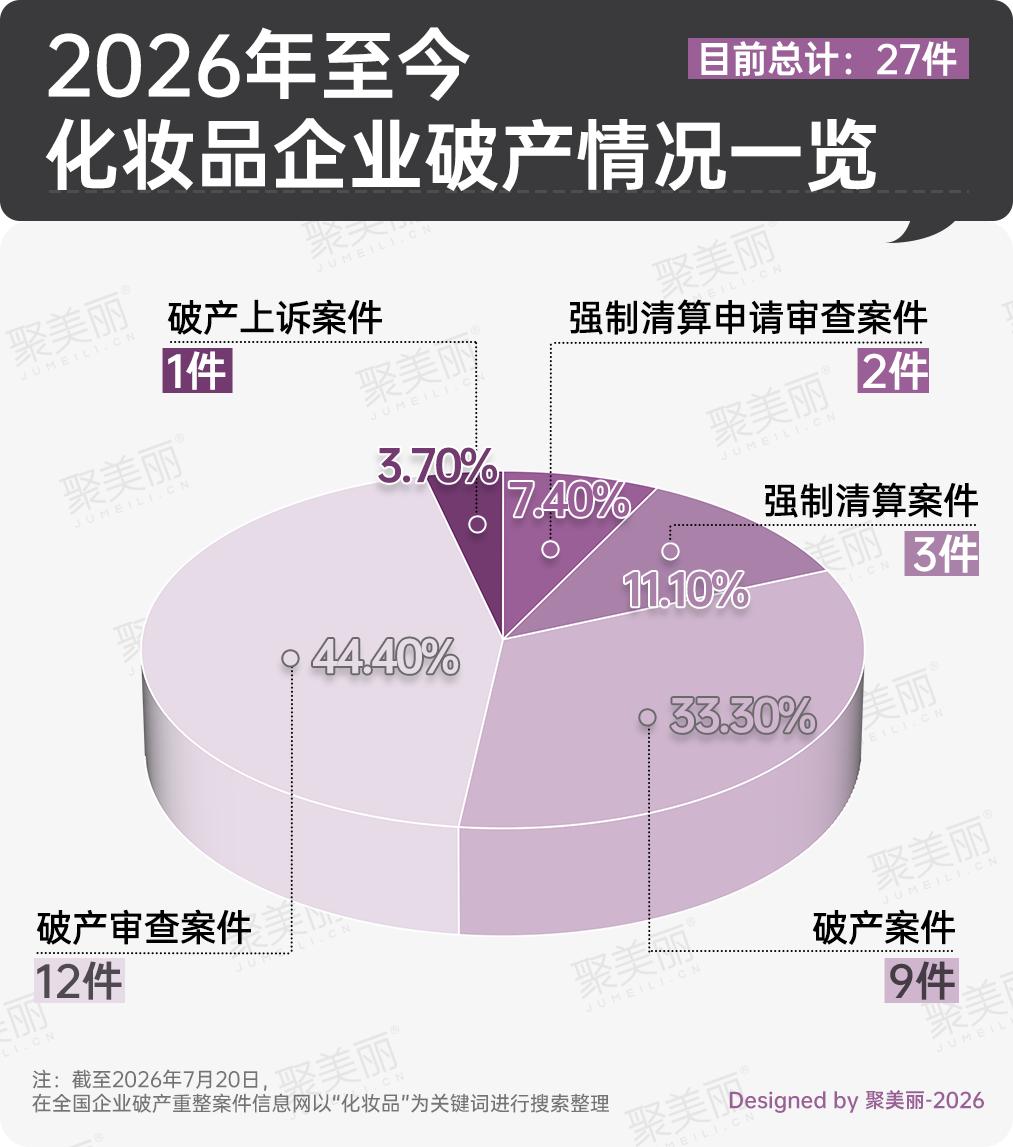
Finally, from the perspective of case types, among the 27 cosmetics enterprise bankruptcy cases, bankruptcy review cases and bankruptcy liquidation cases account for the majority, 12 and 9 respectively. In addition, many companies have voluntarily declared bankruptcy and terminated bankruptcy proceedings, or been ruled by the court to terminate compulsory liquidation procedures due to reasons such as no property available for distribution and unknown whereabouts of enterprise personnel.
It is worth noting that among the above bankrupt enterprises, in addition to Shanghai Meilan, there are 4 veteran cosmetics enterprises with a history of more than 15 years, namely Beijing Tongrentang Cosmetics Co., Ltd., Shanghai Youbeishi Cosmetics Co., Ltd. (hereinafter referred to as "Youbeishi"), Yiying Cosmetics (Shanghai) Co., Ltd. (hereinafter referred to as "Yiying Cosmetics") and Shanghai Jinkou Cosmetics Co., Ltd. (hereinafter referred to as "Jinkou Cosmetics").
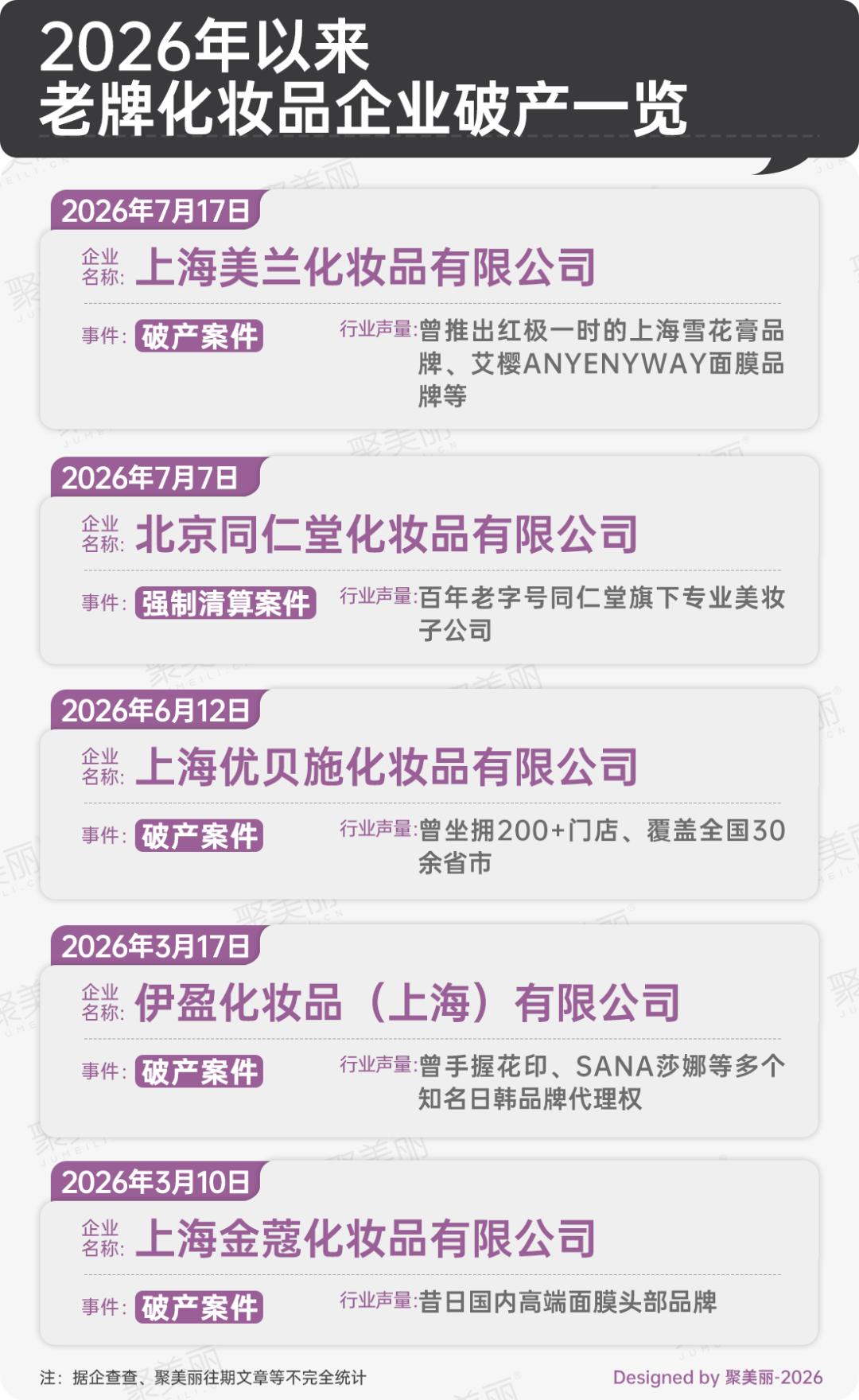
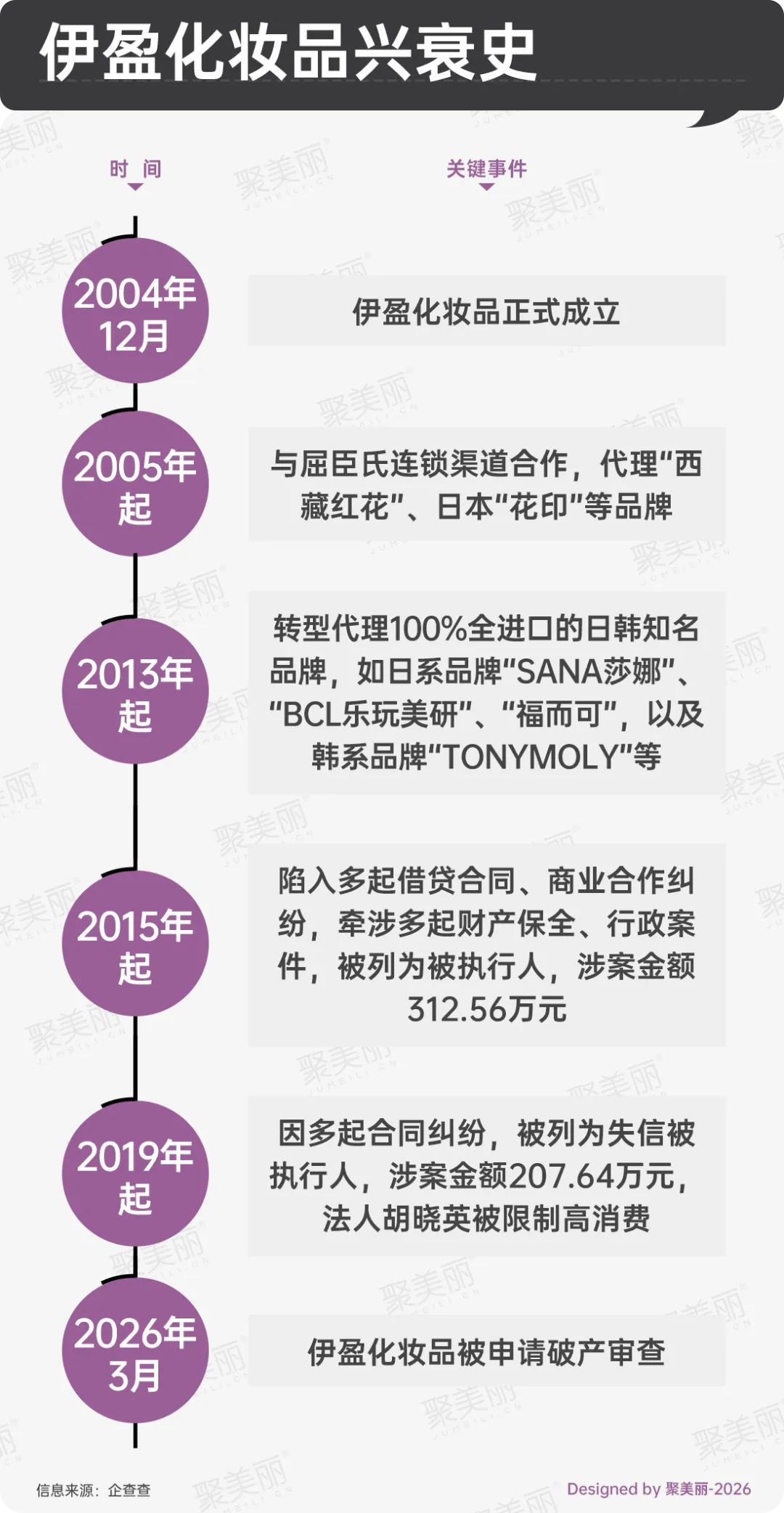
Focusing on Yiying Cosmetics, a 22-year veteran cosmetics agent, reviewing its development history, Yiying Cosmetics started in 2005 by acting as an agent for brands such as Tibetan Saffron and Japanese Huayin. In its heyday, it covered more than 500 Watsons stores in East China; around 2013, the company further transformed to act as an agent for Japanese and South Korean brands such as SANA, BCL and TONYMOLY. However, since 2015, Yiying Cosmetics has been deeply mired in various debt disputes such as loans, commercial cooperation and property preservation, with successive judicial cases. Finally, in March 2026, this veteran enterprise was formally applied for bankruptcy review [3].
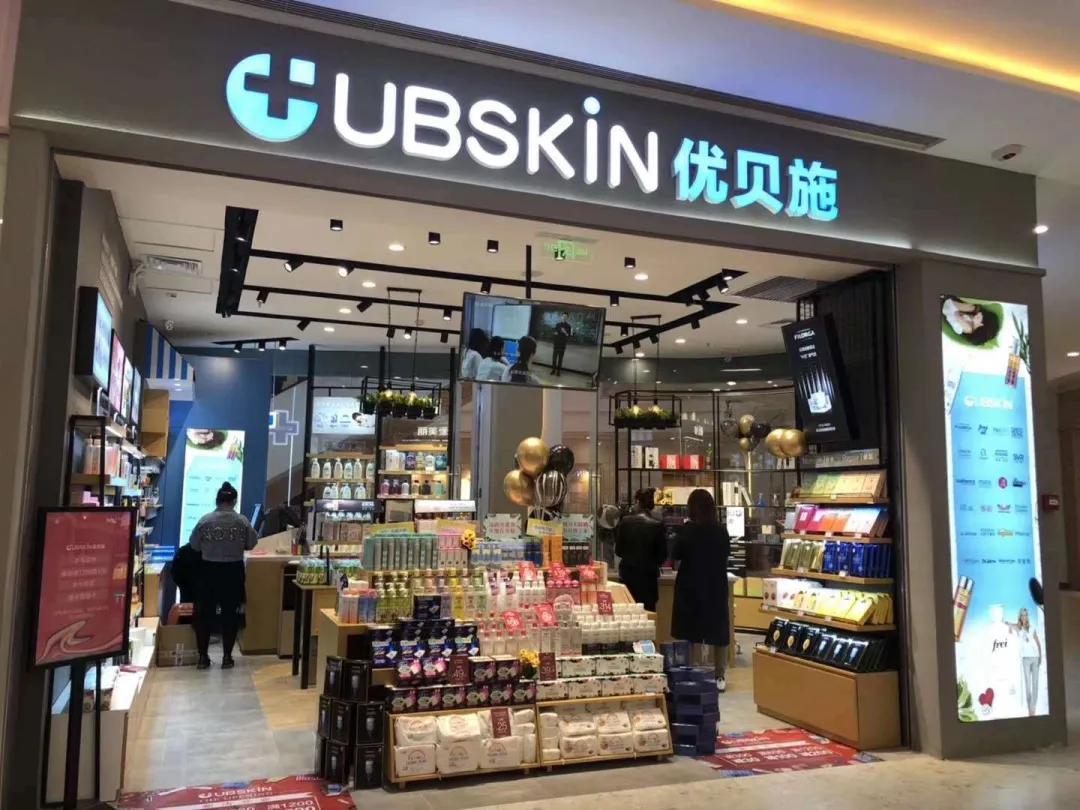
Another notable enterprise is Youbeishi, once known as the "largest imported cosmeceutical chain". Since its founding in 2009, the company has gathered more than 200 cooperative brands from more than 50 countries around the world, including SkinCeuticals, FILORGA, HABA, and Freeplus, and has more than 200 stores nationwide. At the end of 2018, Youbeishi announced the suspension of franchise, and was later included in the list of abnormal operations for failing to publicize its annual report; in March 2022, its official WeChat account stopped updating and its official mall was closed, and all Shanghai stores were closed by the second half of 2025; in May 2026, the enterprise officially entered the bankruptcy review process [4].
Source: Youbeishi
The two veteran cosmetics enterprises mentioned above once had a certain scale and had a short glorious moment in their early development. However, against the background of the changing industry environment, they failed to keep up with the trend of the times and lacked new development thinking, which led to their elimination by the market and complete fading out of the public view.
The bankruptcy wave is not over, and the beauty industry reshuffling continues
From the cases and analysis sorted out above, the bankruptcy of these cosmetics enterprises can be attributed to the combined effect of internal operational factors, external factors such as policy environment and market competition.
Mired in debt quagmire
First of all, from the internal factors, most of these bankrupt enterprises are small and medium-sized enterprises, whose operating conditions are generally in a loss state, and they lack the necessary financial support for survival and development, making them extremely vulnerable to debt distress.
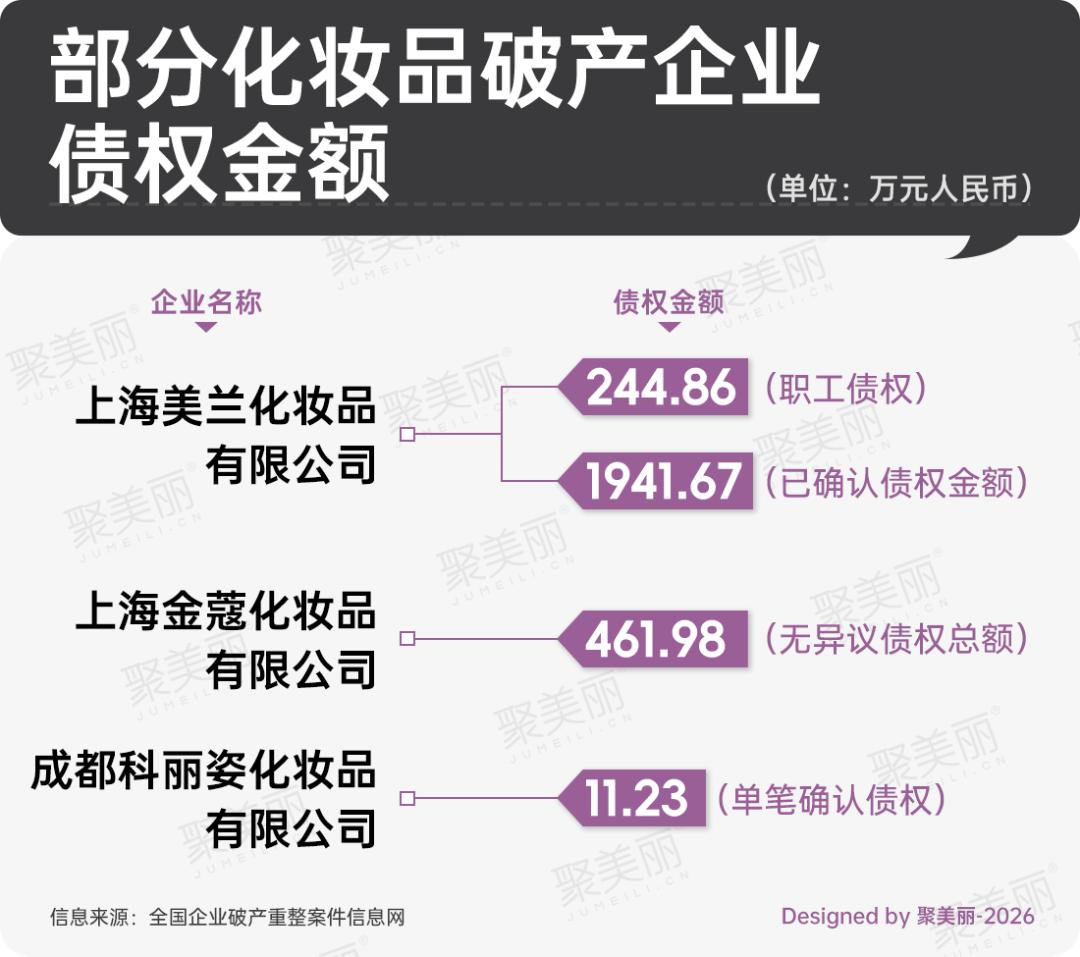
According to the disclosure of the National Enterprise Bankruptcy and Reorganization Case Information Network, Jumeili counted the creditor's rights amount of some bankrupt cosmetics enterprises. Among these cases, the minimum is 112,300 yuan and the maximum is 19.4167 million yuan. The enterprises are facing huge repayment pressure. However, despite carrying huge debts, the assets under the names of these enterprises that can be used for repayment are very limited.
Jinkou Cosmetics is a typical example of being applied for bankruptcy liquidation due to insolvency. The company was once integrated R&D, production and sales, and