After rushing back to Earth at high speed from space, the largest spacecraft of Elon Musk is currently floating on the Indian Ocean.
Early this morning Beijing time, the most powerful rocket in human history lifted off once again from Starbase Launch Complex 2 on the coast of the US-Mexico border.
This marked SpaceX's 13th Starship test flight, and the second launch of the V3 iteration of the Starship system.
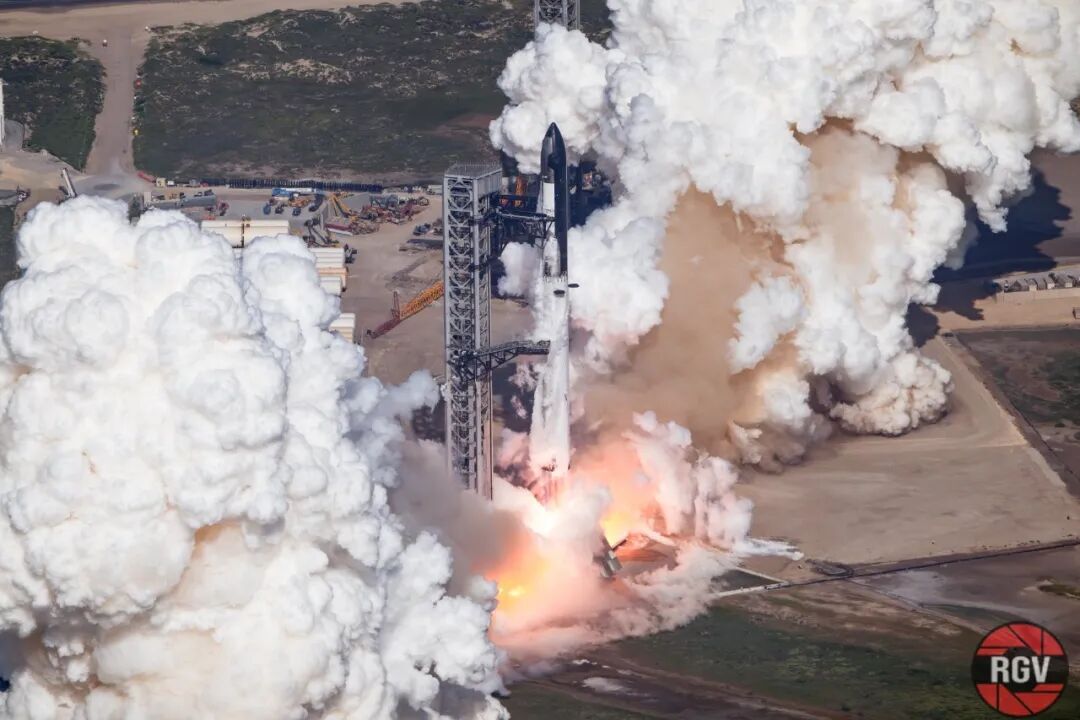
The ignition and liftoff moment of Starship's 13th test flight | RGV Aerial Photography
Two months ago, the debut flight of the V3 Starship was full of tense moments: the first-stage booster unexpectedly pitched nearly 90 degrees during separation, five engines experienced abnormal restarts, and the second-stage engine unexpectedly shut down in outer space.
So this time, the second V3 Starship took to the skies for a "retest" with a full "error correction and rectification report".
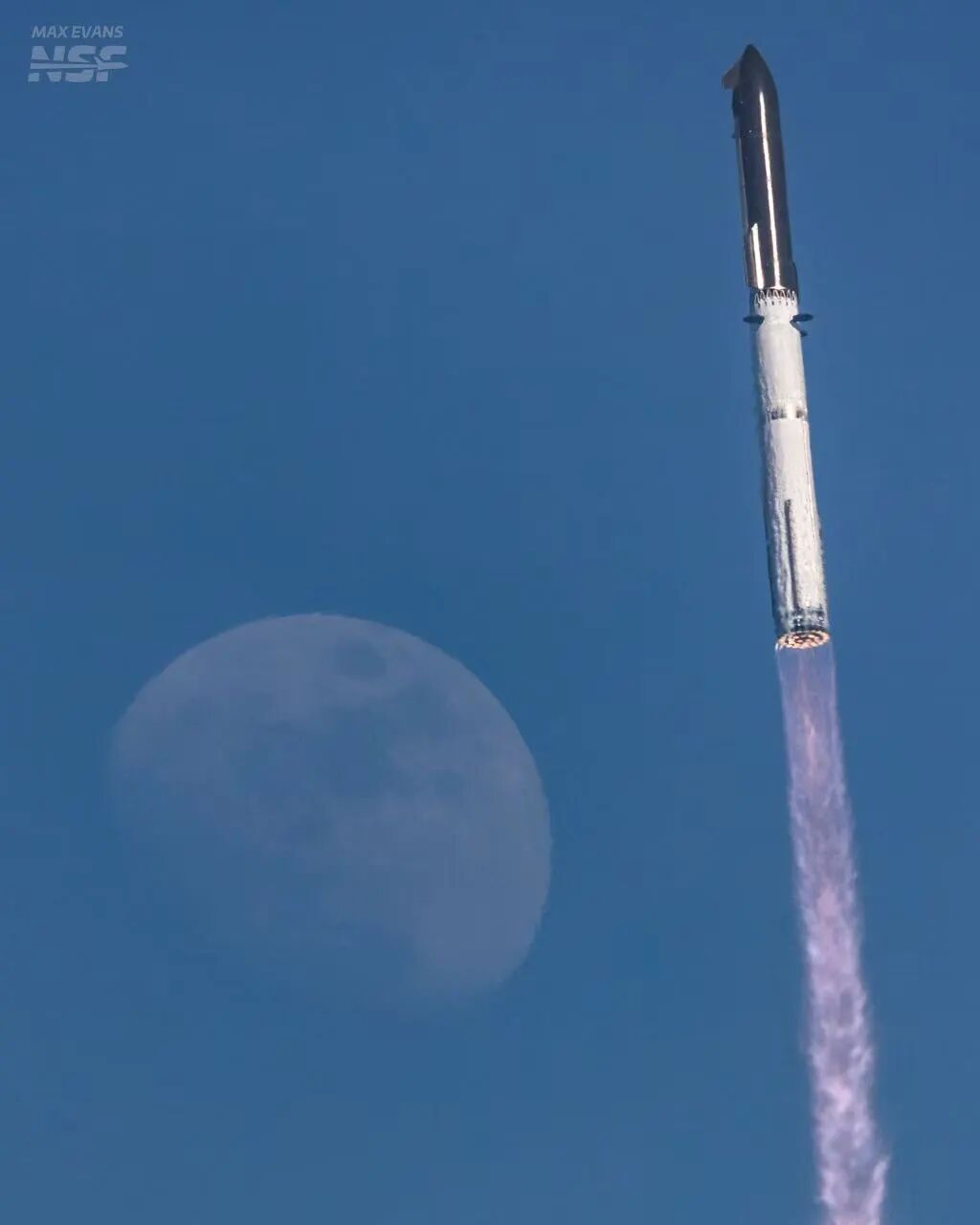
Liftoff footage of Starship's 13th test flight | Max Evans / NSF
V3 Starship's "Makeup Exam"
The Starship launched today is assembled from two stacked sections.
The first-stage booster, designated B20, stands 72 meters tall — equivalent to a 24-story building — carries approximately 3,650 tons of propellant, and is powered by 33 Raptor 3rd-generation engines.
The second-stage Starship, designated S40, is 52 meters tall, carries roughly 1,600 tons of propellant, and also features an all-Raptor 3 engine configuration.
Unlike the previous test flight, this time the Starship's payload bay housed 20 genuine, fully functional V3 Starlink satellites — real, production-grade satellites built with actual investment that were originally intended to enter operational service in the constellation.
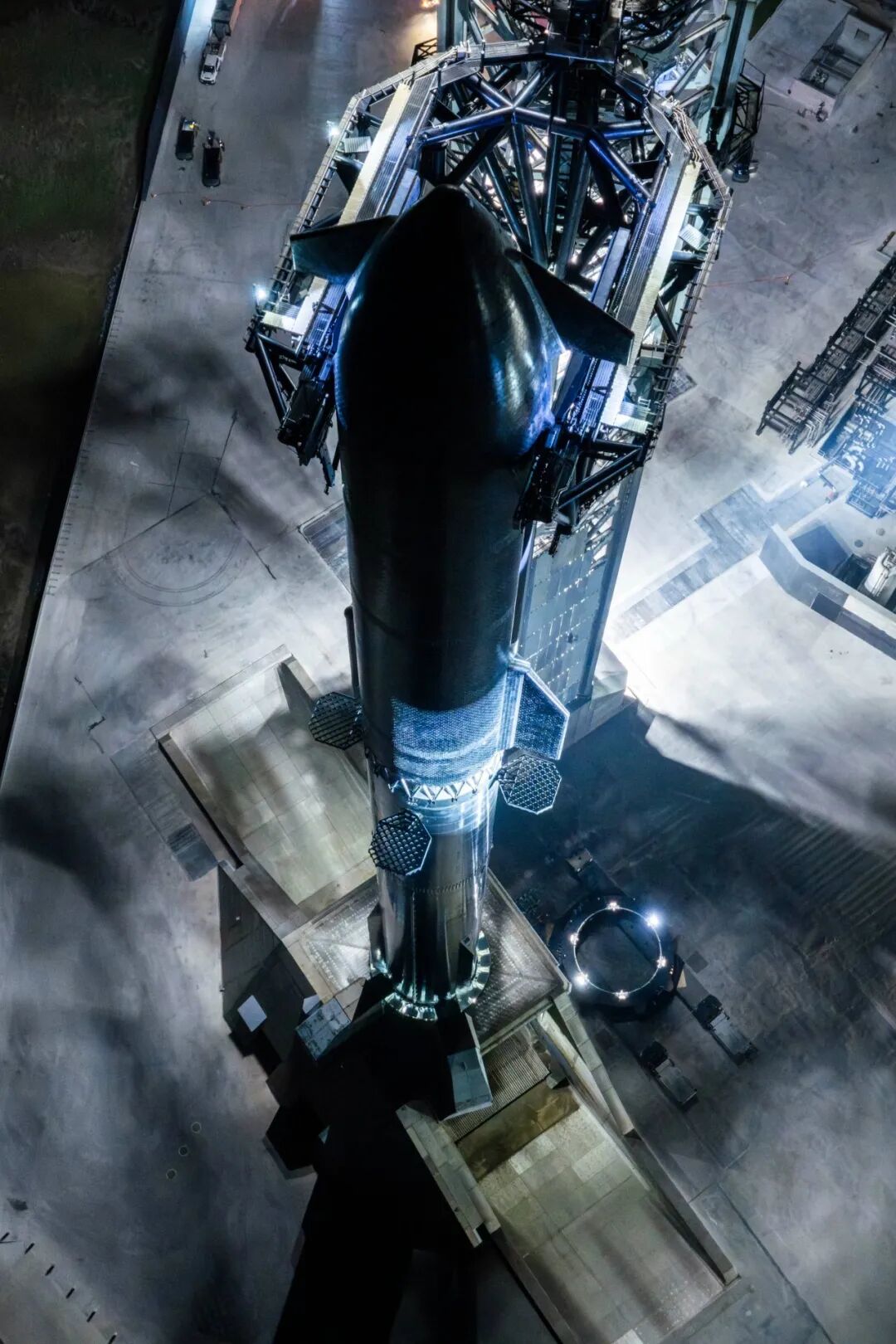
The fully stacked B20/S40 Starship assembly | SpaceX
This flight still followed a suborbital trajectory. A suborbital flight means the craft exits the atmosphere and reaches space, but lacks sufficient velocity to complete a full orbit around the Earth.
Starship is technically capable of achieving orbit, but regulatory authorities have not yet granted approval. This predetermined the fate of the 20 satellites: they would re-enter the atmosphere alongside Starship and burn up in a streak of meteors.
2 minutes and 18 seconds after liftoff, 30 of the first stage's 33 engines shut down, leaving 3 engines operating for attitude control. 3 seconds later, the second stage — still riding atop the first stage — ignited directly, with the exhaust plumes of its 6 engines bursting through the truss-style interstage section and pushing the first stage away.
This maneuver of igniting the second stage before full separation is called hot staging — it saves time and effort, but presents a major challenge for attitude control. During the previous V3 Starship's maiden flight, the first stage was struck by the second stage's exhaust plumes at this exact point, causing it to pitch nearly 90 degrees.
After separation, the first stage successfully initiated its return burn, heading back toward its designated splashdown point in the Gulf of Mexico.
Per the original plan, 6 minutes and 53 seconds after ignition, B20 would reignite its engines to decelerate, and slowly descend to a "virtual landing spot" on the ocean surface.
The so-called virtual landing spot is an imaginary circle SpaceX marked on the sea, simulating the presence of a launch tower, to let the rocket practice the full sequence of being caught by the mechanical arms over open water.
However, during today's test flight, multiple engines failed to ignite during B20's landing burn, resulting in insufficient deceleration that caused the booster to crash into the sea. The planned simulated offshore recovery of the first stage could not be completed.
Meanwhile, the separated S40 Starship continued to climb, deploying the 20 genuine V3 Starlink satellites sequentially from its payload bay.
After exiting the payload bay, the satellites deployed their solar panels and phased array antennas, established contact with ground stations, set up laser communication links with active Starlink satellites already in orbit, and practiced the full workflow prior to entering operational service.
Six of these satellites were even equipped with cameras; after deployment, they turned back specifically to photograph the Starship and scan its heat shield tiles, transmitting the imagery back to the ground in real time. SpaceX even intentionally painted several heat shield tiles white as calibration targets, to specifically verify whether any tiles had dislodged during flight.
After deploying all satellites, S40 completed another critical makeup exam: the single-engine restart in outer space.
For Starship to obtain orbital flight approval, it must first demonstrate it can reliably initiate a controlled deorbit whenever required. Otherwise, an out-of-control 100+ ton vehicle covered in heat shield tiles would pose a serious threat to all humanity orbiting overhead.
During the previous test flight, this test had to be canceled due to an engine malfunction — which was one of the reasons this flight remained restricted to a suborbital profile.
Towards the end of the flight, the S40 Starship plunged back into the atmosphere. Tens of thousands of heat shield tiles on its windward side withstood thousands of degrees of aerodynamic heating, before the vehicle used its four aerodynamic surfaces to adjust its attitude, fired its engines for retrothrust, and made a controlled vertical splashdown in the designated area of the Indian Ocean.
The 20 satellites were not so fortunate: lacking heat shields, they disintegrated into a streak of meteors under the intense friction of atmospheric reentry, bringing their journey to an end.
Notably, after S40 splashed down at sea today, it did not explode as previous test articles had — instead, it remained intact, floating on the water surface, and even continued to transmit telemetry signals normally. Footage from SpaceX's official live broadcast showed the heat shield tiles on the vehicle's windward side were largely undamaged.
Identify Problems, Implement Fixes, Fly Again
In the aerospace industry, the process of thoroughly investigating and fully resolving a rocket anomaly has a specialized term: "root cause rectification", meaning tracing the issue to its absolute origin and implementing a complete fix without leaving any unresolved loose ends.
Traditional aerospace root cause rectification processes often take months or even years, but SpaceX is renowned across the industry for its "light-speed" anomaly resolution: back in February this year, a Falcon 9 rocket suffered a second-stage deorbit failure during a Starlink launch mission, and the entire process from accident investigation to full rectification was completed in just 5 days.
Today's Starship test flight served as a comprehensive validation of the root cause fixes for the three major anomalies that occurred during the previous V3 Starship's maiden flight.
The first anomaly occurred the moment the first and second stages separated.
During the previous flight, the exhaust from the second stage's ignition impacted the first stage, while the three remaining operating engines on the first stage provided additional thrust. The two forces failed to coordinate properly, creating an asymmetric torsional moment that the existing control program lacked sufficient fault tolerance to counteract. As a result, the first stage was twisted nearly 90 degrees, nearly compromising the safe separation gap between the two stages.
SpaceX's solution was to revise the engine startup timing sequence, while enhancing the control program's fault tolerance capability, to ensure the first stage reliably clears the flight path after separation.
The first stage's stable attitude performance during today's hot staging event was the direct proof that this rectification worked.
The second anomaly was concentrated in the propulsion system.
During the previous flight, 5 of the first stage's 33 Raptor 3 engines exhibited abnormalities during the return burn.
While the Raptor 3 has a significantly simplified design, reliable restart in the low-pressure environment at high altitude is inherently a major technical challenge for liquid oxygen-methane engines.
The root cause finding was that the hardware had insufficient safety margins for high-altitude restarts — essentially, the design's safety allowances were too tight. SpaceX accordingly improved the hardware design, and repeatedly performed ignition validation tests on ground test stands.
However, the fact that multiple engines failed to ignite during the first stage's landing burn today indicates that the Raptor 3 engine's reliability still requires further improvement.
The third anomaly was the most harrowing of the three.
During the previous flight, one of the second stage's vacuum-optimized engines unexpectedly shut down roughly 40 seconds after separation. Fortunately, Starship has propulsion redundancy, and the remaining engines compensated by extending their burn duration and increasing thrust to successfully salvage the flight. The tradeoff, however, was that the planned deorbit burn test had to be canceled.
As previously noted, without demonstrating reliable deorbit capability, Starship cannot obtain approval for orbital flight — which directly forced the vehicle to remain restricted to an additional suborbital test flight.
Root cause analysis found that the issue stemmed both from engine hardware reliability factors, and from software flaws in the propellant management timing sequence during the coast phase in space. SpaceX implemented a two-pronged solution: optimize the cryogenic propellant management logic, and revise the flight procedures to bring this phase under more rigorous monitoring.
S40 performed nominally during its on-orbit phase today, with its space ignition succeeding on the first attempt, confirming the effectiveness of the rectification measures.
In addition to addressing the prior issues, this test flight also opportunistically validated multiple thermal protection upgrades: experimental heat shield tiles were installed on the aft aerodynamic surfaces, some with built-in sensors to measure the actual loads on the tiles under high-stress conditions; heat shield tiles around the engine bay were fitted with improved attachment mechanisms to collect real flight data from different design approaches.
Starship's heat shield tiles were once notoriously unreliable, with early static ignition tests sometimes shaking tiles loose and scattering them. From tiles flying all over the place to withstanding the full reentry process, this key weakness is being gradually addressed — and it is precisely one of the final critical hurdles for Starship to achieve rapid reusability.
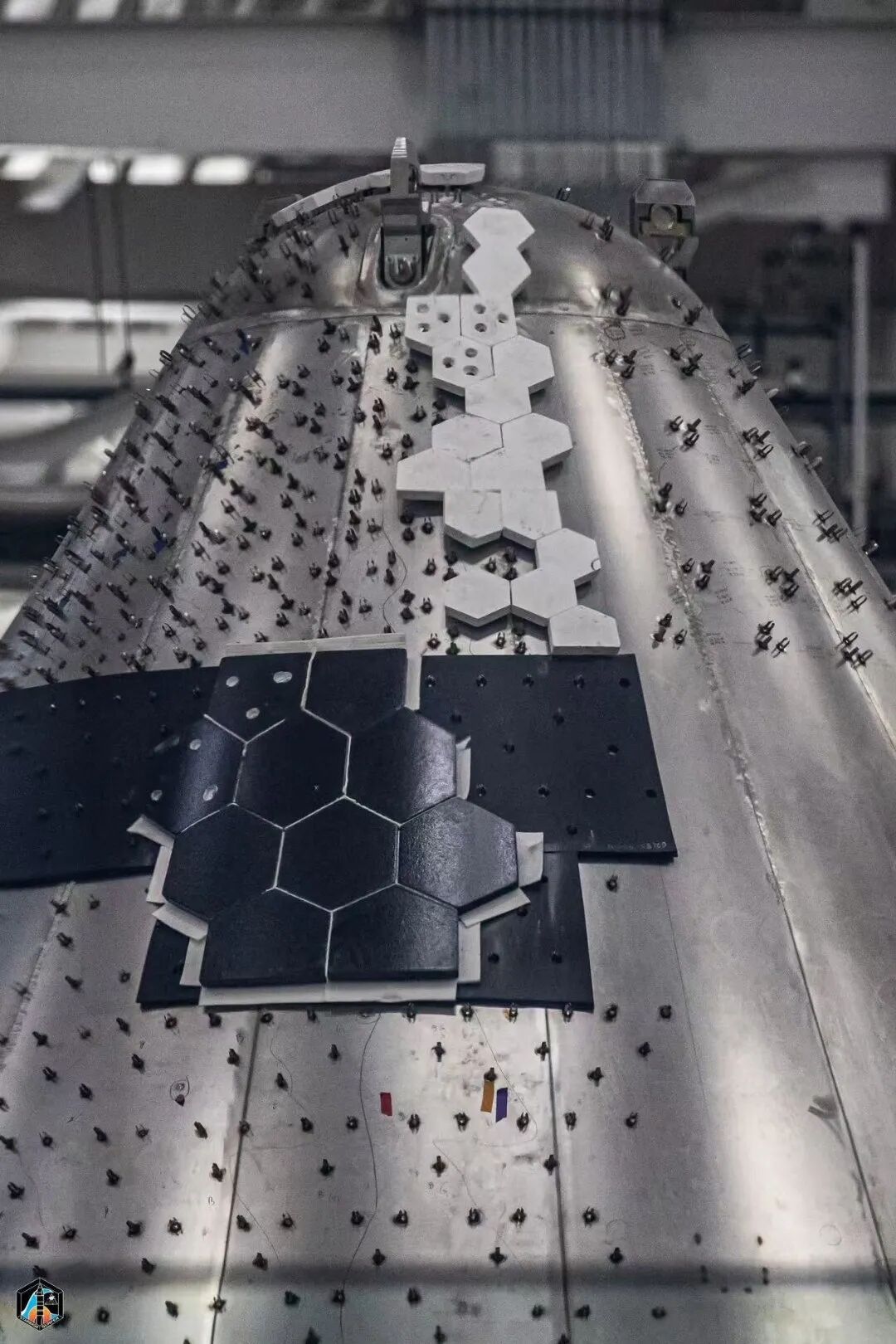
The Starship second-stage nose cone under assembly in the factory, with smaller white heat shield tiles visible — these are intended for future missions | NasaSpaceFlight
What Did We Gain From Those 20 Burned Satellites?
The aspect of today's test flight that truly puzzled the industry was the inclusion of those 20 genuine V3 Starlink satellites. 20 real, production-grade satellites built with substantial investment, flying for just dozens of minutes in space before falling back to burn up in the atmosphere.
The primary reason, of course, is that SpaceX has the resources to make bold, unconventional moves — but the V3 Starlink is not a simple scaled-up version of the existing operational Starlink satellites, it is a completely redesigned, next-generation massive platform.
Each individual satellite weighs around 2 tons, its solar panels span roughly 257 square meters when deployed (expandable to a maximum of approximately 500 square meters), with a form factor comparable to a Boeing 737 airliner.
Its power generation capacity is approximately 20-25 kilowatts, with the maximum expandable configuration expected to exceed 100 kilowatts — equivalent to the simultaneous electricity consumption of more than a dozen households.
Each satellite delivers a terrestrial communication bandwidth of up to 1 Tbps, over 10 times that of the current operational V2 Mini satellites. A single V3 Starlink satellite can support hundreds of thousands of users streaming high-definition video concurrently.
The satellites are also equipped with dedicated computing modules, whose processing power represents a generational leap over the previous model.
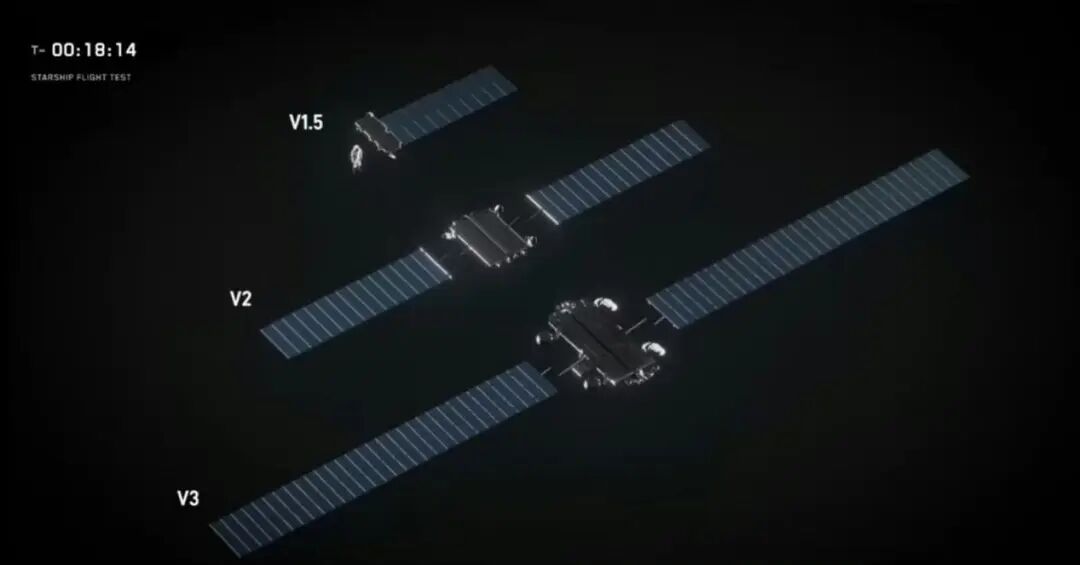
The V3 Starlink has finally reached space this time | SpaceX
For such a complex system, how the solar panels deploy, how the antennas point, how power supply and thermal management coordinate — all are questions that simulated mass dummies from prior flights could never answer.
Mass dummies can only prove that "Starship can eject an object". Only real satellites can prove that "the object ejected can perform its intended function".
Having 20 real satellites go through the full sequence of deployment, extension, and link establishment exposes real-world flaws at the interface, power, and software levels — data that is absolutely essential for the subsequent large-scale constellation deployment.
In other words, these 20 real satellites were not burned in vain: they were tuition fees.
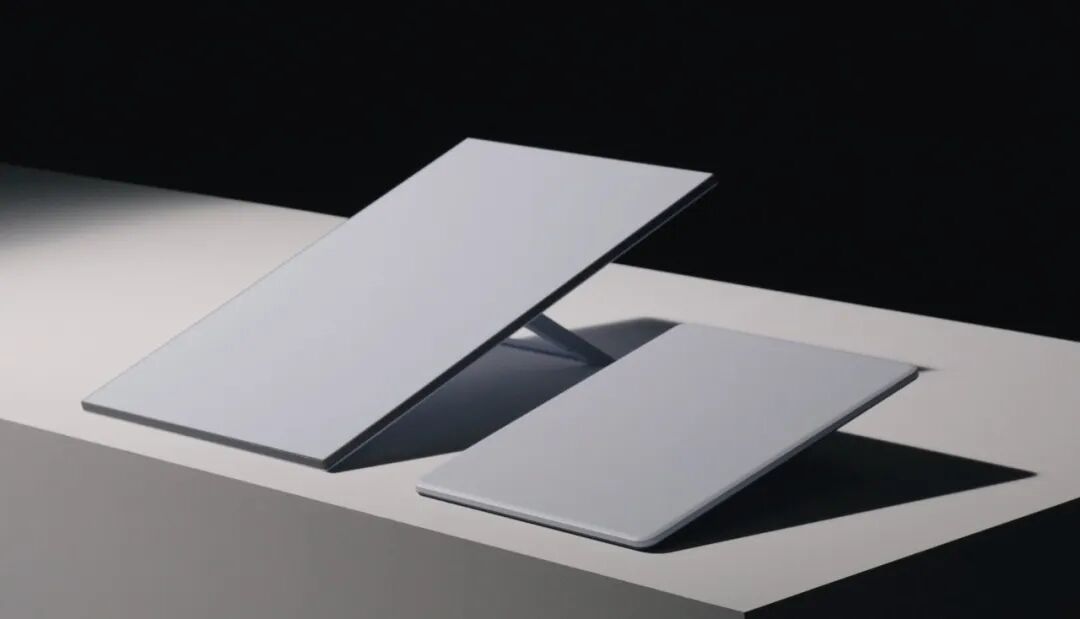
SpaceX's newly launched V5 Starlink terminal (right), with a smaller footprint and enhanced performance | SpaceX
This tuition fee was unavoidable, because SpaceX can no longer afford to wait. As of June this year, Starlink has launched a cumulative total of over 12,000 satellites, amassing more than 12 million users across over 160 countries and regions. The surging user base is pushing the existing network to its capacity limits, and some high-demand regions have already had to impose one-time "congestion surcharges" of up to $1500.
The V3 satellites were built specifically to solve this problem, representing the critical leap for Starlink from "hundreds of megabits" to "gigabit" service: A single full-load Starship launch can carry 60 of these satellites to orbit, adding network capacity equivalent to the total capacity delivered by 40 Falcon 9 launches carrying the current generation of satellites.
On July 7, SpaceX submitted an application to US regulators for an operating license covering up to 100,000 third-generation Starlink satellites. That figure is nearly 10 times the number of satellites currently in orbit — and such a massive constellation can only be transported to orbit by the Starship launch vehicle.
It can be said that No Starship, No Starlink