After models are no longer scarce, why has Kingsoft Office become even more valuable?
Liang Wenfeng, founder of DeepSeek, recently sparked widespread public discussion across the internet with his remarks at an investor exchange meeting. He put forward a judgment: AI's capabilities have surpassed those of humans, but the premise is that it must be provided with complete context. Humans can learn continuously, while AI has to start from scratch every time. This is precisely the core reason why AI cannot replace employees at present.
This judgment exactly echoes a notable change at this year's WAIC. Looking back at this grand event, from the long queues under the scorching outdoor heat, to the high concentration of investors in the forums and exhibition halls, and then to the massive amount of on-site footage and discussions on social networks, the level of excitement can be described as the highest among all previous editions. However, beyond the fanfare, manufacturers are no longer keen on competing over model parameters. The focus on exhibition booths has shifted from "whose model is smarter" to "whether AI can get things done".
On July 15, three days before the opening of WAIC, Kingsoft Office held an AI Productivity Conference in Shanghai. At the event, CEO Zhang Qingyuan stated: "A large language model is like a doctoral student. It understands the world, but it doesn't understand you."
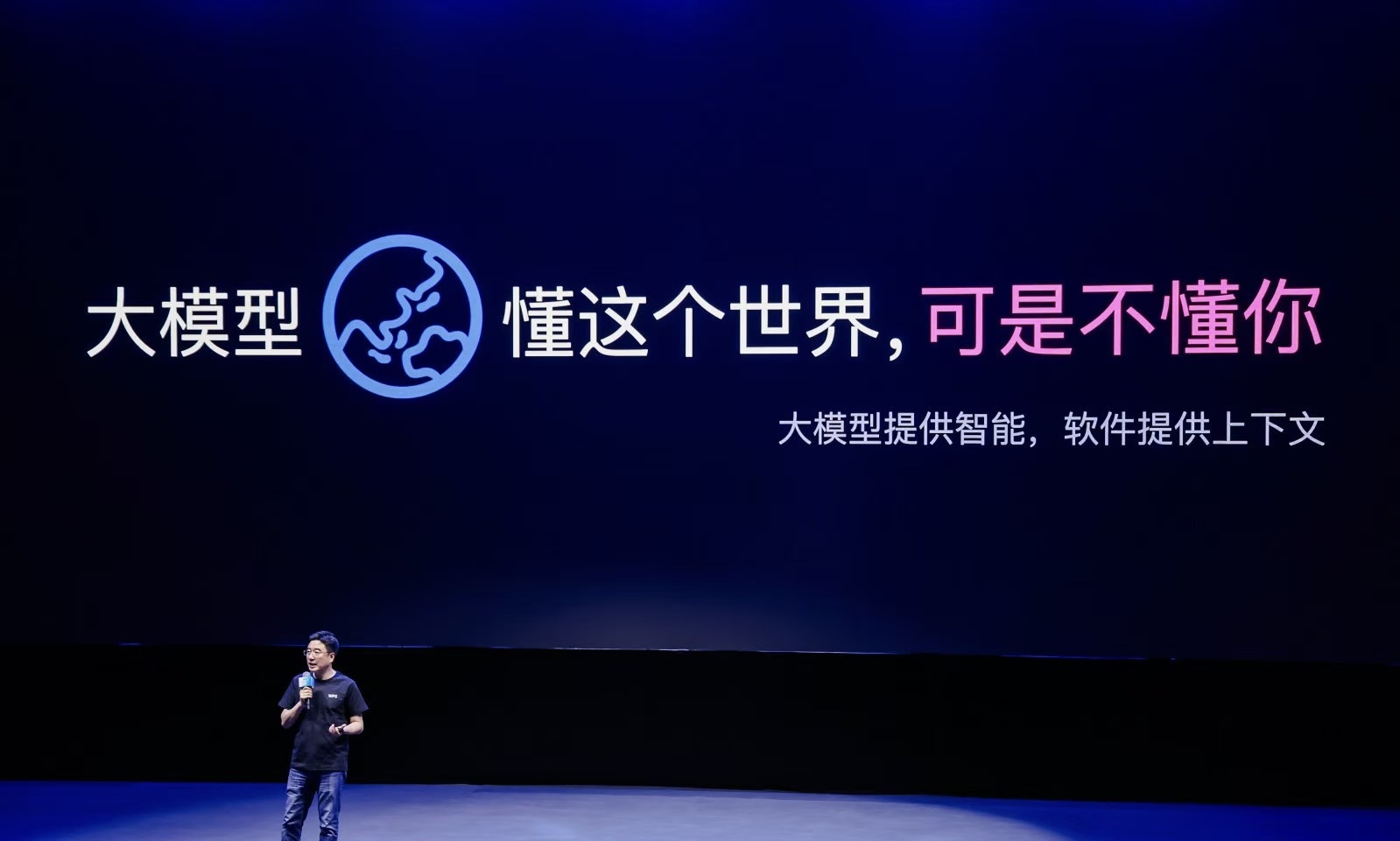
This points to an industry-level question: When large language models become as ubiquitous as utilities like water, electricity and gas, who can emerge victorious in the application layer of AI office work?
01 Capability Gap: AI that only generates ideas cannot complete the full office workflow
Over the past year, the underlying logic of the industry has quietly shifted. The scarcity of large language models has rapidly decreased, models are increasingly becoming infrastructure services, open-source products and various Agents are emerging rapidly, and competition has returned to software itself.
But what can software provide? The answer is context.
For individual users, large language models do not know your writing preferences or the progress of your projects; for enterprise users, they do not understand business rules or approval processes. All this context exists in the software, not in the model.
Zhang Qingyuan summed this up in one sentence: Large language models provide intelligence, while software provides context. However, a large number of products in the industry have only implemented the first half of this statement.
At a forum during WAIC, Tang Xingcai, Deputy General Manager of the Research and Production Center of Ronglian Cloud, cited a set of data: 88% of enterprises worldwide have deployed or used Agents, but less than 10% have truly gained clear business value from them.
At the launch event on July 15, Tian Ran, Assistant President of Kingsoft Office, used a more straightforward distinction: Is AI a "strategic advisor" or an "assistant"? A strategic advisor can come up with ideas, while an assistant needs to complete the task. Most AI products on the market remain at the strategic advisor stage: they can generate textual suggestions, but reveal their shortcomings when it comes to delivery. Some AI-generated spreadsheets have no formulas, making it impossible for users to verify how the figures were calculated; some PPTs appear complete, but when opened, they are often found to be made up of a single image or a large number of text boxes, and cannot be further edited.
Walking through the WAIC exhibition halls also confirms this point. Most AI products still attach a dialogue window to traditional software, and can only complete simple text generation. A professional attending the exhibition complained: When preparing a quarterly report, AI can only output scattered text, and cannot automatically match charts or unify the layout. In the end, I still have to assemble everything manually.
The problem is not that the model is not smart enough, but that there is a capability gap between AI and office software. This gap is also the starting point for capital to re-evaluate the value of the application layer.
02 Capital's Vote: After the equalization of model capabilities, "context assets" become the moat
While various manufacturers showcase product performance on their exhibition booths, the flow of funds is revealed inside the forum venues.
Lu Ying, Director of the Cathay Haitong Research Institute, disclosed a set of data during WAIC: In the first quarter of 2026, 66.4% of domestic AI primary market funds flowed to downstream application tracks. She judged that AI has moved from the "storytelling" phase to the phase of "finding scenarios and generating revenue".
Behind this shift in capital lies a consensus: Competition at the model layer is converging, and the value of the application layer is being re-evaluated. However, the very concept of "application layer moat" is still a point of divergence among investors. When model capabilities become similar, why can we say that one application vendor has a stronger moat than another?
Wen Zhi from Shanghai SDIC Pilot Fund gave the answer: The document parsing technology in the office track and the long-term accumulated work data of users cannot be supplemented by general-purpose models. This means that certain application-layer assets are inherently irreplaceable — all the documents, habits and processes accumulated over ten years of using office software are difficult to migrate simply by switching to a different model.
A report released by KPMG on-site at WAIC further corroborates this judgment: Vertical industry software with a complete closed loop of scenario data has a higher ceiling for commercial profitability; lightweight AI tools without exclusive data accumulation will fall into low-price cutthroat competition in the long run.
Capital is providing the answer: After models are no longer scarce, the context assets accumulated by software are even more valuable.
03 Reject "Reinventing the Wheel": Become an integrator of large language models and the foundation for enterprise data governance
The equalization of model capabilities presents all vertical software vendors with a choice: continue investing in developing their own models, or focus their energy on scenarios and delivery?
Zhang Qingyuan's answer is very straightforward. He admitted at the media briefing after the launch event that if a mid-sized vendor like Kingsoft Office forcibly develops its own model, the input-output ratio will be extremely low.
But not developing a model does not mean having no winning cards. Kingsoft Office has 38 years of accumulation in the field of office software, and its in-depth understanding of document parsing, spreadsheet formulas, layout collaboration and other aspects cannot be replaced by large language models in the short term.
Therefore, Kingsoft Office's choice is logical: It is compatible with multiple mainstream domestic large language models such as Qwen and DeepSeek, allowing users and customers to switch inference backends as needed. Models are replaceable, but context is not.
Based on this judgment, Kingsoft Office simultaneously launched two products on July 15: Lingxi Professional Edition for individuals and WPS Comate for organizations. This was not a last-minute decision. From the debut of WPS AI in 2023, to the launch of WPS 365 in 2024, and then to the release of WPS Lingxi in 2025, Kingsoft Office has been working on AI office for three years. This launch represents the respective upgrades of the two product lines.

The core idea of Lingxi Professional Edition is to transform AI from a "question-and-answer tool" to an "office assistant", managing context with "projects" as the basic unit. Users do not need to repeatedly explain background information, and can obtain editable native Office files with a single instruction.
Zhang Qingyuan gave an analogy: If we only modify WPS to add AI features, it's like modifying a film camera and eventually turning it into a DSLR. But what truly killed the film camera was not the digital camera, but the smartphone. Lingxi Professional Edition is building the "smartphone" layer.
As a brand-new component under WPS 365, WPS Comate targets another level of anxiety among enterprises: whether AI can be well managed and effectively used. It fills in the weakest link of general large language models — the enterprise's own knowledge.
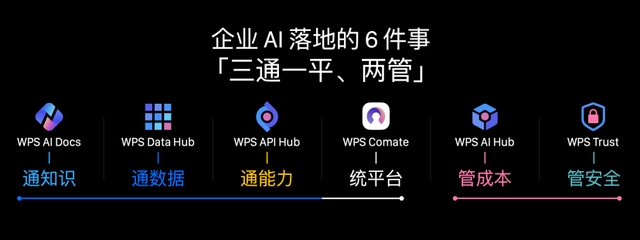
Wang Dong, Vice President of Kingsoft Office, said bluntly at the launch event: "Large language models are very smart, but they don't understand your business." Travel expense standards, contract review specifications, project cost structures — these enterprise-specific pieces of knowledge are precisely the weakest points of general large language models.
Moreover, office documents are often the carriers of core corporate secrets. In recent years, common formats such as Word and PDF have become powerful tools for overseas organizations or hackers to carry out phishing attacks and steal trade secrets. When enterprises face these external security threats, if they still feed their core operating data unreservedly to public cloud large language models, they will undoubtedly face extremely high security risks.
The breakthrough point of WPS 365 is that it is not just an AI tool, but an enterprise-exclusive "knowledge foundation". While connecting internal enterprise documents, data and business systems, it blocks the risk of data leakage through strict localized permission control and a secure sandbox mechanism.
This "foundation model" is demonstrating strong commercial explosive power. Taking a group of leading manufacturing and retail enterprises in South China as an example, they have successfully activated the value of their long-dormant enterprise data relying on WPS 365. While ensuring the absolute security of sensitive documents such as supply chain contracts and R&D drawings, they have achieved extremely fast AI parsing of complex contexts and end-to-end collaboration. This digital office transformation that allows enterprises to "dare to use" AI and truly convert it into productivity is a moat that general models cannot easily match.
It is worth mentioning that only one week after the launch of WPS Comate, more than 450 large and medium-sized enterprises have reached co-creation intentions with Kingsoft Office. The two sides take joint organization of AI skill competitions, in-depth demand research, and proof of concept for key scenarios as core measures, rely on WPS 365 to connect enterprise data assets, knowledge systems and business processes, build an integrated AI office hub for enterprises, and jointly promote the accelerated implementation of the "enterprise brain" across all industries.
Conclusion:
Becoming the foundation for enterprise data governance is not just the choice of Kingsoft Office. After the equalization of model capabilities, the office software industry is undergoing differentiation: some continue to bet on model capabilities, while others turn to deep cultivation of scenario data and end-to-end delivery. The former competes on computing power and parameters, while the latter competes on time and accumulation.
Judging from the current attitude of capital, the latter is winning more chips.